
Sometimes, a little dust around the vents is just that—dust. But other times, your HVAC system sends out an S.O.S. that you absolutely can't ignore. An actual emergency isn't subtle; it's your home telling you something is seriously wrong and needs immediate attention.
So, how do you tell the difference between a routine cleaning job and a real crisis? It's all about recognizing the red flags that signal a risk to your home's safety and your family's health.
Knowing When Duct Cleaning Becomes an Emergency
Think of it this way: a slow decline in air quality might mean you're overdue for a cleaning, but a sudden, alarming symptom often points to a hazard. For instance, a musty, damp smell that pops up overnight—especially after a basement flood or a pipe leak in your Toronto home—is a classic sign of a mould bloom inside your ductwork. That's not something you want circulating through every room.
Another major warning sign is a sharp, electrical burning odour. That could point to a dangerous malfunction inside your furnace or AC unit. These aren't issues you can put on the back burner, especially during a harsh Canadian winter.
Telltale Signs of a Duct Crisis
Beyond just strange smells, some signs are undeniable emergencies. If you experience any of the following, it's time to make an emergency call right away:
- Visible Smoke or Soot: See puffs of smoke or black, sooty dust coming from your vents? Shut the system down immediately. This often indicates a furnace "puff-back," an event that can spray oily, hazardous residue throughout your entire duct system.
- Loud, Abrupt Noises: A sudden banging, grinding, or screeching from your HVAC, especially if followed by a total loss of airflow, likely means a major component like a fan motor has failed. Worse, it could have sent broken pieces flying into your ductwork.
- Evidence of Pests: Finding droppings, shredded nesting materials, or dead insects near your vents is a clear sign you have unwelcome tenants. This isn't just unpleasant; it's a serious health hazard that pumps allergens, bacteria, and viruses through your home's air supply.
- Post-Disaster Contamination: After a nearby fire, major home renovations, or a severe storm, your ducts can become a repository for harmful contaminants. For many across Canada, infiltration from wildfire smoke is now a primary reason for urgent duct cleaning.
"Ignoring urgent symptoms doesn't just risk damaging your HVAC system—it can directly impact your family's respiratory health by circulating mould spores, soot, or allergens through every room in your house."
To make it even clearer, here’s a quick-reference table to help you distinguish between a problem you can schedule and one that needs an immediate professional response.
Emergency Signs vs. Routine Maintenance Needs
| Symptom | Potential Cause | Urgency Level |
|---|---|---|
| Visible smoke or soot from vents | Furnace malfunction, "puff-back" | Emergency – Call Immediately |
| Sudden, strong burning smell | Electrical or mechanical failure | Emergency – Call Immediately |
| Recent pest infestation | Rodents or insects in ductwork | Emergency – Call Immediately |
| Mould growth after a flood/leak | Water damage creating a health hazard | High – Urgent Service Needed |
| Allergies/dustiness seem worse | Gradual dust & debris accumulation | Routine – Schedule a Cleaning |
| Slight "stale air" smell | Dust and microbes in the system | Routine – Schedule a Cleaning |
| It's been 3-5 years since last clean | Standard maintenance interval | Routine – Schedule a Cleaning |
Ultimately, these urgent scenarios are a world apart from the more subtle clues that just mean it's time for a regular cleaning. If you're on the fence, you can learn more about the general signs that you need to get your air ducts cleaned. Knowing the difference empowers you to act fast when it really counts.
Your First Five Minutes: What to Do Immediately
When you think you're facing a ductwork emergency, what you do in the first few minutes is absolutely critical. The goal here is simple: stop whatever is in your ducts—be it smoke, mould spores, or nasty fumes—from spreading through your entire home. The key is to stay calm and act fast.
Your very first move, before anything else, is to shut down the entire HVAC system. I don't mean just flipping the switch on your thermostat. You need to go straight to your home's breaker panel and kill the power to both your furnace and your air conditioner. This is the only way to be certain the fan won't kick on and make a bad situation much worse.
This quick flowchart can help you decide what to do based on what you're seeing, smelling, or hearing.
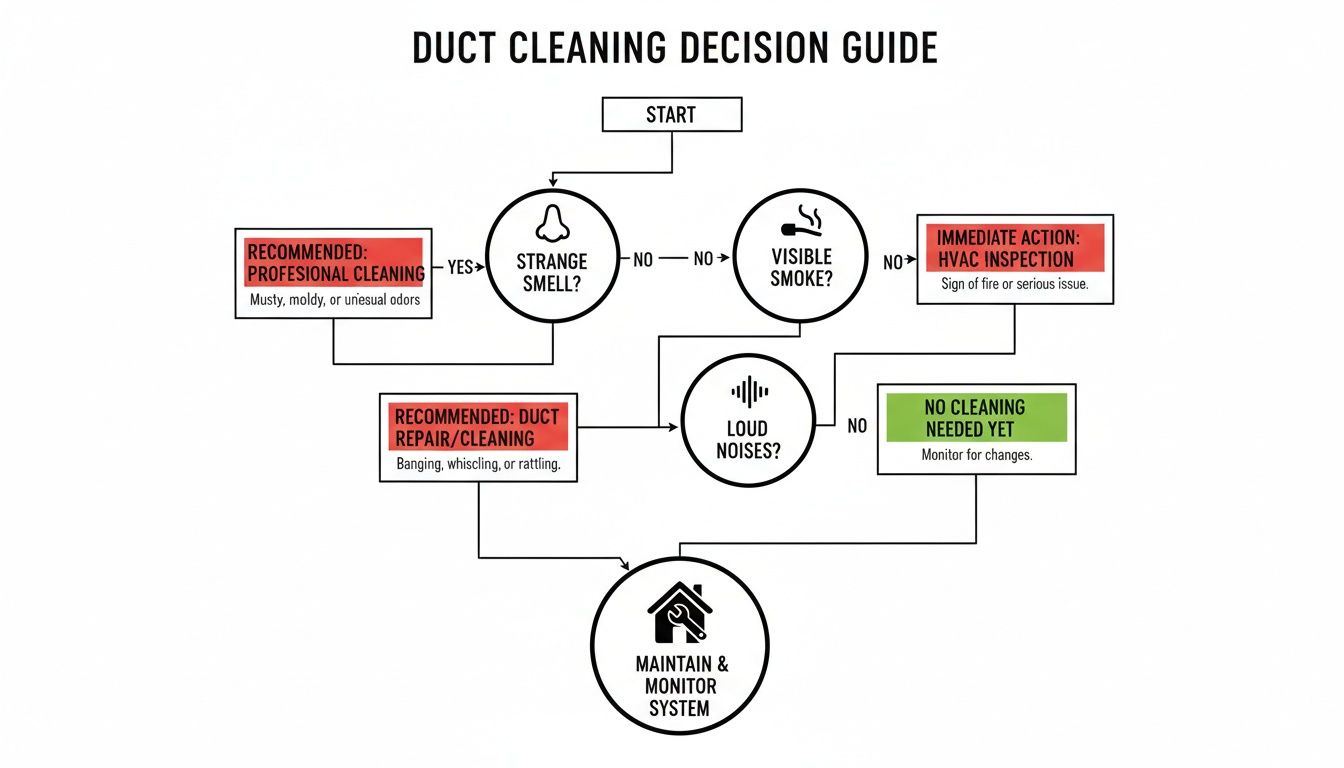
As the chart shows, any sign of smoke, bizarre odours, or loud noises coming from your HVAC system means it's time to shut it down and call a professional, no questions asked.
Situation-Specific Safety Steps
With the system powered down, your next actions depend on exactly what kind of crisis you're dealing with.
- If you see or smell smoke: Get everyone out of the house immediately. Once you're safely outside, call 9-1-1. That burning smell could be an electrical fire or a serious furnace issue, both of which can pump deadly carbon monoxide into your home. It’s always a good idea to know how to test for carbon monoxide in your home before you're in an emergency.
- If you suspect mould or water: As long as it's safe to do so, try to contain the problem. Close the doors to the affected room and shut any vents leading into it. This helps keep mould spores from becoming airborne and travelling elsewhere. Whatever you do, don't turn on any fans.
- If you hear loud mechanical noises: Back away from the furnace or air handler. A failing motor or fan can sometimes break apart violently, and you don't want to be anywhere near it if that happens.
In any emergency, your best defence is taking clear, decisive action. Once you've secured the area and made sure your family is safe, your very next call should be to a professional emergency duct cleaning service.
Knowing what to do when things go wrong is half the battle. Reading up on general guidance on how to respond to an emergency maintenance problem can also give you the confidence to act correctly. Those first few minutes truly make all the difference.
What to Expect From a Professional Emergency Duct Cleaning Service
When you make that urgent call, you want to know what's coming next. A professional emergency duct cleaning is a whole different ball game compared to a routine clean-up—the stakes are simply higher. The moment a team arrives, their first job is to play detective.
They won't just start blindly blasting air through your vents. Instead, a technician will likely feed a specialized video inspection camera deep into your ductwork. This is the only way to see what's really going on in there—whether it’s locating the source of a mould outbreak, assessing soot damage after a puff-back, or finding a collapsed section of ducting causing a major blockage.
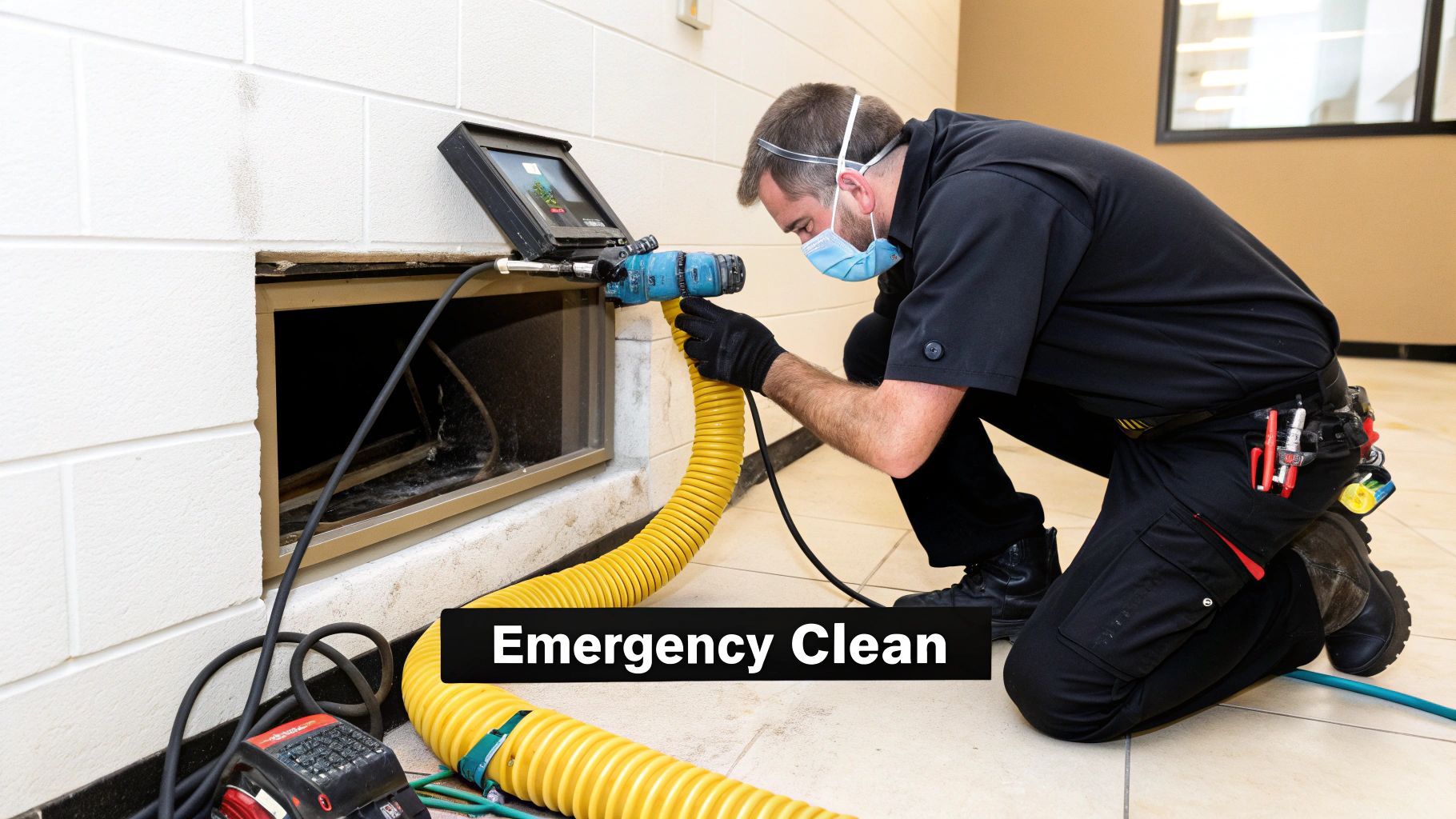
This initial look dictates the entire plan of attack and the specific tools they’ll need to bring in.
The Tools for a Tough Job
Once the problem is sized up, the real work begins with some serious hardware. Your average shop vac just won't cut it here. Professionals roll up with gear designed specifically for safely containing and removing hazardous materials.
- High-Powered Vacuums: These aren't your typical vacuums. We're talking truck-mounted industrial systems that create powerful negative pressure. This ensures that nasty stuff like mould spores, soot, and debris get pulled directly out of your home, not blown back into your living space.
- HEPA Filtration Systems: High-Efficiency Particulate Air (HEPA) filters are non-negotiable. They trap 99.97% of tiny airborne particles, which is critical for preventing microscopic hazards from getting recirculated during the cleaning.
- Agitation Tools: To break stubborn gunk free from the duct walls, technicians use tools like specialized brushes, high-pressure air whips, and skipper balls. These dislodge caked-on contaminants so the vacuum system can suck them away for good.
- Antimicrobial Treatments: If the emergency involves mould, bacteria, or water damage, the final step is often an antimicrobial sanitizer. This treatment is fogged through the system to neutralize any remaining microbial growth, making sure your ducts are truly sanitized.
An emergency cleaning is all about meticulous containment and removal. The real goal isn't just to clean what you can see, but to completely eliminate the hidden threats that are putting your home's air quality and your family's safety at risk.
Knowing how intense this work is helps set realistic expectations for both the timeline and the cost. An emergency job is more involved than a standard cleaning, which is reflected in the price. While you might see standard air duct cleaning services in Canada range from $350 to over $500, an emergency call-out will likely be higher. Professionals often charge $80 to $115 per hour, and the job can last anywhere from 3 to 8 hours depending on how bad the situation is. You can discover more insights about HVAC service costs from Angi to get a general idea of standard pricing.
It’s the combination of advanced diagnostic cameras and powerful duct cleaning equipment that truly separates a professional emergency response from a simple cleaning. Depending on the severity, a full-scale emergency service can take anywhere from a few hours to a full day to get done right.
Breaking Down Emergency Service Costs in Canada
Let's be honest—the last thing you want to think about during a home emergency is the bill. But having a rough idea of what an emergency duct cleaning service costs can help you keep a level head when stress is high and time is short.
In Canada, an urgent call-out will naturally cost more than a routine cleaning. You're paying for immediate, priority service, often outside of regular business hours.
The size of your home and the sheer length of your ductwork are big factors, of course. But the real driver of the cost is the nature of the emergency itself. Dealing with thick, oily soot after a furnace puff-back is a completely different ball game than handling mould from a burst pipe. Each requires unique tools, techniques, and safety protocols.
What Determines the Final Bill
The price you're quoted isn't just a number pulled out of thin air. It’s a careful calculation based on several moving parts that can change drastically from one crisis to the next.
- Urgency and Timing: Need someone at your door on a long weekend or in the middle of the night? Expect to pay a premium. After-hours and holiday call-outs always come with higher labour rates.
- Specialized Gear: If the situation calls for advanced tools like video inspection cameras to find the source of a problem or antimicrobial fogging to kill off a mould infestation, these services will be added to the final invoice.
- Severity of the Problem: Removing a family of squirrels that got into your vents is a lot less complicated (and less expensive) than performing a full-system decontamination after a house fire.
A number of variables can influence the final cost of an emergency call-out. The table below breaks down some of the most common factors to give you a clearer picture of what to expect.
Estimated Emergency Duct Cleaning Cost Factors
| Cost Factor | Typical Price Impact (Low to High) | Notes |
|---|---|---|
| After-Hours/Holiday Surcharge | $150 – $400+ | Applies to calls outside of standard 9-5 business hours, on weekends, or statutory holidays. |
| Type of Contamination | $200 – $1,500+ | Soot, mould, and biohazards require specialized cleaning agents and PPE, increasing the cost. |
| Video Camera Inspection | $150 – $350 | Often necessary to diagnose hidden issues like blockages, collapsed ducts, or pest infestations. |
| Antimicrobial Fogging | $200 – $600+ | Essential for mould or bacteria remediation to ensure spores are neutralized throughout the system. |
| Home Size & Ductwork Length | $100 – $500+ | Larger homes with more complex duct systems simply require more time and labour to service properly. |
Ultimately, these factors combine to determine your final bill. Always ask for a detailed quote that breaks down the costs before work begins.
When you're budgeting for an emergency service, remember you're not just paying for a cleaning. You're paying for a rapid response, specialized expertise, and the safe containment of materials that could be a serious risk to your property and your family's health.
Will Homeowner's Insurance Cover It
This is a big question for many Canadian homeowners, and the answer is often yes. Your policy might cover emergency duct cleaning, especially if the problem was caused by a "covered peril" like a fire, furnace puff-back, or major water damage.
The absolute key to a successful claim is documentation. Before anyone starts cleaning, grab your phone and take plenty of clear photos and videos of the damage. Keep a log of every conversation with your insurance agent and the duct cleaning company. This paper trail is your best friend when it comes time to file.
Every policy is different, so you'll need to check yours, but solid proof makes all the difference. To get a better feel for baseline pricing, you can check out guides on the air duct cleaning average cost to see how emergency rates compare.
How to Prevent Your Next Duct Emergency
Okay, so you’ve just made it through a duct crisis. The last thing you want is a repeat performance. The goal now is to shift from panic mode to prevention mode—this is how you ensure your home stays safe, healthy, and free from another expensive emergency call.
The single best thing you can do? Get your HVAC system on a regular maintenance schedule. I’m not just talking about swapping out the filter every few months, either. An annual professional inspection is where the real magic happens. A technician can spot things like worn-out parts or tiny leaks long before they become a massive headache.
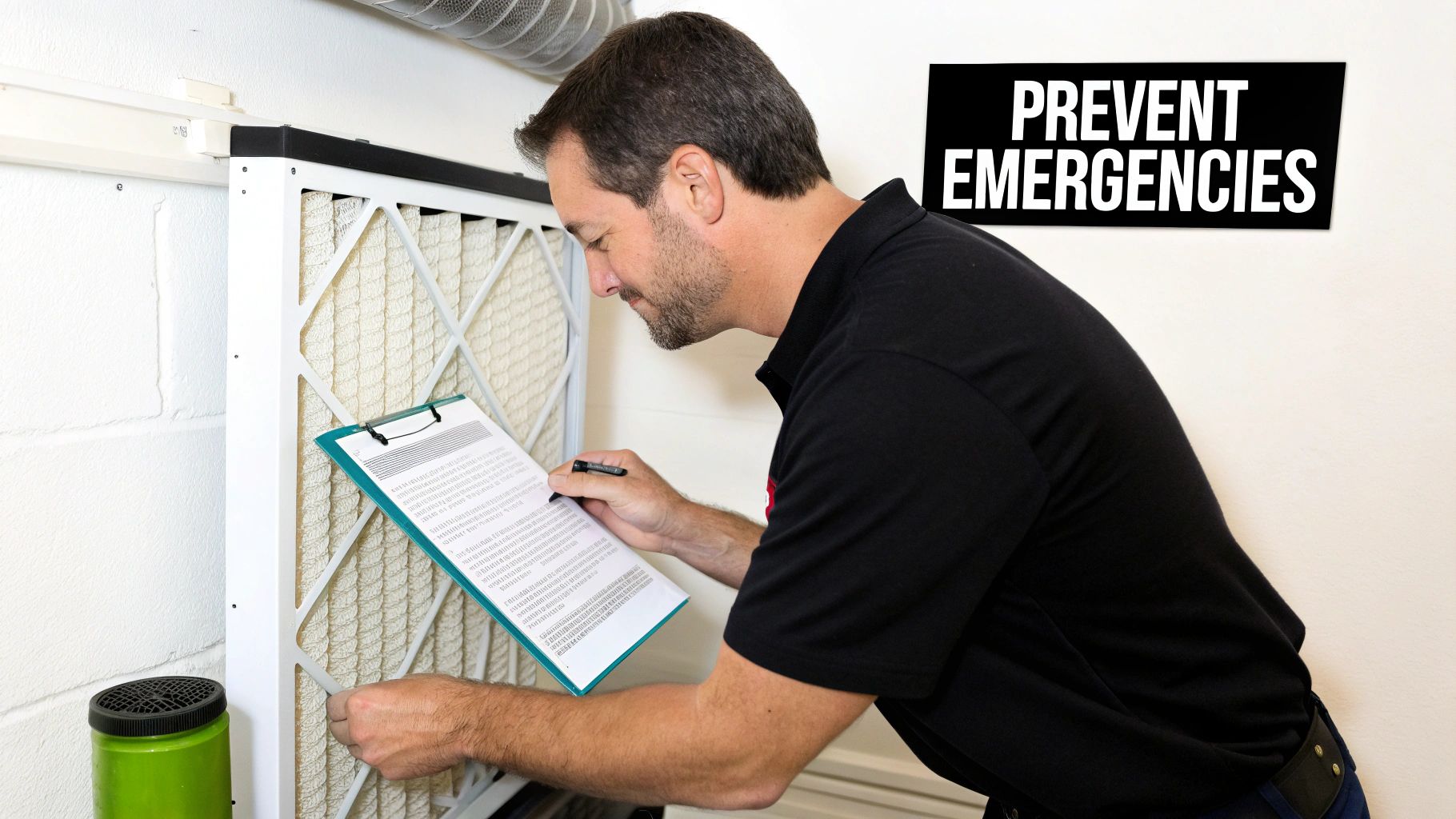
Think of it as the foundation of a healthy, trouble-free system. With a few simple habits, it’s surprisingly easy to maintain your air duct systems.
Practical Steps for Long-Term Prevention
Beyond the yearly professional check-up, there are a few simple things you can do yourself to dramatically cut the risk of another duct disaster. Working these into your regular home care routine really does make all the difference.
- Keep Indoor Humidity in Check: High humidity is basically an open invitation for mould, especially in basements or damper parts of the house. A good dehumidifier set to keep humidity levels between 30-50% will stop mould from getting a foothold in your ductwork in the first place.
- Get Your Dryer Vent Cleaned: This one is huge. A clogged dryer vent isn't just inefficient; it's a serious fire hazard. All that lint buildup can cause the dryer to overheat and ignite, sending a fire right into your duct system. A professional cleaning every one to two years is non-negotiable.
- Seal Vents During Renovations: If you're doing any kind of home improvement project, you know the dust gets everywhere. Before you even pick up a hammer, take the time to seal off the air vents in that area. It prevents all that debris from getting sucked directly into your HVAC system.
The best defence is a good offence. When you start thinking proactively about your home’s upkeep, you’re not just putting out fires—you’re preventing them from ever starting. It saves you an incredible amount of stress, money, and time in the long run.
Using an ultimate rental property maintenance checklist is a great way to stay on top of potential issues before they spiral out of control. These small, consistent efforts are your best bet against facing another emergency duct cleaning situation.
Common Questions About Emergency Duct Cleaning
When your home's ductwork suddenly becomes a hazard, your mind is probably racing with questions. It’s a stressful situation, and you need clear answers, fast. We've been in the business long enough to know what’s on Canadian homeowners' minds during a crisis, so let's get you some clarity.
How Do I Find a Trustworthy Emergency Service?
In a panic, it’s easy to just call the first number that pops up on Google. Take a breath and spend 30 seconds checking for one key thing: a NADCA (National Air Duct Cleaners Association) certification. This isn't just a fancy logo; it's your assurance that the technicians are properly trained to handle emergencies safely and effectively.
A reputable company will also have a solid local reputation—look for recent reviews and transparent pricing. You want someone who solves your problem, not adds to it.
Are the Cleaning Solutions Safe for My Family and Pets?
This is, understandably, a huge concern for most people. When you're dealing with mould or a nasty bacterial growth, professionals often need to use powerful antimicrobial sanitizers to truly solve the problem.
The key is that legitimate companies use products specifically approved by Health Canada for HVAC systems, which are completely safe once they've dried. Don't hesitate to ask the technician what they're using. If you have a family member with sensitivities or are worried about your pets, ask to see the safety data sheets. It's your home, and you have a right to know.
Peace of mind comes from knowing that the solution to one problem isn't creating another. A true professional prioritizes your family's health right alongside fixing the immediate duct issue, often using eco-friendly products when the situation allows.
Can an Emergency Cleaning Fix My High Energy Bills?
It's possible, but it’s not a guarantee. If the emergency was caused by something that was seriously choking your system—like a collapsed duct, a massive debris blockage, or a severe pest infestation—then yes, clearing it out will absolutely improve airflow and efficiency. You'll likely see a difference in your next hydro or gas bill.
However, chronically high energy bills often point to deeper issues. Things like an aging furnace, poor insulation around your home, or leaky window seals are common culprits. An emergency service is designed to tackle the immediate threat, but you might need a follow-up HVAC inspection to diagnose and fix those underlying efficiency drains.
When you're facing a ductwork crisis, you need a team you can trust to respond quickly and effectively. Can Do Duct Cleaning has over 30 years of experience providing reliable emergency services to homeowners across the Greater Toronto Area. If you need immediate assistance, visit us at https://www.candoductcleaning.com.