Air Duct Cleaning Burlington: Your 2026 Expert Guide

You vacuum, dust, change the furnace filter, and a day later there's still a fine layer settling on tables and vent covers. Or maybe you've just finished a renovation and now every time the heat kicks on, the air feels dry, stale, or slightly gritty. That's usually the point where Burlington homeowners start looking into air duct cleaning and wondering whether it's necessary or just another upsell.

The honest answer is that air duct cleaning in Burlington makes sense in specific situations. It's useful after renovations, when there's visible buildup in the system, when airflow is restricted by debris, or when moisture problems have created contamination concerns. In other homes, the better first move is simpler: change the filter, improve housekeeping, and fix the source of dust or humidity.

Good indoor air starts with the whole house, not just the ductwork. If you want a broader view of how deep cleaning boosts indoor air quality, it helps to look at floors, fabrics, surfaces, and ventilation together. For Burlington homeowners trying to sort out the cause of stale or dusty air, practical guidance on improving indoor air quality at home can also help you decide whether duct cleaning is the right next step.

Improving Your Burlington Home's Air Quality

In Burlington, indoor air problems often show up gradually. A long heating season means the furnace runs for months, pushing air through supply and return ducts over and over. In Ontario, ventilation systems are expected to be maintained so they don't become sources of contamination, and ductwork or air-handling components should be cleaned when visible dust, microbial growth, or post-renovation debris are present, according to guidance summarized here.

That's the practical way to think about duct cleaning. It isn't a cosmetic add-on. It's one part of normal building upkeep when the system is carrying material it shouldn't be carrying.

When cleaning helps most

Some calls are straightforward. Renovation dust got pulled into returns. A basement suite has a musty smell near registers. A newly purchased home has years of neglected buildup around vent openings. In those cases, cleaning the duct system can be a sensible corrective step.

Other calls need a bit more restraint.

Practical rule: If the problem starts with moisture, leaks, or poor filtration, cleaning the ducts without fixing the cause won't solve much for long.

A well-maintained HVAC system depends on a few basics working together:

  • Clean filtration: The right filter, changed on schedule.
  • Controlled moisture: No recurring condensation, leaks, or damp basement air feeding the system.
  • Sealed pathways: Returns and joints that aren't pulling dust from wall cavities, utility areas, or renovation zones.
  • Targeted cleaning: Professional removal of debris when there's an actual contamination issue.

That's why the best duct cleaning advice is never just “clean everything.” It's “identify the source, then clean what needs cleaning.”

Duct Contaminants and Your Family's Health

Your HVAC system works like the lungs of the home. It pulls air back through return ducts, conditions it, and sends it out again through the supply side. When the system is clean and dry, that cycle is fairly controlled. When contamination builds up, the system can keep redistributing the same unwanted material through living areas.

A diagram illustrating how HVAC duct contaminants impact indoor air quality and human family health.
Air Duct Cleaning Burlington: Your 2026 Expert Guide 4

What actually collects inside ducts

Duct contamination usually isn't one thing. It's a mix, and the mix tells you a lot about the actual problem.

  • Household dust and fibres: lint, skin particles, pet hair, and fine debris that bypasses weak filters or enters during filter changes
  • Outdoor material: pollen and fine particulates entering through normal air exchange or leaky sections
  • Renovation residue: drywall dust, sawdust, and other construction debris after sanding, cutting, or demolition
  • Biological material: buildup associated with damp conditions, especially near coils, plenums, and poorly insulated sections

The health concern changes depending on what's there. Dry dust is annoying and can aggravate sensitive occupants. Moisture-related contamination is more serious because it points to an active building problem, not just dirty duct walls.

Moisture is the issue many homeowners miss

For Burlington and the wider GTA, dampness deserves more attention than it usually gets. The City of Toronto reports that the climate is getting wetter, with annual precipitation and extreme rainfall trends increasing the likelihood of indoor dampness issues. Ontario public health guidance also emphasizes that mould problems are driven by moisture sources such as leaks and poor ventilation, not by dirt alone, and if mould is present in ducts, the underlying water source must be found and corrected, as summarized here.

That's why a musty vent smell shouldn't be treated as a simple cleaning job.

If a vent smells earthy or damp when the fan starts, the first question isn't “How dirty are the ducts?” It's “Where is the moisture coming from?”

Common moisture pathways include basement humidity, condensation on cold surfaces, blocked condensate drainage, and air leakage around uninsulated duct sections. If those conditions continue, freshly cleaned ductwork can become contaminated again.

For homeowners dealing with visible mould in other parts of the house, this effective mould removal guide is useful for understanding the broader difference between surface cleaning and fixing a moisture source. If you're trying to connect indoor symptoms with HVAC cleanliness, this overview of dirty air ducts and possible health problems is also worth reviewing.

What cleaning can and cannot do

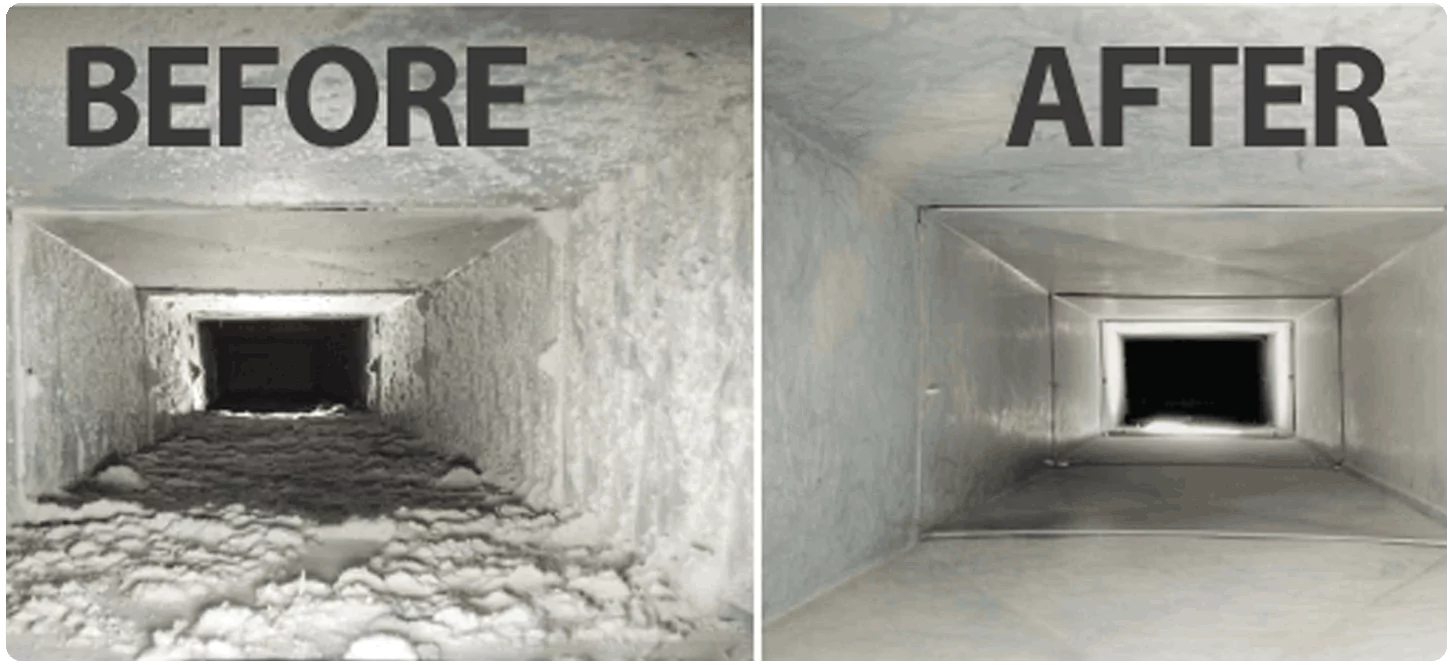
Professional duct cleaning can remove settled debris from supply runs, returns, and main trunks. It can also expose issues such as poor filter fit, heavy post-construction contamination, or visible biological growth near accessible components.

It can't repair a leak, stop condensation, or correct a ventilation design problem. If the home has a moisture issue, cleaning is part of the solution only after the source is addressed.

Key Signs Your Burlington Home Needs Cleaning

A lot of homeowners assume duct cleaning should be done on a schedule no matter what. That isn't the best standard. Independent guidance from the U.S. EPA says duct cleaning is generally not needed on a routine basis but should be considered when there is visible mould, vermin infestation, or excessive debris blocking airflow. The same guidance warns that duct cleaning alone hasn't been conclusively shown to prevent health problems, which is why it works best as a targeted response to a specific issue, as summarized here.

That makes decision-making simpler. Look for evidence, not hype.

A close-up view of a dusty household air vent cover mounted on a beige wall.
Air Duct Cleaning Burlington: Your 2026 Expert Guide 5

Signs that usually justify a closer look

Some signs are visible. Others show up as performance or comfort issues.

  • Heavy debris after renovation: If drywall sanding, flooring replacement, framing, or major cutting happened while the system was exposed, debris may have been drawn into returns and trunk lines.
  • Dust blowing from registers: A small puff right after startup can happen. Ongoing visible discharge from vents is different.
  • Blocked airflow from certain vents: If one area has weak airflow and the duct system contains buildup or construction debris, cleaning may be part of the remedy.
  • Musty odours at supply vents: This points to contamination, but it also raises a moisture question that should be checked before cleaning alone.
  • Evidence of pests: Droppings, nesting material, or unusual odours inside ductwork should be treated as a contamination issue.
  • Visible growth around vent interiors: This needs inspection, not guesswork.

Signs that don't always mean the ducts are the culprit

Some complaints are common, but the ducts aren't always to blame.

Household issueWhat it may mean
Dust returns quickly after cleaningFilter quality, leaky returns, or general housekeeping load may be the main issue
Allergy symptoms indoorsDucts may contribute, but bedding, carpets, upholstery, and humidity often matter too
One room feels stuffyAir balancing, closed dampers, or restricted returns may be involved
Furnace runs often in winterSeasonal load may be normal, especially in cold weather

What to check first: Pull the filter, inspect a few registers, and think about recent work in the home. If the issue started after a renovation or move-in, that's a strong clue.

For homeowners who want a practical checklist before booking service, this guide to signs of dirty air ducts is useful. The main point is simple: if there's no visible contamination, no airflow obstruction, and no specific event like renovation debris, duct cleaning may not be the first thing to spend money on.

The Professional Cleaning Process Step by Step

A proper duct cleaning job should feel organised, controlled, and methodical. Homeowners are often less concerned about the cleaning itself than about what technicians will do inside the house, whether furniture will need moving, and whether dust will end up everywhere. A professional process addresses those concerns from the start.

Ontario guidance expects ventilation systems to be maintained so they don't become sources of contamination. In practice, that means cleaning ductwork and air-handling components when there's visible dust, microbial growth, or post-renovation debris, as summarized here.

A professional duct cleaning process infographic showing seven steps from inspection to final walkthrough and reassembly.
Air Duct Cleaning Burlington: Your 2026 Expert Guide 6

What happens on the day of service

The first step is inspection. A technician checks the layout, counts supply and return runs, identifies access points, and looks for issues that could affect cleaning, such as damaged ducts, disconnected sections, or signs of moisture.

Next comes protection. Drop sheets and corner protection should go down where needed, especially near the furnace area and high-traffic paths. Registers are typically opened and prepared for cleaning in sequence, not all at once.

Then the cleaning equipment is set up. The heart of the process is negative air pressure. A powerful vacuum collection unit is connected to the system so loosened debris travels toward the collection point instead of into the room.

How debris is removed properly

Once suction is established, each run is agitated with specialized tools. Depending on the duct type and access, technicians may use air whips, skipper balls, rotary brushes, or compressed-air nozzles to dislodge settled material from the interior surfaces.

The order matters. Branch lines are usually cleaned methodically, then the main supply and return trunks. Accessible components around the furnace or air handler should also be inspected and cleaned where appropriate, because contamination doesn't stop at the vent opening.

A careful process usually includes:

  1. System inspection to confirm condition and access
  2. Protection of floors and nearby furnishings
  3. Vacuum hookup to create negative pressure
  4. Register-by-register agitation to free debris
  5. Main trunk cleaning on both supply and return sides
  6. Cleaning of accessible components where contamination is present
  7. Final check and reassembly before startup

A proper duct cleaning job should contain the mess, not spread it. If dust is blowing into rooms during service, something is going wrong.

What separates professional work from a quick blow-through

The biggest difference is containment and completeness. A rushed job often focuses only on visible vents. A proper one addresses the full pathway, including branch lines, trunks, and accessible HVAC components tied to the contamination issue.

DIY attempts usually fall short because a shop vacuum and household brushes can't create system-wide negative pressure. They also can't reach deep branch lines or safely clean around key components. If you want a better sense of what full-system service includes, this page on professional air duct cleaning methods gives a useful overview.

Estimating Air Duct Cleaning Costs in Burlington

The cost of air duct cleaning in Burlington depends less on a flat menu price and more on the structure of the house and the condition of the system. A compact home with straightforward access is different from a larger property with multiple returns, finished basement ceilings, and long branch runs.

Burlington has a large residential base for this kind of work. Statistics Canada's 2021 Census Profile reported 75,679 private dwellings in Burlington, and that housing stock is widely associated with forced-air HVAC systems. Combined with months of furnace operation, that creates steady local demand for duct maintenance services, as summarized here.

What usually affects the final price

The most important pricing variables are practical, not mysterious.

Cost FactorDescriptionImpact on Price
Home sizeLarger homes typically have more duct runs and longer trunk linesMore time, more access points, higher labour
Number of ventsMore supply and return openings increase cleaning scopeIncreases setup and cleaning time
Duct accessibilityFinished spaces, tight mechanical rooms, or difficult access add complexityRaises labour difficulty
System conditionHeavy debris, renovation dust, or contamination requires more thorough workCan increase service intensity
HVAC layoutMultiple systems or more complex layouts require separate attentionExpands the scope of the job
Add-on servicesDryer vent cleaning or related HVAC cleaning may be booked togetherChanges total invoice depending on bundle

How to think about value, not just price

A low quote can be fine, but only if it covers the whole job. Homeowners should ask what's included, whether both supply and return sides are cleaned, whether the main trunks are part of the service, and whether accessible furnace components are inspected.

If your home also has air leakage concerns, sealing may matter as much as cleaning. For a useful comparison on how another duct-related service is priced, this breakdown of Aeroseal duct sealing costs in Phoenix shows the kinds of factors that influence ductwork pricing generally, even though the market and service type are different. For local planning, this overview of average duct cleaning costs can help you frame the questions to ask before booking.

The best estimate is the one that clearly defines the scope. If a quote is vague, the final bill often won't be.

Why Trust Can Do Duct Cleaning for Your Home

Homeowners usually don't need a long checklist to judge a service company. They need a few clear signs that the work will be done properly. The provider should inspect before promising results, explain what cleaning will and won't fix, use modern equipment that contains debris instead of scattering it, and give straightforward pricing.

Experience matters too, especially in older GTA homes where duct layouts, basement conditions, and retrofit work can complicate access. A technician who has seen post-renovation dust, neglected returns, leaky sections, and moisture-related contamination before is less likely to treat every house the same way.

Can Do Duct Cleaning stands out on those points. The company has over 30 years of experience serving the GTA, and that kind of history matters because duct cleaning is rarely one-size-fits-all. Some homes need a full debris removal after construction. Some need a dryer vent cleared. Some need a technician to tell the homeowner that the smarter first step is filtration or moisture correction, not duct cleaning.

Another advantage is approach. Can Do Duct Cleaning uses qualified technicians who perform on-site inspections and choose cleaning methods based on the actual condition of the system. The company also emphasizes eco-friendly products and modern techniques, which is reassuring for families who want cleaner air without harsh, unnecessary treatments.

Trust also comes from restraint. A good duct cleaning company should be willing to say, “Yes, this needs cleaning,” and just as willing to say, “No, this looks like a filter, sealing, or humidity problem first.” That kind of honesty is what homeowners usually remember.

Frequently Asked Questions

How often should ducts be cleaned

There isn't one schedule that fits every Burlington home. Cleaning should be based on conditions inside the system, not a calendar reminder. Homes with renovation debris, visible buildup, pest issues, or moisture-related contamination need attention sooner than homes with good filtration and no specific problems.

How long does the cleaning process take

It depends on the size and layout of the home, the number of vents, and the condition of the system. A straightforward home generally takes less time than a property with difficult access or heavy debris. The better question to ask is whether the company is cleaning the full system methodically, not how fast they can get in and out.

Is duct cleaning messy or loud

The equipment is usually noisy, but the process shouldn't be messy in the living space. Professional technicians use negative pressure, hoses, register control, and floor protection to contain debris. You should expect sound from the vacuum equipment and air tools, but not dust blowing around your rooms.

Will duct cleaning remove every dust problem in the house

No. It can remove contamination that's already in the duct system, but it won't stop dust created by daily living, pets, textiles, poor filtration, or air leakage. If the root cause is outside the ductwork, cleaning alone won't fully solve it.

Should I clean ducts after a renovation

Often, yes. Renovation dust is one of the clearest reasons to inspect and clean ductwork, especially if the HVAC system ran during sanding, cutting, or demolition. Fine debris can settle deep in returns and branch lines and continue circulating after the work is finished.

Is a musty smell always a duct cleaning issue

No. A musty smell may point to contamination in the system, but it can also indicate a moisture problem nearby, such as basement humidity, condensation, or drainage issues. If moisture is involved, the source needs to be corrected or the smell may come back.


If you want practical advice or a professional inspection for your Burlington home, Can Do Duct Cleaning offers experienced GTA service focused on real problems, not generic sales talk. Whether you're dealing with post-renovation dust, stale airflow, or a system that needs a closer look, their team can help you decide on the safest and most effective next step.

whatsapp