When most of us think about cleaning, we focus on what we can see—the floors, the counters, the furniture. But what about the parts of our home we can't see? That's where professional ductwork cleaning comes in.
It’s an incredibly thorough process that clears out years of accumulated dust, debris, and other gunk from your home's entire forced-air system. This isn't just about wiping down a few vents; it involves specialized, heavy-duty equipment to make sure the air you and your family breathe is as clean and fresh as possible.
Uncovering Your Home’s Hidden Lungs
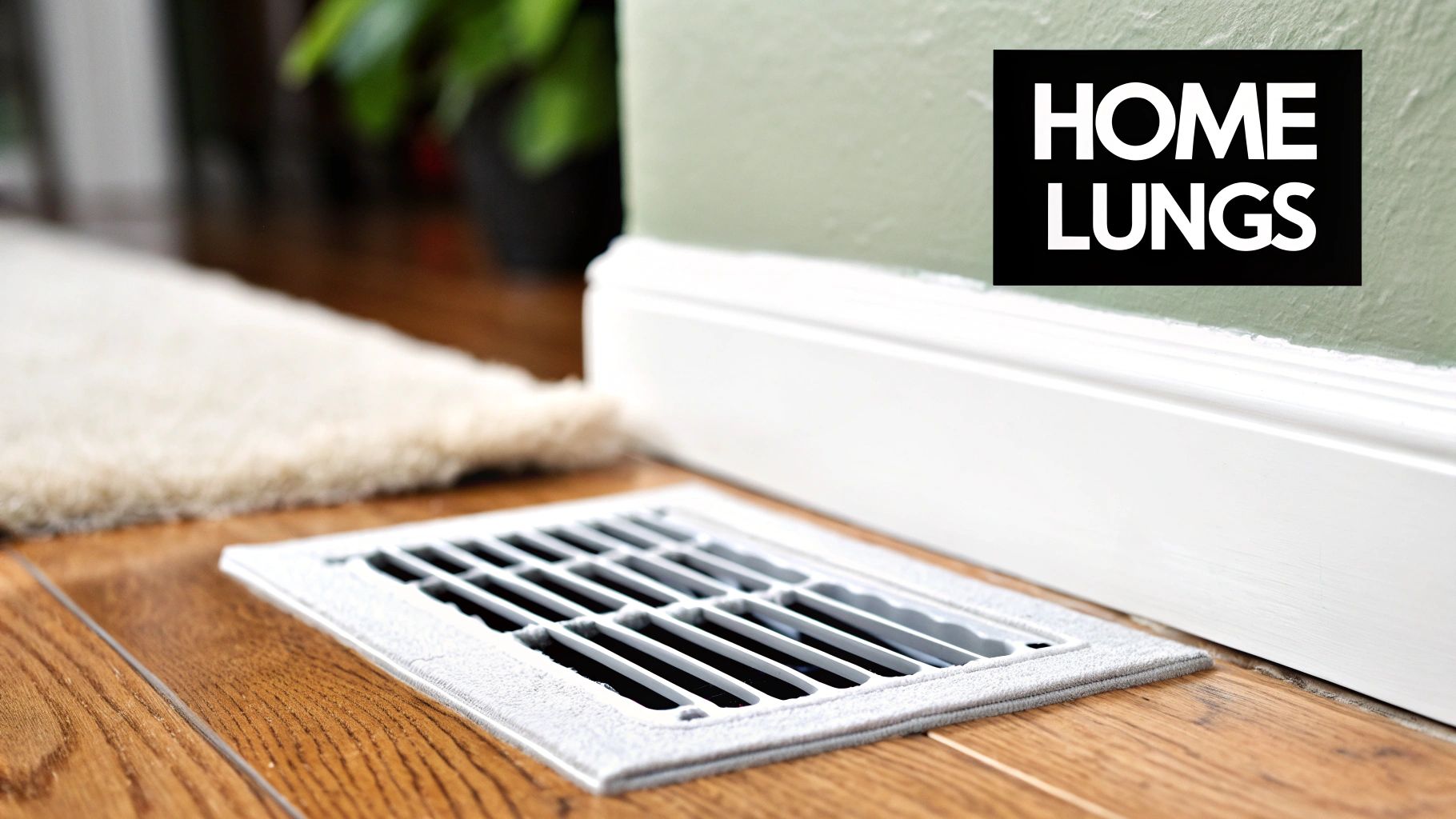
It helps to think of your home’s heating, ventilation, and air conditioning (HVAC) system as its respiratory system. Day in and day out, it breathes air in through return vents and exhales conditioned air out through supply vents, circulating it to every corner of your house.
Just like our own lungs, this massive network of ducts can get clogged up with unwanted particles over time. With every cycle of your furnace or central air conditioner, tiny bits of dust, pet dander, pollen, and construction debris get pulled into the system. Over the years, this stuff settles and builds up a thick layer on the inside of your ductwork.
For a quick summary, here's what the service typically covers.
Ductwork Cleaning At a Glance
| Aspect | Description |
|---|---|
| What It Is | A deep cleaning of the entire HVAC system, including ducts, vents, and furnace components. |
| Key Goal | To remove built-up contaminants like dust, pet dander, pollen, and construction debris. |
| Why It Matters | Improves indoor air quality, enhances HVAC efficiency, and can reduce allergens. |
| Who Does It | Certified technicians using powerful, specialized vacuum and agitation tools. |
| When to Do It | Typically every 3-5 years, or more often if you have pets, allergies, or recent renovations. |
This table gives you the basics, but the real work happens inside the system itself.
What Does Cleaning Involve?
A professional duct cleaning is far more than a surface-level job. It’s a comprehensive service that targets every part of your ventilation system to get rid of that hidden buildup. A certified technician will tackle several key areas:
- Supply and Return Air Ducts: These are the highways that carry air from your furnace and AC to every room and then back again.
- Registers and Grilles: The vent covers on your floors, walls, and ceilings are removed and cleaned to get rid of any grime clinging to them.
- Furnace Components: Critical parts like the blower motor, fan, and evaporator coil are meticulously cleaned to boost efficiency and stop them from blowing dust back into your home.
So, how do they do it? Technicians hook up a massive, truck-mounted vacuum to your ductwork, creating powerful negative pressure. Think of it like a giant, super-powered vacuum cleaner for your house's lungs. This ensures that when they start cleaning, all the dislodged debris is sucked directly out of your home into a containment unit—not into your living room.
Then, they feed specialized tools like high-pressure air whips and rotating brushes through the ducts to scrub the interior walls clean.
The whole point of duct cleaning is to get rid of every source of contamination in your forced-air system. A properly cleaned system doesn't just work better; it helps ensure the air you're breathing is healthier, too.
Why Duct Cleaning Matters in Canada
For us Canadians, keeping ductwork clean is especially important. Our long, cold winters mean our homes are sealed up tight for months at a time to keep the heat in. While that’s great for the hydro bill, it also means indoor air pollutants have nowhere to escape.
Instead, they just get recirculated by the HVAC system over and over again.
This constant recirculation can lead to a high concentration of allergens and dust inside your home, turning your indoor air quality into a real concern. Professional ductwork cleaning offers a direct solution by physically removing those trapped contaminants right from the source.
If you want to get into the nitty-gritty of how these systems are built, you can learn more about residential ductwork systems in our detailed guide. Ultimately, it’s a crucial step toward creating a healthier home environment, especially during the seasons we spend most of our time inside.
The Real Benefits of Clean Air Ducts
Getting your ductwork professionally cleaned isn't just about ticking a box on your home maintenance checklist. It delivers real, tangible benefits you can feel in your home and see on your utility bills. The payoffs go way beyond just having less dust on your furniture—they directly affect your family’s health and the efficiency of your home’s most expensive appliance.

When you break it down, the two biggest wins are creating a healthier living space and running a more efficient, cost-effective home. For many Canadian families, especially those with kids, elderly relatives, or anyone with allergies or asthma, the health improvements alone make it a no-brainer.
A Healthier Home Environment
Ever wonder what’s lurking in your air ducts? Over the years, they can collect a pretty nasty cocktail of dust, dander, and other gunk. Every single time your furnace or central air kicks on, those particles get blasted back into the air you breathe, which can seriously tank your home's air quality.
For most homeowners, improving indoor air quality is the number one reason they call us. A professional cleaning physically pulls all those irritants out of your HVAC system for good. You can learn more about the link between your home’s air and your well-being by checking out resources on Indoor Air Quality and your Duct System.
A proper ductwork cleaning gets rid of the common culprits that trigger allergies and other respiratory issues, including:
- Dust and Dust Mites: These microscopic critters are a primary cause of year-round allergies and asthma attacks, and they love to hide out in dusty ductwork.
- Pet Dander: Those tiny flecks of skin from your furry friends are so lightweight they easily get sucked into your vents, creating a concentrated source of allergens.
- Pollen and Outdoor Allergens: Pollen finds its way inside and settles in your ducts, making seasonal allergy symptoms linger long after you've closed the windows.
- Mould and Mildew Spores: If any moisture gets into your system, it can become a breeding ground for mould, which releases spores that can cause significant respiratory problems.
Getting rid of all that built-up debris drastically cuts down on the airborne junk circulating through your home. This means cleaner air, which can bring major relief to allergy sufferers and give everyone in the family peace of mind. To see the full picture, take a look at our guide on the key benefits of professional air duct cleaning.
Better HVAC Efficiency and Longevity
Beyond the health perks, clean ducts are just plain smart for your wallet. Think of your ductwork as the lungs of your home's HVAC system. When they're clogged and dirty, your furnace and air conditioner have to work way harder just to push air through.
That extra strain has a direct impact on your monthly bills and the lifespan of your equipment. It's a simple concept, really.
When your HVAC system can breathe freely, it runs the way it was designed to. In fact, cleaning a heavily soiled system can cut the energy needed for heating and cooling by as much as 20% to 30%.
That kind of efficiency gain means lower utility bills, month after month. The reduced workload also means less wear and tear on crucial parts like the blower motor and fan. By keeping the system clean, you’re not just saving a bit of cash now—you’re actively preventing expensive repairs and helping your entire HVAC unit last longer. A clean system doesn't have to struggle, which means it runs smoothly for years to come.
Telltale Signs Your Ducts Need a Deep Clean
Because your home’s ductwork is tucked away behind walls and ceilings, it's a classic case of "out of sight, out of mind." But just like any other system in your house, it sends out clear signals when it needs a bit of attention. Learning to spot these clues is key to deciding when it’s time to call in the pros for a ductwork cleaning and get your home's air quality and HVAC efficiency back on track.
Many of these signs start small, but they have a habit of getting more obvious over time. If you start paying closer attention to the little changes in your home's atmosphere, you can catch a hidden duct problem before it gets worse.
Visible Dust and Debris
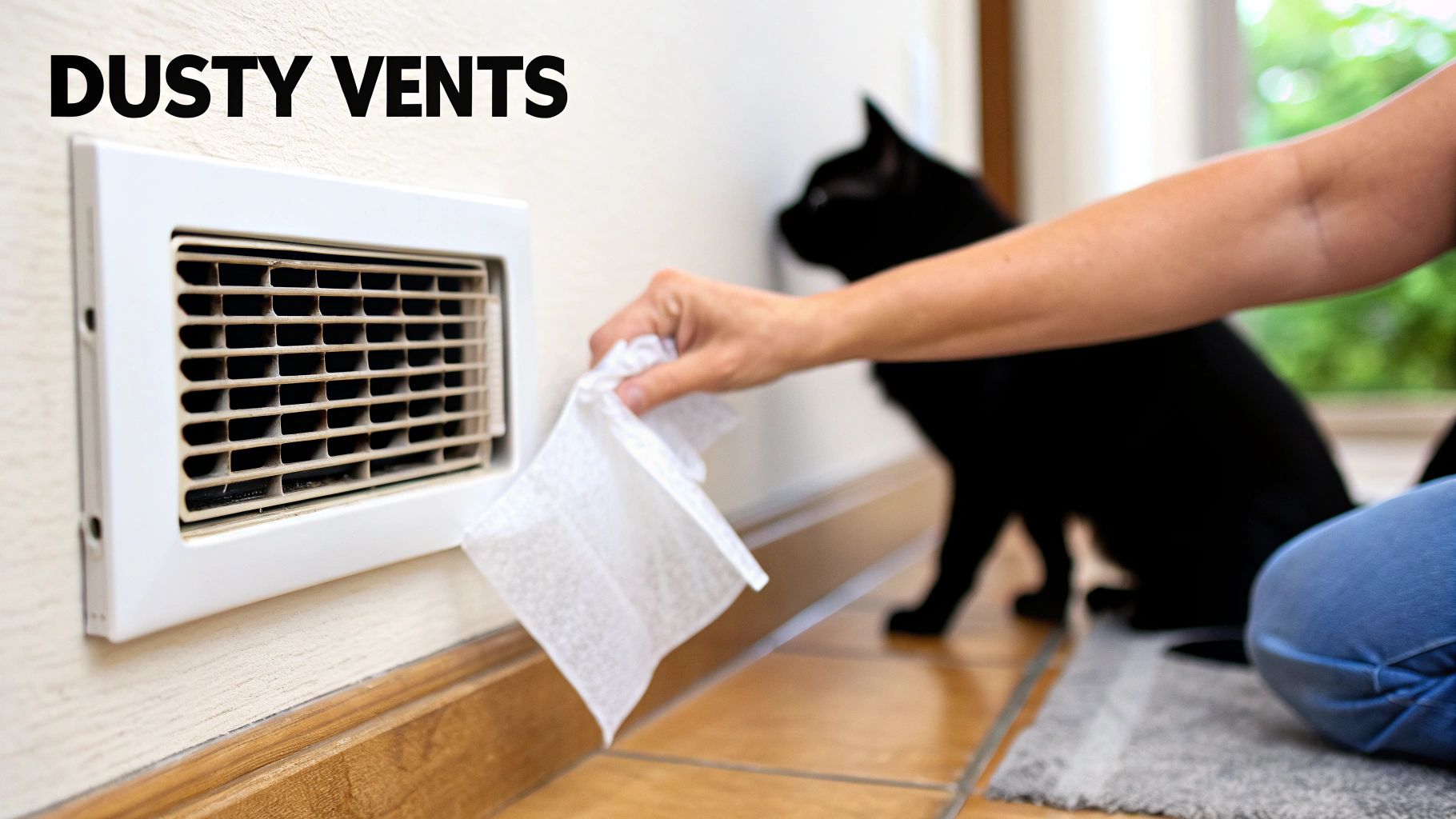
One of the most undeniable signs is seeing little puffs of dust shoot out of your supply vents when the furnace or air conditioner turns on. You might also notice that your furniture is coated in a fine layer of dust just a day or two after cleaning, or that the grilles and areas around your vents are always grimy.
This is what happens when the buildup inside your ducts gets so thick that the force of the air moving through them is enough to break bits loose and launch them straight into your living room. If you pop off a vent cover and peek inside with a flashlight, a thick blanket of dust and cobwebs is a dead giveaway that a cleaning is long overdue.
Persistent Odours
Have you been dealing with a stubborn musty or stale smell that just won't go away, no matter how many windows you open? Your ductwork could easily be the culprit. All that trapped dust, mould spores, and other gunk can create some funky odours that get spread all over the house every single time your HVAC system kicks in.
If you're picking up a damp, musty scent, it could be a sign of mould or mildew growing inside the ducts—a common problem, especially after our humid Canadian summers. Getting on top of this quickly is vital for keeping your indoor air healthy.
These smells are often at their worst right when you fire up the heat or AC for the first time in a season.
Unexplained Allergy Symptoms
If you or your family members are suddenly dealing with worse-than-usual allergies, asthma, or other respiratory troubles inside the house, your air ducts might be the very thing circulating the triggers. Ducts are a perfect trap for common allergens like pollen, pet dander, and dust mites.
When your HVAC system is running, it’s constantly pushing these irritants back into the air, creating a tough environment for anyone with sensitivities. A sudden increase in sneezing, coughing, or itchy eyes that seems to get better when you leave home is a huge clue. For a closer look, you can explore these other common signs that you need to get your air ducts cleaned.
Other Clear Warning Signs
Beyond dust and smells, a few other red flags should definitely get your attention. Keep an eye out for these telltale indicators:
- Pest Infestations: If you find any evidence of unwanted guests like insects or rodents (think droppings or nesting materials) in your ductwork, it's a serious issue that demands immediate professional help.
- Recent Home Renovations: Big construction projects, especially anything involving drywall, create a shocking amount of fine dust that gets sucked right into your HVAC system. It’s always a smart move to schedule a duct cleaning right after any major reno.
- Visible Mould Growth: This one is a no-brainer. If you can actually see mould growing on the inside of your ducts or on the vent registers, you need a professional cleaning to remove it safely and effectively.
A Look Inside the Professional Cleaning Process
Knowing you need a ductwork cleaning is one thing, but what actually happens when the pros show up? It helps to pull back the curtain on the process to see why it’s so effective. A professional cleaning isn't just about sticking a vacuum hose in your vents; it's a systematic, multi-step job designed to get every last bit of dust out of your home for good.
From the moment they arrive, certified technicians follow a meticulous game plan. This ensures your entire HVAC system gets a deep clean, which means better airflow and, most importantly, healthier air for you and your family. Let's walk through what a typical professional duct cleaning looks like from start to finish.
Initial Inspection and Home Preparation
The job kicks off the minute the technicians walk through your door. They'll start with a thorough walk-through to get the lay of the land, inspecting your HVAC unit, finding all the supply and return vents, and figuring out the best way to tackle your home's unique ductwork layout. This initial assessment is crucial for a smooth and effective cleaning.
Before any of the heavy-duty equipment gets fired up, they prep your home. The team puts down drop cloths to protect your floors and covers any furniture near the vents to keep everything spotless. Next, they'll seal off every single vent and register with adhesive covers. This might seem simple, but it’s a critical setup for what comes next.
Creating Powerful Negative Pressure
Here's where the real magic happens. This is the heart of a professional ductwork cleaning. The crew connects a massive, high-powered vacuum collection unit—usually mounted on their truck—directly to your home’s main duct lines near the furnace. When they flip the switch, this machine creates immense negative pressure throughout the sealed duct system.
Imagine your entire network of ducts turning into a giant, controlled vacuum. This powerful suction means that once the crew starts dislodging all the gunk inside, it has nowhere to go but straight out of your house and into the collection truck. This is the single most important step that prevents dust and allergens from being blown back into your living space.
The Agitation and Cleaning Phase
With the system under constant suction, the deep cleaning begins. Technicians work their way through your home, starting from the vent furthest from the furnace and cleaning one duct run at a time. They feed specialized agitation tools down each duct to scrub the inside surfaces clean.
This is way more than a light dusting. We're talking about high-powered tools like rotating brushes and compressed air whips that snake through the ductwork, aggressively knocking loose years of caked-on dust, pet hair, and leftover construction debris.
The one-two punch of aggressive scrubbing and powerful negative pressure pulls every speck of dirt out of the system. It's a method that guarantees a top-to-bottom clean, reaching corners and crevices that a regular vacuum could never hope to touch. To see these tools in action, you can get a better look at the professional duct cleaning equipment that makes this level of clean possible.
Cleaning Critical HVAC Components
A proper ductwork cleaning doesn't end with the ducts. A truly thorough job means cleaning the key components of your furnace, too. After all, what’s the point of cleaning the ducts if a dirty fan is just going to blow dust right back into them?
Our technicians make sure to clean these critical parts:
- The Blower Motor and Fan: These are meticulously cleaned to remove caked-on grime, which helps your system run more efficiently and last longer.
- The Furnace A-Coil: The technicians will inspect and clean the evaporator coil, a prime spot for dust and mould to build up.
- The Heat Exchanger: Keeping the heat exchanger clean is essential for both efficiency and safety.
Once everything is scrubbed clean, the team removes the vent seals and does a final check to make sure the system is reassembled properly and running as it should. They leave your home with nothing but cleaner air and a more efficient HVAC system.
DIY Cleaning vs Professional Service
We all love a good DIY project. The satisfaction of saving a few dollars and getting your hands dirty is a great feeling. And while regularly vacuuming your vent covers is a fantastic maintenance habit, it’s important to know where a homeowner’s job ends and a professional’s job begins.
When it comes to the sprawling, hidden network of your home's ductwork, a DIY attempt just doesn't cut it. Your trusty shop vac might be a hero in the garage, but it simply doesn't have the specialized muscle needed for a real ductwork cleaning.
The Limits of a DIY Approach
Trying to clean your ducts with household equipment runs into two major roadblocks: the tools aren't up to the task, and you can easily make the air quality worse. A standard vacuum cleaner has nowhere near the suction power required to pull years of caked-on dust and allergens from deep inside a winding ventilation system.
More often than not, you just end up stirring the pot. Instead of removing debris, you dislodge it, pushing it deeper into the system or—even worse—blasting it straight into your living space.
Power and Precision of Professional Equipment
Professional duct cleaners come armed with a completely different arsenal of tools. The entire process is built around creating immense negative pressure using a powerful, truck-mounted vacuum. This is the secret sauce—it ensures that every speck of dust and debris is pulled out of your ductwork and directly outside your home, with no chance of contaminating your air.
This systematic approach is what sets a professional job apart.
As you can see, it’s not just about blasting and vacuuming. Sealing the system is the critical first step that makes the whole process effective and safe for your home.
Once your system is sealed and under suction, the real deep cleaning begins with specialized tools you can't find at a hardware store:
- High-Pressure Air Whips: These flexible rods snake their way through the ducts, whipping around to blast compressed air in all directions and break loose stubborn, caked-on grime.
- Rotating Brushes: For the really tough buildup, technicians use motorized brushes that scrub the inside walls of your ductwork, just like a chimney sweep but for your HVAC system.
- Containment System: This is the most crucial part. The powerful negative pressure acts like a one-way street, instantly sucking up all the loosened particles and sending them straight to the truck. Nothing gets left behind to circulate in your air.
Comparing DIY vs Professional Ductwork Cleaning
So, what's the final verdict? We've laid out the key differences in this side-by-side comparison to help you see the full picture.
| Factor | DIY Approach | Professional Service |
|---|---|---|
| Effectiveness | Surface-level cleaning at best. Cannot reach deep into the duct system. | Comprehensive cleaning of the entire system, removing deeply embedded contaminants. |
| Equipment | Household or shop vacuums with weak suction. | High-powered, truck-mounted vacuums, air whips, and specialized brushes. |
| Safety | High risk of releasing dust, allergens, and mould spores into your home's air. | Contaminants are pulled directly outside via a sealed containment system. No cross-contamination. |
| Cost | Low initial cost for supplies, but can lead to bigger problems if done improperly. | Higher upfront investment, but delivers a complete and lasting result. |
| Time & Effort | Very time-consuming and labour-intensive for incomplete results. | Efficient and thorough. Typically completed by a trained team within a few hours. |
| Outcome | A false sense of security; the root problem often remains or is made worse. | Measurably improved indoor air quality, better HVAC efficiency, and peace of mind. |
Ultimately, the choice comes down to effectiveness and your family’s health. While wiping down your vents is a great chore to add to your cleaning list, only a professional service can guarantee the entire system is truly clean.
If you want a closer look at what the pros do, check out our guide on how to properly clean air ducts. It’s about doing the job right the first time for a healthier, more comfortable home.
How to Choose a Reputable Duct Cleaner in Canada
Finding the right professional for your ductwork cleaning is a big deal, especially since the industry isn’t heavily regulated here in Canada. The right company leaves you with genuinely cleaner air and a better-running HVAC system. The wrong one can take your money and leave your ducts just as dirty as they found them.
Knowing what to look for is your best defence. This is especially true in busy areas like the Greater Toronto Area (GTA), where homeowners are constantly bombarded with “special offers” that seem too good to be true. A few key questions can help you spot the real experts.
Look for NADCA Certification
Your first and most important checkpoint should be a certification from the National Air Duct Cleaners Association (NADCA). This isn't just a logo they can stick on their van; it's the gold standard for the industry.
To become NADCA-certified, a company must meet some serious standards:
- Have at least one certified Air Systems Cleaning Specialist (ASCS) on their team.
- Follow a strict code of professional ethics.
- Carry full liability insurance to protect you and your property.
When you hire a NADCA-certified company like Can Do Duct Cleaning, you’re getting a baseline of trust. It tells you their team is properly trained and they're serious about doing the job correctly.
Ask About Their Equipment
All duct cleaning equipment is not created equal. The tools a company brings to your home say a lot about the quality of their work. You want to hear that they use a powerful, truck-mounted vacuum system, not a small portable unit.
A massive truck-mounted system is the only way to create the powerful negative pressure needed to pull all the loosened dust and debris straight out of your ducts and into the truck.
A small, portable vacuum just can't compete. Often, it does little more than stir up the dust inside your ductwork, which then gets blown back into your living space. Always ask: "Do you use a truck-mounted vacuum?" If they don’t, it’s a major red flag.
Verify Their Reputation and Insurance
A solid company will have a history of happy customers. Check out recent, detailed reviews on sites like Google and HomeStars to see what real people in your area are saying. When you’re doing your homework, understanding online reputation management can give you a better idea of how companies build trust through feedback.
Beyond reviews, don't be shy about asking for proof of full liability insurance. This protects your home in the rare case something goes wrong. Any professional company will be happy to provide it.
Finally, watch out for "bait-and-switch" pricing tactics. Get a firm quote in writing that clearly lists everything included. This simple step helps you avoid any nasty surprises on the final bill.
Common Questions About Ductwork Cleaning
Even with all the benefits laid out, it’s natural for homeowners across Canada to have a few more questions before booking a service. We get it. To help clear things up, here are some straightforward answers to the most common things we’re asked.
How Often Should I Clean My Ducts?
The standard rule of thumb for most homes is to get your ducts professionally cleaned every 3 to 5 years. That’s usually the sweet spot to keep dust and debris from building up to a point where it starts hurting your air quality or HVAC system’s performance.
But that’s just a baseline. You might want to bump that up to every 2 to 3 years if your situation is a bit different. Think about a more frequent schedule if you've got:
- Pets that shed a lot, because all that fur and dander gets pulled right into your ductwork.
- Family members with bad allergies or asthma, since they're much more sensitive to what's floating in the air.
- Someone who smokes indoors, as that residue creates a sticky surface inside the ducts that traps even more gunk.
- Just finished a big renovation project, which kicks up an incredible amount of fine dust that settles everywhere—including your vents.
How Long Does the Service Take?
Don't expect a quick 30-minute job. A proper, thorough ductwork cleaning takes time. For a standard single-family home in Canada, you should set aside 3 to 5 hours for the crew to do their work right.
Of course, the final timeline depends on a few things, like the overall size of your house, how many vents you have, and how complicated your duct system is. A sprawling two-storey with a finished basement will naturally take longer than a simple bungalow. Any good company will give you a solid time estimate when they first assess your home.
Will It Really Lower My Energy Bills?
Yes, it really can. No, it won't cut your utility bill in half overnight, but the savings are definitely there. Think of it like this: when your ducts are clogged, your furnace and central air have to fight to push air through all that obstruction. That extra effort uses more energy.
By clearing out the blockage, you’re giving your HVAC system a clear path to do its job. It runs more efficiently, and that efficiency translates into real savings on your heating and cooling bills month after month. Over time, the service can help pay for itself.
Is the Duct Cleaning Process Messy?
This is a huge worry for a lot of people, but the answer is a simple no—as long as you hire a real professional. A reputable team uses massive, truck-mounted vacuum systems that put your entire duct network under negative pressure.
What does that mean? It means every last bit of dust, dander, and debris that gets knocked loose is instantly sucked out of your home and into a containment unit on the truck. The technicians will also cover your furniture, seal every vent, and make sure your home is left exactly as they found it.
Ready to breathe easier and help your HVAC system run more efficiently? The team at Can Do Duct Cleaning brings over 30 years of experience to homes across the GTA. Contact us today for a free, no-obligation quote!