
Imagine a washable furnace filter as a permanent coffee filter for your home's HVAC system. Instead of tossing it out and buying a new one every few months, you simply buy it once, wash it, and reuse it for years. It’s a completely different approach from disposable filters that pile up in landfills, offering a pretty compelling case for both your wallet and the environment.
Understanding How Washable Furnace Filters Work
At first glance, a washable furnace filter might seem like a complex bit of kit, but how it works is surprisingly simple. Its whole job is to snag airborne gunk before it gets sucked into your HVAC system and blown all over your house. To really get it, let's look at what it's made of and the clever trick it uses to clean your air.
The Anatomy of a Reusable Filter
Most reusable filters are built tough with a similar design meant to handle repeated cleanings. They generally break down into two key parts:
- A Sturdy Frame: This is typically made from a solid piece of aluminum or heavy-duty plastic. The frame gives the filter its shape and stops it from buckling under the force of the air moving through your system, ensuring it always fits snugly in its slot.
- Woven Filter Media: This is where the real action happens. The filter material itself is usually a multi-layered pad made of woven polypropylene or a similar synthetic fabric. The weave is just open enough to let air flow through easily but tight enough to trap particles.
The Science of Static Attraction
So, how does a simple woven pad actually catch anything? The secret ingredient is static electricity. As air rushes through the synthetic fibres, a natural electrostatic charge builds up on the filter's surface. Think of it like rubbing a balloon on your hair—it creates a charge that makes things stick.
This static charge acts like a magnet for airborne particles. Instead of just physically blocking debris like a window screen, the electrostatic effect actively pulls dust, lint, and other larger particles out of the air, forcing them to cling to the filter. It's an incredibly effective way to capture the bigger stuff that can really gum up your HVAC system.
This basic filtration principle is a cornerstone of home air quality. To give you an idea of how common this approach is, in-duct filter devices made up 60.00% of California's air cleaning market way back in 2017. It's a testament to a simple, effective mechanism that's central to all the different types of furnace air filters and how they help keep the air in our homes clean.
Washable vs Disposable A Head-to-Head Comparison
Picking a furnace filter might seem like a small chore, but it’s a decision that hits your wallet, your home’s air quality, and even the planet. The choice between a washable filter and its disposable cousin is a classic trade-off: upfront cost versus long-term savings, and convenience versus a bit of elbow grease. Let's dig in and see which one makes the most sense for your home.
The heart of the matter is really about a one-time purchase versus a never-ending subscription. Disposable filters are cheap to buy off the shelf, but those costs creep up on you. Most homeowners are swapping them out every one to three months, which can easily add up to over $100 a year. And that's a bill you'll be paying for as long as you live in your home.
On the flip side, a good-quality washable filter comes with a higher price tag right out of the gate, usually somewhere between $100 and $150. It might sting a little at first, but think of it as a one-and-done purchase. It's built to last for years, wiping out the need to ever buy a replacement again.
Filtration Power and Airflow
A filter’s main gig is to scrub the air clean, and we measure how well it does that with a MERV (Minimum Efficiency Reporting Value) rating. You can find disposable filters with a huge range of MERV ratings, from the most basic (MERV 1-4) all the way up to hospital-grade (MERV 13+). This makes it easy to target specific irritants like pet dander or pesky mould spores.
Washable filters typically hang out in the MERV 1-4 range. They do a fantastic job of grabbing bigger stuff like dust and lint, which is crucial for protecting your HVAC system from getting clogged up. Because they're less dense, they also allow for great airflow, which means your furnace's blower motor doesn't have to work overtime. But let's be clear: if someone in your house struggles with serious allergies or asthma, a higher-rated disposable filter is almost always going to do a better job at catching those microscopic particles.
This diagram shows just how simple yet effective the design of a washable filter really is.

It’s just a sturdy frame, a woven filter material, and an electrostatic charge that work together to snag airborne gunk.
The Long-Term Commitment
Beyond the numbers, the biggest difference comes down to upkeep. Disposables are as easy as it gets: pull out the old, grimy one and slide in a fresh one. Done. For busy homeowners, that convenience is a huge plus. The obvious downside is the garbage. Every single one of those used filters, with their plastic and cardboard frames, ends up in a landfill.
Washable filters, on the other hand, require you to get your hands a little dirty. Every month or so, you'll need to pull it out, give it a good wash, and—this is key—let it dry completely. It doesn't take long, but it’s a chore you can't afford to skip. A clogged reusable filter will kill your airflow and could even damage your HVAC system. Knowing your home's dust levels helps you figure out the right furnace filter replacement frequency so you can set a consistent cleaning schedule.
To make the choice a bit easier, let's put everything side-by-side.
Washable vs Disposable Filters At A Glance
Here’s a quick breakdown of how these two filter types stack up against each other on the most important points.
| Feature | Washable Filters | Disposable Filters |
|---|---|---|
| Upfront Cost | High ($100 – $150) | Low ($15 – $25) |
| Long-Term Cost | None after initial purchase | Ongoing, recurring expense |
| MERV Rating | Typically MERV 1-4 | Wide range from MERV 1-16+ |
| Maintenance | Requires regular cleaning | Simple removal and replacement |
| Environmental Impact | Minimal waste, reusable | Contributes to landfill waste |
Ultimately, there's no single "best" answer—it all comes down to what you value more. Do you prefer to save money over time and reduce waste, even if it means a little more work? Or is the grab-and-go convenience of disposables worth the recurring cost?
The Right Way to Clean Your Washable Filter
Knowing how to properly clean your washable furnace filter isn't just another household chore—it's the most important thing you can do to make sure it lasts and keeps your HVAC system safe. When a filter gets clogged, it chokes off airflow and forces your furnace to work overtime. A clean one, on the other hand, keeps the whole system running like a well-oiled machine.
Think of it less as cleaning and more as preventative maintenance that pays you back with a more efficient furnace and a longer-lasting filter.
The whole process is pretty simple, but the details really do matter. If you cut corners or skip a step, you could end up with poor performance, mould growth, or even a damaged filter. But if you stick to a consistent routine, you’ll get it right every time.
Your Step-by-Step Cleaning Guide
Follow these steps every one to three months to keep your filter in prime condition. It's a good idea to check it regularly, as every home's environment is a bit different.
Shut Down Your HVAC System: This is a non-negotiable safety step. Before you even think about touching the filter, kill the power to your furnace or air handler. You can do this at the thermostat or the breaker box. This prevents the system from sucking in dust and debris while the filter is out.
Gently Remove the Filter: Slide the filter out from its slot in the furnace. Pay attention to the arrow on the frame—it shows the correct airflow direction. You'll need to know which way it goes back in later.
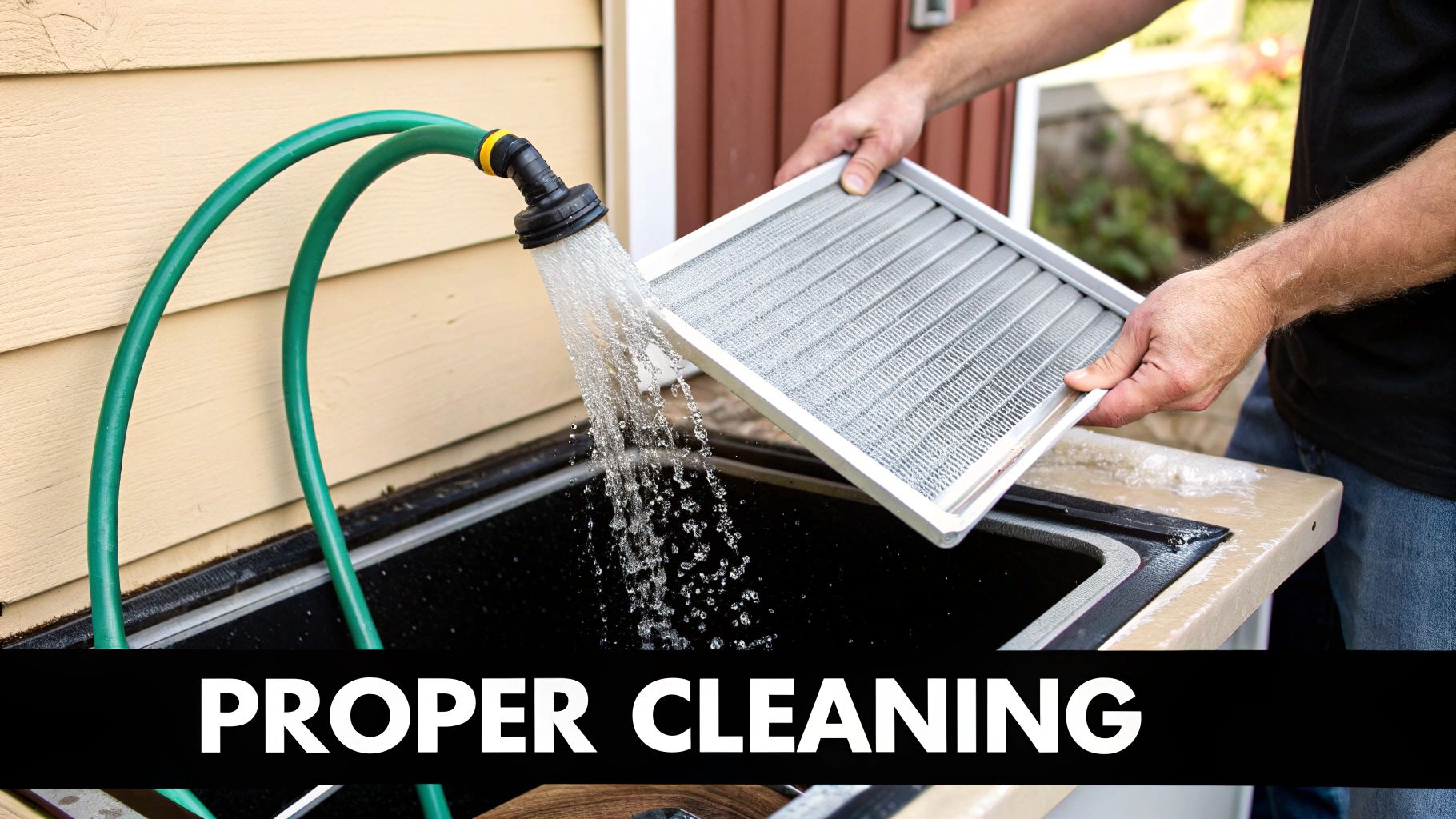
Rinse It the Right Way: Take the filter outside or to a large utility sink. Using a garden hose with a gentle spray, rinse the filter from the clean side through to the dirty side. This pushes all the gunk out the same way it came in, so it doesn't get jammed deeper into the filter media.
Important Reminder: Whatever you do, never use a pressure washer or a high-powered jet spray. That kind of force can easily tear the delicate filter material, making it totally useless.
Give It a Gentle Wash (If Needed): If you're dealing with greasy kitchen residue or stubborn grime that water alone won't budge, a little soap can help. Mix a bit of mild dish soap with water and use a soft-bristled brush to give it a light scrub. Make sure you rinse it completely to get all the soap off.
Let It Dry Completely: This is the most crucial part of the whole process, and it's the one people mess up most often. After rinsing, shake out the excess water and stand the filter up somewhere with good air circulation to dry. It needs to be 100% dry before you put it back in.
Common Cleaning Mistakes to Avoid
Knowing what not to do is just as important as following the steps. A simple slip-up can put your entire HVAC system at risk.
- Putting Back a Damp Filter: This is a huge mistake. A damp filter is the perfect breeding ground for mould and mildew. Once that stuff takes hold, it can spread through your ductwork and tank your home's air quality.
- Using Harsh Chemicals: Stay away from bleach, ammonia, and other aggressive cleaners. They can break down the synthetic materials in the filter and strip away its electrostatic charge, which is what helps it grab tiny particles in the first place.
- Forgetting to Clean It: A completely clogged filter is actually worse than having no filter at all. It suffocates your HVAC system, driving up your energy bills and setting the stage for an expensive mechanical breakdown.
Keeping your filter clean is a cornerstone of good HVAC care. To get the full picture of what your system needs, our comprehensive furnace maintenance checklist can help you build a routine that keeps everything running smoothly.
What They Mean for Your Home's Air Quality
At the end of the day, a furnace filter’s main job is to clean up the air you and your family breathe. But here’s the thing: not all filters are cut from the same cloth. When you're weighing the pros and cons of a washable filter, you need to be realistic about what it can—and can't—do for your indoor air quality, especially when it comes to the tiny particles that cause the most trouble.
The secret language of air filters is something called a MERV (Minimum Efficiency Reporting Value) rating. It’s a simple scale from 1 to 20 that tells you how effective a filter is at snagging airborne particles of different sizes. The higher the number, the finer the mesh and the more gunk it can trap.
Most washable furnace filters you'll find land in the MERV 1-4 range. They do a fantastic job of catching the big stuff—think dust bunnies, lint, and some pollen. This is absolutely essential for keeping the guts of your HVAC system clean and running smoothly. But they just aren't built to stop the smaller, more irritating allergens from circulating.
Understanding MERV Ratings for Allergies
If anyone in your home deals with allergies, asthma, or is just sensitive to airborne irritants, that MERV rating suddenly becomes a lot more important. It's the difference between relief and a stuffy nose.
Let's break it down:
- MERV 1-4: Good for catching particles larger than 10 microns, like dust, pollen, and carpet fibres.
- MERV 8-13: This is where you start trapping smaller particles (3-10 microns), including pesky pet dander, mould spores, and dust mites.
- MERV 14+: These high-efficiency filters can capture the really tiny stuff (below 1 micron), like bacteria and even some viruses.
This is the crucial takeaway. If your primary reason for buying a filter is to fight off allergy symptoms, a standard washable filter probably isn't going to cut it. You'll get much better results with a higher-rated disposable filter designed specifically to trap those fine irritants.
What's happening outside your window matters, too. For instance, folks dealing with California's air quality challenges have to be extra vigilant. During peak pollution months like May and June 2023, unhealthy air meant that both washable and disposable filters needed way more attention to keep indoor air clean.
When to Consider Additional Solutions
If you've got a nagging suspicion that your home’s air could be cleaner, getting professional indoor air quality testing can give you some real data to work with. And for an extra layer of defence, especially against the smallest airborne threats, it might be worth looking into the best air purifier for viruses to supplement your furnace filter.
Analyzing the Long-Term Cost and Value
That initial price tag on a washable furnace filter can definitely give you pause. But to get the real story, you have to look past the upfront cost and see the bigger financial picture. It's really a classic case of spending a little more now to save a lot more later.
Think about it this way: buying disposable filters is like having a subscription you can never turn off. That $15 to $25 you drop every few months doesn't seem like much, but it adds up fast. If you're swapping out your filter four times a year, you’re easily looking at $60 to $100 annually, year in and year out.
A washable filter, which might run you between $100 and $150, completely changes the game. It’s a one-time purchase that essentially erases that recurring filter expense from your budget for years to come.
Calculating Your Break-Even Point
So, how long until you're actually saving money? For most people, that break-even point shows up a lot quicker than they expect.
Let's do some quick back-of-the-napkin math. Say you spend $80 a year on disposable filters and you buy a quality washable one for $120. You’ll have paid for that new filter in just 18 months. After that, every cent you would have spent on another disposable filter is money back in your pocket.
Over the typical 5 to 10-year lifespan of a well-cared-for washable filter, the savings really start to stack up. A homeowner could easily save $400 to $800 in that time—cash you can put toward other things your home needs.
Lifespan and Overall Durability
The real value of these filters comes from how long they last. They’re built tough, usually with sturdy aluminum frames and resilient synthetic filter material designed to handle years of regular washing. How long yours lasts will depend on a few things:
- Cleaning Frequency: If you stick to a regular cleaning routine, you prevent the kind of serious buildup that can wear out the filter material.
- Home Environment: A house with pets or a lot of dust means you’ll be washing it more often, but these filters are built for that.
- Proper Maintenance: Using the gentle washing techniques we talked about earlier is key to keeping the filter in good shape for the long haul.
It's clear homeowners are catching on to this kind of long-term thinking. North America currently makes up about 38% of the global washable air filter market, which was valued at $1.4 billion in 2024. As this market grows, it shows a real shift toward products that offer lasting value. You can dig into more data on these market trends and what they mean for sustainable home products.
Common Questions About Washable Furnace Filters
Even after weighing the pros and cons, trying something new like a washable furnace filter can bring up a few last-minute questions. It’s only natural. Homeowners want to be absolutely sure they’re making the right call for their furnace, their wallet, and their family's health.
Let's walk through some of the most common questions we hear to clear up any lingering doubts.
Are They Compatible With All HVAC Systems?
This is a big one, and the short answer is: mostly, but you need to check. Washable filters are made in all the standard sizes, so they’re designed to pop right into the same slot as your old disposable one. For the vast majority of residential HVAC systems, it’s a simple swap.
The catch can be with some newer, high-efficiency furnaces. These systems are often finely calibrated to work with a specific amount of airflow resistance from the filter. Since washable filters typically have a lower MERV rating (and therefore less resistance), they could potentially throw off the system's balance. Your best bet is always to check the furnace manual or have a quick chat with an HVAC technician to confirm it's a good match.
Before you even think about buying one, you must accurately measure your current filter's length, width, and depth. A filter that doesn't fit snugly is a useless filter—it just lets dusty air sneak around the edges.
Can a Washable Filter Damage My Furnace?
When it's properly cared for, a washable filter poses zero risk to your furnace. In fact, because it allows air to flow so freely, it can actually put less strain on your system's fan motor compared to a thick, high-MERV disposable filter.
The real danger isn’t the filter itself—it’s neglect.
If you forget to clean it on schedule, it will inevitably get clogged with a thick blanket of dust and gunk. This blockage chokes off the airflow, forcing your furnace's blower motor to work overtime just to pull air through.
This added strain can lead to higher energy bills, reduced heating and cooling efficiency, and, in severe cases, cause the system to overheat or the AC coils to freeze. A clean filter is a safe filter.
Another sneaky risk? Putting the filter back in while it's still damp. This introduces moisture into your dark, warm ductwork—the perfect recipe for a mould and mildew problem. The key to protecting your HVAC system is simple: clean the filter properly and consistently.
How Do They Compare to High-MERV Filters for Allergies?
This is where the trade-off becomes really clear, especially for families dealing with respiratory issues. Most washable filters have a MERV rating between 1 and 4. They do a fantastic job of grabbing the big stuff: dust, lint, pet hair, and some pollen. Basically, all the things that can clog up your furnace.
High-MERV disposable filters (MERV 8 to 13), on the other hand, are engineered to capture much smaller, more irritating particles. We're talking about fine pet dander, mould spores, dust mite debris, and even some bacteria.
For households where allergies or asthma are a major concern, a high-MERV disposable filter is going to offer far better protection from those microscopic airborne triggers. While washable filters have clear cost and eco-friendly benefits, if your number one goal is tackling health issues, you'll want to find the best furnace filter for allergies that's designed for that specific job.
When Should I Replace My Washable Filter?
Even though they're reusable, washable filters won't last forever. With good care, you can expect a quality filter to serve you well for anywhere from 5 to 10 years. Over hundreds of washes and constant exposure to airborne gunk, the filter media just naturally breaks down.
You'll know it's time to get a new one when you spot these tell-tale signs:
- Visible Damage: Look for any tears, holes, or spots where the filter material looks thin.
- Warped Frame: If the frame gets bent or damaged, it can’t create a proper seal, letting dirty air get by.
- It Won't Come Clean: If the filter still looks grimy or discoloured after a thorough wash, the media has likely reached the end of its life.
- Clogs Up Faster: Noticing you have to clean it more often than you used to? Its ability to hold onto dust is probably fading.
Once you see any of these issues, it's time to retire the old filter and invest in a new one to keep your system running smoothly and your air clean.

