
If you're wondering how to improve the air quality at home, it really boils down to three core strategies: controlling pollutants at the source, improving ventilation to let fresh air in, and upgrading your filtration to trap whatever is left. Getting these three things right will make a huge difference in cutting down dust, allergens, and other irritants, creating a much healthier space for you and your family.
Your Practical Starting Point for Cleaner Indoor Air
Does your home feel stuffy? Are you constantly fighting a losing battle against dust? You're definitely not alone. So many Canadian homeowners deal with indoor air that just feels… off. It’s especially noticeable during our long, sealed-up winters or when summer wildfire smoke blankets the province.
The great news is you don’t need to rip your house apart to start breathing easier.
This guide skips the dense science and gets straight to practical, effective changes that actually work. We're going to focus on the simple fundamentals that give you the most bang for your buck when it comes to your family's health.
The Three Pillars of Better Home Air
Improving your home's air quality is built on a simple, three-part framework. If you focus your efforts here, you can tackle the most common problems from every angle and build a solid foundation for clean air that lasts. Think of these pillars as a team working together—one stops pollutants from getting in, and the others clear out what slips through.
Here’s the breakdown:
- Source Control: This is all about prevention. It means stopping pollutants before they even get a chance to circulate. This is as simple as being mindful of the products you use and certain activities you do inside.
- Ventilation: This is the act of swapping out stale, polluted indoor air for fresh outdoor air. Good ventilation is your secret weapon for flushing out contaminants that inevitably build up over time.
- Filtration: This is your active defence system. It’s the net that catches particles like dust, pet dander, pollen, and smoke already floating around.
Tackling your indoor air quality isn't a one-and-done project; it’s an ongoing process. By combining these three strategies, you create a powerful, adaptable system that keeps your home's air cleaner year-round, whether you're dealing with seasonal allergies or a hazy summer day.
Taking Your First Steps
Before you start making changes, it helps to know what you’re working with. Getting a baseline of your current air quality is a smart first move. You can learn about the different tools and methods in our guide on how to check air quality in your home. Having that knowledge helps you pinpoint the real problems and choose the right solutions.
Once you have an idea of what's going on, you can start with the small, immediate actions we'll cover next. These are straightforward steps designed to give you some quick wins and build momentum toward a fresher, healthier home for everyone.
For homeowners feeling overwhelmed and wondering where to start right now, we've put together a quick-glance table.
Top 3 Actions for Immediately Better Home Air
This table summarizes the most impactful first steps any homeowner can take to improve their indoor air quality today. These are the low-hanging fruit that deliver noticeable results fast.
| Action Area | Immediate Step | Long-Term Benefit |
|---|---|---|
| Ventilation | Open windows for 5-10 minutes daily, even in winter. | Flushes out built-up VOCs, CO2, and stale air. |
| Filtration | Check your furnace filter and replace it if it's dirty. | Improves HVAC efficiency and captures more airborne dust/allergens. |
| Source Control | Use your kitchen and bathroom exhaust fans every time. | Vents moisture and cooking fumes directly outside before they spread. |
Focusing on just these three simple habits can kickstart your journey to a significantly healthier indoor environment without costing you a dime.
Eliminating Pollutants at the Source
While air purifiers and filters are fantastic for trapping what's already in the air, the best defence is a good offence. Why not stop pollutants from getting into your home in the first place? This strategy is called source control, and it’s about being mindful of what you bring inside.
Think of it this way: it’s far easier to use a doormat than to constantly vacuum dirt from every corner of the house. By tackling pollution at its root, you get better air quality with a lot less long-term effort.
Unmasking Common VOCs in Your Home
One of the sneakiest threats to your home's air quality is Volatile Organic Compounds (VOCs). These are chemicals that "off-gas" from everyday items. That distinct "new paint" or "new car" smell? That's the unmistakable scent of VOCs being released into your breathing space.
Unfortunately, these compounds are lurking everywhere in Canadian homes. Knowing where to find them is the first step to getting rid of them.
Here are a few of the usual suspects:
- Paints and Finishes: Your standard can of paint, varnish, or sealant can release VOCs for weeks, sometimes even months, after you've finished the job.
- New Furniture and Flooring: Many pressed-wood products, carpets, and vinyl floors are made with glues and materials that off-gas formaldehyde and other VOCs.
- Cleaning Products and Air Fresheners: Those aerosol sprays, potent chemical cleaners, and even scented candles or plug-in air fresheners can pump pollutants directly into your air.
The next time you’re at Canadian Tire or Home Hardware, get into the habit of looking for products labelled "low-VOC" or "zero-VOC." It's a small change that makes a massive difference, especially if you're renovating.
The Kitchen: A Major Pollution Hotspot
Believe it or not, your kitchen can be ground zero for indoor air pollution. This is especially true if you cook with a natural gas stove, which is a significant source of nitrogen dioxide (NO₂) and fine particulate matter—both of which can irritate your lungs.
Studies have shown that just using an unvented gas stove can cause indoor NO₂ levels to spike dramatically. The most effective fix is switching to electric cooking appliances, which cuts off that source of pollution entirely.
Pro Tip: Whether you have a gas or electric stove, always, always use your range hood fan when you cook. Critically, make sure it actually vents to the outside of your home and isn't just a recirculating model that blows fumes back into the room. Even cracking a nearby window can help.
Tackling Biological Pollutants
It’s not just about chemicals. Biological pollutants like pet dander, dust mites, mould spores, and pests are a huge problem, triggering allergies and asthma for many people.
Getting a handle on these requires a few simple but consistent habits:
- Control Moisture: Mould and dust mites absolutely love damp, humid spots. Always run the exhaust fan in the bathroom during and after a shower, and fix any plumbing leaks as soon as you spot them.
- Manage Pet Dander: If you have furry friends, regular grooming and washing their bedding goes a long way in reducing the dander floating around your home.
- Deal with Pests Smartly: Dousing your home in chemical pesticides just swaps one pollutant for another. A much healthier, more effective strategy is to adopt the principles of Integrated Pest Management (IPM).
By being more conscious of what you bring into your home and how you manage your daily routines, you can cut pollution off at its root. This proactive approach is the single most important step toward creating a genuinely healthy living space.
Mastering Home Ventilation and Airflow
Ever walk into a room and it just feels… stuffy? That's the feeling of stale, trapped air. Think of good ventilation as your home taking a deep, cleansing breath—exhaling all the built-up gunk and inhaling fresh, clean air. It’s one of the most powerful tools you have for improving the air quality inside your home.
Here in Canada, our first instinct is to seal everything up tight against the cold. But modern homes are built so well, so airtight, that without a way for fresh air to get in, indoor pollutants get trapped. This can make the air inside your home far more polluted than the air outside.
Put Your Home’s Built-In Systems to Work
You probably already have a couple of powerful ventilation tools hiding in plain sight. They only work, though, if you actually use them. I’m talking about the exhaust fans in your kitchen and washrooms. They aren't just for getting rid of smells; they're your frontline defence against specific pollutants.
These fans do the critical job of grabbing moisture, smoke, and contaminants right at the source and shooting them outside before they have a chance to spread.
- In the Kitchen: That range hood is your best friend when you’re cooking. It sucks up grease, smoke, and even nasty gases like nitrogen dioxide. Flip it on every single time you use the stovetop—yes, even for boiling pasta—and let it run for a few minutes after you’re done.
- In the Washroom: The humble bathroom fan is your number one weapon in the war against mould and mildew. Run it during every shower or bath and keep it going for at least 15-20 minutes afterwards. This simple habit pulls all that humid, steamy air outside where it belongs.
Here's a pro tip: Make sure these fans actually vent outside. I've seen plenty of older setups, especially in apartments, where they're just "recirculating" fans. They might have a charcoal filter, but they don't remove the moisture or harmful gases—they just blow them back into the room.
The Power of a Quick Air Exchange
Beyond those spot-fixes, you need a strategy for the whole house. It doesn’t need to be complicated. In fact, one of the best tricks is what some people call "shock ventilation."
Just open windows on opposite sides of your house for 5-10 minutes a day. That’s it. This creates a powerful cross-breeze that swaps out a huge volume of stale indoor air for fresh outdoor air, and it's so fast it barely affects your heating or hydro bill. It’s a fantastic way to flush out accumulated CO₂ and VOCs that build up during the day.
Why Modern Homes Need a Little Mechanical Help
As our building codes have gotten stricter to improve energy efficiency, our homes have become almost hermetically sealed. It’s great for the hydro bill, but it’s a disaster for air quality. Pollutants get in, but they can't get out.
This is where mechanical ventilation systems become a game-changer.
A Heat Recovery Ventilator (HRV) is basically a set of lungs for your house, designed perfectly for cold climates like ours. It runs continuously, pushing stale air out while pulling fresh air in. The magic is in its core: it grabs the heat from the outgoing air and uses it to warm up the incoming fresh air. You get a constant supply of fresh air without making your furnace work overtime.
An Energy Recovery Ventilator (ERV) does the exact same thing, but with an added bonus—it also transfers some moisture. This helps keep your home’s humidity from getting too dry in the winter or too sticky in the summer. You can discover more about how an ERV can benefit your home's air quality, especially with reliable models from trusted brands.
These whole-home systems are truly the gold standard for keeping the air fresh in today's airtight homes. They ensure your house is always breathing, giving you a steady stream of healthy, comfortable air, no matter what the weather is doing outside.
Your Guide to Smarter Air Filtration
If ventilation is about moving stale air out, filtration is your active defence against the invisible junk floating around inside. Think of it as a microscopic net catching dust, pollen, pet dander, and even wildfire smoke particles before you breathe them in. A truly effective strategy uses two key players: your central furnace filter and portable air purifiers for specific rooms.
For many of us in Canada, especially during allergy season or when wildfire smoke blankets the province, this two-pronged approach is the secret to better indoor air. It's not about one magic box; it’s about building a solid system that protects your entire home.
Upgrading Your Furnace Filter The Right Way
Your furnace isn’t just for heat—its filter is the first line of defence for your home’s air. But here’s the thing: not all filters are made equal. Their power is measured by a MERV (Minimum Efficiency Reporting Value) rating, which simply tells you how good it is at trapping airborne particles.
That cheap, flimsy fibreglass filter that came with your furnace? It’s probably a MERV 1-4, which barely stops anything you couldn't see with the naked eye. To actually make a difference, you need to level up.
Here’s a quick breakdown:
- MERV 8: This is a good starting point. It'll grab most pollen, dust mites, and mould spores.
- MERV 11: Now we're talking. These filters trap finer particles like pet dander, smoke, and even droplets from a cough or sneeze.
- MERV 13: For many homes, this is the sweet spot. It captures everything above, plus bacteria and some virus carriers, making it a fantastic choice for anyone with allergies.
Now, before you run out and buy the highest MERV-rated filter you can find, there's a catch. Higher-rated filters are much denser. This can restrict airflow and put a serious strain on your HVAC system if it’s not designed for it. For most residential systems here in the GTA, a MERV 11 or 13 filter offers the best balance of powerful filtration and healthy airflow.
If you want to get really specific, we break it down even further in our guide to choosing the best furnace filter for allergies.
A high MERV rating helps you choose a filter that can effectively remove the specific contaminants causing issues in your home, from common dust to microscopic bacteria.
| Choosing the Right Furnace Filter MERV Rating | ||
|---|---|---|
| MERV Rating | Particles Captured | Best For |
| 1-4 | Dust, lint, carpet fibres | Basic equipment protection, minimal air cleaning. |
| 5-8 | Pollen, dust mites, mould spores | Good baseline for homes without specific allergy concerns. |
| 9-12 | Pet dander, auto emissions, smoke particles | Homes with pets, smokers, or moderate allergies. |
| 13-16 | Bacteria, virus carriers, microscopic allergens | Households with significant allergies, asthma, or compromised immune systems. |
Ultimately, selecting the right MERV rating is about balancing filtration performance with your HVAC system's capabilities to maintain optimal airflow and efficiency.
Pro Tip: Check your filter every month and plan to replace it every three months, minimum. A clogged filter is useless—it chokes your furnace, making it work harder and driving up your energy bills.
This diagram shows how ventilation and filtration work together as a team.
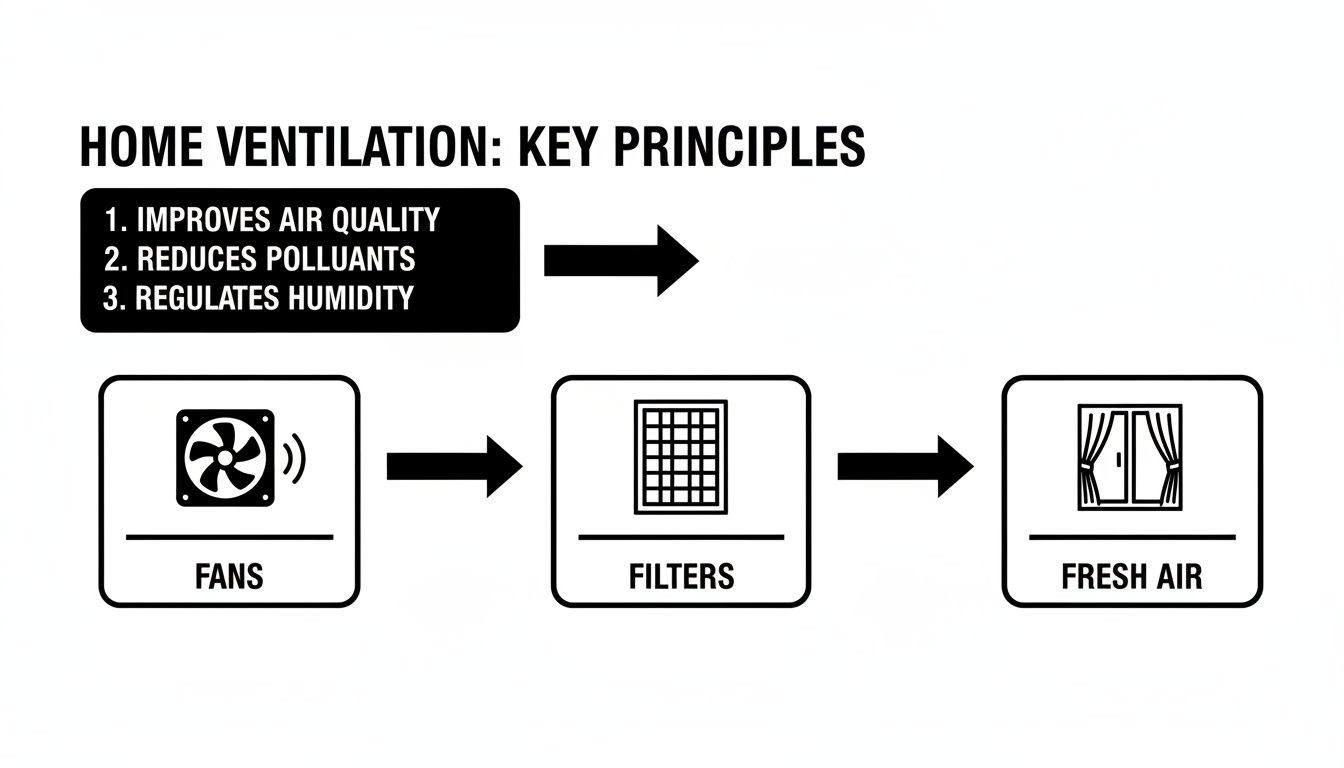
You can see how fans push stale air out, upgraded filters trap particles, and a supply of fresh air completes the cycle for a healthier home.
Strategic Use of Portable HEPA Purifiers
While your furnace filter is doing the heavy lifting for the whole house, portable air purifiers give you concentrated power right where you need it most. They're perfect for creating clean air zones, especially in bedrooms where you spend about a third of your life.
When you're shopping for one, the key term to look for is a true HEPA (High-Efficiency Particulate Air) filter. This is the gold standard, engineered to capture 99.97% of particles as tiny as 0.3 microns. To get a better sense of what makes these so effective, it's worth understanding the advanced HEPA filtration technology that sets them apart.
Sizing is also critical. Check the purifier’s CADR (Clean Air Delivery Rate). This number tells you how quickly it can clean the air in a room of a certain size. A small unit built for a home office just won't cut it in a big, open-concept living room.
During wildfire season, a properly sized HEPA purifier isn't just a nice-to-have; it's a critical health tool. Studies show that a good portable unit can slash indoor fine particulate matter (the nasty PM2.5 from smoke) by 50–80% when you keep the doors and windows shut. That's enough to turn a hazardous indoor environment into a much safer space during a bad smoke event.
Building Daily Habits for Better Air
Fantastic air quality isn't just about the fancy equipment—it's about the small, consistent things you do every day. Your filtration and ventilation systems are the workhorses, for sure, but your daily routines are what really make them count. These simple actions lighten the overall pollution load in your home, making it far easier for your systems to do their job effectively.
It's just like keeping a room tidy. You wouldn't rely solely on your vacuum cleaner and skip picking things up. These habits are the daily tidying up that keeps your indoor air fresh and supports all your bigger-picture efforts.
The Power of a Purposeful Cleaning Routine
When it comes to air quality, not all cleaning methods are created equal. A quick flick of a feather duster can actually make things worse by launching dust and allergens straight into the air you breathe. If you really want to trap and remove particles, you need to be a bit more strategic.
The single biggest upgrade you can make is switching to a vacuum with a HEPA filter. This is non-negotiable. It ensures that microscopic culprits like dust mites, pet dander, and pollen are actually captured and removed, not just spit back out into the room. For your hard floors, forget the dry mop. Damp-mopping with a microfibre cloth is the way to go, trapping dust that would otherwise get kicked up.
The goal is to trap pollutants, not just shuffle them around. This simple shift in mindset turns your regular cleaning from a chore into a powerful tool for improving your home's air.
Mastering Your Home Environment
Beyond the weekly clean, a few passive habits can make a massive difference in stopping pollutants from settling in. Think of these as set-it-and-forget-it strategies that work around the clock.
- Use Doormats: A good, sturdy doormat at every entrance is your first line of defence. It’s amazing how much dirt, pesticides, and other gunk from outside they can trap before it ever gets tracked through your home.
- Manage Humidity: You want to keep your home's humidity level between 30% and 50%. Any higher, and you're rolling out the welcome mat for mould and dust mites. Any lower, and you're dealing with dry skin and irritated sinuses. A dehumidifier in a damp basement or during humid Ontario summers can be a real game-changer.
- Bring in Some Greenery: While they're no substitute for an air purifier, certain houseplants like Snake Plants, Spider Plants, and Peace Lilies are well-known for their ability to filter out common VOCs. Plus, they just make a space feel better.
These small, consistent actions add up, seriously cutting down on the irritants inside your home. We cover even more of these tips in our detailed guide on how to reduce dust in your house.
Responding to Poor Air Quality Days
As Canadians, we're all too familiar with air quality alerts, especially during wildfire season. On those days, your normal routine needs to shift a bit to turn your home into a safe haven.
The priority becomes sealing your home from the outside world. Studies have repeatedly shown that simple actions by homeowners are incredibly effective at reducing indoor exposure during these events. This means keeping all doors and windows shut tight, running your portable HEPA air cleaners on high in the rooms you're using most, and switching your HVAC system to recirculation mode. If you have a MERV-13 filter, even better. You can read more about how these measures impact indoor air during wildfires.
By weaving these smart habits into your daily and seasonal life, you create a resilient system that actively keeps your air clean. It’s this steady effort that truly transforms your home into a healthier, more comfortable place to be.
When to Call a Professional in the GTA
Look, even with the best DIY efforts, some air quality issues are just too stubborn or deep-seated for you to handle alone. Knowing when to wave the white flag and bring in an expert is one of the smartest things you can do for your home and your family's health.
If you’ve changed every filter, wiped every surface, and the air still feels heavy or smells off, that’s a pretty clear sign something more serious is going on.
Your home's HVAC system is essentially its lungs. Think about it—it breathes air in and pushes it out into every single room. Over the years, that network of ducts can get clogged with dust, pet dander, pollen, and all sorts of other nasty stuff. Every time your furnace or AC unit kicks on, it's just recirculating those contaminants. You can change your furnace filter religiously, but you have no way of seeing what’s lurking metres deep inside the ductwork.
Red Flags That Demand an Expert Eye
Sometimes, your house will tell you exactly when it needs a professional's touch. You just have to know what to look (and smell) for. If you spot any of these signs, it's time to get a real diagnosis.
Here are the big ones:
- A Persistent Musty Odour: Does a damp, locker-room smell hit you every time the system turns on? If you've searched high and low for the source and found nothing, you could be dealing with mould or mildew growth inside your ducts or the HVAC unit itself.
- A Sudden Spike in Allergy Symptoms: If your family is suddenly sneezing, coughing, and dealing with watery eyes way more than usual inside the house, your HVAC system could be the culprit. A clogged system becomes an allergen cannon, blasting irritants into your living space.
- Visible Dust and Debris: This is the most obvious one. If you can actually see little puffs of dust shooting out of your vents when the air kicks in, you've got a major buildup that needs to be professionally removed.
Just finished a home renovation? Don't even wait for the signs. That fine drywall dust and construction debris can clog a standard filter in no time and settle deep in your ductwork, wrecking your air quality for months. A post-reno duct cleaning is one of the best investments you can make.
Choosing the Right GTA Service Professional
Okay, so you've decided to call for backup. But who do you call? It’s crucial to find a reputable company in the Greater Toronto Area to ensure you get real, lasting results.
For problems like excessive dust, strange smells, or that crucial post-renovation clean-up, an experienced air duct cleaning company should be your first call. These specialists have the proper equipment—like powerful truck-mounted vacuums and specialized agitation tools—to get the job done right. To understand what a comprehensive service involves, see what a professional air duct cleaning company offers and the questions you should be asking.
But what if the problem is more specific? If you have a strong reason to suspect a serious mould issue, you’ll want a dedicated mould remediation expert. And if your furnace or AC unit itself is old, struggling to perform, or making strange noises, it's time to call a certified HVAC technician. Knowing who to call is the final, crucial step to getting your home's air back to being fresh, clean, and healthy.
Common Questions About Home Air Quality
Once you start paying attention to your home's air quality, a lot of questions pop up. It's only natural. You start wondering if you're on the right track or if that shiny new gadget is actually worth the investment.
Let's clear the air on some of the most common things Canadian homeowners ask about. We'll give you the straight goods so you can make confident, practical choices for a healthier home.
Are Air Purifiers a Waste of Money?
This is the big one, and the answer is a hard no—if you buy the right one for the job. A quality air purifier with a true HEPA filter is a powerhouse for trapping all sorts of nasty stuff floating around, like dust, pet dander, pollen, and even those fine particles from wildfire smoke.
Think of it this way: your furnace filter is your home's general gatekeeper, but a portable purifier is your personal bodyguard. It creates a bubble of clean air right where you need it most, like your bedroom while you sleep or your home office during the day. For anyone dealing with allergies or asthma, they're less of a luxury and more of an essential tool.
The secret to success is matching the purifier's Clean Air Delivery Rate (CADR) to your room size. If you stick an undersized unit in a massive living room, it's just not going to keep up. That’s usually why some people feel like they don't work.
How Often Should I Really Change My Furnace Filter?
That old "every three months" rule is a decent starting point, but it's far from a perfect science. The real answer depends entirely on what’s going on inside your house.
Think about what your filter is up against:
- Pets: Got a furry friend (or two)? Their dander and hair will clog a filter in no time. You should be checking it monthly and probably swapping it out every 45 to 60 days.
- Allergies or Asthma: If anyone in your home has respiratory issues, you can't slack off. A strict monthly or bi-monthly change is your best bet to keep airborne irritants under control.
- Smokers or Renovations: Smoke particles and construction dust are filter killers. In these situations, your filter's lifespan is drastically shorter. Check it every few weeks to be safe.
Remember, a clogged filter is a useless filter. It also makes your HVAC system work overtime, which you'll see on your hydro bill.
Do Houseplants Actually Clean the Air?
They do, but let's manage expectations here. The impact is often blown way out of proportion. While some plants like Snake Plants, Spider Plants, and Peace Lilies are great at absorbing a few VOCs (like formaldehyde), you’d need a literal jungle in your living room to match the power of a good air purifier.
It’s better to see houseplants as a nice little bonus. They look great, can boost your mood, and offer a tiny, natural assist to your air quality. Just don't rely on them to do the heavy lifting.
Ready to take the guesswork out of your home's air quality? For a professional assessment and a deep clean that tackles pollutants at their source, trust the experts at Can Do Duct Cleaning. With over 30 years of experience serving the GTA, we use eco-friendly methods to ensure your family breathes cleaner, healthier air. Visit us online to book your service today!

