
Hot water baseboard heaters, often called hydronic heating systems, are a fantastic way to warm your home using hot water that flows through pipes. Unlike forced-air systems that can kick up dust and make noise, this method delivers a gentle, consistent warmth that feels incredibly comfortable.
The Journey of Warmth Through Your Home
Think of a hot water baseboard system as a quiet, closed-loop river of warmth moving through your house. The whole process is a continuous cycle that uses simple physics to spread heat evenly. It’s a totally different feeling from a furnace blasting hot air; this system radiates heat from the floor up.
Everything starts and ends at a central unit, which is almost always a boiler. The boiler is the heart of the system, heating the water to the exact temperature you’ve set on your thermostat. From there, a network of pipes and the baseboard units themselves do the work of delivering that cozy warmth to every room.
The Heating Cycle Explained
Let's break down how it all works. First, your thermostat notices the room is getting a bit chilly and tells the boiler to kick on. The boiler, usually powered by natural gas, oil, or propane, gets to work heating the water inside the system.
Once the water is hot enough, a small electric circulator pump gives it a push, sending it out of the boiler and into the pipes. These pipes are typically hidden under your floors or inside walls, connecting to the baseboard units you see along the walls in each room. This is where the real magic happens.
How Convection Warms Your Rooms
As hot water flows through the pipe inside the baseboard heater, it warms up a series of thin metal fins. These fins are the key—they create a massive surface area to transfer heat to the air around them.
This heat transfer relies on a natural process called convection:
- Cooler, denser air near the floor gets pulled into the bottom of the baseboard unit.
- As that air passes over the hot fins, it heats up, becomes lighter, and naturally rises.
- This rising warm air circulates through the room, creating a silent, even heat.
- Eventually, the air cools, gets heavier, and sinks back toward the floor to start the cycle all over again.
This simple diagram shows just how efficiently heat moves from the boiler to your living space.
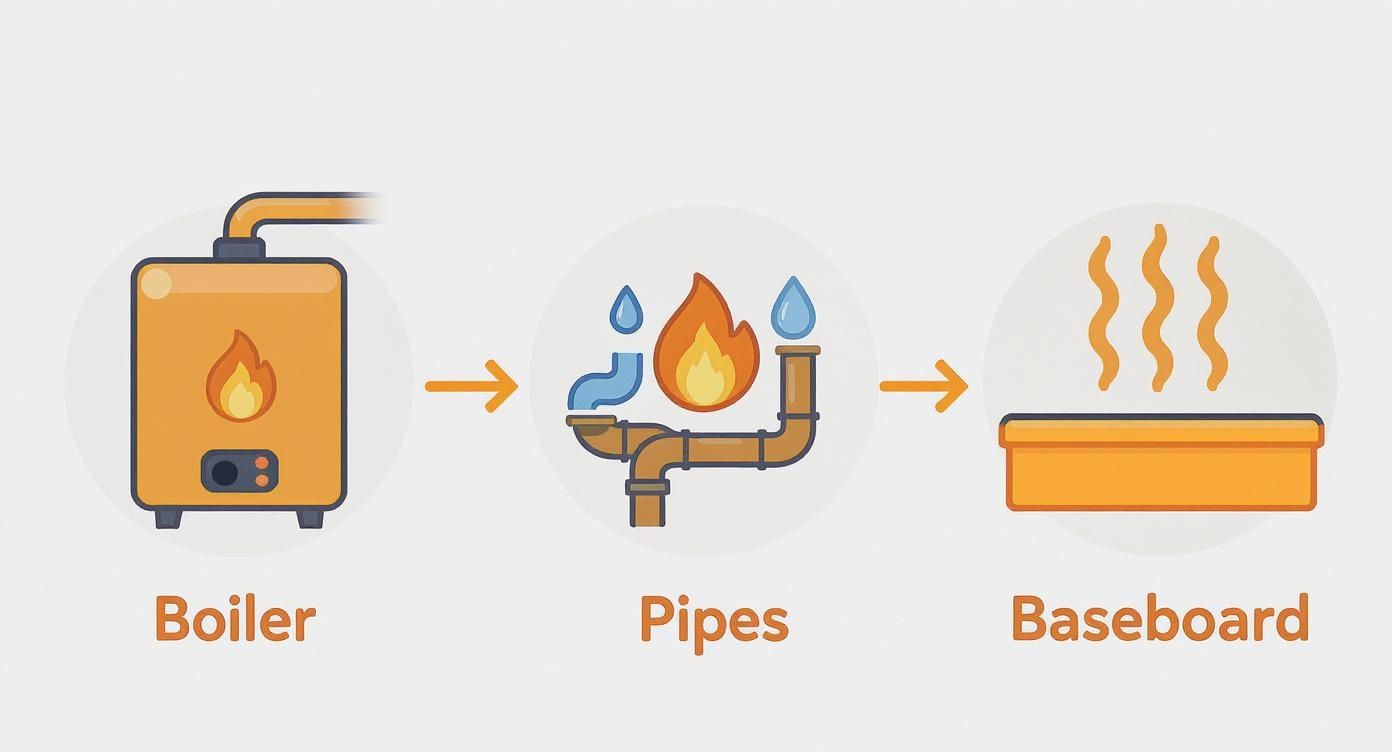
You can see it’s a closed-loop system: water is heated, circulated to warm the rooms, and then sent back to be reheated. After giving off its heat, the now-cooler water continues its trip through the pipes and back to the boiler. This constant loop keeps your home at a steady, comfortable temperature. The boiler is the most critical piece of this puzzle, and understanding the costs of a new furnace with installation can offer good perspective on central heating systems in general.
Exploring the Pros and Cons for Your Home
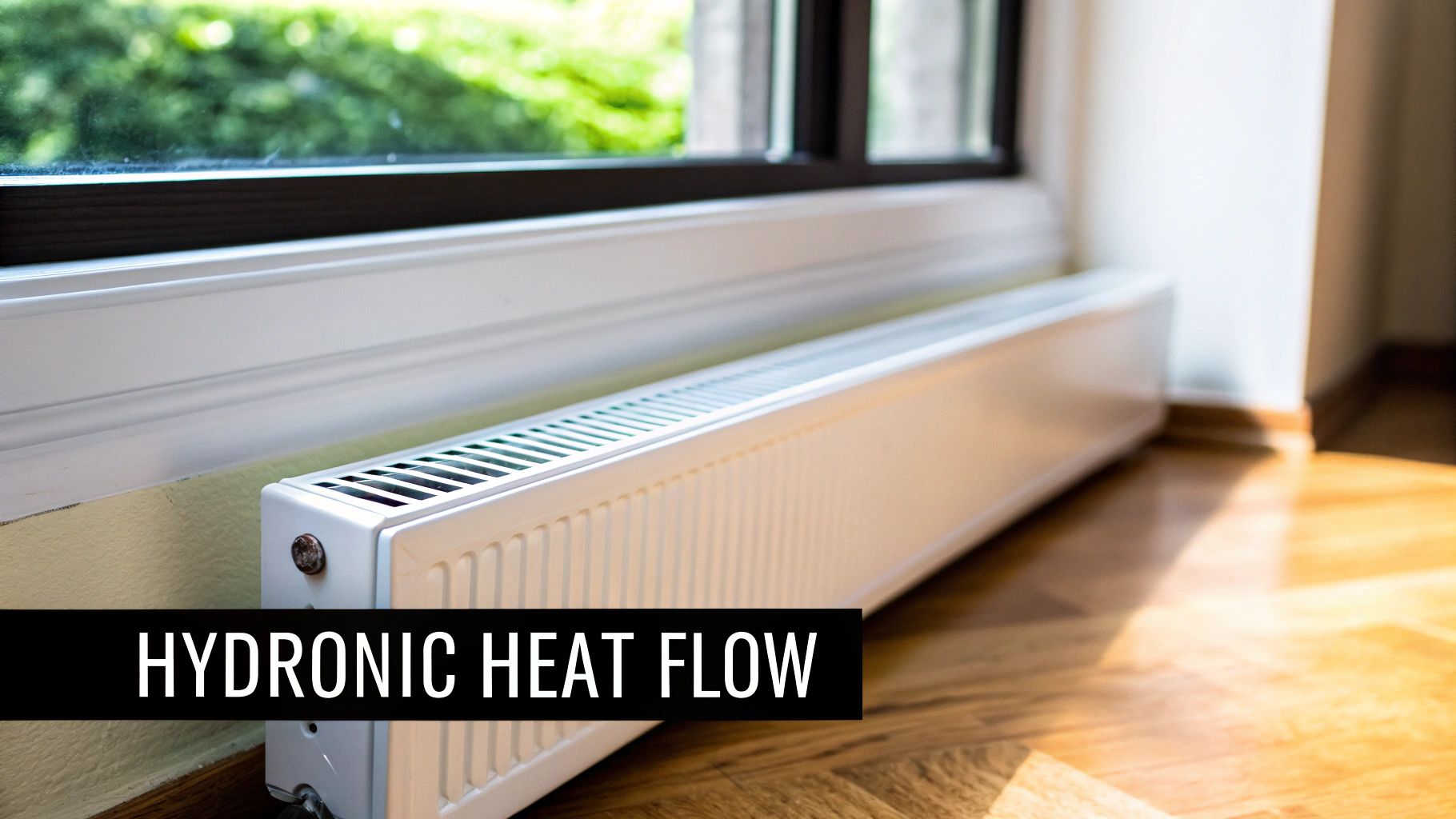
Picking the right heating system is always a balancing act between comfort, cost, and practicality. Hot water baseboard heaters have a unique appeal for many homeowners, but they aren't without their quirks. Getting a clear picture of both sides is the only way to make the right call for your home.
This honest look will help you weigh what truly matters for your family’s comfort and budget here in the Greater Toronto Area.
The Clear Advantages of Hydronic Heat
One of the first things people notice—or rather, don't notice—is the silent operation of hot water baseboard heaters. There's no whoosh of a furnace kicking on or air rushing through vents. The system works almost noiselessly, creating a peaceful and quiet home environment.
Then there's the quality of the heat itself. It's a gentle, radiant warmth that heats the objects in the room, not just the air. This eliminates the cold spots and drafts you often get with forced-air systems, delivering a comfortable, bone-deep warmth that many people find far more pleasant.
Finally, these systems are a huge win for indoor air quality.
- No Dust Circulation: Since there are no blowers or fans, dust, pet dander, and other allergens stay put instead of being circulated throughout your home. This can be a game-changer for anyone with allergies or asthma.
- Maintained Humidity: Forced-air furnaces are notorious for drying out the air in winter, leading to static shock and dry skin. Hydronic heat doesn't strip moisture from the air, helping you maintain more comfortable and healthy humidity levels naturally.
For homeowners who are serious about clean air, pairing hydronic heat with an energy recovery ventilator creates an incredibly healthy indoor environment. You can dig deeper into how an energy recovery ventilator from Panasonic works to bring fresh, filtered air into your house without wasting energy.
Considering the Potential Downsides
While the benefits are strong, there are a few important trade-offs to keep in mind. The biggest one is their slower response time. Unlike a furnace that blasts hot air almost instantly, a hydronic system takes longer to warm up and react when you adjust the thermostat.
You also have to think about furniture placement. The baseboard units need clear space to let air circulate properly. This means keeping couches, bookshelves, and even heavy curtains from blocking them, which can sometimes put a cramp on your interior design plans.
Lastly, the upfront installation cost for a complete hydronic system—boiler, pipes, and all—is typically higher than for a standard furnace. While they often pay for themselves over time through energy savings, that initial investment is a real factor, especially if your home doesn't already have the necessary plumbing in place.
Thinking through these points will help you decide if the quiet, clean, and consistent warmth of hot water baseboards is the right fit for your home.
Comparing Hot Water Baseboard Heaters to Other Systems
To put things in perspective, it helps to see how hydronic baseboards stack up against the other common heating systems you'll find in the GTA.
| Feature | Hot Water Baseboard | Electric Baseboard | Forced-Air Furnace |
|---|---|---|---|
| Operating Noise | Virtually silent | Silent | Noticeable (blower & air) |
| Heat Quality | Consistent, radiant warmth | Intense, localized heat | Can create drafts & hot/cold spots |
| Air Quality | Excellent (no dust circulation) | Excellent (no dust circulation) | Circulates dust & allergens |
| Response Time | Slow to heat up & cool down | Fast to heat up & cool down | Very fast to heat up |
| Installation Cost | High | Low | Moderate to High |
| Operating Cost | Efficient (depends on boiler) | Very High (uses electricity) | Moderate (depends on fuel) |
| Furniture Placement | Requires clear space | Requires clear space | No restrictions (uses vents) |
Each system has its place. While forced-air furnaces are the most common for their speed and ability to integrate with central AC, hydronic systems offer a premium comfort and air quality experience that's hard to beat.
Essential Maintenance for Peak Performance
To keep your hot water baseboard heaters running smoothly, a bit of seasonal TLC makes a world of difference. These simple, proactive steps don't just boost performance; they actually extend the life of your entire hydronic system, ensuring it runs efficiently and quietly when you need it most.
Think of it as a quick tune-up for your home's comfort. The good news is that most of these tasks are well within reach for the average homeowner. A little time spent at the start of the heating season can head off common problems like cold spots and weird noises, saving you a potential service call down the road.
The Art of Bleeding Your Baseboard Heaters
Over time, small air pockets can sneak into your hydronic system's pipes. This trapped air is the number one culprit behind those annoying gurgling sounds and rooms that just won’t get warm. Why? Because the air blocks the hot water from circulating properly through the baseboard units.
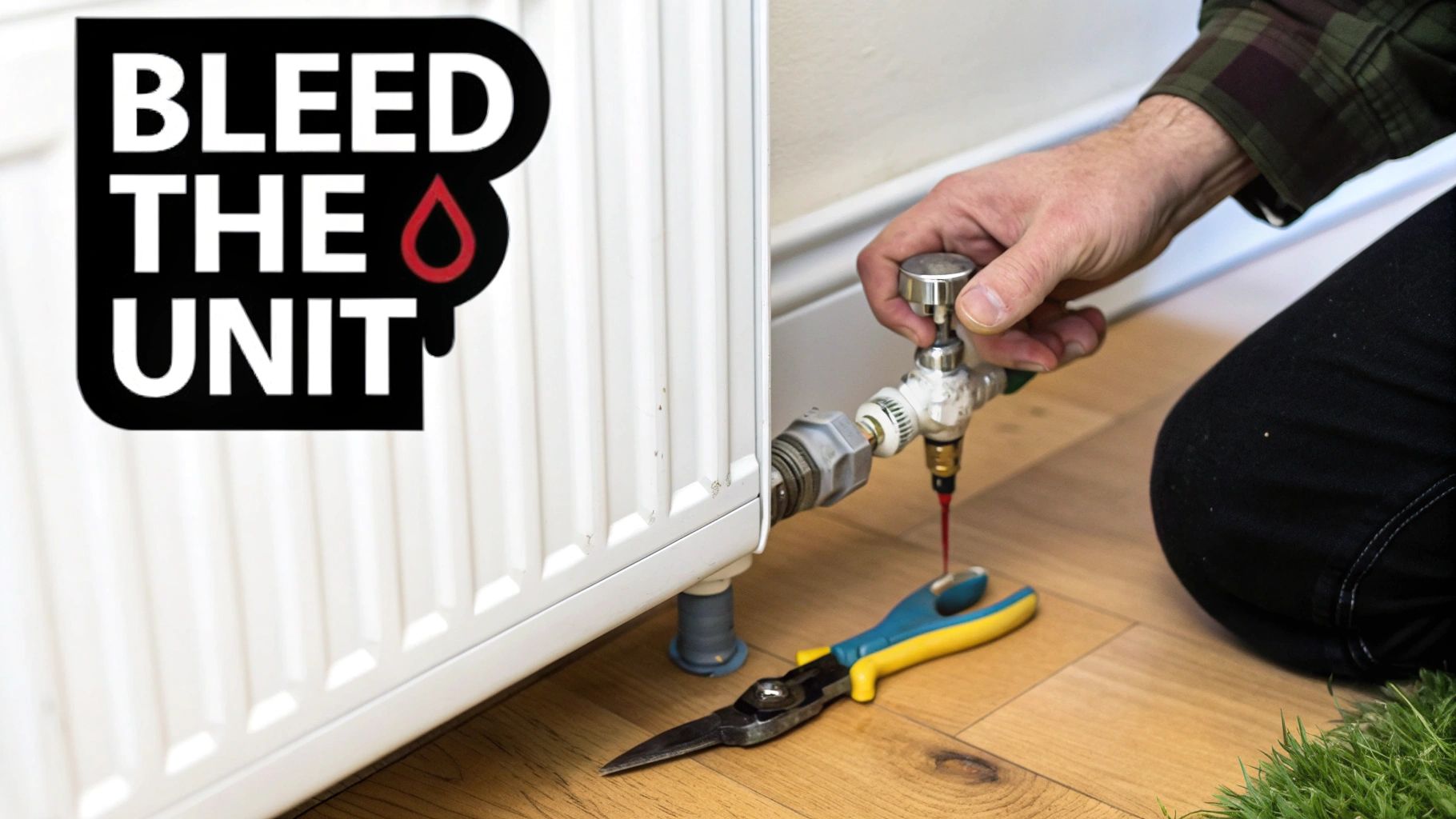
The fix is a simple process called bleeding. It sounds a lot more dramatic than it is—all you're doing is letting that trapped air out. When you hear that tell-tale hissing sound from the valve, you know you’ve got it. That's the sound of inefficiency leaving your system, allowing hot water to flow freely and heat to spread evenly once again.
This is a job you’ll want to tackle once a year, ideally in the autumn before the cold really hits. It’s the same principle as checking off other seasonal tasks, like the ones in this handy furnace maintenance checklist, which highlights the value of regular upkeep.
A Step-by-Step Guide to Bleeding
Ready to get your system running silently and efficiently? Here’s how to bleed your heaters safely.
What You'll Need:
- A radiator key (or a flathead screwdriver will often do the trick)
- A small cup or an old rag to catch drips
- Gloves are a good idea, as the unit might be warm
The Process:
- Turn Off the Boiler: First things first, shut your heating system down completely. Turn off the thermostat and flip the boiler's power switch off. This stops water from circulating and prevents any hot spray.
- Find the Bleed Valve: Go to each baseboard heater and look for the small bleed valve, usually tucked away at one end. You might have to pop off the front cover to get to it.
- Slowly Open the Valve: Put your cup or rag right under the valve. Using your key or screwdriver, give the valve a small counterclockwise turn. You should hear a hissing sound almost immediately as the trapped air starts escaping.
- Wait for Water: Keep the valve open. The hissing will eventually stop and be replaced by a steady trickle of water. That's your cue that all the air is out of that unit.
- Close the Valve Securely: Turn the valve clockwise to tighten it up, but don't go overboard. Wipe up any water that dripped out.
- Repeat for All Units: Now, just repeat this process for every single baseboard heater in your house. You want the whole system to be completely air-free.
- Check Boiler Pressure: After you've bled all the heaters, take a look at the pressure gauge on your boiler. When the system is cold, it should ideally be between 12-15 PSI. If the needle is below that, you might need to add a little water to the system (your boiler's manual will tell you how).
- Turn Everything Back On: Once you're done, you can power up the boiler and turn the thermostat back on. You should notice right away that the system is quieter and the heat is much more consistent.
By getting rid of that trapped air, you’re doing more than just stopping annoying gurgles. You’re making your entire system more energy-efficient, since the boiler and pump don’t have to fight against air pockets to circulate the hot water.
Additional Maintenance Tips
Beyond bleeding, a few other quick jobs will keep your heaters in prime condition.
- Clean the Fins: Pop the covers off and gently vacuum the metal fins inside. Dust, dirt, and pet hair build up over time and act like a blanket, blocking heat from getting into the room.
- Look for Leaks: Every so often, do a quick visual check around the baseboards and pipe fittings for any damp spots or drips. Catching a tiny leak early can save you from major water damage later.
- Keep Them Clear: Make sure furniture, thick carpets, and long curtains aren’t blocking your baseboard heaters. They rely on the natural circulation of air (convection), and they need space to work properly.
Troubleshooting Common Heater Issues
Even the most dependable hot water baseboard heaters can act up now and then. The good news? Many common problems have simple fixes you can handle yourself, saving you the time and cost of a service call.
Before you pick up the phone, a little detective work can go a long way. We'll walk you through the most frequent issues, from cold spots to strange noises, and help you figure out what’s safe to DIY and when it’s time to bring in the pros.
Problem One The Heater Is Cold
It’s a classic scenario: you’ve turned up the thermostat, but one of your baseboard heaters is still cold as a stone. This almost always points to a problem with water flow, and a few usual suspects are to blame.
The number one cause is trapped air, which creates an "airlock" that physically blocks the hot water from getting through. It's also worth checking that the valves controlling water flow to that specific unit are actually open.
Here’s a quick checklist to run through:
- Bleed the Heater: This is your first and most likely fix. Grab a radiator key and slowly open the bleed valve. Let the air hiss out until a steady trickle of water appears, then tighten it back up.
- Check the Valves: Look for the small shut-off valves on the pipes going into the heater. They can get knocked closed by accident during cleaning, so make sure they’re fully in the "open" position.
- Inspect Your Thermostat: Is it set to "heat"? Is the temperature high enough to call for heat? Sometimes, the fix is as simple as replacing dead batteries.
Problem Two Gurgling or Banging Noises
Those odd sounds coming from your walls and baseboards can be unsettling, but they're usually more annoying than alarming. If you hear a gurgling or bubbling, it’s a telltale sign of trapped air in the pipes. As water shoves its way past that air pocket, it creates that familiar gurgle.
A loud banging noise, on the other hand, is a bit more serious. This sound, often called "kettling," can indicate a buildup of limescale or sludge inside your boiler. This causes water to superheat into pockets of steam that then collapse, creating a violent bang.
While bleeding the system usually silences gurgling, a persistent banging sound could mean there's a problem brewing inside the boiler. It’s always smart to be aware of the potential safety issues from faulty heating systems, as these are things professionals are trained to spot.
Problem Three Small Water Leaks
Finding a puddle of water near your baseboard heater is never a welcome sight, but don't panic just yet. A small leak requires immediate action, but it's often a fixable issue at a connection point, like a valve or fitting.
Here's what to do right away:
- Shut Off the Water: Find the shut-off valves for that specific heater and close them. If you can't find them, you may need to shut off the valve for the entire heating zone.
- Turn Off the Boiler: Cut the power to the boiler at the main switch or breaker to stop all water circulation.
- Find the Source: Dry the area completely with a towel, then watch closely to see exactly where the water is coming from.
Sometimes, a leak is just from a loose packing nut on a valve, which you might be able to gently tighten with a wrench. But if you see a crack in the pipe or the leak is more than a slow drip, it's time to call an HVAC technician or plumber immediately. Waiting could lead to serious water damage.
Understanding Costs and Boiler Efficiency
When you're looking at the cost of hot water baseboard heaters, it's easy to get focused on the installation price tag. But that's only part of the story. While the upfront investment for a full hydronic system might be higher than a typical furnace, the real value reveals itself over time through lower energy bills and unbeatable comfort.
The secret to those long-term savings is the boiler—it’s the engine that drives your entire heating system. Think of it this way: the efficiency of your boiler directly dictates how much you'll spend on heating every month. And a modern, high-efficiency boiler completely changes the game.
The Power of a High-Efficiency Boiler
Many older homes have standard-efficiency boilers that run at about 80% AFUE (Annual Fuel Utilization Efficiency). That means for every dollar you put in, a full 20 cents goes straight up the chimney as wasted exhaust. It's like paying for a full tank of gas but only getting to use 80% of it.
In sharp contrast, the new high-efficiency condensing boilers can hit 95% AFUE or higher.
This isn't a small jump; it’s a massive leap that translates directly into real, year-over-year savings on your heating costs. These advanced units cleverly capture extra heat from the exhaust gases that older models just throw away, giving you more warmth from the same amount of fuel. Pairing your baseboards with one of these is the single best move you can make to control your long-term heating expenses.
Of course, getting those efficiency numbers depends on proper setup and upkeep, much like professional Water Heater Installation Services are crucial for peak performance.
Total Cost of Ownership
When you're choosing a heating system, you need to think beyond the sticker price and consider the total cost of ownership. This includes the initial installation, your annual fuel bills, and any maintenance over the system's entire lifespan, which can easily be 20 years or more. For any homeowner here in the GTA, seeing the full financial picture is key.
The initial investment in a high-efficiency boiler and baseboard system is often paid back over its lifetime through significant energy savings. This makes it a smart, long-term play that boosts your property value and eases your monthly budget.
The efficiency of your boiler also makes a big dent in your home's total energy footprint. Residential water heating is a huge energy consumer, so picking the right technology matters. In some areas, it can account for up to 32% of a home's energy use, which really highlights why an efficient system is so important.
It's always a good idea to compare the full lifecycle cost of a hydronic system against other options. To give you a helpful local benchmark, our guide on new furnace costs in Ontario offers a great point of reference. It will help you weigh the upfront costs against the lasting rewards of quiet, efficient, and deeply comfortable heat.
Frequently Asked Questions About Baseboard Heaters
Let's tackle some of the most common questions homeowners have about hot water baseboard heaters. We’ll get straight to the point to clear up any confusion and help you feel confident about your home’s heating.
Think of this as the final piece of the puzzle, giving you all the details you need.
Can I Paint My Hot Water Baseboard Heaters
Absolutely, but you have to do it right. The key is using a high-heat enamel paint made specifically for radiators. This isn't the place for regular wall paint, which will just peel, crack, and potentially release nasty fumes once the heat comes on.
Before you even think about painting, turn the system off and let the heaters cool down completely. A good cleaning to get rid of dust and grime is also a must if you want the new paint to stick properly and look great for years.
Are These Heaters Safe for Homes with Children and Pets
Hydronic baseboard heaters are generally a safer bet than their electric cousins. Why? Their surfaces don't get scorching hot, which dramatically lowers the risk of a serious burn from a curious hand or a playful pet bumping into them.
That said, they still get hot enough to be uncomfortable. It's a good idea to teach kids not to touch them and to keep things like curtains, toys, or bedding a safe distance away. A little space prevents any potential fire hazards.
The bottom line is that while they are safer, baseboard heaters still demand some common sense in a busy home. Keeping the area around them clear is a simple habit that boosts both safety and their ability to heat the room effectively.
How Long Does a Hydronic Heating System Last
One of the biggest selling points for a hydronic system is its incredible lifespan. The baseboard units themselves are built like tanks and can easily last 30 years or more. With very few moving parts, there's just not much that can wear out.
The life of the whole system usually comes down to the boiler. A modern, well-maintained boiler can run reliably for 15 to 25 years, depending on the model and fuel type. Getting it serviced by a professional every year is the single best thing you can do to get the most out of it.
Do Hot Water Baseboard Heaters Use a Lot of Electricity
Nope, they barely use any. The real energy consumption comes from whatever fuel your boiler uses to heat the water—usually natural gas, propane, or oil.
The only parts that draw electricity are the small circulator pump that pushes water through the pipes and the thermostat. It’s a tiny amount of power compared to an electric baseboard heater, and it's even less than the big blower fan in a standard furnace. This efficiency is a huge plus. Since they don’t blow air around, they also don't kick up dust and allergens. If you do have a furnace, choosing the right furnace filter for allergies is another great way to improve your home's air quality.
For any professional maintenance or questions about your home's heating and air quality systems, trust the experts at Can Do Duct Cleaning. Visit us online to learn more about our services in the GTA.

