
Getting a new furnace is about more than just buying a piece of equipment. You're investing in a complete comfort system, and a proper furnace with installation is a package deal where the unit and the technician's skill are equally vital.
Understanding Your Furnace With Installation Project
Think of it like this: you can buy the most expensive, top-of-the-line engine for a car, but if a rookie mechanic installs it, you're not going to get the performance you paid for. It's the same with your furnace. A poorly installed, high-efficiency unit will never run properly, leading to wasted energy and even safety issues.
This guide will walk you through the whole process, so you can make a smart, confident decision. We’ll cover everything from picking the right unit for our tough Canadian winters to understanding what really goes into the final cost.
The Bigger Picture: Your Home's HVAC System
Your furnace might be the heart of your home's heating system, but it doesn't work alone. It's completely dependent on a network of ducts to push warm air through your house. If that ductwork is clogged with years of dust and debris, your brand-new furnace has to work way harder than it should, right from day one.
A professional installation always starts with a look at the bigger picture. A good technician will check your existing ductwork, ventilation, and electrical setup to spot any red flags that could hurt your new furnace’s performance.
To really get your money's worth, you need to think about the health of the entire system. Making sure your ductwork is clean is a critical first step. You can learn more about how professional cleaning prepares your home for a new furnace in our guide to https://candoductcleaning.com/hvac-ductwork-cleaning/.
Planning For The Long Term
A new furnace is a major home investment, so it pays to think about its entire lifespan. Knowing the typical life expectancy of a gas furnace helps you understand the long-term value you're getting.
It's also smart to keep an eye on industry changes. For instance, new EPA refrigerant regulations in the U.S. are already affecting HVAC systems and prices. While these rules aren't fully in place in Canada yet, it’s a trend that will likely have an impact here eventually. Staying aware helps you plan better for the future.
Choosing the Right Furnace Type for Your Home
Picking the right furnace isn't just about grabbing one off the shelf. It’s about finding the perfect match for your home, your budget, and the reality of local energy prices here in Canada. Think of it like buying a car. A two-seater sports car is fun, but it’s not going to work for a family of five. A massive truck is great for hauling, but it's overkill for a quick trip to the grocery store.
Each furnace type has its own sweet spot. To make a smart choice, you need to look past the initial price tag and think about the long game: fuel costs, energy efficiency, and how it’ll hold up during a deep January freeze. Let's break down the main options to see what makes the most sense for you.
This visual guide can help map out your furnace project, from picking the right unit to getting it installed properly.
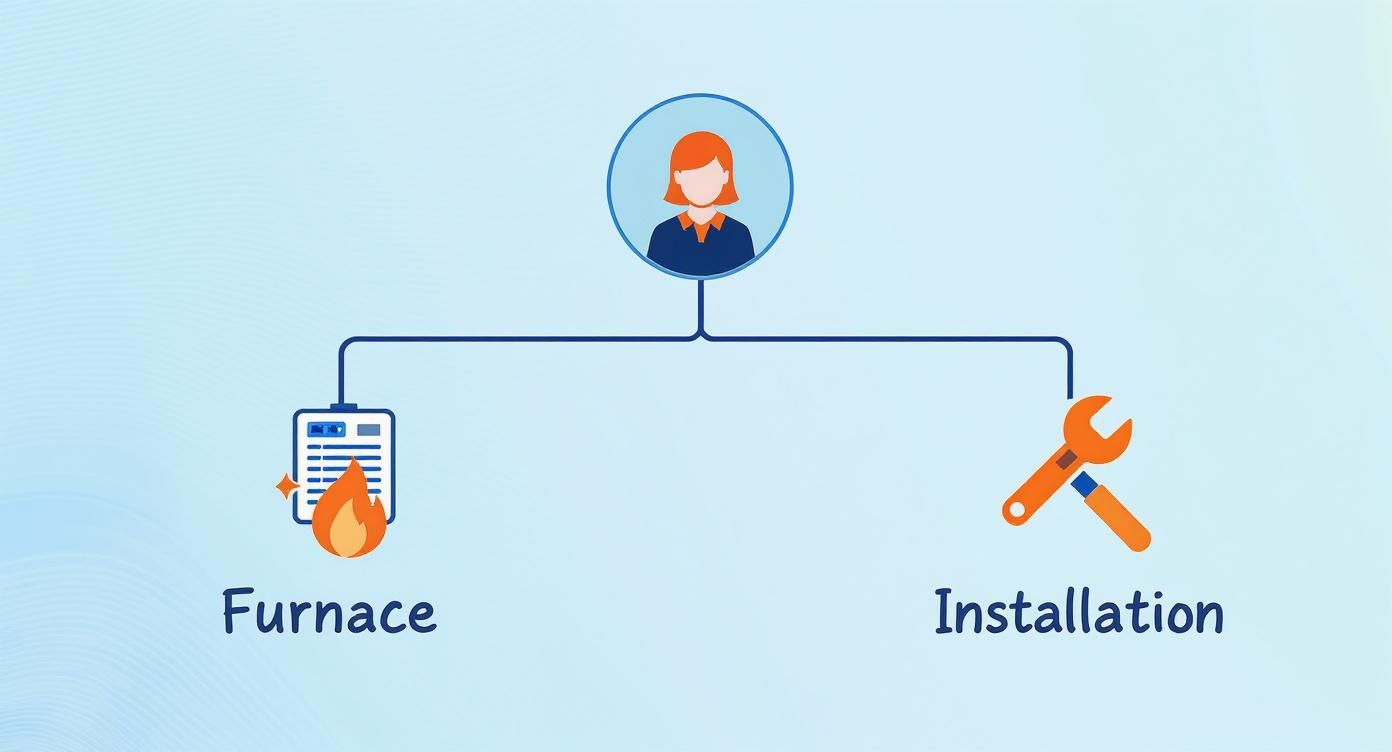
As you can see, a great furnace is only half the battle. Professional installation is what makes it all work together seamlessly.
To help you weigh the pros and cons, here’s a quick comparison of the most common furnace types you’ll find in Canadian homes.
Comparing Furnace Types for Canadian Homes
| Furnace Type | Average Fuel Cost (Relative) | Typical AFUE Range | Key Advantage | Best For |
|---|---|---|---|---|
| Natural Gas | Low | 90% – 98% | Lowest operating cost & most convenient | Urban & suburban homes with access to a municipal gas line. |
| Propane | Medium | 90% – 98% | High-efficiency heating without a gas line | Rural properties or homes without a natural gas connection. |
| Electric | High | 100% | Low upfront cost, simple & safe operation | Smaller, well-insulated homes or areas with low electricity rates. |
| Oil | High (Variable) | 80% – 90% | Powerful heat output for extreme cold | Older homes in regions where oil is still a common fuel source. |
Each option has a clear place, but as you can see, natural gas often comes out on top for cost-effectiveness if it's available in your area.
Natural Gas Furnaces: The Popular Choice
There’s a good reason why natural gas furnaces are the go-to for most Canadian homeowners. Natural gas is usually the cheapest and cleanest-burning fossil fuel you can get, piped directly to your house. No tanks, no delivery schedules, no worrying about running out mid-winter.
Today's gas furnaces are also incredibly efficient. High-efficiency models can hit an AFUE (Annual Fuel Utilization Efficiency) rating of 95% or higher. That means for every dollar you spend on gas, 95 cents goes directly into heating your home. Those savings on your monthly bills add up fast.
- Key Advantage: The lowest operating cost by far, provided you have a gas line.
- Best For: Pretty much any homeowner in a city or suburb connected to the gas grid.
- Consideration: You need access to a natural gas line, which simply isn't an option for many rural properties.
Propane Furnaces: A Versatile Alternative
What if you're not on a natural gas line? That's where propane furnaces come in. They offer a powerful and reliable heating solution that burns cleanly and efficiently, with AFUE ratings that are right up there with natural gas models.
The main difference is the fuel logistics. Propane is stored in a big tank on your property, so you'll need to schedule refills with a local supplier. While the fuel itself costs more than natural gas, it’s a fantastic option for getting robust heat to rural and off-grid homes.
Electric Furnaces: Simplicity and Safety
Electric furnaces are all about simplicity. They are often the cheapest to buy and install because there are no fuel lines, exhaust vents, or storage tanks to worry about. This straightforward design also makes them very safe—there's zero risk of a carbon monoxide leak.
The big catch? The cost of electricity. In many parts of Canada, hydro bills can make running an electric furnace a very expensive proposition. They work best in smaller, super-insulated homes, in regions with cheap electricity, or as a secondary heat source.
An electric furnace is technically 100% efficient. Every bit of electricity it pulls is turned into heat. The trade-off is that a unit of electricity costs a lot more than a unit of natural gas.
Oil Furnaces: A Traditional Powerhouse
Head out to Eastern Canada or check out older homes, and you'll still find plenty of oil furnaces chugging away. These units are workhorses, known for being durable and pumping out a serious amount of heat in a hurry. Just like propane, they rely on a storage tank on the property.
The downsides are the fluctuating price of heating oil and the environmental footprint—oil just doesn't burn as cleanly as gas. They also need more frequent maintenance to keep them from getting gummed up with soot.
No matter which fuel you choose, your furnace is only as good as the ductwork it's connected to. If you’re putting in a new heating system, it’s the perfect time to think about your ducts. For anyone doing a major renovation, learning about a proper air duct installation ensures your shiny new furnace can actually deliver that cozy heat efficiently to every room.
Decoding the Costs of a New Furnace Installation
Getting a few quotes for a new furnace can leave your head spinning. Why does one company quote thousands more than another? It's because you're not just buying a metal box; you're investing in a complete comfort system.
Think of it like buying a custom-built suit. The final price isn't just for the fabric. It includes the tailor's expertise, the buttons, the lining, and the time it takes to get the fit just right. A comprehensive quote for a furnace with installation is the same—it bundles the equipment, skilled labour, and necessary materials into one price. Knowing what goes into that final number helps you understand where your money is going and why the cheapest quote often isn't the best value.
The Furnace Unit Itself
Naturally, the biggest chunk of the cost is the furnace. But not all furnaces are created equal. The price of the unit itself depends on a few key things:
- Fuel Type: As we've covered, natural gas, propane, and electric furnaces all sit at different price points.
- Brand and Model: Just like with cars, some brands are the "premium" choice known for their features and reliability, while others are built to be more budget-friendly.
- Size (BTUs): This is critical. A pro will do a proper "load calculation" to figure out the perfect size for your home. Going too big is just as bad as going too small.
- Efficiency (AFUE Rating): A furnace with a 96% AFUE rating will cost more upfront than an 80% model. The trade-off? You'll see significant savings on your energy bills for years to come.
These variables create a pretty wide price range. For a closer look at what to expect in our area, check out our guide on new furnace costs in Ontario.
Labour: The Skill Behind the Scenes
The second major cost is the professional labour, and it's so much more than just a few hours of work. This fee pays for the licensed, insured technicians who are trained to work safely with gas lines, high-voltage electricity, and tricky venting systems.
A professional installation isn't just about hooking up a few pipes. It's a careful process of removing your old unit, making sure the new one is perfectly level, calibrating it for your home's unique airflow, and running exhaustive safety checks for gas leaks and carbon monoxide.
This expertise is what keeps your family safe and guarantees your new investment actually works the way it's supposed to.
Necessary Modifications and Upgrades
Sometimes, installing a modern furnace means your home's existing setup needs a few tweaks to meet current building codes or simply to work properly. These adjustments can add to the total cost, but they are absolutely essential for a safe and effective installation.
Common extra costs might pop up for:
- Ductwork Adjustments: Your old ductwork might not line up perfectly with the new furnace, requiring some custom modifications or repairs.
- Venting Changes: High-efficiency furnaces vent differently than older ones. This often means running new PVC pipes out an exterior wall.
- Electrical Work: An older home might need some wiring updates or a new circuit to handle the electrical demands of a modern furnace.
- Permits: Most municipalities in Canada require a permit for furnace installations to ensure everything is done by the book and up to code.
The Influence of Regional Factors
It’s also worth remembering that where you live matters. While our focus is on Canada, we can look at a huge market like California to see how local rules affect price. As the largest HVAC market in the U.S., California's strict energy efficiency standards heavily influence furnace installation costs. Those regulations, plus higher labour rates, create a massive price spectrum from $1,700 to over $10,000. It's a clear example of how local codes can shape what you pay. You can dig into more of these HVAC market stats over at Workyard.com.
At the end of the day, a good contractor will give you a detailed, itemized quote. It's a sign of transparency and lets you see exactly what you’re paying for—from the furnace model to the labour and every little modification. That's how you can feel truly confident in your investment.
What to Expect on Furnace Installation Day
Knowing what's going to happen on installation day can really take the stress out of the equation. Think of it like a detailed road map for a trip—you know the route, the stops along the way, and what the destination looks like. Let's pull back the curtain on the process so you feel completely in the loop when our technicians arrive.
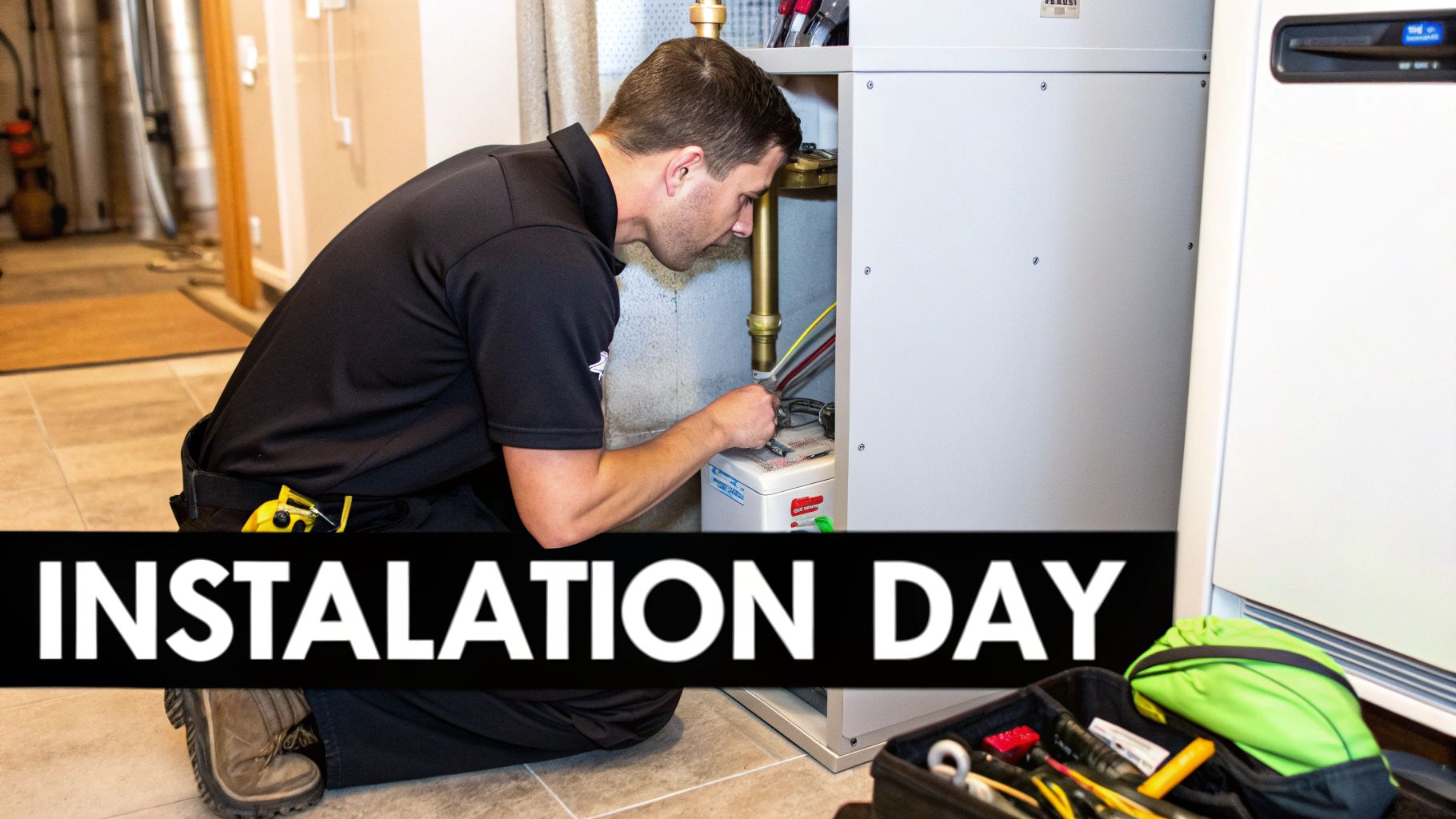
A standard furnace with installation isn't a rush job; it's a carefully planned operation that typically takes between 4 to 10 hours. That timeline gives the team plenty of room to handle every detail meticulously, especially the critical safety checks.
Arrival and Site Preparation
First things first: when the installation team arrives, their priority is to prep the workspace. This is all about protecting your home and setting up a safe, efficient area to work in.
You'll see them lay down drop cloths and protective coverings all the way from your front door to the furnace room. It’s a simple but vital step to keep your floors free from dirt, scuffs, and debris as the old unit goes out and the new one comes in. They'll also walk you through the plan one last time, confirm the equipment, and answer any questions you've thought of.
Disconnecting and Removing the Old Furnace
With your home protected, the crew gets to work decommissioning your old furnace. This isn't just a matter of yanking it out; it's a methodical, safety-first process.
- Shutting Off Utilities: The technician will start by killing the power at the electrical circuit breaker and shutting off the fuel supply, whether it's a natural gas or propane valve.
- Disconnecting Lines: Next, they'll disconnect all the connections—electrical wiring, the fuel line, thermostat controls, and the condensate drain.
- Separating Ductwork: The big metal plenums connecting the furnace to your duct system are carefully detached.
- Careful Removal: Finally, the old unit, which is often surprisingly heavy, is carefully maneuvered out of your home without leaving a single scratch on your walls or floors.
Setting and Connecting the New Furnace
Now for the exciting part—putting the new heart of your heating system in place. This is more than just sliding a new box into an old spot. It’s all about precision.
The new furnace is positioned and perfectly levelled. If a furnace isn't level, it can cause premature wear and tear on crucial parts like the blower motor. Once it's sitting just right, the connections begin. The unit is re-attached to the ductwork, often using custom-fitted sheet metal to create a perfectly airtight seal. Any gaps here would just bleed heated air, wasting energy and crippling performance.
An airtight, secure connection to your ductwork is absolutely non-negotiable. Poorly sealed ducts can slash a system's efficiency by up to 20%. That forces your brand-new furnace to work overtime and drives up your energy bills.
To give your new system the best possible start, having your ducts cleaned beforehand is a smart move. For a full rundown, our guide on preparing the house for duct cleaning service is a great resource.
Final Connections and System Commissioning
With the furnace physically installed, the technicians move on to the final, highly technical connections. This is where licensed expertise really counts.
- Venting: High-efficiency furnaces need new PVC pipes for both air intake and exhaust. These are routed and sealed to make sure no dangerous exhaust gases can leak into your home.
- Fuel Line: The gas or propane line is connected and then rigorously tested for leaks with specialized detection tools. Safety is paramount.
- Electrical and Controls: All the wiring is hooked up, from the main power for the unit to the low-voltage lines for your thermostat.
- Condensate Drain: A drain line is installed to safely carry away the condensation that high-efficiency furnaces naturally produce.
Once every single connection is made, the system is "commissioned." This is the moment of truth. The technicians will fire up the furnace for the first time and run it through a full diagnostic cycle. They check everything—gas pressure, temperature rise, safety shut-offs—to ensure it's all running exactly to the manufacturer's specs.
Finally, they’ll clean up the entire work area, leaving it just as they found it.
How to Select a Qualified HVAC Contractor
Picking out the perfect furnace is only step one. The real success of your investment comes down to the person who actually installs it. A top-notch installation means your system will run efficiently, last for years, and most importantly, operate safely.
Think of it like hiring a surgeon—you're looking for proven expertise, not just the cheapest option on the block.

Here's a straightforward checklist to help you find a trustworthy pro for your furnace with installation project. We’ll go beyond just grabbing a few quotes and dig into the non-negotiables every legitimate contractor in Canada must have.
Start with Credentials and Licensing
Before you even glance at a price, do your homework on the contractor's credentials. This is your first and best line of defence against shoddy work and ensures they meet provincial safety standards. For instance, any HVAC technician in Ontario handling fuel-burning appliances must be certified by the Technical Standards and Safety Authority (TSSA).
Make sure they have these essentials covered:
- Provincial Licensing: This is non-negotiable. Look for the proper certification in your province, like TSSA in Ontario or the BC Safety Authority in British Columbia.
- Comprehensive Insurance: The company absolutely needs both liability insurance and WSIB coverage. This protects you and your home from any financial fallout if an accident or property damage happens on your watch.
- Proven Experience: Don't be shy. Ask how long they've been in business and if their technicians have hands-on experience with the specific furnace brand and model you're eyeing.
Evaluate Quotes and Professionalism
Once you have a shortlist of licensed and insured contractors, it's time to ask for detailed, written quotes. A professional quote is a window into how a company operates. A vague, one-line price scribbled on a notepad? That's a huge red flag.
A proper quote should break everything down for you:
- The specific furnace model number.
- All labour charges.
- Costs for necessary materials like venting pipes or sheet metal.
- Any fees for required permits.
- Warranty details, covering both the furnace itself and the installation work.
Pay close attention to how they communicate. Do they answer your questions clearly and patiently? A good contractor will insist on a thorough home assessment before giving you a quote, not just toss out a number over the phone. If you feel cornered by high-pressure sales tactics or they're hesitant to provide details, it's time to walk away.
Check Reviews and Reputation
In today's world, reputation is everything. While price matters, most homeowners are looking for quality and reliability first. In fact, 83% of consumers say factors other than cost are their top priority when choosing a new system. And with 91% of consumers turning to online reviews to find HVAC contractors, a company's digital footprint speaks volumes.
A contractor's online presence tells a story. Look for consistent, positive feedback across multiple platforms like Google, HomeStars, or the Better Business Bureau. Pay special attention to how the company handles negative reviews—a professional and helpful response shows they care about customer satisfaction.
Making sure your furnace installation is in good hands means knowing how to choose a qualified builder. The core principles are the same: always check licenses, insurance, and past work. Taking these steps is an investment not just in a new furnace, but in the long-term comfort and safety of your home.
Common Questions About Furnace Installation
You've picked out the perfect furnace and lined up a great contractor, but a few nagging questions are probably still floating around. That's completely normal. Getting these last few details sorted is the final step to feeling confident about your new furnace with installation.
Let's run through some of the most common questions we get from homeowners. Think of it as a quick chat about timelines, techy terms, and how to look after your new system so it keeps you warm for years to come.
How Long Does Furnace Installation Usually Take?
This is usually the first question on everyone's mind: how long will my house be without heat? For a typical, straightforward furnace swap, we can usually get the job done in a single day. Most installations take somewhere between 4 to 10 hours from start to finish.
Of course, some jobs are more complicated. If we need to modify your ductwork, switch you from oil to natural gas, or wiggle the new unit into a tight crawlspace, it might take a bit longer. Any good contractor will give you a solid time estimate after they've had a look at your specific setup.
What Is An AFUE Rating?
You'll see "AFUE" mentioned a lot when you're shopping for a new furnace. It's a big deal. AFUE stands for Annual Fuel Utilization Efficiency, which is just a fancy way of saying "how much heat you get for your money."
Think of it like the fuel economy for your car. It’s a percentage that shows how much fuel is turned into actual, usable heat for your home.
A furnace with a 96% AFUE rating means that for every dollar you spend on gas, 96 cents becomes heat in your house. The other four cents are lost through the exhaust vent. Compare that to an old, clunky furnace that might have an AFUE of only 60%—that’s a huge amount of money literally going up in smoke.
In Canada, all new gas furnaces have to meet a minimum efficiency standard. But spending a bit more upfront for a higher AFUE model almost always pays for itself through lower energy bills over the furnace's lifetime.
Is a DIY Furnace Installation a Good Idea?
I'll keep this one short: absolutely not. I get the urge to save a few bucks on labour, but this is one job you should never, ever tackle yourself. Installing a furnace is complex and dangerous work that requires a licensed and insured professional.
The risks of getting it wrong are just too high:
- Gas Leaks: An improperly connected gas line is a ticking time bomb. It can lead to fires or, even worse, an explosion.
- Carbon Monoxide Exposure: If the venting isn't perfect, you could have a carbon monoxide (CO) leak. It's an invisible, odourless gas that can be fatal.
- Electrical Hazards: Modern furnaces have high-voltage connections that can cause serious injury if you don't know exactly what you're doing.
Besides the very real safety dangers, a DIY job will instantly void your manufacturer's warranty. Most home insurance policies won't cover damage from an improperly installed furnace, and it's against local building codes. Hiring a pro protects your home, your family, and your investment.
How Do I Maintain My New Furnace?
The good news is that once your furnace is installed by a pro, your part in keeping it running well is pretty simple. There's one key task for you, and one for the professionals each year.
Your main job is to check and change the air filter. A dirty, clogged filter is public enemy number one for a furnace. It chokes the airflow, making the system work way harder than it should. This not only spikes your energy bills but can also cause the motor to burn out early. For a detailed schedule, check out our guide on furnace filter replacement frequency.
Then, once a year—ideally in the autumn before you really need the heat—schedule a professional tune-up. A technician will clean the inner workings, inspect all the components, test the safety controls, and make sure everything is calibrated perfectly. This little bit of proactive care goes a long way in preventing a breakdown on the coldest night of the year and keeps your system running efficiently.

