
That thick, fuzzy layer of lint you find in your dryer vent is a lot more than just a nuisance—it’s a serious fire hazard waiting to happen. To clean your dryer vent properly means getting all that buildup out of the entire duct system, from the back of your machine to the outside of your house. It’s not just a quick chore; it’s a critical piece of home safety maintenance.
The Hidden Dangers of a Clogged Dryer Vent
Most of us are pretty good about cleaning the lint trap inside the dryer door after every load. It’s easy to think that’s all you need to do, but that trap only catches some of the lint. The rest gets funnelled straight into the dryer vent, where it builds up over time, creating a hidden threat inside your walls.
This blockage chokes off the airflow, making your dryer work way harder and run much hotter than it should. That's when things can get dangerous.
Fire Hazard: The Overlooked Risk
Let’s be blunt: a clogged dryer vent is a fire waiting to happen. Lint is incredibly flammable. Pack it into a hot, tight space like a dryer duct, and you have the perfect recipe for a fire.
According to the U.S. Fire Administration, thousands of house fires every year start with clothes dryers, and the number one cause is a simple failure to clean them. These aren't just minor flare-ups; they can lead to devastating damage, serious injuries, or worse.
The risk is so real that insurance companies are paying attention. Having your dryer vent professionally cleaned can be a recognized safety measure, sometimes even helping to lower your home insurance premiums. If you want to get a better sense of how professionals identify these kinds of risks, understanding what a fire risk assessment entails offers great insight into spotting hazards like a clogged vent before they become a disaster.
Carbon Monoxide Poisoning
If you have a gas dryer, the stakes are even higher. A blocked vent doesn't just trap lint; it can trap dangerous combustion fumes, including deadly carbon monoxide (CO).
Because CO is colourless and odourless, it can quietly leak into your home, causing severe illness or even death. For any gas appliance, clear and open ventilation isn't just a suggestion—it's an absolute must.
A clogged dryer vent forces your appliance to overwork, increasing energy consumption and causing premature wear on critical components like the heating element and motor. This not only shortens the lifespan of your dryer but also leads to higher utility bills and expensive repair costs.
Recognizing the early warnings is key. Are your clothes still damp after a full cycle? Does the dryer feel scorching hot to the touch? These are clear signs that your vent is clogged and needs immediate attention. Learning to spot these 5 warning signs of clogged vents helps you act before a small problem turns into a catastrophe.
How to Properly Clean Your Dryer Vent
Deciding to clean your dryer vent yourself is a fantastic weekend project. It’s one of those satisfying jobs that not only makes your dryer run better but also makes your home a whole lot safer. Before you dive in, you need to get your tools ready and understand the goal: we’re not just grabbing the lint you can see, but clearing the entire duct from the back of your machine to the outside world.
Good prep makes all the difference. The absolute first thing you must do is make the area safe. Before you even think about pulling the dryer out, disconnect the power. If it’s an electric model, just unplug it. For a gas dryer, you have an extra step: find the gas supply valve on the pipe behind it and turn it off completely.
This infographic really drives home the link between a clogged vent and a serious fire risk.
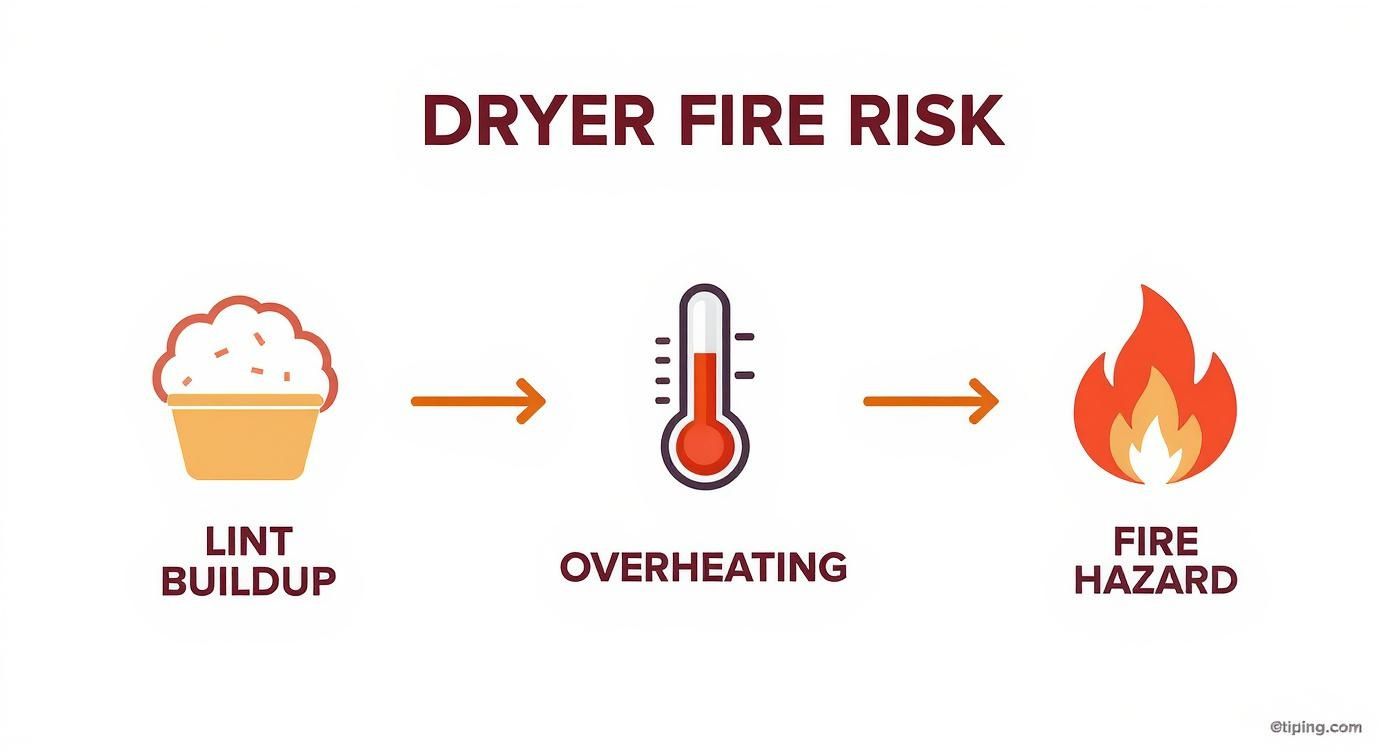
As you can see, the process is frighteningly simple: lint gets trapped, the dryer overheats, and that heat can easily ignite the bone-dry lint.
Starting from Inside Your Home
With the dryer safely disconnected, gently pull it away from the wall. You'll need enough room to get behind it comfortably. The flexible hose connecting your dryer to the wall is called the transition duct—go ahead and detach it from both ends.
Now the real work begins. Start with the easy stuff. Grab your vacuum, put a hose attachment on it, and clean out the dryer's exhaust port and the vent opening on the wall. You'll be amazed by how much gunk collects right there.
Pro Tip: A vacuum alone won't cut it. Get yourself a flexible dryer vent brush to really break up the caked-on lint that’s been stuck there for ages. The best method is to alternate: brush to loosen, then vacuum to suck it up. Repeat.
Next, turn your attention to that flexible duct you just removed. You can clean it out using the same brush-and-vacuum method. While you have it in your hands, give it a good look-over for any holes, tears, or sharp kinks. A damaged duct is a problem, as it can spew lint and hot, moist air behind your dryer. If it looks rough, don't try to patch it—just replace it. A rigid metal duct is always the best choice.
Tackling the Ductwork and Exterior Vent
Okay, with the entry and exit points clear, it’s time to clean the main event: the ductwork hidden in your wall. This is where a proper dryer vent cleaning kit, especially one with a rotary brush that hooks up to your drill, is worth its weight in gold.
Here’s the game plan:
- Get the Brush Ready: Screw the brush head onto one of the flexible rods from your kit.
- Start Cleaning: Feed the brush into the duct from inside your house. If you're using a drill, keep it on a low, steady speed and only run it clockwise (forward). Running it in reverse can unscrew the rods inside the duct, and that’s a headache you don’t want.
- Extend and Push: As you work the brush deeper, keep adding rod sections. Your mission is to push all that dislodged lint forward, toward the vent on the outside of your house.
- Clear the Exit: Head outside and find the exterior vent cap. You should see a satisfying pile of lint getting pushed out. Pop the cover off (if you can) and clear away any leftover debris. Make sure the flaps or louvres can move freely.
This top-to-bottom approach ensures you’re actually removing the blockage, not just shifting it around. If your vent run is particularly long or has a lot of twists and turns, it might be worth seeing how the pros handle it. Understanding the scope of professional dryer air duct cleaning services can show you what it takes to get a truly deep clean.
Once you're satisfied it's all clear, just put everything back together. Reattach the ductwork, making sure the connections are snug. Slide the dryer back, plug it in (and turn the gas back on), and run it on a quick, empty cycle to make sure everything is running smoothly.
Choosing the Right Tools for the Job

Trying to clean your dryer vent without the right gear is a bit like trying to paint a room with a toothbrush—you might make some progress, but you’re mostly just making a mess. Getting this job done right isn't just about making things easier; it’s about safety and actually clearing the clog.
Most homeowners start with a standard dryer vent cleaning kit. You've probably seen them at the hardware store: a synthetic bristle brush with a few flexible rods that screw together. For most straightforward, short vent runs, these kits do a decent job and won't break the bank.
But here’s a pro tip: if your vent has a few bends or is longer than a few feet, you'll want to step up your game. A rotary brush kit that hooks up to your power drill is a game-changer. The spinning action attacks caked-on lint that a simple push-and-pull manual brush would just glide over.
Your Secret Weapons: Power Tools
Beyond the brush, a couple of common garage tools can make all the difference. Your trusty shop vacuum is your best friend here. Use it to clear out all the loose lint you can reach from both ends before you even think about sending a brush down the line.
Then, once you’ve scrubbed the duct, hit it with the shop vac again to capture all the dislodged debris.
Got a leaf blower? Perfect. A quick, powerful blast from the inside out will clear any lingering dust and fine particles. Just give a heads-up to anyone standing near the exterior vent—it can get messy!
A word of advice from the field: Always pull lint out, don’t just push it deeper into the duct. Start by vacuuming what you can reach, then work the brush through, and finish by vacuuming again.
Comparison of Dryer Vent Cleaning Tools
Picking the right tool depends entirely on your home's setup. What works for a short, straight vent in a bungalow won't cut it for a long, winding path in a two-storey house. Here’s a quick breakdown to help you decide.
| Tool Type | Best For | Pros | Cons |
|---|---|---|---|
| Manual Brush Kit | Short, straight vent runs (under 10 feet). | Inexpensive, easy to find, no power tools needed. | Can't handle sharp bends, lacks power for compacted lint. |
| Rotary Brush Kit | Longer runs, vents with multiple bends. | Attaches to a drill for powerful scrubbing action. | More expensive, rods can snap if used improperly. |
| Shop Vacuum | Sucking up loose debris at both ends of the vent. | Excellent suction power, great for initial and final cleanup. | Hose may not reach far into the ductwork. |
| Leaf Blower | Final clearing of fine dust and small particles. | Powerful airflow pushes out anything left behind. | Can create a massive mess outside, not a primary cleaning tool. |
Ultimately, a combination is your best bet: a rotary brush to do the heavy lifting and a shop vac for cleanup.
Don't Forget Your Safety Gear
This is a non-negotiable step. Lint dust is incredibly fine and you don't want to be breathing it in. A good quality dust mask is an absolute must-have. Grab a sturdy pair of work gloves, too—the edges of metal ductwork and exterior vent caps can be surprisingly sharp.
Being properly equipped means you’re ready for whatever you find lurking in that vent. And if you're curious to see the kind of heavy-duty systems the pros use, you can get a glimpse of high-end duct cleaning equipment to understand what makes a professional clean so thorough.
Common Cleaning Mistakes and How to Avoid Them
Taking on a DIY dryer vent cleaning is a smart move for any homeowner, but even the best intentions can lead to trouble. A few common slip-ups can turn a simple weekend task into a major headache, leaving you with a false sense of security or, worse, actual damage. Knowing what not to do is half the battle.
One of the most common blunders we see is simply using the wrong tool for the job. You might think a stiff, aggressive brush is what you need to scrape out stubborn lint, but if you have a flexible foil or vinyl duct, that's a recipe for disaster. Those brushes will shred delicate ductwork, creating tiny holes that spew lint and hot, moist air into your wall cavities—the exact hazard you were trying to prevent. Always match your tools to your duct type.
Pushing Instead of Pulling
Another classic error is trying to force all the lint out through the exterior vent. It seems logical, but this often compacts the lint into a dense plug further down the line, creating an even more dangerous blockage. The goal is always to pull the lint out from where you can access it.
Start by vacuuming everything you can reach from both the inside and outside openings. Then, when you use a brush, think of its job as loosening the lint from the duct walls so your vacuum can suck it right out.
We’ve seen it time and again: a homeowner clears the first few feet perfectly, but unknowingly shoves the rest of the lint into a solid brick right at the exterior vent cap. The result? The dryer performs worse than before, and the fire risk skyrockets.
Overlooking the Final Details
You're not done just because the duct is clean. How you put everything back together is just as critical. Forgetting to tighten a clamp or accidentally crushing the flexible hose behind the dryer are easy mistakes to make, and a kinked hose restricts airflow just as badly as a lint-filled one.
- Secure All Connections: Double-check that the duct is tightly clamped to both the dryer and the wall vent. A loose connection will inevitably wiggle free.
- Check the Exterior Cap: Don't neglect the outside vent. Lint, dead leaves, or even a bird's nest can jam the flaps, preventing them from opening properly.
- Give It Space: When you slide the dryer back, leave enough room so the vent hose has a gentle curve. A hose squashed flat against the wall is a major bottleneck.
Nailing these final steps ensures your hard work actually pays off with a safer, more efficient dryer. For a deeper dive, check out our guide on the most common dryer vent cleaning mistakes to avoid to make sure your project is a success.
When to Call a Professional for Your Dryer Vent

While you can absolutely clean your dryer vent yourself for regular upkeep, some situations are just too much for a standard homeowner's kit. Knowing when it's time to put down the brush and pick up the phone can save you a ton of hassle, prevent damage, and give you real peace of mind.
Certain home layouts are a dead giveaway that you'll need help. If your vent run is super long—something we see all the time in townhouses or newer builds where the laundry room is buried in the middle of the house—a DIY kit just won't cut it. It simply doesn't have the reach or the power. These long, winding paths with multiple elbows are the perfect place for stubborn clogs to form, and consumer-grade tools won't even make a dent.
Signs You Need an Expert
Sometimes, you're dealing with more than just a buildup of lint. If you have a feeling there's a more serious blockage, it’s always better to call in a pro. These are the red flags that a simple DIY clean isn't going to solve the problem.
- Pest Infestations: Birds, mice, you name it—they love nesting in warm, sheltered dryer vents. A professional has the right equipment to safely clear out nests and any unfortunate remains without damaging the duct or just compacting the blockage deeper inside.
- Persistent Problems: You’ve already cleaned the vent yourself, but your dryer is still overheating or taking forever to dry a load. This is a classic sign of a deep, compacted clog that only professional-grade equipment can break through.
- No Airflow Outside: This one's critical. If you turn on your dryer and feel little to no air pushing out of the exterior vent cap, you have a major blockage. It's a serious fire hazard that needs a qualified technician to handle it, and fast.
The biggest advantage a professional brings to the table is their gear. We're talking high-powered, truck-mounted vacuum systems and specialized compressed air tools. There's just no replicating that level of power with a shop vac and a drill brush. This process doesn't just loosen lint; it scours the entire vent system clean from end to end.
What to Expect from a Professional Service
When you hire a pro, you’re getting more than just a cleaning service—you’re investing in a thorough inspection and genuine safety. A good technician will usually start by measuring the airflow before they begin and then again after they finish. This gives you a clear, measurable result showing how much better your system is working. They use specialized tools that can snake through the entire length of your ductwork, guaranteeing every inch is clear.
For homeowners here in the GTA, the cost of a professional cleaning can depend on how long and complicated your vent system is. But honestly, it’s a vital part of regular home upkeep. If you’re not confident tackling the job or you think there's a bigger issue at play, getting help for general maintenance and repairs is the smart move. To ensure your home is safe and your dryer runs efficiently, it’s worth exploring the benefits of a dedicated professional dryer vent cleaning service.
Your Top Dryer Vent Questions Answered
Even after walking through the steps, you probably still have a few questions floating around. That's completely normal. We get asked a lot of the same things by homeowners across the GTA, so we've put together answers to the most common queries to clear things up.
How Often Should I Actually Be Cleaning My Dryer Vent?
For most families, a once-a-year clean-out of your dryer vent is a solid rule of thumb. But let's be realistic—not every household is "average." Your laundry routine is the real driver here.
You should seriously consider cleaning it more often, maybe twice a year, if any of these sound familiar:
- You have a big family, and the laundry machine feels like it’s running nonstop.
- Pets are part of the family, leaving fur on everything.
- You’re frequently washing bulky items like towels, bedding, or heavy blankets.
Also, take a look at your vent's path. If it's extra long (think over 7 metres) or has a bunch of sharp corners, lint will get trapped much more easily and will need more frequent cleaning.
Can I Really Use a Leaf Blower on My Vent?
Surprisingly, yes! But there's a catch. A leaf blower is a great finishing tool, not your main weapon. Think of it as the final puff of air to clear out the small stuff.
After you've gone through with a brush to break up the stubborn lint and vacuumed out the big clumps, that's when the leaf blower comes in. Stick the nozzle in the duct from inside your house and hit it with a few quick, strong bursts. Just make sure the vent flap outside is open and give anyone nearby a heads-up—a big cloud of lint and dust is about to make an exit!
A pro-level clean almost always involves a three-pronged attack: a rotary brush to scrape off the caked-on gunk, a high-powered vacuum to suck it all up, and then something like a leaf blower for that final, dust-clearing blast. Using all three ensures nothing gets left behind.
What's the Big Deal with Flexible vs. Rigid Ducts?
The type of duct running from your dryer to the outside wall makes a huge difference in both safety and efficiency. Most people have that flimsy, silver flexible foil duct, the one that looks like a slinky. It’s cheap, but its ridged design is a perfect trap for lint, it gets crushed easily behind the dryer, and it's a known fire hazard.
The much better option is a rigid metal duct. It’s a completely smooth, solid pipe. Air flows through it beautifully, it's far safer, and cleaning it is a breeze. Whenever you have the choice, rigid metal is what the pros recommend and what building codes often demand.
I Cleaned the Vent, but My Dryer Is Still Taking Forever. What Gives?
This is a frustrating one. If you’ve done a thorough cleaning and your clothes are still damp after a full cycle, the problem might not be the vent.
First, go back to the basics: the lint screen inside your dryer. Over time, residue from dryer sheets can build up a nearly invisible film on the mesh, blocking air. Give it a good scrub with a soft brush and some warm, soapy water to see if that helps.
If the screen is spotless and the vent is clear, you're likely looking at a mechanical issue. It could be a dying heating element or a faulty moisture sensor inside the dryer itself. At that point, your best bet is to call in an appliance repair technician to run a diagnostic.
When a DIY job just isn't cutting it, or you simply want the peace of mind knowing it's done right, Can Do Duct Cleaning is here for homeowners across the GTA. Our professional technicians have the right tools and deep experience to get your dryer vent spotless and safe. Get in touch with us today!

