
When we talk about cleaning ducts and vents, we’re going way beyond just a quick wipe of the grilles. It's a comprehensive clean-out of your home's entire HVAC system, getting rid of years of built-up dust, allergens, and other gunk. For those of us here in Canada, it’s a critical piece of home maintenance, especially since our heating and cooling systems are constantly on the go.
Why Clean Ducts Are Your Home's Unseen Protectors
It's a classic case of "out of sight, out of mind." Your ductwork is a hidden network, but think of it as your home's lungs, circulating air to every single room. Over time, that system becomes a magnet for all sorts of unwanted particles.
Here in Canada, our dramatic seasons keep our furnaces and air conditioners working hard pretty much year-round. All that constant airflow is great for comfort, but it also sucks in and traps everything floating around your home.
What Is Hiding in Your Ductwork
The stuff that builds up inside your vents isn't just harmless fluff. It’s a nasty cocktail of contaminants that gets blown back into your living space every time your furnace or AC kicks on.
Some of the usual suspects lurking in dirty ducts include:
- Dust and Dust Mites: The most common culprits behind allergies and asthma flare-ups.
- Pet Dander: A major allergen for many families. Even if you don't have pets, it can get tracked in on clothes.
- Pollen and Outdoor Allergens: These particles easily sneak inside and settle into your ductwork.
- Construction Debris: Fine particles like drywall dust and sawdust from that reno you did years ago can stick around for a long time.
And this accumulation doesn't just sit there. In Canada, where most of us spend about 90% of our time indoors, these contaminants can be recirculated up to seven times a day. This constant exposure can make allergy and asthma symptoms worse, turning your clean home into an uncomfortable space.
The Connection Between Clean Ducts and Your Health
The link between the air you breathe and your family's health is crystal clear. When your ductwork is full of contaminants, your HVAC system becomes a delivery service for allergens and irritants, spreading them into the air you breathe day in and day out.
For households with kids, elderly family members, or anyone with respiratory issues like asthma, the impact of poor indoor air quality is felt even more strongly. Cleaning those pollutants out at the source is a direct investment in your family's well-being.
Clean ducts are fundamental to improving indoor air quality and protecting your family. The cleaning process removes the very particles that trigger sneezing, coughing, and irritated eyes, creating a healthier and more comfortable home.
Ultimately, a professional cleaning does more than just get rid of dust—it supports a healthier lifestyle by making sure the air circulating through your home is as clean as it can be.
Telltale Signs Your Air Ducts Need Attention
Sometimes, your house has a way of telling you what it needs. When it comes to your ductwork, the clues can range from subtle annoyances to glaring problems. The trick is knowing what to look for so you can stop guessing and start taking action.
One of the most common complaints we hear is about the endless battle with dust. Does it feel like you just finished cleaning, only to see a fine layer of dust coating your furniture a day or two later? That's a classic sign your HVAC system is just blowing the same old dust around your house.
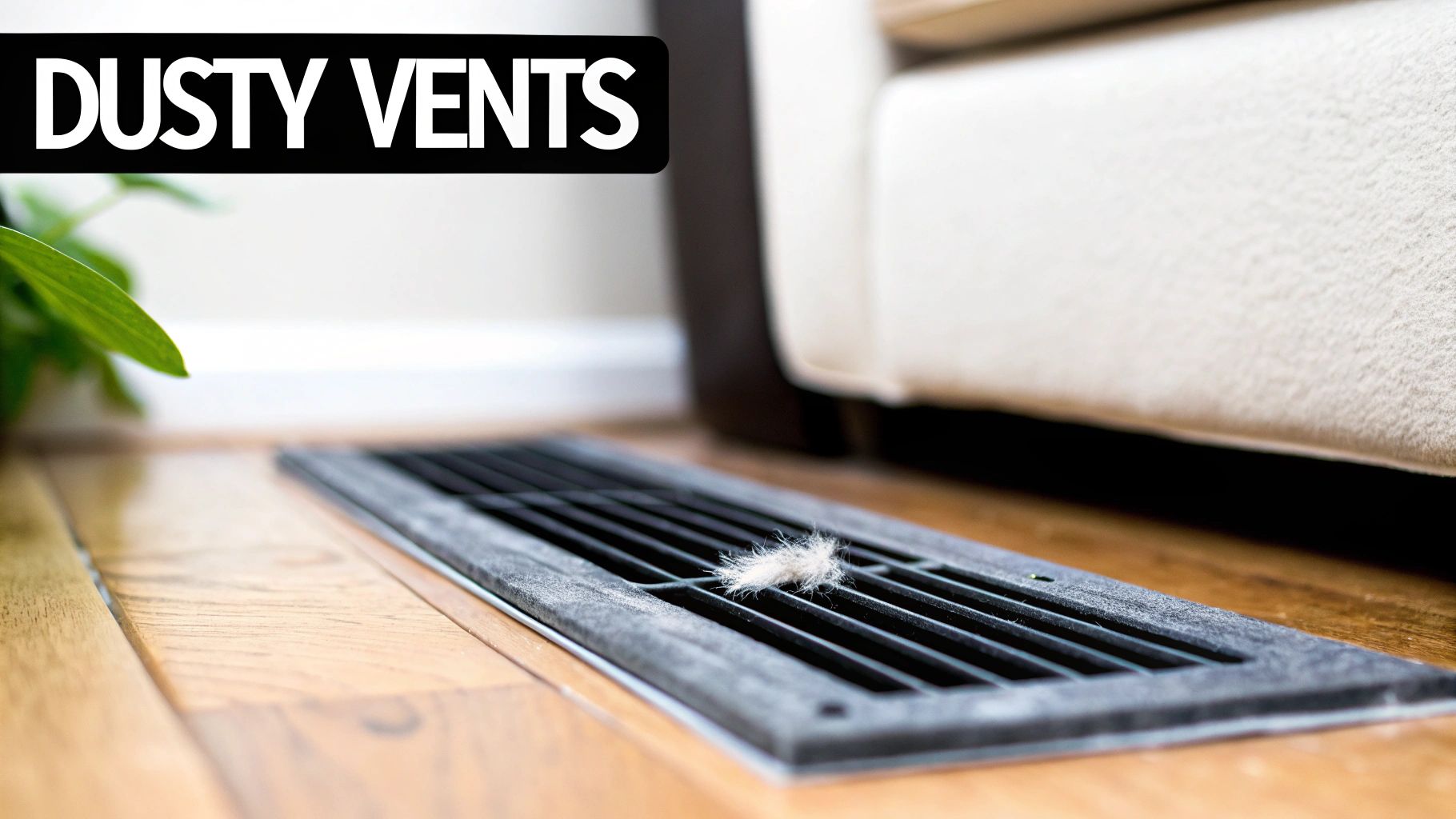
Another dead giveaway is what you can see with your own eyes. Stand near a vent when your furnace or AC kicks on. If you see a little puff of dust or debris shoot out, that’s a clear signal that the inside of your ducts is full of gunk that’s being pushed directly into your living space.
Odours and Airflow Issues
It's not always what you can see, but what you can smell or feel. A lingering musty smell that you can’t quite pin down often comes from deep within the ductwork. Dust, moisture, and even mould can build up in there, creating unpleasant odours that circulate through every room.
You might also notice that some rooms are just… off. Maybe the bedroom is always stuffy, or the living room never feels quite cool enough in the summer. When thick layers of dust and debris clog up the pathways, it can severely restrict airflow, forcing your HVAC system to work overtime just to keep up.
Key Takeaway: If you’re constantly dusting or one room always feels stuffy, don't just write it off as a quirk of the house. Your air ducts are likely the culprit, and it's a sign your indoor air quality needs a boost.
Health and Allergy Symptoms
Pay attention to how everyone in your home feels. Are sneezing, coughing, and itchy eyes a regular thing inside the house, but seem to magically clear up when you go outside? Your indoor air is probably to blame.
This is a huge deal, especially if you have children, elderly family members, or anyone with asthma or other respiratory issues. Your ducts can become a reservoir for allergens like pollen, pet dander, and dust mites, which get recirculated every time the system runs. For a deeper dive, check out our list of signs that you need to get your air ducts cleaned.
Spotting these signs is the first step. When you decide it's time to clean ducts and vents, you’re not just tidying up; you're tackling the root of the problem and making your home a healthier place to breathe.
Setting a Realistic Duct Cleaning Schedule for Your Home
You've probably heard the standard advice: get your air ducts cleaned every three to five years. While that’s a decent rule of thumb, it doesn’t quite capture the full picture for every home. Your house isn't "standard"—it's a living space with its own unique conditions.
Think of it this way. A quiet home with two adults and no pets might easily hit that five-year mark without any issues. But bring a lovable, shedding Golden Retriever into the mix, and that timeline shrinks fast. The same goes for homes with smokers or if you've recently dealt with a mould problem. These situations demand a closer eye on your ductwork to keep your indoor air healthy.
When to Throw the 5-Year Rule Out the Window
Certain life events and household factors are clear signals to clean your ducts sooner rather than later. Ignoring them just lets allergens, dust, and other gunk pile up, undoing all the benefits of a clean system.
You should seriously consider shortening the schedule if any of these sound familiar:
- You have pets. Fur and dander are pulled directly into your HVAC system, creating a breeding ground for dust mites and other allergens.
- Someone in your family suffers from allergies or asthma. For anyone sensitive to airborne particles, more frequent cleanings can make a world of difference in reducing triggers and improving day-to-day comfort.
- You just finished a renovation. That fine drywall dust and sawdust gets everywhere, especially deep inside your ductwork. Without a cleaning, your HVAC system will just circulate it for years to come.
- You've moved into a new-to-you home. You have no idea what the previous owners' habits were. It's always a smart move to start fresh with a professionally cleaned system.
A Quick Guide for Canadian Homeowners
To make it even clearer, here’s a simple table to help you pinpoint a schedule that fits your life.
Duct Cleaning Frequency Guide for Canadian Homes
| Household Condition | Recommended Cleaning Frequency |
|---|---|
| Standard Household (No pets, no allergies) | Every 3-5 years |
| Home with Pets | Every 2-3 years |
| Residents with Allergies or Asthma | Every 1-2 years |
| Post-Renovation | Immediately after construction ends |
| New Home Purchase | Within the first 3 months of moving in |
| Home with Smokers | Annually |
This guide gives you a more personalized starting point. From there, you can adjust based on what you notice in your own home—like more dust than usual or a lingering musty smell.
Why Living in Canada Matters
Our distinct Canadian climate adds another layer to this whole equation. The extreme temperature swings from coast to coast directly impact how quickly contaminants build up in our homes.
Canadian homeowners should aim to clean their ducts every 3 to 5 years. Our harsh climate—with winters that can dip well below -10°C and hot, humid summers—forces HVAC systems to work overtime, recirculating air up to 7 times a day. This process traps dust, allergens, and mould, which is a big problem in suburban homes and downtown condos alike.
Whether you're in a Calgary high-rise or a bungalow in Halifax, factors like pets or recent renovations mean you need to be more proactive. Don't wait for problems to appear.
For a deeper dive into creating the perfect schedule for your home, check out our detailed guide on how often you should clean your ducts. By looking at your specific situation, you can build a maintenance plan that genuinely protects your home’s air quality.
What To Expect During A Professional Duct Cleaning
So, you’ve decided to hire a pro. Good choice. But what actually happens when the truck pulls up? Knowing the process from start to finish demystifies the service and shows you exactly where the value is. It’s far more than just sticking a vacuum hose in your vents; it’s a systematic, powerful cleaning that rejuvenates your entire HVAC system.
Before any cleaning starts, a good team will do a thorough walk-through. They’ll inspect your HVAC system, trace the path of your ductwork, and spot any potential red flags like existing damage or leaks. They’ll also prep your home by laying down drop cloths and using corner guards to make sure nothing gets scuffed or dirty.
The Magic of Negative Pressure
The absolute cornerstone of a professional duct cleaning is creating negative pressure. This is the game-changer. The technicians hook up a massive, truck-mounted vacuum system directly to your main duct line, usually down by the furnace. When they flip the switch, this beast starts pulling air into the vents from every single room in your house.
Why is this so critical? It creates a one-way street for all the dirt. As the crew dislodges years of dust, pet dander, and construction debris, it has nowhere to go but straight into the collection unit outside. Without this powerful suction, you'd just be blowing contaminants around your home, making an even bigger mess.
Agitating and Scrubbing the Ducts
With the system under constant suction, the real work begins. The team moves through your house, tackling each vent one by one. They use specialized tools designed to scrub the inside of your ducts, something a household vacuum could never do.
These aren't your average cleaning tools:
- High-Pressure Air Whips: Think of these as powerful, flexible whips on the end of a long hose. Once inserted deep into the ductwork, they’re blasted with compressed air, causing them to spin violently and scrub every inch of the duct walls.
- Rotating Brushes: For the really stubborn, caked-on gunk, technicians use heavy-duty rotating brushes. They snake these through the system to scrape away anything that the air whips can't handle.
This one-two punch of agitation and suction is what gets your ducts truly clean. When looking for a company, it’s good to know this kind of work is often categorized with other professional specialty cleaning services.
The chart below shows just how much factors like pets or a recent renovation can impact how often you should be getting this done.
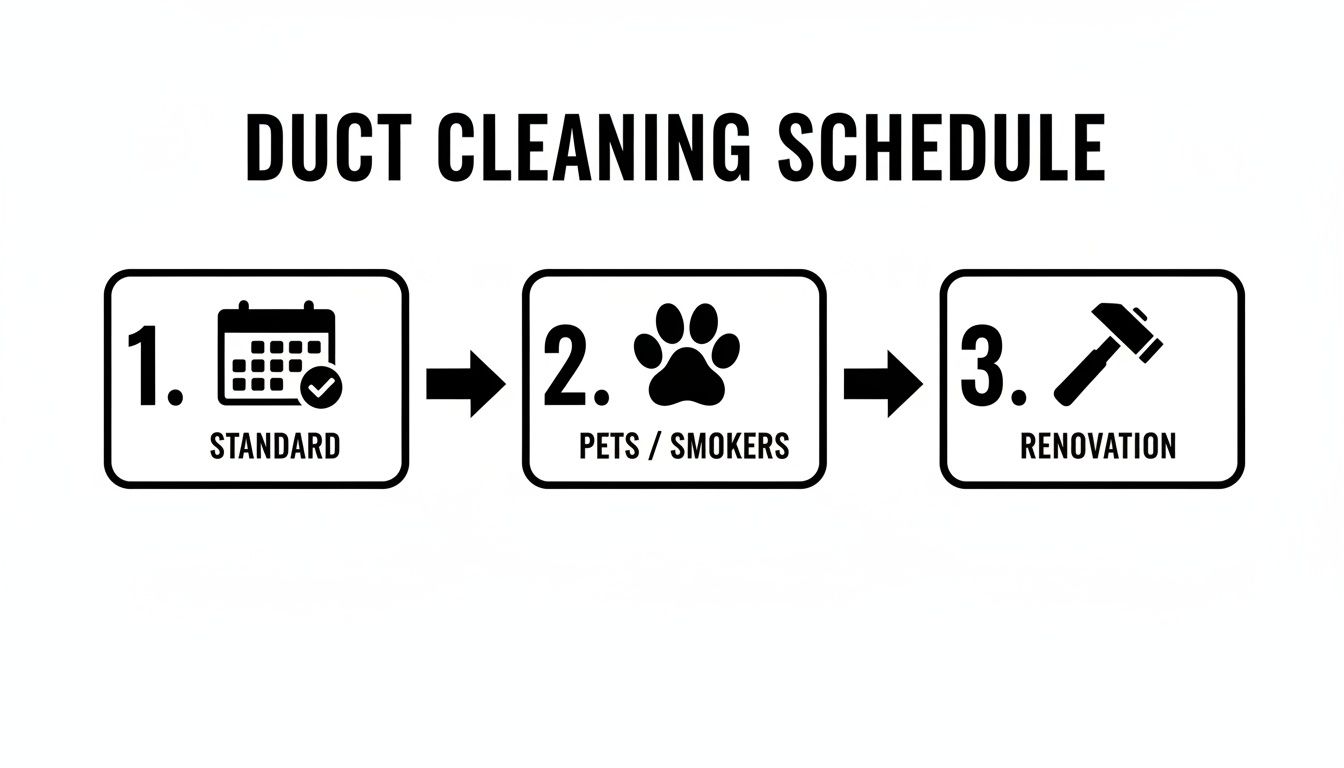
As you can see, life events directly influence your home's air quality, making a thorough, professional cleaning that much more important.
It's Not Just About the Ducts
A comprehensive cleaning doesn't stop at the ductwork. Reputable pros know that the ducts are just one part of a larger system. All the key components of your HVAC unit need attention, too.
Think about it: your HVAC system is a big loop. If you only clean the ducts but leave the furnace fan caked in dust, that fan will immediately blow all that gunk right back into your sparkling clean vents.
A proper service will always include cleaning:
- The Blower Motor and Fan: Getting grime off the fan blades helps your system move air more efficiently.
- The AC Evaporator Coil: A clean coil is crucial for your air conditioner to cool your home effectively.
- The Heat Exchanger: Keeping this component clean is vital for both the safety and efficiency of your furnace.
Once everything is scrubbed clean, the technicians seal up the access panels they created, pack up their gear, and reinstall all your vent covers, leaving your home just as they found it—only with much cleaner air. For a deep dive into our specific methods, check out our full air duct cleaning service details. The difference in your home's air quality is something you'll notice right away.
DIY Maintenance vs Professional Deep Cleaning
I get it—the urge to roll up your sleeves and tackle a home project yourself is strong. When it comes to your HVAC system, there are absolutely some simple jobs you can (and should) do regularly to keep things running smoothly.
Think of it this way: you handle the regular car washes and top up the washer fluid, but you leave the major engine tune-ups to a qualified mechanic. Both are vital for the health of your car, but they address completely different needs.
Smart DIY Tasks for Every Homeowner
Your focus should be on the easy-to-reach spots. These quick tasks are your first line of defence, preventing surface-level gunk from becoming a deep-seated problem.
You can make a surprising difference with just a few minutes of effort:
- Swap Out Your Furnace Filter: This is non-negotiable. A clogged filter chokes your system, drives up energy bills, and stops trapping new dust. Check it every month and plan to replace it every 1-3 months.
- Wipe Down Vent Covers: Grab a damp cloth and give your supply and return air vent grilles a quick clean. It stops that puff of dust from shooting into the room every time the furnace or AC kicks on.
- Keep Vents Clear: Make sure couches, carpets, and curtains aren't smothering your vents. Proper airflow is everything for an efficient system.
These small habits are fantastic, but it's crucial to know where your reach ends and a professional's begins.
The Limits of a Shop Vac
One question we hear all the time is, "Can't I just stick my shop vac hose in there?" Unfortunately, it's just not that simple. While a shop vac is great for sucking up dust bunnies right at the vent opening, it's no match for the metres of ductwork winding through your home’s walls and ceilings.
A professional cleaning isn’t just about suction. It’s a two-part process of aggressively knocking debris loose and then extracting it with powerful, contained suction. A shop vac can't create the negative pressure needed to trap contaminants, which means you could end up just blowing mould spores and allergens from one room to another.
This is exactly why the pros have specialized gear. And honestly, the investment in a deep clean is often more reasonable than most people assume. In Canada, the average cost for professional air duct and vent cleaning lands somewhere between $500 and $1,100 for a typical house, based on its size and the complexity of the system.
When you consider that dirty ducts can make your HVAC system work up to 30% harder, the service starts to look like a smart investment, not just an expense.
Ultimately, to truly clean ducts and vents from the furnace to the furthest register, you need the truck-mounted vacuums and high-pressure air tools that only a professional brings to the job. For a full breakdown of the equipment and methods we use, our guide on how professional air duct cleaning works walks you through the entire process.
Your Top Duct Cleaning Questions Answered
If you're thinking about getting your ducts professionally cleaned, you probably have a few questions. It’s a smart move to do your homework—you want to understand the process, how long it takes, and what the real value is for your home. Let's get into some of the most common questions we hear.
One of the first things homeowners ask is, "Will it make a mess?" It's a valid concern, but with modern professional techniques, the answer is a firm no. We use a powerful method called negative pressure to contain everything.
It works by connecting a massive, truck-mounted vacuum to your main duct line. This creates an intense suction that pulls every last bit of dust, pet dander, and debris directly out of your vents and into a secure unit outside. Nothing gets blown back into your living space.
On top of that, our technicians treat your home with respect. They lay down drop cloths to protect your floors and furniture and use corner guards so the hoses don't scuff your walls. The goal is always to leave your home cleaner than we found it.
How Long Does a Cleaning Take?
For a typical Canadian home—somewhere in the 1,500 to 2,500 square foot range—a complete duct and vent cleaning usually takes about two to four hours.
Of course, this can change depending on a few things. The size of your home, the complexity of the ductwork, and just how much gunk has built up over the years all play a role. If you're in a larger house or it's been a decade since the last clean-out, it might take a little longer to do the job right.
The Long-Term Value of Clean Ducts
The upfront cost is one thing, but the long-term benefits are where you really see the return. When your HVAC system can breathe freely, it doesn't have to work nearly as hard. That often translates into real savings on your monthly energy bills.
Think of it as an investment in your home's infrastructure. By removing corrosive buildup and reducing strain on the motor and fan, a professional cleaning helps extend the lifespan of your expensive furnace and air conditioner, delaying the need for costly repairs or replacements. It's a proactive measure that pays for itself over time.
Ready to improve your home's air quality and HVAC efficiency? The expert team at Can Do Duct Cleaning is ready to help homeowners across Canada. Get your free, no-obligation quote today!


