
If you really want to get a handle on the dust in your home, you need a game plan. It's about more than just wiping down surfaces. The best approach involves catching the dust that's already there, stopping new dust from getting in, and making sure your home's air circulation system is working for you, not against you.
It's a combination of smart cleaning habits, effective HVAC filtration, and sometimes bringing in specialized tools like air purifiers to trap those tiny airborne particles.
Why Your Home Feels Constantly Dusty
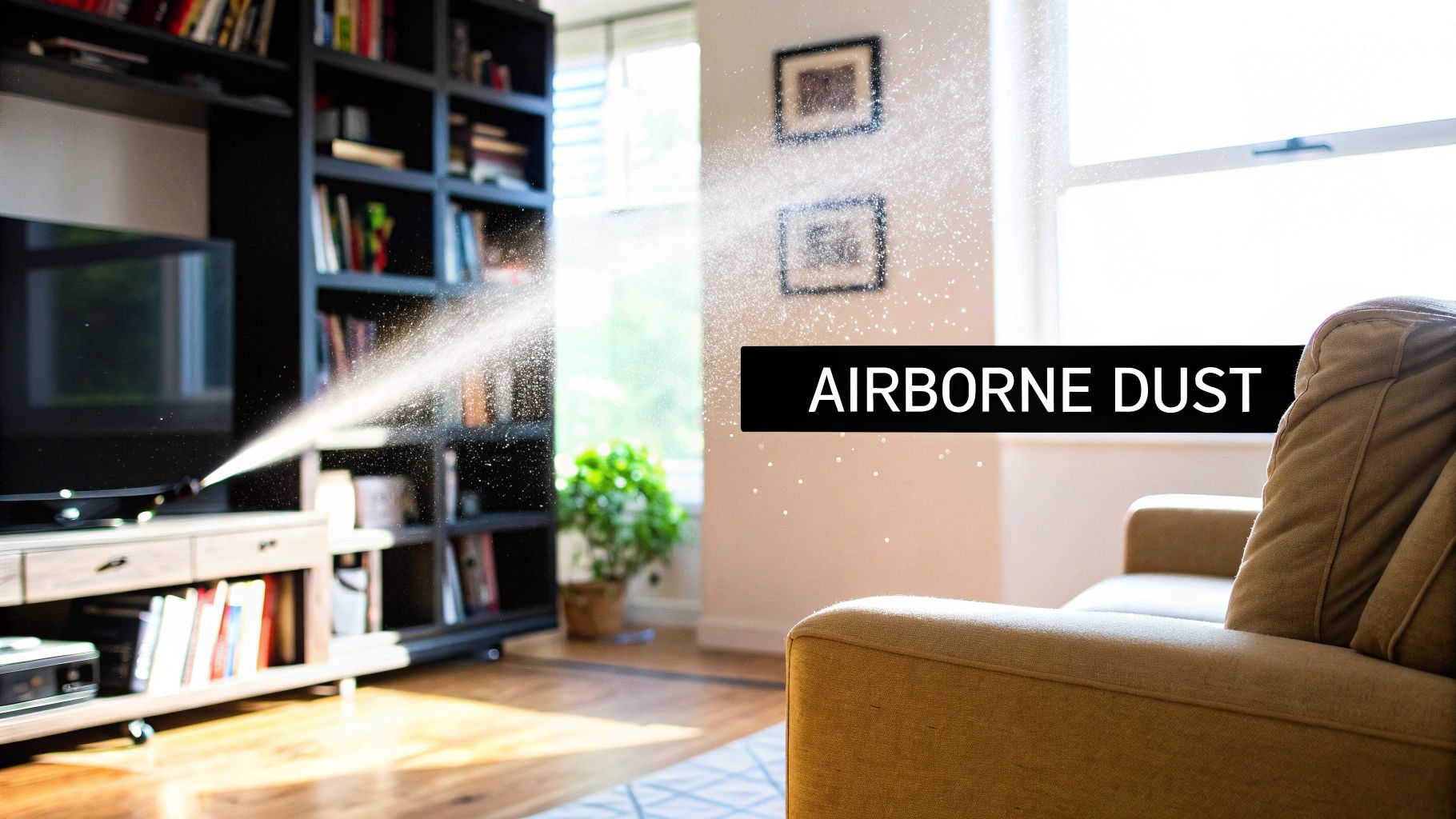
You know that thin layer of grey fluff that seems to reappear on your furniture just a couple of days after you’ve cleaned? It’s not just annoying—it’s a clear sign of what’s going on with your indoor air quality. Figuring out what it is and where it comes from is the first real step to clearing the air for good.
Household dust isn't just one thing. It's a messy cocktail of particles from inside and outside your house. Think tiny fibres from your carpets and clothes, dead skin cells, pollen that snuck in from outdoors, and, of course, pet dander. All of it mixes together to create the airborne gunk you and your family breathe in every day.
The Indoor Air Quality Challenge
Here's a startling fact: in Canada, most of us spend about 90% of our time indoors. This makes dust control more than a cleaning chore; it's a genuine health concern.
Studies from Health Canada show that indoor air can be two to three times more polluted than the air outside, mainly because of fine particles from dust and dander. For Canadian homeowners, where our heating and AC systems are running for months on end, any dust that settles in the ductwork just gets blown right back into our living spaces, over and over again.
This issue can look different depending on where you live. An older home in a city like Montreal might have drafty windows that let in more outdoor pollutants. On the other hand, a newer, tightly sealed condo in Vancouver can trap indoor dust sources like pet dander, causing it to build up and constantly recirculate. For a closer look at that particular problem, we have a whole guide on how to get rid of pesky pet dander.
Think of your HVAC system as your home's lungs. It can either be your best defense, filtering out all that nasty stuff, or it can be the very thing that spreads it into every single room.
Ultimately, you have to stop thinking of dust as just a mess to clean up. It’s an ongoing air quality problem. The dust you can see on your coffee table is only a fraction of what's actually there—the rest is still floating in the air you’re breathing right now.
Simple Habits for a Less Dusty Home
Before you start looking at expensive air purifiers or major HVAC upgrades, let's talk about the most effective way to cut down on dust: tackling it at the source. This is your first and best line of defence. It really just comes down to forming a few simple, consistent habits and rethinking your cleaning routine to trap dust for good, not just send it flying.
The single biggest mistake I see homeowners make is grabbing an old-school feather duster. All that does is launch dust particles into the air, letting them float around for hours before they settle right back where they started. It’s time to ditch it. Instead, make the switch to microfibre cloths. These things are designed to grab onto dust and hold it tight, actually removing it from your surfaces.
Rethink Your Cleaning Tools
A weekly dusting and vacuuming schedule is the foundation of a low-dust home, but the gear you use makes all the difference. For hard surfaces like tables and shelves, a slightly damp microfibre cloth is your best friend. When it comes to floors, carpets, and upholstery, your vacuum is the real workhorse.
But not all vacuums are created equal. A vacuum with poor filtration can actually make your air quality worse. It sucks up dust from the floor and blasts the finest, most irritating particles right back into the air you’re breathing.
The most important feature to look for in a vacuum is a HEPA (High-Efficiency Particulate Air) filter. This isn't just a marketing term—it's a standard. A true HEPA filter is certified to capture 99.97% of airborne particles as small as 0.3 microns, ensuring that dust, pet dander, and pollen stay trapped inside the machine.
Overlooked Dust Hotspots
Once you've got your regular surfaces under control, it's time to target the hidden dust reservoirs that often get missed. Hitting these spots regularly can make a massive difference in your home's overall dust levels.
- Bedding and Linens: Your bed is a major source of dust mites and the skin cells they love to eat. Wash all your bedding—sheets, pillowcases, duvet covers—in hot water at least once a week to keep them in check.
- Curtains and Drapes: These are basically giant fabric dust magnets hanging on your walls. Give them a once-over with your vacuum's brush attachment every month. It’s also a good idea to launder or dry-clean them every three to six months.
- Declutter Surfaces: It's simple math: the more stuff you have sitting out, the more surfaces there are for dust to land on. Adopting a more minimalist approach on shelves and tables doesn't just look tidier; it makes cleaning faster and more effective.
And if you're planning any home improvements, like redoing the floors, be mindful of the mess it can create. Whenever possible, choose non-toxic and dust-free floor sanding methods to prevent a massive influx of fine particles into your home's air.
Sticking with these habits does more than just make your home look cleaner. It directly reduces the amount of dust that becomes airborne, which means your HVAC system doesn't have to work nearly as hard. A cleaner house means a cleaner furnace filter that won't clog up as fast. This routine is just as crucial as knowing the correct furnace filter replacement frequency for your system.
Making Your HVAC System Work for You
Your home's heating, ventilation, and air conditioning (HVAC) system is probably your single most powerful ally in the fight against dust. Think about it—it’s constantly moving huge volumes of air. With a couple of smart tweaks, you can turn it from a simple climate control system into a whole-home air cleaner.
The secret weapon here is your furnace filter.
Many Canadians are guilty of grabbing the cheapest, flimsiest filter off the shelf at the hardware store. The problem is, those basic fibreglass filters are only designed to protect your furnace from big stuff like hair and lint. They do next to nothing for the fine dust that actually affects your air quality.
Decoding MERV Ratings for Better Air Quality
To really trap dust, you need to get familiar with MERV ratings. It stands for Minimum Efficiency Reporting Value, which is just a fancy way of saying how good a filter is at catching tiny particles. The scale runs from 1 to 20; the higher the number, the smaller the particles it can trap.
For the average Canadian home, a filter in the MERV 8 to 11 range is the sweet spot. These are fantastic at grabbing common dust, pollen, and pet dander without choking your furnace. A filter that's too restrictive can actually strain the motor, leading to costly repairs.
If you or someone in your family has severe allergies or asthma, stepping up to a MERV 13 filter might be worthwhile. Just be sure to double-check your furnace manual first to make sure it can handle the added resistance.
Your furnace filter isn't a "set it and forget it" item. A clogged filter not only stops cleaning the air but also forces your entire HVAC system to work harder, driving up your energy bills and risking damage.
This is a big one: you have to change it regularly. A standard one-inch filter needs to be swapped out every one to three months. If you’ve got a furry friend or live near a busy street, you’re probably looking at changing it closer to every month. Do yourself a favour and set a reminder on your phone right now. It’s a five-minute job that makes a massive difference.
Choosing the Right Furnace Filter for Your Home
Picking the right filter can feel overwhelming with all the options out there. This table breaks down the most common types to help you find the best balance of performance, cost, and maintenance for your home.
| Filter Type | Typical MERV Rating | Dust Capture Effectiveness | Average Cost (CAD) | Replacement Frequency |
|---|---|---|---|---|
| Fibreglass | 1-4 | Low (protects furnace, not for air quality) | $2 – $5 | Monthly |
| Pleated Polyester | 6-8 | Good (captures most household dust) | $10 – $20 | Every 90 days |
| Electrostatic | 8-10 | Very Good (traps dust, pollen, dander) | $20 – $30 | Every 90 days (washable) |
| High-Efficiency | 11-13 | Excellent (great for allergies, captures fine particles) | $25 – $40 | Every 6 months |
Ultimately, a pleated MERV 8 filter is a great starting point for most homeowners, offering a significant upgrade from basic fibreglass without breaking the bank or straining your system.
To see how this fits into your overall cleaning strategy, this flowchart is a handy guide for tackling dust on different surfaces before it even gets a chance to become airborne.
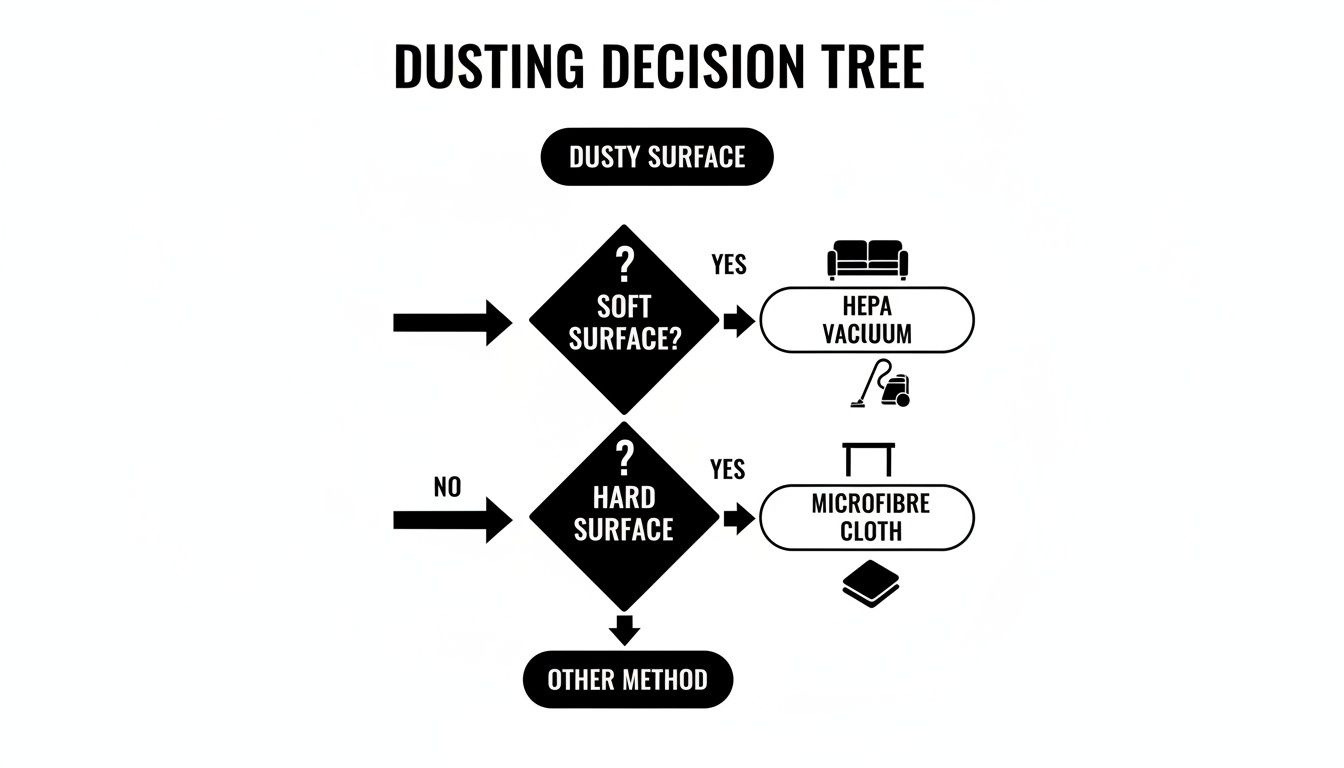
As the guide shows, using the right tool—like a HEPA-filter vacuum or a microfibre cloth—is key to actually capturing dust instead of just kicking it up into the air for your HVAC system to deal with.
Activate Your Fan for Continuous Cleaning
Here’s a fantastic pro-tip that costs almost nothing. Head over to your thermostat and find the "Fan" setting. Most are set to "Auto," meaning the fan only runs when the heat or AC is on.
Switch it to "On."
By running the fan continuously, you’re constantly pulling air through that high-quality filter you just installed. It becomes a 24/7 air-purifying cycle, grabbing dust particles as they float around.
If you’ve done this and still notice puffs of dust coming from the vents, it’s a red flag. That’s a sign of a deeper issue—years of buildup hiding inside your ductwork. When that happens, it’s time to look into professional HVAC ductwork cleaning to clear out the source of the problem.
Air Purifiers and Other Tools for Cleaner Air
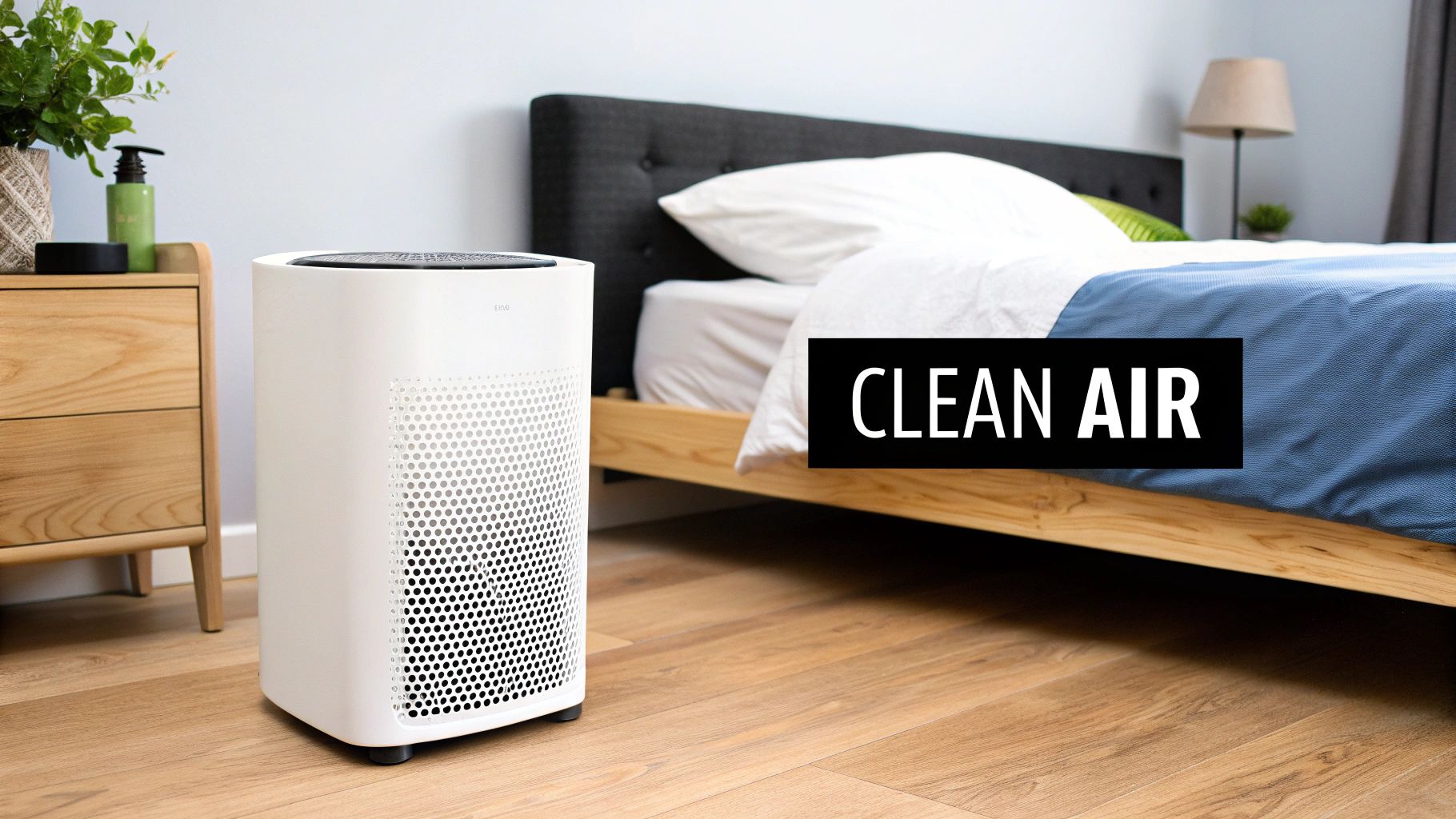
Even with a top-of-the-line furnace filter working overtime, some microscopic dust particles will inevitably slip past. These are the tiny, irritating culprits that can hang in the air for hours, triggering allergies and just generally making your space feel less fresh.
This is exactly where a dedicated, standalone air purifier comes into play. Think of it as specialized support for your HVAC system.
While your furnace filter handles the whole house, a portable air purifier delivers targeted, high-intensity cleaning right where you need it most. We recommend placing them in the rooms you spend the most time in—your bedroom for a better night's sleep or the main family room where everyone gathers.
Choosing the Right Air Purifier
When you're shopping for an air purifier, there's one feature that's non-negotiable: a true HEPA filter. Just like with a quality vacuum, a HEPA filter is the gold standard, certified to capture 99.97% of airborne particles as small as 0.3 microns. That includes fine dust, pet dander, pollen, and even some mould spores.
After the filter, you need to look at the unit's power, which is measured by its Clean Air Delivery Rate (CADR). The CADR number tells you how quickly and effectively the purifier can clean the air in a room of a specific size.
A good rule of thumb is to pick a purifier with a CADR rating that's at least two-thirds of your room’s area in square feet. For a typical 150-square-foot bedroom, you’d want a unit with a CADR of at least 100 to get the job done right.
It can feel a bit overwhelming, but focusing on HEPA and CADR ensures you're buying a machine that actually delivers results. For a deeper dive, take a look at our guide on the best air purifiers for allergies to find the perfect match for your home.
The Surprising Role of Humidity
Here’s a tool you might not have considered in the fight against dust: a humidifier. It seems a bit counterintuitive, but getting your home’s humidity level right can make a huge difference, especially during our bone-dry Canadian winters when the furnace is blasting.
It all comes down to simple physics:
- Dry Air: In low-humidity environments, dust particles are incredibly lightweight, allowing them to float around endlessly.
- Balanced Air: When you maintain an optimal humidity level (ideally between 30% and 50%), tiny water vapour molecules in the air attach to the dust particles.
- The Result: This process makes the dust heavier, causing it to fall out of the air and settle on surfaces. From there, it’s a simple matter of wiping or vacuuming it up for good.
Keeping the humidity in check doesn't just knock down dust; it also makes your home feel more comfortable and helps protect your wood furniture from cracking. A simple humidifier running in the winter is a surprisingly effective strategy for cleaner air.
When to Consider Professional Duct Cleaning
So, you’ve done everything by the book. You’re swapping out your furnace filter regularly, you’ve armed yourself with microfibre cloths, and you even have an air purifier humming away in the corner. But then it happens: the furnace kicks on, and you see a telltale puff of dust float out of the vent.
When that happens, it's a clear signal that the problem isn't just on the surface—it’s lurking deep inside your home’s circulatory system. While your daily efforts and good filtration are fantastic for maintenance, they can’t touch years of caked-on grime hiding in your ductwork.
If you’ve tried everything and still feel like you're losing the battle against dust, it might be time to call in the professionals.
Telltale Signs Your Ducts Need a Deep Clean
The dust you can see is only the tip of the iceberg. What’s hiding in your ducts is often a nasty mix of old construction debris, pet dander, pollen, and even mould spores that have been accumulating since day one. Over time, this buildup turns your ductwork into a non-stop source of indoor air pollution.
Here are a few dead giveaways that it's time to get a professional assessment:
- Visible Dust Coming from Vents: This is the most obvious sign. If you see dust particles blowing out of your supply registers, your ducts are definitely overloaded.
- A Stubborn Musty Smell: Does a stale or musty odour fill the air whenever your HVAC system runs? That often points to mould or mildew thriving in the dark, damp environment inside your ductwork.
- Allergies Acting Up Indoors: If your family’s allergy or asthma symptoms seem to get worse the moment they walk through the door, your ducts could be circulating a heavy concentration of allergens.
- After a Home Renovation: Fine drywall dust and sawdust from renovations are notorious for getting sucked into the HVAC system, and it’s nearly impossible to get it all out without specialized tools.
If any of this sounds a bit too familiar, take a look at this more detailed breakdown of the signs that you need to get your air ducts cleaned to see if your home is showing the classic symptoms.
Think about it: your home’s ductwork is a complex network of tunnels, often stretching for hundreds of feet. A regular household vacuum can’t even begin to reach it all. Trying to DIY it can actually make things worse by dislodging debris and sending it straight into the air you breathe.
What to Expect from a Professional Service
Bringing in a professional duct cleaning crew is a surprisingly tidy and straightforward process. Technicians will hook up powerful, truck-mounted equipment to create negative pressure throughout your entire duct system. This effectively turns your HVAC network into a massive, contained vacuum, so no dust escapes back into your home.
From there, they use tools like high-pressure air whips and rotating brushes to scrub the inside walls of the ducts. All the dislodged debris, dust, and allergens are pulled directly outside into a containment unit on their truck. It's a powerful process—a typical professional duct cleaning in Canada can remove an average of two to three kilograms of dust and debris in just a few hours.
For a lasting solution, professional duct cleaning services are the way to go. Experts guided by the National Air Duct Cleaners Association (NADCA) generally recommend a cleaning every three to five years.
However, for many Canadians—especially if you have pets or family members with allergies—scheduling a cleaning every two to three years is a smart investment in your family’s health and comfort.
Your Top Dust Questions, Answered
Even after you've started tackling dust, some questions always pop up. We get it. Homeowners across Canada ask us about the nitty-gritty details—like how often certain jobs really need doing, if calling in a pro is worth the money, and what they can realistically handle themselves.
Let's clear the air on the most common questions we hear every day.
How Often Should Ducts Be Cleaned in Canada?
For most homes across the country, a professional duct cleaning every three to five years is a great rule of thumb. That’s usually enough to keep major buildup at bay and your HVAC system running smoothly.
But that’s just a baseline. Life happens, and some situations call for a more frequent schedule. You’ll want to bump that up to every two or three years if any of these sound familiar:
- You share your home with furry friends who shed. All that pet dander and hair has to go somewhere.
- Someone in the family deals with bad allergies or respiratory conditions like asthma.
- Your neighbourhood is a new construction zone, which is common in growing suburbs across the country.
- You’ve just finished a big renovation. Fine drywall and wood dust can clog up your entire system in a hurry.
While Canada doesn't have a federal law forcing you to clean your ducts, official guidance from Health Canada connects clean HVAC systems to better indoor air quality. Ask any HVAC pro, and they’ll likely recommend a cleaning every 2–3 years, especially if you see dust bunnies gathering around your vents or just finished a reno.
Is Professional Duct Cleaning a Messy Process?
This is a huge worry for a lot of people, but here's the good news: when a certified pro does it, it’s anything but messy. It’s actually a very clean, contained process.
Reputable companies use powerful, truck-mounted vacuums to create what’s called negative pressure inside your ductwork. Think of it as a one-way ticket for dust. Everything that gets knocked loose is pulled straight out of your house and into a sealed unit on the truck.
Before they even turn the machine on, the technicians will carefully seal every single one of your vents. This ensures nothing escapes back into your living space. The whole point is to leave your home’s air far cleaner than they found it.
Can I Just Clean My Own Air Ducts with a Shop Vac?
We love a good DIY spirit, but this is one job where calling in the experts pays off. Go ahead and use your shop vac to clean the surface of your vent covers and the area right inside the opening—that's great regular upkeep.
But a shop vac just doesn't have the muscle or the reach to handle the metres and metres of ductwork hiding in your walls and ceilings. Professional gear is built for this, with super-long hoses and specialized tools like rotating brushes and high-pressure air whips that scrub the entire system clean.
Trying to deep-clean with a shop vac can honestly make things worse. Without that critical negative pressure setup, you’re more likely to just push debris deeper into the system or, even worse, send a cloud of dust billowing into the room.
For a truly deep clean that gets rid of dust at the source without any of the mess, you need an expert. Can Do Duct Cleaning has been helping homeowners across the country breathe easier for over 30 years. Schedule your professional duct cleaning service today and feel the difference for yourself.


