
Are your clothes still damp after a full drying cycle? Does your laundry room feel more like a sauna these days? These aren't just minor annoyances—they're clear warning signs that your dryer vent is clogged and becoming a serious hazard. For Canadian homeowners, keeping that vent clear isn't just about efficiency; it's a critical piece of home safety.
Why Dryer Vent Cleaning Is a Critical Safety Task
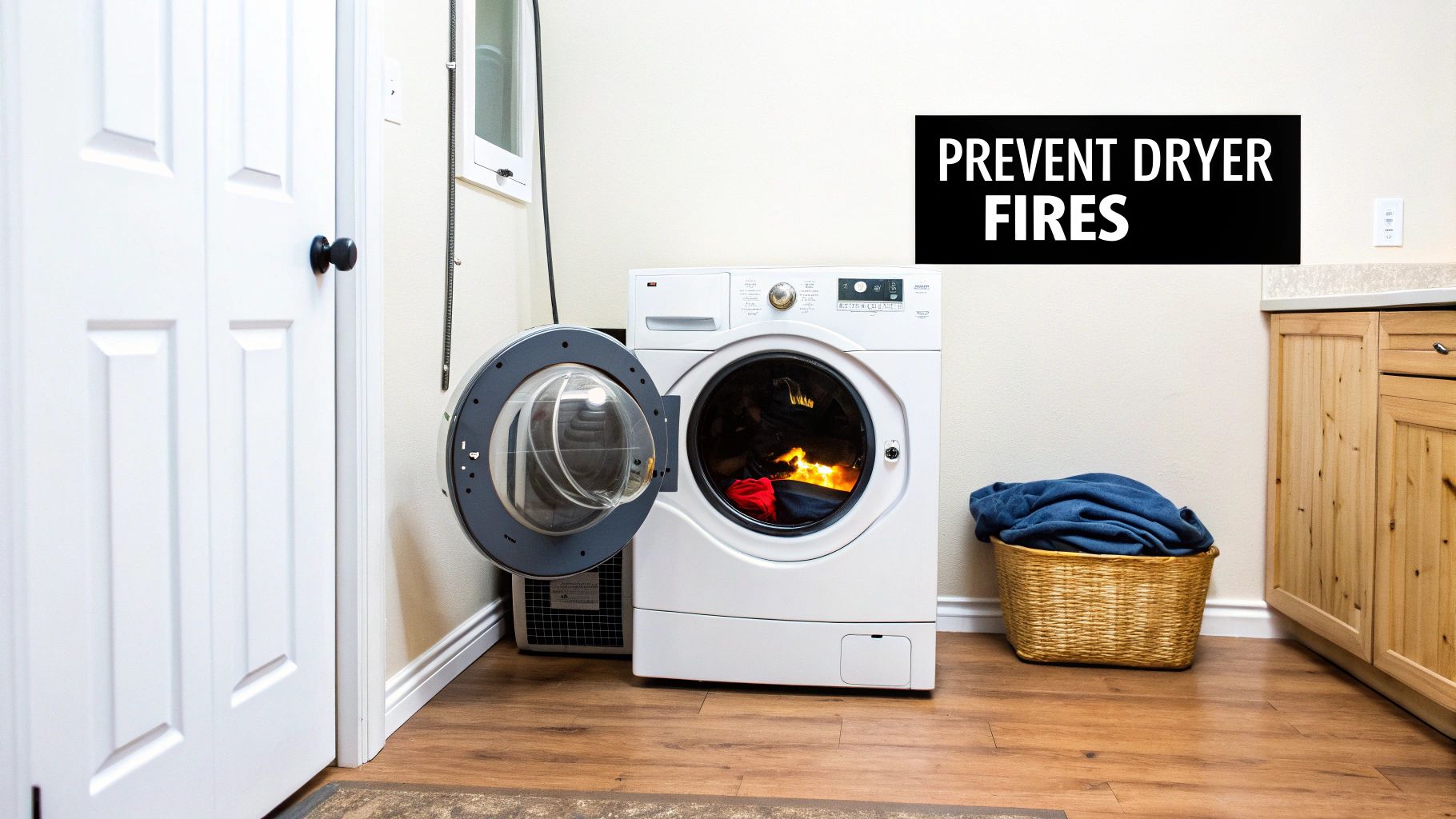
Putting off cleaning your dryer vent is a major gamble. Every time you dry a load of laundry, your dryer sheds lint, which is incredibly flammable. While the little screen you clean out after each cycle—the lint trap—catches a lot of it, a surprising amount gets past and builds up deep inside your dryer's ductwork.
This hidden buildup chokes off the airflow, forcing your dryer to work much harder and get dangerously hot. That trapped lint can easily heat up and ignite, sparking a fire that can spread through your home in minutes. If you ever notice a burning smell coming from your dryer, stop using it immediately. That’s a massive red flag, and you can learn more about the burning smell in dryer: causes & safe solutions.
Beyond the Fire Hazard
Preventing a fire is reason enough, but the benefits of a clean dryer vent don't stop there. When air can flow freely, your dryer runs the way it was designed to, which means you'll see some real perks.
- Lower Hydro Bills: An efficient dryer uses less energy. When it isn't fighting against a lint blockage, it dries clothes faster and pulls less power, which means real savings on your monthly bills.
- Longer Appliance Life: Constant overheating and strain take a toll on your dryer's motor, heating element, and other parts. Regular cleaning reduces that stress, helping your machine last years longer.
- Faster Drying Times: A clean vent gets the job done right the first time. No more running the same load twice, which saves you time and a whole lot of frustration.
The Real Numbers Behind Dryer Fires
This isn't just a theoretical risk. Fire departments across Canada respond to thousands of residential clothes dryer fires every single year. These fires cause millions of dollars in property damage and, tragically, can lead to injuries or worse. The leading cause? You guessed it—a failure to clean the dryer vent system.
For most Canadian homeowners, a house fire feels like something that happens to other people. But the simple, often-overlooked task of cleaning out a dryer vent is one of the most powerful fire prevention steps you can take.
This guide will walk you through exactly how to do it. But if you're a GTA resident who'd rather leave it to the experts, our professional dryer vent cleaning services can give you complete peace of mind.
Gathering Your Dryer Vent Cleaning Tools
Before you dive in and start pulling your dryer away from the wall, let's talk about tools. Taking a few minutes to get organized now will save you a world of frustration later. Trust me, there’s nothing worse than getting halfway through a job only to realize you’re missing a crucial piece of equipment, forcing a mid-project run to Canadian Tire.
Having the right gear on hand makes this job smooth and, dare I say, satisfying. Most of what you need is probably already kicking around your garage, but there's one special item you’ll definitely want to pick up.
Essential Toolkit for Dryer Vent Cleaning
To do this job right, you'll need a few specific items to safely disconnect, dislodge, and remove all that built-up lint. Here’s a quick rundown of the gear that will make this process a breeze.
| Tool or Material | Primary Purpose | Pro Tip |
|---|---|---|
| Vacuum with Hose Attachment | Sucking up loose lint from the dryer cavity, vent opening, and floor. | A shop vac is ideal for its power, but a regular household vacuum with a long hose works perfectly well. |
| Dryer Vent Brush Kit | The key tool for scrubbing the entire length of the ductwork. | Look for a kit with flexible, screw-together rods. Cheaper plastic ones can snap inside the vent—a nightmare to retrieve! |
| Screwdriver / Nut Driver | To loosen the clamps holding the vent hose in place. | Have both a Phillips head and a Robertson (square) head ready. You never know which one the installer used. |
| Duct Tape | For temporary seals and minor repairs on the transition hose. | Choose a heavy-duty foil tape for a more permanent patch on rigid or semi-rigid ducting if you find a small tear. |
| Old Towels or Rags | Catching the inevitable mess of lint that falls out upon disconnection. | Lay them down before you disconnect anything. You'll thank yourself later. |
| Dust Mask & Gloves | Personal protection from inhaling fine particles and from sharp metal edges. | Don't skip these! A simple N95 mask and a pair of work gloves are non-negotiable for safety. |
This kit gives you the core components to tackle the job effectively and safely.
Pro Tip: Before you buy a brush kit, get a rough measurement of your vent line—from the back of your dryer to where it exits your house. Make sure the kit you buy has enough rod extensions to easily cover that distance, plus a little extra. You don't want to come up short.
Why Safety Gear Isn't Optional
I can't stress this enough: protecting yourself is just as important as cleaning the vent. You're about to disturb months, maybe even years, of packed-in dust, lint, and whatever else has found its way in there. That stuff goes airborne the second you touch it.
Your safety checklist is short but crucial:
- A good dust mask: This keeps you from breathing in a lungful of fine lint particles, which can seriously irritate your respiratory system.
- A pair of work gloves: These are your best friends for protecting your hands from surprisingly sharp metal edges on the ductwork and, of course, keeping them clean.
With these tools in hand, you’re basically set up like the pros for a standard residential job. Of course, the professional-grade gear gets a bit more complex. If you're curious, you can learn more about the specialized duct cleaning equipment we use for more demanding situations.
Now that your toolkit is ready, let's get to the main event.
The Complete Process for Cleaning Your Dryer Vent
Alright, let's get our hands dirty. Cleaning your dryer vent isn’t rocket science, but tackling it with a clear game plan is crucial for getting it done right—and safely. We'll walk through it together, from inside your laundry room straight through to the outside wall.
This simple process flow breaks down the essentials: you need suction, agitation, and protection.
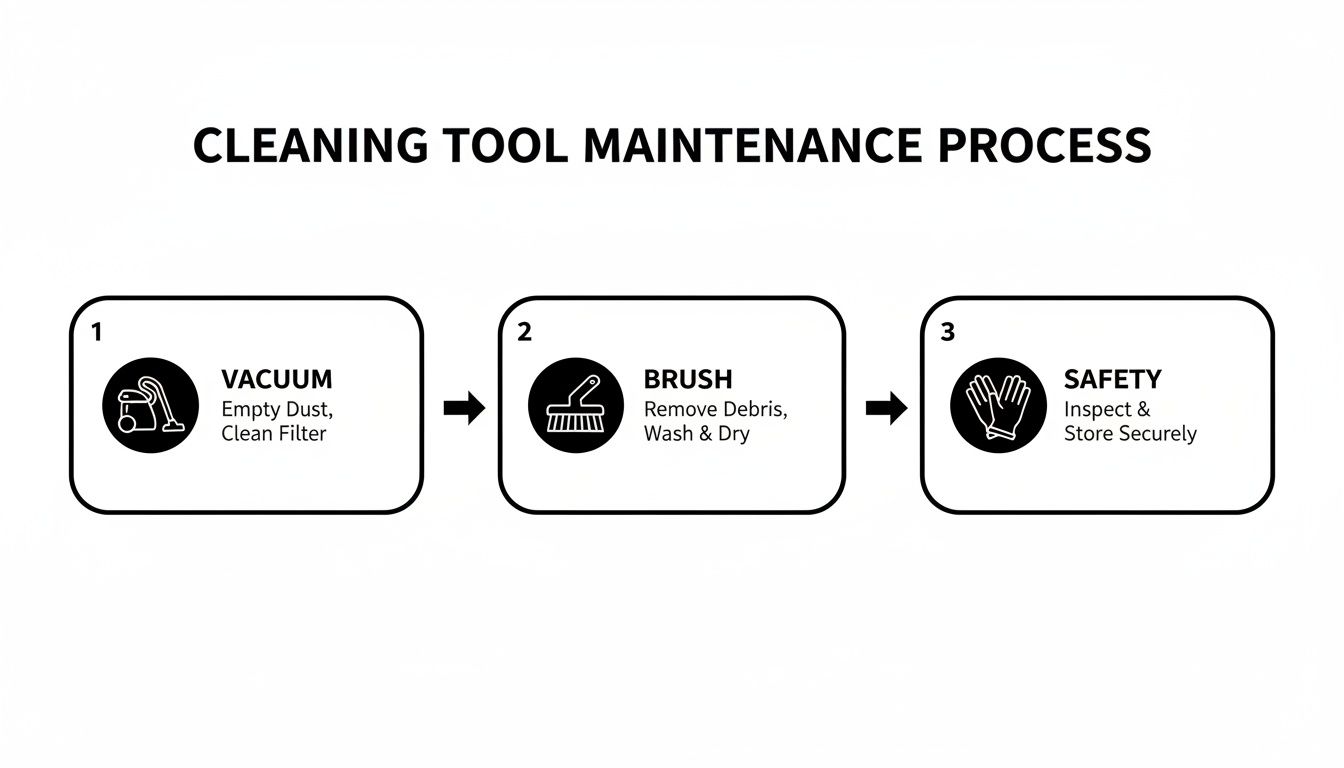
Think of it as a three-pronged attack: the vacuum for powerful removal, the brush for a deep scrub, and safety gear to protect yourself.
Starting with Safety Inside
Before you even think about moving the dryer, you have to cut the power. This is the one step you absolutely cannot skip. It’s all about keeping you safe.
First things first, unplug the dryer from the electrical outlet. I know it sounds basic, but it’s the most important move you'll make. If you have a gas dryer, you also need to shut off the gas supply. Find the small valve on the gas line behind the dryer and give it a quarter-turn so it's perpendicular to the pipe.
With everything disconnected, you can now gently pull the dryer away from the wall. Take your time here to avoid yanking on the vent hose or scuffing up your floor. You just need enough room to work comfortably behind it.
Disconnecting and Tackling the Transition Hose
Now that you can see what you're doing, it's time to deal with the transition hose—that flexible tube connecting your dryer to the wall duct. This is a notorious hot spot for lint clogs.
Grab your screwdriver or nut driver and loosen the clamps that hold the hose in place on both ends. Once they’re loose, you can carefully wiggle the hose free. Be ready for a good bit of lint to tumble out; this is where those old towels on the floor will come in handy.
Set the hose aside for a minute. Your immediate focus should be the openings it was just connected to.
Pro tip: Take a second to inspect the lint trap housing on the dryer itself. Use your vacuum's crevice tool to get deep into the slot where the screen sits. You’ll be floored by how much gunk builds up in there.
Next, turn your attention to the duct opening in the wall. Use your vacuum hose to clean up all the loose fluff around the entrance before you bring in the brushes.
Cleaning the Main Duct Run
This is the main event—clearing out the entire length of the vent system. It’s time to break out your dryer vent brush kit.
Start by attaching the brush head to a single rod section. Insert the brush into the ductwork at the wall and begin turning it clockwise. Gently rotate the brush clockwise as you advance it; this motion is what breaks up all those stubborn, caked-on lint deposits.
As you push the brush further into the duct, keep adding more rod sections. This is how you extend your reach to clean the entire vent, all the way to the outside. Keep that clockwise rotation going as you push and pull the brush to work the lint loose.
Once you’ve gone the full length, slowly pull the brush back out, still rotating it clockwise to help drag the dislodged lint toward you. Finish up by sticking your vacuum hose as far into the duct as you can to suck out any leftover debris. Getting the technique right is key, as there are plenty of common dryer vent cleaning mistakes to avoid that can lead to damage or a job half-done.
Finishing the Job Outside
The last stop on our tour is the exterior of your house where the dryer vent exits. The vent cap outside is a prime location for blockages that can completely stop airflow.
Give the vent cap a thorough inspection. You’re looking for a few specific things:
- Thick lint buildup: Sometimes it looks like a fuzzy grey blanket completely covering the opening.
- Birds' nests: Especially in Canadian suburbs and rural spots, birds see dryer vents as a five-star location for a nest, creating a serious fire hazard.
- Debris: Leaves, twigs, and even compacted snow can easily clog the exterior vent.
Carefully clear away any obstructions you find. Jiggle the flaps or louvres on the cap to make sure they can move freely. If they’re stuck shut, all that moist air from your dryer has nowhere to go.
Once the outside is clear, you're done! Head back inside, reassemble everything in the reverse order you took it apart, and run a quick, empty test cycle to make sure everything is working perfectly.
Knowing When to Call a Professional
Tackling your own dryer vent cleaning is a fantastic way to stay on top of home maintenance, but some jobs are best left to the experts. Knowing when to wave the white flag isn't a sign of failure—it's just a smart move to keep your home safe and your dryer running efficiently.
Sometimes, even after you've done everything right, the problem doesn't go away. If you’ve cleaned the vent from end to end and your dryer is still overheating or taking forever to dry a load, that’s a clear signal. You’re likely dealing with a deep, compacted blockage that your DIY kit can’t touch, or maybe an issue inside the dryer itself. Don’t just keep running a struggling appliance; it’s time to call in someone with the right tools for the job.

Red Flags for Professional Intervention
Certain home layouts create challenges that your standard brush kit just wasn't built for. Pros show up with specialized gear, like high-powered vacuums and flexible cameras, that can navigate complex systems safely and get them truly clean.
You should definitely consider calling for help if your setup includes any of these:
- Long Vent Runs: If your ducting stretches longer than 10 metres (about 35 feet), your brush kit probably won't reach the end. That leaves a huge section of the vent completely untouched and full of lint.
- Sharp, Inaccessible Bends: Many systems have multiple sharp turns where lint loves to build up. Professionals have tools that can snake around these corners without getting stuck or damaging your ductwork.
- Rooftop Vents: This one’s a biggie. Cleaning a vent that exits on your roof is a serious safety risk. It takes the right equipment and experience to get up there and do the job without causing injury or property damage.
Calling a professional is an investment in certainty. It guarantees that every inch of your vent system is completely clear, eliminating hidden fire hazards and restoring your dryer's peak performance.
The Financial Sense of Hiring an Expert
This isn't just about fire safety; a clogged dryer has to work much harder and run longer, which directly translates to higher hydro bills. Yes, there's an upfront cost for professional service, but think of it as a small preventative investment.
That modest annual expense is a drop in the bucket compared to the cost of repairing fire damage or replacing a dryer that burned out years before its time.
Ultimately, whether you're dealing with a tricky vent path or a stubborn clog, a reliable air duct cleaning company can provide the definitive solution you need. They'll ensure your system is safe, efficient, and sound.
Year-Round Maintenance for a Healthy Dryer Vent
A deep clean is a great start, but it's only half the battle. The real secret to keeping your dryer safe and efficient is consistent, year-round maintenance.
Think of it like brushing your teeth—you do it every day to prevent much bigger problems down the line. The same idea applies perfectly to your dryer vent. These simple, proactive habits will drastically cut down on lint buildup, help your appliance last longer, and make sure it runs safely through our harsh Canadian winters and humid summers.
The Most Important Daily Habit
The single most effective thing you can do is also the simplest: clean the lint screen after every single load. I know it's easy to forget, but this little task takes less than 15 seconds and is your absolute first line of defence against lint getting into your ductwork.
When that screen gets clogged, air can't flow through properly. This forces lint to bypass the screen and get pushed straight into the vent system. Making this a non-negotiable step in your laundry routine will prevent the vast majority of buildup before it even has a chance to start.
Your Quarterly and Semi-Annual Checklist
Beyond that daily screen check, a quick seasonal routine will keep everything in top shape. You don't need to pull out all the tools for a deep clean; this is just about spending a few minutes inspecting things to catch issues early.
- Every three months: Take a quick walk outside to check your exterior vent cap. Look for blockages from things like leaves, heavy snow, or even birds’ nests—a surprisingly common issue in Canadian suburbs. Make sure the flaps can still open and close freely.
- Every six months: Do a quick clean of the ductwork you can easily get to. Just disconnect the flexible transition hose from the back of the dryer and the wall, then use your vacuum's hose attachment to clear out any lint you can see. This simple step stops minor buildup from turning into a major clog.
A quick look at the easily accessible ductwork every six months can prevent small accumulations from becoming a major fire hazard. It's a five-minute job that makes a huge difference.
Knowing the Right Cleaning Frequency
So, how often should you book a full, professional deep cleaning? A yearly clean is a solid baseline for most Canadian households, but your situation might call for something different. You can find more detailed advice on how often dryer vents should be cleaned based on factors like your family size, if you have pets, and how often you run the dryer.
Keeping up with dryer vent maintenance is a big part of overall household energy efficiency. For more great ways to save, check out these energy efficiency tips for your home. By staying on top of it, you’re not just preventing serious safety hazards—you're also keeping your hydro bills from creeping up.
Got Questions About Dryer Vent Cleaning? We've Got Answers
Even with the best instructions, you might still have a few questions floating around. That’s perfectly normal. Getting the right answers is key to doing this job safely and with confidence.
Let’s tackle some of the most common things Canadian homeowners ask us.
How Often Should I Clean My Dryer Vent in a Canadian Climate?
For the average household here in Canada, a full, professional-level cleaning once a year is the sweet spot. But that’s just a baseline.
You’ll want to bump that up to every six months if you're:
- Running laundry nearly every day for a big family.
- Dealing with pets who shed enough to knit a whole new animal.
- Regularly drying heavy loads like towels, bedding, or lint-heavy work clothes.
Our crazy Canadian seasons matter, too. The big swings in humidity from a sticky summer to a dry winter can make lint get clumpy and stick inside the duct. An annual clean-out is a non-negotiable part of your home maintenance schedule.
Can I Use a Leaf Blower to Clear My Dryer Vent?
I get why people ask this—it seems like a clever shortcut. But please, don't do it. A leaf blower is far too powerful and uncontrolled for this job.
Instead of blowing the lint out, it’s far more likely to slam it together, creating a dense, rock-hard clog deep inside the vent. Even worse, that blast of air can easily disconnect the ductwork hidden inside your walls, leading to serious issues like moisture damage and mould. Stick with a purpose-built dryer vent brush kit and a good vacuum.
Using a leaf blower is a gamble. It often turns a simple cleaning task into a costly repair by pushing the problem deeper instead of actually solving it.
Is a Rigid Metal Vent Better Than a Foil One?
Absolutely, 100% yes. Those flexible, accordion-style foil or vinyl ducts are a disaster waiting to happen. Their ribbed interior is a perfect trap for lint, and they crush so easily that your airflow gets choked off, creating a major fire hazard. In fact, many Canadian building codes now prohibit their use.
A smooth, rigid or semi-rigid metal vent is the only safe and efficient option. It lets air and lint flow through freely without anything to snag on. If you see a flimsy white or foil hose behind your dryer, your first priority should be to get it replaced.
My Dryer Still Takes Ages to Dry… What Gives?
So you've cleaned the vent from the dryer to the outside wall, but your clothes are still damp after a full cycle. Frustrating, right? If the vent is truly clear, the issue is almost certainly with the dryer itself.
It could be anything from a burnt-out heating element to a faulty thermal fuse or a broken moisture sensor. When you've ruled out the vent, it's time to call in a qualified appliance repair technician to get to the bottom of it.
At Can Do Duct Cleaning, we have the professional-grade tools and years of experience to guarantee your dryer vent is clear, safe, and efficient. If you're in the Greater Toronto Area and would rather have an expert handle it, visit us at https://www.candoductcleaning.com to book your service today.