
A whole-home humidifier isn’t just another gadget; it's a system that plugs right into your home's furnace and HVAC system to add moisture back into the air. It works in the background, automatically pushing balanced humidity through your existing ductwork to treat every room, not just the one you're in.
What Is a Whole-Home Humidifier Actually Doing?
It's best to think of it as your home’s central hydration system. While your furnace is busy pumping out heat, the humidifier is its partner, adding essential moisture to create a far more comfortable and healthy indoor environment.
This system is designed to solve one major problem: bone-dry indoor air. This is a huge issue for homeowners in the Greater Toronto Area, especially during our long, cold winters. When your furnace is running nonstop, it actively strips moisture from the air, which leads to a whole host of problems you can see and feel.
The Problem with Dry Indoor Air
Dry air is thirsty. It acts like a sponge, pulling moisture out of everything it touches. That’s what causes those annoying static shocks when you grab a doorknob, but the real impact goes much deeper than that.
You’ve probably noticed some of the effects yourself:
- Personal Discomfort: It’s the reason for dry, itchy skin, constantly chapped lips, and that scratchy feeling in your nose and throat.
- Increased Health Risks: Overly dry air can make you more vulnerable to sinus infections, bloody noses, and other respiratory troubles.
- Damage to Your Home: Wood is the biggest victim here. Your beautiful hardwood floors can shrink and leave gaps, expensive wooden furniture can crack, and even musical instruments like pianos can get knocked out of tune.
A whole-home humidifier fixes this by introducing a controlled, consistent amount of moisture into the air that flows through your entire home. You set the level you want, and it takes care of the rest. This is a massive upgrade from those little portable units that only work in one room and need to be refilled constantly.
A properly humidified home doesn't just feel warmer and more comfortable. It also protects your single biggest investment—your house itself—from the silent, costly damage caused by overly dry air.
As more people become aware of indoor air quality, these systems are becoming a must-have. In fact, the built-in house humidifier market is booming, valued at roughly USD 2.3 billion in 2025 with major growth expected. Homeowners are looking for a real solution for everything from soothing dry skin to preserving their home's structure.
While humidifiers manage your home's moisture levels, other systems like an energy recovery ventilator are designed to bring in fresh air. Both play a crucial role in creating a truly healthy home.
Comparing the Three Main Humidifier Technologies
Picking the right whole-home humidifier comes down to understanding the "engine" inside. While all three main types get moisture into your home's air, they go about it in very different ways, each with its own pros and cons. Let's dig into the three technologies—bypass, fan-powered, and steam—to figure out which one makes the most sense for your house.
Think of it as a ladder, where each step up offers more performance and a bit more complexity. We'll start with the most common and work our way to the most powerful.
Bypass Humidifiers: The Simple and Efficient Choice
The bypass whole-home humidifier is the classic workhorse. Its design is brilliantly simple: it siphons off a small amount of warm air from your furnace, guides it through a water-soaked panel, and sends that newly humidified air back into your ducts to circulate through your home.
It's a passive system, meaning it doesn't have its own fan or motor. Instead, it piggybacks on the airflow your furnace's blower is already creating. This makes it incredibly energy-efficient since it uses almost no extra electricity. It's a go-to choice for homeowners who want a reliable, budget-friendly solution.
The trade-off for that simplicity? A bypass unit only works when your furnace is actually running and pushing air. During a brutal Canadian winter, this can make it tough to hit higher humidity levels, especially if you have a very large or drafty home.
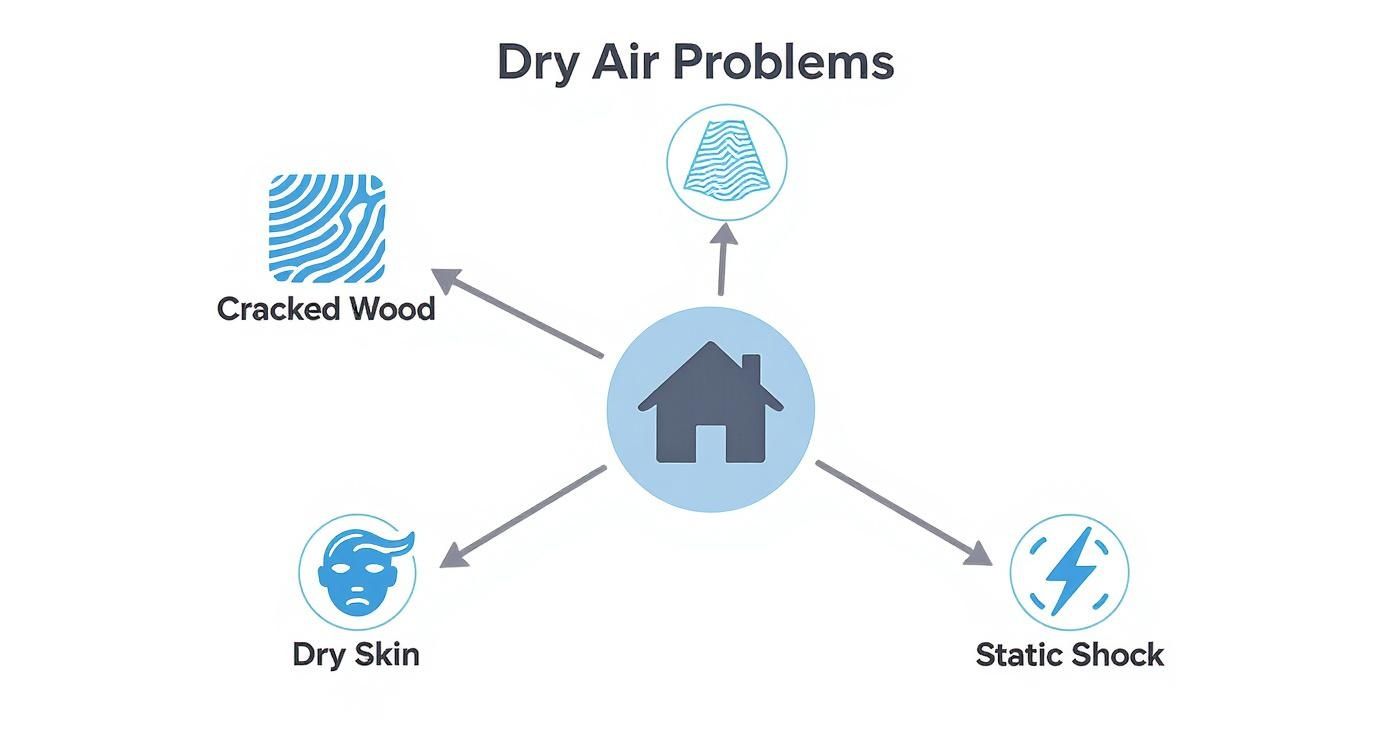
As you can see, that dry indoor air does more than just give you chapped lips; it can damage your wood floors and furniture and turn your home into a static-filled shock zone.
Fan-Powered Humidifiers: An Active Boost of Moisture
Take a step up the ladder and you’ll find the fan-powered whole-home humidifier. It's built on the same idea as the bypass model—air moving across a wet panel—but with one game-changing addition: its own built-in fan.
This little fan makes it an active player. It pulls air directly from your furnace and pushes it through the water panel, generating a lot more moisture than a passive bypass unit ever could. We're talking up to a gallon more humidity per day.
Because it has its own power source, it can run even when your furnace blower is on low, giving you more consistent control. This makes it the perfect middle-ground option, offering a real performance bump without the higher cost of a steam system. It's a fantastic fit for larger homes that need that extra oomph to stay comfortable.
Steam Humidifiers: The Ultimate in Precision and Power
At the very top of the performance ladder is the steam whole-home humidifier. This is the most powerful and advanced option on the market, and it works on a totally different principle.
Instead of waiting for water to evaporate, a steam unit is like an industrial-strength kettle for your house. It boils water in a self-contained canister, creating pure, sterile steam. That steam is then injected right into your ductwork for instant, precise humidity.
This method delivers some serious advantages:
- Works On-Demand: It can run any time, even if your furnace isn't heating. If you need humidity, you get it.
- Highest Output: Steam units produce the most moisture, period. They're the best solution for huge homes, extremely dry climates, or for protecting delicate things like pianos or art collections.
- Sterile Moisture: The boiling process kills off any bacteria or mould, so the moisture going into your air is completely clean.
That top-tier performance does come with a higher price tag and uses more energy. But for homeowners who need absolute control and the highest humidity output possible, there’s no better choice.
To get the most out of any of these systems, the humidified air needs a clear path. Ensuring your home's ductwork and ducting are in good shape is critical for effective and clean distribution.
Ultimately, choosing between these three comes down to your home’s size, your budget, and exactly how much control you want over your indoor climate.
Whole Home Humidifier Technology Comparison
To make the decision a bit easier, here’s a quick side-by-side look at how the three main types of whole-home humidifiers stack up against each other.
| Feature | Bypass Humidifier | Fan-Powered Humidifier | Steam Humidifier |
|---|---|---|---|
| How it Works | Uses furnace blower to pass air over a wet panel. | Uses its own fan to push air over a wet panel. | Boils water to create and inject steam into ducts. |
| Installation Cost | Lowest | Moderate | Highest |
| Energy Usage | Very Low | Low | Highest |
| Humidity Output | Good | Better | Best |
| Water Efficiency | Lower (some water drains away) | Moderate | High (uses only what's boiled) |
| Maintenance | Simple (annual panel change) | Simple (annual panel change) | More Involved (canister may need replacing) |
| Best For | Small to medium-sized homes; budget-conscious buyers. | Medium to large homes; those needing more output than bypass. | Very large homes; precise control; sterile moisture needed. |
This table should give you a clear snapshot of the trade-offs. If cost and energy efficiency are your top priorities, a bypass is a solid start. If you need more power, fan-powered is a great upgrade. And if only the best will do, steam is the undisputed champion.
The Real Benefits of Balanced Indoor Humidity
Think of a whole-home humidifier as more than just a tool to add moisture to the air. It’s an investment in a healthier, safer, and more comfortable living space. The benefits go way beyond zapping static shock—they directly impact your family's health and even help preserve the structure of your house.
Once your indoor air is properly balanced, the first thing you'll notice is just how much better you feel. That dry, scratchy air is a real problem during our long Canadian winters when the furnace is working overtime.
Better Health and Personal Comfort
Ever notice how dry air acts like a sponge, pulling moisture from everything around it? That includes you. It's the culprit behind painfully dry skin, chapped lips, and that persistent itchy feeling you just can't shake. A whole-home humidifier restores that moisture, helping your skin stay hydrated from the inside out.
But the benefits are more than just skin deep. Proper humidity is crucial for your respiratory health. Your nasal passages are the first line of defence against airborne germs, but when they get too dry, their ability to trap viruses and bacteria drops significantly. This leaves you more vulnerable to colds, sinus infections, and other bugs.
On top of that, common allergens like dust and dander travel much more freely in dry air. Adding moisture makes these particles heavier, causing them to fall out of the air instead of ending up in your lungs. It can be a game-changer for anyone with allergies. The link between humidity and air quality is undeniable, and you can learn more about creating a healthier home by improving your overall indoor air quality.
"Air that’s too dry can feel uncomfortable, damage woodwork, and even make you more susceptible to illness. Your humidifier is the quiet hero that keeps your indoor climate balanced—but only if it’s maintained properly!”
Protecting Your Home and Possessions
Your house itself will thank you for balanced humidity. Wood, in particular, is incredibly sensitive to moisture levels. When the air gets too dry, it leaches moisture from hardwood floors, furniture, cabinetry, and even your piano or guitar.
This process causes the wood to shrink, leading to all sorts of problems:
- Unsightly gaps suddenly appearing between your floorboards.
- Cracks forming in that beautiful dining room table or antique dresser.
- Warping of wooden window frames and door jambs, making them hard to open and close.
- Musical instruments like pianos and guitars constantly falling out of tune.
A whole-home humidifier acts as a guardian for these valuable assets. It maintains a stable environment, preventing costly and often irreversible damage while preserving the beauty and character of your home.
The Rise of Smart Humidity Control
Humidifier technology has come a long way, too. Smart humidifiers with WiFi and app-based controls have become especially popular, allowing for completely automated humidity management. This trend is also supported by government initiatives promoting greener, more energy-efficient home appliances.
Ultimately, installing a whole-home humidifier is one of the smartest, most proactive steps you can take for your home. It boosts personal comfort, supports better respiratory health, and protects your house from the silent damage caused by dry air—making it one of the most impactful upgrades for your family's daily life.
Choosing the Right Humidifier Size for Your Home
Picking a whole-home humidifier isn’t like grabbing a portable unit off the shelf. This is about finding the perfect match for your home's specific needs. Go too small, and the unit will run constantly without ever hitting the right humidity level. Go too big, and you risk creating too much moisture, which can lead to condensation on your windows or even mould.
The secret to getting it right comes down to one key measurement: Gallons Per Day (GPD). It’s simply the amount of moisture a unit can pump into your air over a 24-hour period. But that number is meaningless without understanding the space it’s working in.
Calculating Your Home's Humidity Needs
Think of your home as a bucket you’re trying to keep filled with moisture. A bigger bucket needs more water, and a leaky one needs to be refilled more often. The same logic applies to your home's air.
Here’s what you need to look at:
- Total Square Footage: This is the obvious starting point. A sprawling bungalow has a lot more air to humidify than a compact two-storey, so it’ll need a unit with a higher GPD.
- Home Construction Quality: Is your house a modern, airtight build, or an older, charmingly drafty place? Older homes lose humidified air much faster through tiny gaps, meaning your humidifier has to work harder.
- Ceiling Height: Most calculations assume standard 8-foot ceilings. If you have soaring vaulted ceilings, you’ve got a much larger volume of air to treat, which bumps up your GPD requirements.
Getting the size right is a balancing act. You need a unit that can handle the driest, coldest GTA winter days without being so powerful it causes issues when the weather is milder.
A Practical Checklist for Sizing
To get a better sense of where your home lands on the spectrum, run through this quick checklist. For every "yes," you should lean toward a model with a higher GPD rating than what the basic square footage suggests.
- Is your home over 15 years old, with its original windows and insulation?
- Do you have high or vaulted ceilings in your main living spaces?
- Do you use a wood-burning fireplace often during the winter?
- Can you feel cold drafts around windows and doors?
Answering these questions gives you a real-world picture. A modern, 2,000-square-foot home might be perfectly happy with a 12 GPD unit. But a draftier home of the exact same size could easily need a 17 GPD model to feel just as comfortable.
Matching the Humidifier to Your HVAC System
Finally, you have to think about compatibility. Most whole-home humidifiers are designed to hook right into a standard forced-air furnace. But the biggest question is space—is there enough room around your furnace and ductwork to actually mount the unit and connect it to a water line?
The condition of your ducts is just as important. After all, they’re the delivery system. If your ductwork is inefficient, that perfectly humidified air might not reach every room. If you’re unsure about your setup, a quick chat with a professional about air duct installation can make all the difference, ensuring your new system works exactly as it should.
Understanding Costs: Installation and Upkeep
A whole-home humidifier is a fantastic investment for your family’s comfort and your home’s health, but it helps to know what to expect financially. The journey starts with buying the unit and getting it professionally installed, but it doesn't end there. Simple, regular upkeep is key to making sure it runs like a top for years.
Let's walk through the numbers—from the upfront costs to the easy long-term care. This way, you can budget properly and really see the return on your investment, like protecting your beautiful hardwood floors and easing those dry winter coughs.
The Initial Investment: A Breakdown
Getting a whole-home humidifier up and running typically involves two main costs: the unit itself and the labour for a professional installation. Generally, you can expect the humidifier unit to cost between $300 and $1,500. Installation will add another $200 to $600 to that, depending on how complex your HVAC setup is.
So, what pushes the price to the lower or higher end of that range? A few things:
- Type of Humidifier: Bypass models are the most budget-friendly option. Fan-powered units sit in the middle, and the more advanced steam humidifiers are at the premium end.
- Home Size and GPD Rating: It's simple, really. Bigger homes need more powerful units to do the job right. That means a higher Gallons Per Day (GPD) rating, which comes with a higher price tag.
- Installation Complexity: If your furnace and ductwork are easy to get to, the job will be quicker and cheaper. An installation that needs new plumbing lines or major modifications will naturally cost more.
Because these units tie directly into your home's plumbing, it's often a smart move to hire a professional plumber. They'll make sure the water supply lines are hooked up correctly and safely, preventing any leaks and ensuring everything works perfectly from day one.
A Simple Guide to Seasonal Maintenance
Once your new system is installed, keeping it in great shape is surprisingly easy. Think of it like changing the filter on your furnace—a small task that makes a massive difference in performance and longevity. Most of the upkeep is well within the skills of the average homeowner.
Your main job will be to replace the humidifier water panel (some people call it a filter or pad). This is the heart of the unit, where water trickles down and gets evaporated into the air. Over time, minerals from our water build up on this panel, making it less effective and potentially hurting your air quality.
Your humidifier’s water panel is where all the magic happens. A clean panel means you get efficient, clean moisture. A clogged one makes your system work way harder for a lot less comfort.
For most of us here in the GTA, a good rule of thumb is to replace this panel once a year. The best time is in the autumn, right before you kick on the furnace for the first time. If you know your home has particularly hard water, you might want to check it and possibly change it every six months.
Easy Upkeep Tasks for Homeowners
Besides swapping out the water panel, a few other quick checks will keep your whole-home humidifier running smoothly.
- Clean the Unit Annually: When you're in there changing the panel, take five extra minutes to wipe down the inside of the humidifier's housing. A simple cloth with a bit of a vinegar-and-water mix will dissolve any mineral scale buildup.
- Check for Leaks: Every so often, just take a quick peek at the water supply and drain lines. You're just looking for drips or any signs of moisture that shouldn't be there.
- Confirm It’s Working: At the start of the heating season, turn up your humidistat. You should hear the unit click on and see water flowing to the panel.
Following these simple steps will head off most common problems and ensure you get that comfortable, consistent humidity all winter long. Plus, good maintenance on one part of your HVAC system benefits the whole thing. If you're also thinking about a furnace upgrade, understanding the complete furnace installation process can give you a better picture of how all these components work together.
Common Questions About Whole Home Humidifiers
So, your new whole-home humidifier is up and running. Awesome. But living with a new piece of home equipment always comes with a few questions. Getting a feel for the right settings and learning what the little signs mean is all part of the process.
Let's tackle some of the most common questions we hear from homeowners. Think of this as your go-to guide for day-to-day operation, from nailing that perfect humidity level to understanding why your windows are sweating.
What Is the Ideal Humidity Level for My Home?
This is the big one, and the answer isn't just a single number. The perfect indoor humidity level is a moving target—it actually changes with the outdoor temperature. Your goal is to keep things comfortable inside without causing moisture to build up on your windows.
For a typical Canadian winter, a great starting point is between 30% and 40% relative humidity. But as the temperature outside plummets, you’ll need to dial that back. A colder day outside means your indoor humidity setting needs to be lower to prevent condensation.
Here’s a simple cheat sheet to help you set your humidistat correctly during those frigid GTA winters.
Ideal Indoor Humidity Levels by Outdoor Temperature
This quick reference guide will help you find that sweet spot between comfort and condensation, protecting your window sills and walls from moisture damage.
| Outdoor Temperature (Celsius) | Recommended Indoor Humidity Level |
|---|---|
| -12°C or above | Not over 35% |
| -18°C | Not over 30% |
| -23°C | Not over 25% |
| -29°C | Not over 20% |
| Below -29°C | Not over 15% |
Sticking to these guidelines is the easiest way to prevent issues and keep your home both cozy and dry where it counts.
Why Is There Condensation on My Windows?
If you spot condensation, frost, or "sweat" on your windows, your house is sending you a clear signal. It's simply telling you that the humidity level inside is a bit too high for how cold it is outside. The frigid window pane is cooling the moist indoor air to its dew point, causing that water vapour to turn back into liquid.
Don't worry, it's an easy fix. Just turn down the setting on your humidistat by a few percentage points. Check the chart above and adjust your setting to match the outdoor temperature. That small tweak is usually all it takes to clear things up.
Condensation is your humidifier's way of telling you to dial it back a bit. It’s a normal part of finding the right balance for your home during a cold snap.
Can a Whole Home Humidifier Run in the Summer?
Short answer: you won't want it to. Here in the GTA, our summers are more than humid enough on their own. The last thing you want is to add more moisture to the air, which would just make your home feel sticky and swampy. Your air conditioner is already working hard to pull humidity out of the air.
Most humidistats have a "summer" or "off" setting. At the end of the heating season, just switch it off. It’s also a good idea to shut off the small water supply line to the unit for the season. You can fire it all back up again in the fall when you feel that dry, crisp air return.
Does My Humidifier Use a Lot of Water?
The amount of water your humidifier sips depends on a few things:
- Your home: A bigger, older, or draftier house will need more moisture to stay comfortable.
- The model: Steam humidifiers are super-efficient and only use water they convert to vapour. Some bypass models might drain a little excess water as part of their normal operation.
- The weather: On brutally cold and dry days, the unit will naturally work harder and use more water to keep up.
Even with these factors, the water usage is surprisingly low. The cost is a drop in the bucket compared to the benefits of protecting your woodwork, your health, and your comfort. For most homes, the impact on your water bill is barely noticeable—we’re talking just a few dollars a month during peak season.
A whole home humidifier is a crucial part of a healthy indoor ecosystem, working hand-in-hand with clean ductwork to deliver fresh, comfortable air. For a complete approach to your home’s air quality, trust the experts at Can Do Duct Cleaning. Learn more about our services and schedule an inspection today!

