
Thinking about a DIY furnace installation to save a few bucks? It's a tempting thought, but pulling off a successful installation of furnace is a whole different ball game compared to a weekend painting project. This job demands a solid mix of hands-on skills, a deep understanding of local codes, and the right gear to do it safely.
Should You DIY Your Furnace Installation
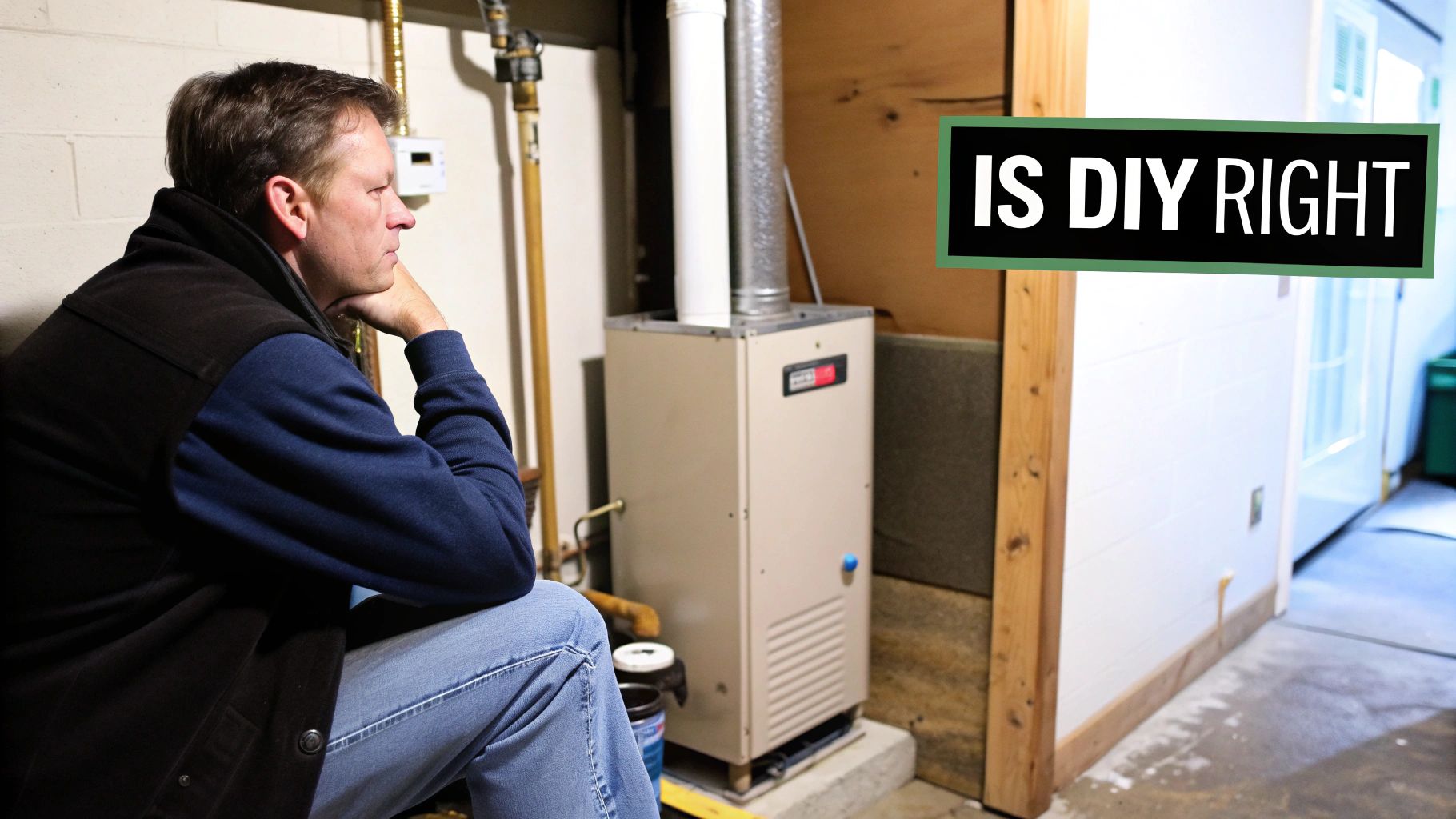
There's a certain satisfaction in tackling a home project yourself. But let's be clear: installing a furnace isn't like putting together IKEA furniture. You're dealing with a trifecta of complex systems—electrical, gas, and ventilation—where one small mistake can lead to some pretty serious trouble. Before you even think about ordering a unit, you need to take a hard, honest look at your skill set.
Let’s get real for a moment. Are you actually comfortable cutting and fitting sheet metal to make your new furnace line up with the old ductwork? Do you genuinely understand electrical schematics and know how to safely handle high-voltage wiring? And the big one: have you ever worked with natural gas lines? An improper seal isn't just a small oops; it's a dangerous leak waiting to happen.
A Reality Check on Skills and Risks
Beyond just having the muscle and know-how, there's a mountain of paperwork. Most municipalities right across the GTA demand permits for any furnace installation. It's not just red tape; it's a system designed to make sure the job gets inspected and meets strict safety standards. Going rogue with an unpermitted install can bite you later by voiding your home insurance or causing major headaches when you try to sell your house.
So, before you jump in, ask yourself these questions:
- Do you have the right tools for the job? I'm not talking about a basic wrench set. You'll need a multimeter for electrical checks, a manometer for gas pressure, and likely some specialized tools for crimping and cutting ductwork.
- Can you actually follow a technical manual? Furnace installation guides are written for pros, not weekend warriors. They assume you already know the lingo and the basics. One wrong interpretation could leave you with a furnace that’s inefficient or, worse, unsafe.
- What's your plan for the unexpected? What happens if the new furnace is a different size than the old one, and it doesn't line up with the plenum? What if you find out the house's wiring isn't up to code?
Here’s a quick rundown to help you decide.
DIY vs Professional Installation Reality Check
| Consideration | DIY Installation | Professional Installation |
|---|---|---|
| Upfront Cost | Lower material cost, but you buy or rent all specialized tools. | Higher upfront cost that includes labour, tools, and expertise. |
| Safety Risks | High. Mistakes with gas, electrical, or venting can be catastrophic. | Low. Professionals are trained, licensed, and insured against accidents. |
| Permits & Codes | Your responsibility. Can be complex and time-consuming to navigate. | Handled by the contractor, ensuring full compliance with local codes. |
| Warranty | Often voided by the manufacturer if not installed by a licensed pro. | Fully valid. The installer often provides an additional labour warranty. |
| Time & Effort | Significant. Expect multiple days, plus time for research and troubleshooting. | Minimal for you. Usually completed in less than a day. |
| Peace of Mind | Low. Lingering doubts about safety and performance are common. | High. You know the job was done correctly and safely. |
Ultimately, calling a professional isn't just paying for labour—you're buying their expertise, liability coverage, and the confidence that every connection is sound and every safety measure is in place.
As you weigh your options, it's also smart to look into different heating systems, like energy-efficient boiler options, which could slash your utility bills over the long run. If you want a better handle on what a new unit might set you back, check out our guide on https://candoductcleaning.com/new-furnace-costs-ontario/.
Preparing Your Space and Gathering Tools
A smooth furnace installation starts well before the new unit even comes out of the box. Getting your space and tools ready isn't just a matter of convenience—it's one of the most important steps for making sure the whole job is safe and efficient. I've seen it time and again: rushing this part almost always leads to headaches and mistakes later on.
Think of it like setting the stage. You need room to work, you need the right props, and you need a clear idea of where everything goes. The first thing you absolutely have to do is create a safe, open work area. If your furnace is tucked away in a small closet, that closet needs to be completely empty. If it's in the basement, clear everything out for at least two metres in every direction. You need that space to get the old unit out and the new one in without a struggle.
Creating a Clear and Safe Workspace
This is more than just a quick tidy-up. You need to make sure the path from your front door all the way to the furnace location is totally clear. Furnaces are heavy and bulky, and trying to squeeze one through a cluttered hallway is just asking for a dented wall or, worse, a serious injury.
Once the clutter is gone, take a hard look at the lighting and ventilation. A dark, stuffy corner makes doing detailed electrical work much more difficult and dangerous. Remember, you're going to be handling wiring, gas lines, and sharp metal edges, so being able to see clearly is a must.
Assembling Your Essential Tool Kit
For a safe and proper installation of furnace, having the right tools on hand isn't optional. Your standard toolbox is a good starting point, but this is a job that calls for some specialized gear. Often, a professional-grade tool is what stands between a secure, leak-free connection and a serious safety hazard.
Here’s a rundown of what you'll need:
- For Gas Lines: Get yourself two pipe wrenches. You need one to hold the pipe steady and another to turn the fitting—this stops you from putting dangerous stress on the main gas line. You’ll also need gas-rated pipe thread sealant (often called pipe dope) to ensure every connection is airtight.
- For Ductwork: A good pair of tin snips is essential for cutting or modifying the existing ductwork or plenum. A hand seamer is also incredibly useful for making clean, crisp bends in sheet metal, which helps you get a much tighter fit.
- For Electrical Work: A multimeter is your most important safety tool here. Use it to double-check that the power is off before you touch anything and to test your connections later. You’ll also need a decent set of wire strippers and a variety of screwdrivers.
Here's a pro tip that's easy to overlook: check the condition of your existing ductwork. If it's been a while, they could be caked with dust and debris. Firing up a brand-new furnace will just blow all that gunk through your home. Getting them professionally cleaned beforehand gives your new system a fresh, clean start.
A clean system runs more efficiently from day one. Before you get started on the install, it's worth learning about preparing the house for duct cleaning service to get the most out of your investment. It’s a smart move that improves your new furnace's performance and your home's air quality.
With a clear space and your tools organized, you're finally ready to get the old unit out of the way.
The Core Furnace Installation Process
Alright, with your space cleared and your tools laid out, it's time to get into the heart of the installation. This is where precision and patience really pay off. Every single connection, from the ductwork to the gas line, is a critical piece of the puzzle for a safe, high-performing system.
First things first: the old furnace has to go. Start by killing the power at the circuit breaker and shutting off the main gas valve that feeds the unit. Don't just trust the switch—grab a multimeter and double-check that the power is completely off before you touch any wiring. Safety isn't optional here.
Once you’re sure it’s dead, you can start disconnecting everything: the gas line, electrical wires, thermostat leads, and finally, the ductwork. Getting the old furnace out is often a clumsy job, so I’d strongly suggest having a friend help with the heavy lifting.
Setting and Levelling the New Unit
With the old unit out of the way, you can slide the new furnace into position. It sounds easy, but getting it perfectly level is absolutely non-negotiable. This is especially true for modern high-efficiency condensing furnaces.
Why? These units create condensation as they run. If the furnace isn't level, water can pool in the wrong places, leading to rust, component failure, or even a nasty leak that damages your floor. Grab a level and check all sides, using shims to make tiny adjustments until it's spot on. This one small step will save you from a world of headaches down the road.
This infographic gives you a great visual on the prep work that should happen before you even get to this point.
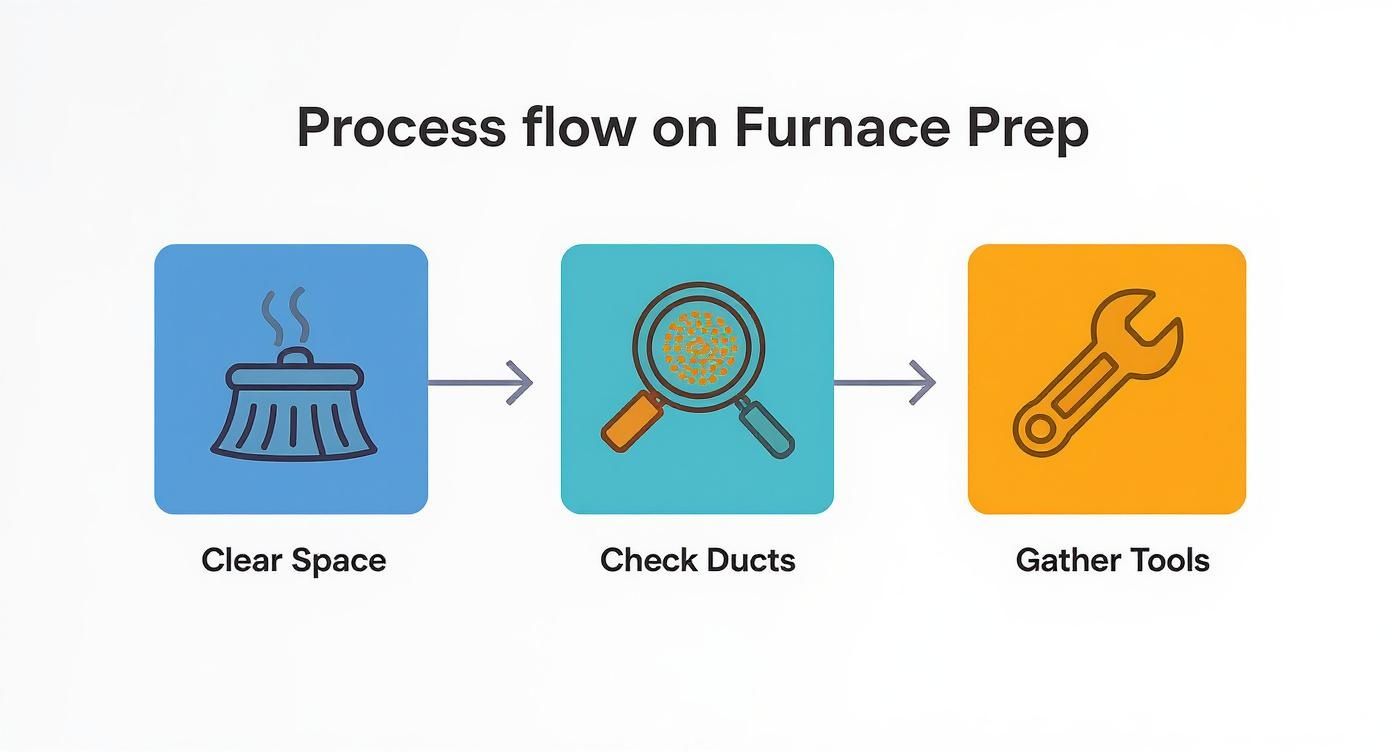
Seeing these initial steps—like clearing your workspace and checking the ducts—really drives home how a smooth installation is all about solid prep work.
Connecting Ductwork and Utilities
Now that the furnace is sitting pretty, it's time to hook it back up to the house. I always start with the ductwork, connecting the main supply plenum on top and the return air drop on the side or bottom. You're looking for a snug fit. Seal every single seam and joint with foil tape or mastic sealant. Even a pinhole leak can waste a surprising amount of heated air and hike up your energy bills.
If you're thinking about a bigger overhaul of your ducts, our guide on air duct installation has some great tips.
Next up is the gas line—the part of the job that demands the most respect. Use a gas-rated pipe thread sealant on every connection. When you tighten the fittings, use two pipe wrenches: one to hold the existing pipe steady and the other to turn the fitting. This keeps you from accidentally putting stress on the main gas line and causing a leak somewhere else.
The single most important safety check you will do is the gas leak test. Mix up a 50/50 solution of dish soap and water in a spray bottle and coat every joint you just made. If you see any bubbles foaming up, you have a leak. Shut off the gas and fix it immediately. Never, ever skip this test.
After the gas line is secure, you'll tackle the electrical wiring for the main power and the thermostat. Follow the manufacturer’s wiring diagram to the letter. A single mismatched wire can fry the furnace’s control board or create a serious safety risk. It's detailed work, and it's a big reason the HVAC industry is so massive. In California alone, the HVAC market hit $33.71 billion in 2024, spread across 12,286 different businesses. It's a testament to the skill required for these jobs.
Last but not least are the condensate drain and the exhaust flue. The flue pipe (usually PVC on high-efficiency units) needs a steady downward slope—about a quarter-inch drop per foot—to carry exhaust gases safely outside. The condensate drain line also needs to be routed properly to a floor drain or a pump so it can't back up. Each step logically follows the last, bringing you closer to a warm, safe, and efficient home.
How to Handle Common Installation Problems
Even the most buttoned-up installation of furnace can hit a snag. Let’s be real—unexpected issues pop up in any big home project. The difference between a smooth job and a weekend of headaches is knowing how to handle them.
So, let's talk about some of the common hurdles you might run into and how to clear them like a pro.
One of the classic surprises is finding out your old ductwork and new furnace aren't exactly a perfect match. Maybe the new unit’s outlet is a different size, or it’s shifted a few inches to the left. Don't panic; this isn't a showstopper. You'll just need to fabricate a custom transition piece from sheet metal. This will bridge the gap, creating an airtight path for your warm air to flow.
Speaking of airtight, even tiny leaks around these new connections can kill your furnace’s efficiency. Those little gaps add up fast, making your system work overtime and inflating your energy bills. This is why a proper seal is non-negotiable. For a permanent, flexible seal that moves with your system, you’ll want to look into using mastic sealant on your ductwork. It's the standard for a reason.
Troubleshooting Electrical and Venting Issues
Another all-too-common headache is the thermostat wiring. You can follow the diagram to a T and still find the furnace won't kick on. More often than not, it's a simple communication breakdown between an old thermostat and the modern furnace control board. Take a breath and double-check your connections. Make sure every wire is seated firmly and there are no stray strands causing a short. Honestly, sometimes the path of least resistance is just upgrading to a new smart thermostat.
Now, improper venting is where things get serious. If you're installing a high-efficiency unit, that PVC exhaust flue needs a constant downward slope away from the furnace. No exceptions.
I've seen it countless times: a flat spot or a "belly" in the flue pipe. This is a huge mistake. Acidic condensation pools there, which can eat right through the PVC or freeze solid in a cold snap. The result is a dangerous blockage that can push carbon monoxide back into your home. Always, always use a level to ensure you have the right slope.
What if the unit turns on but then clicks off and on again every few minutes? That's called "short cycling," and it's a sign something's wrong. Here’s a quick diagnostic checklist:
- Restricted Airflow: Is the filter clean? Are all the supply and return vents in the house open and not blocked by furniture or rugs?
- Oversized Furnace: If the furnace is too big for your house, it will blast the space with heat too quickly and shut down. This is a sizing issue that should have been caught in the planning stage.
- Thermostat Location: Is your thermostat getting a false reading? If it's in direct sunlight or next to a lamp, it will think the room is much warmer than it actually is.
Working through these common problems one by one will help you get your new furnace running smoothly and efficiently.
Final Checks and System Commissioning
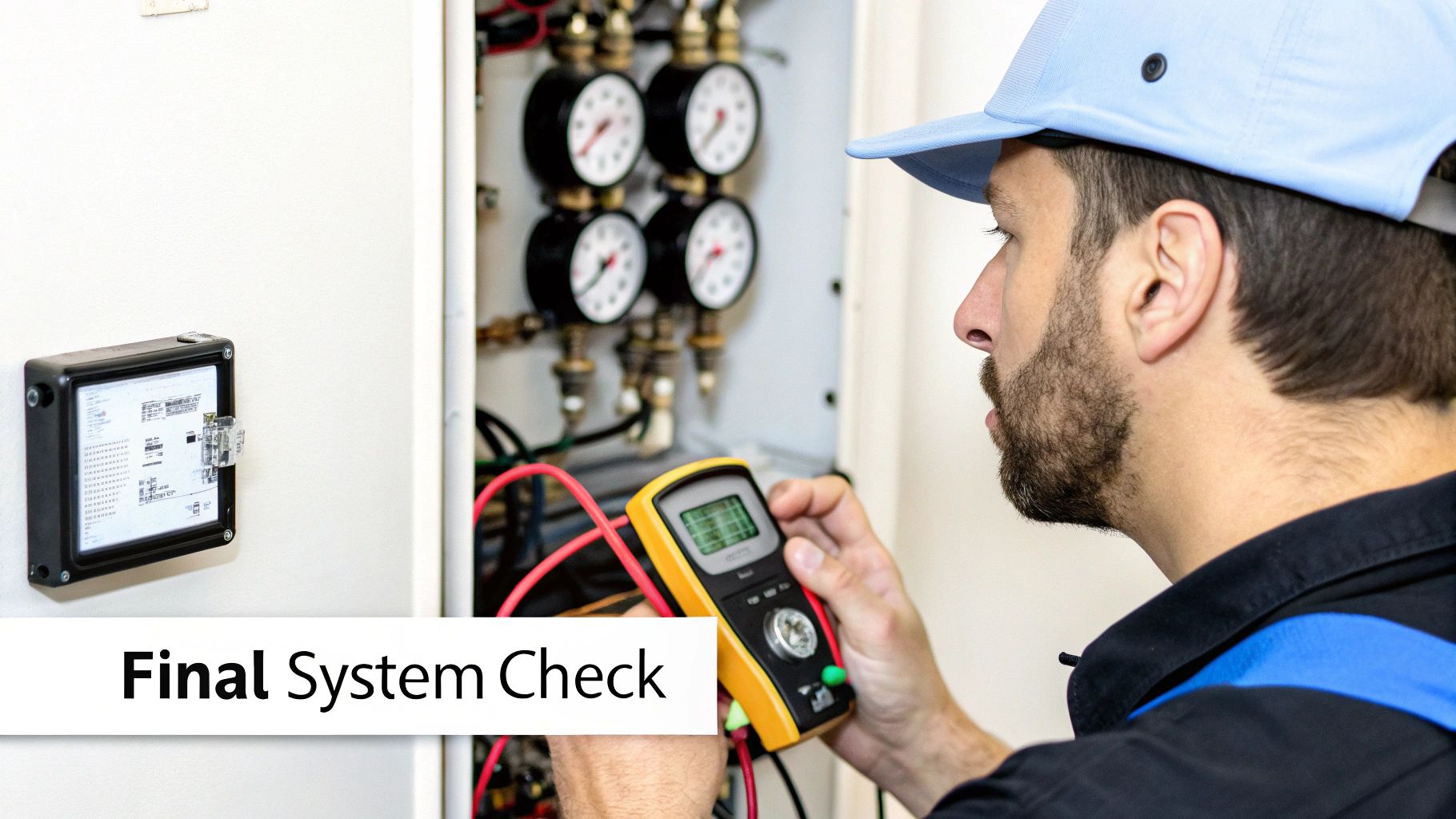
The final connections are done, and your new furnace is sitting pretty. But don't crack open a celebratory drink just yet. This final stage—what we call system commissioning—is hands down the most critical part of the entire installation of furnace process. This is where you confirm everything is working together, both safely and efficiently.
Before you even think about flipping a switch, do one last visual sweep of the area. Make sure all the electrical panels are buttoned up tight, every ductwork seam is sealed solid with foil tape or mastic, and there isn't a single tool left lying around. It’s also your last chance to give those gas line connections a final once-over and confirm the shutoff valve is easy to get to.
The Initial Power-Up Sequence
Okay, final inspection done. Time to bring your new furnace to life. Start by turning the gas supply back on. Next, pop over to your electrical panel and flip the circuit breaker for the furnace. The last step is at your thermostat—set it to heat and bump the temperature up a few degrees.
Now, listen up. You’re about to hear a very specific sequence of sounds as the furnace kicks into gear.
- The first thing you should hear is the small inducer motor starting, which clears out the exhaust flue.
- Next comes the tell-tale click of the gas valve opening, followed by a soft "whoosh" as the burners ignite.
- After a moment, the main blower fan will kick on, and you’ll start to feel warm air coming through your vents.
Hearing that sequence tells you the furnace and thermostat are talking to each other correctly and the basic functions are good to go. Let it run a full cycle to make sure it shuts down properly once it hits the target temperature.
Your work here is a validation of safety and performance. Rushing these final checks can overlook a small issue that could lead to inefficient operation or, in the worst case, a dangerous situation. Take your time and be methodical.
Verifying Safety and Performance
With the furnace running, it's time for a few crucial performance checks. Walk around the house and make sure warm air is actually flowing from all the supply registers. You'll also want to be sure the safety switches, like the high-limit switch, are working as they should (this is one step that's often best left to a professional).
Part of any proper final check is knowing how to detect gas leaks. Now that the system is pressurized, it's a smart idea to re-check your connections with a soap-and-water solution one last time. Better safe than sorry.
It's also worth noting that the industry is changing. To meet climate goals, many jurisdictions are encouraging a switch to heat pumps, which can cut greenhouse gas emissions by 44 to 90 percent compared to the natural gas furnaces they replace. It's a significant shift in home heating.
Finally, with a new furnace installed, you have the perfect opportunity to get a handle on your home's air quality. Using a good air quality testing kit can give you a baseline reading, so you can make sure you're breathing clean air right from day one with your new, efficient system.
Frequently Asked Questions About Furnace Installation
Even after reading a detailed guide, you're bound to have a few questions. That's completely normal. Getting the specifics sorted out before you start a furnace installation helps you plan better and, most importantly, avoid nasty surprises down the road.
Let's dig into some of the most common questions we get from homeowners.
How Long Does a Typical Furnace Installation Take
This is the big one, and honestly, it depends. If it’s a straightforward swap—pulling out an old furnace and putting in a new one of a similar size and type—a seasoned technician can usually get it done in 4 to 8 hours. It’s a one-day job.
Now, if you're going the DIY route, I’d block off the entire weekend. Things come up. You hit a snag you didn't expect, and suddenly your quick job isn't so quick. For more complex installations, like adding new ductwork, switching fuel types (like from oil to gas), or upgrading the electrical panel, even a pro might need two or three days to get everything right.
Do I Need a Permit for a Furnace Installation
In nearly every municipality in the Greater Toronto Area, the answer is a resounding yes. This isn't like changing a light fixture. A furnace installation involves high-voltage electricity, natural gas lines, and venting systems that can release carbon monoxide if done wrong. Local safety codes exist for a very good reason—to keep your family safe.
Getting a permit means a qualified inspector will check the work to make sure it’s up to code. Skipping this step can backfire, big time.
- Safety Risks: A tiny gas leak or some shoddy wiring on an uninspected job can be catastrophic.
- Insurance Issues: If there’s a fire or accident related to the new furnace, your homeowner's insurance could refuse to cover the damage.
- Fines and Resale Problems: You could get hit with fines and be forced to redo the work. It’s also a major red flag for potential buyers when you eventually sell your home.
What Are the Most Critical Safety Precautions
When it comes to the installation of furnace, you can't be too careful. Three things are absolutely non-negotiable. First is gas safety. Always, always shut off the main gas supply before you touch a single pipe. When you’re done, do a leak test on every single connection using a simple soapy water solution. Bubbles mean trouble.
Next up is electrical safety. Flip the breaker to the furnace and then double-check with a voltage tester to make sure the power is truly off. Don’t just trust the switch.
Finally, you have to get the ventilation right. The exhaust flue needs to be sealed tight, sloped correctly so it drains properly, and completely clear of any blockages. A poorly vented furnace can pump deadly carbon monoxide into your home. A working CO detector in the vicinity is an absolute must.
Speaking of long-term safety, proper maintenance is key. Once your new furnace is in, you'll want to keep it running efficiently. A big part of that is knowing how to choose and maintain your furnace air filter—it protects your system and keeps your air clean.
At Can Do Duct Cleaning, we know that a safe, reliable furnace is the heart of a comfortable home. If you're considering a new furnace installation or have questions about your existing system, our experienced and licensed technicians are here to help. Contact us today at https://www.candoductcleaning.com for expert advice and professional service you can trust.

