
Getting your house ready for the market isn't a weekend job. I've seen it time and again: homeowners who rush the process almost always leave money on the table. The secret to maximizing your sale price is a strategic 90-day plan.
Think of it as a marathon, not a sprint. This timeline breaks down a massive, overwhelming project into bite-sized, manageable phases. You’ll move from handling major repairs three months out to adding the final staging touches just before listing. It's a methodical approach that ensures every single detail is polished, making your home shine for potential buyers.
Your 90-Day Home Sale Preparation Blueprint
Selling your home, especially in competitive Canadian markets like the Greater Toronto Area (GTA) or Metro Vancouver, takes more than just sticking a sign on the lawn. Today's buyers are savvy. They’re looking for a move-in-ready property, and a well-prepared home can fetch a higher price and sell much faster.
When you try to cram everything into a couple of weeks, you invite panic and costly mistakes. A structured timeline helps you avoid that last-minute scramble. It gives you the space to budget properly, book trusted professionals without paying rush fees, and declutter thoughtfully instead of just hiding junk in the garage.
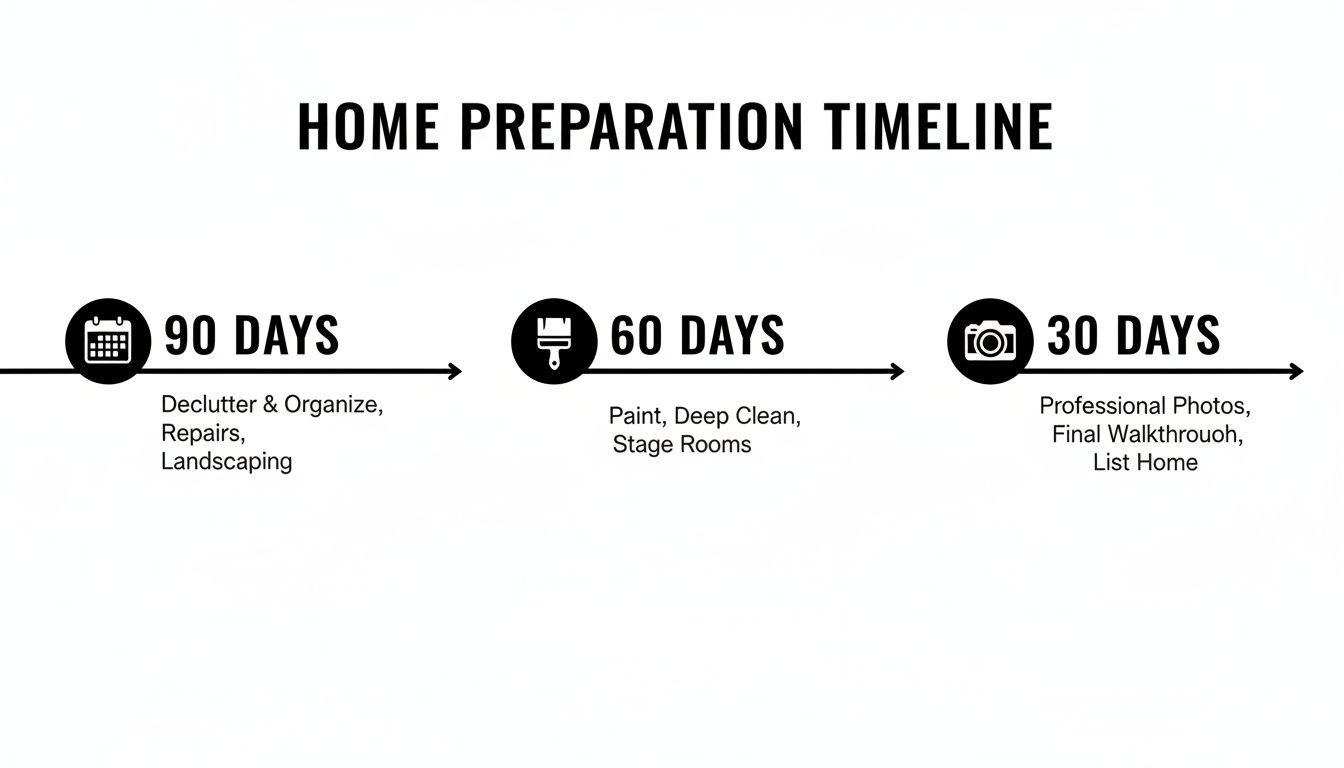
This 90-day timeline isn't just a random number; it's the gold standard for a reason. It provides the breathing room you need to tackle the big stuff—the things that can scare buyers away.
To help you stay on track, I've put together a checklist that breaks down the entire process.
The 90-Day Home Sale Preparation Checklist
| Timeline | Key Tasks | Expert Insight |
|---|---|---|
| 90 Days Out | Address Major Repairs: Get quotes for the roof, foundation, or outdated electrical panels. Start Decluttering: Tackle storage areas first (basement, attic, garage). Consult Professionals: Meet with a real estate agent for market-specific advice. | This is the "heavy lifting" phase. These are the red flags for inspectors, so getting ahead of them now prevents major headaches during negotiations later on. |
| 60 Days Out | Deep Clean & Minor Repairs: Fix leaky faucets, patch drywall, and hire pros for deep cleaning like air ducts and dryer vents. Paint: Apply a fresh coat of neutral paint. | Your focus shifts from structural to cosmetic. You’ve lived with these small imperfections for years, but a buyer will spot them instantly. A fresh, clean slate makes a huge difference. |
| 30 Days Out | Boost Curb Appeal: Power wash the exterior, clean up the garden, and paint the front door. Stage the Interior: Rearrange furniture to maximize space and light. Professional Cleaning: Schedule a final, top-to-bottom clean. | First impressions are everything. This is where you create that "wow" moment when buyers pull up to the curb and walk through the door. |
| The Final Week | Final Touches: Add fresh flowers, clean all windows and mirrors, and make sure every lightbulb works. Pack Personal Items: Depersonalize the space completely. Confirm Showings: Work with your agent to finalize the showing schedule. | The goal is for buyers to envision themselves living here, not to see it as your home. It’s about creating an inviting, aspirational atmosphere. |
By following a clear plan like this, you turn a stressful process into a series of confident, controlled steps, setting the stage for a successful and profitable sale.
Decluttering and Depersonalizing to Maximize Appeal
Before a buyer can fall in love with your house, they need to be able to picture their own life unfolding within its walls. That’s why decluttering and depersonalizing are so much more than just a quick tidy-up—you're strategically transforming your home into a move-in-ready product.
This first step is absolutely crucial. A clutter-free space instantly feels larger, brighter, and more welcoming. It clears away distractions, letting the home’s best features—like the great natural light or the open-concept layout—shine through, instead of your personal mementos. You're giving them the mental breathing room to imagine where their sofa would go and what life would look like here.

Embrace the Three-Box Method
The best way to get started is the tried-and-true "three-box" method. Go room by room and sort everything you own into one of three piles: Keep, Donate, or Discard. You have to be a little ruthless here. If you haven’t touched something in a year and it holds no deep sentimental value, it’s time to say goodbye.
The great thing about this process is that it gives you a massive head start on packing for your own move, breaking a huge job down into manageable chunks. For the items in that third box, a helpful Junk Removal Moving Guide can make clearing everything out surprisingly straightforward.
Create a Neutral and Inviting Space
Depersonalizing is just as critical as decluttering. You want buyers to see the house, not your life story. When they see a home filled with personal belongings, it can make them feel like they're intruding, which creates an emotional barrier.
Make sure you pack away these items:
- Family Photos: Walls covered in family pictures are lovely for you, but they can prevent a buyer from seeing the walls as their own.
- Unique Collections: Your treasured hockey memorabilia or antique teacup collection is a distraction. The goal is to have buyers admire the fireplace, not your collectibles.
- Personal Documents: Anything on the fridge, bulletin boards, or desks needs to be cleared away to create a clean, professional look.
Your goal is to create a serene, almost hotel-like atmosphere. It should feel clean, welcoming, and neutral enough for anyone to project their own life onto the space. This simple psychological shift makes a huge difference in how buyers perceive your home's value.
Focus on High-Impact Zones
Some areas have an outsized impact on a buyer’s first impression. You’ll want to give these clutter hotspots extra attention. Kitchen counters should be almost completely clear, closets need to feel spacious (aim to have 20-30% empty space), and the basement should look like valuable living area, not a forgotten storage locker.
In a competitive Canadian market, this level of polish is non-negotiable. With more properties available, buyers have plenty of options and high expectations. A home that looks clean, organized, and cared for immediately signals its value, attracting better offers and selling faster.
The Deep Clean That Makes Your Home Shine
Once you've decluttered, it's time for the deep clean—and I mean a clean that goes way beyond your regular Saturday morning tidy-up. A genuinely spotless home sends a powerful message to buyers: this property has been loved and meticulously cared for. That feeling builds instant trust and can absolutely influence how much they think it’s worth.
This isn’t about masking problems. It's about letting your home's best features really stand out. When a potential buyer walks into a space that sparkles and smells fresh, they don’t just see a clean house; they see a smart, well-maintained investment.
A Room-by-Room Cleaning Strategy
Every corner of the house needs attention, but let's be strategic. The two rooms where cleanliness is a deal-breaker for buyers are the kitchen and bathrooms. These areas get the most scrutiny, so making them pristine can create a massive positive impression right away.
Try to see your home through a buyer's eyes and notice the little things you've probably gone blind to. The goal is a floor-to-ceiling clean.
Here’s a practical hit list for where to focus:
- Kitchens: Degrease the stovetop, oven, and range hood until they gleam. Clean inside all appliances, especially the microwave and fridge. Wipe down every single cabinet front and sanitize all countertops. Don’t forget to scrub the backsplash and sink until they're free of water spots or grime.
- Bathrooms: Obliterate soap scum from tiles, tubs, and shower doors. Disinfect toilets, sinks, and countertops. Polish every fixture, from faucets to showerheads, and get those mirrors completely streak-free. If the grout looks dingy, scrub and whiten it.
- Living Areas and Bedrooms: Dust everything from the top down—ceiling fans, light fixtures, and even the tops of door frames. Wash all windows, inside and out, and clear out the gunk from the window tracks. Wipe down all baseboards, light switches, and door handles.
A deep clean eliminates all the little visual distractions, letting a home’s real character take centre stage. It’s an investment of elbow grease that pays off by creating a welcoming atmosphere where buyers can easily picture themselves living.
Targeting Overlooked and High-Impact Areas
Beyond the usual surfaces, a few often-forgotten spots can make a surprisingly big difference in how buyers see your home. Hitting these areas shows you’ve been thorough.
Getting the carpets professionally steam-cleaned is non-negotiable. It doesn't just make them look new; it removes trapped dirt and odours you've likely grown used to. This is especially crucial if you have pets or kids.
And don't forget the walls. A simple magic eraser can do wonders on scuffs and fingerprints, making entire rooms feel brighter and fresher without the expense of a full repaint.
The Critical Importance of Air Quality
One of the most powerful cleaning jobs you can do is one you can't even see: tackling your home's HVAC system. For anyone selling a house in Canada, professional air duct and dryer vent cleaning is a true game-changer.
Over the years, your air ducts have collected a nasty mix of dust, allergens, pet dander, and other junk. This buildup gets circulated every time the system kicks on, leading to stale odours and poor indoor air quality—a huge red flag for health-conscious buyers, particularly families. A professionally cleaned system means the air smells genuinely fresh the moment they step inside.
Even more, a clean dryer vent is a critical safety issue that prevents a serious fire hazard, something home inspectors always look for. Having a receipt for a recent professional duct and vent cleaning gives buyers tangible proof of responsible ownership. It’s a small detail that speaks volumes about how well you’ve maintained the home’s essential systems. If you're ready to get this done, you can learn more about preparing the house for duct cleaning service to make sure it all goes smoothly. This one step elevates your property from just "clean" to "truly well-cared-for."
Making Smart Repairs and High-Impact Upgrades
When you're getting ready to sell, not every reno project is worth the cash. The real secret is to zero in on smart repairs and those low-cost upgrades that have a huge impact. You want to squash buyer objections before they even pop into their heads.
Think about it: a small, strategic investment now can stop a buyer from mentally knocking thousands off their offer to deal with what they see as a "problem."
This isn't about a full gut job. It's about creating a practical handyman checklist to finally tackle all those little quirks you’ve probably stopped noticing over the years. To a fresh set of eyes, those minor flaws can make a home feel neglected and give buyers a reason to lowball you.
Prioritizing Your Repair Checklist
Walk through your house, but this time, put on your "picky buyer" hat. Make a list of every squeaky hinge, every door that sticks, and every loose handle. These fixes are usually cheap but add up to create an impression of a home that’s been truly cared for.
Your hit list should include these common irritations that are a breeze to fix:
- Leaky Faucets: That constant drip, drip, drip isn't just annoying; it screams potential plumbing problems to a buyer.
- Cracked Tiles or Grout: Damaged tiles in a kitchen or bathroom can make buyers worry about hidden water damage. Swapping out a few bad tiles is a simple but powerful fix.
- Sticky Doors and Windows: Make sure everything glides open and shuts smoothly. It’s a subtle signal that the house is in good working order.
- Patching Drywall: Before you even think about painting, fill in every nail hole, scuff, and dent for a perfect, clean finish.
Think of this as preventative maintenance for your sale. By knocking out these small repairs, you take away the ammunition picky buyers love to use and set yourself up for a much smoother home inspection.
It's also crucial to deal with any underlying issues head-on. That musty smell in the basement? That's a massive red flag for buyers. Before you list, figure out what's causing it and learn how to prevent mold in your basement. You want that space to feel dry, clean, and welcoming.
Focusing on High-ROI Upgrades
Once the must-do repairs are checked off, it's time for the fun part: small upgrades that deliver a major visual punch without emptying your wallet. These are the details that make a home feel fresh, modern, and totally move-in-ready.
Here are a few cost-effective updates to consider:
- A Fresh Coat of Neutral Paint: This is hands-down the single best bang for your buck. The right neutral—think greige, a soft grey, or a warm off-white—acts as a blank canvas, making rooms feel bigger and brighter.
- Updated Hardware: You'd be amazed what a difference swapping out dated cabinet pulls, doorknobs, and drawer handles can make. It's a fast, affordable way to bring a kitchen or bathroom into the current decade.
- New Light Fixtures: Nothing dates a room faster than an old chandelier or those standard builder-grade fixtures. Replacing them with something stylish and modern can completely transform a space.
In any Canadian market, a home that looks and feels well-maintained is what gets attention. Even when things fluctuate, properties that show pride of ownership always attract more serious, qualified buyers. These thoughtful repairs and upgrades send a clear message: this home is a solid investment. That's how you stand out from the competition and get the best possible price.
Mastering Curb Appeal and Home Staging
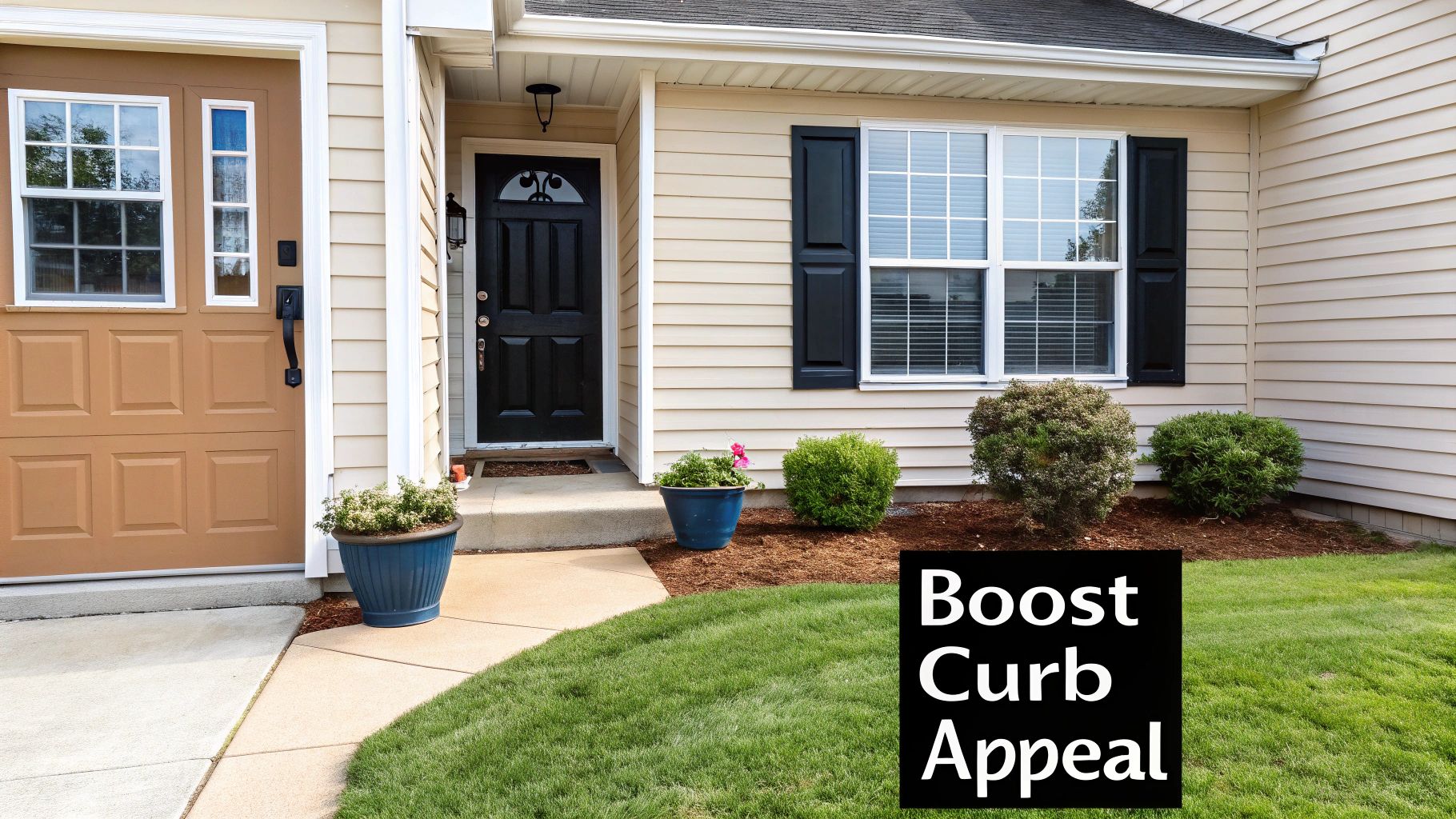
The moment a potential buyer pulls up to your house, they're already making a judgment call. That first impression—your home’s curb appeal—is probably the most powerful tool you have when selling. It sets the tone for everything they’re about to see inside and can be the difference between a buyer who can't wait to see more and one who’s already mentally checked out.
Once they step inside, the focus shifts to home staging. This isn't about fooling anyone or hiding flaws. It's about showing off your home's best features and helping buyers actually picture their life unfolding there. A properly staged home feels welcoming and inviting, turning it from just another house on the market into a place someone can't wait to call their own.
Creating an Irresistible First Impression
Think of your home's exterior as its cover letter. If it looks neglected, buyers will assume the inside is too, and you might lose them before they even walk through the door. Boosting your curb appeal is one of the highest-return investments you can make.
Start with the absolute must-dos: a freshly mowed lawn, neatly trimmed shrubs, and a garden free of weeds. These are non-negotiable. For a simple and inexpensive pop of colour, place some potted seasonal flowers near the entrance—it adds instant charm. If you're looking for more ideas, there are tons of inspiring front yard landscaping ideas for unbeatable curb appeal you can explore.
Next, give the house itself some attention. Renting a power washer can make your siding, driveway, and walkways look brand new by stripping away years of dirt. Make sure the windows are sparkling clean, inside and out. And don't forget the front door! A fresh coat of paint in a classic, inviting colour can make it a beautiful focal point.
Staging the Interior to Showcase Potential
Once you've wowed them outside, the inside has to live up to the hype. The main goal with staging is to make every room feel as bright, spacious, and functional as possible. This almost always means removing some of your personal furniture to open up the space and create clear, easy-to-navigate pathways.
Here are a few core ideas to keep in mind as you stage each room:
- Define Each Space: Make sure every room has a clear, understandable purpose. That awkward corner in the living room? Turn it into a cozy reading nook with an armchair, a small table, and a lamp.
- Arrange for Flow: Don't push all your furniture against the walls. Pulling sofas and chairs into conversational groupings makes a room feel more intimate and much larger.
- Let There Be Light: Open every single blind and curtain to let in as much natural light as possible. Use lamps to brighten up any dark corners, creating a warm and cheerful vibe.
- Add Simple Decor: Tasteful, neutral touches go a long way. Think new throw pillows on the couch, fluffy white towels in the bathroom, or a simple centrepiece on the dining table. It adds warmth without being a distraction.
A well-staged home helps buyers form an emotional connection. When they can easily picture themselves hosting a dinner party or relaxing in the living room, they are one step closer to making an offer.
Addressing the Senses for a Complete Experience
Good staging is about more than just what buyers see—it’s also about what they smell and hear. A clean, fresh scent is absolutely critical. Lingering odours from pets, cooking, or just a stuffy house can be a major turn-off.
This is where a deep, professional cleaning of your home's HVAC system can be a game-changer. After a thorough duct cleaning, the air itself feels crisper and cleaner, getting rid of any musty smells right at the source. If you've been battling persistent odours, learning how to eliminate old musty smells at home is a must before your first showing. A home that smells genuinely clean reassures buyers that it’s been well-cared for, from top to bottom.
Final Preparations Before Your Listing Goes Live
You've done the heavy lifting—the decluttering, the deep cleaning, and the staging are all checked off. Now you’re in the final stretch, but don't ease up just yet. This last phase is all about the crucial details that make your listing pop and ensure a smooth, professional launch.
Think of it as the backstage prep before the big show. Buyers won’t see you pulling paperwork or coordinating photos, but these steps directly impact their confidence, the home inspection, and the offers you'll get. A well-prepared seller is a confident one, and it shows.
Assemble Your Home’s Paperwork
One of the smartest moves you can make is to create a "home binder." This is simply a collection of all the important documents related to your property. When a serious buyer has questions, having every answer at your fingertips shows you’re organized, transparent, and have nothing to hide.
Get these key documents together:
- Utility Bills: A year's worth of hydro, gas, and water bills gives potential buyers a realistic picture of monthly running costs. No surprises for them means a smoother closing for you.
- Major Repair Receipts: That new roof you put on in 2021? The furnace you replaced last winter? Find those receipts. They’re hard proof of the investment you’ve made in the home.
- Appliance Manuals: Gather the warranties and instruction booklets for every appliance you're leaving behind. It’s a small touch that buyers really appreciate.
- HVAC Service Records: A recent receipt for an HVAC tune-up, especially when paired with professional duct cleaning, is solid evidence that you’ve meticulously maintained the home's essential systems.
Final System Checks and Professional Photography
Right before the photographer is scheduled to arrive, do one last walkthrough. Make sure your HVAC system is running quietly and efficiently. This simple check can help you catch a small issue before it becomes a big red flag during the buyer's home inspection.
Next up: professional photography. In today's market, this is completely non-negotiable. With the vast majority of Canadian homebuyers starting their search online, your listing photos are your first impression—and you only get one. A pro knows how to use light and angles to make your home look its absolute best, which is what gets people to book a showing in the first place.
A home that is well-documented and professionally photographed communicates value before a buyer even steps inside. It sets a premium expectation and helps justify your asking price from the very beginning.
Working With Your Agent and Preparing for Showings
With your home looking its best and your paperwork in order, it's time to sit down with your real estate agent and lock in the price. They'll pull recent comparable sales ("comps") from your neighbourhood to position your home competitively in the local market. Trust their expertise—pricing it right from day one is the single best way to generate buzz and multiple offers.
Finally, get your family and pets ready for the reality of showings. It can be a bit chaotic, so a plan is essential. Figure out a go-to spot to take your pets and have a quick 10-minute tidy-up routine you can run through before you leave the house. A little bit of planning here goes a long way in making the selling process far less stressful. And once the deal is done, a solid moving into a new house checklist will help you get organized for the exciting next chapter.
Answering Your Top Questions About Selling a Home in Canada
Getting your home market-ready always brings up a few key questions. If you're selling in a Canadian market, chances are you've wondered about these same things. Let's get you some clear, practical answers.
How Much Should I Actually Spend Getting My House Ready to Sell?
The rule of thumb I always share with clients is to budget around 1-2% of your home's estimated value for pre-listing preparations. That doesn't mean you have to spend it all, but it's a realistic starting point.
Always focus on the high-impact, low-cost stuff first. A fresh coat of neutral paint, a serious deep clean, and fixing those little nagging repairs will give you the most bang for your buck. Think of bigger ticket items like professional duct cleaning not as a cost, but as an investment. It helps you sail through the home inspection and gives you a fantastic selling point about the home's air quality. That investment often pays for itself by helping you close the deal faster and smoother.
Should I Bother Hiring a Professional Stager?
Honestly, it depends on your situation—your budget, your spare time, and whether you have an eye for design. You can absolutely do it yourself if you're willing to be ruthless with decluttering, pack away personal photos, and commit to that deep clean.
But there are times when a professional stager is worth their weight in gold, especially if your home will be vacant. They're experts at making rooms feel bigger and brighter, creating a flow that buyers respond to emotionally. That expertise can directly translate into a higher final sale price.
What’s the One Thing I Absolutely Can't Skip Before Listing?
If I had to pick just one thing, it's the combination of a massive declutter and a top-to-bottom deep clean. Nothing else matters if buyers can't see past your stuff or are put off by a grimy corner.
A spotless, clutter-free home feels open and inviting, letting potential buyers picture their own lives there. This goes for the things they can't see, too—like musty odours or stale air. That's why ensuring the air quality is pristine is so critical. A simple air quality testing kit can tell you where you stand, helping you create that fresh, "I want to live here" feeling from the moment they walk in the door.
Ready to make sure your home’s air quality wows potential buyers? The team at Can Do Duct Cleaning is here to help you leave a fantastic first impression with our professional duct cleaning services. Visit us at https://www.candoductcleaning.com to book your appointment today.

