
As the chill of a Greater Toronto Area winter approaches, the reliability of your furnace shifts from a convenience to an absolute necessity. Proactive maintenance is the single most effective way to ensure your home remains a warm, safe sanctuary through the coldest months. Neglecting your heating system can lead to unexpectedly high energy bills, a decline in indoor air quality, and the serious risk of system failures or even dangerous carbon monoxide leaks. This is why a thorough furnace maintenance checklist is not just a recommendation; it's an essential tool for every responsible homeowner in regions like Ajax, Scarborough, and across the GTA.
This comprehensive guide is designed to empower you with actionable steps to keep your furnace running at peak performance. We will break down the entire process into manageable tasks, covering everything from simple monthly checks you can perform yourself to the more complex annual inspections that require a professional touch. You'll learn how to inspect and clean critical components, from the air filter and burners to the blower motor and heat exchanger.
We will also cover crucial safety protocols, such as testing carbon monoxide detectors and ensuring safety controls are functioning correctly. By following this detailed checklist, you will not only extend the lifespan of your furnace but also enhance its efficiency, lower your utility costs, and secure peace of mind for your family. This isn't just about avoiding a mid-winter breakdown; it's about optimising your home's central system for a season of dependable warmth and safety.
1. Replace or Clean Air Filter
If there is one non-negotiable task on any furnace maintenance checklist, this is it. Your furnace’s air filter serves as the primary line of defence for both your HVAC system and your home’s indoor air quality. It’s designed to capture airborne contaminants like dust, pet dander, pollen, and lint before they can enter the furnace’s sensitive internal components or get recirculated into the air you breathe.
A clean filter allows air to flow freely, enabling your furnace to operate efficiently. Conversely, a clogged filter suffocates the system, forcing the blower motor to work harder to pull air through. This strain leads to higher energy bills, reduced heating performance, and can even cause the system to overheat and shut down, potentially leading to expensive repairs.
When and Why to Change Your Filter
The frequency of filter changes is not one-size-fits-all; it depends heavily on your specific household environment.
- For homes without pets or smokers: A standard 1-inch disposable filter may last up to 90 days.
- For homes with pets or residents with allergies: Monthly replacement is often necessary to manage the increased load of dander and allergens.
- During peak usage: In the heart of a cold GTA winter, your furnace runs constantly, meaning the filter will clog faster. It's wise to check it monthly during these periods.
Pro Tip: Set a recurring monthly reminder on your phone or mark your calendar to physically check the filter. Hold it up to a light source; if you can't see light passing through it, it's time for a change, regardless of how long it's been in use.
Actionable Steps for Filter Maintenance
- Identify Your Filter: Locate the filter slot on your furnace, typically between the return air duct and the main unit. Note the dimensions printed on the filter's cardboard frame. Taking a quick photo is an easy way to ensure you buy the correct size.
- Choose the Right Type: While standard fibreglass filters are cheap, consider a pleated filter with a higher MERV (Minimum Efficiency Reporting Value) rating, like 8-11, for superior particle capture. For a more sustainable option, washable electrostatic filters can be cleaned and reused for years.
- Stock Up: Purchase several filters at once so you always have a clean one ready. This simple step removes the friction of having to run to the store every time a change is needed.
Understanding the optimal replacement schedule is key to balancing air quality and system efficiency. For a more in-depth guide, you can learn more about furnace filter replacement frequency. Regularly replacing your filter is the single most impactful DIY task for prolonging the life of your furnace.
2. Inspect and Clean Burners
While the air filter is the lungs of your furnace, the burners are its heart. This is where the combustion process happens, as fuel (typically natural gas in the GTA) is ignited to generate the heat that warms your home. Over time, these critical components can accumulate dust, soot, and even rust, which obstructs the proper flow of gas and can lead to inefficient and potentially unsafe operation.
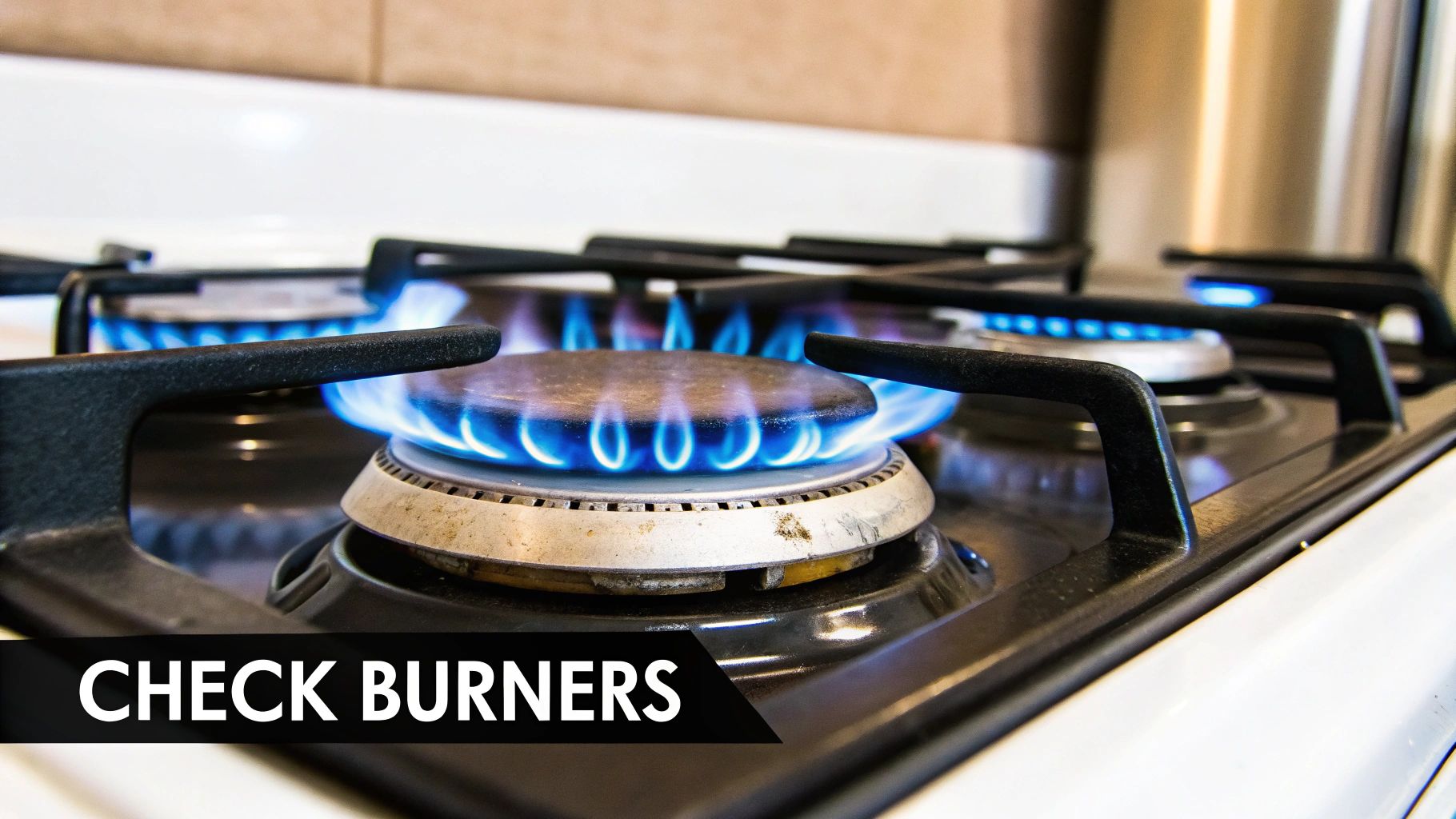
A clean set of burners ensures a clean, efficient burn. Soot buildup forces the furnace to use more fuel to produce the same amount of heat, driving up your energy bills. More critically, dirty burners can produce incomplete combustion, leading to the creation of carbon monoxide (CO), a colourless, odourless, and dangerous gas. A visual inspection is a key part of any comprehensive furnace maintenance checklist.
When and Why to Inspect Your Burners
Regular burner inspection is a crucial safety and efficiency measure that should be performed annually, ideally before the cold weather sets in.
- Annual Tune-Up: Professional HVAC technicians always include a burner inspection and cleaning as part of their annual service. This is the safest and most effective approach.
- Warning Signs: If you notice your furnace struggling to heat your home, making unusual rumbling noises, or if you see soot around the unit, the burners could be the culprit.
- Flame Colour: A healthy flame should be a steady, vibrant blue. If the flame is yellow or orange, it’s a clear sign of a combustion problem, often due to dirty burners.
Pro Tip: While a full cleaning should be left to a professional, you can perform a quick visual check yourself. Turn off the power to your furnace, remove the access panel, and look at the burners. Note any visible rust, debris, or soot buildup. Documenting their appearance with a photo can help track their condition year-over-year.
Actionable Steps for Burner Maintenance
- Schedule Professional Service: The most important step is to book an annual tune-up with a qualified HVAC company. They have the specialized tools, like wire brushes and vacuums, to safely and thoroughly clean the burners and surrounding assembly without causing damage.
- Visual Inspection: Homeowners can safely look for the warning signs. Watch the flame through the observation window (if your furnace has one) when it cycles on. A consistent blue flame is what you want to see. Yellow, flickering flames warrant an immediate service call.
- Keep the Area Clean: Reduce the amount of dust and debris that can get pulled into the burner assembly. Avoid storing items directly around the furnace and sweep the area regularly to minimize airborne dust.
Proper burner function is non-negotiable for the safe and efficient operation of your heating system. For homeowners considering a new system, understanding the components is vital; you can explore more about the professional installation of a furnace. Ensuring your burners are clean is a fundamental step in preventing costly repairs and ensuring your family's safety.
3. Check Thermostat Calibration
Your thermostat is the brain of your heating system, telling your furnace precisely when to turn on and off to maintain your desired comfort level. If this crucial component is miscalibrated, it can send incorrect signals, leading to significant energy waste and an uncomfortable home. An inaccurate thermostat might cause your furnace to run excessively, a problem known as "short cycling," or fail to turn on when needed, leaving you in the cold.
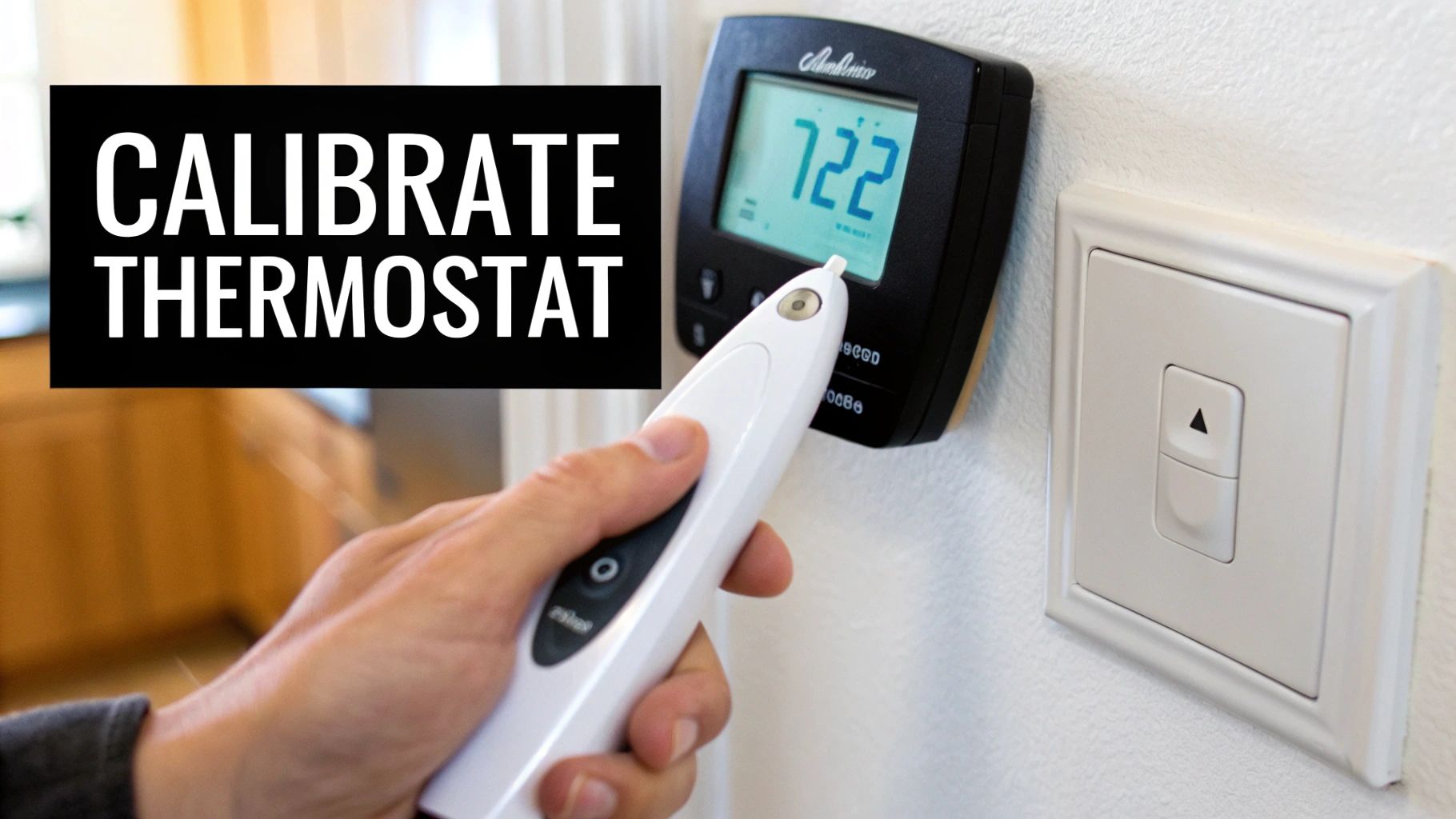
Ensuring its accuracy is a fundamental part of any furnace maintenance checklist. Modern programmable and smart thermostats, like those from Nest or Ecobee, offer enhanced efficiency features, but even they require proper setup and occasional checks. Older mechanical thermostats are particularly prone to losing accuracy over time due to dust buildup or simple wear and tear.
When and Why to Check Your Thermostat
A calibration check should be part of your annual pre-winter furnace tune-up. It's especially important if you notice inconsistencies between the set temperature and how the room actually feels, or if your energy bills seem unusually high.
- Symptoms of Miscalibration: Your furnace runs constantly, rooms feel colder or hotter than the set temperature, or you experience unexplained spikes in your heating costs.
- Annual Maintenance: Perform a simple accuracy test each autumn before the heavy heating season begins.
- Battery-Powered Models: For digital, non-hardwired thermostats, replace the batteries annually to prevent malfunction when you need it most. A dying battery can lead to inaccurate readings before it fails completely.
Pro Tip: Place a reliable, simple glass thermometer next to your thermostat for 15-20 minutes. If the readings differ by more than a degree or two, your thermostat likely needs recalibration, cleaning, or replacement. Ensure it's not placed in direct sunlight or near a drafty window, which can skew readings.
Actionable Steps for Thermostat Maintenance
- Verify Accuracy: As mentioned in the pro tip, use an independent thermometer to confirm your thermostat's reading. This is the simplest and most effective diagnostic test you can perform.
- Clean Mechanical Units: For older, non-digital thermostats, carefully remove the cover and use a can of compressed air or a soft brush to gently clean dust from the internal components, like the bimetallic coils.
- Programme for Efficiency: For programmable models, set schedules that lower the temperature when you are away or asleep. ENERGY STAR suggests setting it to around 20°C (68°F) when you're home and lowering it by a few degrees at night for optimal savings.
- Consider an Upgrade: If you have an older or inaccurate thermostat, upgrading to a smart model can be a wise investment. These devices learn your household's patterns and can be controlled remotely, often leading to energy reductions of 10-23% and providing valuable usage data.
A properly functioning thermostat ensures your furnace operates only when necessary, saving you money and prolonging the system’s lifespan. It’s a small check that delivers significant returns in both comfort and efficiency.
4. Examine Ductwork for Leaks and Blockages
Your furnace can be the most efficient unit on the market, but if your ductwork is compromised, you're essentially heating your attic, basement, or wall cavities. Ducts are the arteries of your HVAC system, responsible for delivering warm air to every room. Leaks, disconnected joints, and blockages force your furnace to work harder and run longer to achieve your desired temperature, directly impacting your utility bills and home comfort.
According to the EPA, the typical home loses 20-30% of its conditioned air to duct leaks. This staggering loss not only wastes energy but can also introduce dust, insulation fibres, and other contaminants into your living space from unconditioned areas. A thorough inspection is a critical part of any comprehensive furnace maintenance checklist, ensuring the heat you pay for actually reaches you.
When and Why to Inspect Your Ductwork
A visual inspection of accessible ductwork should be performed seasonally, before the start of the heavy heating season. However, certain signs may prompt an earlier check.
- Uneven heating: Some rooms are noticeably colder than others.
- High energy bills: A sudden, unexplained spike in your heating costs.
- Excessive dust: Your home seems dustier than usual, even with regular filter changes.
- Strange noises: You hear whistling or rattling sounds when the furnace is running, which can indicate air escaping from small holes or loose joints.
Pro Tip: While your furnace is running, carefully hold a lit stick of incense or a thin piece of tissue paper near the joints and seams of accessible ducts. If the smoke or tissue is disturbed or pulled toward the duct, you have likely found an air leak.
Actionable Steps for Ductwork Maintenance
- Visual Inspection: Start in your basement, crawlspace, or attic. Look for obvious signs of trouble like disconnected sections, crushed or kinked flexible ducts, or tears and holes.
- Seal Leaks Properly: Use metal-backed tape or, for a more permanent solution, paint-on mastic sealant on all accessible seams, joints, and holes. Never use standard grey "duct tape," as it dries out and fails quickly under the temperature changes in an HVAC system.
- Ensure Clear Airflow: Check that all registers and return air grilles are open and unobstructed by furniture, rugs, or drapes. Blocked vents disrupt the system's air balance and reduce efficiency. Beyond just sealing individual leaks, understanding the benefits of optimizing your home's airtight comfort system can significantly enhance your heating efficiency and comfort, complementing your furnace's performance.
Sealing and insulating your ducts is one of the most cost-effective energy-saving measures a homeowner can take. To ensure a durable and effective seal, it is crucial to use the right materials. You can find out more about the professional-grade solution of using mastic sealant for ductwork.
5. Lubricate Moving Parts
Just like any complex machine, your furnace relies on the smooth operation of its mechanical components to function correctly. The motor, blower fan bearings, and other moving parts are subject to constant friction. Proper lubrication is the key to minimizing this friction, reducing wear and tear, and ensuring these parts move quietly and efficiently.
Without adequate lubrication, metal-on-metal contact creates excessive heat and stress. This not only leads to noisy operation like squealing or grinding but also accelerates the breakdown of critical components. An overworked, unlubricated motor draws more electricity, leading to higher energy bills, and is at a much greater risk of premature failure. This simple step is a core part of any comprehensive furnace maintenance checklist and is crucial for extending your system's operational lifespan.
When and Why to Lubricate
The need for lubrication largely depends on the age of your furnace. Many modern, high-efficiency furnaces feature permanently sealed bearings that do not require additional oiling. However, older models, particularly those manufactured before the year 2000, often have service ports specifically designed for this purpose.
- For older furnaces: Annual lubrication, ideally before the start of the heavy heating season in the GTA, is a standard best practice.
- For newer, sealed systems: Attempting to lubricate these units is unnecessary and could cause damage. Always consult your owner's manual first.
- If you hear new noises: Squeaking or grinding sounds from your furnace when it runs can be a clear indicator that a moving part is starved of lubrication.
Pro Tip: Before you begin, check your furnace’s manual. It is the definitive source for whether your specific model needs lubrication, where the oil ports are located, and what type of lubricant is recommended by the manufacturer.
Actionable Steps for Lubrication
- Safety First: Before performing any maintenance, turn off all electrical power to the furnace at your home’s breaker panel. This is a non-negotiable safety step.
- Locate the Ports: Identify the oil ports on the blower motor and fan shaft. These are typically small, covered caps labelled "oil" or simply small holes near the motor's bearings. If you cannot find any, your unit is likely a sealed system.
- Apply Lubricant Sparingly: Use a lightweight, non-detergent electric motor oil (often SAE 20). Apply only two to three drops into each port. Over-oiling can be just as damaging as under-oiling, as excess oil can attract dust and gum up the components.
Properly lubricating your furnace ensures it runs smoothly and quietly, preventing the kind of friction that leads to costly component failures. If you're unsure about your furnace's requirements, this task is often included in a professional annual tune-up.
6. Test Carbon Monoxide and Safety Controls
Beyond efficiency, the most critical function of a comprehensive furnace maintenance checklist is ensuring your family's safety. Your furnace’s internal safety controls, such as the limit switch and flame sensor, are designed to prevent dangerous conditions like overheating or gas leaks. More importantly, proper maintenance is vital for preventing the production and release of carbon monoxide (CO), an invisible, odourless, and potentially lethal gas produced during incomplete combustion.
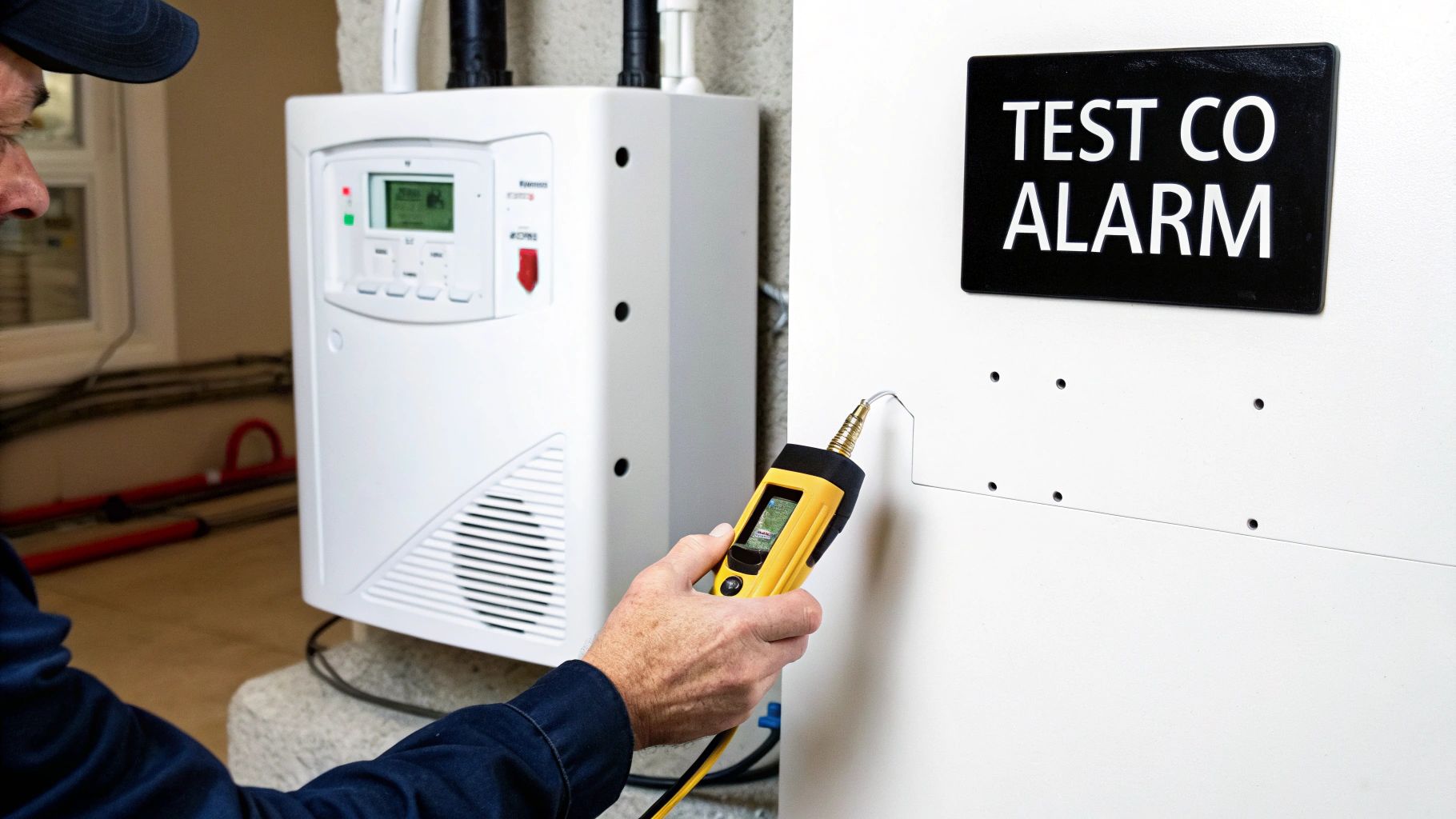
A malfunctioning or poorly maintained furnace can become a source of CO, which can leak into your living space undetected. The Centers for Disease Control and Prevention (CDC) highlights the severe risks, as thousands of people seek emergency care for CO poisoning annually. Regular, professional testing ensures these critical safety systems are functioning correctly and that your furnace is not producing harmful levels of this dangerous gas.
When and Why to Test Safety Controls
Annual testing is the industry standard and a non-negotiable safety measure, especially for older furnaces. This check should be performed by a qualified HVAC technician before the start of every heating season in the GTA.
- Before Winter: The best time for this service is in the early autumn, before you rely on your furnace daily. This proactive approach identifies and resolves potential safety hazards before they become emergencies.
- After Major Work: If you’ve had significant repairs or renovations near your furnace or venting systems, it’s wise to have a safety check performed.
- If You Suspect an Issue: If you notice strange smells, unusual noises, or soot around your furnace vents, shut the system down and call a professional immediately.
Pro Tip: Your CO detectors are your home’s first line of defence, but they are not a substitute for professional furnace inspection. A technician's tools can detect low-level CO leaks that may not trigger a residential alarm but can still indicate a serious underlying problem with your furnace.
Actionable Steps for Carbon Monoxide Safety
- Install and Test CO Detectors: Every home with a fuel-burning appliance must have CO detectors. Install them on every level of your home, especially near sleeping areas. Test them monthly by pressing the "test" button and replace the batteries every six to twelve months.
- Schedule Professional Inspection: Only a certified technician has the calibrated equipment to accurately measure CO levels in your furnace's flue gas and test the safety shut-off controls. This is a crucial part of any annual tune-up.
- Keep Vents Clear: Ensure that all furnace, flue, and exhaust vents leading to the exterior of your home are free from obstructions like snow, ice, leaves, or animal nests. Proper ventilation is essential for safety.
Ensuring your furnace operates safely provides invaluable peace of mind. While DIY checks are important, professional verification of your system’s safety mechanisms and combustion process is essential. For those concerned about overall air purity, you can find more information about a comprehensive air quality testing kit.
7. Clean or Replace Blower Motor Components
The blower motor is the powerful heart of your furnace's distribution system, responsible for pushing heated air through the ductwork and into every room of your home. Over time, the fan blades (blower wheel) and its housing can become caked with a stubborn layer of dust, dirt, and debris that even the best air filter can’t completely stop.
This buildup acts like an anchor, forcing the motor to work harder to spin the weighted-down fan. This strain reduces airflow, leading to uneven heating, higher energy consumption, and increased operational noise. In severe cases, a neglected blower motor can overheat and fail prematurely, resulting in a costly no-heat emergency during a frigid GTA winter. Cleaning these components is a critical step in any comprehensive furnace maintenance checklist.
When and Why to Service Your Blower
Unlike a filter change, blower cleaning is a more intensive task, but its impact on efficiency and longevity is significant. Neglecting this component can lead to a 10-15% loss in airflow efficiency.
- For most homes: A professional blower cleaning every 2 to 3 years is a sound investment.
- For homes with significant dust, pets, or recent renovations: An annual inspection and cleaning may be necessary to maintain optimal performance.
- Signs of a dirty blower: Listen for unusual sounds like humming, grinding, or squeaking. A noticeable drop in airflow from your vents is another key indicator.
Pro Tip: Keeping the area around your furnace clean and free of dust, lint, and debris can significantly reduce the rate at which the blower components get dirty. A tidy utility room is a simple, effective step toward a healthier furnace.
Actionable Steps for Blower Maintenance
Due to the sensitive electrical components and the need for disassembly, cleaning the blower motor is typically best left to a qualified HVAC technician. However, homeowners can take proactive steps.
- Prioritize Filter Changes: The most effective way to protect your blower motor is to be diligent with air filter replacements. A clean filter is the blower’s best friend, capturing most contaminants before they reach it.
- Visual Inspection: With the furnace power turned off at the breaker, you can often peek into the blower compartment with a flashlight. If you see a thick, blanket-like layer of dust on the fan blades, it’s time to schedule a professional cleaning.
- Schedule Professional Service: Incorporate a blower motor inspection and cleaning into your annual professional tune-up. A technician can safely remove, clean, and rebalance the blower assembly, ensuring it runs efficiently and quietly.
A clean blower works in tandem with clean ductwork to deliver warm air effectively. For more details on how these systems are connected, you can explore the benefits of a professional furnace and duct cleaning service. Regular attention to the blower motor is a vital part of ensuring your furnace operates at peak performance for years to come.
8. Inspect and Seal Heat Exchanger
This is arguably the most critical safety check on any comprehensive furnace maintenance checklist. The heat exchanger is a metal chamber where the fiery combustion process occurs. It transfers heat from burning fuel to the air that is then circulated throughout your home, all while keeping the toxic exhaust gases-including deadly carbon monoxide (CO)-safely contained and vented outside.
A crack or hole in this component is a serious hazard, as it allows these poisonous gases to mix with your breathable air. Over time, the constant expansion and contraction from heating and cooling cycles can cause metal fatigue, leading to stress fractures. A compromised heat exchanger is not repairable; it necessitates an immediate furnace shutdown and replacement.
When and Why to Inspect the Heat Exchanger
A professional heat exchanger inspection is a non-negotiable annual task, especially for furnaces over 10 years old. Catching a potential failure early is paramount for your family’s safety.
- Annual Professional Tune-Up: This is the ideal time for the inspection. A qualified technician has the specialized tools, like a borescope camera, to thoroughly examine the exchanger's interior walls.
- Older Furnaces (10+ Years): The risk of metal fatigue and corrosion increases significantly with age. A furnace nearing the 15-20 year mark requires vigilant annual checks.
- Signs of Trouble: If you notice strange odours, soot around the furnace, or your carbon monoxide detectors are triggered, an immediate inspection is required. Corrosion or discolouration on the furnace's exterior can also indicate internal issues.
Pro Tip: When scheduling your annual tune-up, specifically confirm that a detailed heat exchanger inspection and a combustion analysis are part of the service. This ensures the technician will check for both physical integrity and proper, safe operation.
Actionable Steps for Heat Exchanger Safety
While a full internal inspection is a job for a professional, homeowners can and should take proactive steps to monitor for potential issues and support the component's longevity.
- Prioritize CO Detectors: Ensure you have working carbon monoxide detectors on every level of your home, especially near sleeping areas. Test them monthly and replace them according to the manufacturer’s recommendations (typically every 5-10 years).
- Monitor the Flame: Occasionally observe the burner flame through the furnace's viewing port. It should be a steady, blue flame. A flickering, yellow, or orange flame can indicate a combustion problem that could be stressing the heat exchanger.
- Maintain Airflow: A key part of your own furnace maintenance checklist should be keeping air filters clean and all supply/return vents unobstructed. Proper airflow prevents the furnace from overheating, which reduces stress on the heat exchanger and prolongs its life.
Furnace Maintenance: 8-Point Checklist Comparison
| Item | Implementation Complexity | Resource Requirements | Expected Outcomes | Ideal Use Cases | Key Advantages |
|---|---|---|---|---|---|
| Replace or Clean Air Filter | Low — simple DIY monthly task | Low cost filters ($15–50); choose correct size/MERV; reusable options | Improved indoor air quality; 5–15% efficiency gain; reduced dust buildup | Routine maintenance; homes with pets; seasonal prep | Low cost; immediate AQ and efficiency improvements; easy to perform |
| Inspect and Clean Burners | Medium–High — professional recommended; visual homeowner checks possible | Professional service $150–300; safety tools and expertise | Proper blue flame combustion; reduced CO risk; 10–20% fuel efficiency gain | Annual tune-up; yellow/orange flames; gas furnaces | Improves safety and combustion efficiency; extends furnace life |
| Check Thermostat Calibration | Low–Medium — testable DIY; professional calibration if needed | Independent thermometer; programmable/smart thermostat $200–600; calibration $75–150 | Better temperature consistency; 10–15% energy savings with programmable/smart units | Inaccurate temperature control; energy-saving upgrades; smart home integration | Improves comfort and energy management; enables remote control and learning |
| Examine Ductwork for Leaks and Blockages | Medium–High — DIY checks possible; professional testing/sealing often needed | Duct testing $300–500; sealing $300–1,500; mastic/insulation materials | Reduced heat loss; improved distribution; 15–30% energy savings | Uneven heating; high utility bills; older or poorly sealed homes | Significant energy and comfort improvements by eliminating leaks |
| Lubricate Moving Parts | Low — simple if access ports exist; not required on sealed systems | Low-cost lubricant ($0–50); manufacturer-specified oil; basic tools | Reduced noise and vibration; extended motor/bearing life; better reliability | Older furnaces with serviceable bearings; annual maintenance | Low cost; extends component lifespan; prevents premature failures |
| Test Carbon Monoxide and Safety Controls | High — requires professional testing and expertise | Professional CO testing $100–200; CO detectors; potential repair costs $300–1,000+ | Detects CO leaks and safety control failures; prevents poisoning | Annual safety checks; older furnaces; suspected CO issues | Critical life-safety verification; early detection of hazardous failures |
| Clean or Replace Blower Motor Components | High — typically requires professional disassembly and cleaning | Cleaning service $150–300; motor replacement $500–1,500+; technician labor | Restored airflow and heating uniformity; reduced noise; prevents motor overheating | Noisy systems; poor airflow; high-dust environments or long service intervals | Restores circulation efficiency; prevents motor failure; improves comfort |
| Inspect and Seal Heat Exchanger | High — professional visual/CO testing required; replacement if cracked | Inspection/testing $0–200 (part of tune-up); replacement $3,500–7,000+ if needed | Detects cracks that could leak combustion gases; informs replacement planning | Furnaces >10–15 years; suspected CO exposure; annual safety inspections | Essential safety check; prevents dangerous CO exposure and catastrophic failure |
Stay Warm and Safe: Partner with a Pro for Your Furnace Health
Navigating the complexities of furnace care can feel overwhelming, but as we've explored, a structured approach makes all the difference. This comprehensive furnace maintenance checklist isn't just a list of chores; it's a strategic plan for protecting your investment, safeguarding your family, and optimising your home's energy consumption. By transforming these tasks from an afterthought into a regular habit, you take direct control over your home's comfort and operational costs, especially during the demanding Greater Toronto Area winters.
We've covered the full spectrum of furnace care, from simple yet crucial monthly tasks like inspecting your air filter to the more involved annual inspections of the heat exchanger and safety controls. The key takeaway is understanding the division of labour between DIY-friendly maintenance and essential professional servicing. While a homeowner in Ajax or Scarborough can and should regularly handle filter changes and visual inspections, the technical precision required for burner cleaning, blower motor lubrication, and carbon monoxide detector testing demands the skill set of a certified technician. This balanced approach ensures your system receives consistent, thorough attention without putting you at risk.
From Checklist to Confident Homeownership
Mastering this checklist empowers you to become a more informed and proactive homeowner. You'll move from passively reacting to a furnace breakdown on a frigid January night to actively preventing such emergencies. You'll learn to recognise the early warning signs of trouble, such as unusual noises or inconsistent heating, allowing you to schedule a professional visit before a minor issue escalates into a catastrophic and expensive failure.
This proactive stance delivers tangible benefits that extend far beyond simple comfort:
- Financial Savings: A well-maintained furnace operates at peak efficiency, directly lowering your monthly utility bills. You also avoid costly emergency repair fees and prolong the lifespan of your unit, delaying the significant expense of a full replacement.
- Enhanced Safety: The most critical items on our list, like checking the heat exchanger for cracks and verifying safety controls, are non-negotiable for protecting your family from the silent threat of carbon monoxide leaks and other potential hazards.
- Improved Air Quality: A clean furnace, coupled with clean ductwork, means less dust, allergens, and contaminants circulating through your home. This creates a healthier living environment for everyone, particularly those with allergies or respiratory sensitivities.
- Ultimate Peace of Mind: Knowing your furnace has been professionally inspected and tuned provides an invaluable sense of security. You can rest easy, confident that your home will remain a warm and safe haven throughout the harshest Canadian weather.
Your Action Plan for a Worry-Free Winter
Your journey toward total furnace health starts now. Don't let this checklist remain a passive document. Print it out, set calendar reminders for the monthly and seasonal tasks, and most importantly, schedule your annual professional tune-up. Waiting until the first snowfall often means longer wait times and the risk of being caught unprepared. By booking your service during the off-season, you ensure your system is primed and ready to perform flawlessly the moment you need it. Think of it as an annual physical for the heart of your home; it’s an essential preventative measure that pays dividends in reliability and safety all winter long.
Ready to ensure your furnace is operating at peak performance and safety? The certified experts at Can Do Duct Cleaning specialise in comprehensive furnace maintenance and duct cleaning services tailored for GTA homes, ensuring every critical point on your furnace maintenance checklist is professionally addressed. Schedule your professional tune-up today by visiting Can Do Duct Cleaning and enjoy a warm, worry-free winter.

