
Trying to nail down the furnace installation cost Ontario homeowners should budget for can feel a bit like guessing the weather. But there's a solid starting point: for most high-efficiency gas furnace installations, you can expect the all-in price to land somewhere between $3,500 and $7,500.
This range gives you a realistic ballpark figure before you start getting into the nitty-gritty details.
Your Quick Guide to Ontario Furnace Installation Costs
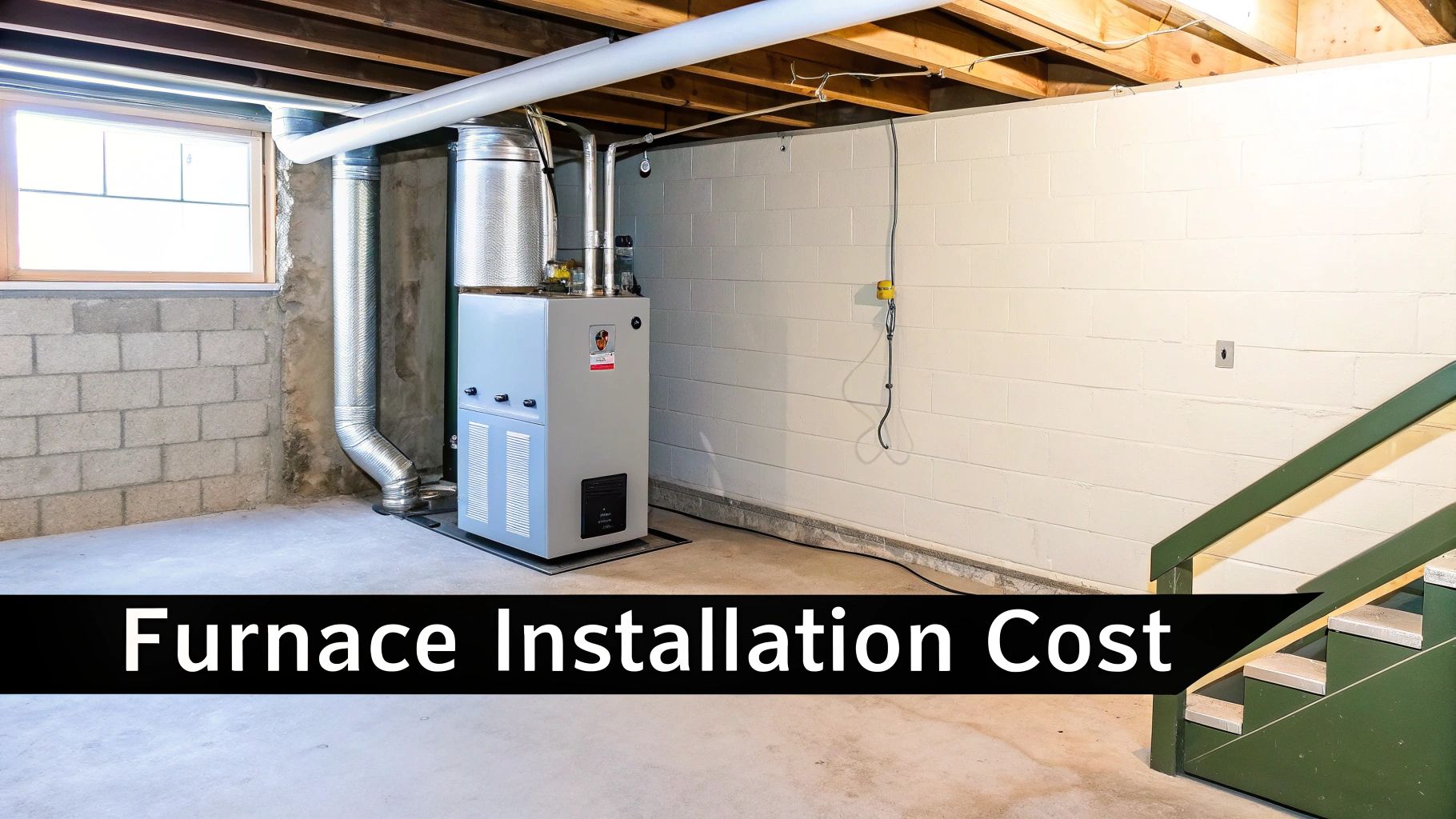
When those cold winds start whipping across the GTA, from Scarborough to Ajax, a reliable furnace stops being a luxury and becomes an absolute necessity. Understanding the costs isn't just about the price tag; it's about making a smart investment in your family's comfort and safety.
The final bill for a new furnace isn't just the cost of the unit itself. Think of it as a complete package deal that bundles the equipment, the professional labour to install it safely, and a few other crucial components.
That initial price range is your starting point, but several factors can push the final number up or down. It’s a lot like buying a car—the base model has one price, but as you add features like a more powerful engine or high-tech options, the final cost changes.
Key Factors That Influence Your Final Bill
So, what moves that needle? Several key variables will shape your final invoice. It’s good to have these in mind when you start calling local contractors for quotes.
Here are the main things that will affect the furnace installation cost in Ontario:
- Type of Furnace: Choosing between natural gas, electric, or propane units makes a big difference in cost.
- Efficiency Rating (AFUE): A furnace with a higher AFUE rating costs more upfront but pays you back with lower energy bills down the road.
- Your Home's Size and Layout: A sprawling bungalow needs a more powerful (and pricier) furnace than a compact townhouse.
- Installation Complexity: Things like tricky venting routes, old ductwork that needs updating, or accessibility issues can add to labour time and cost.
Here's a crucial piece of advice: a lower upfront price doesn't always equal a better deal. An undersized or poorly installed furnace can lead to sky-high hydro bills and constant repair calls, costing you far more in the long run.
A Closer Look at the Numbers
Let’s put some real-world context to that price range. Here's a quick look at what you can expect for different furnace types in Ontario.
Estimated Furnace Installation Costs in Ontario
This table breaks down the typical all-in costs you'll see for the most common furnace types in our area.
| Furnace Type | Average Installed Cost Range | Best Suited For |
|---|---|---|
| Natural Gas Furnace | $3,500 – $7,500 | The majority of homes in the GTA with access to natural gas lines. |
| Electric Furnace | $2,500 – $6,000 | Homes without gas lines or as a backup system in milder climates. |
| Propane Furnace | $4,000 – $8,000 | Rural properties or homes not connected to the municipal natural gas grid. |
The $3,500 to $7,500 range really reflects the sweet spot for most homeowners in the GTA: high-efficiency natural gas furnaces. These units boast AFUE ratings of 95-98%, making them the top choice for battling our tough Canadian winters efficiently. If you want to dive deeper into the specifics, our detailed guide on how much a new furnace costs breaks it down even further.
Later in this guide, we’ll explore provincial rebates and incentives that can bring that total cost down, making a high-efficiency upgrade even more attractive. By getting a handle on all these variables, you can walk into your furnace replacement project with the confidence of an expert.
Decoding Your Furnace Installation Quote
Getting a quote for a new furnace can feel like you’re trying to read a foreign language. It's a jumble of line items, technical jargon, and numbers that don't always make immediate sense. Let's act as your translator and break down what’s actually on that piece of paper so you can see exactly where every dollar goes.
Think of it like getting a bill at a restaurant. The furnace itself is the main course, but you’ve also got the service, the side dishes, and maybe even a corking fee. Understanding each part is the only way to compare quotes fairly and make sure there are no nasty surprises when the final bill for your furnace installation cost Ontario residents can expect arrives.
The Furnace Unit: The Heart of the Cost
The biggest number on your quote, without a doubt, will be the furnace itself. The price tag on the unit is driven by three main things: the brand you choose, the size of the furnace (measured in BTUs), and its efficiency rating (AFUE). It's a lot like buying a car—some brands come with a premium for their reputation and advanced features, while others are known for being solid, reliable workhorses.
Sizing is everything here. A pro will do what’s called a "load calculation" to match the furnace perfectly to your home. If the unit is too small, it’ll run constantly trying to catch up. If it's too big, it will switch on and off all the time—a process called short-cycling—which wastes a ton of energy and puts extra wear and tear on the components.
A proper furnace installation isn't just about swapping boxes. It involves careful calculations, safety checks, and adherence to strict provincial and municipal codes to ensure your system runs efficiently and safely for years to come.
So, what does the equipment actually cost? For homeowners in Ontario, the price for just the unit can swing quite a bit depending on what you need.
- Standard Gas Units: For a basic, reliable gas furnace, the equipment itself will likely be in the $2,000-$3,000 range.
- Top-Tier, High-Efficiency Gas Units: If you’re looking at premium models with all the bells and whistles, expect the unit to cost anywhere from $3,500-$5,000 before installation.
- Electric Furnaces: These are often cheaper upfront. A typical installed price lands around $2,500-$3,500, with the unit making up a smaller portion of that total.
- Propane Furnaces: Common on rural properties in places like Durham Region, a complete propane furnace project can hit $5,000-$7,500, reflecting the unit cost and more complex installation.
Labour and Installation: The Professional Touch
The second-biggest chunk of your quote is the labour. This isn't just paying someone for a few hours of work; it’s paying for expertise. A professional installation is a meticulous process that includes a whole checklist of tasks to make sure your new system is safe, efficient, and up to code.
Here’s what that labour cost usually covers:
- Safe Removal and Disposal: A technician has to carefully disconnect your old unit—messing with gas and electrical lines is not a DIY job. Then, they have to dispose of the old beast in an environmentally friendly way.
- New Unit Installation: This is the main event: putting the new furnace in place, hooking it up to your ductwork, connecting the gas and electrical, and running all the necessary venting.
- System Testing and Calibration: Once it's all connected, the job isn't done. The technician will fire it up, run a series of tests, and calibrate it to make sure it’s running at peak efficiency and, most importantly, safely.
The skilled labour to get all of this done right, including handling permits and venting, usually adds another $1,500-$2,500 to your total. You can get a better sense of the full scope by reading our guide on the installation of a furnace.
Additional Line Items: The Supporting Cast
Beyond the furnace and the main installation labour, you might see a few other charges on your quote. These aren’t "hidden fees." They’re necessary costs for a complete, safe, and long-lasting installation.
Here are a few common extras you might run into:
- Ductwork Modifications: If your existing ductwork is old, leaky, or not the right size for your new, more powerful furnace, it’ll need some adjustments.
- Municipal Permits: Most cities and towns in the GTA require a permit for a furnace installation. This is a good thing—it ensures the work is inspected and meets safety codes. Your contractor should handle all the paperwork.
- Venting Upgrades: Modern high-efficiency furnaces vent differently than old ones. They often need new PVC pipes run out the side of your house, which is an extra step.
- Electrical Work: Sometimes, a new furnace needs a dedicated circuit or other updates to your home's electrical panel. If that’s the case, an electrician will need to be involved.
By knowing what these line items mean, you can look at any quote with confidence, ask smart questions, and pick the right contractor for the job.
How Furnace Type and Efficiency Affect Your Budget
Picking a new furnace is a big deal. The model you choose directly impacts not just the initial installation bill but your heating costs for years to come. It’s a lot like buying a car—you can go for a basic, no-frills model that gets the job done, or a high-performance luxury version. Both will get you from A to B, but the upfront cost and ongoing fuel expenses are worlds apart.
The same logic holds true for your furnace. Here in Ontario, most homeowners are choosing between natural gas, electric, and propane models. Each has its own set of pros, cons, and costs that will shape your final budget.
Decoding Furnace Efficiency: What Is AFUE?
Before we start comparing different furnace types, we need to talk about one key metric: the AFUE rating. It stands for Annual Fuel Utilization Efficiency, which is just a technical way of saying how efficiently your furnace turns fuel into heat for your home.
Think of it this way: if your furnace has an 80% AFUE rating, it means that for every dollar you spend on natural gas, 80 cents of it becomes heat. The other 20 cents? That’s wasted energy that goes right up the chimney as exhaust. On the flip side, a high-efficiency furnace with a 96% AFUE rating only loses four cents of every dollar.
A higher AFUE rating means less wasted fuel and more money staying in your pocket every winter. It's the single most important number for understanding a furnace's long-term value.
This efficiency rating is the main reason you see such a wide range of prices when shopping around. A bigger investment upfront for a more efficient unit almost always pays for itself through lower monthly hydro or gas bills—a huge plus during our chilly Ontario winters.
Comparing Furnace Costs by Efficiency Level
To help you see how these numbers play out in the real world, let's look at how a furnace's efficiency rating affects its upfront cost and long-term savings potential.
Comparing Furnace Costs by Efficiency Level
| Efficiency Tier | AFUE Rating | Typical Installed Cost | Estimated Annual Energy Savings |
|---|---|---|---|
| Standard-Efficiency | 80% – 89% | $3,800 – $6,200 | Baseline |
| Mid-Efficiency | 90% – 95% | $5,200 – $8,800 | 10-15% savings vs. standard |
| High-Efficiency | 96%+ | $7,500 – $12,000 | 16%+ savings vs. standard |
As you can see, jumping to a higher efficiency tier requires a larger initial investment, but the payback comes in the form of lower energy bills year after year. For many homeowners, that trade-off makes a lot of sense.
Breaking Down the Numbers for a Typical Installation
Your fuel type and AFUE rating are the two biggest factors that determine what the final furnace installation cost in Ontario will look like. While natural gas is the most popular and affordable choice across the GTA, electric and propane furnaces are great alternatives for homes without a gas line.
The chart below gives you a clear picture of where your money goes during a typical furnace installation.
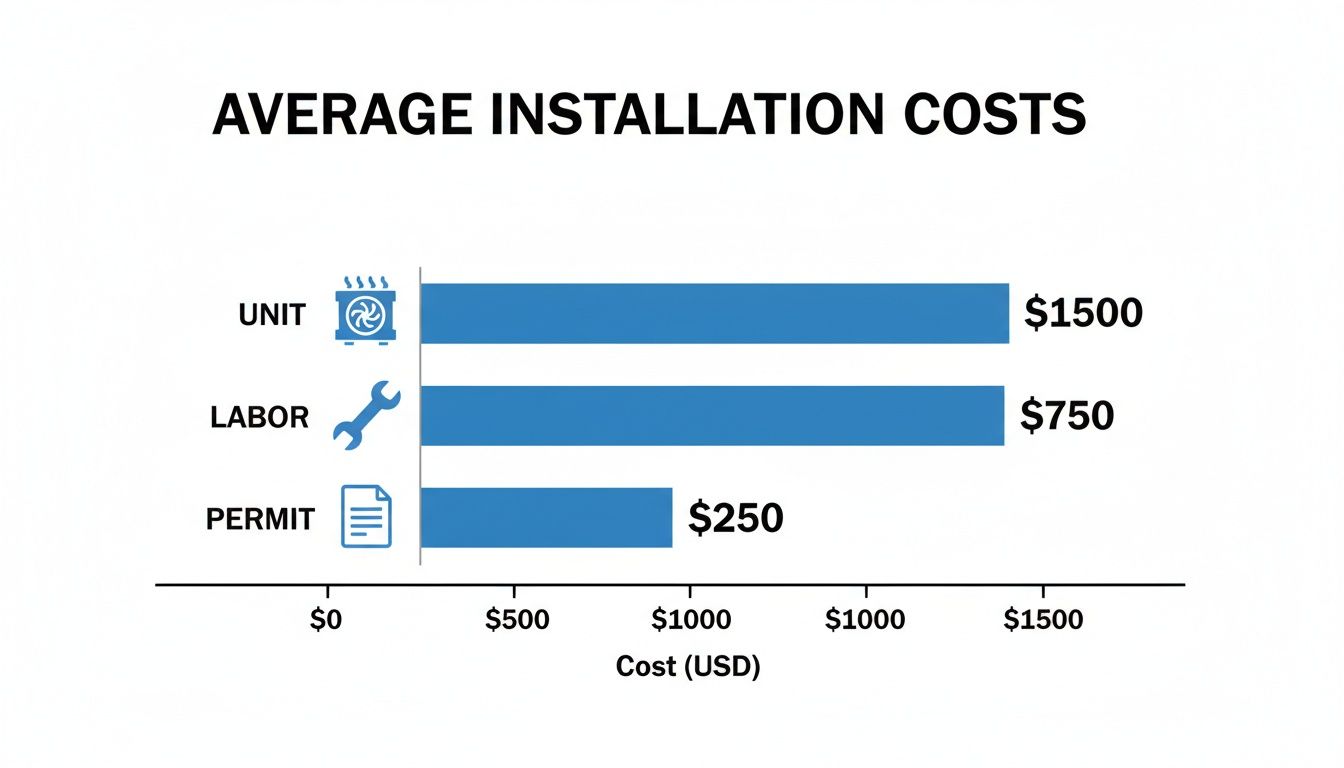
No surprises here—the furnace itself is the biggest piece of the pie, with professional labour coming in a close second. Permits are a smaller but absolutely essential part of the cost.
So, what does this look like in dollars and cents for a gas furnace? Here’s a quick breakdown:
- Standard-Efficiency (80% AFUE): These are entry-level furnaces. While less common now, they are the most budget-friendly option upfront. Expect the total installed cost to land between $3,800 and $6,200.
- Mid-Efficiency (90% – 95% AFUE): This is the sweet spot for many homeowners, offering a great balance of upfront cost and long-term savings. Installation typically runs from $5,200 to $8,800.
- High-Efficiency (96%+ AFUE): These are the top-of-the-line models. They cost the most initially but deliver the lowest running costs and are often required to qualify for government rebates. A high-efficiency installation can range from $7,500 to $12,000 or more, depending on the size of your home.
Making the Right Call for Your Home
While the price tag on a high-efficiency furnace might seem intimidating, the annual savings can be huge. If you're upgrading an old, clunky 60% AFUE furnace to a modern 96% unit, you could slash your heating bill by more than a third. Over the furnace's 15-to-20-year lifespan, that adds up to thousands of dollars in savings, easily covering the higher initial cost.
Of course, the model's efficiency isn't the only thing that matters. You also want a reliable machine from a trusted manufacturer. Our guide to the best furnace brands in Canada is a great place to start your research. By balancing efficiency, brand reputation, and your budget, you can make a smart investment that will keep your family comfortable and your energy bills down for many winters to come.
GTA Cost Factors That Influence Your Final Price
Ever notice how a quote for the exact same furnace can be wildly different in downtown Toronto compared to Ajax or Mississauga? You're not imagining things. The total furnace installation cost Ontario homeowners see on their bill is never a one-size-fits-all number. It's shaped by a handful of local factors specific to the Greater Toronto Area.
Think about it like real estate. Home prices vary enormously from one part of the GTA to another, and the same logic applies to home services. Labour rates, local bylaws, and even the type of house you live in will all nudge your final cost up or down.
Regional Labour Rates and Logistics
Right off the bat, the biggest variable is often the cost of labour. An HVAC technician based in the heart of Toronto has higher overheads—think insurance, gas, and the dreaded cost of parking—than a contractor working out of a suburb. Those costs naturally get factored into their pricing.
It's also about logistics. Getting a service van through downtown traffic, finding a spot to park it, and then hauling a heavy furnace up to a condo unit is a much bigger job than a simple installation in a Brampton bungalow with a wide-open driveway. That extra time and hassle will show up on the invoice.
The Impact of Your Home's Age and Style
The GTA is a beautiful patchwork of different homes, from century-old brick houses in The Beaches to 1950s bungalows in Scarborough and brand-new builds in Vaughan. The unique character of your home plays a huge role in the final price tag.
- Older Homes: If your house was built before the 1980s, installers are on the lookout for a few things. You might have old wiring that can't handle a modern furnace's electrical needs or a narrow, winding staircase to the basement that makes getting the old unit out and the new one in a real puzzle.
- Ductwork Condition: The state of your existing ductwork is a major wildcard. In older homes, it might be too small for a powerful new furnace, lined with asbestos (which requires careful, professional removal), or full of leaks that will kill your new system's efficiency. Getting that right is non-negotiable. After all, what's the point of a great furnace if the delivery system is broken? You can learn more about how to clean furnace ducts to ensure your new system runs at peak performance from day one.
- Venting Requirements: Modern high-efficiency furnaces need specific plastic (PVC) pipes for venting, which usually run out the side of the house. Drilling through the brick of a century home is a much more delicate—and expensive—task than cutting through the vinyl siding of a newer build.
An on-site inspection is absolutely non-negotiable in the GTA. Any contractor who gives you a firm quote over the phone without seeing your home is cutting corners. They need to lay eyes on potential roadblocks like old wiring, tricky venting paths, or ductwork issues to give you a real price.
Varying Municipal Permit Fees
Every single municipality in the GTA—from Toronto to Peel, York, and Durham—has its own fee structure for HVAC permits. A permit isn't optional; it's a critical step that ensures the work is done safely and to code. A reputable contractor will handle all the paperwork for you, but that permit fee will appear as a line item on your final bill.
This isn't just an HVAC thing; regional price differences affect all kinds of home projects. For example, looking into the real cost of renovating a kitchen in Toronto shows just how much location and project specifics can change the final price. Understanding these GTA-specific factors ahead of time helps you decode your quotes and ask the right questions, making sure you get a fair price for a top-quality installation.
Lowering Your Costs with Ontario Rebates and Incentives

While the initial furnace installation cost Ontario homeowners see can feel steep, you don't have to shoulder the entire burden yourself. Think of a new high-efficiency furnace not as an expense, but as a smart investment in your home's comfort and long-term value.
Thankfully, various government and utility programs agree. They offer rebates that can put hundreds—or even thousands—of dollars right back in your pocket. These incentives are there to make the energy-efficient choice the easy choice, softening the upfront cost and setting you up for smaller energy bills for years to come.
Key Rebate Programs for Ontario Homeowners
In Ontario, a couple of major programs are leading the charge to help homeowners save. Your ticket to these savings usually involves picking a specific ENERGY STAR® certified model and, crucially, partnering with a certified contractor who knows the ins and outs of the application process.
Let's look at the main players you should be aware of:
- Canada Greener Homes Grant: This big federal program offers grants up to $5,000 for a range of eligible home energy retrofits, and high-efficiency heating equipment is often on that list. It's a fantastic initiative aimed at boosting the overall efficiency of homes across Canada.
- Enbridge Gas Rebates: As one of the province's primary utility providers, Enbridge offers some pretty compelling incentives for its customers. You could see rebates between $250 to $650 for installing a qualifying high-efficiency furnace, especially if you bundle it with other upgrades.
The best part? These programs can often be stacked, which means you can maximize your total savings. Your HVAC contractor is your best guide here; they should be able to pinpoint every single rebate you're eligible for.
One thing to remember: these rebates aren't automatic. You have to follow the steps, which often include pre- and post-installation energy audits. A good contractor is your best insurance against missing out on savings because of a paperwork mix-up.
Understanding the Eligibility Requirements
Getting these rebates isn't as simple as just buying a new furnace. The programs have very specific rules designed to reward the most impactful energy-saving choices. You'll need to read the fine print carefully.
Here are the most common hoops you'll need to jump through:
- Efficiency Ratings: Most programs require you to install a furnace with a very high AFUE rating—typically 96% or higher. The whole point is to encourage the adoption of the most efficient tech out there.
- ENERGY STAR® Certification: The specific model you choose absolutely must be ENERGY STAR® certified. This label is your guarantee that it meets strict government-set energy performance standards.
- Certified Installation: This is non-negotiable. The installation has to be done by a licensed and TSSA-certified HVAC professional. DIY jobs won't qualify and are a bad idea for safety reasons anyway.
- Energy Audits: Programs like the Canada Greener Homes Grant mandate an EnerGuide home evaluation. A registered energy advisor has to visit before and after the work is done to verify the improvements.
The Application Process Step-by-Step
This is where some homeowners get a bit lost, but it's manageable if you break it down. A quality contractor will hold your hand through it, but it always helps to know the roadmap yourself.
Here’s what the process generally looks like:
- Step 1 Research and Consultation: Start by talking to potential HVAC contractors about rebates. They should be up-to-date on which models qualify for the current programs.
- Step 2 Schedule a Pre-Installation Audit: If it’s required (like for the Greener Homes Grant), book your EnerGuide evaluation before any work starts.
- Step 3 Complete the Installation: Have your certified contractor install your new, qualifying high-efficiency furnace.
- Step 4 Gather Your Documentation: Hold onto every invoice, receipt, and model specification sheet. You'll need them for the application.
- Step 5 Submit Your Application: Follow the exact instructions for each rebate program, uploading or mailing all your documents.
- Step 6 Schedule a Post-Installation Audit: The energy advisor comes back to check the new equipment and calculate your home’s improved energy score.
- Step 7 Receive Your Rebate: Once everything is approved, the cheque arrives in the mail.
By planning your furnace replacement with these incentives in mind, you can make a top-tier system surprisingly affordable, saving you money on day one and for many winters to come.
Essential Questions to Ask Your HVAC Contractor
Picking the right furnace is only half the battle. The contractor you hire is the person you’re trusting to install a major appliance that will keep your family safe and warm for the next decade or more. Choosing the right one is just as critical as the furnace itself.
Think of it as an interview for a really important job—because it is. A true professional will have no problem with your questions and will provide clear, confident answers. If you feel you're getting a high-pressure sales pitch or vague responses, that's a huge red flag. Trust your gut.
Verifying Credentials and Insurance
Before you even get to the numbers, you need to cover the non-negotiables. In Ontario, anyone touching a fuel-burning appliance needs to be properly certified. This isn't just red tape; it's about your family's safety and ensuring your furnace installation cost ontario is a wise investment, not a future headache.
Start with these must-ask questions:
- Are you TSSA-certified? The Technical Standards and Safety Authority (TSSA) is the official regulatory body in our province. Any technician working on your furnace must be a licensed gas fitter. No exceptions.
- Do you have liability insurance and WSIB coverage? This is crucial. Liability insurance protects your home from accidental damage, and WSIB covers you if a worker gets injured on your property. Don't just take their word for it—ask to see proof.
- Will you pull a municipal permit for this job? Any contractor worth their salt will always pull a permit. It ensures the work is done to code and will be properly inspected, giving you total peace of mind.
Getting multiple quotes is essential. Aim for at least three written estimates from different companies. A suspiciously low bid often signals that a contractor is cutting corners on permits, insurance, or quality of work, which can cost you dearly in the long run.
Understanding the Quote and Warranty
Once you’ve confirmed they’re properly licensed and insured, it’s time to dig into the details of their proposal. A vague quote is a recipe for disaster. You want everything in writing to avoid surprise charges down the road. This clarity is a hallmark of trustworthy businesses, and you can see how this principle is applied online by checking out these SEO basics for home service websites.
Make sure you get crystal-clear answers on the following:
- What is the full warranty on the furnace and your labour? Warranties have two key parts: the manufacturer’s warranty on parts and the installer's guarantee on their workmanship. Get both in writing.
- Does your quote include removing and disposing of my old furnace? Most do, but you should never assume. Confirm it’s part of the package deal.
- Who handles the product warranty registration? Some contractors take care of this for you, which is a great service. Others leave it to the homeowner, and if you miss the deadline, you could void your warranty.
- What are your safety checks during and after installation? A pro will always perform checks for gas leaks and carbon monoxide. After they leave, you can also learn how to test for carbon monoxide yourself to ensure everything is running safely.
Common Questions About Ontario Furnace Installation
Deciding on a new furnace is a big step, and it's totally normal to have a few questions before you commit. Getting clear, honest answers is the best way to feel confident about your choice.
We’ve pulled together the questions we hear most often from homeowners across Ontario. Think of it as a final gut-check to make sure there are no surprises down the road.
How Long Does a Typical Furnace Installation Take?
For a standard swap—out with the old, in with the new—you can expect the job to take about 4 to 8 hours. That gives a certified technician enough time to safely disconnect and haul away your old unit, position the new furnace, and hook it up to your ducts, gas line, and electrical. They'll finish by running a full set of tests to make sure everything is perfect.
Of course, sometimes things aren't so simple. The timeline can stretch to a full day or more if we run into:
- Ductwork Modifications: Your existing ductwork might need some tweaks to fit the new furnace for optimal airflow.
- Venting Adjustments: High-efficiency models need new PVC venting, which usually has to be run through an outside wall.
- Electrical Upgrades: An older home might need some wiring brought up to code to handle a modern furnace.
Any good contractor will give you a solid time estimate after they’ve had a look at your specific setup in person.
Should I Repair My Old Furnace or Replace It?
This is the big one, eh? It can be a tough call, but there’s a handy rule of thumb many pros use to cut through the confusion: the "5,000 rule."
The 5,000 Rule: Just multiply the age of your furnace by the estimated repair cost. If that number tops $5,000, it’s almost always smarter to put that money toward a replacement.
Let’s say you have a 12-year-old furnace and you’re looking at a $500 repair bill. The math is 12 x 500 = 6,000. Because that’s over $5,000, a new, more efficient furnace is the better long-term financial move. Once a furnace passes the 15-year mark and starts needing regular fixes, replacement will save you a ton on future service calls and hydro bills.
Do I Need a Permit for Furnace Installation in the GTA?
Yes, you absolutely do. Nearly every municipality in the Greater Toronto Area—from Toronto proper to Ajax and Scarborough—requires a permit for a furnace installation.
This isn't just about paperwork; it's a crucial safety net. The permit process ensures your installation meets strict provincial and municipal codes, especially for gas and electrical work. A reputable HVAC contractor will handle the entire permit application and inspection for you. It’s part of the job and your peace of mind.
At Can Do Duct Cleaning, we know a new furnace is a major investment in your home. Our certified technicians are ready to walk you through every step, answer all your questions, and deliver a professional installation that puts your family’s comfort and safety first. For a straightforward, no-obligation quote, get in touch with us at https://www.candoductcleaning.com.

