
If you're looking for the best furnace filter for allergies, you’ll want to focus on a MERV rating between 8 and 13. These filters hit the sweet spot, trapping tiny irritants like pollen, pet dander, and mould spores without choking your HVAC system's airflow. Making the right choice here is one of the biggest moves you can make to cut down on allergy triggers at home.
Your First Line of Defense Against Indoor Allergens
Do you feel like you're constantly fighting off sniffles, sneezes, and itchy eyes inside your own house? Your HVAC system could be the culprit. As it pushes air through every room, it can also spread the very allergens that are making you miserable.
This is where your furnace filter steps in as your most valuable ally. Think of your HVAC system as your home’s lungs; the furnace filter is the protective mask over them, deciding what gets filtered out and what you and your family end up breathing.
Why a Better Filter Is Like a Better Mask
A cheap, basic furnace filter is kind of like a thin cloth mask. It’ll stop the big stuff—think dust bunnies and lint—but microscopic irritants sail right through. For anyone with allergies, that’s just not going to cut it.
A high-quality furnace filter for allergies, however, is more like an N95 respirator. It has a dense, finely woven mesh designed specifically to trap those invisible culprits before they get a chance to make a second pass through your home.
Your furnace filter isn't just a throwaway maintenance part; it's a powerful tool for improving your home's air quality. The right one can turn your HVAC system from an allergen-spreader into a whole-home air purifier.
What a Better Filter Actually Catches
When you upgrade your filter, you’re equipping your home to fight off a whole list of common triggers. A good allergy-rated filter is built to capture:
- Pollen: Tiny particles that find their way inside and make entire seasons a nightmare.
- Pet Dander: Microscopic flecks of skin from cats, dogs, and other furry family members.
- Dust Mite Debris: The waste from invisible dust mites, which is a major source of indoor allergies.
- Mould Spores: Fungal spores from damp areas that can get kicked into the air and circulated endlessly.
Choosing the right filter is the single most effective step toward cleaner indoor air. Of course, a great filter works best as part of a bigger plan. If you're serious about clearing the air, learning how to reduce dust in your house gives you even more ways to create a healthier home. This guide will walk you through picking the perfect filter to turn your home back into a sanctuary.
Understanding MERV and HEPA for Allergy Sufferers
Shopping for a furnace filter for allergies can feel like trying to crack a secret code. The packaging is plastered with acronyms like MERV and HEPA, which don’t mean much until you get the simple concept behind them. These ratings are just a way to measure how good a filter is at catching tiny, invisible particles floating in your air.
Think of it like fishing. A cheap, basic filter is like a net with wide holes—it’ll only catch the big stuff, like lint and large dust bunnies. But a high-quality filter is like a net with an incredibly fine mesh, able to snag microscopic irritants like pollen, pet dander, and even bacteria.
Decoding the MERV Rating Scale
The most common rating you'll see on filter packaging is the MERV rating. It stands for Minimum Efficiency Reporting Value, and it's a standard scale from 1 to 20 that tells you just how small of a particle a filter can reliably trap.
It's simple: the higher the MERV number, the smaller the particles it can capture. For allergy sufferers, that means better air quality and fewer sniffles.
For residential use, you can think of the MERV scale in a few key tiers:
- MERV 1-4: These are your basic, often flimsy fibreglass filters. They do a decent job of protecting your HVAC equipment from large debris but do next to nothing for your allergies.
- MERV 5-8: Now we're getting somewhere. Filters in this range are a solid starting point, capable of capturing common culprits like pollen, dust mite debris, and mould spores.
- MERV 9-12: This is the sweet spot for most homes dealing with allergies. These filters are great at trapping everything from the lower tiers, plus finer particles like pet dander.
- MERV 13-16: These are top-tier residential filters, capturing even smaller particles like bacteria, smoke, and some airborne viruses. The catch? They can sometimes restrict airflow in older or less powerful HVAC systems.
To give you some perspective on how effective these filters are, consider this:
A filter with a MERV 11 rating can capture particles as small as 1.0 micron. A single human hair is about 50 microns thick, and the pollen that makes you sneeze is often between 10 and 100 microns.
The right filter makes a world of difference. To help you choose, here's a quick breakdown of what different MERV ratings can handle.
MERV Rating Allergen Capture Guide
| MERV Rating Range | Common Allergens Captured | Best For |
|---|---|---|
| MERV 1-4 | Lint, Dust Mites, Large Pollen | Basic equipment protection |
| MERV 5-8 | Mould Spores, Dust Mite Debris, Pet Dander | Good baseline air quality improvement |
| MERV 9-12 | All of the above, plus Auto Emissions, Smoke | Most homes with moderate allergy concerns |
| MERV 13-16 | All of the above, plus Bacteria, Virus Carriers | Homes with severe allergies or sensitivities |
As you can see, a higher MERV rating provides a much more robust defence against the airborne particles that trigger allergy symptoms.
Finding the Sweet Spot for Allergies
For most homeowners, the best balance of performance and system compatibility is found in the MERV 11 to 13 range. A filter in this tier will capture a huge percentage of common allergens without choking your HVAC system.
Here in Canada, seasonal allergies can be a real battle, especially from spring through autumn. That’s why HVAC experts often recommend pleated filters with a MERV 8–13 rating for residential systems. They strike the perfect balance between allergen capture and system efficiency, especially if you stick to a replacement schedule of every 30 to 90 days.
If you want to dig deeper into the different filter options, you can learn more by checking out our detailed guide on selecting a furnace air filter.
What About HEPA Filters?
You’ve probably heard of HEPA filters. The name stands for High-Efficiency Particulate Air, and they are the undisputed champions of air filtration. To earn the HEPA name, a filter must capture at least 99.97% of airborne particles down to 0.3 microns—that includes virtually all bacteria, viruses, and smoke.
Sounds like an allergy sufferer's dream, right? Unfortunately, true HEPA filters are almost never a good fit for a standard residential HVAC system. Their filtration material is incredibly dense. Going back to our fishing net analogy, a HEPA filter is like trying to drag a solid sheet of plywood through the water. Not much is getting through.
This intense density creates massive airflow resistance. Forcing air through a HEPA filter requires a high-powered fan motor that most home furnaces just don't have. Trying to install one in a system not built for it can cause serious problems:
- Poor Airflow: Your rooms won't get enough warm or cool air.
- Sky-High Energy Bills: The furnace fan has to work overtime, driving up your electricity costs.
- System Damage: The constant strain can burn out the motor, leading to an expensive repair.
True HEPA filtration is best left to standalone air purifiers or specialized commercial systems. For your furnace, the smartest and safest approach is to use the highest MERV-rated filter your system can handle without struggling.
Comparing Filter Types: Pleated vs. Washable and More
Now that you have a handle on MERV ratings, you're ready to pick the actual filter for your home. When you walk down the aisle at the hardware store, you'll see a few main types, and each one has its pros and cons. The one you choose doesn't just affect your budget—it can make a real difference in your daily battle against sniffles and sneezes.
Let's dig into the main contenders, focusing on what really matters for an allergy-friendly home. We'll look at how well they grab those tiny particles, what they actually cost you over time, and how much work they take to keep in good shape.
Disposable Fibreglass Filters: The Bare Minimum
First, you have the cheap, flimsy fibreglass filters. They’re easy to spot—usually blue and so thin you can practically see right through them. Their only real job is to stop big stuff like pet hair and dust bunnies from getting into your HVAC system’s fan.
For anyone with allergies, these filters offer almost zero relief. Their loose weave lets microscopic allergens like pollen, pet dander, and mould spores sail right on through. Think of it like trying to stop mosquitoes with a chain-link fence; it's just not the right tool for the job. You might save a few bucks upfront, but you'll pay for it with poor indoor air quality.
Pleated Filters: The Allergy Sufferer's All-Star
Next up are pleated filters, which are the clear winners for most homes looking for serious allergy relief. These are made from synthetic material folded up like an accordion. This clever design massively increases the surface area, letting them trap way more particles without immediately choking off your system's airflow.
Pleated filters are widely available in that crucial MERV 8 to 13 sweet spot, making them the perfect furnace filter for allergies. They’re great at capturing a high percentage of common irritants, from pollen and dander to bacteria. This is the kind of filter that delivers a noticeable improvement you can actually feel.
This infographic shows you just how MERV ratings relate to particle size, and it really highlights why those higher ratings are so important for allergy sufferers.
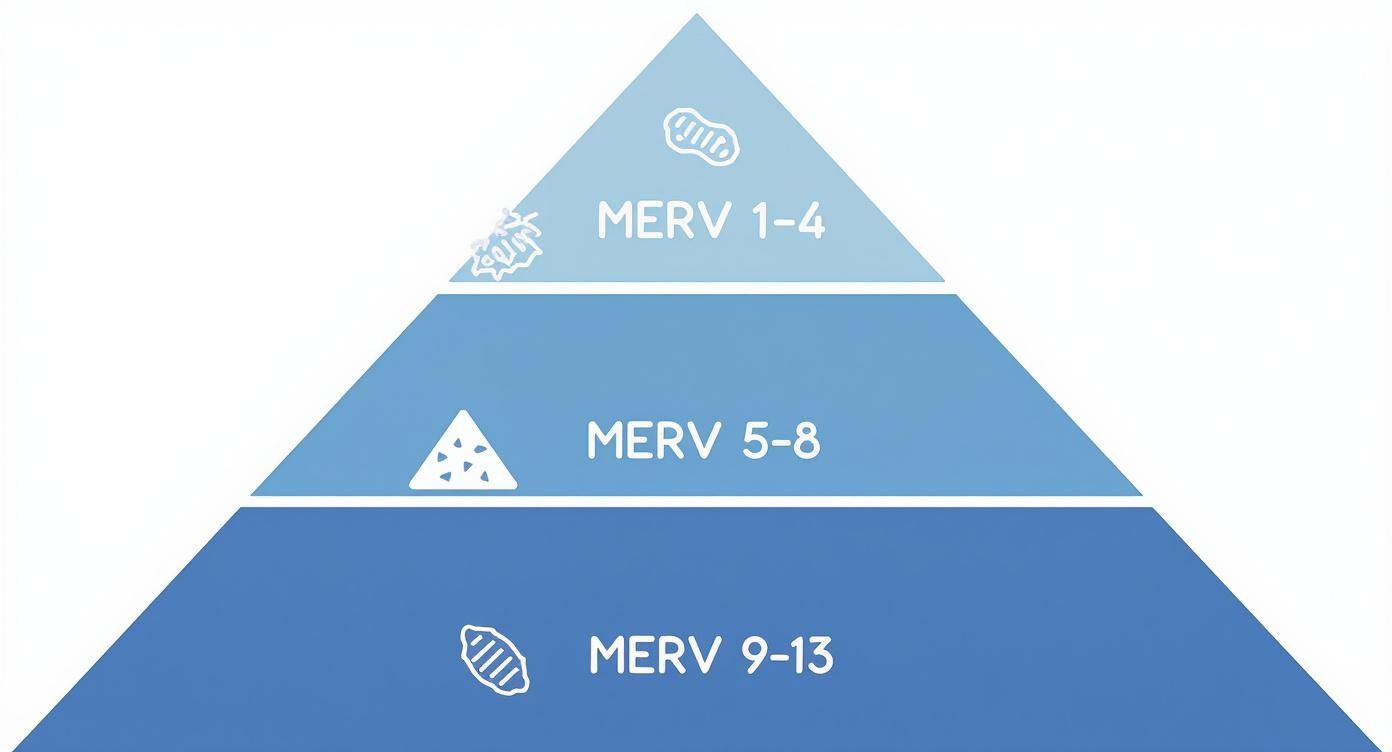
As you can see, jumping from the MERV 1-4 range up to MERV 9-13 gives your filter the power to capture the microscopic particles that actually trigger allergy symptoms.
Washable Electrostatic Filters: The Eco-Friendly Option
Washable filters sound like a great deal: buy one and reuse it for years. These filters work by using self-charging electrostatic fibres that act like a magnet for airborne particles. They're a solid eco-friendly and budget-conscious choice for the long haul since you don't have to keep buying disposables.
But for allergy sufferers, there are some pretty big trade-offs.
While washable filters are convenient, their MERV ratings typically top out around 8. This means they are less effective at capturing the very fine particles that high-quality pleated filters can handle.
They also demand a lot of upkeep. You have to wash them properly every single month to stop mould and bacteria from setting up shop on the damp surface. If it’s not completely dry when you put it back in, you could end up blowing new contaminants all through your home.
A Real-World Scenario: Choosing for a Family
Let's picture a family with a golden retriever and two kids who get hit hard by seasonal pollen allergies. Right now, they're using a basic fibreglass filter, and their home is always dusty and their allergy symptoms never let up.
- Option 1: Fibreglass: Sticking with this filter means the dog dander and pollen just keep circulating through the house. No relief here.
- Option 2: Washable (MERV 8): This would be a step up, catching some dander and the bigger pollen particles. But the finer stuff will still get through, and they’ll have to be diligent about that monthly cleaning schedule.
- Option 3: Pleated (MERV 11): This filter would capture the vast majority of both the pet dander and pollen. The family would see a huge drop in airborne dust and a real improvement in their allergy symptoms. The only maintenance? Swapping it out for a new one every 60-90 days.
For this family, the MERV 11 pleated filter is the obvious choice. It gives them the most effective allergy relief with the least amount of hassle.
Recognizing just how much of an impact high-efficiency filters can have, some regions are now making them mandatory. In California, for example, building codes now require new homes to use filters rated at least MERV 13. This change was driven by research showing these filters significantly reduce the fine particulate matter that harms our health. That same research also found that old-school fibreglass filters could actually release harmful compounds, making synthetic pleated filters a much healthier choice for our homes. You can explore the findings and see for yourself how better filters build healthier homes.
The Critical Balance Between Filtration and Airflow
If you're battling allergies, it's tempting to walk into the hardware store and grab the furnace filter with the highest MERV rating you can find. The logic seems simple: higher number, better filtration, less sneezing. Right?
Well, not exactly. This is one of the most common—and potentially costly—mistakes homeowners make. Choosing a filter is a delicate balancing act between trapping particles and maintaining healthy airflow. Your HVAC system is engineered to move a certain amount of air, and a filter that’s too dense can basically choke it.
The Milkshake Analogy
Think about trying to drink a really thick milkshake through a narrow coffee stirrer. It’s a struggle. You have to pull so hard that the straw starts to collapse, and you get barely any milkshake for your effort. A furnace filter that’s too restrictive for your HVAC system does the same thing to its fan motor.
This extra effort is what we in the industry call static pressure. When a filter is too dense, the blower motor has to work overtime just to pull air through it. This constant strain kicks off a whole chain of problems that are way more aggravating than seasonal allergies.
A filter that is too dense for your furnace forces the fan motor to overwork, increasing energy consumption, reducing heating and cooling performance, and significantly shortening the lifespan of your HVAC system.
Over time, that strain doesn't just make your home less comfortable; it can lead to a burnt-out motor and an eye-watering repair bill. You might get slightly cleaner air for a little while, but the long-term damage to your equipment just isn't worth the trade-off.
Finding Your System’s Sweet Spot
So, how do you find the perfect furnace filter for allergies without putting your HVAC system on life support? The goal is to find the highest MERV rating your specific system can handle without a fight. Luckily, you don't have to guess.
Here are a few straightforward ways to figure this out:
- Check the Manufacturer's Manual: This is your best bet. The manual for your furnace or air handler will almost always list the maximum recommended MERV rating.
- Look on the Unit Itself: Sometimes, this info is printed right on a sticker near the filter slot or on the main access panel.
- Consult an HVAC Professional: When in doubt, call a pro. A technician can properly assess your system’s fan and ductwork to give you a definitive answer.
As a rule of thumb, most modern residential furnaces can handle filters up to a MERV 13. But older or smaller systems might tap out at MERV 8. Pushing those limits is a risky gamble with one of the most expensive appliances in your home.
Airflow is Everything
Good airflow is about more than just protecting your equipment. It directly affects how comfortable your home is and how much you pay in energy bills. When airflow is restricted, you’ll start to notice things like:
- Uneven Temperatures: Some rooms are freezing while others feel stuffy.
- Reduced Output: The air blowing from your vents feels weak or faint.
- Higher Energy Bills: Your system has to run constantly just to keep up with the thermostat.
Ultimately, you want a filter that traps the most allergens without compromising your system’s health. Hitting that sweet spot means you get the allergy relief you’re looking for while keeping your HVAC system running smoothly for years to come.
Filter Replacement Schedules for Peak Allergy Season
Picking a great furnace filter for allergies is a solid start, but it’s completely useless the second it gets clogged. Here's the thing a lot of homeowners miss: a filter is only as good as its last replacement. When it's dirty, it doesn't just stop cleaning the air—it can actually become a source of pollution and puts a ton of strain on your HVAC system.
Think of it like a blocked drain in your sink. As all that gunk builds up, your furnace's fan motor has to work overtime just to pull air through. This drives up your energy bills and can lead to an expensive, premature breakdown. Worse yet, that packed-in dust, pollen, and dander can get kicked right back into your home, making your allergies flare up even more.
General Replacement Guidelines
So, how often should you swap it out? The real answer depends on your filter type and what's going on inside your home. But sticking to a schedule is crucial for keeping your air clean, especially when pollen counts are through the roof.
Here are the standard recommendations to get you started:
- Fibreglass Filters: These are the basic, entry-level filters. Swap them out every 30 days, no exceptions.
- Pleated Filters (1-2 inches thick): The most common choice for allergy sufferers, these usually last between 60 to 90 days.
- Pleated Filters (4-5 inches thick): These thicker, high-capacity filters have more surface area and can go for 6 to 12 months.
The key takeaway? These are just benchmarks. What's happening in your house can shorten a filter's life dramatically, meaning you'll need to change it more often to keep your air fresh and your furnace running smoothly.
When to Change Your Filter More Often
Your home’s unique environment is the biggest factor in how fast your filter gets dirty. It's a good habit to check your filter every month, and you should plan on replacing it more frequently if any of these sound familiar:
- You have pets: Fur and dander are notorious for clogging up filters in a hurry.
- Someone in the home smokes: Those tiny smoke particles will slash your filter's efficiency and lifespan.
- You live in a high-pollen or dusty area: If your car is always covered in a layer of yellow dust, your filter is dealing with that indoors.
- Your HVAC fan runs constantly: The more your system runs, the more air it's filtering—and the faster the filter fills up.
If you’re still not sure what your schedule should be, our guide on furnace filter replacement frequency gets into more specific timelines. And remember, the filter is just one part of the equation. To get the most out of your entire system, a comprehensive air conditioning maintenance guide can be a lifesaver, offering tips that go beyond just the filter to improve overall efficiency.
Telltale Signs a Change Is Overdue
Sometimes, your house will drop some pretty obvious hints that your filter is past its prime. Keep an eye out for these warning signs that you need to swap it out ASAP:
- Increased Dust: You just finished dusting, and somehow there’s already a new layer of fuzz on everything.
- Worsening Allergies: You find yourself sneezing and sniffling more indoors for no clear reason.
- Visible Dirt: A quick visual check shows the filter is dark grey, caked in grime, or just looks plain disgusting.
- Reduced Airflow: The air coming out of your vents feels weak or sluggish.
When Your Furnace Filter Is Not Enough
So, you've done everything by the book. You bought a top-notch furnace filter for allergies, you’re checking it religiously every month, and you swap it out on schedule. But the sneezing, itchy eyes, and stuffiness just won't quit. It’s a frustrating spot to be in, and it usually means the problem goes deeper than just your filter.
When even a high-quality filter isn't bringing relief, it's a huge clue that other parts of your HVAC system—or your home itself—are the real culprits behind your poor air quality. Think of your filter as just one player on a team. If the rest of the system is contaminated, even the best filter is fighting a losing battle.
This is when you need to put on your detective hat and look for signs that the source of your allergies is lurking somewhere your filter can't reach.
Signs of a Deeper Problem
Learning to spot the symptoms of a bigger HVAC issue is the first real step toward a solution. A dirty filter is obvious, but problems hiding in your ductwork or the furnace itself take a little more investigation.
Keep an eye out for these telltale signs:
- Persistent Musty Odours: Do you catch a whiff of a damp, musty smell when your furnace or AC kicks on? That's a classic sign of mould or mildew growing somewhere deep inside your air ducts.
- Visible Dust and Debris: Seeing little puffs of dust or weird particles blowing out of your vents is a major red flag. It means your ductwork is loaded with contaminants that are getting blasted into your rooms.
- Uneven Heating or Cooling: If some rooms feel like a sauna while others are freezing, it can point to blockages or leaks in your ducts. This not only messes with airflow but also kicks up settled allergens.
- Increased Allergy Symptoms at Home: Is your nose running more inside your house than it does outside? That’s a strong signal that an indoor allergen source is to blame.
While furnace filters are fantastic at grabbing what's floating in the air, they can't do anything about allergens that have settled into carpets and furniture. If your symptoms are ongoing, it’s also a good idea to look into what type of carpet cleaning is best for allergies, since carpets can act like a giant sponge for dust and dander.
Calling in the Professionals
If any of those signs ring a bell, it's probably time to stop the DIY guesswork and call an HVAC professional. A trained technician can spot issues that are completely invisible to the average homeowner, getting your entire system back on track to providing clean, healthy air.
An HVAC system is like your home's respiratory system. A good filter is crucial, but if the airways (the ducts) are clogged and dirty, the whole system struggles to breathe clean air.
An expert can tackle a few critical jobs:
- Thorough System Inspection: They’ll give your entire HVAC system a full check-up, from the furnace to the far reaches of your ductwork, to pinpoint exactly what’s wrong.
- Professional Duct Cleaning: Using specialized high-powered vacuums and rotating brushes, technicians can scrub the inside of your ducts clean, removing years of caked-on dust, dander, and even mould. This gets rid of the contamination at its source.
Even with a spotless system, some households with severe allergy sufferers might need an extra layer of protection. For more focused air cleaning, you might want to check out our guide on the best air purifier for allergies, which can be a great partner to your central HVAC system.
Common Questions on Furnace Filters and Allergies
Diving into the world of furnace filters can feel a bit overwhelming, especially when you're just trying to help your family breathe easier. Let’s tackle some of the most common questions and clear the air so you can make a confident choice.
Can a Better Furnace Filter Help Pet Allergies
You bet. A good furnace filter for allergies is one of your best lines of defence against the sniffles and sneezes that come with having furry friends. The real culprit isn't the fur you see, but the microscopic dander—tiny skin flakes—that pets shed everywhere.
Your basic, cheap fibreglass filter just can't catch these tiny particles, letting them circulate through your home again and again. Stepping up to a pleated filter with a MERV rating of 11 to 13 is a game-changer. These are designed specifically to trap fine particles like dander, pulling them out of the air you breathe.
What Is the Difference Between 1-Inch and 4-Inch Filters
The real difference between a standard 1-inch filter and a thicker 4-inch one boils down to two key things: how much it can hold and how long it lasts.
- 1-Inch Filters: These are the common, thin filters most homes use. They have a smaller surface area, which means they get clogged with dust and debris pretty quickly. You’ll find yourself needing to replace them every 1-3 months.
- 4-Inch Filters: These beefier filters, often called media filters, have much deeper pleats. That creates a massive surface area for trapping particles, allowing them to work effectively for much longer—often 6 to 12 months—before needing a swap.
While thicker filters have a higher price tag, their longer lifespan and superior filtration usually make them a smarter, more convenient investment for allergy sufferers, as long as your HVAC system is built to handle them.
Should I Set My Thermostat Fan to ON or AUTO for Allergies
If serious allergy relief is your goal, setting your thermostat's fan to 'ON' is the way to go. This keeps air moving through your filter constantly, even when your furnace or AC isn't running. It’s like having a whole-home air purifier working around the clock.
Of course, there’s a trade-off. Running the fan 24/7 will bump up your electricity bill and wear out your filter faster. The 'AUTO' setting is more energy-efficient, as it only filters the air during heating or cooling cycles. But if allergies are a major problem in your home, the continuous cleaning from the 'ON' setting is often well worth the extra cost. If you're really curious about what's in your air, an air quality testing kit can give you a clear picture of the specific pollutants you're dealing with.
Ready to take the next step towards a healthier home? If you suspect your ductwork is contributing to your allergy woes, the experienced team at Can Do Duct Cleaning is here to help. Contact us today for a professional inspection and cleaning service that will get your indoor air quality back on track.

