
Getting a new furnace is a big deal for any homeowner. It's a major investment, but figuring out the whole process—from picking the right unit to installation day—doesn't have to be a headache. Think of this guide as your complete roadmap. We'll walk you through everything, step-by-step, so you can make smart, confident choices.
Why Your Furnace and Installation Matter
A new furnace isn't just another appliance; it's a 15 to 20-year commitment to your home's comfort and efficiency. The quality of both the furnace itself and the installation work will directly impact your daily life for a long, long time.
Get it wrong, and you're looking at uneven heating, frustratingly high energy bills, and a system that seems to need constant repairs. But when you get it right, the benefits are immediate and obvious every time the temperature drops. A well-installed furnace means your system works exactly as it should from the moment it's switched on.
Key Benefits of a Professional Installation
A proper installation isn't just about connecting pipes. It's about unlocking the full potential of your new equipment.
- Optimal Energy Efficiency: A professional setup ensures your furnace actually hits its advertised AFUE (Annual Fuel Utilization Efficiency) rating. This is what translates into real savings on your monthly bills.
- Enhanced Home Comfort: Correct sizing and calibration mean consistent heat in every room. No more cold spots or drafty corners. Just reliable warmth.
- Long-Term Reliability: A quality installation is the best defence against premature breakdowns. It ensures all components work together seamlessly, extending the lifespan of your unit.
The numbers back this up. The demand for reliable heating is huge, with the furnace and heating equipment installation market in California hitting $6.0 billion in 2025. It's clear that homeowners are prioritizing quality systems. You can dig deeper into heating equipment trends to see where the market is headed.
Choosing the right furnace is only half the battle. The expertise of the installation team is what truly unlocks the system's potential for efficiency and longevity.
In this guide, we'll break down the entire process from start to finish. We're going beyond basic checklists to tackle the real-world questions and situations you'll face, giving you the knowledge you need to manage your furnace and installation project like a pro.
How to Choose the Right Furnace for Your Home
This is the big one. Picking the right furnace is easily the most critical part of the whole process. It goes way beyond just brand names; you're matching a complex piece of equipment to your home’s specific needs for the next decade or two.
Let's dig into the key factors that will drive your decision.
The first thing to sort out is your fuel type. For most people, this is determined by what’s available in your neighbourhood, but you should still know the pros and cons of each.
- Natural Gas Furnaces: If you have a gas line, this is almost always the way to go. They deliver powerful, reliable heat and are typically the most cost-effective to run day-to-day.
- Electric Furnaces: These are a solid choice where natural gas isn't an option. They often have a lower purchase price, but their operating costs can be significantly higher depending on local hydro rates.
- Oil Furnaces: Less common these days, oil furnaces serve homes without gas access. Just remember they require a bulky storage tank on your property, adding a bit of maintenance to your to-do list.
Decoding Efficiency Ratings
You’ll hear the term AFUE thrown around a lot. It stands for Annual Fuel Utilization Efficiency, and it’s not just industry jargon—it’s a direct measurement of how much heat you get for your money.
Think of it like this: a furnace with an 80% AFUE rating turns 80 cents of every dollar you spend into usable heat. The other 20 cents? It’s wasted, lost right up the chimney. In contrast, a high-efficiency model with a 95% AFUE rating only loses 5 cents on the dollar. Over the 15-20 year lifespan of a furnace, that difference adds up to some serious savings.
The Problem with Improper Sizing
One of the costliest mistakes we see in a furnace and installation project is getting the size wrong. There’s a persistent myth that "bigger is better," but with furnaces, that’s just not true. An oversized unit is just as bad as one that’s too small.
If a furnace is too powerful for your home, it will blast hot air and shut off in short, jerky cycles. This "short cycling" puts a ton of stress on the components, wastes energy, and leaves your home with weird hot and cold spots. The flip side is an undersized unit that runs constantly, never quite managing to keep you warm and sending your energy bills through the roof.
A professional load calculation is non-negotiable. An experienced technician will assess your home’s size, insulation levels, window quality, and layout to determine the exact heating capacity you need—no guesswork involved.
This push for high-efficiency, correctly sized systems is also part of a larger trend. For instance, California is aiming to install 6 million heat pumps by 2030 to slash emissions. You can read more about similar state-level energy initiatives to see where the industry is heading.
Ultimately, finding the right balance between fuel type, efficiency, and size is everything. A sprawling two-storey home in a chilly Canadian winter needs a high-efficiency gas furnace, while a small, well-insulated condo might be perfectly fine with a compact electric model.
Understanding these details empowers you to have a much more productive conversation with your HVAC pro. It also gives you a clearer picture of the investment, which you can explore in our guide on what to expect for new furnace costs.
Finding and Vetting Your HVAC Contractor
A top-of-the-line furnace is only as good as the person installing it. I can't stress this enough: the skill of your HVAC contractor is the most critical part of a successful furnace and installation project. Your choice of professional can make or break the entire investment.
This goes way beyond just checking for a license and insurance—that’s table stakes. You're looking for a partner who truly understands the science of home heating, respects your property, and stands firmly behind their work. The best in the business are genuine craftsmen, not just technicians going through the motions.
Asking the Right Questions
When you start making calls, don't just ask for a price. Treat it like an interview, because that’s exactly what it is. Your mission is to get a feel for their experience, professionalism, and how transparent they are.
Here are a few non-negotiable questions to ask every single contractor you speak with:
- Experience: How many years have you been installing furnaces, especially the specific type and brand I’m looking at?
- Process: Do you perform a Manual J load calculation to properly size the new unit for my home? A "no," a hesitation, or a dismissive "we just eyeball it" is a massive red flag.
- Quotes: Can you provide a detailed, itemized quote that breaks down the costs for the equipment, labour, permits, and any other potential add-ons?
- Warranty: What kind of labour warranty do you offer on your installation work? This is separate from the manufacturer's warranty on the furnace itself.
That initial phone call is your first line of defence. Be extremely wary of anyone who throws out a quote without ever setting foot in your home. A true professional will always insist on an in-person visit to give you an accurate estimate.
Verifying Credentials and Reputation
Once you've narrowed it down to a few promising candidates, it’s time to do your homework. Don't just take their word for it—verify their claims and see what real customers are saying.
Look for patterns in online reviews, both the good and the bad. A couple of five-star ratings are nice, but what you’re really looking for is consistent feedback about their punctuality, cleanliness, and communication. Ask them for local references you can call. And actually call them! A quick chat with a past client in your neighbourhood offers priceless, unfiltered insight.
A contractor’s willingness to provide multiple local references is a powerful indicator of their confidence in their own work. If they hesitate, it might be a sign they have something to hide.
Unfortunately, the HVAC industry has its share of bad actors. You can learn more about how to spot trouble by reviewing our guide on common duct cleaning and HVAC scams.
The good news is that there are plenty of great pros out there. As of 2023, California alone had approximately 69,400 HVAC mechanics and installers, showing a vast pool of available talent if you know what to look for. You can learn more about HVAC employment statistics. Taking the time to properly vet your contractor isn't just a step in the process—it's the best investment you can make in your home's comfort and your own peace of mind.
Getting Your Home Ready for Installation Day
A successful furnace installation doesn't just start when the technicians pull up to your curb. A little prep work from you goes a long way in making the day run smoothly, helping the crew work faster and keeping disruptions to a minimum.
Think about the journey from your front door to the furnace room. The crew will be hauling heavy, awkward equipment, so the first and most crucial step is to clear a path. Move any furniture, boxes, or stray items out of the way to create a wide, safe walkway. This protects both the technicians and your walls from any accidental bumps.
Prepping the Immediate Work Area
Next, turn your attention to the space right around your old furnace. The installation team needs room to manoeuvre. Clear out any storage boxes, shelves, or clutter from the immediate vicinity. It's a great chance to give the area a good sweep before the new unit is put in place.
A clean workspace also helps cut down on dust and debris getting stirred up during the job. If you really want to give your new system a fresh start, consider scheduling a professional to clean furnace ducts right around the installation date. That way, you know your new furnace is circulating the cleanest possible air from day one.
Managing Household Logistics
Installation day isn't quiet. It's a full-day affair, usually taking somewhere between four and ten hours. To keep things stress-free for everyone, it’s a good idea to secure your pets in a closed-off room or even have them stay with a friend. This keeps them safe and away from the noise and activity.
Think of installation day as a minor construction project. Expect some noise from tools and the movement of equipment. Planning for this ahead of time makes the temporary disruption much more manageable for everyone in the house.
If you're getting a new gas furnace, the pros will be working with your home's fuel lines, and safety is their top priority. You can get a better understanding of the professional standards they follow to install natural gas lines safely and correctly by looking at specialized guides. By taking these simple steps, you're setting the stage for a quick, efficient installation and a warm, cozy home.
The Installation Process and Final Walkthrough
Okay, installation day is here. After all your prep work, it's time for the pros to take over. Knowing what to expect can make the whole process feel a lot less mysterious and put you in the driver's seat when it's time to sign off on the job.
First things first, the technicians will safely decommission your old furnace. This means shutting off the gas or oil supply and killing the electrical power before they even think about touching the unit. Safety is always priority one.
Once the old unit is out of the way, the crew gets to work setting the new furnace. This isn't just a matter of dropping it into place; it has to be perfectly level to make sure it drains correctly and runs smoothly. After that, it’s all about connecting the vitals.
Connecting the New System
This is where you really see the difference between a seasoned pro and an amateur. They’ll connect the ductwork, making sure every joint has a tight, leak-proof seal. A tiny leak might not seem like a big deal, but it adds up to wasted energy and money over time.
In fact, the best installers use specialized materials to get the job done right. You can dig deeper into why a mastic sealant on your ductwork is so crucial for creating those airtight connections that maximize airflow.
Next up are the fuel lines and electrical wiring. Every single connection gets checked and double-checked to meet local building codes and safety standards. It’s this careful, methodical work that ensures your new system will be reliable for years to come.
To make their job (and your day) go a little smoother, here’s a quick visual on a few simple things you can do before the crew arrives.
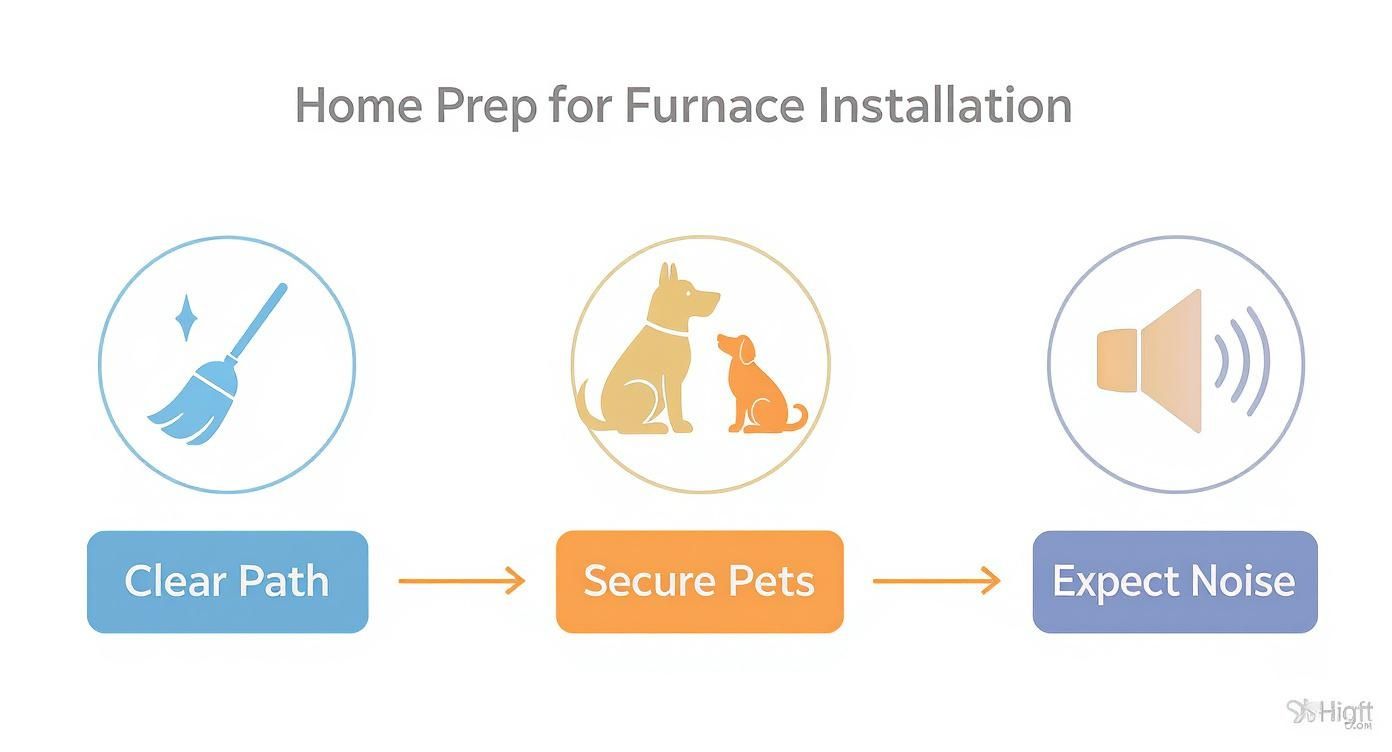
These small gestures really help the installation team work safely and efficiently, which means less disruption for you.
The Critical Final Walkthrough
The furnace is in, but the job isn't done. The final walkthrough is probably the most important part of the entire process from your perspective. This is your chance to understand your new system and make absolutely sure everything is running as it should.
Don't let the technician rush you through this. A true professional will take the time to answer all your questions. They should fire up the system and run a full test cycle with you there. You want to feel that warm air coming from the vents in every single room.
Before they pack up their tools, make sure you know:
- How to work the thermostat: Have them show you how to set schedules or use any smart features.
- Where the filter is: Ask for a hands-on demo of how to access and change the furnace filter.
- The location of emergency shut-offs: You need to know exactly where the main power and fuel shut-offs are, just in case.
The final walkthrough is your quality control. It's your moment to confirm heat is getting everywhere it needs to, and you feel 100% confident operating the system on your own.
Think of it like a final inspection. Knowing what a punch list entails in other trades can be helpful here; it’s all about systematically checking that every last detail is perfect. This ensures you’re left with a flawlessly running furnace and total peace of mind.
Common Questions About Furnace Installation
It's completely normal to have a list of questions when you're looking at a major home project like a new furnace. In fact, it's a great sign you're doing your homework. Let's tackle some of the most common questions we hear from homeowners to help you feel confident about the process.
How Long Does an Installation Usually Take?
For a straightforward, like-for-like furnace swap, you can expect the job to take most of the day. A typical installation usually clocks in somewhere between 4 to 10 hours.
Of course, that timeframe can stretch. If the job involves complex ductwork modifications, running new wiring, or a fuel conversion (like switching from oil to gas), it could easily extend into a second day. Your contractor will give you a much more accurate timeline after they’ve seen your home and assessed the scope of work.
Is It Better to Repair or Replace My Old Furnace?
This is the big question for many homeowners. A few key factors usually make the answer pretty clear.
First, how old is the furnace? If your unit has been chugging along for over 15 years, it’s almost certainly inefficient compared to today's models. Replacement starts to look very appealing for long-term energy savings.
Next, what's the repair bill looking like? We often use the one-third rule: if a single repair costs more than a third of what a brand-new furnace would, replacement is the smarter financial move. And finally, if you're dealing with frequent breakdowns or watching your heating bills creep up every winter, your furnace is telling you it's time to retire.
A new, high-efficiency furnace isn't just a purchase; it's an investment in lower monthly utility bills and improved home comfort that pays dividends for years.
What Is the Average Cost for a New Furnace and Installation?
The all-in cost for a new furnace installation can swing quite a bit, but most homeowners in the Greater Toronto Area should budget between $3,000 and $8,000. Where you land in that range depends on a few things.
- Brand and Model: Just like cars, some brands come with a premium price tag for their reputation and features.
- Energy Efficiency: A furnace with a higher AFUE rating costs more upfront but will absolutely save you money on your energy bills down the road.
- Labour and Complexity: The layout of your home and any unique installation challenges will influence the final labour cost.
Your best bet is to get at least three itemized quotes from reputable local contractors. This lets you compare not just the total price, but the quality of the equipment and the exact work they're proposing.
Do I Need a Permit for a New Furnace?
Yes, almost certainly. Most municipalities in Ontario require a permit for a furnace installation. This isn't just bureaucratic red tape—it’s a critical safety check to ensure the work is done correctly and meets all current building codes.
A professional HVAC contractor will handle the entire permitting process for you, from the application to scheduling the final inspection. If a contractor ever suggests skipping the permit to "save a few bucks," see it as a major red flag. Unpermitted work can be dangerous, void your home insurance, and create huge headaches when it’s time to sell your home.
One of the easiest ways to keep your new system running smoothly is to stay on top of filter changes. You can get the full rundown in our guide on how often you should replace your furnace filter.
For a professional, code-compliant furnace and installation that guarantees your family's comfort and safety, trust the experts at Can Do Duct Cleaning. Visit us online to schedule your free in-home consultation today!

