
Think of your home's ducting and ductwork as its respiratory system. It's a hidden network of channels, mostly out of sight, but absolutely essential for breathing easy. This crucial system is what carries warm and cool air from your HVAC unit into every single room, and it has a massive impact on your family’s comfort, your monthly energy bills, and the quality of the air you breathe. For any Canadian home, keeping this network in good shape isn’t just a good idea—it’s a necessity.
The Unseen System That Runs Your Home
Most of us only think about the parts of our heating and cooling we can see—the thermostat on the wall or the furnace humming away in the basement. But the real workhorse is the maze of ducts tucked away behind your walls, beneath your floors, and above your ceilings. This system is the silent partner to your furnace and air conditioner, tasked with the critical job of delivering treated air exactly where it's needed.
Here’s a simple way to look at it: if your furnace or AC is the heart of your home, then the ductwork is the entire circulatory system. It’s the network of arteries and veins that ensures heated or cooled air actually reaches every last corner of your house. Without a clean, sealed, and properly designed network, even the most powerful HVAC unit is basically useless.
Why Your Ductwork Matters
The condition of your home’s ducting directly affects your daily life, especially during our harsh Canadian winters and hot, humid summers. A well-maintained system keeps everyone comfortable, but a neglected one can create a host of expensive and frustrating problems.
Your ductwork's performance impacts a few key areas:
- Energy Efficiency: Tiny leaks, hidden blockages, or poor insulation in your ducts force your HVAC system to run longer and harder to do its job. This wastes a surprising amount of energy and drives up your hydro and gas bills. In fact, it's estimated that leaky ducts can slash your heating and cooling efficiency by 20% or more.
- Indoor Air Quality: Your ducts are the lungs of your home, circulating every bit of air you and your family breathe. If they're caked with dust, pet dander, mould, or other debris, those contaminants get blown into every room. This can seriously aggravate allergies and other respiratory conditions.
- Home Comfort: Have you ever noticed that one room is always freezing while another is sweltering? That's often a ductwork problem. Poorly designed or compromised ducts lead to uneven temperatures, creating those annoying "hot spots" and "cold spots" that make parts of your home uncomfortable.
A properly sealed and clean duct system is the foundation of an efficient and healthy home. It's an investment not just in your property, but in your family's well-being and comfort, year-round.
While your ductwork is the main player in distributing conditioned air, it works in tandem with other hidden components. For instance, understanding common attic vents types helps you see the bigger picture of how your home breathes and maintains its health. Ultimately, recognizing the importance of the systems you can't see is the first step toward a more comfortable and cost-effective home. You can learn more about why your air ducts system shouldn't be ignored in our detailed guide.
Decoding Your Home's Ductwork System
Ever wonder what’s going on behind your walls and ceilings? Most of us rarely think about our home's ductwork, but it's the hidden circulatory system that keeps us comfortable year-round.
Think of it like a branching tree. Your furnace or air conditioner is the trunk, and a network of ducting and ductwork acts as the branches, delivering fresh, conditioned air to every single room. It’s a simple concept, but a crucial one for your home's health and efficiency.
This entire network is a two-way street. The supply side pushes heated or cooled air out from your HVAC unit into your living spaces. At the same time, the return side is pulling stale air back into the system to be filtered, re-conditioned, and sent back out again. It's a continuous loop that defines your indoor environment.
The relationship is straightforward: your HVAC unit creates the comfortable air, but it’s the ductwork that has to deliver it.
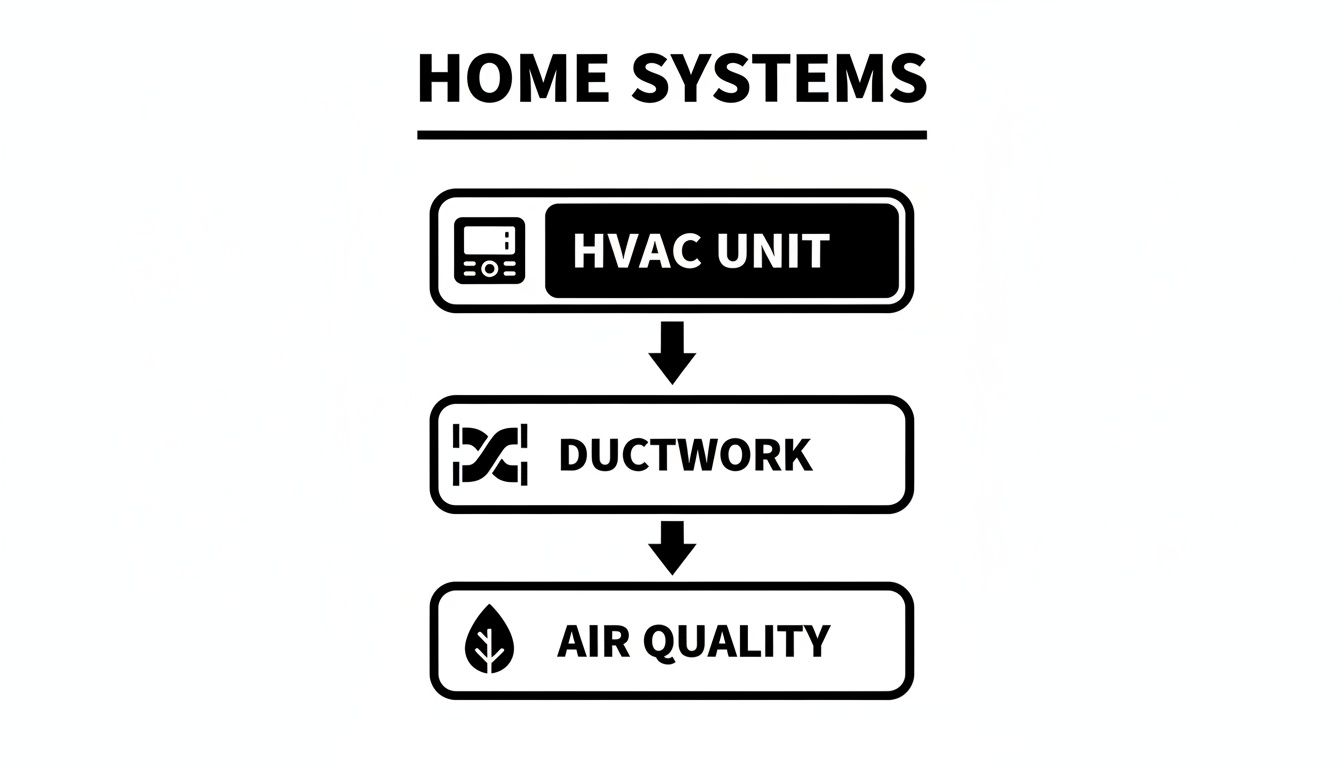
As you can see, even the best furnace is useless if the delivery system is leaky, dirty, or poorly designed.
The Anatomy of Your Duct System
So, what are all those metal boxes and tubes, exactly? Let's break down the key parts you’d find in a typical Canadian home.
- Plenum: This is the big box connected directly to your furnace. It’s the central hub where conditioned air collects before being sent out and where returning air re-enters the system.
- Main Trunks: These are the largest ducts, like the major highways of your HVAC system. One main trunk carries supply air away from the plenum, while the other brings return air back.
- Branch Ducts: Running off the main trunks, these smaller ducts are the local roads that channel air to individual rooms and vents.
- Registers and Vents: These are the grilles you see on your floors, walls, and ceilings. Supply registers often have a lever (called a damper) to control airflow, while the larger return vents simply pull air in.
In the Greater Toronto Area, the demand for high-performing ducting and ductwork is exploding. With a metro population now over 6.4 million and a booming renovation market, residential HVAC systems account for a massive 48% of Canada's entire market. This isn’t just about comfort—it's about your wallet. A poorly maintained duct system can spike your energy bills by as much as 30%.
Common Ductwork Materials and What They Mean for You
The material your ductwork is made from has a huge impact on its lifespan, noise level, and efficiency. You'll often find different types in older homes around Vancouver versus new builds in Calgary.
Here's a quick rundown of the most common materials used for ductwork.
Common Ductwork Materials Pros and Cons
| Material Type | Pros | Cons | Best For |
|---|---|---|---|
| Sheet Metal | Extremely durable, smooth surface resists mould, easy to clean. | Can be noisy without insulation, higher upfront cost. | Main trunks and any accessible, straight runs. |
| Flex-Duct | Lightweight, inexpensive, excellent for tight or awkward spaces. | Easily crushed or kinked, ribbed interior can restrict airflow. | Connecting main ducts to individual room registers. |
| Fibreglass Duct Board | Excellent sound-dampening, naturally insulated, lightweight. | Porous surface can trap dust and moisture, can be damaged during cleaning. | Systems where noise reduction is a top priority. |
Each material has its place, but knowing what you have helps you understand its potential weaknesses and maintenance needs.
When you understand the basic components and materials of your ductwork, you're no longer in the dark. You can have a more intelligent conversation with your HVAC technician, spot problems before they become expensive, and make confident decisions about your home's air quality.
The right materials and a proper layout are the foundation of an efficient system. If you're looking to learn more about the specifics, our guide on the professional installation of ductwork goes into much greater detail.
How Your Ductwork Impacts Comfort and Costs
Your home's ducting and ductwork system is the unsung hero of home comfort. When it's working right, you don't even know it's there. But when it's not, you definitely feel it—in your chilly rooms, stuffy corners, and especially in your monthly hydro bills.
Think of it like a highway system for air. A well-designed, sealed system delivers conditioned air exactly where it needs to go, quickly and efficiently. But if that highway is full of potholes and wrong turns, you're just wasting fuel and going nowhere fast.
Leaky, dirty, or poorly designed ducts force your furnace and air conditioner to work overtime, trying to compensate for all the lost air. This constant struggle doesn't just inflate your energy bills; it also puts a ton of stress on your equipment, setting the stage for expensive, premature breakdowns.
From Uneven Temperatures to High Utility Bills
Is there one bedroom that’s always an icebox in winter? Or a living room that just never seems to cool down in July? These temperature inconsistencies are classic signs of ductwork trouble.
When the warm or cool air you're paying for doesn't reach its destination, there's usually a simple explanation.
- Air Leaks: Tiny gaps and cracks in your ducts bleed conditioned air into your attic, basement, or behind walls. It's like trying to fill a bucket with a hole in it.
- Poor Design: If the duct layout wasn't planned properly, rooms farther from the furnace can be starved for airflow, leaving them chronically uncomfortable.
- Blockages: Over time, dust, debris, or even crushed sections of flexible ducting can create bottlenecks, choking off the airflow to entire sections of your home.
It all adds up. It's not uncommon for a compromised duct system to lose up to 30% of the air passing through it. That's a huge waste that shows up directly on your hydro or gas bill. Want a closer look at fixing those expensive leaks? Our guide on using mastic sealant on ductwork is a great place to start.
The Hidden Impact on Your Indoor Air Quality
Beyond your wallet, your ductwork has a direct line to your family's health. This network is the respiratory system of your home, circulating every breath you take, over and over again. If the ducts are dirty, they become a superhighway for pollutants.
Dust, pet dander, pollen, and other irritants love to settle inside ducts. Add a little humidity, and you have the perfect breeding ground for mould and mildew. Every time your system kicks on, those contaminants are blasted into your living space, triggering allergies, asthma, and other respiratory issues.
A clean, properly sealed duct system isn't just an HVAC component; it's a critical part of your home's health infrastructure. Investing in its maintenance is an investment in the air your family breathes every single day.
Here in Canada, where most of us rely on forced-air furnaces, keeping ducts clean is non-negotiable. Heavy dust buildup can slash a furnace's efficiency by 20-40%. In provinces from British Columbia to Ontario, our furnaces work hard all winter; neglecting the ductwork is asking for a mid-January breakdown.
We see it in commercial projects, too. Public facility retrofits have shown that HVAC upgrades focusing on ductwork can deliver 15-25% in energy savings, which is right in line with the goals of popular provincial energy rebates for homeowners.
Ultimately, what’s hidden behind your walls has a very real impact on your daily life. A well-cared-for duct system means consistent comfort, lower energy bills, and healthier air—the true foundation of a well-run home.
Common Ducting and Ductwork Problems to Watch For
Even the most well-installed ducting and ductwork system isn't invincible. Over time, things can go wrong. The tricky part is that duct problems rarely announce themselves with a big, dramatic failure. Instead, they whisper. They show up as little annoyances you might be tempted to ignore.
Learning to recognize these subtle clues is the key. When you can connect a common household complaint back to its source in the ductwork, you can catch issues early—saving yourself from major headaches and bigger repair bills down the road.

Symptom 1: Your Home Is Excessively Dusty
Do you feel like you’re in a never-ending battle with the dust cloth? You clean every surface, and a new layer seems to settle in just hours later. Don't blame your housekeeping—your ducts could be the real culprit.
When return ducts have leaks, they can pull in dusty, unfiltered air from places like your attic, crawlspace, or inside walls. This dust bypasses the filter entirely and gets blown right back into your living spaces. An old, dirty duct system also acts like a reservoir for dust and dander, blasting it out of your vents every time the system kicks on.
Symptom 2: Hot and Cold Spots Across the House
Does your family fight over the thermostat? Are some rooms always freezing while others feel like a sauna? This isn't just a quirk of your house; it's a classic symptom of an airflow problem, and the trail often leads straight back to your ducting and ductwork.
What could be going on?
- Disconnected or Crushed Ducts: It's surprisingly common, especially with flexible ducts, for a section to get squashed or come loose. This chokes off the airflow to that part of the house.
- Leaks in the System: If your ducts are leaking like a sieve, that precious heated or cooled air escapes before it ever reaches the registers.
- Poor Initial Design: Sometimes the problem has been there from day one. If the ducts weren't sized or balanced correctly for your home's layout, some rooms were always destined to be uncomfortable.
Think of uneven temperatures as your home’s cry for help. It’s telling you that its circulatory system—the ductwork—is failing to deliver conditioned air where it’s needed, wasting your energy and ruining your comfort.
Symptom 3: Strange Noises Coming from Your Vents
Your HVAC system should be a background hum, not the star of a one-act play. If you're hearing rattling, whistling, or loud bangs, your ducts are trying to tell you something.
A loud banging or popping noise, particularly when the furnace or AC turns on or off, is often the sound of undersized metal ducts flexing under pressure changes. That whistling or hissing sound? That’s the tell-tale sign of air escaping through a small hole or a poorly sealed joint.
Symptom 4: Musty Smells When the System Runs
This one is a major red flag. If you turn on your heat or air conditioning and get hit with a wave of musty, mouldy, or stale air, you need to investigate immediately. That smell is a strong indicator of mould or mildew hiding somewhere in your duct system.
Moisture is the enemy. It can get into your ducts from a leak, poor insulation, or even an oversized AC that isn't dehumidifying properly. The dark, sheltered interior of a duct is the perfect place for mould to thrive. Once it's there, the fan will happily spread spores all over your house. These signs are crucial for figuring out how to know if you have blocked air ducts or a moisture problem that demands attention.
DIY Maintenance vs Professional Ductwork Services
Knowing what you can handle yourself and when to bring in an expert is a huge part of smart homeownership. For your home’s ducting and ductwork, this line is crystal clear, and respecting it is key to keeping your system safe, efficient, and running smoothly for years to come.
Some jobs are perfect for a weekend afternoon. Others, however, require specialized tools and know-how to avoid making a small problem much, much worse.

Essential DIY Tasks for Every Homeowner
Think of yourself as the first line of defence for your ductwork. A few simple, regular tasks can make a massive difference in your home's air quality and HVAC bills. The best part? These jobs don't require any fancy equipment and are all about day-to-day upkeep.
Here are the non-negotiables for any Canadian homeowner:
- Change Your Furnace Filter Religiously: This is, without a doubt, the single most effective thing you can do. A clogged filter chokes your system, making it work overtime while letting dust sneak past and settle deep in your ducts. Check it monthly and plan to replace it every 1-3 months.
- Wipe Down Vent Registers and Grilles: Those grilles on your floors, walls, and ceilings collect a surprising amount of gunk. Just unscrew them, give them a good wash with soap and water, and vacuum out any visible debris from the duct opening before you pop them back on.
- Keep Your Furnace Area Clear: Make sure the space around your indoor HVAC unit is free of boxes, clutter, and dust bunnies. This gives it room to breathe, improving airflow and making life much easier (and safer) when a professional comes to service it.
When to Call in the Professionals
While those DIY checks are vital, they really only scratch the surface. Professional services are designed to tackle the entire hidden network—all the parts you can't see or reach. Tackling these jobs without the right training and gear isn't just ineffective; it can be damaging.
Think of it this way: Your DIY tasks are like brushing your teeth every day. A professional service is like going to the dentist for a deep cleaning and check-up. Both are essential for long-term health, and one can't replace the other.
A pro is essential for these bigger ducting and ductwork jobs:
- Comprehensive Duct Cleaning: Professionals use powerful, truck-mounted vacuums and high-pressure air whips to dislodge and suck out years of caked-on dust, pet dander, allergens, and construction debris from every corner of your duct network.
- Duct Sealing and Repair: A technician can hunt down hidden air leaks and seal them with specialized materials like mastic sealant—something no roll of duct tape from a hardware store like Canadian Tire can do. They can also properly repair or replace sections that have been crushed, disconnected, or damaged over time.
- System Inspection and Mould Remediation: If you even suspect you have mould, you need an expert. They can safely inspect the entire system, identify the source, and perform remediation correctly, ensuring harmful spores are eliminated, not just blown all over your house.
It's no surprise that Ontario's HVAC industry is a powerhouse, home to 41.4% of Canada's total companies—that’s a staggering 3,677 out of 7,304 registered businesses. This makes the GTA the epicentre for expert services, fueled by a massive demand for everything from furnace installs in Scarborough to dryer vent cleanings in Ajax. You can see more data on the Canadian HVAC industry on MadeInCA.ca.
At the end of the day, partnering with a trusted local professional ensures your ductwork isn't just clean on the surface but is genuinely healthy from the inside out.
Understanding Ductwork Service Costs in Canada
Putting money into professional ductwork service is one of the smartest moves a Canadian homeowner can make, but figuring out the cost can feel like guesswork. The reality is, pricing for ducting and ductwork services isn't a simple, flat fee. It’s always a custom estimate that hinges on the unique layout of your home and the work that needs to be done.
It’s a bit like getting a quote to have your house painted. The final price depends on the home's size, the number of rooms, and the current state of the walls. Ductwork pricing follows the same logic, with a few key variables that shape the final number you'll get from a reputable Canadian provider.
Key Factors That Influence Your Quote
While every company has its own pricing model, most professional estimates are built on the same core principles. Getting a handle on these elements helps you set realistic expectations and understand where the value is. Be wary of a lowball quote—it often means a company is cutting corners on something important.
Here’s a look at what a technician is sizing up when they assess your system:
- Size of Your Home: This is the big one. A larger house with more square footage simply has more ductwork to cover, which means more time and labour to do a thorough cleaning or repair.
- Number of Vents and Registers: The total count of both supply and return vents directly affects how long the job will take. Every single one needs individual attention for a proper cleaning.
- Accessibility of the Ductwork: Is the main ductwork easy to get to in an open basement? Or is it crammed into tight crawlspaces or hidden behind finished ceilings? Tricky access adds time and complexity to the job.
- System Complexity: There's a big difference between a simple, straightforward system in a bungalow and a multi-zone setup in a three-storey house with more than one furnace.
- Level of Contamination: A system that hasn't seen a cleaning in over a decade will have a much heavier buildup of dust and debris than one that’s maintained every few years. Serious contamination from renovation dust or mould calls for more intensive work and specialized tools.
Viewing professional duct cleaning as a simple expense misses the point. It's an investment in your property's value, your family's health, and long-term energy savings that pays dividends for years to come.
Typical Price Ranges for Common Services
To give you a better idea of what to expect, let's go over some ballpark figures for homes in the Canadian market. Just remember, these are starting points; your actual quote will depend on the factors we just covered. For a more detailed breakdown, check out our guide on the average cost of air duct cleaning.
- Standard Duct Cleaning: For a typical single-family home in Canada, you can generally expect prices to fall somewhere in the $350 to $600 range. This service usually includes a full cleaning of all supply and return ducts, registers, and the main trunk lines connected to your furnace.
- Duct Sealing and Minor Repairs: Fixing leaks is a critical step for boosting your HVAC's efficiency. Sealing up accessible joints with mastic sealant or repairing small holes could add anywhere from $150 to $400+ to your project, depending on how many leaks need attention.
- Mould Remediation: If mould is found in the system, the cost will go up considerably. This kind of work requires special equipment, containment procedures, and safety protocols. It's a highly customized service that always requires an in-person inspection to get an accurate quote.
Your Ductwork Questions Answered
We get it—your home’s HVAC system can seem like a bit of a mystery. To help clear things up, we’ve put together answers to the questions we hear most often from Canadian homeowners about their ducting and ductwork.
How Often Should I Have My Ducts Cleaned?
This is the big one, and the honest answer is: it depends. For most homes across Canada, scheduling a professional cleaning every three to five years is a great rule of thumb.
But you might want to consider doing it more often if your situation includes:
- Pets that leave a trail of hair and dander everywhere they go.
- Anyone in the family who struggles with bad allergies or asthma.
- A recent major home renovation that kicked up a ton of fine dust.
- You’ve started noticing dust bunnies coming from your vents, weird smells, or visible mould.
Can I Clean My Own Ducts?
While we absolutely encourage homeowners to handle the basics—like swapping out the furnace filter regularly and giving the vent covers a good wipe-down—a full duct cleaning is a job for the pros. Your household vacuum just doesn’t have the muscle to get the job done right.
Professional duct cleaning relies on powerful, truck-mounted vacuums and specialized agitator tools that can scrub and suck out contaminants from deep inside the system. Trying to do it yourself can often just stir up hidden debris, making your air quality even worse.
Is Duct Sealing Really Worth the Investment?
One hundred percent, yes. Leaky ducts are one of the biggest energy vampires in a typical Canadian home. They can let 20-30% of the warm or cool air you're paying for escape into your walls, attic, or crawl space.
Sealing up those gaps makes sure that conditioned air gets where it's supposed to go. Not only does this trim down your monthly utility bills, but it also makes your home more comfortable by getting rid of those annoying hot and cold spots. It’s an investment that truly pays for itself.
What's That Banging Noise When My Furnace Turns On?
That sudden "bang" or "pop" you hear is usually the sound of your metal ductwork expanding and contracting with the rapid temperature change. Think of it like a cookie sheet warping in a hot oven. It’s often called "oil canning" in the industry.
While it's not always a major problem, it can be a sign that your ductwork is under pressure or wasn't sized or supported properly during installation. If the noise is loud, happens all the time, or is a new development, it's smart to have an expert take a look. They can make sure there isn’t a bigger airflow issue hiding behind the noise.
Feeling more confident about your ducting and ductwork is the first step toward a more efficient and healthier home. If you've got more questions or are ready for some expert help, the team at Can Do Duct Cleaning has you covered. Explore our professional ductwork solutions today.

