
Finding the best dehumidifiers for basements isn't just about picking a box off the shelf. It’s about choosing a workhorse powerful enough to tackle high moisture, chilly temperatures, and often, large open spaces. The best models come armed with features like a continuous drain hose, a smart humidistat, and an auto-defrost function—all crucial for protecting your home’s foundation and the air you breathe.
For any Canadian homeowner, investing in the right unit is a non-negotiable step in home maintenance.
Why Your Canadian Basement Needs a Dehumidifier
Think of your basement as a giant, concrete sponge. Because it’s below ground, it’s constantly wicking moisture from the surrounding soil. This is especially true during the spring thaw or after a heavy Ontario downpour. Add in cooler temperatures and stagnant air, and you’ve got the perfect recipe for a damp, clammy basement.
When that “sponge” gets saturated, the first thing you’ll probably notice is a persistent, musty smell that seems to stick to everything. That odour is more than just unpleasant—it’s a big red flag. If you're already dealing with this, learning how to eliminate that old musty smell from your home is a great starting point.
But if you ignore it, the problems get a lot worse than just a bad smell.
- Structural Damage: Constant dampness is the enemy of your home's structure. It can weaken wooden support beams, cause concrete to crumble, and even lead to cracks in your foundation over time.
- Mould and Mildew Growth: These fungi absolutely love dark, damp environments. They'll ruin anything you have stored, stain your walls, and pump harmful spores into your air.
- Pest Infestations: Creepy crawlies like dust mites, cockroaches, and silverfish are drawn to moisture. A damp basement is like rolling out the welcome mat for them.
- Damaged Belongings: That humid air will warp furniture, fry electronics, and cause irreversible damage to cherished photos, books, and other keepsakes.
Understanding Relative Humidity
To win the battle against basement dampness, you need to know about Relative Humidity (RH). It’s a simple concept: RH measures how much water vapour is currently in the air compared to the maximum amount it could hold at that specific temperature. When you see 100% RH, the air is completely maxed out—think of the thick, wet fog on a cool morning.
For a healthy, structurally sound basement, you want to keep the RH level between 30% and 50%. Once it creeps above 60%, you're officially in the danger zone where mould and mildew thrive.
This is where a dehumidifier becomes your basement's best friend. It actively pulls moisture out of the air—essentially wringing out that saturated sponge—to keep your basement in that safe, dry zone. High humidity can also wreck your finishes, so when you're renovating, it's smart to look into the best basement paint options that can stand up to these tough conditions.
The Canadian Climate Challenge
Canada's wild weather swings pose a unique problem for our homes. From sticky, humid summers in the GTA to the constant dampness on the coasts, it's no surprise that demand for dehumidifiers has shot up.
During certain times of the year, it’s not uncommon for basement humidity to soar to 60-80% RH—prime conditions for damage. This has led to a huge number of homeowners investing in these units, with portable model sales growing by about 7-8% annually as people get serious about preventing mould and improving their indoor air quality.
A dehumidifier isn't just another appliance; it’s an essential tool for protecting your biggest investment. By controlling the moisture, you’re safeguarding your foundation, making the air healthier for your family, and preserving the comfort and value of your home.
How to Choose the Right Dehumidifier Size
Picking the right size dehumidifier is hands down the most critical step you'll take toward a dry, healthy basement. It's like trying to bail out a leaky boat. If your bucket is too small, you'll be working all day and getting nowhere. Too big, and you've just wasted money on something you don't really need.
The trick is to match the unit's capacity to both your basement's square footage and its unique level of dampness. A dehumidifier's size isn't about its physical footprint; it's all about pints per day (PPD). This number tells you how much moisture it can pull out of the air in 24 hours, and it's your best weapon against humidity.
Assess Your Basement's Moisture Level
Before you even start browsing models, you need to play detective in your own home. Every basement is different, so a one-size-fits-all solution just doesn't work. You have to get a real handle on the situation to find the right tool for the job.
Start with your senses. What do you see and smell?
- Moderately Damp: This is what most homeowners deal with. You get that signature musty, earthy smell when you go downstairs, and the air feels a bit clammy or heavy. You won't see obvious water stains, but you can just tell something is off.
- Very Damp: At this stage, the signs are much clearer. You might see condensation beading on pipes or windows. Small damp patches can appear on the walls or floor after it rains, and that musty odour is now a permanent resident.
- Wet: This is a much more serious moisture problem. You're seeing water actively seeping through the foundation walls, finding puddles on the floor, or touching surfaces that are clearly wet. This level of dampness calls for a heavy-duty dehumidifier and, frankly, probably a call to a professional to check your foundation.
This little flowchart can help you figure out what to do next based on what you’re smelling down there.
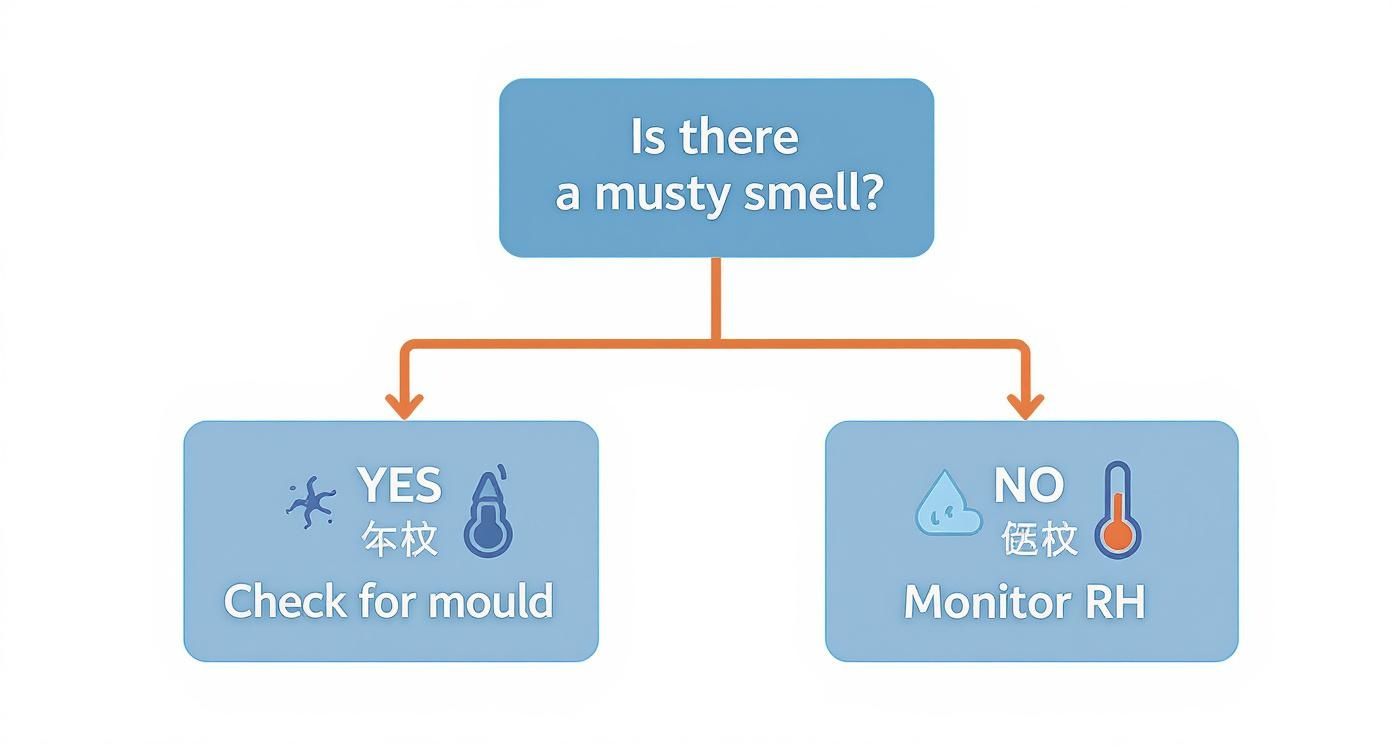
As you can see, even a faint musty smell is a red flag that warrants a closer look for mould. If you're not sure what's causing that odour or you're worried about what's floating in your air, an air quality testing kit can give you concrete answers about your basement's environment.
Match Your Space to the Right Capacity
Once you’ve sized up your basement's dampness, you can use that information along with your square footage to pinpoint the perfect dehumidifier. The single biggest mistake people make is buying a unit that's too small. It will run constantly, jack up your energy bill, and still fail to get the job done. Trust us, it’s always better to go a little bigger than you think you need.
An undersized dehumidifier will run 24/7 without ever hitting your target humidity level. This doesn't just fail to fix the dampness—it also puts incredible strain on the machine, drastically shortening its lifespan.
Use this chart as your go-to guide. Just find your basement's approximate square footage on the left and follow the row across to the column that best describes your moisture situation. That will give you the PPD capacity you should be shopping for.
Dehumidifier Sizing Chart for Basements
This table helps you match your basement's square footage and dampness level to find the recommended dehumidifier capacity in pints per day (PPD).
| Basement Size (Square Feet) | Condition Moderately Damp (Musty Odour) | Condition Very Damp (Visible Water Beads) | Condition Wet (Seepage or Standing Water) |
|---|---|---|---|
| 500 – 1,000 sq. ft. | 20-30 Pints | 30-40 Pints | 40-50+ Pints |
| 1,000 – 1,500 sq. ft. | 30-40 Pints | 40-50 Pints | 50-70+ Pints |
| 1,500 – 2,500 sq. ft. | 40-50 Pints | 50-70 Pints | 70+ Pints |
| 2,500+ sq. ft. | 50+ Pints | 70+ Pints | 70+ Pints (Consider multiple units) |
So, for a 1,200 square foot basement that just has that musty smell ("Moderately Damp"), a 30 to 40-pint dehumidifier is the perfect fit. But if that same basement has condensation on the pipes, you’re now in "Very Damp" territory and need to bump up to a 40 to 50-pint model to keep up.
Getting this right from the start will save you a world of time, money, and frustration.
Essential Features for Basement Models

When you start shopping for a basement dehumidifier, the list of features can make your head spin. But here’s the thing: not all of them are essential. Some are absolute game-changers for a damp, subterranean space, while others are just noise.
Think of it like buying a car for a tough Canadian winter. You’d skip the sunroof and go straight for the winter tires, remote starter, and heated seats. A basement dehumidifier needs the right tools for the job, too. It’s got to handle cold, damp conditions, often running out of sight and out of mind. Get this wrong, and you'll end up with a machine that needs constant babysitting and a basement that never quite feels dry.
Let's cut through the marketing fluff and look at the non-negotiable features that separate a basic room dehumidifier from a true basement workhorse.
The Continuous Drain: A True Lifesaver
Ever tried bailing out a boat with a tiny bucket? That’s what it feels like to own a dehumidifier without a continuous drain feature. In a humid GTA summer, the collection bucket on even a big unit can fill up in less than 24 hours. The moment it's full, the machine shuts off, and all your hard work starts to unravel as the dampness creeps back in.
A continuous drain option completely sidesteps this endless chore. You just attach a standard garden hose, run it to a floor drain or sump pump, and you're done. It's the single most important feature for a "set it and forget it" setup.
- Manual Bucket Emptying: This means daily trips to the basement, annoying spills, and downtime where humidity levels climb right back up.
- Continuous Gravity Drain: The simplest and most reliable option. Water flows out automatically through a hose to a nearby floor drain.
- Built-in Pump: A great upgrade for finished basements. The internal pump can push water upwards and over longer distances, letting you drain into a laundry sink or even out a window.
Smart Controls for Hands-Off Operation
A good basement dehumidifier needs a brain, not just brawn. Smart controls automate the whole process, keeping your space at the perfect humidity level without you lifting a finger.
The most critical feature here is the automatic humidistat. It’s basically a thermostat for humidity. You set your ideal level—usually between 40% and 50%—and the machine cycles on and off by itself to maintain it. This stops the unit from running 24/7, which saves a bundle on your hydro bill and also prevents the air from getting too dry, which can damage wood furniture or flooring.
An automatic humidistat is the key to both efficiency and effectiveness. It ensures your unit only runs when necessary, protecting your home and your wallet simultaneously.
Must-Haves for Canadian Winters
Let's face it, Canadian basements get cold, often dipping below 18°C (65°F). This is a huge problem for standard dehumidifiers because the moisture they pull from the air can freeze on the internal coils, turning your machine into a useless block of ice.
That’s why an auto-defrost feature is non-negotiable for any unit operating in Canada. When it senses ice buildup, the machine pauses the dehumidifying process and runs its fan to melt the coils. Once clear, it gets right back to work. Without this, your dehumidifier would conk out just when you need it most during the damp, cool seasons.
An auto-restart function is another lifesaver. Power flickers happen. You don’t want your dehumidifier to stay off after a brief outage, letting dampness build up while you’re none the wiser. This feature ensures the machine powers back on and returns to its previous settings the second the electricity comes back.
While you're dialing in your basement's air, it's a good time to think about the rest of your home. If sniffles and sneezes are a common complaint in your family, looking into the best air purifier for allergies can be another big step toward a healthier home.
Smart Placement and Maintenance Tips
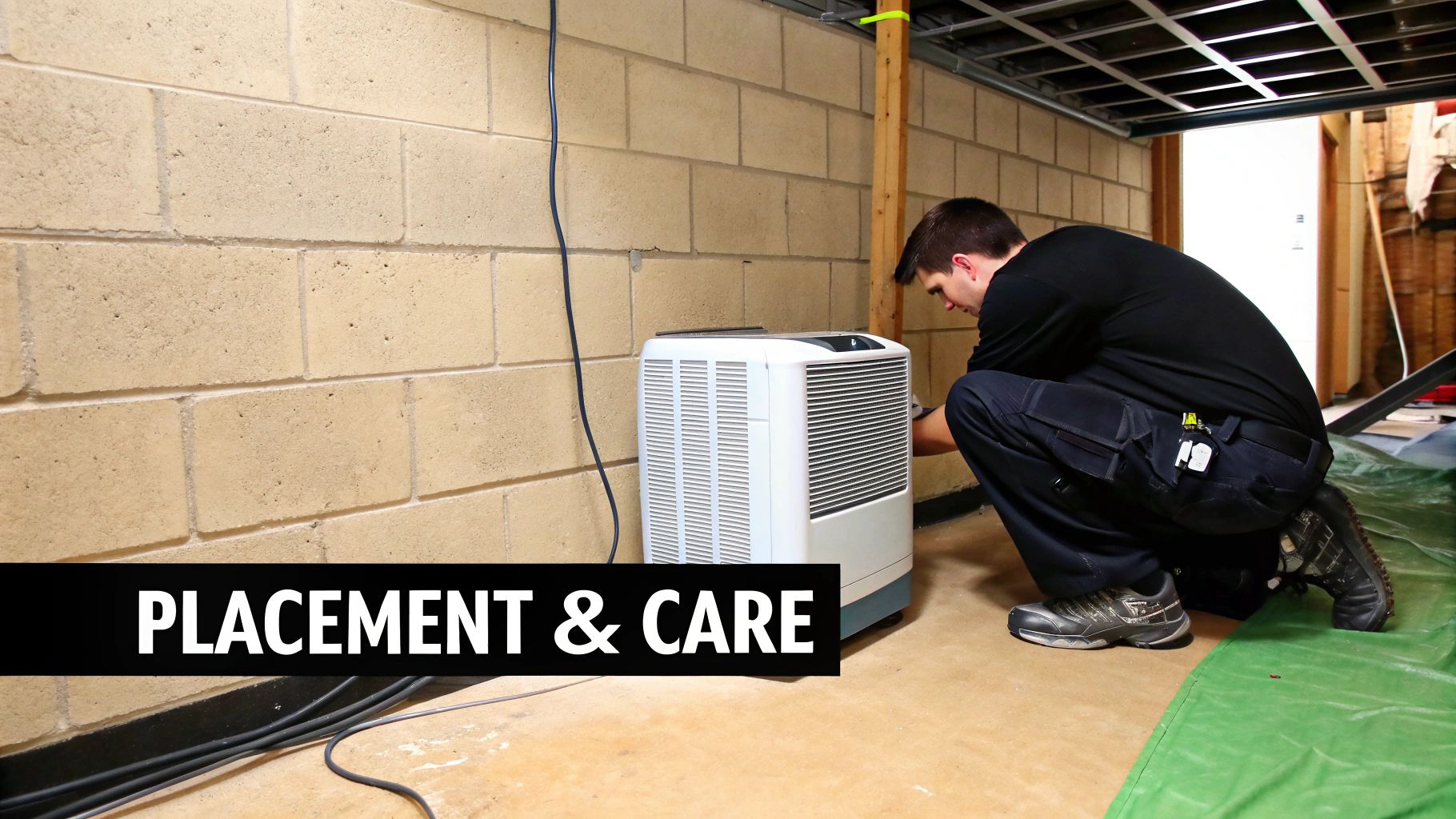
Getting a great basement dehumidifier is only half the battle. Where you put it and how you treat it will make all the difference in its real-world performance. Think of it like a high-end stereo system—you wouldn’t stick the speakers in a closet and expect crystal-clear sound, right? Your dehumidifier needs room to breathe to do its job properly.
Proper placement isn't about hiding the unit in a forgotten corner. For it to effectively pull moisture from the entire basement, it needs clear airflow from all sides. If you jam it right up against a wall or tuck it behind the old sofa, you're essentially choking it. This forces the machine to work way harder just to pull in the damp air.
All that extra strain doesn't just make it less effective; it also sends your hydro bill climbing. A well-placed unit, on the other hand, manages your basement’s humidity effortlessly, cycling on and off as needed and lasting much longer.
Finding the Perfect Spot
To get the most out of your dehumidifier, follow these simple placement rules. They’re all about making sure your machine can "breathe" easily and push dry air throughout the whole space.
- Aim for the Centre: If you can, place your dehumidifier somewhere near the middle of your basement. This is the prime location for it to draw in damp air from every direction and circulate dry air back out evenly.
- Give It Space: Make sure there's at least 30-45 centimetres (12-18 inches) of open space around the unit on all sides. This is non-negotiable. Pay special attention to the air intake and exhaust vents—don't let walls, furniture, or storage bins block them.
- Stay Away from Dust: Keep the unit clear of extra dusty spots, like a workshop area. Dust is the number one enemy of your dehumidifier's filter and internal parts.
- Find a Level Surface: Always set your dehumidifier on a flat, level floor. This keeps it running quietly and ensures everything inside, like the water collection bucket, works the way it's supposed to.
A dehumidifier’s efficiency is directly tied to its ability to circulate air. Placing it centrally with ample clearance is the single most important setup decision you can make for optimal performance and energy savings.
Routine Maintenance for Longevity
Just like any other major appliance in your home, your dehumidifier needs a little TLC to keep running smoothly. Ignoring basic maintenance is the fastest way to kill its efficiency and shorten its lifespan. Thankfully, the upkeep is dead simple and only takes a few minutes.
A clean machine is an efficient machine. This couldn't be more true for the air filter, which is your unit's first line of defence against airborne gunk.
Key Maintenance Tasks:
- Clean the Air Filter: This is your most important job. Think of it like the lint trap in your dryer. A clogged filter suffocates the machine, forcing it into overdrive. Check it every 2-4 weeks, wash it with a bit of soap and warm water, and let it dry completely before popping it back in.
- Check the Drain Hose: If you're using the continuous drain feature, give the hose a quick look every so often. Make sure it isn’t kinked, twisted, or clogged. Any blockage can cause water to back up, shutting the whole unit down.
- Inspect the Collection Bucket: For those emptying the bucket manually, give it a rinse every few weeks. This prevents any slimy buildup or mould from starting a science experiment inside the tank.
These simple habits don’t just boost performance; they also help improve your home's overall air quality. A well-maintained dehumidifier is a great partner to clean ventilation. To learn more, take a look at our guide on how to maintain your air duct systems. By making these small tasks a habit, you’ll ensure your investment keeps protecting your basement for years to come.
Understanding Energy Use and Operating Costs
A dehumidifier isn't like a blender you pull out once a week. It's a real workhorse, often chugging away for hours—sometimes days on end—to keep your basement humidity under control. For any GTA homeowner keeping an eye on their hydro bill, that constant runtime makes energy efficiency a huge deal.
The sticker price is just the first part of the story. The real cost of owning a dehumidifier is what you pay to run it month after month, year after year.
Choosing an inefficient model is like having a tiny leak in your plumbing—it doesn't seem like much at first, but it adds up to a shocking amount of waste over time. A highly efficient unit, on the other hand, does the exact same job using way less electricity, potentially saving you hundreds of dollars over its lifespan.
This is exactly why the ENERGY STAR® certification is so important.
What ENERGY STAR® Certification Means for Your Bill
When you see that little blue ENERGY STAR® label, it's not just a slick marketing sticker. It’s a seal of approval from a trusted government program, guaranteeing that the appliance has met strict energy performance standards. On average, a certified model uses about 15% less energy than a standard, non-certified one to pull the same amount of moisture from the air.
That efficiency translates directly into money back in your pocket. The upfront cost might be a little higher, but the lower operating costs usually make up the difference pretty quickly. Think of it as a smart, long-term investment in both your home's health and your wallet.
Choosing an ENERGY STAR® model is like picking a car that gets better mileage. They both get you from A to B, but one leaves a lot more cash in your wallet at the end of the year.
This same principle of efficiency applies to your entire home's air management system. For instance, homeowners exploring whole-home ventilation might want to learn more about the benefits of an Energy Recovery Ventilator from Panasonic, another piece of tech designed to minimize energy loss while improving air quality.
Estimated Annual Energy Cost Comparison
To give you a clearer picture of the long-term financial impact, we've put together a simple comparison. The table below estimates the annual electricity cost to run a standard dehumidifier versus an ENERGY STAR® certified model here in Canada, based on typical use and average hydro rates.
The potential savings might be bigger than you think.
| Dehumidifier Capacity (Pints) | Standard Model Estimated Annual Cost | ENERGY STAR® Model Estimated Annual Cost | Potential Annual Savings |
|---|---|---|---|
| 30 Pints | ~$110 | ~$95 | ~$15 |
| 50 Pints | ~$185 | ~$155 | ~$30 |
| 70 Pints | ~$270 | ~$230 | ~$40 |
While $30 to $40 a year might not sound like a life-changing amount, those savings really add up over the typical 5-8 year lifespan of a quality dehumidifier. By choosing an efficient model from the get-go, you could easily save $200 or more without giving up an ounce of performance.
When a Dehumidifier Is Not Enough
A high-quality dehumidifier is a powerful ally in the fight against damp basement air. But it's important to know what it can and can't do. Think of it like this: a dehumidifier is great at mopping up a spill, but it can’t fix the leaky pipe that's causing it.
If your basement has a water intrusion problem, a dehumidifier is just a band-aid solution. It’ll run non-stop, working overtime to pull moisture from the air, but it won’t address the root cause—water getting in from the outside. That underlying issue will continue to quietly damage your home's foundation.
Knowing when you're dealing with a bigger problem is the key to protecting your home.
Red Flags to Watch For
If you spot any of the following signs, your moisture issue is likely bigger than what a dehumidifier can handle alone. These are tell-tale signs that water is actively seeping into your basement.
- Visible Foundation Cracks: Any crack in your concrete walls or floor is a concern. If it looks wet or has a chalky white residue on it (that's called efflorescence), you’ve got a problem.
- Water Pooling After Rain: Finding puddles on the floor or seeing dark, damp stains on the walls after a heavy storm is a clear signal that your foundation's seal is compromised.
- Persistent Mould Growth: You've scrubbed and cleaned, but the mould keeps coming back, even with the dehumidifier running. This means it has a constant source of moisture to feed on.
A dehumidifier controls airborne humidity; it can’t stop liquid water from making its way through your foundation. To truly solve the problem, you have to stop the water at its source.
When facing these more serious issues, it's time to look into proper basement waterproofing solutions. This could involve professional work like sealing the exterior foundation or installing an interior drainage system for a long-term fix.
If your basement is showing these symptoms, it’s time to bring in the pros. A waterproofing specialist can diagnose and fix foundational leaks. At the same time, an HVAC expert like Can Do Duct Cleaning can assess how this moisture problem might be impacting your home's entire ventilation system, making sure you get a complete and healthy solution.
Got Questions? We’ve Got Answers on Basement Dehumidifiers
Even after you've done your homework, a few questions always pop up when choosing the right dehumidifier. It's totally normal. Let's clear up some of the most common ones so you can feel confident you’re making the right call for your home.
Can I Just Use a Regular Room Dehumidifier in the Basement?
It’s tempting to try and save a few bucks by moving a smaller, upstairs unit into the basement, but it’s usually a bad idea. Basements are a different beast altogether—they're colder, damper, and much more demanding than any other room in your house.
Dehumidifiers built for basements are engineered specifically for these tough conditions. They have an auto-defrost function, which is absolutely essential in a chilly Canadian basement. Without it, the unit's coils would freeze solid and stop working. They also come standard with a continuous drain hose option, because you'd be emptying a tiny bucket constantly otherwise.
How Can I Tell If My Dehumidifier Is Actually Working?
You don't need any special tools to see if your dehumidifier is doing its job. The signs are pretty straightforward.
For starters, you’ll see the proof: water. The collection bucket will start filling up, or if you’ve hooked up the hose, you'll see it draining away. Your nose is another great indicator—that classic musty, damp basement smell should begin to disappear after a few days. For the final verdict, a separate hygrometer will show the relative humidity (RH) level dropping into that sweet spot of 30% to 50%.
A dehumidifier's job is to make your basement an unwelcoming place for mould to grow. It does this by removing moisture from the air, but it cannot kill or remove mould that's already there.
Will a Dehumidifier Kill the Mould That’s Already Here?
This is a really important distinction to make: no, a dehumidifier cannot kill or remove existing mould. Once mould has taken hold, it’s a living colony that needs to be physically removed and the surface properly remediated.
What a dehumidifier does is take away the one thing mould needs to survive and spread: moisture. By keeping the air dry, you’re cutting off its life support system and stopping new spores from finding a place to grow. So, if you already have mould, deal with that first. Then, let your dehumidifier stand guard to make sure it never comes back.
If a high-quality dehumidifier isn't enough to solve your home's moisture problems, you might have a bigger ventilation issue on your hands. For a professional look at your system and services like duct cleaning in the GTA, get in touch with Can Do Duct Cleaning at https://www.candoductcleaning.com.

