
Cleaning your air vents is way more than just another item on your spring-cleaning list. Think of it as a vital part of keeping your home's air healthy and your HVAC system running smoothly. For those of us living in Canada, factors like seasonal pollen, city pollution, and our wild swings in humidity make regular vent cleaning essential. It’s all about clearing out the dust, allergens, and other gunk from your registers and the ductwork you can actually reach.
Why Cleaning Air Vents Is a Non-Negotiable for Canadian Homes
Let's be real for a second. The air inside your house is often more polluted than the air outside. That’s a tough pill to swallow, but it’s especially true here in Canada, whether you’re near a bustling street in Calgary or a new subdivision in Halifax. Your HVAC system works hard to keep you comfortable, but it can also become a superhighway for dust and allergens if you don't keep an eye on it.
Every single time your furnace or air conditioner kicks in, it's pushing air through a complex network of ducts. Over the years, you'd be shocked at what builds up in there.
The Hidden Impact on Your Family's Health
The number one reason to clean your air vents is simple: your family's health. That visible layer of dust you wipe off your vent covers? That's just the tip of the iceberg. Deeper inside the ductwork, a nasty mix of contaminants can build up, and that’s not what you want your family breathing.
This stuff gets recirculated through your living space constantly, which can make existing health issues worse. You might notice your allergies are acting up more, someone's always sneezing, or you're dealing with headaches you can't explain. For anyone with asthma or respiratory problems, clean air isn't a luxury—it's a must. You can learn more about the harmful risks of dirty ducts and how they can directly affect your well-being.
A clean HVAC system doesn't just filter the air; it stops recycling pollutants. Think of your air ducts as the lungs of your home—keeping them clean is fundamental to the health of everyone living inside.
Canadian-Specific Environmental Factors
Living in Canada throws a few curveballs at our indoor air quality. Our humid summers, especially in Central and Eastern Canada, are the perfect breeding ground for mould and mildew inside dark, damp ducts. That can lead to that musty smell you notice the first time you turn on the AC for the season.
On the flip side, our long, dry winters mean the furnace is running non-stop, cycling dust and pet dander that irritates everyone's sinuses and skin. Add in local challenges like construction dust, wildfire smoke, and traffic pollution, and your HVAC system is fighting a tough battle.
Regularly cleaning your air vents helps you push back against these challenges by:
- Removing Accumulated Pollutants: This gets rid of the dust, pet dander, pollen, and construction debris that sneak into your home.
- Preventing Mould and Mildew Growth: By clearing out the organic junk that mould loves to feed on, you make it much harder for it to grow in the first place.
- Improving Overall HVAC Efficiency: When your system isn't straining to push air through layers of grime, it runs better. That can mean lower energy bills and a longer life for your equipment.
At the end of the day, this straightforward maintenance task makes a massive difference in your home's comfort and air quality. It’s a small investment in a healthier, cleaner home for you and your family.
Key Signs Your Air Vents Need a Deep Clean
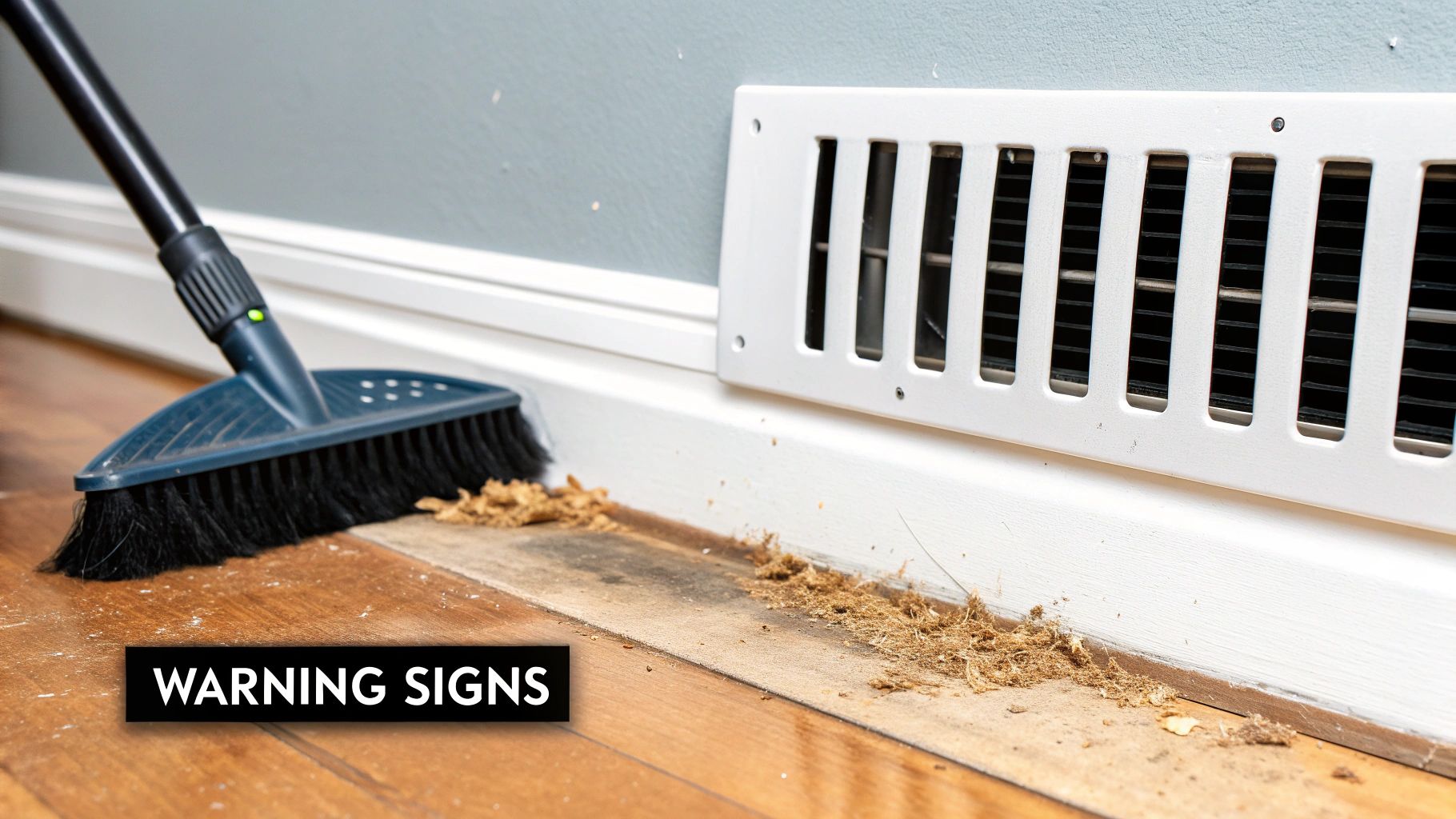
So, how can you tell when it's time to go beyond just wiping down your vent covers? A little bit of household dust on the grilles is one thing, but there are some serious clues that your entire HVAC system is crying out for a professional deep clean.
Ignoring these signals isn't just about tidiness; it can hit your wallet and, more importantly, your family's health. The signs are often hiding in plain sight, disguised as minor daily annoyances. Learning to spot them is the first step toward deciding that cleaning air vents needs to be a real priority, not just another task on the to-do list.
You Can See Dust and Debris
Let's start with the most obvious sign. If you see little puffs of dust shooting out of your vents when the furnace or AC kicks on, that’s a massive red flag. This isn't just a bit of dust from the surface; it’s a clear signal that your ducts are so full they're spitting particles back into your living space.
Keep an eye out for other visual cues around the registers, too:
- Endless Dust Bunnies: No matter how often you vacuum, do dust bunnies and pet hair reappear around your vents almost instantly?
- Black Streaks: Look for dark smudges on the walls, ceiling, or carpet surrounding the vents. This is often called "filtration soiling," and it means fine particles are being forced out through the gaps.
Catching these visual signs early is key. The dust you can see is just the tip of the iceberg. Think of it as your HVAC system showing you it’s completely overloaded with dirt.
Your Energy Bills Are Creeping Up
Have your hydro or natural gas bills been climbing for no apparent reason? Your dirty HVAC system is a likely culprit. When ducts get clogged with layers of dust and debris, the system has to work way harder to push air through your home. This means it runs longer and guzzles more energy to do the same job.
That inefficiency translates directly to you paying more for less comfort. A clean system, on the other hand, has unrestricted airflow, allowing your furnace and air conditioner to run at peak performance—something every Canadian homeowner wants.
There's a Lingering Musty Smell
If you catch a whiff of a stale, musty odour that only seems to show up when your HVAC system is running, you could be dealing with mould or mildew. The dark, sometimes damp environment inside your ductwork is a perfect breeding ground, especially during our humid Canadian summers.
The same goes for other stubborn smells. If you've had a pest problem or can't shake that post-renovation dust smell, the source could be trapped deep inside your vents. For a more detailed look, check out our guide covering the various signs that indicate a need for duct cleaning.
Allergies and Breathing Issues Are Getting Worse
This is arguably the most critical sign of all. If you or your family members notice that allergies, asthma, or other respiratory problems are flaring up inside the house, your air ducts could be to blame. They might be circulating a non-stop stream of irritants like pollen, pet dander, mould spores, and dust mites.
Keeping indoor air clean is a constant battle for homeowners across Canada. While a general recommendation is to have ducts cleaned every two to three years, this isn't a one-size-fits-all rule. If you live near a busy road, an industrial area, or in a region prone to seasonal allergens, you might need more frequent cleanings to combat the invisible threats lurking in your vents.
A Practical DIY Guide for Surface Vent Cleaning
Ready to roll up your sleeves? Getting the surface gunk off your air vent covers is a surprisingly satisfying job that pays off immediately in how your home looks and feels.
Let's be clear, though. This is light housekeeping for your HVAC system, not a replacement for a deep, professional duct cleaning that gets into the entire network. Think of it more like wiping down your kitchen counters—it stops dust, pet dander, and other grime from building up right where the air comes out, so it doesn't get blown back into the room.
We'll walk you through the simple steps using tools you almost certainly have lying around the house.
Gathering Your Simple Toolkit
You really don't need anything fancy for this. The idea is to quickly and safely get your vent covers off, cleaned, and back in place without a fuss. Before you start, round up these household staples to make the job a breeze.
- A Screwdriver or Cordless Drill: Most vent covers are just held on by a couple of standard screws. A multi-bit screwdriver works perfectly, but a drill will speed things up.
- Vacuum with Attachments: Your vacuum’s brush and crevice tools are your best friends for this task. They’re ideal for sucking up all the loose dust from the vent cover and the bit of ductwork you can see.
- Microfibre Cloths and Warm Soapy Water: A simple mix of dish soap and warm water is all the cleaning solution you need. We recommend microfibre cloths because they grab onto dust instead of just pushing it around.
- An Old Toothbrush or Small Brush: Got an old toothbrush? Perfect. It’s the best tool for scrubbing those grimy, hard-to-reach spots between the grille slats.
The Cleaning Process Made Easy
Got your tools? Great. The very first thing to do—and this is non-negotiable—is to think about safety. That means shutting down your HVAC system completely.
Head to your thermostat and switch it to the "Off" position. This is crucial because you don't want the furnace or AC to suddenly kick on while you’re working, blowing a cloud of dust right in your face.
With the system off, you can start taking off the vent covers (you might also hear them called registers or grilles). Carefully unscrew them and set them aside. Do yourself a favour and keep the screws somewhere safe, like a small bowl or a magnetic parts tray, so they don't get lost.
Pro Tip from Experience: As you take each cover off, shine a light into the duct opening. You'd be surprised what we find in there—from kids' toys to construction debris. If you see anything obvious, use your vacuum’s crevice tool to gently fish it out. Just be careful not to knock it further down the line.
From Grimy to Gleaming
With the vent covers off, it's time for the deep clean. If you can, take them outside or to a utility sink and give them a good shake or tap to knock off the loose stuff. Then, go over the front and back of each grille with your vacuum's brush attachment to pull away any stubborn dust bunnies and cobwebs.
Next, dunk the vent covers in a bucket of warm, soapy water. A few minutes of soaking will help loosen up any caked-on grime. Give them a good wash with your microfibre cloth, and use that old toothbrush to get right into the nooks and crannies between the slats where dirt loves to hide.
Rinse every cover with clean water and then—this is the most important part—make sure they are completely dry before you put them back. Pat them down with a dry cloth and then let them air-dry for a while. Reinstalling a damp metal vent can lead to rust, and even a damp plastic one will just become a magnet for fresh dust.
If you want to learn more about keeping other parts of your system clean, we have a detailed guide on how to properly clean air conditioner vents.
While the covers are drying, grab your vacuum again. Use the crevice tool to clean out the inside lip of the duct as far as you can comfortably reach. It's also a good idea to wipe down the wall or floor around the opening to get rid of any dust streaks.
Once everything is bone-dry, simply screw the covers back into place. Flip your HVAC system back on at the thermostat, and you're all done. You’ve just made a real, immediate improvement to your home's air quality. Nice work.
When to Call a Professional for Duct Cleaning
Look, your DIY efforts are great for keeping the visible parts of your HVAC system looking tidy. But there's a hard limit to what a vacuum cleaner and a bit of elbow grease can really accomplish. Wiping down a vent cover is just maintenance; a professional service is a deep, restorative clean for the entire respiratory system of your home.
This is where you draw the line between routine upkeep and calling in the pros. While you can definitely manage the dust bunnies on the grilles, you simply can't reach the kilometres of ductwork snaking behind your walls and through your ceilings. That’s a job for specialized equipment and years of experience.
Not sure when to make the call? This little decision tree should help clear things up.
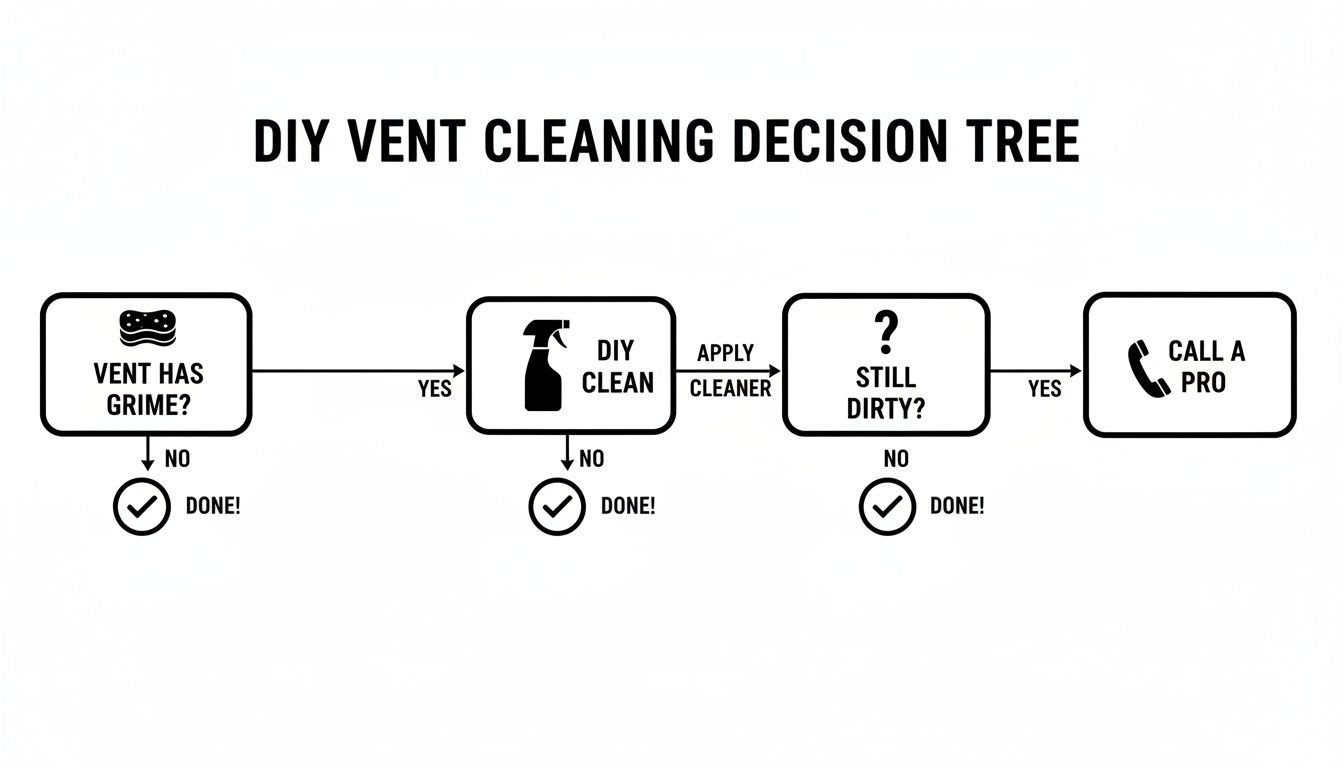
As you can see, if a basic clean-up doesn't fix persistent issues like dust or weird smells, it's a pretty clear sign that the problem lies deeper in the system.
The Limits of a DIY Vent Clean
Your household vacuum, even with its fanciest attachments, just doesn't have the muscle to pull gunk from deep within your duct system. It’s not what it was built for. Professionals show up with truck-mounted, high-powered vacuums that create serious negative pressure, making sure every last bit of dust and debris is knocked loose and sucked out for good.
They also have a whole arsenal of tools you won’t find at your local Canadian Tire:
- Rotary Brushes: These are long, flexible brushes that snake through the entire length of your ductwork, scrubbing the interior walls to break free caked-on grime.
- High-Pressure Air Whips: Think of these as tiny, powerful pressure washers for your ducts. They blast compressed air in every direction, dislodging contaminants from all those nooks and crannies.
- HEPA Filtration Systems: All that nasty stuff they pull out gets filtered through High-Efficiency Particulate Air (HEPA) systems. These capture 99.97% of particles, stopping them from being released right back into your home.
This level of deep cleaning is something a DIY job just can't match. It’s the difference between wiping down a surface and truly giving your home's lungs a fresh start.
Scenarios That Absolutely Demand a Professional
Sometimes, life happens, and it creates conditions inside your ductwork that go way beyond a little dust. In these situations, calling a professional isn't just a good idea—it's critical for your family's health and safety.
You should book a professional cleaning immediately if you've gone through any of these:
- After a Home Renovation: Construction dust, especially from drywall and wood, is incredibly fine and gets everywhere. It settles deep in your ducts and will keep circulating for months or even years unless it’s professionally removed.
- If You Suspect Mould: Are you smelling a persistent musty odour? Seeing signs of water damage near your vents? A pro can inspect for mould and, if they find it, use specialized antimicrobial treatments to safely sanitize the entire system after cleaning.
- Following a Pest Infestation: If you’ve dealt with rodents or insects, your ductwork can be a real horror show of droppings, nesting materials, and other debris that poses a serious health risk.
- For Severe Allergies or Respiratory Issues: When someone in your house suffers from bad allergies, asthma, or other breathing problems, a professional duct cleaning can make a world of difference by cutting down on the airborne irritants that trigger their symptoms.
Think about it this way: Across Canada, we see it all the time. Our teams routinely pull several kilograms of dust and debris out of an average home's HVAC system. That's a big bag of grime that’s otherwise being circulated through your vents every time the furnace or AC kicks on.
Ultimately, your own cleaning is a fantastic first line of defence. But for a truly clean system that boosts your air quality and protects your family’s health, professional help is a necessary investment. Wondering if it's the right move for your home? You might find our article exploring if professional air duct cleaning is truly necessary a helpful read.
How to Choose the Right Duct Cleaning Service
Trying to find a good duct cleaning service in Canada can feel like navigating a minefield. Honestly, the industry has a bit of a reputation, thanks to a long history of scams and those relentless telemarketers. It makes it tough to know who you can actually trust.
This guide is your checklist for cutting through the noise. We'll show you how to spot a reputable, professional company and dodge the common traps. A little bit of homework now saves you a lot of headaches later and ensures you get real value and a healthier home.
Look for NADCA Certification
Your first filter should always be NADCA certification. This isn't just some sticker they put on their van; it's a serious mark of quality and competence from the National Air Duct Cleaners Association.
A NADCA-certified company means a few important things:
- They have at least one certified Air Systems Cleaning Specialist on their team.
- They’ve committed to following NADCA’s strict code of ethics and cleaning standards.
- They carry proper insurance, which protects both you and your property.
Hiring a certified company is the single easiest way to weed out the unqualified players from the get-go. It tells you they’re serious about their work and have proven their expertise.
Beware of Common Red Flags
The duct cleaning world has been flooded with "blow-and-go" scams for years. These outfits hook you with an unbelievably low price—think $99 or even less—and then hit you with aggressive upsells for services you don't need once they're inside your home.
A price that sounds too good to be true almost always is. Proper duct cleaning requires powerful, expensive truck-mounted equipment and skilled technicians. It simply can't be done right for pocket change.
Another huge red flag? Those unsolicited phone calls. For years, Canadians have been bombarded with these calls, so much so that the CRTC has had to step in and issue significant fines for violations of the Unsolicited Telecommunications Rules. Reputable companies build their business on referrals and quality work, not by hassling you during dinner.
Insist on an On-Site Inspection and Transparent Pricing
Any legitimate duct cleaning company will tell you they can't give a firm, final quote over the phone. They need to see your home first. A pro will always offer to do an on-site inspection to get a handle on the size and layout of your HVAC system.
This initial visit is crucial. It lets them:
- See your unique system: They'll count the vents, check the general layout of the ductwork, and see how accessible your furnace is.
- Give you a real quote: You should get a detailed, written estimate that clearly breaks down every cost. No surprises.
- Explain what they’ll do: The technician can walk you through the entire process, from cleaning the supply and return ducts to servicing the furnace fan and coils.
Thinking about what to look for in a professional cleaning service is a great mindset to have. The same principles of transparency and thoroughness apply whether you're hiring someone for your carpets or your HVAC system.
Verify Their Process and Proof of Work
Finally, ask any potential company to walk you through their cleaning process. A thorough job isn't just about the ducts; it has to include every part of your HVAC system. That means the blower motor, furnace fan, and evaporator coil should all be on their checklist.
A company that’s confident in its work will have no problem showing you the results. Ask if they provide before-and-after photos or video from inside your ductwork. This kind of transparency is the hallmark of a business that stands by its service, giving you peace of mind that the job was done right. Getting this choice right is so important, which is why our guide on selecting the right air duct cleaning company in the GTA offers even more detail.
Keeping Your Home Healthy with a Simple Vent Cleaning Routine
When it all comes down to it, keeping your air vents clean is one of the most straightforward ways to create a healthier home. This goes way beyond just cutting down on dust. It’s a real investment in your family’s health, the lifespan of your HVAC system, and your monthly hydro bills. The time you spend on this simple task pays you back in better air quality and comfort.
The best approach is a two-pronged attack. Your first line of defence is regular, quick surface cleaning of the registers and grilles you can see. This takes care of the immediate dust. Then, you bring in the pros every few years for a deep clean that gets into the kilometres of ductwork your vacuum could never dream of reaching.
Finding Your Maintenance Rhythm
Getting into a routine is what makes this all work. Think of it as a partnership—a little bit of your own effort mixed with professional expertise when it counts. This combination is what keeps your home’s “lungs” in great shape all year round.
Here’s a balanced schedule that we’ve seen work for thousands of homeowners:
- Quarterly DIY Clean: Every three months or so, give your vent covers a good vacuum and a wipe-down. It’s a fast job that stops all that surface gunk from getting blown right back into the room.
- Annual HVAC Tune-Up: Get your furnace and AC professionally inspected once a year. This service usually includes a basic cleaning of critical parts and makes sure the whole system is running as efficiently as possible.
- Professional Duct Cleaning Every 3-5 Years: This is the big reset. It’s how you get rid of the pounds of dust, allergens, and debris that build up deep inside the system where you can't get to them.
The real win is staying ahead of the problem. When you maintain your vents, you aren't just cleaning up a mess—you're stopping allergens and pollutants from circulating before they can affect your family.
This strategy is especially important for modern Canadian homes. In high-density housing and energy-efficient new builds, shared or tightly sealed systems can cause indoor pollutant levels to rise significantly if the ducts are ignored. A professional service, which usually takes 3-5 hours, can also disinfect coils to kill bacteria, boosting efficiency and potentially trimming your energy use by 15-20%—a welcome relief with Canadian energy costs always on the rise.
A Smart Part of Your Overall Home Care
Your air vents are just one piece of the puzzle. It’s smart to roll their upkeep into your bigger home maintenance plan. If you want to get organized, checking out something like an ultimate rental property maintenance checklist can give you a great framework for taking care of your entire home, from the roof to the foundation.
The takeaway here is simple: you have the power to significantly improve your home’s environment. By combining your own routine cleaning with periodic deep cleans from a professional, you can create the clean, healthy, and comfortable home your family deserves.
Ready to breathe easier? For over 30 years, Can Do Duct Cleaning has been the GTA's trusted choice for expert duct cleaning services. Contact us today for a free, no-obligation quote!


