
If you're a homeowner in Canada, you can expect the total cost for a new furnace installation to land somewhere between $3,500 and $7,500 CAD.
That price range is your all-in cost, covering not just the furnace itself but also the professional installation, any required permits, and the disposal of your old unit. Of course, this is a ballpark figure—the final number on your quote will hinge on the specifics of your home and the system you choose.
Your All-In Furnace Cost in Canada
When you get a quote for a new furnace, you’re not just paying for a big metal box. The final price is a package deal. It includes the furnace unit, the skilled hands needed to install it safely, and all the behind-the-scenes stuff like pulling permits. Getting a handle on how this all adds up is the first step to budgeting properly for this major home upgrade.
Costs across Canada can vary by province due to local labour rates and market competition, but the core components remain the same. The price you pay is a mix of fixed and moving parts, and it’s smart to know what they are before you sign on the dotted line.
Breaking Down the Total Price Tag
To really understand what you're paying for, let's look at the three main components of a furnace installation bill.
To give you a clearer picture, here’s a typical breakdown of where your money goes when replacing a furnace in Canada.
| Estimated New Furnace Installation Cost Breakdown in Canada | ||
|---|---|---|
| Cost Component | Typical Price Range (CAD) | What This Covers |
| Furnace Unit | $1,500 – $4,000+ | The physical appliance. The price depends heavily on the brand, fuel type, size (BTU output), and efficiency (AFUE rating). |
| Installation Labour | $1,500 – $3,000+ | The expertise of certified HVAC technicians to safely remove your old unit, install the new one, and test everything to ensure it runs perfectly. |
| Permits & Disposal | $250 – $500 | The cost of the municipal or provincial permit to ensure the installation meets safety codes, plus the environmentally-friendly disposal of your old furnace. |
| Ductwork Modifications (If Needed) | $500 – $2,000+ | This isn't always required, but if your existing ductwork needs to be altered or repaired to fit the new system, this will be an added cost. |
This table shows that the furnace unit and the labour are the two biggest pieces of the puzzle. It really highlights why it’s so important to not only pick the right furnace for your home but also to hire a qualified, reputable installer to do the job right.
Below, the chart gives you a quick visual of how these costs typically stack up against each other.
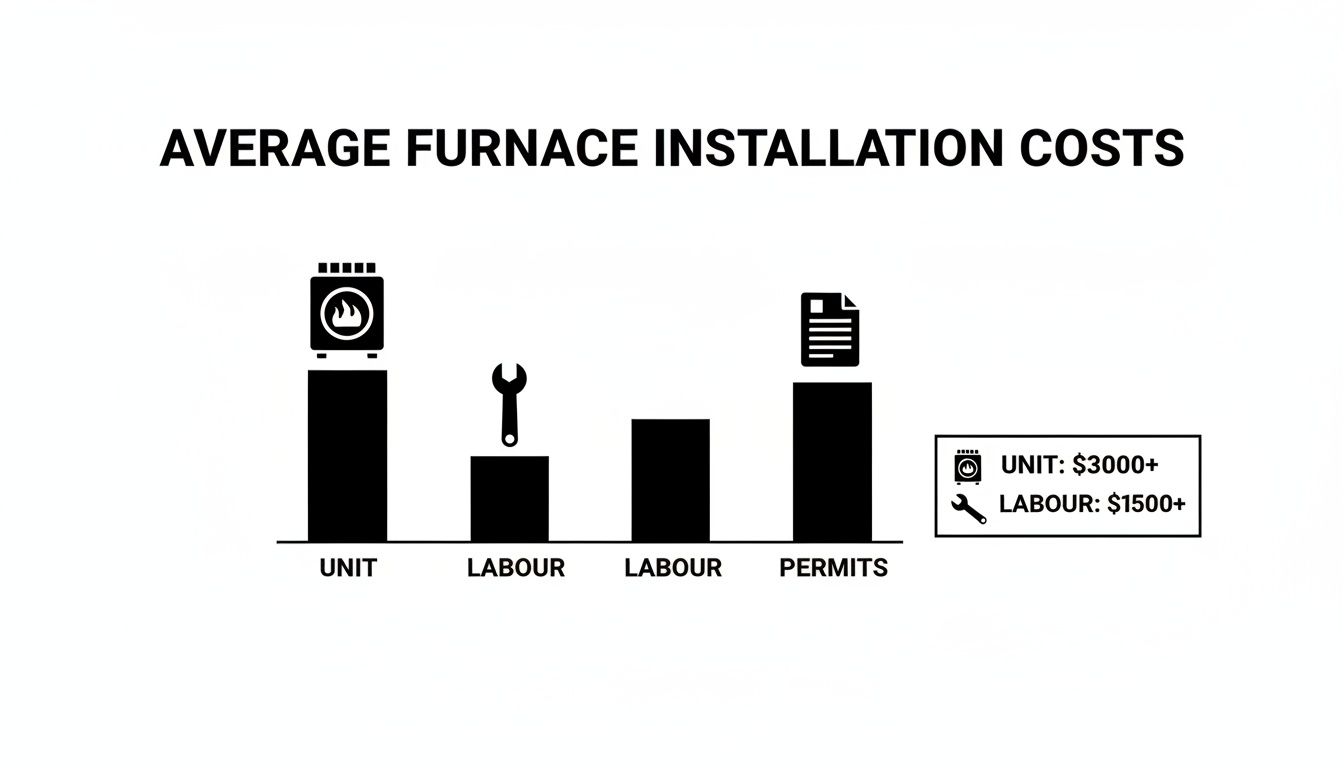
As you can see, the equipment and the installation are the heavy hitters, making up most of the final bill. This is why getting both of those decisions right is key to a successful—and cost-effective—furnace replacement.
What Drives the Final Price of Your New Furnace?
Ever wondered why one furnace quote comes in at $4,000 and another at $7,000? It’s not just a random number. There are real, tangible factors behind that price tag, and getting a handle on them is the key to making a smart investment for your home.
Think of it like building a custom meal—the final cost depends entirely on the ingredients you choose. Getting the right mix is crucial for a heating system that keeps you cozy without cooking your budget.
Here in Canada, furnace prices have definitely crept up over the last decade. A big part of that is due to stricter efficiency standards and rising labour costs. Most homeowners across the country can expect to pay somewhere between $3,500 and $7,500 CAD for a new gas furnace, installation included. That's a serious chunk of change, often ranking a new furnace among the top 5 most expensive interior projects a homeowner will face.
The good news? A huge driver for this cost is efficiency. Modern high-efficiency furnaces operate at 95% AFUE or higher, which can slash your fuel consumption by 20–30% compared to an old clunker. That upfront investment starts paying you back on day one and continues over the furnace's 15–20 year lifespan.
Furnace Size and Power (BTUs)
Picking a furnace is a lot like choosing an engine for a vehicle. You wouldn’t put a four-cylinder engine in a transport truck and expect it to haul a heavy load up a hill. The same logic applies to your furnace. Its power, measured in British Thermal Units (BTUs), has to be the perfect fit for your home.
If the unit is too small, it'll run nonstop trying to keep up on those frigid January nights, which means sky-high energy bills and a chilly house. On the flip side, a furnace that's too big is just as bad. It will "short-cycle"—blasting your home with hot air for a few minutes before shutting off, then repeating the process over and over. This leads to hot and cold spots, premature wear and tear on parts, and a ton of wasted energy.
A true HVAC pro will never just guess. They’ll perform what's called a Manual J load calculation to pinpoint the exact BTUs your home needs, taking into account its size, insulation, windows, and even its layout.
Efficiency Rating (AFUE)
The efficiency of a furnace is summed up by its Annual Fuel Utilization Efficiency (AFUE) rating. It's a simple percentage that tells you how much of your fuel money is actually turned into heat for your home.
For instance, a 96% AFUE furnace means that for every dollar you spend on natural gas, 96 cents becomes heat inside your house. The other four cents? That’s lost up the exhaust vent.
- Mid-Efficiency (80% AFUE): These are the old guard. They are no longer permitted for new installations in most of Canada.
- High-Efficiency (95% to 98%+ AFUE): This is the modern standard. While they cost more upfront, the savings on your monthly heating bills are significant and add up fast.
Going for a higher AFUE model is like buying a car that gets great gas mileage. It costs a bit more to drive off the lot, but you save money every single time you have to fill the tank.
Brand Reputation and Installation Complexity
Let's be honest: not all furnace brands are created equal. You’ll see a range of prices that often reflect a brand's track record for reliability, the strength of its warranty, and any fancy features it includes. A premium brand might hit the wallet harder initially, but it can mean fewer headaches and repair bills down the road. If you're curious about who's who in the furnace world, check out our guide to the best furnace brands in Canada.
Finally, a huge chunk of your bill is labour, and that all comes down to the job's complexity. A simple swap-out in an open, accessible basement is going to be far cheaper than a difficult retrofit in a century home with a cramped crawl space. If the job requires new venting, major ductwork changes, or electrical upgrades, the price will reflect that extra time and skill. Getting a peek into the HVAC estimating process can really help you understand how a contractor builds your final quote.
Understanding Typical Furnace Prices Across Canada
Trying to pin down furnace costs can feel a bit like guesswork, but things get a lot clearer when you look at national trends. Our cold climate and robust HVAC market mean that pricing across the country, while variable, follows similar patterns.
Whether you're in Halifax or Vancouver, getting a handle on the cost landscape is the best way to feel confident when you get a quote. Let's dig into the numbers and what really drives them in our country.
The Going Rate for a New Furnace in Canada
Across Canada, natural gas is the most common heating fuel. In fact, a majority of households rely on it to stay warm, which keeps the market for gas furnaces incredibly competitive and helps keep a lid on prices. That competition means you have plenty of options for both the furnace itself and the folks who install it.
When you're putting together a budget, a standard high-efficiency gas furnace installation in Canada will typically land somewhere between $3,500 and $6,500 CAD. That range generally covers the new unit, professional installation, and pulling the necessary permits. If your installation is more complicated or you opt for a premium brand, the total could climb towards $7,500 CAD or more.
These numbers are fairly consistent nationwide. Why? Our cold winters demand reliable equipment, and the large market keeps contractors competitive. For a more granular look at these figures, our complete guide on new furnace costs in Ontario provides a detailed provincial example.
Why High Efficiency Is the Baseline
Good luck trying to find a low or mid-efficiency furnace for sale in Canada these days. Federal regulations and a serious push for energy conservation have made high-efficiency models the only real option on the market.
Today, nearly every new or replacement furnace installed in the country must have an AFUE rating of 95% or higher. This isn't just red tape—it's a built-in savings plan for homeowners.
This government-mandated baseline sets the starting point for furnace replacement costs, but it also guarantees you're getting a system that doesn't waste fuel. While the upfront investment is higher than the clunky old models they're replacing, the long-term payoff is huge. Most homeowners see that money come back within 5 to 10 years thanks to much lower monthly gas bills. This is especially true when you’re upgrading an old 80% AFUE unit to a modern condensing furnace, as noted in data compiled from HVAC retailers.
Budgeting for Expenses Beyond the Furnace Itself
The sticker price on a new furnace is just the beginning. While the contractor's quote covers the main hardware and labour, it’s often the "add-ons" and necessary upgrades that catch homeowners by surprise and can throw a budget completely off course.
Thinking about these potential extras ahead of time is the best way to get a realistic answer to how much a new furnace truly costs. These aren't sneaky hidden fees; they're essential modifications needed to make sure your new, high-efficiency system runs safely and performs at its peak. A little preparation helps you ask the right questions and avoids that dreaded shock when the final bill arrives.
Common Additional Project Costs
So, what kind of extra costs might pop up? If you’re switching from an older oil or electric system to natural gas, one of the biggest jobs is installing natural gas lines safely and correctly. This is a specialized task that requires a licensed professional and is a critical part of the overall project budget.
Beyond a fuel switch, here are a few other common expenses you might encounter:
- Ductwork Modifications: Today's high-efficiency furnaces move air differently than their decades-old counterparts. Your existing ductwork might need to be resized, sealed up, or even reconfigured to match the new unit's airflow. This work can add anywhere from $500 to $2,000+ to the final price.
- Electrical Upgrades: A modern furnace, especially one with a sophisticated variable-speed motor, might need a dedicated circuit or updated wiring to meet current electrical codes and ensure it gets the stable power it demands.
- Venting and Code Compliance: High-efficiency furnaces vent exhaust through PVC pipes, not an old-school chimney. This usually means drilling new openings through an exterior wall and making sure the entire system meets your province's stringent building codes for safety.
- Permit Fees: Just about every municipality in Canada requires a permit for furnace installations. This ensures the job is done to code by a qualified technician. The fee is typically a few hundred dollars and is managed by your contractor.
Don't forget the small but mighty thermostat. A new furnace often needs a compatible smart thermostat to unlock its full efficiency potential, which can be an additional but worthwhile expense.
When you start to factor in these possibilities, you realize you're not just buying a furnace—you're planning a complete system overhaul. Understanding what goes into a professional furnace installation service gives you a much clearer picture of what a comprehensive, quality job really involves.
How to Make Your New Furnace More Affordable
That initial price tag for a new furnace can be a bit of a shock, I get it. But there are a few smart ways to bring that number down to something much more manageable. With a bit of planning, you can get the high-efficiency system your home deserves without emptying your savings account.
Let's start with financing. Most reputable Canadian HVAC companies know that a new furnace is a major household investment. That’s why many offer flexible payment plans that let you break up the cost over several months or even years. This turns one big bill into a predictable monthly payment that's much easier on your budget.
Another route some homeowners take is a Home Equity Line of Credit (HELOC). If you have equity built up in your home, you can often borrow against it at a lower interest rate than a credit card. It can be a smart way to fund a furnace replacement alongside other home improvement projects you might have on your list.
Tapping Into Rebates and Incentives
Here’s where you can find some of the biggest savings: government and utility rebates. These programs are designed to reward homeowners like you for choosing energy-efficient models.
- Utility Rebates: Keep an eye on companies like Enbridge Gas or FortisBC. They often have programs that give you cash back—sometimes hundreds of dollars—for installing a qualifying high-efficiency natural gas furnace.
- Provincial and Federal Programs: The federal government's Canada Greener Homes Grant is a major one to watch. Many provinces also have their own energy-saving initiatives. These programs can change, but it’s always worth checking for grants that cover furnace upgrades.
To get your hands on these rebates, you'll almost always need to buy a furnace that meets a minimum efficiency standard, like an AFUE rating of 96% or higher. Double-check the program rules before you commit to a specific model to make sure it qualifies.
Navigating the application process can be tricky, but your HVAC contractor should be able to walk you through it. They can help you with the paperwork and make sure you get every dollar you're entitled to.
And remember, saving money doesn't stop after the installation. Following a solid furnace maintenance checklist will keep your new unit running efficiently for years, helping you avoid costly repairs down the road.
A Simple Checklist for Your Furnace Replacement
Feeling like you're in over your head with this whole furnace replacement thing? It's a big job, no doubt. But if you break it down into a few simple steps, it becomes a whole lot less intimidating.
This quick checklist will walk you through the process, making sure you feel confident in your decisions and get the most out of your investment. Think of it as your roadmap.
Your Step-by-Step Guide
Gather Multiple Quotes: Don't just go with the first company you call. Your best bet is to get quotes from at least three different reputable, licensed, and insured HVAC contractors in your area. This is the only way to get a true sense of what a fair price looks like.
Ask the Right Questions: When the technician comes to your home, be ready with a few questions. Ask them what size furnace (BTU) they recommend and why, what the proposed AFUE rating is, and what the warranty covers for both parts and labour. Also, get a clear timeline for the installation.
Review Quotes Carefully: A legit quote will be itemized, not just a single number on a piece of paper. You should see a clear breakdown of costs for the furnace unit itself, the labour, any necessary permits, and extras like ductwork modifications.
Prepare for Installation Day: Make sure there's a clear path to your furnace room so the crew can get in and out easily. A typical installation can take anywhere from four to ten hours, so plan your day accordingly.
Here's the most important final step, and one that gets overlooked all the time: a new furnace pushing air through dirty ducts is like putting a high-performance engine in a car with a clogged fuel line. It just won’t work the way it's supposed to.
To protect your brand-new investment right from the start, a professional duct cleaning is a must. It clears the way for maximum airflow, boosts efficiency, and makes sure the air you're breathing is actually clean.
To see what a full, professional job entails, you can learn more about a professional furnace and installation service.
Common Questions About Furnace Costs and Installation
Even after you've crunched the numbers and made a plan, a few questions are bound to pop up. It's totally normal. Getting some quick, honest answers can make the whole furnace replacement process feel a lot less intimidating. Let's dig into some of the most common things we hear from homeowners across Canada.
These are the practical, real-world questions that help you know what to expect on installation day and finalize your decisions with confidence.
How Long Does a Typical Installation Take?
For most homes, a standard furnace replacement is a one-day affair. If it's a simple swap—taking out an old unit and putting in a new one of a similar size and type—a professional crew can usually get it done in four to eight hours.
Now, if your project is more involved—say, you need new ductwork run, electrical systems upgraded, or major changes to the venting—it could easily stretch into a second day. Your contractor should always give you a clear timeline upfront based on your home's specific needs.
Is a Premium Brand Furnace Worth the Extra Cost?
This is a classic "it depends" situation, and the right answer comes down to you. Top-tier brands definitely have a higher price tag, but you're usually paying for a better warranty, slick features like variable-speed blowers that run whisper-quiet, and a rock-solid reputation for reliability.
For some people, that extra peace of mind is worth every penny. For others, a dependable mid-range brand hits that sweet spot between performance and price. Think about your budget and how long you plan on staying in your home to figure out what makes sense for you.
Can I Replace My Furnace in the Winter?
You bet. It might sound crazy to think about swapping out your main heat source in the dead of a Canadian winter, but HVAC pros do this all the time. They work like a well-oiled machine to keep the no-heat window as short as possible, often finishing the job in just a few hours. Yes, your house will get chilly for a bit, but it’s a small, temporary trade-off for years of reliable warmth.
The biggest question we get is this: "Do I really need to clean my ducts with a new furnace?" The answer is a hard yes. Installing a powerful new furnace on a dirty duct system is like putting a high-performance engine in a car with a clogged exhaust pipe—it’s just not going to work properly.
All that dust, debris, and gunk hiding in your ductwork gets blasted right into your shiny new equipment. This can wreck sensitive parts and shorten its lifespan from day one. Cleaning your ducts first ensures your new furnace gets a fresh start, running at peak efficiency, protecting your investment, and seriously improving your home’s air quality.
A new furnace is a big step up for your home, and making sure your entire HVAC system is ready is crucial. At Can Do Duct Cleaning, our technicians provide meticulous duct inspections and cleaning to protect your new equipment and ensure it runs perfectly. Visit us online to book your service and give your new furnace the clean slate it deserves.