
That faint, musty odour you’ve noticed or the persistent cough that only seems to appear when you’re at home might be more than just minor annoyances. They could be subtle cries for help from your house, indicating a hidden mold problem. Mold is more than just an unsightly nuisance; it’s a potential health hazard and a threat to your property’s structural integrity. It thrives in damp, dark corners, often going unnoticed until it becomes a significant issue, particularly in humid climates or older homes found throughout the Greater Toronto Area.
Understanding the early warnings is crucial for protecting both your property’s value and your family’s well-being. This comprehensive guide breaks down the most common and often overlooked signs of mold in house, providing a practical checklist to help you identify, confirm, and address potential growth before it spreads. Ignoring these indicators can lead to costly remediation and long-term health complications.
We will explore everything from the obvious visual cues like discoloured patches to the more subtle clues, such as unexplained allergic reactions, persistent condensation, or changes in your home’s air quality. This listicle is designed to empower homeowners, property managers, and real estate agents in regions like Ajax and Scarborough with the knowledge needed to act decisively. You will learn to recognise the signals your property is sending, from musty odours near your HVAC vents to warping floorboards, ensuring you can maintain a safe and healthy indoor environment. We’ll detail what to look for, what it means, and what your next steps should be.
1. Visual Mold Growth and Discoloration
The most definitive and alarming of all the signs of mold in house is, without a doubt, seeing it with your own eyes. While other signs require some investigation, visible mold growth is an undeniable confirmation that a colony has established itself and is actively reproducing within your property. This growth isn’t always the stereotypical black splotch; it can present in various colours and textures, making it crucial to know what you’re looking for.
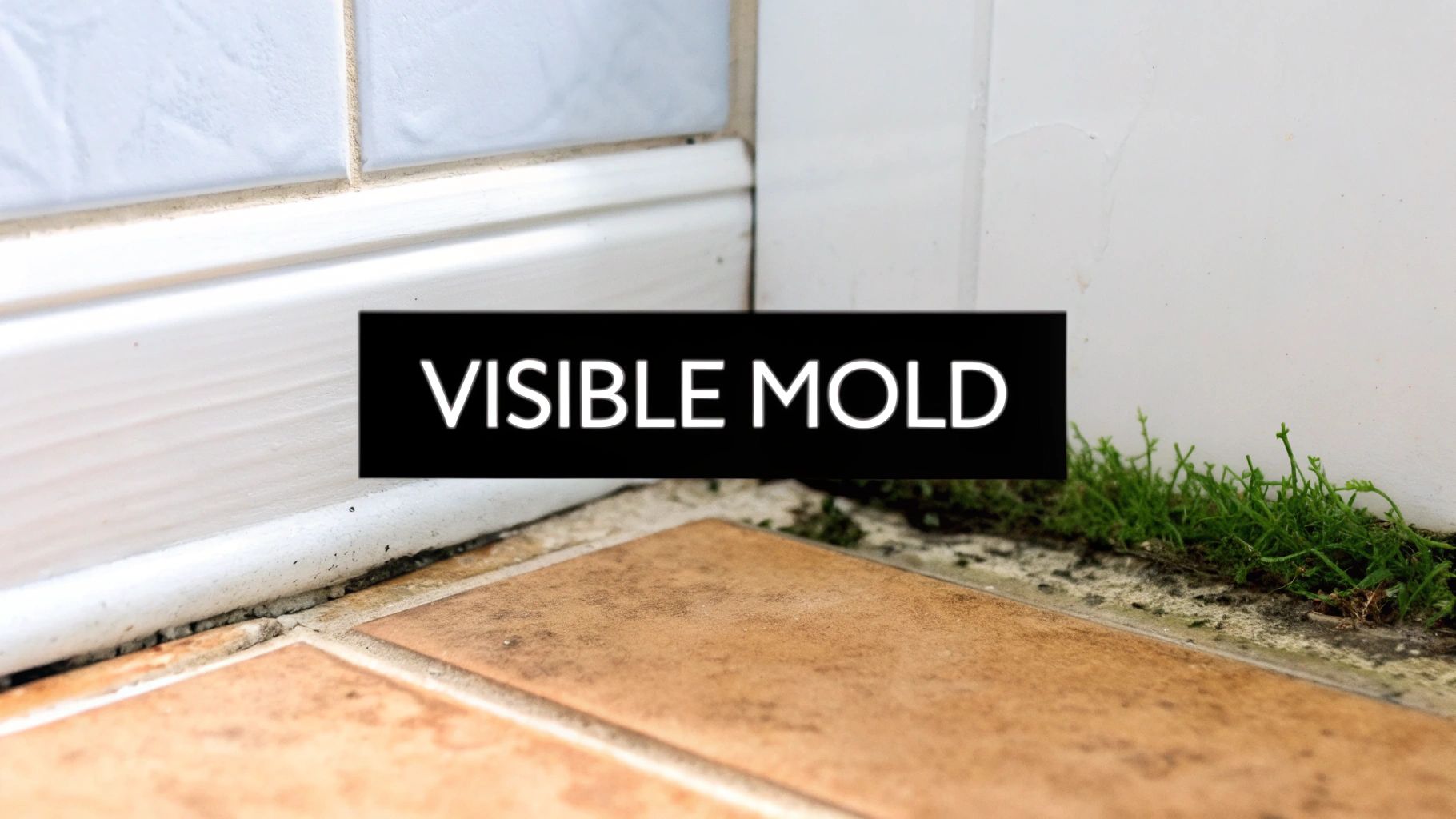
Mold can appear as spots, patches, or discolourations on surfaces. Depending on the species and the material it’s feeding on, it might look fuzzy, slimy, or even powdery. Recognizing these variations is key to a prompt response.
Common Appearances and Locations
In homes across Toronto and the Durham Region, visible mold often takes these forms:
- Black or Dark Green Patches: Frequently found on tile grout in bathrooms, along window sills where condensation collects, and on damp drywall in basements.
- White and Fuzzy Growth: This can appear on wooden joists in basements, inside cabinets under a leaking sink, or even on furniture stored in a damp area. It’s often mistaken for efflorescence on concrete, but efflorescence is a crystalline salt deposit that dissolves in water, whereas mold will not.
- Orange or Pink Film: Often seen in consistently wet places like shower corners, on drains, or inside toilets. This is typically a slime mold or bacteria that thrives in high-moisture environments.
Actionable Inspection Tips
To proactively search for visible mold, you need to look beyond the obvious. Mold thrives in dark, damp, and undisturbed areas.
Pro Tip: Don’t just look, investigate. Use a high-powered flashlight to inspect dark corners, the back of closets, and behind large appliances like your fridge or washing machine. These are prime locations for hidden moisture problems that lead to visible mold.
When inspecting, carefully check under sinks, around plumbing fixtures, along basement walls, and in your attic, particularly near any signs of roof leaks. Document any suspicious spots with photos before attempting to clean them. This provides a crucial record if you need to call in professional mold remediation services.
2. Musty Odor Detection
Often preceding any visual evidence, a persistent musty smell is one of the most common and telling signs of mold in house. This distinctively earthy, damp, or stale odour is a direct result of microbial volatile organic compounds (MVOCs) being released as mold consumes organic material and reproduces. If you can smell mold, it means you are inhaling its by-products, signaling that a colony is active somewhere nearby, even if it’s hidden from plain sight.
This tell-tale scent is your home’s early warning system. It frequently indicates hidden mold growth behind walls, under floorboards, in crawl spaces, or circulating through your HVAC system. Ignoring this smell allows the underlying moisture problem and mold colony to worsen, potentially leading to more significant structural damage and health concerns down the line.
Common Odour Hotspots
In homes throughout Toronto and the surrounding areas, this musty odour is often strongest in specific locations that are prone to moisture issues:
- Finished Basements: Poor ventilation, foundation leaks, or high humidity can create the perfect breeding ground for mold behind drywall or under carpeting, making the basement smell perpetually damp.
- Crawl Spaces and Attics: Leaky roofs or condensation in attics and dampness from the soil in crawl spaces can lead to widespread hidden mold, with the odour permeating up into the living areas.
- HVAC Systems: If mold grows inside your ductwork or on the evaporator coils, the musty smell will be distributed throughout your entire home every time the system runs.
- Under Sinks and Around Appliances: A slow, unnoticed leak from a dishwasher, washing machine, or sink P-trap can create a localized but potent musty smell confined to a cabinet or laundry room.
Actionable Inspection Tips
Trusting your sense of smell is the first step in hunting down a hidden mold problem. Your nose can often guide you to the source far more effectively than your eyes can.
Pro Tip: If you’ve become accustomed to the smell, ask a friend or neighbour who doesn’t live with you to do a “smell test” when they visit. A fresh nose can often detect odours you’ve gone “nose-blind” to and help confirm your suspicions.
To pinpoint the source, methodically move through your home, sniffing in closets, basements, and near plumbing fixtures. Pay attention to where the smell is most potent. If the odour is generalized or appears when the heat or AC kicks on, the issue likely lies within your ductwork. Understanding how to eliminate that old musty smell at home begins with identifying and addressing the hidden moisture source that is feeding the mold.
3. Water Stains and Discoloration Marks
Long before you spot actual mold, your house will often signal a moisture problem through tell-tale water stains and discolouration. These marks are the precursors to mold growth, acting as a map that points directly to areas where moisture has infiltrated your home. Ignoring these blemishes is like ignoring a warning siren; they indicate that the perfect conditions for mold are already present, and an infestation could be imminent.
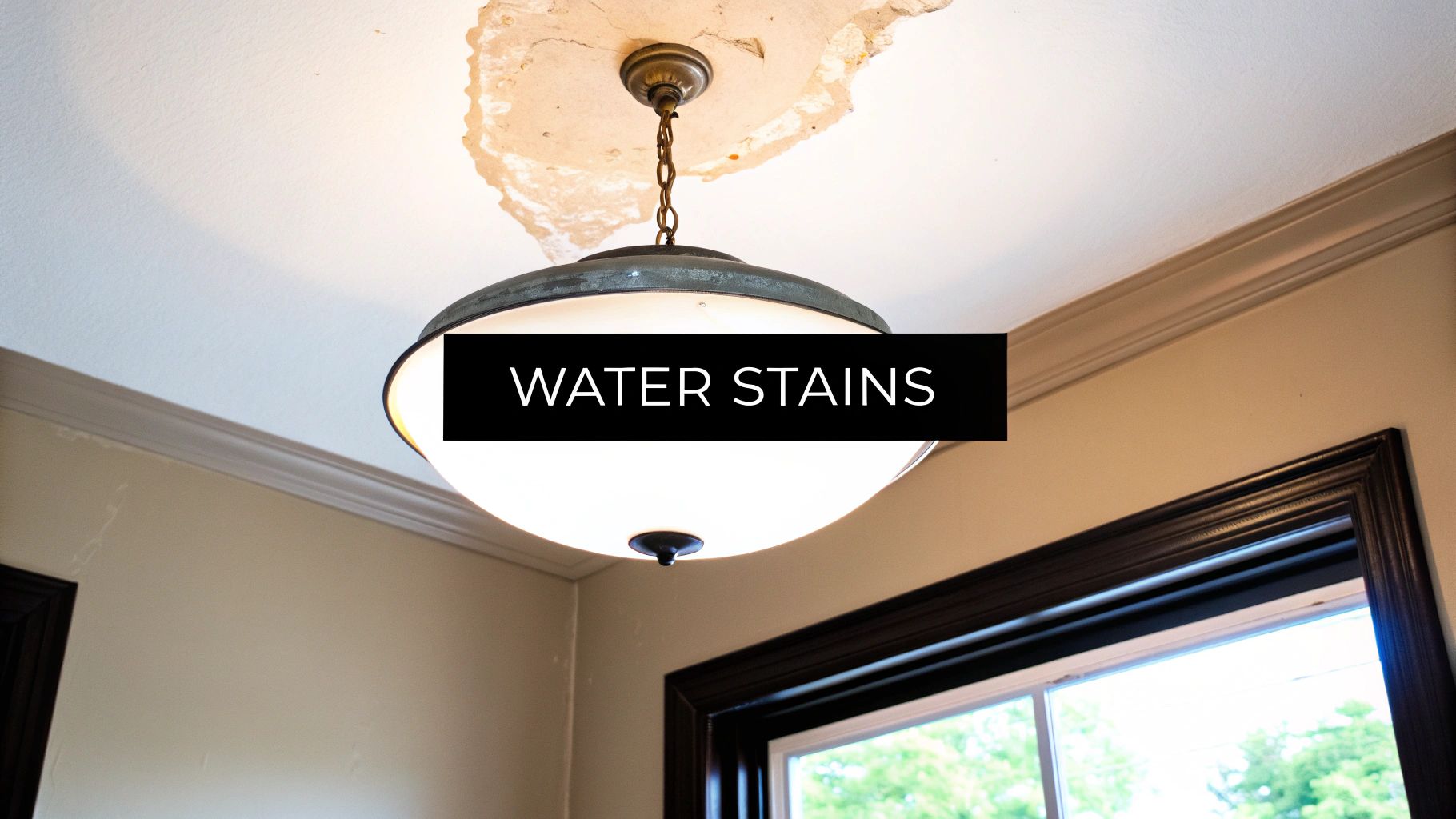
These stains are a direct sign that building materials have absorbed and retained water, creating a prime feeding ground for mold spores. The appearance can range from subtle yellowing to dark brown or even blackish rings, often with distinct edges that show how far the water has spread.
Common Appearances and Locations
For homeowners in Toronto and the surrounding areas, water stains are a frequent issue, especially after heavy rain or significant snowmelt. Look for these common forms:
- Yellow or Brown Rings on Ceilings: These are classic signs of a leak from the roof, an upstairs bathroom, or failing plumbing pipes running between floors. The circular shape often expands over time.
- Dark Streaks on Walls: You might see dark lines running down from window corners or along the intersection of a wall and ceiling. This often indicates condensation buildup or a small, persistent leak.
- Discolouration at the Base of Walls: Stains along the bottom of basement or ground-floor walls are a red flag for foundation leaks, poor grading outside, or a high water table.
- Shadowy Patches in Attics: Dark stains on the underside of the roof sheathing or on wooden trusses can indicate a roof leak or poor ventilation leading to condensation.
Actionable Inspection Tips
Finding the stain is just the first step; investigating its source is crucial to preventing mold from taking hold. Being proactive can save you from a much larger problem down the road.
Pro Tip: Use a moisture meter to confirm if a stained area is still damp. A reading above 20% in drywall or wood is a strong indicator of an active water issue that requires immediate attention, even if the surface feels dry to the touch.
Your inspection should be thorough, especially after weather events. Check basements and attics, look behind furniture placed against exterior walls, and examine the areas around all windows and doors. Document the size and shape of any stains with photos and a measuring tape, then monitor them to see if they grow. Addressing the source of the water is the only way to stop these stains from becoming full-blown mold colonies.
4. Respiratory Health Effects and Symptoms
While physical signs of mold in house are concrete, the impact on your health can be a more subtle yet equally powerful indicator. If you or your family members experience persistent and unexplained respiratory issues that seem to worsen indoors, it could be your body’s way of signalling a hidden mold problem. Mold releases microscopic spores and mycotoxins into the air, which, when inhaled, can trigger a range of allergic and inflammatory responses.
These symptoms are often mistaken for seasonal allergies or a common cold, but a key difference is their connection to your indoor environment. Paying close attention to how you feel inside your home versus outside can provide crucial clues about your indoor air quality and the potential presence of mold.
Common Health Reactions and Vulnerable Individuals
In homes across the Toronto and Durham Region, mold-related health symptoms often manifest in predictable patterns, especially among certain groups:
- Persistent Coughing and Wheezing: A chronic, dry cough or a whistling sound when breathing that doesn’t seem to go away could be a direct reaction to airborne mold spores irritating the lungs and airways.
- Nasal Congestion and Sneezing: If you constantly feel stuffy, have a runny nose, or sneeze frequently only when at home, it points towards an indoor allergen like mold.
- Aggravated Asthma and Allergies: Individuals with pre-existing asthma or mold allergies may experience a significant increase in the frequency and severity of their attacks or symptoms while inside the affected property.
- Sore Throat and Itchy Eyes: General irritation of the mucous membranes is a common allergic reaction to mold exposure.
Children, the elderly, and individuals with compromised immune systems or chronic respiratory conditions are particularly susceptible to these health effects. For instance, a child with asthma might experience more frequent attacks in a damp basement playroom, or an adult might develop sudden allergy-like symptoms after moving into an older home.
Actionable Inspection Tips
If you suspect your health is being impacted by mold, it’s time to play detective and correlate your symptoms with your environment. This approach can help you confirm your suspicions and provide valuable information for your healthcare provider.
Pro Tip: Keep a simple health diary. Note when symptoms like coughing, sneezing, or headaches start, worsen, and subside. If you consistently feel better after spending a day away from home, it’s a strong indicator that the problem originates indoors.
When symptoms point to poor indoor air quality, consider the role of your HVAC system. A contaminated system can circulate mold spores throughout the entire house, exacerbating respiratory issues. If you notice these health signs along with musty smells from your vents, it’s a clear signal to investigate further. You can learn more about signs that you need to get your air ducts cleaned to see if your system is contributing to the problem. Always consult a healthcare professional about your symptoms and inform them of your potential exposure to mold.
5. Allergic Reactions and Skin Irritation
Beyond structural damage and musty odours, one of the most personal and concerning signs of mold in house is the impact it can have on your health. Mold releases microscopic spores and mycotoxins into the air, which can trigger a range of allergic reactions and skin problems when inhaled or touched. If you or your family members are suddenly experiencing unexplained symptoms, your home’s indoor environment could be the culprit.
These physical reactions can be particularly telling because they often flare up when you’re at home and subside when you’re away for an extended period. This connection between location and symptoms is a powerful clue that points toward an indoor allergen like mold.
Common Appearances and Locations
In homes across Toronto and the Durham Region, mold-related health issues often manifest in these ways:
- Persistent Allergy Symptoms: This includes a constantly runny or stuffy nose, sneezing, itchy or watery eyes, and a scratchy throat that seems to have no other cause, like a common cold. These symptoms are often worse in specific rooms, such as a damp basement or a poorly ventilated bathroom.
- Skin Rashes and Hives: Direct contact with mold spores can cause dermatological reactions. You might notice red, itchy rashes, hives, or a worsening of pre-existing conditions like eczema in family members, especially children. If you want to understand this connection better, you can learn more about how black mold can cause skin rashes.
- Respiratory Issues: For individuals with asthma or other respiratory conditions, mold exposure can lead to increased attacks, wheezing, shortness of breath, and chest tightness.
Actionable Inspection Tips
If you suspect your health symptoms are linked to mold, it’s time to correlate your physical feelings with your environment. Pay close attention to when and where symptoms appear or worsen.
Pro Tip: Keep a simple “symptom journal” for a week. Note down when you experience itchy eyes, skin flare-ups, or sneezing fits, and where you are at that time. A pattern showing symptoms are most severe in the basement or after a shower points directly to a potential mold hotspot.
When investigating, remember that the source may not be visible. Spores can circulate through your HVAC system, affecting the entire home. Upgrading to a high-quality furnace filter designed for allergies can help capture these airborne irritants while you locate and address the root cause of the mold. Consulting a doctor or dermatologist about persistent symptoms can also provide valuable insights.
6. Condensation and Excessive Moisture Buildup
Long before visible mold appears, its favourite ingredient often announces itself loud and clear: excessive moisture. Persistent condensation on windows, pipes, or walls is one of the most significant early warning signs of mold in house. It signals that the humidity levels in your home are too high, creating the perfect breeding ground for mold spores to germinate and colonize surfaces. Think of it as the precursor to a bigger problem.
When warm, moist air comes into contact with a cooler surface, the air can no longer hold the moisture, and it turns into liquid water droplets. If this moisture isn’t managed, it keeps surfaces constantly damp, preventing them from ever drying out completely. This is the ideal environment for mold to thrive.
Common Appearances and Locations
In homes throughout the Greater Toronto Area, condensation issues frequently manifest in specific areas, especially during seasonal temperature shifts:
- Window and Glass Door Condensation: The most common sign is “sweating” on windows, particularly during colder months. Look for water droplets, fog, or even ice forming on the interior panes.
- “Weeping” Basement Walls: In humid summers or during wet seasons, you might notice concrete basement walls feel damp to the touch or have visible streaks of moisture.
- Cold Water Pipe Droplets: Uninsulated pipes carrying cold water will often form condensation, dripping onto surrounding materials like drywall, wood framing, or insulation.
- Bathroom and Kitchen Moisture: Persistent fog on mirrors long after a shower or on kitchen windows during cooking indicates that ventilation is inadequate to handle the moisture being produced.
Actionable Inspection Tips
Effectively managing moisture is about proactive control rather than reactive cleaning. The goal is to lower indoor humidity to a safe level, typically between 30% and 50%.
Pro Tip: Invest in a few inexpensive digital hygrometers and place them in key areas like the basement, bathroom, and main living space. This gives you real-time data on your home’s humidity levels, allowing you to take action before condensation becomes a persistent problem.
To combat excessive moisture, use exhaust fans during and after showers and cooking. Ensure your clothes dryer is properly vented to the outside. In chronically damp areas like basements, using a quality dehumidifier is crucial for maintaining a healthy environment. For more information, explore our guide on the best dehumidifiers for basements. Wiping down any visible condensation immediately will also help prevent moisture from soaking into surrounding materials.
7. Warping, Peeling Paint, and Structural Deterioration
Beyond obvious spots and smells, some of the most serious signs of mold in house are the structural changes it causes. When moisture penetrates building materials, it doesn’t just invite mold; it physically damages them. This deterioration is a clear indication of a long-standing moisture problem that has allowed a mold colony to thrive, often out of sight.
Warping, peeling, and bubbling are physical evidence that the integrity of your home’s materials has been compromised. Water saturates materials like wood and drywall, causing them to swell, weaken, and change shape. This process creates the perfect environment for mold to feed and grow, compounding the damage.
Common Appearances and Locations
In homes throughout Toronto and the Durham Region, moisture-related structural damage often appears in these forms:
- Peeling or Bubbling Paint: This is common in high-humidity areas like bathrooms (especially near showers), laundry rooms, and kitchens. Moisture gets trapped behind the paint, pushing it away from the surface.
- Warped Wood: Look for this around window frames where condensation collects, along baseboards in damp basements, or in hardwood floors near a leak. The wood will appear swollen, bent, or uneven.
- Soft or Sagging Drywall: Drywall that feels spongy to the touch or appears to be sagging is a red flag for significant water saturation. This is often found on ceilings below a leaky roof or bathroom, or on basement walls.
Actionable Inspection Tips
To identify structural deterioration, you must actively look and feel for changes in your home’s surfaces. This type of damage signals a hidden and potentially widespread issue.
Pro Tip: Perform a “push test” on vulnerable surfaces. Gently press on drywall in basements, under sinks, and around windows. If the surface feels soft, spongy, or crumbles easily, it’s a strong indicator of prolonged moisture damage and likely hidden mold.
During your inspection, pay close attention to the seams where walls meet floors and ceilings. Run your hand along baseboards to feel for warping. Check the condition of paint and wallpaper, looking for any signs of lifting or bubbling. Any structural change, no matter how small, warrants further investigation into the source of the moisture.
8. HVAC System Issues and Air Quality Degradation
Your home’s heating, ventilation, and air conditioning (HVAC) system is designed to circulate air and maintain comfort, but if it harbours mould, it becomes a high-speed distribution network for spores. When moisture problems develop within the system’s dark, dust-filled components, it creates a perfect breeding ground. Once established, every time the system runs, it aerosolizes and spreads these spores throughout every room, significantly degrading your indoor air quality and posing a widespread health risk.
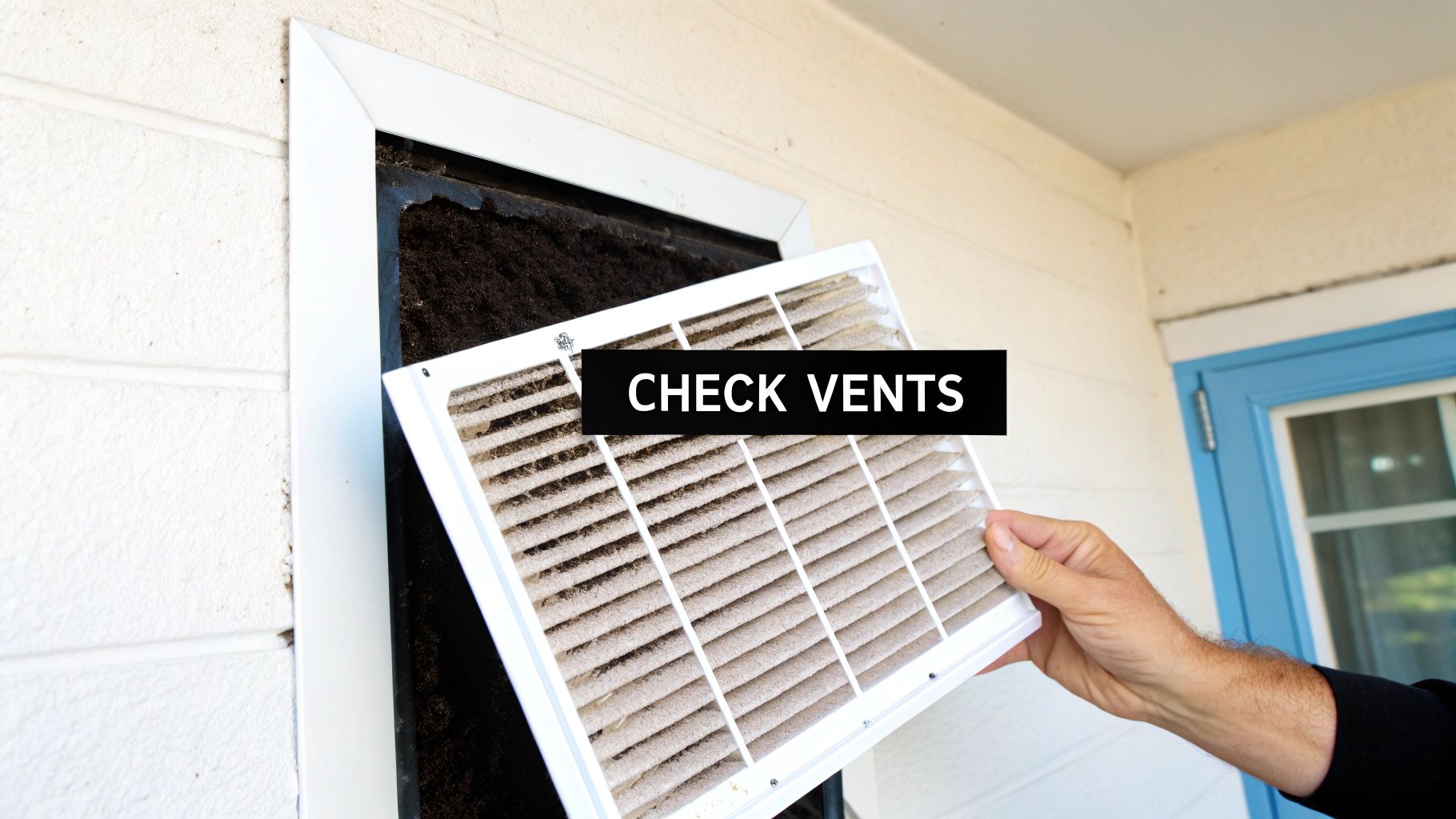
This is one of the more insidious signs of mold in a house because the source is hidden, yet its effects are felt everywhere. A musty smell that appears only when the air conditioner or furnace kicks on is a classic red flag. This indicates that the air passing through the system is picking up mould-related odours and delivering them directly into your living space.
Common Appearances and Locations
Mould within an HVAC system can be difficult to spot without a professional inspection, but here are key areas where it commonly develops:
- Evaporator Coils and Drain Pans: These components are inherently cool and wet when the AC is running, creating a prime location for microbial growth. Look for black, spotty growth on coils or slimy buildup in the condensate pan.
- Air Filters: A clogged, damp filter can become a food source for mould. Dark spots or fuzzy discolouration on the filter itself is a clear warning sign.
- Ductwork and Vents: Condensation can form inside poorly insulated ductwork, leading to growth on the interior surfaces. You might see black or green debris around the edges of supply vents.
Actionable Inspection Tips
A proactive approach to your HVAC system can prevent it from becoming a source of contamination. Regular maintenance and visual checks are crucial for homeowners in the Toronto area, where seasonal humidity changes can impact these systems.
Pro Tip: Your nose is one of your best tools. If you detect a musty odour when your system starts, turn it off immediately and inspect the filter and accessible components with a flashlight. Catching it early can prevent a much larger, more expensive remediation problem.
When inspecting, check the condensate drain line to ensure it’s not clogged and is draining properly. Look for any signs of moisture or water stains on the ductwork, particularly in your basement or attic. If you suspect a problem but can’t see it, it may be time for professional indoor air quality testing in Toronto to confirm the presence and concentration of airborne spores.
8-Point Comparison of Home Mold Signs
| Indicator | Implementation complexity | Resource requirements | Expected outcomes | Ideal use cases | Key advantages |
|---|---|---|---|---|---|
| Visual Mold Growth and Discoloration | Low — direct visual inspection | None to minimal (flashlight, camera) | Confirms established colony and location; immediate remediation needed | Routine checks in bathrooms, basements, windowsills | Easiest to identify; clear documentation for professionals |
| Musty Odor Detection | Low — subjective detection | None (optionally odor tests or carbon filters) | Early warning of hidden mold; location often unclear | When smell appears without visible signs; HVAC/crawlspaces | Detects hidden problems early; no special tools |
| Water Stains and Discoloration Marks | Low — visual inspection | None; moisture meter recommended for confirmation | Indicates moisture pathways and past leaks; precursor to mold | After leaks, heavy rain, around roofs/windows/foundations | Identifies moisture sources; useful for prevention/insurance |
| Respiratory Health Effects and Symptoms | Medium — monitor symptom patterns and timing | Medical consultation, symptom diary, possible allergy testing | Signals health risk and possible indoor exposure; motivates action | Suspected mold-related illness or vulnerable occupants (asthma, immunocompromised) | Direct health indicator; compels remediation and medical review |
| Allergic Reactions and Skin Irritation | Medium — observe and document physical reactions | Dermatological consults, photos, allergy testing | Suggests personal sensitivity and possible exposure | When occupants report itching, rashes, eye irritation | Visible physical signs that support medical documentation |
| Condensation and Excessive Moisture Buildup | Low–Medium — monitor humidity and surfaces | Hygrometer, dehumidifier, ventilation improvements | Early intervention possible before visible mold; measurable conditions | Kitchens, bathrooms, cold-climate windows, basements/attics | Prevents mold formation; actionable and quantifiable |
| Warping, Peeling Paint, and Structural Deterioration | Medium — visual + tactile inspection | Professional assessment and repair resources | Indicates prolonged moisture damage; often requires costly repairs | When building materials show bubbling, soft spots, sagging drywall | Clear evidence of damage; justifies professional remediation |
| HVAC System Issues and Air Quality Degradation | High — system inspection and testing | HVAC professional services, duct cleaning, upgraded filters, possible UV lights | Indicates system-wide contamination and airborne spread of spores | Widespread health symptoms, musty vents, reduced airflow | Explains whole-home air quality problems; requires professional remediation |
Your Action Plan: From Mold Detection to a Healthier Home
Recognising the subtle and overt signs of mold in house is more than just a home maintenance task; it is a critical step in safeguarding your property’s structural integrity and, more importantly, the health and well-being of everyone who lives there. Throughout this guide, we have explored the various ways mold makes its presence known. From the unmistakable musty odour lingering in your basement to the dark, speckled stains appearing on drywall, each sign is a piece of a puzzle. We have seen how persistent condensation, peeling paint, and even unexplained respiratory issues can all point to the same underlying problem: unwanted moisture creating a breeding ground for mold.
By now, you understand that mold detection is not a passive activity. It requires an active, vigilant approach. You are now equipped to connect the dots between a damp spot on the ceiling and the potential for hidden mold in the attic, or to question why your allergies seem to flare up only when you are at home. This knowledge empowers you to shift from being a reactive homeowner to a proactive protector of your living space.
Summarising Your Mold Detection Toolkit
Let’s recap the essential takeaways to ensure you are prepared to act decisively. Your first line of defence is always your own senses and a keen eye for change within your home.
- Trust Your Nose: A persistent, earthy, or musty smell is one of the most reliable indicators of hidden mold. Do not dismiss it as just an “old house smell.” Investigate its source, paying close attention to basements, crawl spaces, and areas near plumbing.
- Be a Visual Detective: Regularly inspect vulnerable areas for any signs of discoloration, water stains, or visible growth. Remember that mold can appear in various colours, including black, green, white, or orange. Pay special attention to corners, behind furniture, and inside cabinets.
- Monitor Your Health: Unexplained, persistent symptoms like coughing, sneezing, skin irritation, or headaches could be your body’s alarm system. If these symptoms lessen when you leave the house, it is a significant clue that your indoor air quality may be compromised by mold.
- Address Moisture Immediately: Mold cannot thrive without moisture. This is the most crucial takeaway. Whether it is a leaky pipe, high indoor humidity, or condensation on windows, controlling moisture is the single most effective way to prevent mold from taking hold.
From Identification to Eradication: Your Next Steps
Identifying potential signs is only half the battle. Your next moves are what will truly define the health of your home environment. If you have spotted a small area of surface mold (less than 10 square feet) and feel confident in your ability to handle it safely, a DIY approach with appropriate protective gear may be an option. However, it is vital to address the source of the moisture first, or the problem will inevitably return. For specific challenges, such as dealing with porous surfaces, understanding the correct techniques for black mold removal on wood is essential to avoid causing further damage or leaving spores behind.
For larger infestations, or if you suspect mold is hidden within walls or your HVAC system, professional intervention is not just recommended; it is necessary. Certified mold remediation specialists have the training and equipment to safely contain and remove the contamination without spreading spores throughout your home. Similarly, your HVAC system can act as a superhighway for mold, distributing spores to every room. A professional inspection is the only way to know for sure if your ducts are contributing to the problem. By taking these signs seriously and acting with informed confidence, you are investing in a safer, healthier future for your home and family.
Is your HVAC system circulating musty air or contributing to your allergy symptoms? Don’t let your air ducts be a hidden source of mold. Contact Can Do Duct Cleaning today for a professional inspection and cleaning service to ensure the air you breathe is fresh, clean, and healthy.


