For anyone battling allergies, the answer is clear: the best air purifier is always one with a True HEPA filter, a high Clean Air Delivery Rate (CADR) that matches your room size, and an Air Changes per Hour (ACH) rating of at least four. These three specs are your powerhouse trio for capturing common irritants like pollen, pet dander, and dust mites.
Your Starting Point for Allergy Relief at Home
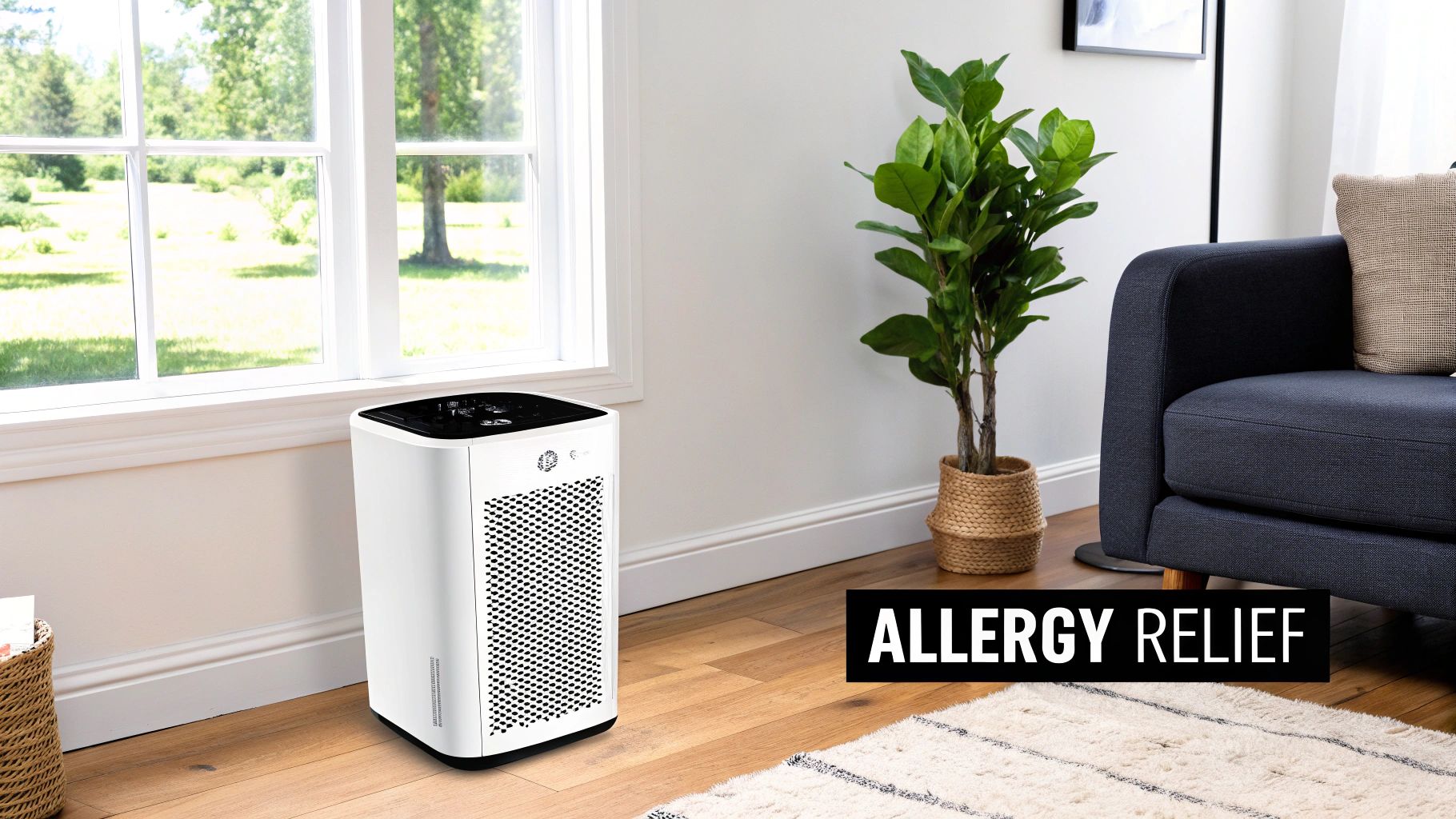
If you're tired of constant sneezing, itchy eyes, and a stuffy nose being the norm at home, an air purifier can feel like a game-changer. These machines work by pulling in the air from a room, trapping all the microscopic gunk floating around, and then circulating clean, filtered air back out.
The whole point is to lower the amount of airborne allergens in your space, giving your immune system a much-needed break.
But here’s the thing: not all purifiers are cut out for the job, especially when you’re dealing with allergies. The market is packed with options, but only a handful of features really deliver noticeable relief. Getting them right is what separates a glorified fan from a true allergy-fighting machine.
The Non-Negotiables for Allergy Sufferers
To cut through the noise, let's focus on the three metrics that matter most. I tell all my clients to think of these as the foundation of any good air purifier for allergy relief. Get these right, and you're well on your way.
Here’s a quick rundown of what you need to look for.
Key Features for an Allergy Air Purifier at a Glance
| Feature | Why It Matters for Allergies | What to Look For |
|---|---|---|
| True HEPA Filtration | This is the gold standard for a reason. It captures 99.97% of tiny particles down to 0.3 microns—that includes pollen, pet dander, and mold spores. | The label must say "True HEPA." Anything like "HEPA-type" or "HEPA-like" is a red flag and won't be as effective. |
| CADR (Clean Air Delivery Rate) | This number tells you how fast the purifier can clean the air in a specific room size. A higher CADR means quicker cleaning. | Match it to your room. A good rule of thumb is for the CADR to be at least two-thirds of the room's square footage (e.g., a 300 sq. ft. room needs a CADR of at least 200). |
| ACH (Air Changes per Hour) | This tells you how many times the machine can cycle through and clean all the air in the room every hour. | For serious allergy relief, you want a unit that delivers 4 to 5 ACH. This ensures allergens are removed consistently. |
This table covers the core specs, but it’s important to see the bigger picture.
An air purifier is a critical tool, but it's most effective as part of a larger strategy. Pairing it with other actions creates a more resilient, allergy-friendly home environment.
Look at the regulations in California, for instance. The California Air Resources Board (CARB) has strict rules on ozone emissions, which has pushed most ineffective or potentially harmful ionizer models off the market there. As a result, over 90% of purifiers sold in the state rely on HEPA or activated carbon filters—the technologies we know work best against allergens.
A complete strategy also includes things like choosing the right fabrics for your home. You can find some great tips in this guide to sustainable bedding for allergy relief. And of course, making sure the air circulating through your home is clean from the start is fundamental, which you can learn more about by reading up on improving your indoor air quality.
How to Assess Your Home's Allergy Profile
Before you even start looking at product specs and reviews, the first move is to figure out what you're actually fighting. Buying an air purifier without knowing your specific allergy triggers is like trying to find a destination without a map. A little homework upfront ensures you invest in a machine that actually targets your home's unique airborne culprits.
Not all allergens are created equal, and your home’s layout and lifestyle dictate which ones are most common. Start by identifying the main offenders. Do your symptoms flare up every spring and fall? Seasonal pollen is probably drifting in through open windows and hitching a ride on your clothes.
If your sneezing fits are a year-round battle and seem worse inside, the issue might be closer to home. Dust mites, which love to hide in bedding and carpets, are a classic perennial allergen. For many of us, though, the source of constant sniffles is a furry family member—pet dander is a potent and incredibly persistent trigger.
Pinpointing Your Main Allergen Triggers
Getting to the root cause of your allergies is the most important step. Just take a moment to think about when and where your symptoms are at their worst.
- Pet Dander: If you have cats or dogs, dander is almost certainly a factor. These microscopic skin flecks are so lightweight they can stay airborne for hours and settle on literally everything. An air purifier becomes a non-negotiable tool for managing this constant source of irritation.
- Pollen: For those of us with seasonal allergies, an air purifier can create a clean-air sanctuary indoors. It’s especially helpful in bedrooms, letting you get a restful night's sleep even when the pollen count outside is sky-high.
- Dust and Dust Mites: Do your symptoms feel worse first thing in the morning or right after you’ve cleaned? Dust mites are a likely suspect. A good purifier helps capture those airborne dust particles that get stirred up by movement before they can settle or you breathe them in.
- Mould Spores: Got a damp basement or a bathroom with a stubborn musty smell? Mould spores can trigger some pretty serious allergic reactions and require a two-pronged attack: air purification and effective moisture control.
It’s also worth remembering that a healthy home involves more than just airborne particles. Pet owners, for example, might also be dealing with other sensitivities. It can be helpful to also think about your pet's own health needs, as explored in guides on managing pet food sensitivities. A complete view of your home's environment, including pet wellness, contributes to a healthier space for everyone.
Matching Purifier Power to Your Room Size
Okay, so you know what you’re targeting. The next step is sizing up your space. One of the most common mistakes I see people make is putting an underpowered purifier in a large room. It's essentially throwing money away because the machine just can't clean the air fast enough to make any real difference.
Grab a tape measure and get the square footage of the room where the purifier will live. Simply multiply the room's length by its width.
Real-World Scenario: Let's say you have an open-concept living room that’s 20 feet by 25 feet. That's a 500-square-foot space. A small, budget-friendly purifier rated for a 200-square-foot bedroom will be running constantly and still won't be able to keep up. To feel any real relief, you’d need a much more powerful model designed for that larger area.
Don't forget to look up. High ceilings mean there's more air volume to clean, so you might need to size up your choice. An odd L-shaped room or one with multiple doorways can also disrupt airflow, making where you place the purifier even more important.
If you're not sure where you stand with your home's overall air quality, it's always a good idea to get a baseline. You can learn how to check air quality in your home to get a comprehensive picture, which ensures your investment is as effective as possible.
Decoding Air Purifier Tech Specs
Shopping for an air purifier can feel like you need an engineering degree. You’re bombarded with a mess of acronyms—HEPA, CADR, ACH—and it's easy to just give up and pick the one that looks the nicest.
But here’s the thing: those technical specs are what separate a machine that actually works from a pricey fan with a useless filter. Getting a handle on these key metrics is the most important thing you can do to find an air purifier that will genuinely help your allergies.
Think of it like reading a nutrition label. Once you know what you're looking for, you can see right past the flashy marketing claims and find the product that will make a real difference. Let's break down this alphabet soup into plain English so you can shop like a pro.
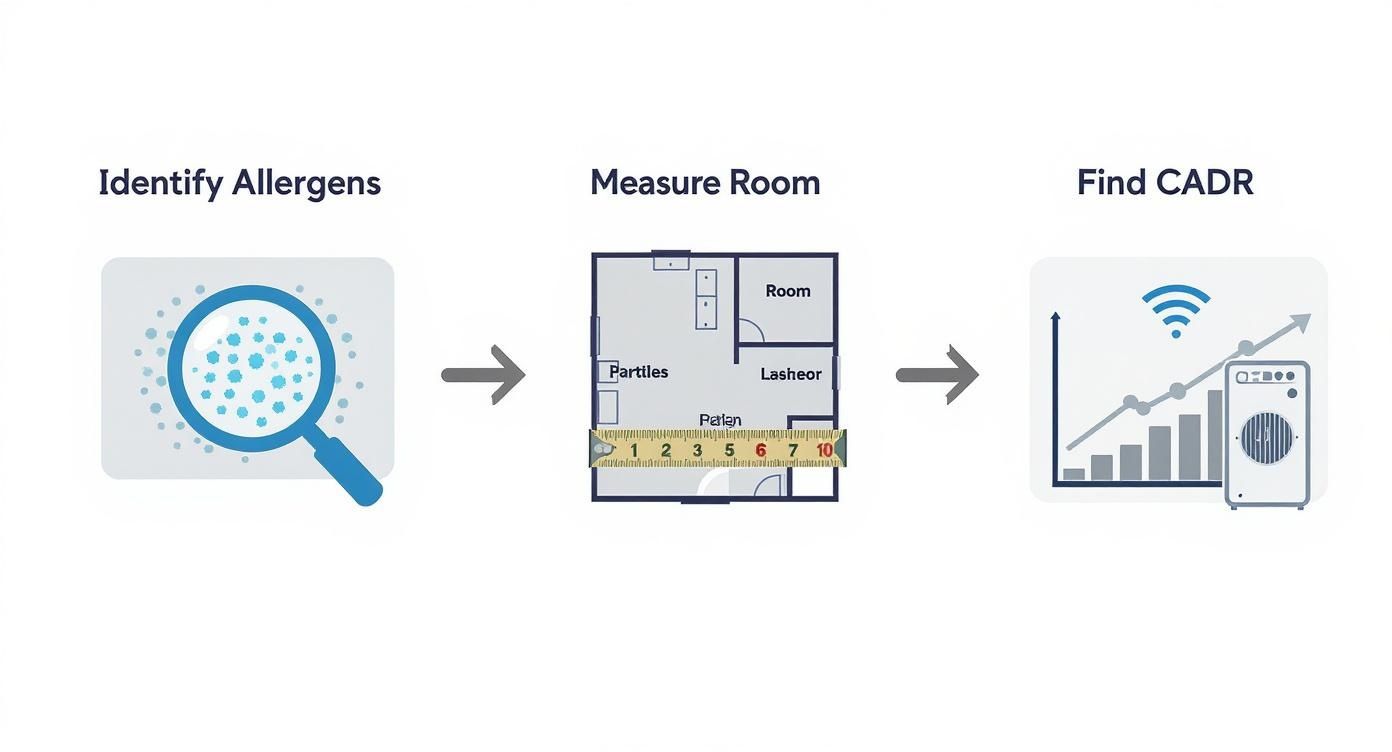
This simple flow chart really nails it. First, know what allergens you're fighting. Then, measure your space. Finally, use that info to pick a unit with the right power (CADR).
The Gold Standard: True HEPA Filtration
Let’s start with the most critical feature for anyone with allergies: the filter. You’ll see a lot of vague terms like “HEPA-type” or “HEPA-like” out there. Ignore them. They’re just marketing fluff.
The only term you should care about is True HEPA.
A True HEPA filter isn’t a brand name; it’s a performance standard. It’s certified to capture 99.97% of airborne particles down to a minuscule 0.3 microns. To give you some scale, a single human hair is about 50-70 microns thick. The very things making you sneeze and wheeze—pollen, pet dander, mould spores, and dust mite bits—are easily trapped by this incredibly dense filter.
That 0.3-micron size isn't arbitrary. It's actually considered the most difficult particle size to catch. If a filter can reliably snag those, it can handle just about any common household allergen you throw at it.
CADR: The Speed of Clean
Next up is the Clean Air Delivery Rate (CADR). This number is all about speed and power. It tells you exactly how quickly the purifier can clean the air in a room of a certain size.
CADR is measured in cubic feet per minute (CFM) and you'll typically see three numbers for smoke, dust, and pollen. For allergy sufferers, the dust and pollen ratings are your best friends. A higher CADR means the unit cleans the air faster, which is vital because allergens are always finding their way into your home. A powerful unit can snatch them out of the air before they ever reach your lungs.
As a solid rule of thumb, use the "two-thirds rule." Your purifier's smoke CADR number should be at least two-thirds of your room's square footage. So, for a 300-square-foot bedroom, you'll want a CADR of at least 200.
To help you match the right power to your space, we've put together a quick reference table. This will give you a good starting point for finding a purifier that can keep up.
CADR Recommendations by Room Size
| Room Size (Square Feet) | Common Room Type | Recommended Minimum CADR (for Smoke) |
|---|---|---|
| Up to 150 sq ft | Small Bedroom, Office | 100 |
| 151 – 300 sq ft | Master Bedroom, Den | 200 |
| 301 – 450 sq ft | Living Room, Playroom | 300 |
| 451+ sq ft | Open-Concept Area | 350+ |
This table makes it easy to see how a more powerful CADR is needed as room size increases to maintain effective air cleaning.
ACH: The Frequency of Filtration
Finally, we have Air Changes per Hour (ACH). This tells you how many times the purifier can cycle through and clean the entire volume of air in your room every hour. For just general air freshening, 2 ACH might be fine. But for allergy relief, that's not going to cut it.
For anyone dealing with allergies or asthma, you should be looking for a minimum of 4-5 ACH. This rapid turnover is what keeps allergen levels low enough to actually provide relief.
Think of it this way: a unit rated for 5 ACH in your bedroom will suck in all the air, filter it, and push it back out every 12 minutes. This constant cleaning cycle is a game-changer, especially overnight, as it prevents that build-up of irritants that can wreck your sleep.
Just remember that an air purifier's filter is only one piece of the puzzle. It works differently from the filter in your home's HVAC system. Using both effectively gives you a much better whole-home strategy for cleaner air. You can learn more about the role of a furnace air filter in our other guide to get the full picture.
Understanding Long-Term Costs and Maintenance
The price you see on the box is just the beginning. To really find the best air purifier for allergies, you have to think like a seasoned homeowner and look at the total cost of ownership over time. It’s easy to get swayed by a low upfront price, only to find out later that the maintenance and energy bills make it a much more expensive machine in the long run.
A smart buyer knows the real investment includes two things: replacement filters and the electricity it uses every day. These are the costs that truly define the value you're getting over the next few years.
The Real Price of Replacement Filters
By far, the biggest ongoing cost for any decent air purifier is the filters. That main True HEPA filter is the powerhouse, but it doesn't work forever. As it pulls allergens out of your air, it gets clogged and becomes less effective.
Most brands suggest swapping out the main HEPA filter every 12 to 18 months, but that’s just a guideline. If you have pets shedding dander or live in an area with high pollen, you might be changing it sooner. These replacements can set you back anywhere from $40 to over $100 a pop, depending on the model.
Pro Tip: Before you commit to a purifier, do a quick Google search for its replacement filters. A cheap unit with pricey or hard-to-find filters is a bad deal disguised as a good one.
On the bright side, many of the best purifiers for allergies come with a washable pre-filter. This is your first line of defence, catching big stuff like pet hair and dust bunnies. Giving this filter a quick rinse once a month is a free and easy chore that can seriously extend the life of your more expensive HEPA filter, saving you cash.
Factoring in Energy Consumption
For an air purifier to do its job, it needs to run pretty much constantly. While it’s not a huge energy hog like an air conditioner, it will add a little something to your electricity bill every month. This is where energy efficiency really matters.
Always look for a model with an Energy Star certification. This little blue label is your guarantee that the unit meets strict energy performance standards, meaning it sips power instead of guzzling it. As a bonus, efficient motors are usually quieter—perfect for running in a bedroom overnight.
Here’s what to look for on the spec sheet:
- Wattage: This tells you the power consumption. A lower number is better. A really efficient model might only use 5-10 watts on its lowest setting.
- Auto Mode: This is a fantastic feature. The purifier has a sensor that detects the air quality and adjusts the fan speed for you. It only kicks into high gear when it needs to, saving a ton of energy.
A Three-Year Cost Breakdown
Let's run the numbers and compare two hypothetical purifiers to see how this plays out in the real world.
| Feature | Purifier A (Budget Model) | Purifier B (Premium Model) |
|---|---|---|
| Initial Purchase Price | $150 | $250 |
| HEPA Filter Replacement | $70 every 12 months | $80 every 18 months |
| Annual Energy Cost (est.) | $40 (less efficient) | $25 (Energy Star certified) |
| Total 3-Year Cost | $480 ($150 + 3x$40 + 2x$70) | $485 ($250 + 3x$25 + 1x$80) |
Look at that. The "cheaper" Purifier A almost completely closes the price gap after just three years. Because the premium model has longer-lasting filters and is more energy-efficient, it practically pays for itself. By year four, Purifier B would actually be the more economical choice.
Thinking long-term is crucial. And remember, your air purifier is part of a team. It works alongside your home's HVAC system, so keeping that furnace filter fresh is just as important for clean air. You can check out our guide on furnace filter replacement frequency to build a complete clean-air strategy for your home.
How to Maximize Your Air Purifier's Effectiveness
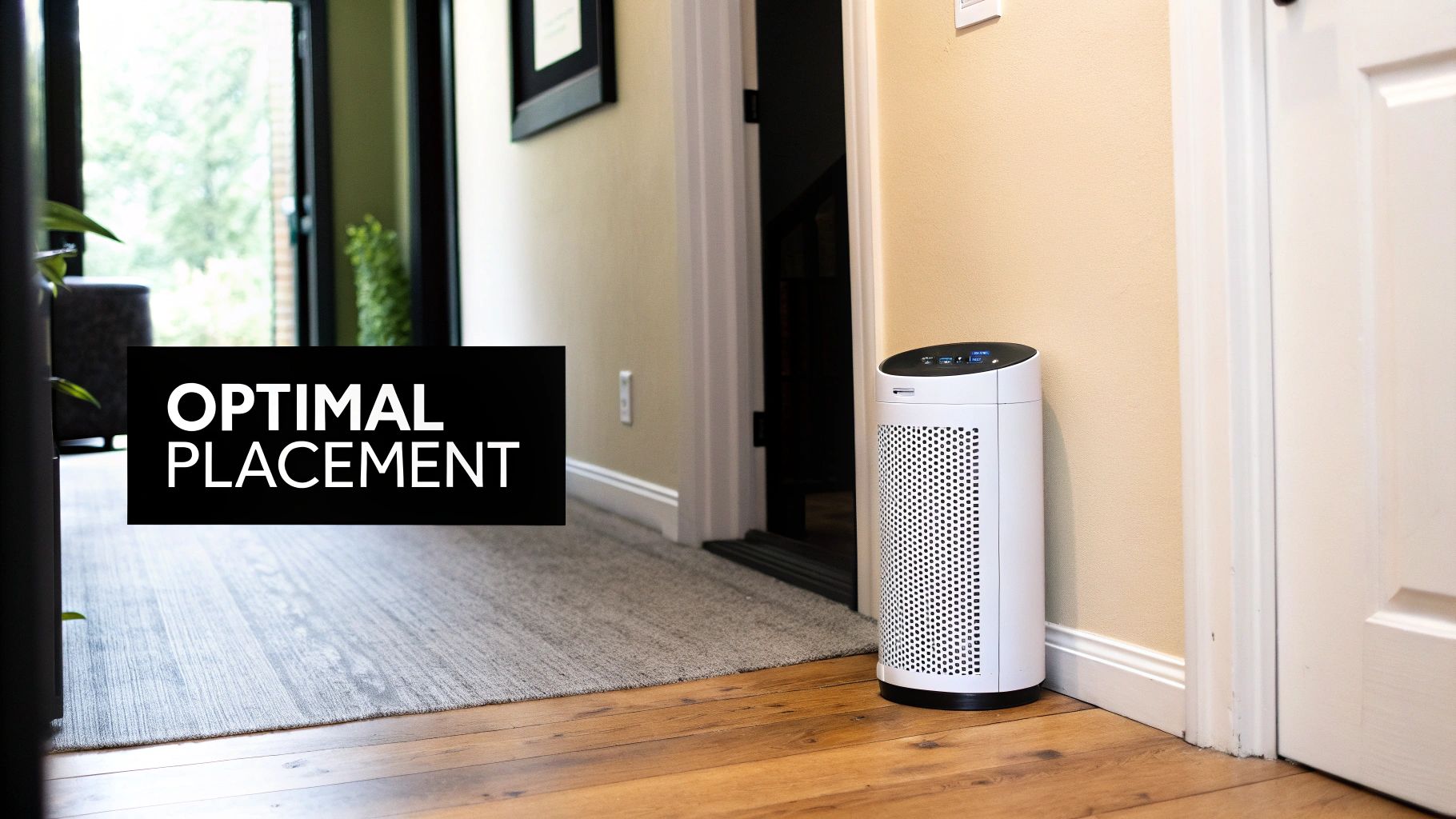
So you've brought home a shiny new air purifier. The temptation is to just plug it in and forget about it, but that's a classic rookie mistake. To get the real allergy relief you paid for, you need to be smart about where you put it and how you run it.
Think of it less like a toaster and more like a goalie for your home's air quality team. Proper setup is the difference between a machine that just hums in the corner and one that actually stops you from sneezing and wheezing all day.
Strategic Placement for Peak Performance
Where you put your air purifier might just be the most important decision you make. The whole point is to create a strong, continuous current of air, pulling the dirty stuff in and pushing the clean stuff out.
Don't make the mistake of tucking it behind the sofa or into a tight corner. You're basically choking it, starving it of the airflow it needs to do its job. Give it some space! The best spots are usually in open areas, often near a doorway where it can catch allergens right as they try to sneak into the room.
Give your purifier breathing room. Placing it three to five feet away from walls and furniture allows for optimal 360-degree air intake and circulation, ensuring no corner of the room is left untreated.
This isn't just about dust bunnies. In areas plagued by seasonal smoke, like during California's wildfire season, strategic placement is non-negotiable. Unhealthy air quality days there jumped by a staggering 300% between 2017 and 2023. This has had a real impact, with studies showing a spike of up to 25% in hospital visits for asthma and allergy attacks during these events. Having a purifier that's actually working at full capacity is critical.
Consistent Operation Is Key
For the best results, your air purifier needs to run 24/7. Allergens don't take a break, and neither should your machine. Pollen, pet dander, and dust are constantly floating around. Running the unit all the time means you're capturing them as they appear, keeping the overall allergen load way down.
Lots of people only switch theirs on when their nose starts running, but by then, it's too late—the allergens have already won. Be proactive, not reactive. Just set it on a quiet, low-to-medium speed and let it do its thing, especially in the bedroom while you sleep.
Here are a couple of pro tips:
- During high pollen season: When you get home, crank the fan to high for an hour or two. This will quickly clear out any pollen you've tracked in with you.
- After cleaning: Vacuuming and dusting are great, but they kick a ton of particles into the air. Run your purifier on high for about an hour afterwards to snatch them up before they can resettle.
Remember, an air purifier is a fantastic weapon against airborne gunk, but it can’t grab dust that’s already clinging to your shelves and floors. That's why you need to pair it with a solid cleaning routine. For more on that, check out our guide on how to reduce dust in your house—it’s packed with practical tips to create a complete defence system.
Common Air Purifier Questions for Allergy Sufferers
Even after you've nailed down the specs, a few final questions can pop up and make the decision feel overwhelming. Let’s clear the air on some of the most common sticking points for allergy sufferers.
Think of this as the last sanity check before you pull the trigger. Getting these answers straight ensures you’ll feel great about your choice and get the most out of your new machine from day one.
Can an Air Purifier Really Help with Pet Allergies?
Absolutely. In fact, this is one of the main reasons people buy them. Pet allergies are usually a reaction to dander—microscopic skin flecks that cats, dogs, and other animals shed. These things are so light they can hang around in the air for hours.
A True HEPA filter is your best weapon here, as it's specifically built to trap these tiny particles. For the biggest impact, you'll want a purifier with a high CADR that's the right size for the room where your pet hangs out the most. If the model also has an activated carbon filter, that's a huge bonus for tackling any pet odours.
The key to real relief from airborne dander is running the purifier 24/7. This catches allergens as they’re shed, stopping them from building up in the air and settling on all your stuff.
Do I Need a Separate Purifier for Every Room?
Putting a purifier in every single room is the dream, but for most of us, it's just not practical or budget-friendly. The smart move is to be strategic. Prioritize the rooms where you spend the most time.
For almost everyone, that means starting with the bedroom. You're in there for about eight hours a night, and breathing clean air while you sleep can make a world of difference for morning stuffiness and overall allergy symptoms. It gives your system a chance to rest and recover.
The living room is usually the next priority. If you can only swing one purifier for now, look for a portable model that’s easy to move between these two key spaces.
Are Ionizers or UV-C Lights Necessary for Allergies?
I get this question a lot, and the simple answer is usually no. When you’re fighting physical allergens like pollen, dust, and dander, these features are more like nice-to-haves than must-haves.
- Ionizers: The big watch-out here is that some ionizers produce ozone, which is a lung irritant that can make allergies or asthma even worse. If a model you're looking at has an ionizer, make sure it is CARB-certified to be ozone-safe.
- UV-C Light: This technology is meant to kill germs like bacteria and viruses. But its effectiveness is debatable inside a purifier where air moves so quickly. For the UV light to actually sanitize the air, it needs a certain amount of contact time, which it might not get.
Your number one priority should always be a high-quality True HEPA filter. That's the proven workhorse for capturing the physical particles that make you miserable.
Will an Air Purifier Make My Home Less Dusty?
It will definitely help, but it's not going to replace your duster. An air purifier is fantastic at capturing airborne dust before it gets a chance to settle on your furniture and floors. Over time, you’ll likely notice less dust building up.
But it can't magically lift dust that's already settled on your coffee table.
For the best results, you need a two-pronged attack:
- Keep Cleaning: Stick to your routine of dusting with a damp microfibre cloth and vacuuming with a HEPA-filter vacuum. This handles the dust that's already settled.
- Purify Continuously: Let your air purifier run around the clock to trap the airborne particles that get stirred up when you walk around or that drift in from outside.
When you do both, you're tackling dust from every angle, which leads to a home that feels and looks noticeably cleaner.
Creating a truly healthy indoor environment often goes beyond portable devices. For a whole-home solution, ensuring your HVAC system is clean and efficient is a crucial next step. At Can Do Duct Cleaning, our professional duct cleaning services remove years of built-up dust, dander, and other allergens, ensuring the air circulating throughout your home is as clean as possible. Learn more and book your service today.