
Deciding whether to roll up your sleeves and clean your own ducts really comes down to what's going on in your home and how comfortable you are with the task. If you're just dealing with some light dust near the vents you can see, a DIY approach can be a great, cost-effective way to handle some surface-level maintenance.
But for the gunk hiding deep inside your system, you’ll need professional-grade tools and experience to get the job done right.
Should You DIY Your Duct Cleaning
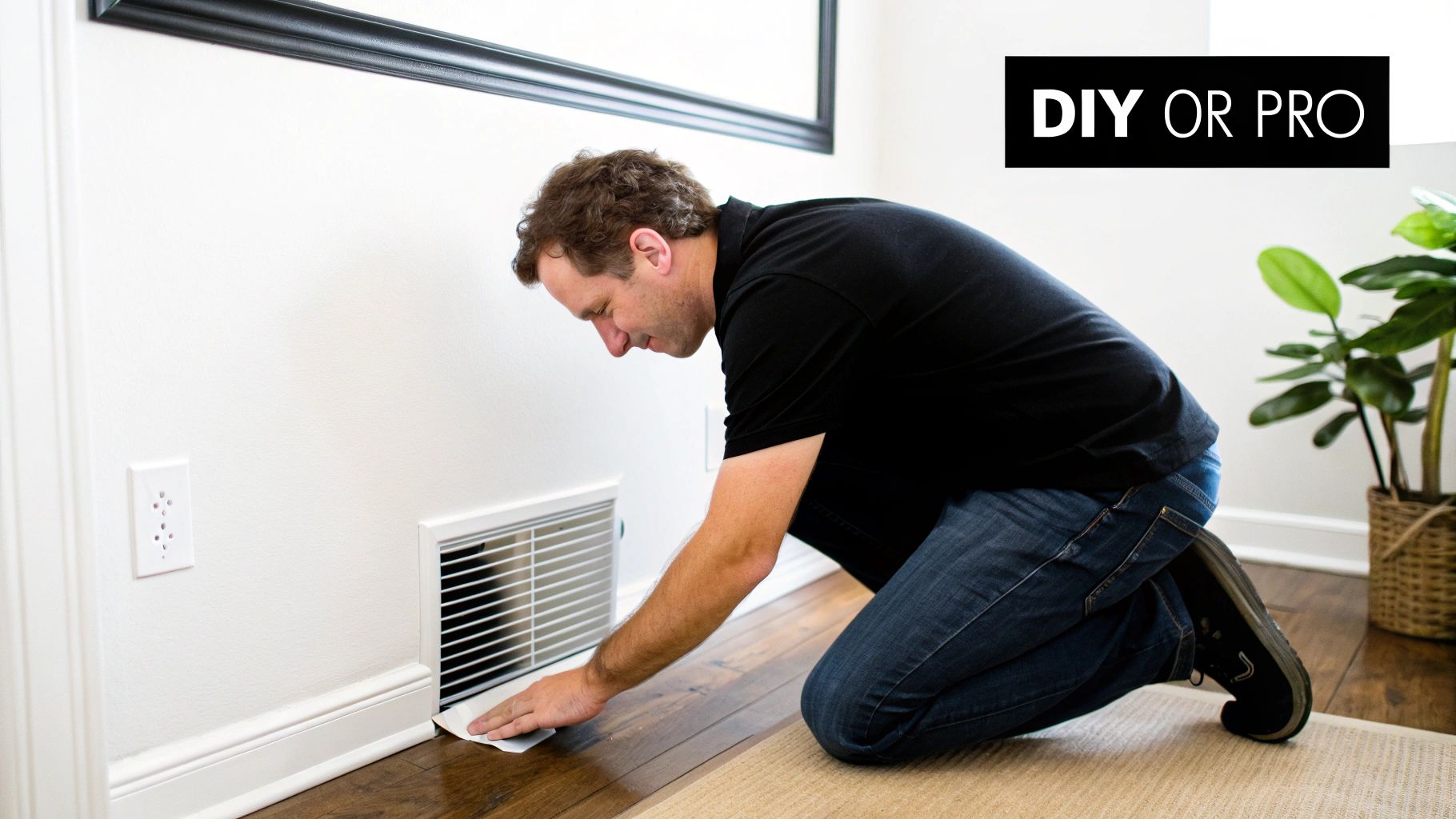
Before you start unscrewing vent covers, it pays to be honest with yourself about whether this project is a good fit. A do-it-yourself cleaning can definitely help with routine upkeep, but it has some real limitations when you compare it to a professional service. Knowing the difference is the key to getting the results you’re looking for.
A DIY cleaning works best for homes with minor dust problems—think of it as a surface-level refresh. If you've noticed little puffs of dust blowing from your supply vents or see a light film on the grilles, you’re probably a good candidate. It’s a smart way to manage seasonal dust and keep things tidy between professional cleanings.
The thing is, you have to recognize what a home vacuum and a brush kit can’t do. Consumer-grade equipment just doesn’t have the horsepower to create the negative air pressure needed to yank out and capture contaminants embedded deep within your entire duct system.
When DIY Is a Good Starting Point
Consider tackling this job yourself if you’re seeing any of these common signs:
- Visible Dust: You can easily spot a light coating of dust on the vent covers and just inside the duct openings.
- Minor Odours: A slightly stale or dusty smell wafts out of the vents when your furnace or AC first turns on.
- Recent Renovations: You've just wrapped up a small project, like painting a room, and you want to clear out the fine dust that got into the system.
In these situations, your efforts can make a real difference in the air quality of specific rooms. Just remember, the goal here is maintenance, not a complete system overhaul.
It's a common myth that a DIY job is a substitute for a professional one. In reality, it’s a complementary step—just like vacuuming your carpets regularly doesn't mean you never need a deep steam cleaning.
Red Flags That Signal You Need a Professional
On the other hand, some situations absolutely demand professional equipment and expertise. Trying to DIY these problems can actually make things worse by kicking up contaminants without actually removing them from your home. If you want to dive deeper, our guide explains in more detail if duct cleaning is necessary for your situation.
You should call in a pro if you notice:
- Signs of Mould or Mildew: Any visible dark spots or a stubborn musty smell that points to microbial growth.
- Pest Infestations: You’ve found evidence of rodents or insects, like droppings or nesting materials, in your ductwork.
- Heavy Debris: Your home just went through a major renovation, and a significant amount of drywall dust or construction debris is in the system.
- Persistent Symptoms: People in your family are dealing with ongoing allergies or respiratory issues that don't get better after your cleaning efforts.
In the end, making the right choice is all about matching your expectations with the tools you have on hand.
DIY vs Professional Duct Cleaning at a Glance
Use this quick comparison to decide if you should tackle the job yourself or hire an expert based on your specific needs and situation.
| Factor | DIY Duct Cleaning | Professional Service (Can Do Duct Cleaning) |
|---|---|---|
| Best For | Light, surface-level dust and debris near vents. Routine maintenance between professional cleanings. | Deep system-wide contamination, mould, pests, post-renovation cleanup, and improving overall air quality. |
| Equipment | Household vacuum with hose attachment, brushes, screwdriver, cleaning cloths. | Truck-mounted high-powered vacuums, compressed air tools, specialized agitation brushes, and cameras. |
| Effectiveness | Cleans only the areas you can reach (typically the first few feet of ductwork). | Cleans the entire HVAC system, including furnace components, supply/return ducts, and registers. |
| Time | 2-4 hours for a typical home, depending on the number of vents. | 3-5 hours, providing a comprehensive and thorough cleaning of the entire system. |
| Typical Cost | $50 – $100 for brushes and supplies. | Varies by home size, but provides a guaranteed result and peace of mind. |
| Safety Risks | Potential to damage ductwork or stir up contaminants without proper removal. | Trained and insured technicians who know how to work safely and effectively. |
While a DIY approach has its place for light upkeep, a professional service like ours provides a comprehensive, deep clean that you simply can't achieve with household tools.
Gathering Your Duct Cleaning Tools and Supplies
Let’s be honest, the difference between a successful DIY duct cleaning and a frustrating, dusty mess comes down to one thing: having the right gear before you start. Getting everything organized first means you can do the job efficiently without damaging your ductwork. It’s about more than just a checklist; it's about understanding why each tool is essential.
Your absolute workhorse for this project is a powerful shop-style vacuum. Forget about your regular household vacuum—it just doesn't have the suction or the hose length to pull debris from deep inside your system. You'll want a model with at least 5 peak horsepower and a long, flexible hose that can actually reach into the twists and turns of your ducts.
But suction alone isn't enough. You need tools to break loose all the gunk that’s been caked onto the duct walls for years. That’s where the right brushes come in.
Essential Cleaning Tools and Attachments
The name of the game is scrubbing the inside of the ducts without scratching or tearing them, which is a real risk with delicate flex ducts. Having a few different brushes on hand prepares you for whatever you find lurking in there.
- Rotary Brush Kit: This is your primary weapon. These kits hook up to a standard cordless drill and come with flexible rods you can extend deep into the ductwork. The spinning brush head does the hard work of scrubbing away dust and grime.
- Soft-Bristled Hand Brushes: For cleaning the register grilles and the area just inside the vent opening, a few small, soft brushes are perfect. Honestly, an old toothbrush is fantastic for getting into the detailed patterns on some grilles.
- Crevice Tool Attachment: That long, skinny attachment for your shop vac is ideal for sucking out debris from the tight corners of the register boot (that's the metal box connecting the duct to your floor or wall).
You'll find a huge range of quality and prices for these tools. I can tell you from experience that spending a little more on a decent rotary brush kit pays off big time in the final result. If you're curious, take a look at our breakdown of professional-grade duct cleaning equipment to see the kind of gear the pros rely on.
Must-Have Safety and Miscellaneous Supplies
This is a dirty job. There's no way around it. Protecting yourself from breathing in years of dust, dander, and allergens is not optional. Don't even think about pulling off the first vent cover without the right personal protective equipment (PPE).
Your Safety Checklist:
- N95 or P100 Respirator Mask: A simple cloth or paper mask is useless here. You need a certified respirator to filter the fine particles you're about to stir up.
- Safety Goggles: Debris will fall, especially when you’re working on ceiling vents. Protect your eyes.
- Durable Gloves: A good pair of work gloves will save your hands from the surprisingly sharp metal edges of vents and ductwork.
A few other small things will make the whole process go much smoother:
- Screwdriver or Cordless Drill: You'll need this to remove and reinstall all your vent covers.
- Paper Towels and Cleaning Solution: For wiping down the grilles before you put them back on.
- Painter's Tape: Use it to seal off the other vents in the room you're working in. This little trick helps maximize the vacuum's suction on the one duct you're cleaning.
- A Reliable Flashlight: It’s impossible to see your progress inside a dark duct without one.
Pro Tip: Before you start, lay down a tarp or an old sheet in a central spot. Make this your "cleaning station." As you take off each vent cover, bring it here to be cleaned. This simple step keeps you from tracking dust all over the house.
While the cost of buying these supplies is far less than a professional service, it's crucial to acknowledge the limitations of DIY tools. You're trading your time and the cost of the gear against the comprehensive, whole-system cleaning that professionals provide. For perspective, the average cost for professional air duct cleaning in Los Angeles is about $335, with hourly labour rates hitting $130 to $180. This shows how both DIY and professional services offer different kinds of value.
The Complete Duct Cleaning Process for Your Home
Alright, you've got your tools and safety gear lined up. Now for the main event: cleaning the ducts themselves. Let's walk through how to do this right. The most important advice I can give you is to be methodical and patient. Rushing this job is a recipe for a mess and poor results.
Before you touch a single vent, you have to power down your entire HVAC system. This is non-negotiable for your safety. Start at the thermostat—turn the system off there. Then, head to your electrical panel and flip the breaker that controls your furnace and air conditioner. This double-check ensures the fan won't suddenly kick on while your hands are in the ductwork.
With the power safely off, it's time to get your hands dirty.
This infographic breaks down the core tools you'll be juggling throughout the process.
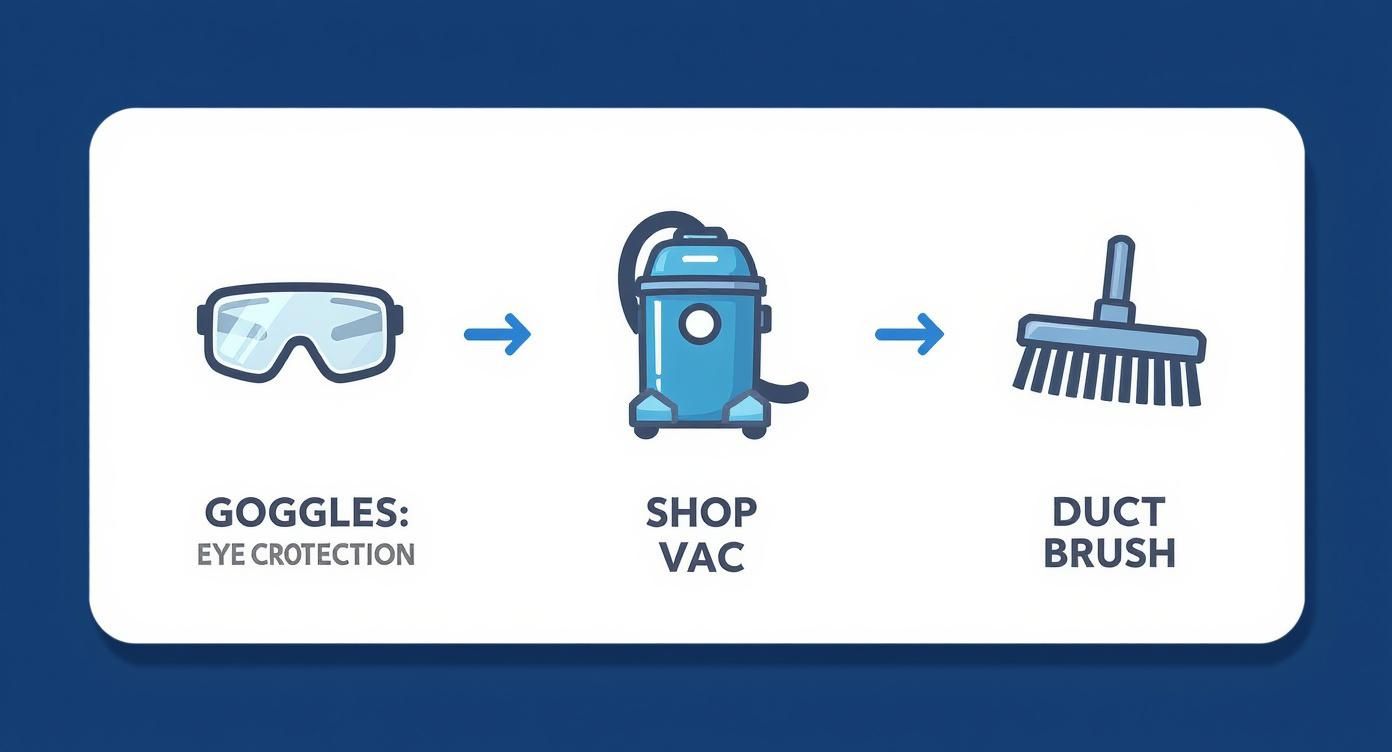
As you can see, it’s a simple but effective system: eye protection keeps you safe, the vacuum provides the suction, and the brush does the scrubbing. Each piece is critical.
Preparing and Cleaning Your Vent Covers
Start with one room and remove all the supply and return vent covers (you might know them as registers or grilles). A cordless drill will be your best friend here, saving you a ton of time compared to a regular screwdriver. Keep a small cup or magnetic tray handy to drop the screws into so they don’t vanish into your carpet.
Carry the grilles to a spot you can make a bit of a mess—a bathtub, a large utility sink, or even a tarp in the backyard works perfectly. Scrub them down with warm, soapy water and a soft brush. For the really stubborn gunk caked into the corners, an old toothbrush is surprisingly effective.
Rinse them well and set them somewhere to air dry completely. Don't be tempted to put them back while they're still damp; that's just asking for mould to start growing.
Tackling the Supply Ducts
With the grilles off, you've got a clear shot into the ductwork. Here's a pro tip: before you start on one vent, cover the other supply vents in the room with painter's tape or even just some paper towels stuffed in the opening. This little trick forces your shop vacuum to focus all its suction on the one duct you're cleaning, making a huge difference.
For each supply duct, follow this rhythm:
- First Pass Vacuum: Grab your shop vac hose and crevice tool. Reach as far into the duct opening (the "boot") as you can and suck up all the loose dust, pet hair, and whatever else has fallen in there. You'll be amazed at what you find.
- Scrub with the Brush: Now, attach the rotary brush to your drill. Feed it into the duct, extending it as far as you can comfortably control. Set your drill to a low or medium speed and move the brush back and forth, letting it agitate and break loose all the dust clinging to the duct walls.
- Final Vacuum Pass: As you slowly pull the spinning brush back out, keep the vacuum hose right behind it. This captures all the debris you just dislodged before it can fly out into the room or settle back down in the duct.
Important Takeaway: The magic is in the one-two punch of agitation (the brush) and extraction (the vacuum). Just shoving a vacuum hose down a vent only gets the top layer of dust. You need to scrub the walls to get a real clean.
Work your way through every single supply vent in your house using this method. Yes, it gets a bit repetitive, but doing it right means being consistent. For more expert tips on keeping your system running clean after the job is done, check out our guide on how to maintain your air duct systems.
Cleaning the Return Air Ducts
Once all the supply vents are done, it's time to move on to the return ducts. These are the larger grilles that pull air back to your furnace. They're often the dirtiest, since they collect air directly from your living spaces.
The cleaning process is identical: remove and wash the grille, then use the brush and vacuum combo to clean the duct. Because these ducts are wider, you'll probably need to make a few passes with the brush to scrub the top, bottom, and sides thoroughly.
Pay close attention to the large chamber where the return ducts meet the furnace, known as the return plenum. This is a major hotspot for dust buildup, especially right before the furnace filter. Give this area an extra-thorough vacuuming.
Final Steps and System Restart
You're on the home stretch. With every duct cleaned and all your vent covers sparkling and bone-dry, it's time to put everything back together. Reinstall each grille carefully—don't overtighten the screws and risk cracking the plaster or grille itself.
Go around and peel off all the painter's tape or paper towels you used to block the vents. Now for a crucial final step: go to your furnace and put in a brand-new filter. Firing up a freshly cleaned system with an old, clogged filter immediately undoes all your hard work.
With the new filter in and all grilles secured, you can finally turn the power back on. Flip the switch at the circuit breaker first, then go to your thermostat and turn the system back on. Let the fan run by itself for about 15-20 minutes. This will push out any fine, airborne dust particles that might have been kicked up, ensuring the first breath of air from your clean vents is truly fresh.
Common DIY Mistakes and How to Avoid Them
Knowing how to clean your ducts is only half the job. Knowing what not to do is where you save yourself from headaches and costly repairs. A simple mistake can quickly turn a productive Saturday into a disaster, leaving your home’s air quality worse than when you started.
Let's walk through the most common blunders I see, so you can make sure your hard work actually pays off.
Mismatching Tools and Duct Types
One of the biggest pitfalls is treating all ductwork like it's the same. It's not. Many newer homes have flexible, accordion-style ducts made from foil or plastic, and they are surprisingly easy to damage.
Taking a stiff, abrasive brush meant for old-school metal ducts and ramming it into a flex duct is a recipe for disaster. You'll tear the delicate material, creating air leaks that kill your HVAC system's efficiency and pull dusty, unfiltered air from your attic right into your living room.
Always start by figuring out what you’re working with. If you can get a look at the ducts in your basement or attic, it’s usually obvious. Metal ducts are rigid and smooth; flex ducts are ribbed and bendable.
For flex ducts, you absolutely need a soft-bristled rotary brush. These are made specifically to scrub gently without tearing the liner. If you hit a tight corner, don't force it. Pull the brush back and work it in slowly. Brute force is the fastest way to puncture your ductwork.
The goal here is to loosen debris, not to power-wash the inside of your ducts. A gentle but persistent approach with the right tool will always give you better, safer results.
Creating a Bigger Mess Than You Started With
Here’s another classic mistake: dislodging all that gunk without a plan to capture it. If you just start scrubbing away without a powerful vacuum running at the same time, you aren't really cleaning—you're just redecorating with dust.
All those fine particles you knock loose will go airborne, eventually settling on your furniture, in your lungs, or deeper down the line in your HVAC system.
This is why the agitation and extraction method is so critical. Your vacuum hose needs to be right there, sucking up the debris as your brush sets it free. Without that constant suction, you're just kicking up a dust storm inside a closed system, which can make things much worse for anyone with allergies.
Overlooking the Final Details
Don't stumble at the finish line. A couple of small oversights can undo hours of hard work in an instant.
- Forgetting a new filter: Firing up your HVAC system with the old, clogged furnace filter still in place is a huge no-no. It’s like washing your car and then immediately driving it down a muddy road. Always finish the job by popping in a brand-new filter.
- Improperly sealing vents: When you put your vent covers back on, make sure they sit flush against the wall or floor. Any gaps can create annoying whistling sounds and, worse, pull unfiltered air from behind your walls into the room.
Thinking through the entire scope of a home maintenance project is key to avoiding these kinds of mistakes. For instance, with other jobs like solar panel maintenance, you'll find that expert guides on cleaning tasks and common mistakes stress the same thing: preparation prevents problems.
It's also smart to know what the pros charge, so you can weigh the real value of your DIY time. Based on 2025 data, professional air duct cleaning typically runs between $350 to $600. Tackling bigger issues like mold ($600+) or even just a clogged dryer vent ($120–$180) will add to that. Knowing these numbers helps you decide if your effort is worth the savings versus getting a guaranteed, comprehensive clean from a professional service.
Knowing When to Call a Duct Cleaning Professional
The hallmark of a great DIY-er isn't just knowing how to do a job—it's knowing when not to. You can absolutely tackle the surface-level dust in your vents, but some jobs need a different level of muscle and expertise.
Recognizing these limits isn't admitting defeat; it’s making a smart call for your home and family's health.
Let's say you've done everything right—you’ve vacuumed every vent and scrubbed every grille, but that weird musty smell just won't go away. Or maybe you're still seeing puffs of dust when the furnace kicks in. That’s a telltale sign that the real problem is hiding deeper inside the ductwork, far beyond where your shop vac can ever hope to reach.
Red Flags That Demand Professional Attention
Some discoveries should be an immediate full stop on your DIY project. These aren’t just signs of a dirty system; they're potential hazards that your tools could accidentally make worse by stirring them up without proper, high-powered containment.
If you come across any of the following, it’s time to put down the tools and pick up the phone:
- Visible Mould or Mildew: Any dark, fuzzy, or splotchy growth inside a vent is a serious warning. Trying to clean this yourself can launch millions of mould spores into the air you breathe.
- Evidence of Pests: Finding rodent droppings, chewed-up nesting materials, or dead insects is a clear sign of an infestation. The waste left behind carries bacteria and viruses that require professional-grade sanitization.
- Post-Renovation Debris: Just finished a big renovation? That fine drywall dust and sawdust gets everywhere, settling deep into your ductwork. It's often too heavy and dense for a standard shop vac to pull out effectively.
- Tricky or Old Ductwork: Older homes with complex, long, or fragile ducts are a challenge. A professional has the right equipment to navigate these systems without causing cracks or leaks.
In these situations, trying to save a few dollars can backfire badly. The right move is always to hand it over to a certified team who deals with this stuff every day.
Think of it this way: a DIY cleaning is maintenance, but a professional cleaning is a full-on system restoration. When you're dealing with contaminants like mould, you need a restoration, not just a quick cleanup.
The Power of Professional Equipment
The real game-changer between a DIY job and a professional one is the equipment. Your shop vac is great for the first few feet, but the pros bring in the heavy artillery.
The industry standard is a massive, truck-mounted vacuum that creates powerful negative air pressure throughout your home’s entire duct system. This incredible suction, combined with specialized high-pressure air tools and rotating brushes, ensures every bit of dislodged dust, dander, and debris is pulled straight out of your house and into a sealed containment unit. There’s just no way to match that level of clean with store-bought tools.
Working with a trusted air duct cleaning company means you get the benefit of this powerful, specialized technology.
An Investment in Your Home’s Health
Hiring a professional is more than just paying for a service; it's an investment in your home's air quality and your family's well-being. Yes, there's a cost, but it comes with the assurance that the job is done right.
For instance, 2025 data from San Francisco shows the average professional duct cleaning is around $347, though this can vary based on your home’s size and the type of ductwork. You can read more about regional duct cleaning costs on angi.com. That price covers not just the technicians' time but also the use of equipment that delivers a truly deep clean.
When you hit a problem that’s bigger than a weekend project, the team at Can Do Duct Cleaning is here to help. Our certified technicians have the right gear and the right experience to get your ductwork back to a clean, healthy state.
Common Questions About Duct Cleaning
Even with a detailed walkthrough, you probably still have a few questions. That's totally normal. We've put together some of the most common things homeowners ask us, giving you straight answers so you can feel confident about what you're doing.
Knowing the "why" and "when" is just as crucial as the "how." It helps you make the right call for your home's air and your HVAC system's health.
How Often Should I Really Clean My Air Ducts?
For most homes, a deep clean every 3 to 5 years is a good benchmark. It keeps the usual buildup of dust and allergens from getting out of hand. But this isn't set in stone; some situations mean you'll need to do it more often.
You might want to shorten that to every 2 or 3 years if you're dealing with any of these:
- You’ve got pets leaving fur and dander everywhere.
- Someone in your house struggles with bad allergies, asthma, or other breathing issues.
- You've just finished a big home renovation that kicked up a ton of dust.
- Someone smokes inside the house.
For a deeper dive into finding the right schedule for your home, our guide explains how often your ducts should be cleaned.
Can I Just Use My Regular Household Vacuum?
It's tempting, I get it. But your standard household vacuum is really only good for cleaning the surface of your vent covers. It just doesn't have the power or the hose length to pull gunk out from deep inside your ductwork. To do a proper DIY job, you need a powerful shop-style vacuum at a minimum.
Professionals like us use massive, truck-mounted vacuum systems. They're worlds more powerful than anything you can buy at a hardware store. That power is what creates the negative air pressure needed to pull contaminants out of the entire system without blowing them back into your house.
What Are the Red Flags That My Ducts Need Cleaning Now?
Sometimes, your house will tell you loud and clear that your ducts need help—and not on a routine schedule. These are signs of bigger problems that can affect your health and your HVAC system.
Keep an eye out for these urgent warnings:
- Visible Dust Clouds: See a puff of dust shoot out when your furnace or AC kicks on? That's a huge sign your ducts are overloaded.
- A Lingering Musty Smell: If you’ve got a damp, mouldy odour that you can’t track down, it’s often coming from your ductwork.
- Visible Mould: See any dark, splotchy spots on or just inside your vents? That needs immediate, professional attention. Don't touch it.
- Signs of Pests: If you find droppings, nesting materials, or dead insects in your ducts, you need a professional to clean and sanitize the system.
These are not DIY situations. They require serious equipment to handle safely.
Is Duct Cleaning Actually Worth the Effort?
Yes, absolutely. Whether you invest your time in a DIY clean or hire a pro, the payoff is real. Getting rid of years of caked-on dust, pollen, and pet dander makes a noticeable difference. It's all about improving the importance of indoor air quality.
A clean system is also an efficient system. When your furnace fan isn't working overtime to push air through clogged ducts, it uses less energy. That can translate to lower hydro bills and a longer life for your HVAC unit.
Tackling a DIY duct cleaning is a great project, but when you run into stubborn grime or signs of mould, it’s time to call in the pros. At Can Do Duct Cleaning, our team uses high-end equipment to get every last corner of your system clean and sanitized. We leave you with cleaner air and total peace of mind. Contact us today to book a consultation and feel the difference for yourself.