
A heat recovery ventilator, or HRV, is a game-changer for modern homes. In simple terms, it's an advanced ventilation system that pulls fresh, clean air into your house while pushing out stale, polluted air.
But here’s the clever part: as it exhausts the old air, it captures the heat and uses it to warm up the fresh, cold air coming in. It’s a brilliant way to keep your home healthy without racking up huge heating bills, especially during our tough Canadian winters.
Why Your Modern Home Needs to Breathe
If you live anywhere in Canada, you know the winter drill. We seal our homes up tight to keep the warmth in and the bitter cold out. The problem? We also trap all the stale, polluted air inside with us.
Today's homes are built to be incredibly energy-efficient, which means they're practically airtight. They can't breathe on their own.
That’s where a heat recovery ventilator (HRV) comes in. Think of it as a set of lungs for your house. It ensures a constant flow of fresh air, so your furnace doesn't have to work overtime just to heat up freezing air from outside. An HRV integrates with your HVAC system to significantly boost your indoor air quality and lower your heating costs.
The Problem With Airtight Homes
Modern building codes are great for energy conservation, but they create an unintended side effect: poor indoor air quality. When there's no way for air to circulate naturally, all sorts of contaminants get stuck inside your home.
- Trapped Pollutants: Things like cooking, cleaning products, and even new furniture release VOCs (volatile organic compounds) that have nowhere to go.
- Lingering Odours: Ever notice that cooking smells stick around forever? That’s stale air at work.
- Excess Moisture: Steam from showers and boiling pots can lead to condensation on your windows, which is a perfect breeding ground for mould. You can learn more about tackling these issues in our guide to improving air quality at home.
An Elegant Solution for Canadian Climates
Here in Canada, where winter hits hard, an HRV is your silent partner in energy efficiency. It handles the whole-home air exchange, though it's still smart to have other ventilation solutions, like a proper range hood in your kitchen, to tackle pollutants at their source.
In fact, for Canada's climate, Natural Resources Canada requires ENERGY STAR certified HRVs to recover a minimum of 65% of the heat from outgoing air at 0°C. It’s a testament to how crucial this technology is for building comfortable, efficient homes. You can dig into the official Canadian government specifications to see just how high the standards are.
How an HRV Works: The Lungs of Your Home
Ever wish your house could take a deep breath of fresh air and exhale all the stale, stuffy air—all without throwing your energy bill for a loop? That's exactly what a heat recovery ventilator (HRV) is designed to do. The simplest way to picture it is as your home’s own set of lungs, constantly managing a balanced exchange of air.
The system works with two separate air streams that never actually touch, making sure old pollutants don't get mixed back into your fresh air supply. One fan pulls damp, stale air out of places that generate the most moisture, like your kitchen, bathrooms, and laundry room. At the very same time, another fan draws in an equal amount of fresh, clean air from outside.
The Magic Inside the Heat Exchange Core
The real genius of an HRV lies within a component called the heat exchange core. Think of it as a highly efficient "heat magnet." As the warm, stale air from inside your house is on its way out, it has to pass through this core.
This core is designed to pull the heat from that outgoing air right before it’s lost to the great outdoors. That captured warmth is then immediately transferred over to the incoming stream of cold, fresh air. By pre-warming the fresh air, your furnace doesn’t have to work nearly as hard to get it up to a comfortable temperature.
This clever exchange continuously boots out indoor pollutants like dust, allergens, and VOCs without letting all that precious heat you've paid for escape. It’s a remarkably smart and efficient way to keep your home’s air healthy.
This diagram breaks down how stale air gets swapped for fresh, pre-heated air.
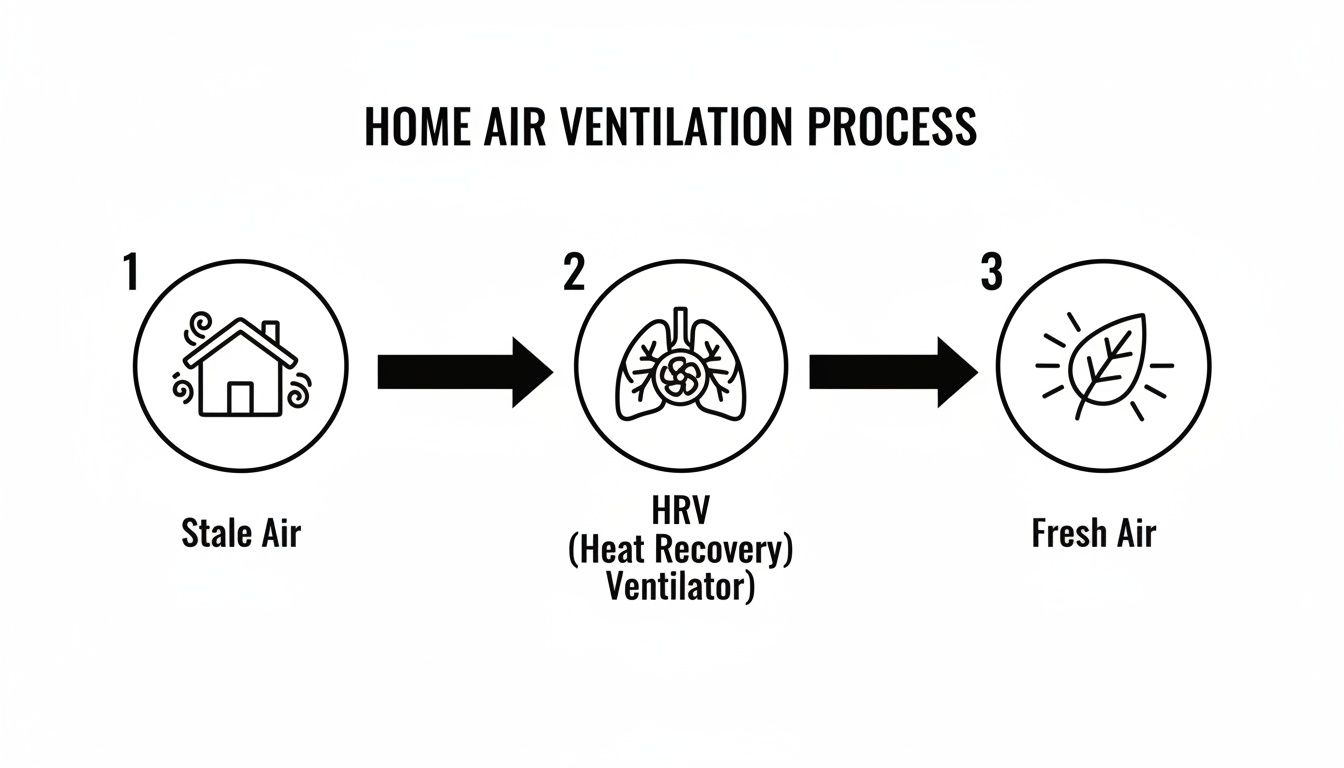
You can see the air’s journey—from inside your home, through the HRV's heat exchange process, and back in as fresh, tempered air.
Real-World Performance in Canadian Winters
This isn't just theory; this technology proves its worth in the thick of a harsh Canadian winter. Just imagine walking into your home on a bitter prairie night when it’s -26.9°C outside. The air inside is still fresh and warm, but your energy bills haven’t shot through the roof.
In a real-world Canadian study, an HRV system maintained an average sensible recovery efficiency (SRE) of 72%. It delivered fresh air 98% of the time over a two-month period, meaning it successfully recaptured and reused almost three-quarters of the heat from the exhaust air. You can dig into the specifics in this Canadian HRV performance research if you’re curious.
Of course, this whole process depends on clear pathways for the air to travel. The HRV is connected to your home through a network of ducts, which are like its arteries and veins.
Key Takeaway: An HRV is far more than just a fan—it's an intelligent air exchanger. By keeping air streams separate while transferring heat between them, it delivers non-stop fresh air with very little energy loss. That makes it a true cornerstone of any healthy, efficient modern Canadian home.
Keeping those ducts clean and clear is absolutely essential for your HRV to do its job properly. That's why the condition of your home's ductwork is directly tied to your ventilation system's performance. You can learn more about the importance of well-maintained ductwork and ducting systems in our other guide. At the end of the day, an HRV is only as good as the ducts that serve it.
Key Benefits for Canadian Homeowners
Getting a heat recovery ventilator isn't just about bolting another gadget to your wall; it’s about making a real change to the air you breathe every day. For homeowners across Canada, the difference is immediate and obvious, especially with our wild seasons. An HRV delivers three huge wins you'll feel right away.
These perks work together to turn your home into a healthier, more comfortable, and more affordable place to live.
A Healthier Home Through Cleaner Air
Believe it or not, the air inside our modern, well-sealed homes can be way more polluted than the air outside. An HRV tackles this head-on by constantly pushing out the stale, contaminated indoor air and pulling in fresh, filtered air from outdoors.
This cycle gets rid of a whole host of airborne nasties, including:
- Allergens like dust, pollen, and pet dander that can make life miserable for anyone with respiratory issues.
- Volatile Organic Compounds (VOCs) which are chemical fumes that off-gas from new furniture, cleaning supplies, and even paint.
- Lingering odours from last night’s fish dinner or your teenager’s hockey bag that just won’t seem to go away.
By keeping the air moving and fresh, an HRV creates a much safer breathing environment for your family. It cuts down on the concentration of pollutants that can impact everyone's health over time.
Lower Energy Bills and Greater Efficiency
Here’s the part everyone loves: an HRV has a direct impact on your wallet. Think about a freezing Canadian winter. Your furnace is chugging away, working hard to keep you warm. Every time you crack a window for a bit of fresh air, you’re literally throwing that expensive heat outside.
An HRV is the perfect solution. It cleverly recovers up to 80% of the heat from the stale air it’s pushing out and uses it to warm up the fresh air coming in.
This means your furnace doesn't have to work nearly as hard to get that new air up to temperature. The result? A noticeable drop in your energy use and lower monthly bills. It’s one of those smart home upgrades that actually pays for itself.
Superior Moisture and Condensation Control
Ever notice that annoying condensation building up on your windows in the winter? That’s a telltale sign of too much humidity trapped inside your home, which can lead to much bigger problems like mould and mildew. It’s a common headache in both new, airtight houses and older, renovated homes across Canada.
An HRV is your best weapon in this fight. It actively targets and expels moist, stale air from places like bathrooms and kitchens before it can cause trouble. This helps keep your indoor humidity levels balanced and healthy, protecting your home’s structure from moisture damage and making the whole house feel more comfortable all year.
If you'd like to dig deeper into how they work and what they can do, you can find more on heat recovery ventilation systems.
Choosing Between an HRV and an ERV for Your Climate
Once you start looking into home ventilation, you’ll quickly come across two acronyms: HRV and ERV. They sound similar, and they are, but one key difference makes one a clear winner for our Canadian climate.
Think of them as cousins. A Heat Recovery Ventilator (HRV) is designed to transfer just the heat from the stale outgoing air to the fresh incoming air. Its cousin, the Energy Recovery Ventilator (ERV), transfers both heat and humidity. That single difference in how they handle moisture is everything.
Why HRVs Are the Clear Winner for Canadian Winters
For anyone living in Canada—from Vancouver to St. John's—the HRV is almost always the right call. Our winters are more than just cold; they're incredibly dry. The moment your furnace kicks in, it starts baking out what little moisture is left in the air. The result? That familiar winter feeling of dry skin, a scratchy throat, and static shocks every time you touch a doorknob.
This is where an HRV becomes your best friend. Because it only moves heat, it cleverly holds onto the valuable humidity your home generates from daily life, like cooking, showering, or even just breathing. It helps keep your indoor air from becoming painfully dry, striking a much more comfortable balance.
An ERV, on the other hand, would actively work against you during a classic Canadian winter. It would pull that precious little bit of moisture out of your home along with the stale air, making an already dry house feel like a desert.
When an ERV Makes More Sense
So, is there ever a good time to choose an ERV? Absolutely, just not usually here. ERVs are superstars in climates with oppressively hot and humid summers, like you’d find in the southern United States. In those places, an ERV does a brilliant job of stopping sticky outdoor humidity from getting inside an air-conditioned home.
For a straightforward comparison, we've put together a simple table to help you see the difference at a glance.
HRV vs ERV At a Glance for Canadian Homeowners
This quick chart breaks down the core functions of each system, making it easy to see why one is built for our winters and the other is not.
| Feature | Heat Recovery Ventilator (HRV) | Energy Recovery Ventilator (ERV) |
|---|---|---|
| Primary Function | Transfers heat only | Transfers both heat and moisture |
| Ideal Climate | Cold climates with dry winters (most of Canada) | Hot climates with humid summers |
| Winter Benefit | Helps retain essential indoor humidity | Can make dry indoor air even drier |
| Summer Benefit | Provides fresh air without unwanted heat | Helps dehumidify incoming fresh air |
Ultimately, the choice comes down to managing moisture. For keeping your home comfortable through a long, dry Canadian winter, the HRV is the undisputed champion.
If you’d like to get into the nitty-gritty details, we cover more on the specific roles of ERV and HRV ventilation systems in our complete guide.
Maximizing Performance with Proper Maintenance
Think of your new heat recovery ventilator like a high-performance car. You wouldn't expect it to run well without a proper tune-up, right? The same logic applies here. An HRV's incredible benefits hinge on two things: getting the installation right from the start and keeping up with some simple maintenance.
First things first, professional installation isn't just a suggestion—it's essential. A certified technician does more than just hang the unit on the wall. Their main job is to ensure the system has balanced airflow. This is a critical concept. It means the volume of fresh air pulled into your home perfectly matches the volume of stale air being pushed out.
If that balance is off, you'll run into problems. The system can create weird pressure zones in your house, put extra strain on the HRV’s motors, and completely cancel out the energy savings you were hoping for. A proper install is the foundation for everything else.
Your Role in Routine Upkeep
Once it's installed, you have a small but important role to play. The good news is, homeowner maintenance is pretty straightforward and mostly comes down to the filters. These filters are the gatekeepers, stopping dust, pollen, and other gunk from getting into your home.
Here are a few quick tasks to keep your HRV happy:
- Regular Filter Cleaning: Every one to three months, pop the filters out and give them a gentle vacuum with a brush attachment. It takes just a few minutes and keeps air flowing smoothly.
- Annual Core Inspection: Once a year, take a look at the heat exchange core. On most newer models, you can vacuum it right in place to get rid of any fine dust buildup.
- Seasonal Checks: As the seasons change, especially here in Canada, make a habit of checking the intake and exhaust vents on the outside of your house. Make sure they’re clear of snow, leaves, or anything else that could block them.
A few minutes of your time every so often will make a huge difference in how well your HRV performs.
Why Your Ductwork Is the Most Important Piece of the Puzzle
Now, let's talk about the unsung hero of your ventilation system: the ductwork. Homeowner maintenance is great, but it's only one piece of the puzzle. Your ducts are the lungs of your home, carrying stale air out and delivering fresh, clean air to every single room.
If those pathways are clogged with years of accumulated dust, allergens, and debris, your brand-new HRV is trying to breathe through a dirty straw.
A dirty duct system chokes your HRV, drastically reducing its efficiency and air-purifying capabilities. The system has to work much harder to move air, which increases energy consumption and can lead to premature wear and tear on the unit’s fans and motors.
This is exactly why professional maintenance is so crucial. To get the clean air and energy savings you paid for, your ducts have to be clean. A professional duct cleaning ensures the entire network is clear, letting your HRV do the job it was designed for. You can learn more about what's involved in our guide to cleaning ventilation systems.
Signs Your Home Needs an HRV System
How can you tell if your home is quietly suffocating? It’s a real problem, especially in modern, airtight houses where homeowners often miss the subtle clues that their indoor air has gone stale. An HRV isn't just a fancy gadget for new builds; it's a vital solution for any home showing signs of poor ventilation.
These symptoms often masquerade as everyday household annoyances, but they're usually pointing to a much bigger issue. If you find yourself nodding along to the signs below, it might be time to look into what a heat recovery ventilator can do for you.

Common Warning Signs of Poor Ventilation
Recognizing you have a problem is the first step. Keep an eye out for these tell-tale signs that your home is struggling to breathe:
- Persistent Condensation: Do your windows "sweat" or frost up on the inside all winter long? That’s a classic symptom of excess moisture being trapped inside your home.
- Lingering Odours: If the smell of last night’s fish dinner is still hanging around by breakfast, your air isn't circulating properly to clear things out.
- General Stuffiness: Does the air in your home often feel heavy, stale, or just plain stuffy? If you feel the constant urge to crack a window even when it's freezing outside, that's a sign.
- Visible Mould or Mildew: Finding mould spots in bathroom corners, closets, or along window sills is a serious red flag that humidity levels are dangerously high.
These issues are particularly common in homes that have had energy-efficiency upgrades. While new windows and insulation are great for your heating bill, they can seal a home so tightly that pollutants and moisture get trapped right inside with you. You can also check out our guide on other signs that indicate a need for air duct cleaning, as your home's ventilation and ductwork health go hand-in-hand.
An Investment in Health and Home Value
As Canadian homeowners deal with rising energy costs—with households now spending around $2,500 annually on heating—a heat recovery ventilator becomes a seriously practical investment. The Canadian market for these systems is growing fast, largely thanks to new building codes requiring proper ventilation in today's airtight homes.
With a lifespan of up to 15 years and the potential for 30% heating savings, an HRV often pays for itself long before it needs replacing. You can find more insights on the HRV market growth on grandviewresearch.com.
Your Top Questions About Heat Recovery Ventilators
Even after getting the basics down, homeowners usually have a few practical questions. Let's tackle some of the most common ones we hear to clear up any lingering doubts you might have about adding an HRV to your home.
How Loud Are They?
Modern HRVs are surprisingly quiet. When a system is installed and balanced correctly, most people compare the sound to a new refrigerator—it’s just a low, consistent hum that fades into the background.
If you ever hear loud or strange noises, that’s usually a red flag. It typically points to an installation mistake or a sign that the unit needs a good cleaning or maintenance check.
Do I Need to Run It All Year?
For the best results, you absolutely should. The heat-saving magic of an HRV is most noticeable during our chilly winters, but its air-filtering job is a year-round benefit.
During the summer, it keeps pushing out stale, pollutant-filled air and pulling in fresh air from outside. This constant exchange means your family breathes healthier air, no matter what the season. Many models even have different settings to optimize for summer or winter operation.
Think of it this way: the main job of an HRV is continuous ventilation. Running it consistently is what keeps your home's air quality high and prevents that buildup of moisture and pollutants that happens in every season.
Does an HRV Replace My Furnace or AC?
Not at all. An HRV is a team player, designed to work right alongside your existing forced-air furnace and air conditioner.
It physically connects to your home's ductwork, using those same channels to deliver fresh, pre-warmed (or pre-cooled) air throughout your house. This setup creates a complete home comfort system: your HVAC equipment handles the heavy lifting of heating and cooling, while the HRV takes care of the all-important task of ventilation.
A heat recovery ventilator is a fantastic investment, but it can only do its job if the air has a clear path to travel. To get the fresh air and energy savings you're paying for, your ductwork needs to be clean. For expert duct cleaning services that will protect your HRV investment, trust the experienced team at Can Do Duct Cleaning. Learn more about our services and get a free estimate today!

