
When it comes to vent cleaning, the number one question we get is, "How often?" It's a great question, but the answer isn't one-size-fits-all.
As a starting point, you can think of it like this: your home's air ducts should be cleaned every 3-5 years, while your dryer vent needs attention at least once a year. But these are just baseline numbers. The real schedule depends entirely on your home and lifestyle.
Understanding Vent Cleaning Schedules For Your Canadian Home
Think of your home's ventilation system as its lungs. To breathe easy, you need to keep them clean. Here in Canada, a rigid cleaning schedule just doesn't cut it because so many different factors come into play. Things like having pets, dealing with bad seasonal allergies, or kicking up dust during a home renovation can seriously load up your ductwork with debris.
This means a home in Calgary with two golden retrievers will need a completely different schedule than a pet-free condo in downtown Vancouver. Likewise, if you've just finished renovating your basement in Montreal, all that construction dust needs to be dealt with right away, not in a few years.
This simple flowchart can help you figure out if you need to clean your vents more often than the standard recommendation.
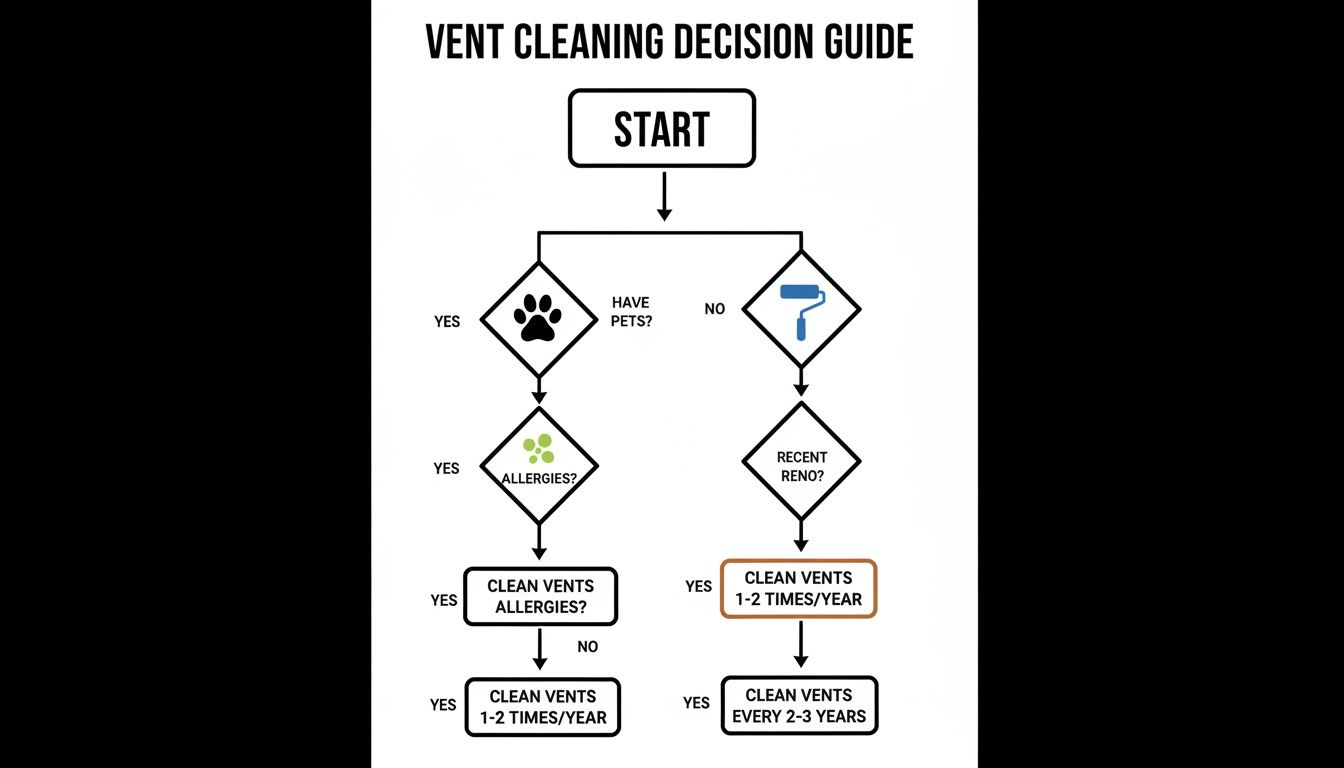
This visual guide is a quick way to see how common household situations—like having pets, allergies, or recent renovations—impact your ideal cleaning frequency.
Recommended Vent Cleaning Intervals For Canadian Homes
To make things easier, we've put together a quick reference table. It breaks down how often you should be thinking about air duct and dryer vent cleaning based on your specific household situation.
| Household Condition | Air Duct Cleaning Frequency | Dryer Vent Cleaning Frequency |
|---|---|---|
| Average Home (No Pets, No Allergies) | Every 3-5 years | Annually |
| Home with Pets (1-2) | Every 2-3 years | Annually |
| Home with Multiple Pets (3+) | Every 1-2 years | Every 6-12 months |
| Residents with Allergies or Asthma | Every 2-3 years | Annually |
| Post-Renovation or New Construction | Immediately after work is complete | Check for construction debris |
| Home with Smokers | Every 2-3 years | Annually |
This table provides a solid guideline for most Canadian homes, but always remember to keep an eye out for signs that your vents might need cleaning sooner.
Why Your Home’s Needs Are Unique
Living in Canada means dealing with our wild seasonal swings, from sticky, humid summers to bone-dry winters. This puts a unique strain on our HVAC systems. For most households across the country, getting your air ducts cleaned every 3-5 years is a smart move that keeps your system running smoothly and your air quality high.
This isn't just our opinion; it's a guideline backed by industry leaders like the National Air Duct Cleaners Association (NADCA).
Of course, duct cleaning is just one piece of the puzzle. To get the full picture of your system's health, it’s also helpful to know how often you should service your air conditioner.
Ultimately, the best approach is a cleaning plan tailored specifically to your home. If you want to learn more about how we handle things, check out our guide to https://candoductcleaning.com/vent-cleaning-toronto-2/.
Why Your Canadian Home's Vents Get Dirty Faster
Ever feel like you’re fighting a losing battle with dust? You clean every surface, and just a few days later, a fresh layer has already settled. The culprit is often hiding where you can’t see it: inside your home’s ventilation system. And if you live anywhere in Canada, our diverse local environments are working overtime to clog up those vents.
Here in Canada, we get the full experience of four distinct seasons. That constant swing from one extreme to the other puts a unique strain on your home’s air quality, which is why a one-size-fits-all cleaning schedule rarely works for homeowners here.
The Seasonal Strain on Your Ductwork
It all starts with our sticky, humid summers. When you crank up the air conditioning, that warm, moist air gets pulled into your cool, dark ductwork—creating the perfect environment for mould and mildew to thrive. Before you know it, you’re dealing with a musty smell every time the AC kicks in.
Then, winter arrives. The air turns bone dry, and static electricity becomes your enemy, making dust, pet dander, and other debris cling to everything, especially the inside of your vents. Your furnace then happily circulates those trapped particles all season long, which can be a nightmare for anyone with allergies or asthma.
Think of your ductwork as your home's respiratory system. In Canada, that system is constantly battling seasonal extremes—summer humidity invites mould, while winter dryness helps dust settle in. Keeping these airways clear is essential for a healthy home.
This back-and-forth is particularly hard on homes across the country, causing contaminants to build up much faster than in places with a more stable climate.
Urban and Suburban Challenges
On top of the weather, our bustling urban landscapes throw another wrench in the works. Life across Canada is busy, and all that activity contributes directly to the gunk accumulating in your home.
- Construction Dust: With new developments popping up all over the country, especially in fast-growing regions, fine particles from drywall, wood, and concrete easily find their way into your home and settle deep inside your ductwork.
- High Pollen Counts: We love our green spaces, but Canada’s lush environment means sky-high pollen counts every spring and fall. Your HVAC system inhales these allergens right along with the fresh air, where they collect and get blown back into your living space.
- City Pollutants: Living near major highways or even busy city streets means dealing with a constant influx of traffic-related pollutants and fine particulate matter. Over time, this grime builds up a sticky residue inside your vents, tanking your indoor air quality.
When you add it all up, it’s clear why homes here face a unique challenge. For Canadian homeowners, staying on top of vent cleaning isn't just a chore—it's a must-do for keeping your home healthy, clean, and running efficiently.
How Often to Clean Air Ducts and HVAC Systems
Ever think about what’s lurking in the hidden network of passages behind your walls? Your home's air ducts are like its lungs, constantly circulating the air you and your family breathe. When they get clogged with dust, pet dander, and other gunk, your whole home's health can take a hit. So, what’s the magic number for getting them cleaned?
The general rule of thumb, backed by industry groups like the National Air Duct Cleaners Association (NADCA), is to get your air ducts professionally cleaned every 3 to 5 years. That’s a solid baseline for the average home. But let’s be honest—"average" is a fuzzy term, especially here in Canada where our homes and lifestyles can seriously speed up that timeline.
When to Shorten Your Cleaning Schedule
Some situations basically put your ductwork on a fast track to getting dirty. If any of these sound familiar, you'll want to think about a more frequent cleaning schedule, probably bumping it up to every 2 to 3 years, to keep your air fresh and your system running smoothly.
- You Have Pets: We love our furry family members, but their fur, dander, and whatever they track in from the outside are major culprits for duct buildup. The more pets you have, the more often you’ll want to clean.
- Family Members Have Allergies or Asthma: For anyone sensitive to airborne irritants, clean ducts are a must. A thorough cleaning pulls out triggers like dust mites, pollen, and mould spores that can make respiratory issues a nightmare.
- You've Recently Renovated: Construction is a dust storm. That fine powder from drywall, sawdust, and other materials doesn't just disappear—it settles deep inside your ductwork and will keep circulating for years unless it's professionally removed.
- Someone in the Home Smokes: Tobacco smoke leaves behind a sticky, smelly film inside the ducts. This residue acts like flypaper for every bit of dust and debris passing through, creating a stubborn buildup that’s tough to ignore.
The Financial Cost of Dirty Vents
Putting off a duct cleaning doesn't just mess with your air quality; it can also put a real dent in your wallet. When your ducts are clogged, it's like trying to breathe through a straw. Your furnace and air conditioner have to work way harder to push air through those narrowed passages. All that extra strain can lead to a surprise spike in your hydro bill and cause expensive parts to wear out way too soon.
According to data from Canadian HVAC pros, dirty, uncleaned vents can inflate your energy bills by 20-30%. For a typical Canadian home, that’s hundreds of dollars tacked onto your utility bills each year. This is especially true during heavy pollen seasons in the spring when dust and allergens really narrow those ducts.
At the end of the day, you're paying more money for less comfort. Staying on top of your system's health with a comprehensive HVAC preventive maintenance checklist can help you figure out the right service schedule. Think of proactive cleaning as a smart investment in your family’s health and your home's financial well-being. To get a better idea of what the process involves, check out our guide on the essentials of air duct cleaning.
The Forgotten Fire Hazard in Your Laundry Room
When we think about home ventilation, our minds usually go straight to the HVAC system. But there's another critical pathway, tucked away in your laundry room, that often gets ignored until it's a serious problem: the dryer vent.
While a dirty air duct might ding your utility bill, a clogged dryer vent is a genuine safety risk. That’s why the standard recommendation for most households is an annual professional dryer vent cleaning.
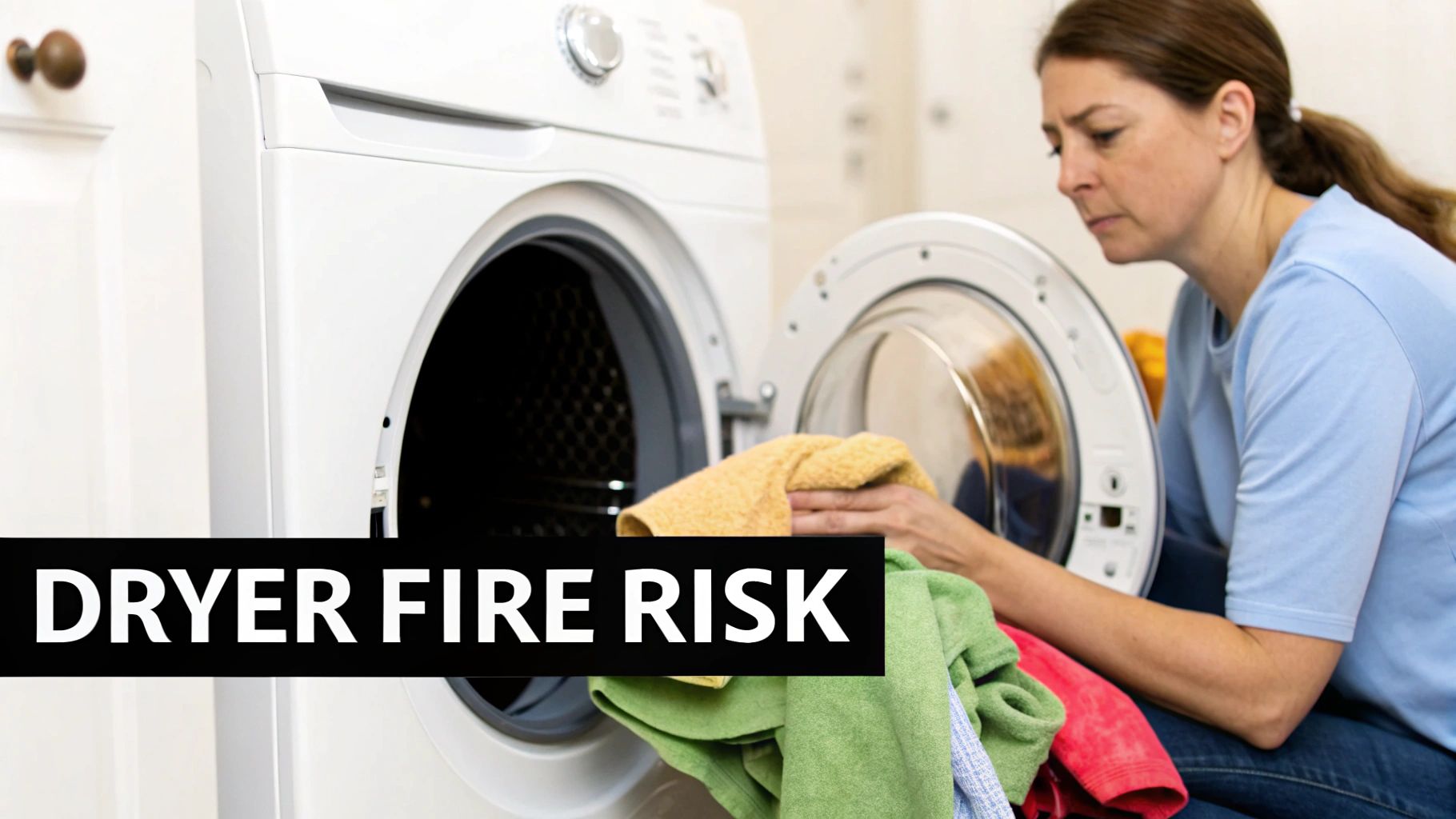
Picture this: a busy family notices their laundry is taking forever to dry. What starts as a simple annoyance—having to run the dryer for a second or even a third cycle—is actually a massive red flag. With every extra cycle, hot, moist air is being forced through a duct packed tight with highly flammable lint. It's the perfect recipe for a house fire.
From Annoyance to Emergency
This small inconvenience is one of the most common signs that you have a dangerous blockage. As lint builds up, it traps heat and restricts airflow. This not only forces your dryer to work harder and run longer, but it dramatically increases the chance of that trapped lint igniting.
Dryer fires are a leading cause of household fires in Canada. A simple annual cleaning is one of the most effective preventive measures you can take to protect your home and family from this hidden danger. It's not just about efficiency; it's about essential home safety.
The real danger is how slowly this hazard builds. It’s easy to miss the signs until something serious happens. Knowing what to look for is the key to stopping a potential disaster in its tracks.
Red Flags Your Dryer Vent Needs Cleaning Now
Your dryer will almost always give you hints that it's struggling. If you spot any of the signs below, it’s time to stop using the appliance and call in a professional right away. For a closer look at the specifics, our guide on how often to clean your dryer vent goes into even more detail.
- Clothes are still damp or feel unusually hot after a full drying cycle.
- The outside of the dryer feels very hot to the touch while it's running.
- You notice a faint burning smell in or around your laundry room.
- It’s taking longer and longer to dry a normal load of laundry.
- The laundry room feels excessively humid or warm during a cycle.
- You can see lint and debris building up around the outdoor vent opening.
Recognizing these symptoms is the first step. It empowers you to take action and turn a potential fire hazard back into a safe, efficient appliance you can rely on.
Spotting the Signs Your Vents Need Cleaning Now
While sticking to a schedule is a great rule of thumb, sometimes your home sends out an S.O.S. long before your calendar reminder pops up. Your ventilation system has its own way of telling you it’s clogged with dust and debris. Knowing how to read these signs means you can tackle problems before they start messing with your air quality or your HVAC system's efficiency.
Think of it less like a rigid schedule and more like learning to listen to your home. These clues are its way of asking for a cleaning, right when it’s needed most.
Visible and Audible Warnings
Often, the most obvious signs are the ones you can see and hear. They're a direct signal that contaminants are piling up and getting pushed right back into your living space. A quick look around is sometimes all it takes to see the problem.
- Excessive Dust: Do you feel like you’re in a never-ending battle with your duster? If you clean a surface only to see a fresh layer of dust settle a day or two later, your ducts are likely full and just recycling it all back into your rooms.
- Visible Debris Around Vents: Get up close and personal with your air vents. If you spot dust, pet hair, or fuzzy grime clinging to the grilles, that’s a pretty clear snapshot of what’s lurking inside the rest of your ductwork.
- Strange Noises: Does your HVAC system make weird rattling or buzzing sounds when it kicks on? That could be loose debris getting knocked around inside the vents every time the air starts flowing.
If you notice a persistent musty or stale smell every time the furnace or AC turns on, that’s one of the biggest red flags. It often points to mould or mildew growth in the dark, damp environment of your ductwork, a problem that needs professional attention right away.
Changes You Can Feel
Not every clue is something you can see. Sometimes, the signs show up in your family's health, your personal comfort, or the way your HVAC system runs. These subtle hints are just as critical and often signal that blockages are starting to impact your system’s performance.
- Increased Allergy Symptoms: Is your family sniffling and sneezing more inside than they do outdoors? Your ducts might be circulating a high volume of allergens like dander, pollen, and dust mites throughout the house.
- Uneven Airflow: Are some rooms in your home always stuffy while others feel fine? Major blockages in specific sections of ductwork can choke off airflow, causing hot and cold spots from one room to the next.
Keeping an eye out for these signals is a key part of maintaining a healthy home. For a deeper dive, you can learn more about the common signs that you need to get your air ducts cleaned in our detailed guide. Recognizing these warnings early allows you to schedule a cleaning exactly when it’s going to do the most good.
The Professional Difference for a Truly Clean System
Sure, you can vacuum your vent covers—and you absolutely should as part of your regular cleaning routine. But what about the metres and metres of ductwork snaking unseen through your home's walls, floors, and ceilings? A quick DIY job barely scratches the surface. For a genuinely healthy home, calling in the pros is an investment that pays off.
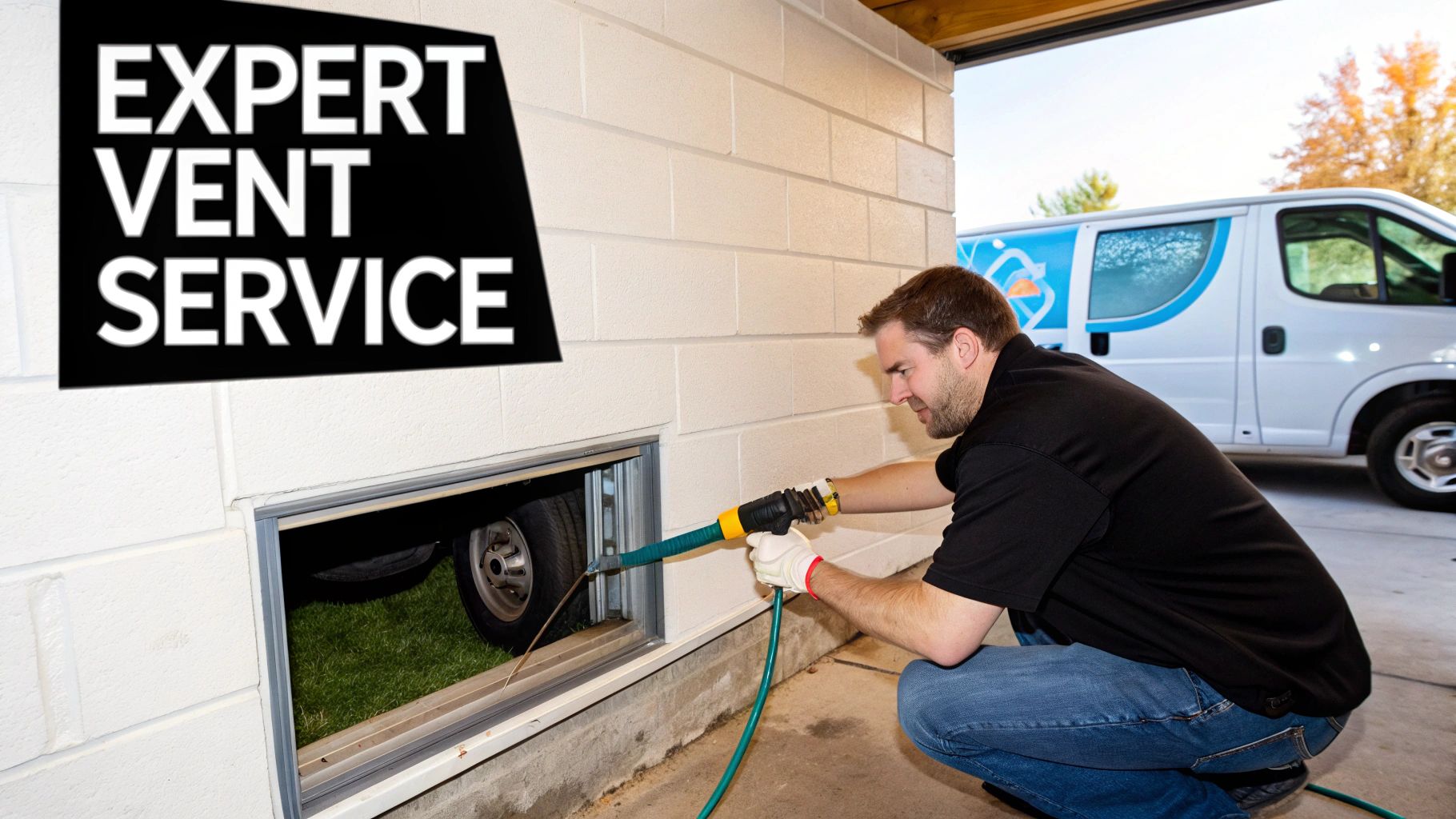
When you hire a professional team, you're getting so much more than a powerful vacuum. You're getting a systematic, top-to-bottom process designed to scrub every inch of your home's ventilation network safely and completely.
Demystifying the Professional Process
The magic behind a professional cleaning starts with creating powerful negative air pressure. Technicians hook up a massive, truck-mounted vacuum to your main duct lines. This isn't your average vacuum; it’s strong enough to pull every last speck of dust and debris straight out of the ducts and into a secure containment unit outside. This crucial step ensures none of that gunk gets kicked back into your home's air.
While that vacuum is working its magic, specialized tools go deep inside the ductwork to dislodge all the stubborn, caked-on buildup.
- Rotary Brushes: Think of these as high-speed scrubbers for your ducts. They spin aggressively to break free years of accumulated dust, pet dander, and other grime from the interior walls.
- High-Pressure Air Whips: These are flexible lines that blast compressed air in every direction, acting like a tiny hurricane inside the ducts to push all the loosened debris toward the main vacuum line.
A proper duct cleaning is a one-two punch of agitation and extraction. The brushes and whips knock everything loose, while the powerful negative pressure system guarantees it all gets pulled safely out of your home—not just shuffled around from one room to another.
From Inspection to Final System Check
Any reputable service will start with a thorough inspection to see exactly what they're dealing with and finish with a final walkthrough to make sure your system is running perfectly. This isn't just about cleaning; it's about a complete service that leaves every supply vent, return vent, and main HVAC component spotless.
It's a level of clean that a shop vac and a good intention simply can't match. So, when you're thinking about vent cleaning how often, remember that professional service is essential for protecting your air quality and your system's efficiency. To see what a top-tier service looks like, it helps to know what to look for in a professional air duct cleaning company.
Common Questions About Vent Cleaning in Canada
Even after mapping out a maintenance schedule, it’s normal to have a few questions. To help clear the air, we’ve put together answers to some of the most common things we’re asked by homeowners across Canada.
Is Air Duct Cleaning Really Necessary?
Absolutely. When done right by a reputable crew, professional air duct cleaning is a worthwhile investment in your home. It’s the only way to get rid of years of caked-on dust, pet dander, and other gunk lurking inside your HVAC system.
This isn't just about tidiness—it directly impacts your indoor air quality, which is a game-changer for anyone in the house with allergies or asthma. It also helps your system run more efficiently, and with Canada's high utility costs, every little bit helps. The key is to find a certified company that plays by the book, not one making wild health claims.
How Long Does a Professional Cleaning Take?
For an average single-family home in Canada—think somewhere around 1,500 to 2,500 sq. ft.—a full air duct cleaning typically takes between 2 to 4 hours. The final time depends on the size of your house, how many vents you have, and the complexity of your ductwork.
A proper job is far more than just sticking a vacuum hose in a vent. It's a detailed process where every supply and return duct, register, and main HVAC component is thoroughly cleaned, leaving the entire system pristine.
One of the first questions we get is, "Will it make a mess?" The answer is a hard no. A professional team uses powerful, truck-mounted vacuums to create negative pressure in the system. This pulls all the dislodged debris straight out of your home and into a containment unit on the truck. Crews also lay down drop cloths and protective coverings, so your home looks exactly as it did when they arrived—just with cleaner air.
Ready to improve your home's air quality and efficiency? The experienced team at Can Do Duct Cleaning is here to help. For a thorough and professional cleaning service you can trust, visit us at https://www.candoductcleaning.com.

