
Heating duct cleaning involves professionally removing all the built-up dust, debris, and other gunk from your home’s forced-air heating system. It’s a critical service for keeping your indoor air healthy and making sure your entire HVAC system runs efficiently. Think of it as a deep-clean for your home's lungs.
Understanding What Heating Duct Cleaning Actually Is
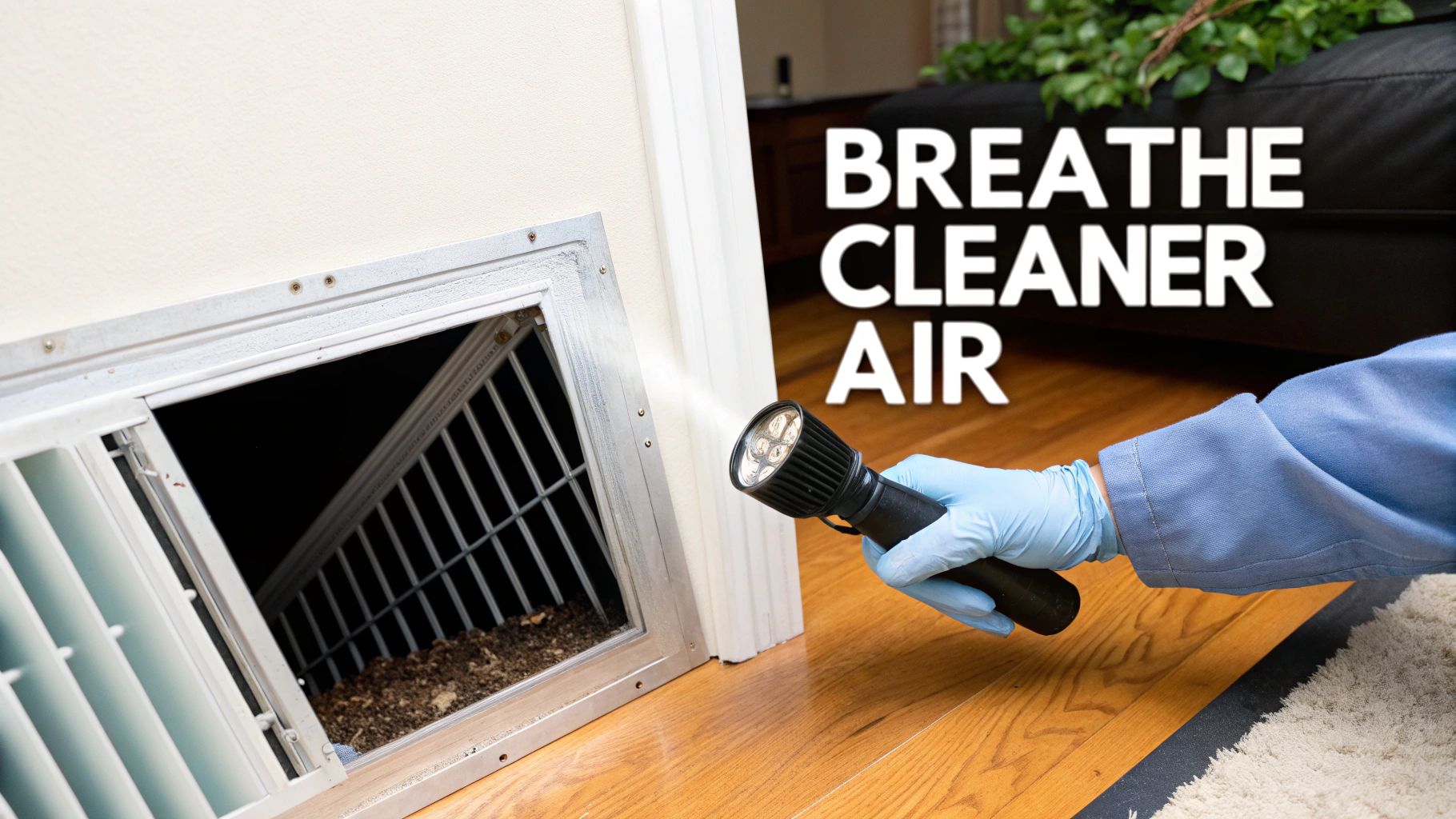
Picture the ductwork in your home as a hidden network of arteries. Instead of circulating blood, they push warm air from your furnace into every room, keeping you cozy during those harsh GTA winters. But over time, this network gets clogged with all sorts of things you'd rather not think about.
And we're not just talking about a bit of dust. The gunk hiding inside your heating ducts is a nasty mix that can include:
- Pet Dander: A major trigger for people with allergies.
- Pollen and Outdoor Allergens: These get tracked inside and then blown all over the house.
- Construction Debris: Sawdust and drywall particles often get left behind after renovations.
- Microscopic Contaminants: This is the really gross stuff, like dust mites, mould spores, and bacteria.
A professional heating duct cleaning is a lot more involved than just sticking a vacuum hose in your vents. It’s a systematic process that scrubs this entire unseen system from top to bottom.
The Core Goals of Duct Cleaning
At the end of the day, the service is all about hitting two main goals. First, it’s designed to improve your indoor air quality. By physically removing pounds of dust and allergens, you're cutting down on the irritants that get blasted into the air you breathe every time the furnace kicks on. This can be a game-changer for family members with asthma or allergies.
Second, it helps get your HVAC system running like it should. Just like a clogged artery makes your heart work overtime, ducts packed with debris choke off the airflow. This forces your furnace to run longer and harder to hit the temperature on your thermostat, which leads to more wear and tear and bigger energy bills.
A clean HVAC system doesn't have to work as hard to maintain a comfortable temperature. This efficiency can translate into lower utility bills and a longer lifespan for one of your home's most expensive appliances.
The Mechanics of a Professional Clean
To get these results, trained technicians use a one-two punch of agitation and extraction. They don't just show up with a shop vac. Instead, they create a fully contained, high-powered vacuum system right inside your ductwork.
The process usually starts by hooking up a massive, truck-mounted vacuum to your main duct lines near the furnace. This machine creates powerful negative pressure, basically turning your entire duct system into a giant vacuum that sucks air inward from every single vent. This containment is the secret to making sure none of that dust and debris escapes into your living space during the cleaning.
With the vacuum system running, technicians then go to each vent and use specialized tools to break all the gunk free:
- High-powered air whips: These flexible tools blast compressed air in all directions, knocking stubborn debris off the duct walls.
- Rotating brushes: For really tough buildup, soft-bristled brushes are sent through the ducts to scrub the inside surfaces clean.
Every bit of dislodged grime gets instantly pulled down the line and captured in the collection unit outside your home. A proper cleaning also covers other key components like the furnace blower motor, coils, and all the vent registers. You can get a more detailed look into what comprehensive air duct cleaning entails right here: https://candoductcleaning.com/what-is-air-duct-cleaning/.
While we're talking about heating ducts, it's worth noting that many of the same ideas apply to air conditioning systems. You can learn more about specialized AC duct cleaning services if that's a concern for your home.
Key Signs Your Ducts Need Professional Cleaning
Because your home's heating ducts are tucked away behind walls and floors, it’s easy to forget they even exist. But when they get clogged with dust and other gunk, they have a way of sending out signals. Learning to spot these clues can help you figure out when it's time for a professional heating duct cleaning.
The signs might start small, but they usually get more obvious over time. They tend to fall into three main categories: things you can see, things you can smell, and changes you notice in your health or home. If you ignore them, you could be dealing with poor air quality and a furnace that’s working way too hard.
Visible Clues Around Your Home
Sometimes, the best evidence is hiding in plain sight. A quick look at your vents and registers can tell you a surprising amount about what’s going on inside your ductwork.
One of the most telling signs is seeing little puffs of dust shoot out of your supply vents when the furnace kicks on. That’s a clear giveaway that your ducts are so packed with loose debris that the airflow is just pushing it right into your living space. You might also find that surfaces near the vents—like the walls, ceiling, or even furniture—are collecting a layer of grime or showing dark, sooty marks.
Here are a few specific things to look for:
- Debris in the Vents: Take a moment to pop off a vent cover (also called a register). If you see a thick, fuzzy blanket of dust, pet hair, and other nasty bits inside, you can bet the rest of the system looks the same.
- Signs of Pests: Finding insect shells, droppings, or bits of nesting material in your ducts is a huge red flag. Pests don't just contaminate your air; they can physically damage your ductwork, too.
- Visible Mould Growth: Any sign of mould or mildew on or around your vent covers needs immediate attention. If you can see it on the outside, there's a very good chance it's thriving in the dark, damp environment inside your ducts.
Mould spores circulating through your home's HVAC system can create serious health risks, particularly for anyone with allergies, asthma, or a compromised immune system. This isn't a DIY job—professional remediation is the only way to handle it safely.
To help you get a clearer picture, use this checklist to see if your home is showing any of these telltale signs.
Homeowner's Duct Cleaning Checklist
Use this checklist to identify common signs that your heating ducts may require professional attention.
| Symptom Category | Specific Sign to Look For | What It Could Mean |
|---|---|---|
| Visual Signs | Puffs of dust from vents when the furnace starts | Ducts are overloaded with loose debris. |
| Dark "filtration marks" on walls/ceiling near vents | Dust and particles are being forced out around the vent. | |
| Thick layer of dust and hair inside the vent cover | The entire duct system is likely heavily contaminated. | |
| Odours & Smells | A persistent musty or stale smell from vents | Could indicate mould, mildew, or bacteria buildup. |
| Unpleasant odours after renovations or water damage | Construction dust or moisture has settled in the ducts. | |
| Health & Home | Increased allergy symptoms (sneezing, coughing) indoors | Your HVAC is circulating allergens trapped in the ducts. |
| The house gets dusty again right after cleaning | The source of the dust is the duct system itself. | |
| Unexplained insect or rodent droppings | Pests may be nesting or travelling through your ductwork. |
If you're ticking off several boxes on this list, it’s probably time to give your ducts some much-needed attention.
Sensory Clues You Can Smell
Beyond what you can see, your nose is often the first to know when something’s not right. Your ductwork should be completely odourless when your heating system is running.
A lingering musty or stale smell that wafts from your vents every time the furnace starts up is a classic sign of trouble. This kind of odour is usually caused by a buildup of old dust, bacteria, or even mould growth hiding deep inside the system. These smells can get even worse if you've recently done renovations or had any moisture problems. For a deeper dive, you can explore the various signs that you need to get your air ducts cleaned.
Health and Home Indicators
Finally, just pay attention to how you and your home feel. Contaminated ducts can have a real, noticeable impact on your family’s well-being and the overall cleanliness of your house.
Have you noticed a sudden spike in allergy-like symptoms? Things like sneezing, coughing, itchy eyes, or headaches that seem to get worse when you're inside can be directly linked to poor air quality. Your HVAC system could be blowing pollen, pet dander, and other irritants throughout your home.
Another common frustration is a house that seems to get dusty just hours after you’ve finished cleaning. If you feel like you’re constantly wiping down surfaces only for a new layer of dust to settle a day or two later, your ducts are the likely culprit, continuously spewing old debris back into your air.
The Professional Duct Cleaning Process Explained
Ever wondered what really happens during a professional heating duct cleaning? Knowing the process helps you understand what you're paying for and spot the difference between a thorough job and a quick, useless pass. A real cleaning is a careful, multi-step process that protects your home while powerfully removing contaminants from your entire system—it's way more than just poking a vacuum hose in your vents.
The whole procedure hinges on one core principle: containment. The last thing anyone wants is years of dust and gunk from inside your ducts suddenly blown all over your house. A reputable crew makes sure this doesn't happen by controlling your system's airflow right from the start.
Stage 1: Preparation and System Inspection
Before a single tool comes out, a professional team will focus on protecting your home. They’ll lay down drop cloths and put on shoe covers to keep everything clean. Then, they'll do a pre-cleaning inspection of your ductwork, sometimes with cameras, to scope out any problem spots, check for damage, and get a clear picture of the system layout.
Next, they get your HVAC system ready for cleaning:
- Protecting Key Components: They’ll make sure your furnace and A/C coil are covered so dislodged debris can't cause any harm.
- Sealing the Vents: Every single supply and return vent register in your home gets sealed off. This is a critical step for what comes next.
This prep work ensures that once the main cleaning equipment fires up, your entire duct network becomes a sealed, closed-loop system, ready for some serious suction.
Stage 2: Negative Pressure and Agitation
With your home prepped, the real work begins. A massive, powerful vacuum hose is connected from a truck-mounted unit directly to your main supply and return duct lines, usually near the furnace. Once this vacuum is switched on, it creates intense negative pressure throughout the sealed ductwork.
Think of it like this: the negative pressure turns your entire duct system into a giant vacuum cleaner. Instead of blowing air out, every vent is now pulling air inward, making it impossible for dust to escape into your rooms while they work.
While the system is under constant suction, technicians move through your home, unsealing one vent at a time. They feed specialized tools into the ducts to break all the caked-on dust and debris loose from the inner surfaces. This is the agitation part, and it usually involves a couple of key tools:
- Compressed Air Whips: These are flexible rods with whip-like ends that shoot compressed air in every direction, knocking contaminants loose from deep inside the ducts.
- Rotating Brushes: For the really stubborn stuff, motorized brushes with soft bristles scrub the duct walls clean without damaging them.
Thanks to the negative pressure, every speck of dust that gets knocked free is immediately sucked down the line and captured safely in the truck outside. This methodical, vent-by-vent approach ensures every single branch of your ductwork gets a thorough cleaning. You can see a more detailed look at how we handle this on our page for GTA air duct cleaning services.
The image below shows how your own senses are often the first to tell you that this process is needed.
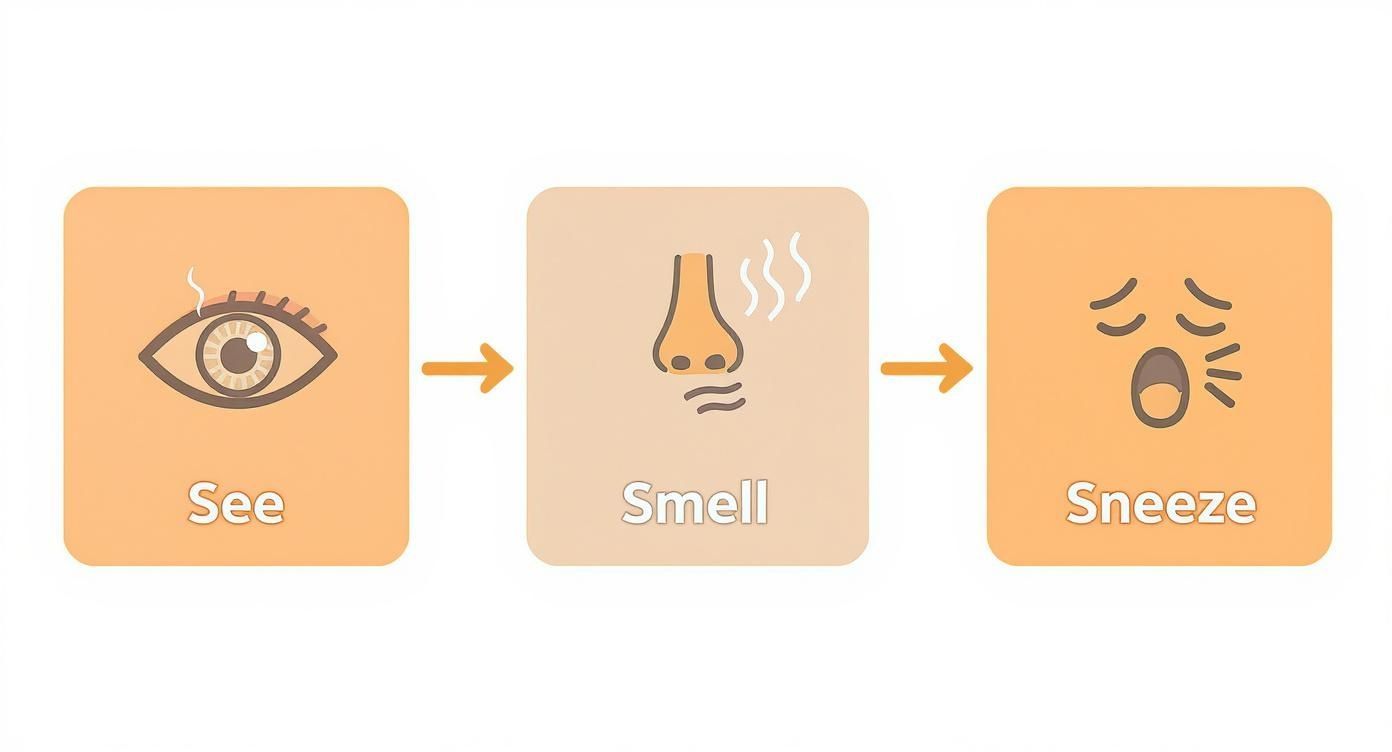
This visual is a great reminder that what you see (dust), smell (musty odours), and feel (allergies) are often direct results of the very contaminants a professional cleaning is designed to remove.
Stage 3: Final System Cleaning and Reassembly
A truly comprehensive heating duct cleaning doesn't just stop at the ducts. For the job to be effective, it has to include the key components of your HVAC system that the air actually passes through. Any reputable company will clean these parts as part of their standard service.
This means a careful cleaning of the furnace's blower motor and housing—this is the fan that pushes all the air around, and it's almost always caked with grime. If you have central air, the evaporator coil gets inspected and cleaned, too.
Once every duct and component is clean, the crew removes the vent seals, cleans and reinstalls all the registers, and properly seals up the access holes they made for the vacuum hookup. They finish with a final system check to make sure everything is running perfectly, leaving your home with cleaner air and an HVAC system that can finally breathe easy.
How Often and How Much You Should Expect to Pay
Two of the biggest questions we hear from homeowners in the GTA are about the right schedule and budget for heating duct cleaning. There are definitely some good rules of thumb, but the truth is, the best answers really depend on your specific home and lifestyle.
Figuring this out means you’re investing in the service right when you need it—without spending money unnecessarily or, worse, waiting too long and letting problems build up.
There’s no magic number for how often your ducts need attention. However, a solid industry guideline is to schedule a professional cleaning every 3 to 5 years. For most households, this is the sweet spot for managing the slow-and-steady buildup of everyday dust, pet dander, and other gunk.
Sticking to this timeframe helps keep your indoor air quality healthy and stops your HVAC system from getting bogged down by debris. Think of it like any other deep-cleaning maintenance task, like getting your carpets professionally cleaned or pressure washing your siding.
When to Clean Your Ducts More Frequently
That 3-to-5-year rule is just a starting point. Some situations can overload your ducts with contaminants much faster, which means you’ll want to clean them more often to keep your home healthy. You should definitely consider a more frequent schedule if any of these sound familiar.
- You Have Pets That Shed: Our furry friends are family, but they contribute a lot of dander and fur that gets sucked right into the ductwork. This can clog your system up surprisingly fast.
- Family Members Have Allergies or Asthma: For anyone sensitive to what’s in the air, cleaner ducts can be a game-changer. It means fewer triggers like dust mites, pollen, and mould spores circulating through the house.
- After Major Renovations: Construction kicks up a massive amount of fine dust from drywall, wood, and insulation. All of that inevitably settles in your ductwork, so a post-reno clean-up is a must.
- You've Moved into a New-to-You Home: You have no idea if the previous owners ever cleaned the ducts. It’s always smart to start with a clean slate and get them professionally serviced.
Waiting too long between cleanings, especially when you’re in one of these high-need situations, can really drag down your HVAC system’s performance and hurt your home’s air quality. It always pays to be proactive.
Breaking Down the Cost of Duct Cleaning
Just like the cleaning schedule isn't one-size-fits-all, neither is the price. Heating duct cleaning isn't a flat-rate service because every home’s duct system is unique. The final quote will depend on a few key factors that tell a technician how big and complex the job will be.
Here’s what typically influences the cost:
- Size of Your Home: A bigger house simply means more ductwork to cover, which takes more time and labour.
- Number of Vents: Pricing is often based on the total count of supply and return vents that each need to be cleaned individually.
- Accessibility of the Ductwork: If your system is tucked away in tight crawl spaces or tricky attics, it can require more effort from the technicians.
- Level of Contamination: Ducts that haven’t been touched in a decade are going to be a much bigger job than a system that’s maintained regularly.
For a clearer idea of what to expect, check out our guide on the average cost of air duct cleaning, which gives a more detailed breakdown for GTA homeowners.
Why You Should Avoid "Too Good to Be True" Prices
As you look for a service provider, you’re almost guaranteed to see ads for whole-home duct cleaning at a shockingly low price. Be very careful. These deals are often a red flag for a scam or, at best, a sign of a sloppy, incomplete job.
Looking at other major markets, you can see what legitimate services cost. In Los Angeles, for example, average prices for a typical home fall between $380 to $441. Experts there warn that anything under $300 probably means the company is using subpar equipment or will hit you with hidden fees later. Reputable companies deliver a thorough cleaning of all ducts, vents, and key HVAC parts, and their fair, transparent pricing reflects that.
A quality heating duct cleaning is a labour-intensive process that requires skilled technicians and powerful, expensive equipment. An unbelievably low price usually means corners are being cut. They might only clean the vent covers you can see, use a weak shop-vac instead of a proper truck-mounted unit, or tack on a bunch of extra charges once they're in your home. Investing in a reputable company from the start ensures the job is done right, protecting both your home and your family’s health.
How to Choose a Reputable Duct Cleaning Company

Finding a trustworthy company for your heating duct cleaning can feel like navigating a minefield. Unfortunately, the industry has its share of scammers who lure homeowners in with suspiciously low offers and then use high-pressure tactics.
Knowing what to look for is your best defence. It ensures you hire a true professional who will genuinely improve your home's air—not just take your money. A quality job isn't about the cheapest price; it's about skilled technicians, powerful equipment, and a commitment to doing things right.
Start With Credentials and Insurance
Before you even talk about price, the first step is to confirm the company is legitimate. Any reputable provider will be upfront about their qualifications and insurance, giving you peace of mind that your home is in capable hands.
Ask if they are certified by the National Air Duct Cleaners Association (NADCA). This isn't just a piece of paper; it means the company follows strict standards for quality and ethics.
Next, and this is non-negotiable, confirm they have full liability insurance. Accidents are rare, but they happen. Proper insurance protects you and your property from any potential damage during the cleaning. If a company can't show you proof of their current insurance, walk away.
Ask About Their Cleaning Process and Equipment
Not all duct cleaning services are the same—the tools they use make a world of difference. A professional will have no problem explaining their entire process, from start to finish. This is your chance to understand exactly what they'll be doing in your home.
The single most critical piece of equipment is the vacuum. Be sure to ask what kind they use.
- Truck-Mounted Vacuums: These are the gold standard. Their immense suction creates powerful negative pressure, pulling every last bit of dislodged debris out of your ductwork and directly into a collection unit outside.
- Portable Vacuums: While useful for high-rise condos or hard-to-reach spots, these units are much less powerful. For the vast majority of homes in the GTA, a truck-mounted system is the only way to guarantee a deep clean.
If a company shows up with a shop-vac or a small portable unit, that's a huge red flag. They simply can't do the job properly. In fact, an inadequate cleaning can stir up contaminants and make your air quality even worse.
Look Up Reviews and Get Everything in Writing
In today's world, it’s easy to check a company's track record. Spend a few minutes looking up recent reviews on sites like Google or HomeStars. One or two unhappy customers can happen to anyone, but a pattern of complaints about surprise fees, poor work, or leaving a mess is a clear warning sign.
Be wary of any company that quotes you a flat price over the phone without asking detailed questions. A proper quote depends on your home’s size, the number of vents, and the layout of your HVAC system. For context, estimates often range from $0.13 to $0.27 per square foot.
An unbelievably low price is almost always a sign of a bait-and-switch tactic or a subpar service. To help you spot the difference, here's a quick comparison.
Reputable Provider vs. Potential Scam
| Feature | Reputable Company (e.g., Can Do Duct Cleaning) | Warning Signs of a Scam |
|---|---|---|
| Pricing | Provides a detailed, written quote based on your home’s specifics. | Offers a very low flat rate ($99-$199) without asking questions. |
| Equipment | Uses powerful, truck-mounted vacuum systems. | Relies on small portable vacuums or a standard shop-vac. |
| Credentials | Is NADCA-certified and can provide proof of insurance. | Lacks professional certifications and avoids discussing insurance. |
| Process | Cleans the entire system, including furnace components. | Does a quick, superficial "blow-and-go" service. |
| Reputation | Has consistent, positive online reviews and a professional website. | Has many negative reviews, no online presence, or uses aggressive telemarketing. |
Always insist on a detailed, written quote before any work begins. This document protects you from hidden fees and makes sure everyone is on the same page. Unfortunately, shady tactics are all too common, so it's critical to be informed. You can learn more by reading our guide on spotting common duct cleaning scams.
Taking these simple steps will help you hire a reliable professional like Can Do Duct Cleaning and ensure the job is done right the first time.
Common Questions About Heating Duct Cleaning
Even after seeing the process and benefits laid out, it's totally normal to have a few lingering questions about heating duct cleaning. It’s a real investment in your home and family’s well-being, so you deserve clear, honest answers.
We've gathered some of the most common questions we hear from homeowners across the GTA to help you get the clarity you need.
Will Heating Duct Cleaning Lower My Energy Bills?
The short answer is: it can help, but it's not a magic fix for high hydro bills.
Think of it this way—when your ducts are caked with dust and debris, your furnace has to work overtime just to push air through all that gunk. That extra effort burns more energy. By clearing out the blockages, you're giving your system a clear runway, letting air flow freely. This improved efficiency means your furnace doesn’t have to struggle, which can certainly lead to some energy savings.
The real wins, though, are better air quality and a longer, happier life for your HVAC system.
How Long Does a Professional Duct Cleaning Take?
For a typical home in the GTA, a proper, thorough heating duct cleaning will take somewhere between 3 to 5 hours.
The exact time really depends on a few things:
- The size of your home.
- How many vents you have (both supply and return).
- How easy it is to access all the ductwork.
Be wary of any company promising to be in and out in an hour. That’s a huge red flag. It almost always means they’re cutting corners, using subpar equipment, or not cleaning the entire system. A quality job takes time and can't be rushed.
A key government review highlights that conclusive evidence linking routine duct cleaning to major health benefits remains insufficient. Official guidance generally does not recommend regular cleaning unless specific issues like visible mould, pest infestations, or excessive dust are present. You can explore the findings on official guidance about HVAC duct cleaning here.
This expert consensus reinforces why it's best to clean for a specific reason rather than just because you think you should.
Is the Duct Cleaning Process Messy?
Not when it's done right. A true professional team will treat your home with respect, making sure the entire process is clean and contained. They'll lay down drop cloths to protect your floors and wear shoe covers so they don’t track anything inside.
The real key is the powerful, truck-mounted vacuum they use. By creating strong negative pressure inside your ductwork, all the dust, dirt, and allergens that get knocked loose are immediately sucked out of your home and into a collection unit in their truck. Nothing gets left behind to float around in your living space.
Are Chemicals Used During Duct Cleaning Safe?
For most standard heating duct cleaning jobs, no chemicals are needed at all. The work is done using physical tools—like high-powered brushes and air whips—and powerful suction.
The only time chemicals might come into play is if an inspection turns up mould, mildew, or bacterial growth. In that specific scenario, a technician might recommend an antimicrobial sanitizer or sealant. Any reputable company will only use products specifically designed for HVAC systems and approved by Health Canada.
You should always feel comfortable asking what they plan to use and even ask to see the Safety Data Sheets (SDS). A trustworthy pro will have no problem showing you that the products are completely safe for your family and pets. While our focus is on central heating, we know other vents matter too. If you're interested, you can learn more about professional dryer vent cleaning services and how they ensure safety.
Making an informed choice about your home's maintenance is key to a healthy living environment. If you're ready to improve your indoor air quality and boost your HVAC system's efficiency, the experienced team at Can Do Duct Cleaning is here to help. With our NADCA-certified technicians and state-of-the-art equipment, we provide the thorough, professional service your home deserves.

