
If you're a homeowner in Canada, you can generally expect furnace installation costs to land somewhere between $4,000 and $7,500. That ballpark figure usually covers a new, standard mid-efficiency gas furnace and all the professional labour to get it up and running.
Of course, that's just a starting point. Costs can easily climb higher if you opt for a premium, high-efficiency model or if your home's setup presents a few challenges for the installation crew.
Your Quick Guide To Canadian Furnace Installation Costs
When your home's furnace starts showing its age, the first thing on your mind is the bottom line. What's this actually going to cost?
Think of it like a major car repair—the final bill depends heavily on the parts you choose and the amount of labour needed to do the job right. Across Canada, the market is full of options, from no-frills units that get the job done to sophisticated systems that can seriously slash your monthly energy bills.

We'll start with a quick overview of the numbers so you have a solid foundation for your budget. This is your upfront look at what to expect before we dive into the nitty-gritty details that can make those prices flex.
Estimated Costs By Furnace Type
To give you a clearer picture, let's break down the all-in cost by the furnace's fuel source and its efficiency level. A furnace's efficiency is measured by its Annual Fuel Utilization Efficiency (AFUE) rating. The higher the number, the less fuel is wasted—and the more money stays in your pocket each month.
If you want to get into specific models, you can learn more about the best furnace brands in Canada to see how different manufacturers stack up.
Here's a simple way to think about AFUE: A furnace with an 80% AFUE rating means that for every dollar you spend on fuel, 80 cents actually heats your home while 20 cents is lost up the chimney. A 96% AFUE model loses only 4 cents per dollar, which really shows the long-term savings of a high-efficiency unit.
To help you get started, we've put together a quick snapshot of what you can expect to pay for a new furnace installation in Canada. These estimates combine the cost of the unit itself with standard installation labour.
Estimated Furnace Installation Costs In Canada By Type
| Furnace Type | Average Unit Cost (CAD) | Average Installation Cost (CAD) | Total Estimated Cost Range (CAD) |
|---|---|---|---|
| Mid-Efficiency Gas (80% AFUE) | $1,500 – $2,500 | $2,000 – $3,000 | $3,500 – $5,500 |
| High-Efficiency Gas (90-98% AFUE) | $2,500 – $4,500 | $2,500 – $3,500 | $5,000 – $8,000 |
| Electric Furnace | $1,000 – $2,500 | $1,500 – $2,500 | $2,500 – $5,000 |
| Oil Furnace | $3,500 – $6,000 | $3,000 – $4,000 | $6,500 – $10,000 |
This table should give you a good idea of how to align your budget with the type of performance you'll need to stay warm through our tough Canadian winters.
Decoding The Key Factors That Influence Your Final Bill
So, you’ve seen the general price ranges, but you're probably asking why there’s such a huge gap between the low and high end. It’s a great question. Two neighbours on the same street could get quotes that are thousands of dollars apart for what looks like the same furnace replacement.
The truth is, the final price tag is a mix of several crucial components—it’s never just about the furnace unit itself.
Think of it like buying a car. The sticker price for the base model is just the beginning. Once you start adding a more powerful engine, all-wheel drive, or that fancy sound system, the final bill changes. A furnace installation is no different; a handful of key factors shape your total investment.
Equipment Type And Brand Reputation
The most obvious factor is the furnace itself. We've already seen that natural gas furnaces are the go-to in Canada, but their costs vary from electric or oil models. Beyond the fuel type, the brand you pick makes a big difference.
Established brands with a solid history of reliability and robust warranties naturally command a higher price. But you're not just paying for a logo. You’re investing in years of engineering, rigorous quality control, and the confidence that comes from knowing you can find replacement parts down the road. That reputation is a huge piece of the upfront cost puzzle.
The All-Important Efficiency Rating (AFUE)
This might be the single most critical factor, influencing both the initial price and your long-term savings: the Annual Fuel Utilization Efficiency (AFUE) rating. This simple percentage tells you exactly how much of the fuel you pay for gets turned into actual heat for your home.
Let’s put it this way. Imagine two cars driving from Vancouver to Calgary. One has incredible fuel economy and makes the trip on half a tank. The other is a gas-guzzler that burns through a full tank for the same journey. Your furnace's AFUE rating is its fuel economy.
- An 80% AFUE furnace converts 80 cents of every fuel dollar into heat, while the other 20 cents goes right up the chimney.
- A 96% AFUE high-efficiency furnace turns 96 cents of every dollar into warmth, wasting only 4 cents.
While a high-efficiency furnace costs more to buy, the drop in your monthly heating bills can lead to massive savings over its 15-to-20-year lifespan. It’s an investment that literally pays you back month after month.
Sizing Your Furnace Correctly (BTUs)
When it comes to furnaces, bigger is definitely not better. A furnace's "size" isn't about its physical footprint but its heating power, measured in British Thermal Units (BTUs). If a furnace is too small for your house, it will run constantly, fighting a losing battle to keep you warm and never quite getting there.
On the flip side, a furnace that’s too powerful—a surprisingly common mistake—will blast your home with heat too quickly and then shut off. This constant on-off cycle, called "short-cycling," is terribly inefficient. It puts a ton of stress on the components, leading to early breakdowns and inflated energy bills.
A true HVAC pro will do a detailed calculation (called a "heat load calculation") to match the furnace perfectly to your home’s square footage, insulation levels, and windows. This ensures it runs just right. If you're curious about how services like this are valued, you can find more information on general pricing structures.
Labour Costs And Installation Complexity
The labour part of your quote is a significant chunk of the total, often falling between $2,000 and $3,500 in Canada. This fee covers way more than just the physical work of hooking up a new unit.
It pays for the expertise of certified technicians who can safely handle gas lines, ensure venting is up to code, and fine-tune the system for peak performance. The complexity of the job also plays a big role. A simple swap in an open, accessible basement will cost less than a tricky installation in a cramped attic or a home that needs major modifications to fit the new unit.
If the job requires significant changes, you might also need to factor in the process of ductwork installation and its associated costs. This is exactly why a detailed, on-site inspection is the only way to get a truly accurate and fair quote.
Uncovering The Hidden Costs In Your Installation Quote
When you get a furnace quote, your eyes probably go straight to the big numbers: the unit itself and the labour to install it. But a simple quote can be a bit deceiving. Often, several other essentials pop up on the final bill, turning what looked like a good deal into a much bigger investment.
It's a lot like buying a house. You see the list price, but you know there are land transfer taxes, lawyer fees, and inspection costs waiting for you. The same logic applies to furnace installations; you have to look past the major line items to see the complete picture.
These "hidden" costs aren't about contractors trying to pull a fast one. They're necessary parts of a safe, legal, and efficient installation. Knowing about them upfront just makes you a smarter homeowner and helps you budget properly, so there are no nasty surprises when the final invoice arrives.
The Non-Negotiable Cost of Permits
In most municipalities across Canada—from major cities to smaller towns—installing a new gas furnace requires a permit. This isn’t just bureaucratic red tape; it's a vital safety check.
A permit guarantees that a licensed, insured technician is doing the work according to strict provincial and local codes. It triggers an inspection to make sure gas lines are secure, venting is properly installed to prevent deadly carbon monoxide leaks, and the whole system runs correctly. The permit itself usually runs between $75 and $250, a small price to pay for the peace of mind that your home is safe.
When Old Ductwork Adds to the Bill
Many older homes across Canada are still using ductwork that’s seen better days. While it might seem fine, this old infrastructure often isn’t a great match for a modern, high-efficiency furnace. Decades-old ducts can be leaky, undersized, or clogged with years of accumulated grime.
Connecting a powerful new furnace to old, inefficient ductwork is like putting a race car engine in a vehicle with flat tires—you’re simply not going to get the performance you paid for. Your contractor might recommend sealing, repairing, or even replacing some duct sections to improve airflow. This can add a few hundred to several thousand dollars to the job, but it's crucial for getting the most out of your new system.
Don't think of ductwork repairs as just another expense. See it as an opportunity to optimize your entire heating system. Good airflow means every room gets warm, and your furnace runs as efficiently as possible, which saves you money on your hydro bill every month.
Upgrades and Disposal Fees to Consider
Beyond permits and ductwork, a few other items can nudge your total installation cost upwards. These are often presented as optional, but some are highly recommended for any modern heating system.
Here are a few common add-ons you might see:
- Smart Thermostat: Swapping a basic thermostat for a smart model like a Nest or Ecobee usually costs $150 to $400. The real win is their ability to learn your routine and cut down your energy use over time.
- Electrical Work: If your home's electrical panel is outdated or the new furnace needs a specific circuit, you might need an electrician. This could add $200 to $700 or more, depending on how complex the job is.
- Old Unit Disposal: You can’t just leave your old furnace on the curb. Contractors charge a fee, typically between $100 and $200, to safely decommission and dispose of the old unit in an environmentally sound way.
- Ongoing Maintenance: While it's not part of the initial installation bill, thinking about future upkeep is a smart move. Our guide on furnace maintenance costs can help you budget for those essential annual tune-ups.
Factoring in all these elements is key to understanding the true cost. When you know all the potential expenses, you can ask the right questions and get a quote that truly covers everything from start to finish.
Real-World Canadian Furnace Installation Scenarios
Numbers on a page are one thing, but it’s much easier to understand furnace installation costs when you can see how they play out in real homes. Let’s walk through three different scenarios you might find across Canada.
These stories will help you connect the dots between furnace type, your home's size, and the unique challenges that can shape a final quote. Whether you’re in a cozy bungalow or a sprawling suburban house, one of these situations will likely feel familiar.
Scenario 1: The Budget-Conscious Bungalow in a Mid-Sized City
Picture a couple in a classic 1,200 sq. ft. bungalow. Their furnace is 20 years old and has officially called it quits in the middle of a cold snap. Their main goal? Get a reliable replacement installed quickly without draining their savings. They don't need all the bells and whistles, just a solid unit that works.
They go with a standard mid-efficiency natural gas furnace with an 80% AFUE rating. The installation itself is about as straightforward as it gets—a simple swap in an easy-to-access basement. The existing ductwork is in great shape, so no extra work is needed there.
Here’s a realistic breakdown of their costs:
- Mid-Efficiency Gas Furnace (80% AFUE): $2,200
- Standard Labour & Installation: $2,500
- Municipal Permit: $150
- Old Furnace Disposal: $125
- Total Estimated Cost: $4,975 + Tax
This is a very common, no-fuss replacement where the priority is getting the heat back on affordably.
Scenario 2: The High-Efficiency Upgrade in a Major Suburb
Next, let's imagine a growing family living in a 2,500 sq. ft., two-storey home in a suburb of a major Canadian city. They’ve noticed their heating bills creeping up every winter and want a more energy-efficient solution that’s built to last. For them, it's about investing now for long-term savings and maybe even qualifying for some government rebates.
They choose a high-efficiency gas furnace with a 96% AFUE rating. This job is a bit more involved. It needs new PVC piping for venting, which has to be routed through the wall to the outside. They also decide to add a smart thermostat to get the most out of their new system.
Their itemized quote looks more like this:
- High-Efficiency Gas Furnace (96% AFUE): $4,100
- Complex Labour (New Venting): $3,200
- Smart Thermostat Installation: $300
- Municipal Permit: $100
- Old Furnace Disposal: $150
- Total Estimated Cost: $7,850 + Tax
Sure, the upfront cost is higher, but this family’s new furnace will cut their monthly gas bills significantly, paying for itself over the years.
As you can see, costs like permits and thermostats can add up. It's more than just the big-ticket furnace itself.
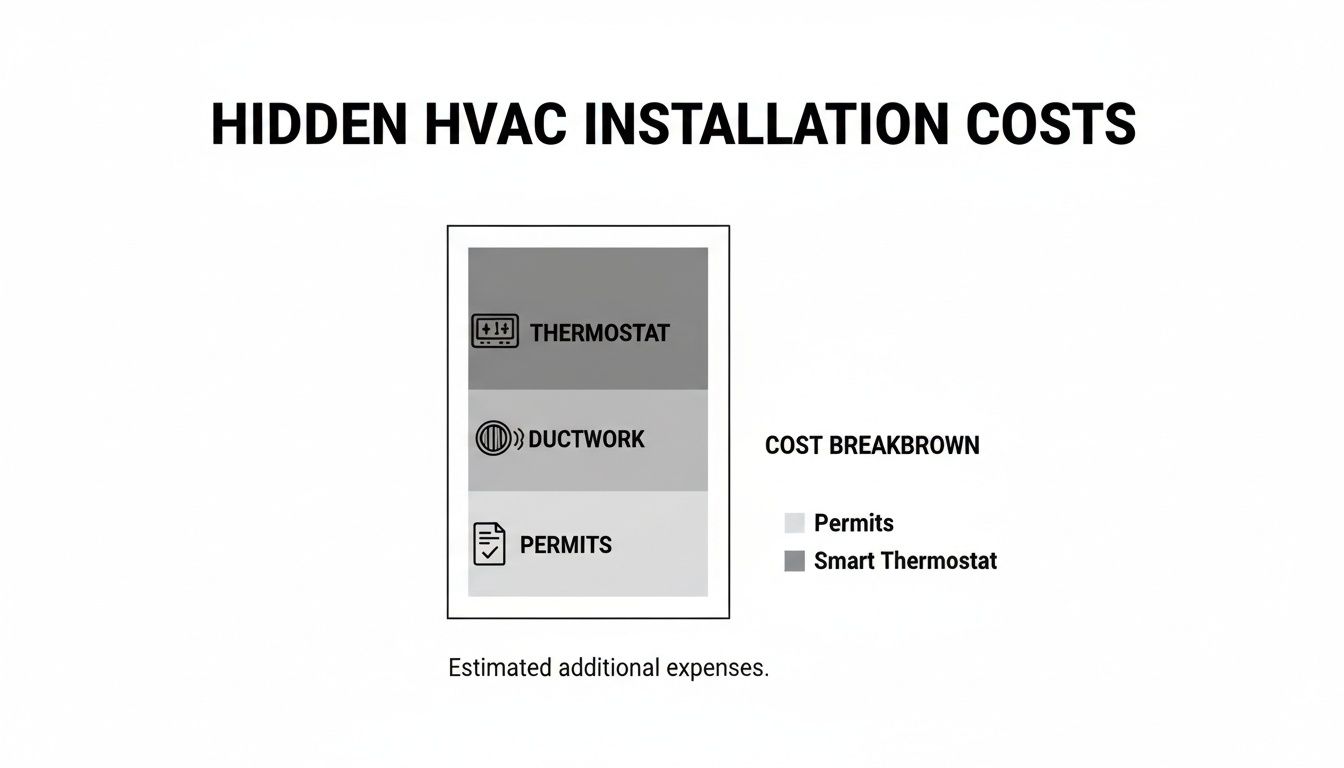
This just goes to show that a good quote will always account for these "extra" items.
Scenario 3: The Complex Duplex Installation in an Older Urban Centre
For our final scenario, imagine a property manager dealing with a century-old duplex in a tight downtown neighbourhood. The furnace is ancient and crammed into a tiny utility closet. To make things worse, the old ductwork is too small for a modern, powerful furnace and needs to be reworked.
This is where things get tricky—and more expensive. The size and layout of a home dramatically impact the cost. A small 1,000 square foot house might just need a 40,000 BTU unit with materials under $2,000. But a large home needing 120,000 BTUs could easily see material costs jump past $5,000. Labour and permits on top of that can range from $3,000 to $5,000 based on how tough the job is. You can dig deeper into how sizing affects the bottom line and learn more about U.S. furnace cost findings.
For this downtown duplex, the quote reflects all the extra work.
The installation requires a specialized high-efficiency unit designed for tight spaces, along with significant ductwork modifications to ensure proper airflow to both residential units.
Here’s the breakdown for this complex job:
- High-Efficiency Compact Furnace (95% AFUE): $4,800
- Advanced Labour (Confined Space): $3,800
- Ductwork Modifications: $1,500
- Municipal Permit & Inspection: $200
- Old Furnace Disposal: $175
- Total Estimated Cost: $10,475 + Tax
This example is a perfect illustration of how unique challenges like a cramped space or ductwork issues can add thousands to the final furnace installation bill.
How To Save Money On Your New Furnace Installation
A new furnace is a major home investment, but that doesn't mean it has to empty your bank account. With a bit of smart planning, you can bring down your furnace installation costs and make a decision that's good for both your comfort and your wallet.
Think about it like buying a car—you wouldn't just take the first offer you see. The same logic applies here, and it can save you hundreds, or even thousands, on the final bill.
Get Multiple Quotes From Reputable Installers
This is the single most important thing you can do to get a fair price. Never settle for the first quote you get. Make it your goal to collect at least three detailed, written estimates from different certified HVAC contractors in your area.
Comparing quotes side-by-side lets you see the going market rate for your job and spot any prices that seem way too high or suspiciously low. It also gives you a bit of negotiating power, ensuring you get the best overall value—not just the rock-bottom price—from a qualified pro.
Schedule Your Installation During the Off-Season
Like any seasonal business, HVAC contractors have their peak times. They're swamped during the coldest snaps of winter and the most blistering heatwaves of summer when emergency calls flood in. That high demand almost always means higher prices and longer waits.
You can use this to your advantage. Try scheduling your furnace replacement during the “shoulder seasons” like spring and autumn. In these milder months, contractors have more open spots in their calendars and are often willing to offer better pricing or special deals just to keep their teams working.
Look for Rebates and Promotions
Don't sleep on rebates. Both the federal and provincial governments, along with furnace manufacturers, regularly run programs that can seriously cut down your out-of-pocket costs, especially if you're buying a high-efficiency model.
- Government Rebates: Keep an eye out for federal programs like the Canada Greener Homes Grant, as well as any provincial initiatives, which can offer major cash back when you upgrade to an energy-efficient system.
- Manufacturer Promotions: Big brands often have seasonal sales, particularly in the spring and fall, with direct discounts or mail-in rebates on certain furnace models.
- Utility Company Incentives: Local utilities like Enbridge or FortisBC sometimes have their own programs to reward homeowners for installing high-efficiency natural gas furnaces.
Always ask any contractor you're considering about the current rebates they know of. A good company stays on top of these programs and will even help you with the paperwork.
Finding these savings is more crucial than ever. Recent data shows that even the most basic, standard furnace replacement projects are getting more expensive, not just premium installations. This makes chasing down every available rebate and discount a crucial step in managing your budget. You can discover more insights about rising HVAC costs to see why planning is so important.
Consider a Smart Thermostat Upgrade
While it’s an extra cost upfront, adding a smart thermostat is one of the smartest long-term savings moves you can make. It's a small upgrade that packs a big punch, delivering significant smart thermostat energy savings year after year.
These clever devices learn your household's schedule and adjust the temperature automatically, so you're not wasting money heating an empty home. This one change can lower your heating bills by 10-15% a year, meaning it easily pays for itself within just a few winters. If you need some ideas, our guide to the best smart thermostats in Canada can point you toward the right model for your new furnace.
Choosing The Right HVAC Contractor in Canada
Let’s be honest—even the slickest, most energy-efficient furnace on the market is only as good as the hands that install it. The quality of the installation job directly shapes your furnace's performance, safety, and how long it’ll last. That makes picking the right contractor just as critical as picking the right furnace unit.
Think of it this way: you wouldn't let an amateur mechanic tinker with a brand-new car engine. The same logic applies here. A professional installation ensures every wire, vent, and gas line works in perfect harmony, giving you maximum efficiency and saving you from costly repairs down the road.
Your Contractor Vetting Checklist
When you start calling around for quotes, think of it as an interview process. You’re not just hiring someone for a one-day job; you're looking for a reliable partner to keep your home comfortable and safe for years. Don't be shy about asking tough questions and demanding proof of their credentials. Any reputable company will have this info on hand and be happy to share it.
Here are the absolute must-haves for any HVAC contractor working in Canada:
- Provincial Certification: Each province has its own regulatory body for trades, like the Technical Standards and Safety Authority (TSSA) in Ontario or Technical Safety BC in British Columbia. Ensure your technician holds the proper gas fitter certification for your province. No certification, no deal.
- Full Insurance Coverage: Ask to see their certificate of liability insurance. This is your safety net, protecting your home and property from any accidental damage that could happen during the installation.
- Workers' Compensation Coverage: This is mandatory for a reason (e.g., WSIB in Ontario, WorkSafeBC in B.C.). It ensures you won’t be held liable if a technician gets injured while working on your property.
A contractor missing any of these three credentials is a massive red flag. Hiring someone uncertified or uninsured might seem cheaper upfront, but it puts your family’s safety on the line and can lead to disastrously expensive problems later.
Decoding Quotes and Reviews
Once you’ve got a few quotes from properly certified contractors, it's time to read between the lines. A truly professional quote will be detailed and transparent, breaking down the costs for the furnace model, all labour, permit fees, and any extra work like duct modifications. Watch out for vague, single-line estimates—they’re often a smokescreen for hidden fees.
The same goes for online reviews. Don't just glance at the star rating. Dig into what people are actually saying. Are there consistent comments about the crew being punctual, keeping the work area clean, or communicating clearly? Those details often reveal more about a company’s professionalism than a simple five-star badge. Many of the same vetting principles apply when you learn more about choosing the right air duct cleaning company, too.
Common Questions About Furnace Installation
It’s totally normal to have a lot of questions when you’re thinking about replacing your furnace. To help you feel completely confident about the process, we've answered some of the most common questions we hear from homeowners across Canada.
How Long Does a Typical Furnace Installation Take?
For a straightforward swap—taking out an old furnace and putting a new one in its place—you can expect the job to take between four to eight hours. That gives a certified technician enough time to disconnect and remove your old unit, set the new furnace, and connect everything to your ductwork, gas line, and electrical system before running tests to make sure it’s working perfectly.
Of course, things can get more complicated. If your ductwork needs significant changes, if we need to run new venting for a high-efficiency model, or if the furnace is tucked into a tight, awkward space, the job could easily stretch into a full day. A good contractor will always walk you through the specifics and give you a realistic timeline upfront.
The key to a smooth installation is preparation. A professional team will assess the site beforehand, anticipating potential challenges so they can work efficiently on installation day and minimize disruption to your home.
What Is the Real Difference Between Furnace Efficiencies?
It all comes down to the AFUE (Annual Fuel Utilization Efficiency) rating. Think of it like the fuel economy sticker on a new car—it tells you exactly how much of your gas money is actually being converted into heat.
- Mid-Efficiency (80% AFUE): This means 80 cents of every dollar you spend on natural gas goes to heating your home. The other 20 cents is wasted as exhaust, sent straight up the chimney.
- High-Efficiency (90-98% AFUE): These units are far better at their job, wasting as little as 2 to 10 cents for every dollar spent.
While a high-efficiency furnace costs more at the outset, the savings on your monthly energy bills really add up over time. Better yet, they're often the only models that qualify for federal and provincial government rebates, making them a much smarter investment in the long run.
Is a Permit Really Required for a Furnace Installation in Canada?
Yes, in most cases. Whether you're in a major city or a smaller town, a permit is typically a legal must-have for any new gas furnace installation. This isn't just bureaucratic red tape; it’s a critical safety step.
The permit ensures the work is done by a licensed and insured technician who follows strict safety codes—especially when it comes to natural gas lines and proper ventilation. Any reputable HVAC contractor will handle the entire permit application and inspection scheduling for you. It's part of the service and gives you complete peace of mind.
Ready to get a clear, no-surprise quote for your furnace installation? The certified professionals at Can Do Duct Cleaning have over 30 years of experience keeping homes across the country safe and warm. We handle everything from permits to final testing, ensuring your new system runs perfectly from day one. https://www.candoductcleaning.com

