
For homeowners across Canada, the sweet spot for indoor humidity is somewhere between 30% and 50%. Getting this right is about more than just comfort—it’s a crucial part of keeping your home and your family healthy, especially with our wild seasonal swings. Striking this balance protects everything from your sinuses to your hardwood floors.
Why Your Home's Humidity Level Is So Important in Canada
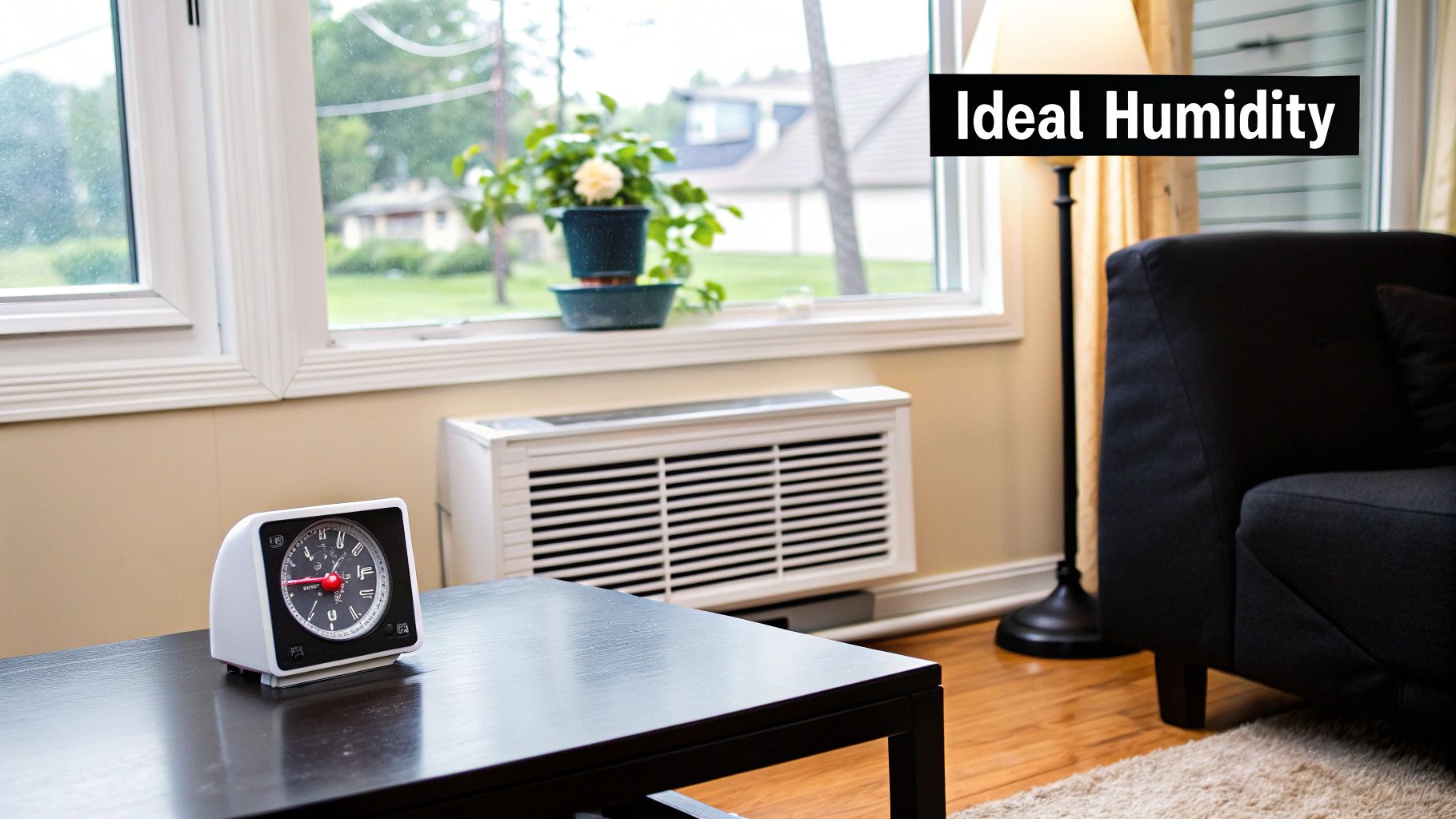
Think of the air inside your home like a big sponge. During a humid summer, that sponge gets waterlogged, making the air feel thick and sticky. Come winter, the furnace kicks on and wrings that sponge bone-dry, leaving the air harsh and brittle. Your goal is to keep that sponge perfectly damp—not sopping wet, not cracked and dry.
This balance is measured as relative humidity (RH), which simply tells you how much moisture is in the air compared to the maximum amount it could hold at that temperature. Keeping your home’s RH in that 30% to 50% Goldilocks zone is important for a few big reasons:
- Your Health and Comfort: When the air is too dry, you feel it. Itchy skin, a scratchy throat, and irritated sinuses are common complaints. On the flip side, air that’s too damp can feel suffocating and make allergies flare up.
- Protecting Your Home: Wood is particularly sensitive to moisture. High humidity makes it swell and can lead to rot, while low humidity causes it to shrink, warp, and crack. This can damage your floors, furniture, and even the structural integrity of your home.
- Preventing Pests and Mould: Nothing loves a damp, muggy environment more than mould, mildew, and dust mites. Keeping humidity below 50% is one of your best defences against these unwelcome guests.
Navigating Southern Ontario's Unique Climate Challenges
Here in Southern Ontario, our humid continental climate makes managing indoor air a real priority. It’s not uncommon for outdoor humidity to soar into the 70-80% range during the summer. All that moisture sneaks into our homes, often pushing indoor levels well above 60%.
This creates the perfect breeding ground for mould, which is a major headache for countless basements every year. If you’re worried about that damp, musty smell, you can find helpful tips in our guide on how to prevent mould in your basement.
Over our 30 years serving the Greater Toronto Area, the team at Can Do Duct Cleaning has seen it all. We can tell you firsthand that unmanaged humidity is one of the biggest threats to a home’s structure and the health of the people inside it. Your HVAC system is your best line of defence.
Your home’s HVAC system is the key to managing this constant tug-of-war. For it to work properly, your air ducts and vents need to be clean. When they're clogged with dust and debris, they can trap moisture and work against your efforts to maintain a healthy, balanced home environment.
Recognizing the Dangers of High Indoor Humidity
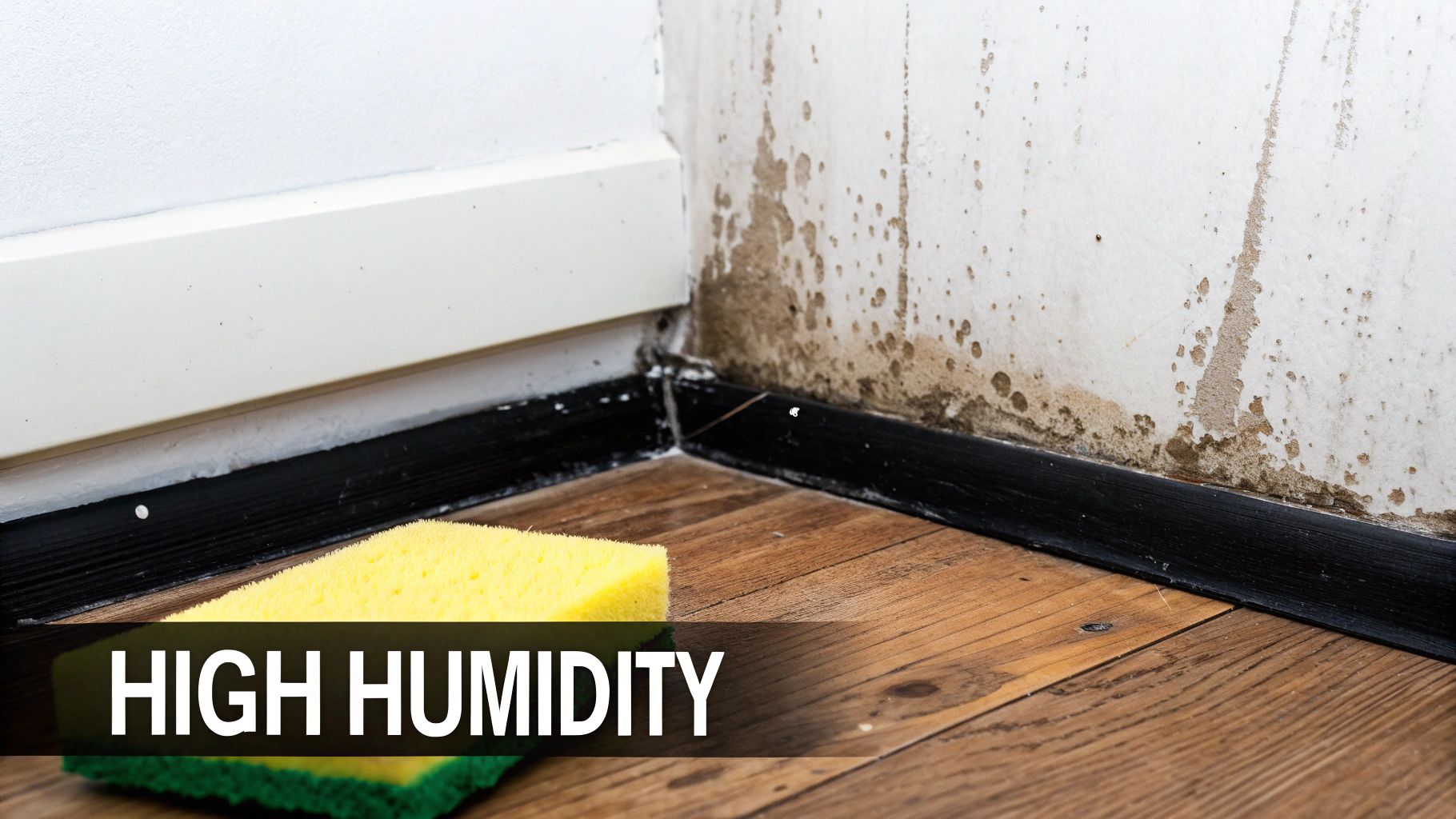
We’ve all felt it during a sweltering Canadian summer—that heavy, damp feeling in the air that makes your home feel sticky and uncomfortable. That’s more than just a nuisance; it’s a warning sign. Think of your home’s air like a giant sponge. When it gets oversaturated with moisture, it sets the stage for a whole host of problems to quietly take root.
This dampness is especially common in basements and bathrooms, creating the perfect breeding ground for mould and mildew. As they grow, they release tiny spores into the air you breathe, which is bad news for anyone with allergies or respiratory conditions like asthma.
An Unwelcome Invitation for Pests and Damage
It’s not just your health that’s at risk. High humidity rolls out the welcome mat for all sorts of unwanted pests. Dust mites, for one, absolutely thrive when the relative humidity gets above 50%. These microscopic critters are a major allergy trigger and can multiply like crazy in damp bedding, carpets, and furniture.
And then there's the damage to your home itself. All that excess moisture gets soaked up by porous materials, causing real, visible problems over time.
- Warped Wood: Hardwood floors, wooden furniture, and even your door frames can start to swell, buckle, and warp.
- Peeling Paint: Moisture gets trapped behind painted surfaces, causing those ugly bubbles and blisters before the paint starts peeling right off the wall.
- Musty Odours: That unmistakable stuffy, damp smell? That’s the direct result of mould and mildew having a party in stagnant, humid air.
One of the worst-case scenarios is ending up with serious issues like black mold on hardwood floors. That’s why spotting the early signs of mould is absolutely critical to stop the problem before it gets out of hand.
A home with consistently high humidity is like a slow-motion water leak. It quietly damages your property from the inside out, compromising both its value and its safety.
Your HVAC System's Role in a Humid Home
Your home's ventilation systems are supposed to get rid of this excess moisture, but they can't do their job if they're not working properly. Clogged dryer vents and dirty air ducts just trap that humid, contaminated air, forcing it to recirculate through your home again and again. It makes a bad situation much worse.
In many parts of Canada, it's common for summer humidity peaks to push indoor levels above 65% in homes without good ventilation, leading to a major spike in mould-related problems. Getting to the best humidity level for your home—somewhere around 45-55% in the summer—is your best defence. It can slash dust mite populations by 75% and stop condensation from forming on your windows.
This is exactly why professional HVAC maintenance, especially duct and dryer vent cleaning, is so important. It ensures your home can actually breathe, pushing out the damp air that fuels these costly and unhealthy issues.
Understanding the Problems of Low Indoor Humidity
As the vibrant colours of a Canadian autumn fade and the furnace kicks on, we’re faced with a different kind of indoor challenge. While that warmth is welcome, the heated air creates an environment that’s often bone-dry. This is the other side of the humidity coin, where the crisp winter air outside leads to a whole host of problems inside.
Your furnace is great at heating air, but it doesn't add any moisture to it. The process actually strips out whatever humidity is there, leaving the air feeling harsh and brittle. This kicks off a chain reaction of issues that affect everything from your family's health to the structure of your house.
The Physical Toll of Dry Air
Your body is the first thing to sound the alarm when humidity levels drop. The most obvious signs are physical discomforts that can make our long winters feel even more miserable. You’ll probably start to notice:
- Irritated Skin and Sinuses: Dry air pulls moisture right out of your skin, leading to that constant itchy feeling, chapped lips, and flare-ups for conditions like eczema. Your nasal passages dry out too, which means a scratchy throat, sinus pain, and even annoying nosebleeds.
- Increased Vulnerability to Illness: Think of the moist membranes in your nose and throat as your body's frontline defence against viruses. When they dry out, they can’t trap germs effectively, leaving you more open to catching colds and other respiratory bugs.
For most people, simply adding moisture back into the air is a game-changer for winter wellness. A properly installed whole-home humidifier can make a world of difference. We cover how these systems work in our detailed guide on the benefits of a whole-home humidifier.
Damage to Your Home's Structure and Belongings
Beyond your own comfort, overly dry air is quietly waging war on your home. Wood and other natural materials are especially at risk when the air lacks moisture.
The constant shrinking and expanding of wood from fluctuating humidity is a leading cause of long-term damage in Canadian homes. Over time, it can lead to expensive repairs for flooring, cabinetry, and structural elements.
As moisture gets pulled from these materials, they physically shrink. This leads to very visible (and often permanent) damage, like those unsightly gaps that appear between hardwood floorboards. You might also see cracks forming in wooden furniture, door frames, and trim. Even your walls can suffer, as paint and plaster become brittle and start to crack.
And let’s not forget the dramatic increase in static electricity. Those little zaps you get every time you touch a doorknob are more than just annoying—they can be a real threat to sensitive electronics.
Just how big of a deal is this for Canadian homeowners? Historical weather data shows that during our cold winters, indoor humidity can easily plunge below 25%. That level of dryness is responsible for cracking wood trim in a significant percentage of homes each year and boosts static electricity risks by a shocking 50%. You can learn more about how our local climate impacts home humidity in this detailed analysis on Same Day Service's blog.
How to Accurately Measure Your Home's Humidity
You can't manage what you don't measure. Before you can dial in the perfect humidity level, you need to know exactly where your home stands right now. Thankfully, getting a clear picture is easier and cheaper than most people think.
The key tool for this job is a hygrometer. Think of it as a thermometer for moisture in the air. These small, digital devices give you a precise reading of the relative humidity (RH) and are easy to find at any local Canadian Tire, hardware store, or online.
Once you have your tool, it helps to know what you’re aiming for. Getting familiar with ideal indoor humidity ranges gives you a clear target to work towards.
Using a Hygrometer for Best Results
Just having a hygrometer isn't enough—where you put it is everything. To get a truly accurate snapshot of your home's environment, placement is key.
Follow these simple tips for a reliable reading:
- Find a central spot. Place it in a living room or main-floor hallway, away from rooms like kitchens and bathrooms where moisture levels can swing wildly.
- Avoid direct heat and sun. Keep it away from heating vents, radiators, and sunny windows, as these can easily throw off the measurement.
- Test a few different areas. The humidity in your basement is probably very different from your upstairs bedroom. Taking readings in multiple rooms gives you the full story.
Signs of an Imbalance You Can See and Feel
Long before you buy a hygrometer, your home is probably already giving you clues. Your own senses are often the first line of defence in spotting a humidity problem.
One of the most classic signs of high humidity is that persistent condensation you see on the inside of your windows. When the warm, moist air in your home hits the cold glass, it turns back into water droplets.
Keep an eye out for these other tell-tale signs:
- Too High: The air feels stuffy or heavy, you notice musty odours, or paint starts to peel and bubble.
- Too Low: You're getting zapped by static electricity constantly, your skin feels dry and itchy, or you notice your wood furniture or floors are starting to crack.
By pairing what you see and feel with the hard data from a hygrometer, you can get a complete diagnosis. If you want to dig even deeper into your home's air quality, a professional air quality testing kit can help identify other potential issues lurking in your air.
Practical Ways to Balance Your Home's Humidity
Getting your home's humidity just right isn't a one-and-done deal—it's an ongoing process. But with the right approach, you can easily take control of your indoor climate, making your space more comfortable and healthier all year long. Think of this as your playbook, covering everything from simple daily habits to the major role your HVAC system plays.
This handy decision tree can help you figure out if your air is too damp or too dry based on the clues your home is giving you.
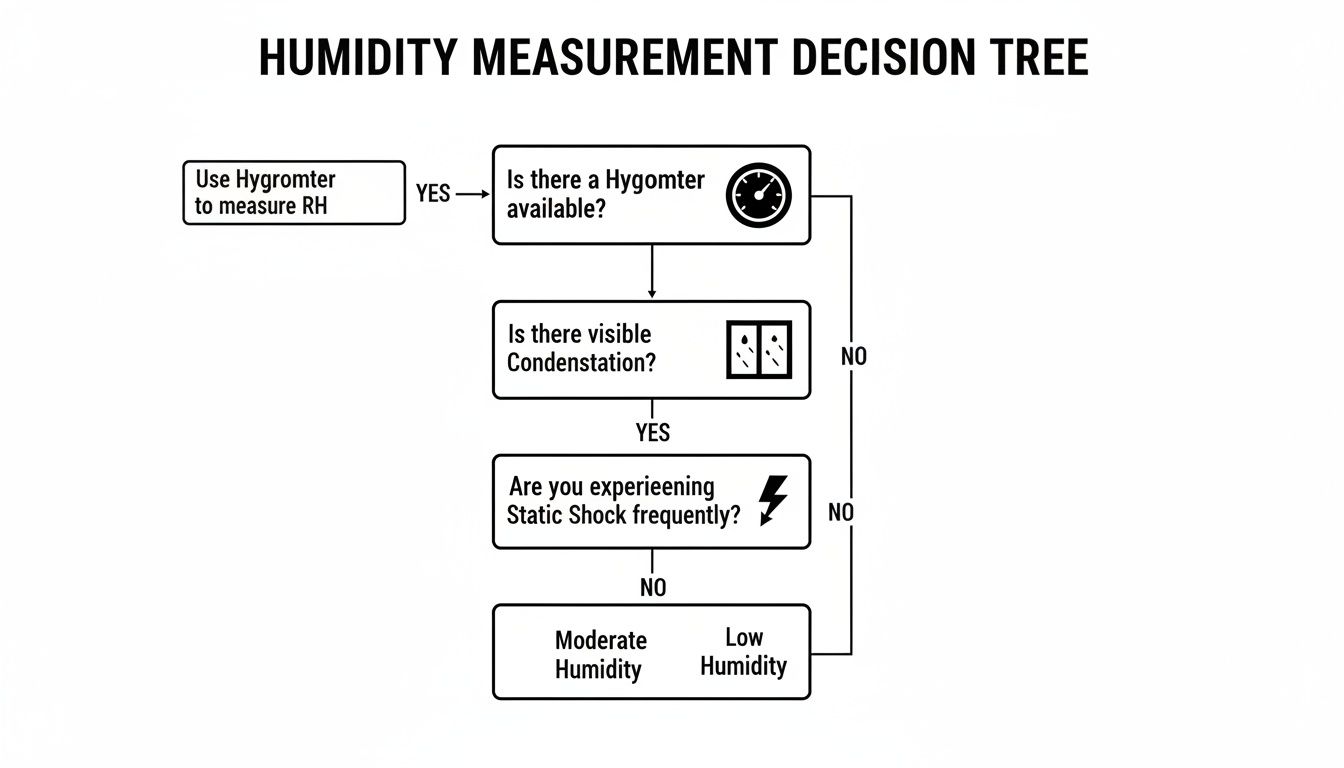
While a hygrometer gives you the exact numbers, this chart shows that you don't always need one. Things like condensation on your windows or a zap of static electricity are tell-tale signs that your home’s humidity is out of whack.
Targeted Solutions for High and Low Humidity
When your home’s humidity drifts outside that ideal 30% to 50% sweet spot, you need the right tool for the job. Knowing whether to plug in a humidifier or a dehumidifier is the first, most crucial step.
To battle those sticky, damp Canadian summers, a dehumidifier is your best friend. It acts like a small air conditioner, pulling moisture right out of the air. They’re an absolute must for basements, which are often the first place to get damp and develop that musty, mouldy smell.
On the flip side, a humidifier is a lifesaver during our harsh Canadian winters when the furnace is constantly running and drying out the air. It adds a fine mist of water back into your home, putting an end to dry skin, scratchy throats, and annoying static shock.
The right appliance offers a quick fix, but it's only one piece of the puzzle. For lasting balance, you need to think about how air actually moves through your home.
Choosing the Right Solution for Your Humidity Problem
Not sure which device or strategy to use? This table breaks down the most common solutions to help you decide what your home needs.
| Solution | Best For High Humidity | Best For Low Humidity | Key Benefit |
|---|---|---|---|
| Dehumidifier | ✔️ | Removes excess moisture to prevent mould and mustiness. | |
| Humidifier | ✔️ | Adds moisture to relieve dry air discomfort and protect wood. | |
| Exhaust Fans | ✔️ | Vents moisture from kitchens and bathrooms directly outside. | |
| HVAC System | ✔️ | ✔️ | Circulates and conditions air throughout the entire home. |
Each of these plays a specific role, but the most effective strategy often involves using them together to create a perfectly balanced indoor environment.
The Critical Importance of Ventilation
Think of ventilation as your home’s lungs—it’s designed to breathe out stale, moist air and breathe in fresh, clean air. You’d be surprised how much of a difference a few simple daily habits can make.
- Use Your Exhaust Fans: This is a big one. Always run the bathroom fan during a shower and for about 20 minutes after. Do the same in the kitchen when you're cooking, especially when boiling pasta or making soup, to get that steam outside immediately.
- Keep the Air Moving: A little circulation goes a long way. Use ceiling or portable fans to prevent air from becoming stagnant. Stagnant air traps moisture, and even a gentle breeze can make a room feel fresher.
- Seal Up Leaks: Check that your windows and doors are properly sealed. Gaps and cracks let humid summer air sneak in and warm, humidified air escape in the winter, making your job much harder.
For newer, more airtight homes, you might need a more powerful solution. You can dive deeper into how dedicated systems work in our guide to ERV and HRV ventilation designed for Canadian homes.
Your HVAC System: The Unsung Hero
Your heating, ventilation, and air conditioning (HVAC) system is, without a doubt, your most powerful tool for managing humidity. When it's running smoothly, it circulates, filters, and conditions the air in every single room. But if it's not maintained, it can quickly become part of the problem.
Professional air duct cleaning is a fantastic place to start. Over time, your ducts get clogged with dust, debris, and even mould, all of which can trap moisture and choke off airflow. A thorough cleaning lets your system breathe again, helping it remove humidity far more effectively.
Another common culprit is a clogged dryer vent. Your dryer pushes a ton of hot, moist air out with every cycle. If that vent is blocked, all that humidity has nowhere to go but back into your house, often in your laundry room.
Finally, nothing beats regular furnace and AC maintenance. A well-serviced air conditioner is much better at dehumidifying in the summer, and a clean furnace can work in perfect harmony with a whole-home humidifier in the winter. At the end of the day, a healthy HVAC system is the foundation of a comfortable and well-balanced home.
Common Questions About Home Humidity in Canada
Even after getting the basics down, you’ll probably still have a few questions. That’s perfectly normal. We hear them all the time from homeowners across Canada who are trying to get a handle on our unique climate. Here are the answers to some of the most common ones we get asked.
What Is the Best Humidity Level for a Basement in Canada?
For basements across Canada, you want to aim for the lower end of the ideal spectrum, somewhere between 30% and 50% relative humidity. Basements are naturally cooler and tend to trap moisture, which is basically an open invitation for mould and that all-too-familiar musty smell.
Keeping the humidity below that 50% mark is your best defence against these problems. It helps protect your foundation, furniture, and anything else you have stored down there. Honestly, a good dehumidifier is a must-have for almost any Canadian basement, especially during our sticky summer months.
Can Cleaning My Air Ducts Actually Help Control Humidity?
It absolutely can. Think of your HVAC system as your home’s lungs—it circulates all the air and is your primary tool for managing moisture. When the air ducts get clogged up with years of dust, pet dander, and other gunk, it chokes the system.
That blockage forces your air conditioner or furnace to work way harder and less efficiently, which compromises its ability to remove or add moisture to the air. A professional duct cleaning clears out those obstructions, lets the air flow freely, and allows your system to do its job properly. It’s a key step in improving your home's overall air quality and humidity control.
Managing your home's humidity isn't just about comfort—it's about creating a healthy living environment. From preventing mould to protecting your home's structure, a balanced humidity level is one of the most important aspects of home maintenance.
Should I Get a Portable or Whole-Home Humidifier for Winter?
This really comes down to what you’re trying to achieve. A small, portable humidifier is a great fix for a specific spot, like putting one in your bedroom to help with dry sinuses and sleep better through the night. They’re simple and targeted.
But for a truly consistent level of comfort throughout your entire house, a whole-home humidifier is the way to go. These units tie directly into your furnace to distribute moisture evenly everywhere, so you don't have to think about it. This protects all your hardwood floors, wood furniture, and trim from cracking in the dry Canadian winter air, making it the better long-term solution for maintaining the best humidity level for your home all year.
Why Does My Home Feel Hotter on Humid Days?
That sticky, swampy feeling has everything to do with how your body cools itself down. We sweat, and as that sweat evaporates off our skin, it cools us. It’s a pretty effective system.
But when the relative humidity is high, the air is already loaded with water vapour, leaving very little room for your sweat to go anywhere. Evaporation slows to a crawl. That’s why a 24°C day can feel so much hotter and more miserable than the same temperature on a dry day. It’s a perfect example of why managing summer humidity inside your Canadian home is just as important as setting the thermostat.
Ready to take control of your home's air quality and achieve the perfect humidity balance? The experts at Can Do Duct Cleaning have over 30 years of experience helping homeowners across the Greater Toronto Area breathe easier. From comprehensive duct cleaning to HVAC maintenance, we have the solutions to create a healthier, more comfortable living space for your family. Visit us at https://www.candoductcleaning.com to schedule your service today.

