
That quick swipe of the lint screen is a good habit, but it's really just the beginning. To properly clean your dryer's lint trap, you also have to clear out the deep cavity where the screen sits. This is where the real danger lies, as lint builds up and chokes off the airflow.
Why a Quick Screen Wipe Isn’t Enough
Pulling the fluff off the screen after every load is a fantastic habit. But that only deals with the most obvious part of the problem.
What you don't see is the finer, more compacted lint that gets past the screen and settles deep inside the trap housing. This hidden buildup is a serious fire hazard lurking in countless Canadian homes.
Over time, this accumulation acts like a plug. It traps heat and severely restricts airflow, forcing your dryer to work harder and run hotter just to get your clothes dry. I remember a case with a Scarborough family whose drying times had nearly doubled, and their hydro bills were creeping up for no apparent reason. It wasn't until a technician looked into their "inefficient" dryer that they discovered the lint trap cavity was dangerously clogged.
Taking care of this often-overlooked task is directly tied to your home's safety and your wallet. A clean lint trap system doesn't just lower the risk of a fire; it also makes sure your appliance runs efficiently, keeping your energy costs from spiralling.
The Hidden Costs of a Clogged Lint Trap
When airflow is blocked, the consequences start to ripple outwards, hitting both your bank account and the lifespan of your dryer. The immediate effects are annoying, but the long-term damage can be far worse.
- Higher Hydro Bills: Your dryer is one of the bigger energy hogs in your home. When it has to run longer and hotter, it can add a surprising amount to your monthly hydro bill.
- Premature Wear and Tear: Forcing the heating element and motor to work overtime leads to faster component failure. That means you could be facing expensive repair bills—or a full replacement—much sooner than you expected.
- Poor Performance: It's not just about longer drying cycles. Poor airflow can leave your clothes feeling damp or even smelling a bit musty, forcing you to run the load all over again.
For a deeper dive into how the entire system functions, you might find our guide on professional dryer vent cleaning services helpful.
A Deep Clean Guide for Your Dryer Lint Trap
That quick swipe you do after every load is a great habit, but it's only half the battle. To keep your dryer running safely and efficiently, you need to go beyond the screen and deep clean the entire lint trap system. This is where the real gunk builds up, choking off airflow and creating a serious fire hazard.
Safety first, always. Before you even think about starting, unplug your dryer completely from the wall. This isn't just a suggestion—it's the most critical step to prevent any risk of electric shock while you work.
With the machine safely powered down, pull the lint screen out like you normally would. Now, grab your vacuum and attach its narrow crevice tool. A long, flexible dryer lint brush also works wonders here. Carefully guide your tool down into the empty lint trap cavity.
You'll probably be shocked at what comes out. Work the tool around the entire housing, sucking out all the compacted lint and dust. It’s not uncommon to find lost loonies, buttons, or other small items that have slipped past the screen.
Washing Away Invisible Residue
Now, let's turn our attention to the screen itself. Over time, dryer sheets and fabric softeners leave behind an invisible waxy film on the mesh. You can't see it, but this residue is just as bad as a physical clog, restricting air and forcing your machine to work much harder.
To get rid of it, just take the screen to your sink. Give it a gentle scrub with a soft brush and some warm, soapy water. After a thorough rinse, hold it up to a light source. You should be able to see clearly through the tiny holes in the mesh again.
Crucial Tip: Let the screen air dry completely before you put it back. Reinserting a damp screen is a recipe for disaster—new lint will stick to it like glue, creating a stubborn, mucky buildup and undoing all your hard work.
This diagram shows exactly how that lint you miss on the screen can quickly migrate deeper into the trap, eventually leading to a dangerous blockage.
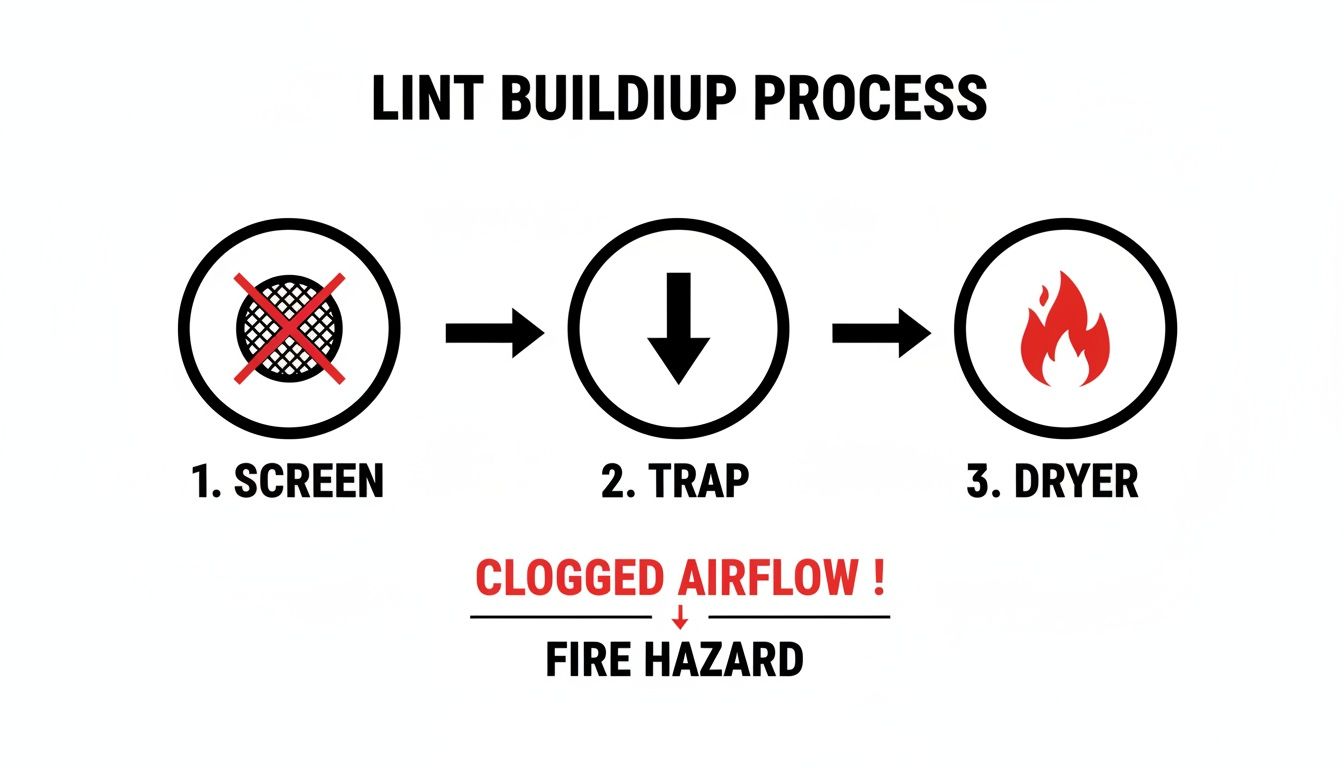
It’s a perfect visual of why cleaning out that cavity is just as important as clearing the screen when it comes to preventing fires and keeping your dryer efficient.
Final Checks and Reassembly
Before you slide the clean, dry screen back in, grab a flashlight and take one last peek inside the trap housing. You want to make sure there's no leftover debris that could cause problems down the road.
This deep clean is especially important for us here in the Greater Toronto Area. A local energy study found that a clogged lint trap can force a dryer to use 22% more electricity, which can add a surprising amount to your annual hydro bill. Since the screen only catches about 70% of the lint, the rest builds up in the vent, posing a major risk. You can learn more about these GTA-specific findings over at Dryer Vent Heroes.
Once you're happy that the cavity is clear and the screen is bone-dry, slide it firmly back into place. You're all done! You’ve just boosted your dryer’s performance, lowered its energy use, and tackled one of the most common fire hazards in any home.
The Best Tools for the Job

When it comes to cleaning your dryer's lint trap, having the right gear on hand makes all the difference. The good news? You don't need a huge, expensive kit. In fact, you probably have most of what you need kicking around the house already.
Your most valuable player here will be a long, flexible nylon brush. These are perfect because they're stiff enough to break up that stubborn, packed-down lint deep inside the vent cavity but gentle enough not to scratch up the inside of your dryer. Whatever you do, steer clear of wire brushes—the metal bristles can easily damage delicate sensors or the trap housing itself.
Your vacuum cleaner’s narrow crevice tool is the perfect partner for your brush, easily sucking up all the dislodged debris. For the lint screen, a simple, gentle approach works wonders.
Your Lint Trap Cleaning Toolkit
Here’s a quick rundown of the gear that will make this job a breeze.
| Tool | Primary Use | Where to Find |
|---|---|---|
| Nylon Vent Brush | Dislodging deep, compacted lint from the trap cavity. | Hardware stores like Canadian Tire, Home Hardware |
| Vacuum with Crevice Tool | Removing loosened lint and debris from the trap cavity. | Your cleaning closet |
| Mild Dish Soap | Breaking down waxy residue from fabric softeners on the screen. | Under the kitchen sink |
| Old Toothbrush | Gently scrubbing the fine mesh of the lint screen. | Bathroom drawer |
| Microfibre Cloth | Wiping down the area around the lint trap after cleaning. | Cleaning supply aisle |
With these few items, you're fully equipped to tackle both the screen and the deeper trap housing for a thorough clean.
Simple and Effective Cleaning Solutions
You can definitely skip the harsh chemicals for this task. A gentle cleaning mixture is all you need to cut through that nearly invisible residue left behind by dryer sheets and liquid fabric softeners.
- Mild Dish Soap: Just a few drops in a basin of warm water is incredibly effective at dissolving the waxy film that can clog the mesh of your lint screen over time.
- Soft Brush: An old toothbrush or a similar soft-bristled brush is perfect for gently scrubbing the screen. It gets the job done without stretching or damaging the fine mesh.
- Microfibre Cloth: Once you’ve finished vacuuming, a quick wipe with a microfibre cloth is great for catching any lingering dust around the lint trap housing.
While these tools are perfect for regular DIY maintenance, professional technicians use much more powerful systems for deep cleaning. If you're curious, you can learn more about specialized duct cleaning equipment and see how it tackles an entire home's ventilation network.
Here’s a pro tip: Always let the lint screen air dry completely before you put it back. Reinstalling it while it's still damp creates a sticky surface that lint just loves to cling to, which can lead to faster buildup and even mould growth.
Warning Signs of a Deeper Clog
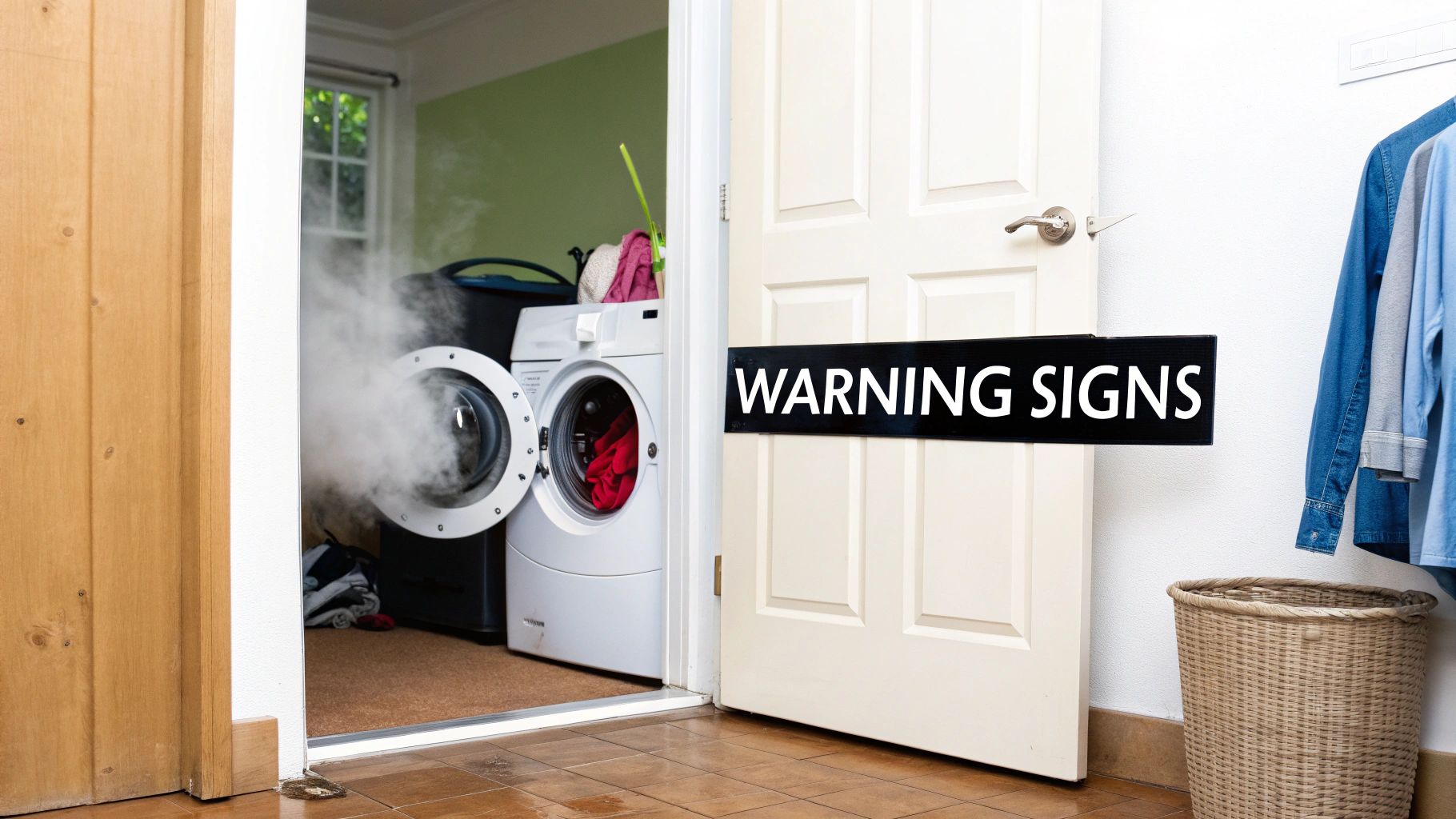
So, you’ve been diligently cleaning your dryer's lint screen after every load. That’s a great habit, but what if your dryer still isn't performing like it used to?
This is often the first clue that a more serious clog is building up deep inside the ventilation system—the parts you can't easily see or reach. Ignoring these hints can lead to major headaches like appliance failure or, even worse, a house fire. Spotting the symptoms early is crucial for keeping your home safe.
Key Symptoms to Watch For
If you notice any of the following issues, it's a strong signal that your dryer vent is obstructed and needs immediate attention.
- Damp Clothes After a Full Cycle: Are your clothes still damp after a normal run? Having to run a second cycle is the most common sign that hot, moist air is trapped and can’t escape the dryer drum properly.
- An Unusually Hot Appliance: Place your hand on the top or sides of the dryer while it’s running. If it feels excessively hot, that’s a red flag. The heat is trapped inside instead of being vented out, which puts a huge strain on the machine.
- A Hot and Humid Laundry Room: Your dryer is supposed to send all that moisture outside, not turn your laundry room into a sauna. A steamy, humid room means the exhaust is blocked, pushing that damp air right back where it came from.
- A Burning Smell: This is the most alarming sign. Lint is highly flammable, and when a clog causes your dryer to overheat, the trapped lint can start to smoulder. If you smell something burning, stop the dryer immediately.
A property manager in Toronto recently shared a story about this exact issue. Residents were good about keeping their individual lint traps clean, but multiple units started reporting that their clothes just weren't drying. A professional inspection found the building's main exhaust line was almost completely blocked—a hidden fire hazard that routine screen cleaning couldn't touch.
This scenario is all too common across the Greater Toronto Area. Simply neglecting to clean the full dryer vent system is a leading contributor to residential fires. Blocked vents force dryers to run 20-30% hotter, a problem made worse during our humid Ontario winters, according to local energy audits.
Understanding these red flags is the first step. For a complete guide on keeping your appliance safe, check out this excellent article on how to clean a dryer and prevent fire hazards. These symptoms are your dryer’s way of asking for help; our own guide on the five warning signs of clogged vents dives into even more detail.
When to Call in the Pros for a Dryer Vent Cleaning
Keeping your lint trap clean is a great habit, but sometimes the problem runs deeper—much deeper than your vacuum hose or a brush can reach. If you've tried all the DIY tips and your dryer is still struggling, that's a sure sign of a stubborn clog hiding in the vent system itself.
This is where a professional service isn't just a convenience; it's a smart move for your home's safety and your dryer's health.
What a Professional Service Actually Does
A professional dryer vent cleaning goes way beyond just clearing the trap. Technicians come equipped with specialized gear, like high-powered vacuums and long, flexible rotary brushes that can navigate the entire length of your ducting. They scrub everything from the connection at the back of your dryer right through to the vent cap on the outside of your house.
This process dislodges years of compacted lint, debris, and—believe it or not—even animal nests that your household tools simply can't handle. It’s not just about a quick clean; it’s about fully restoring proper airflow.
The results are almost immediate for homeowners in the GTA. You’ll see a drop in your hydro bills because your dryer isn't working so hard, the appliance itself will last longer, and you'll get priceless peace of mind. This is especially true in commercial settings. Property managers in Toronto's high-rises and laundromats face unique challenges. In fact, a Toronto Building Code compliance audit found that a staggering 28% of commercial laundry vents were clogged simply because of uncleaned traps, leading to major efficiency losses.
Think of it as a much-needed tune-up for one of your home’s hardest-working appliances. It’s not just another expense—it's preventative maintenance that protects your property and family from a very real fire risk.
For a closer look at what our comprehensive service includes, take a peek at our guide on dryer vent cleaning.
Common Questions About Dryer Maintenance
Even if you're on top of your maintenance game, questions are bound to come up. Let's dig into some of the most common things Canadian homeowners ask about keeping their dryers running smoothly and safely.
How Often Should I Deep Clean The Lint Trap Cavity?
While the screen itself needs a quick swipe after every load, the cavity where it sits is a different beast entirely.
For the typical household, a good, thorough vacuuming of the lint trap housing every three to six months is a solid goal. But if you've got a busy home with a large family, pets that shed like it's their job, or you're constantly drying towels and fleece, you'll want to ramp that up. Think more along the lines of every two months.
Can I Use A Leaf Blower To Clean My Dryer Vent?
I hear this one a lot, and it's a popular DIY shortcut that we absolutely advise against. It might seem like a clever hack, but it’s a risky one.
The sheer force from a leaf blower is way too powerful and uncontrolled for the flexible ducting hidden in your walls. It can easily cause a tear or disconnection you'd never even see. This creates a much bigger hazard: hot, damp, lint-filled air venting directly into your wall cavities, setting the stage for a hidden fire risk.
A leaf blower might feel like a quick win, but the potential for unseen damage makes it a gamble not worth taking. It's always a safer bet to use a vacuum with the right attachment or to call in a professional for the main vent line.
Does Fabric Type Affect Lint Buildup?
It absolutely does. The fabrics you dry have a huge impact on how fast that lint trap fills up.
- High-Lint Fabrics: Natural fibres are the main offenders here. Think cotton (especially towels and fleece), wool, and flannel—they all produce a surprising amount of lint.
- Low-Lint Fabrics: On the other hand, synthetic materials like polyester, nylon, and spandex shed far less.
Knowing this can help you predict when your dryer might need attention sooner rather than later. For a broader look at cleaning schedules around the house, you can check out this guide on how often you should clean various household items. And for more specific timelines on your dryer, our guide on how often to clean your dryer vent dives deeper.
At the end of the day, a clean dryer is a safe and efficient dryer. For a professional, deep clean that gets to the clogs hidden in your system, trust the experts at Can Do Duct Cleaning. Ensure your home's safety and schedule your service today.


