
Across Canada, a professional furnace tune-up generally runs between $150 and $250. Think of it as a small, predictable investment that keeps your heating system humming through our harsh winters, helping you sidestep a much bigger bill for an emergency repair.
Why Annual Furnace Maintenance Is a Smart Investment
Scheduling an annual furnace check-up is a lot like getting your car's tires changed before a long winter road trip. It's a simple, proactive step that ensures safety, reliability, and efficiency right when you need it most. For any homeowner, especially in regions like the Greater Toronto Area where winter temperatures can be unforgiving, a well-maintained furnace isn’t just a nice-to-have—it’s an absolute essential.
A yearly service call is more than just a quick look-over; it's a complete health check for your heating system. It’s all about spotting and fixing the small issues before they snowball into major, expensive problems. Without it, you're really just gambling with your comfort and your bank account.
The True Cost of Neglect
Trying to save a couple of hundred dollars by skipping a tune-up might seem like a good idea at first, but it almost always leads to much higher costs down the line. A furnace that hasn't been serviced has to work harder, burns more fuel, and is far more likely to break down. This is where a little proactive care pays off big time:
- Prevents Costly Emergencies: A technician can spot a failing part that could otherwise leave you without heat on the coldest night of the year.
- Improves Energy Efficiency: A clean, properly calibrated furnace uses less energy, which translates directly to lower monthly heating bills from providers like Enbridge or Hydro One.
- Ensures Home Safety: Professionals inspect critical parts like the heat exchanger for tiny cracks that could leak dangerous carbon monoxide into your home.
- Extends System Lifespan: Regular maintenance reduces the daily wear and tear on your system, helping you get a few more years out of it and pushing back the major expense of a full replacement. If you are starting to think about an upgrade, it's worth understanding the cost of a new furnace installation.
At the end of the day, investing in furnace maintenance isn't just about avoiding repairs. It's about protecting your home, your family's comfort, and your wallet from the stress and expense of a sudden heating failure.
What a Professional Furnace Tune-Up Actually Includes
When you schedule a professional furnace tune-up, you're getting a lot more than just a quick peek under the hood. A certified, TSSA-licensed technician works through a detailed checklist designed to make sure your system is safe, running efficiently, and ready to handle whatever a Canadian winter throws at it. It’s basically a full physical for your home’s heating system.
Think of it like this: anyone can pop the hood on their car and check the oil level. But it takes a real mechanic to inspect the belts, test the battery, and check the brakes. In the same way, a furnace pro gets deep into your system to perform critical checks that a homeowner simply can’t—and shouldn’t—try to do themselves.
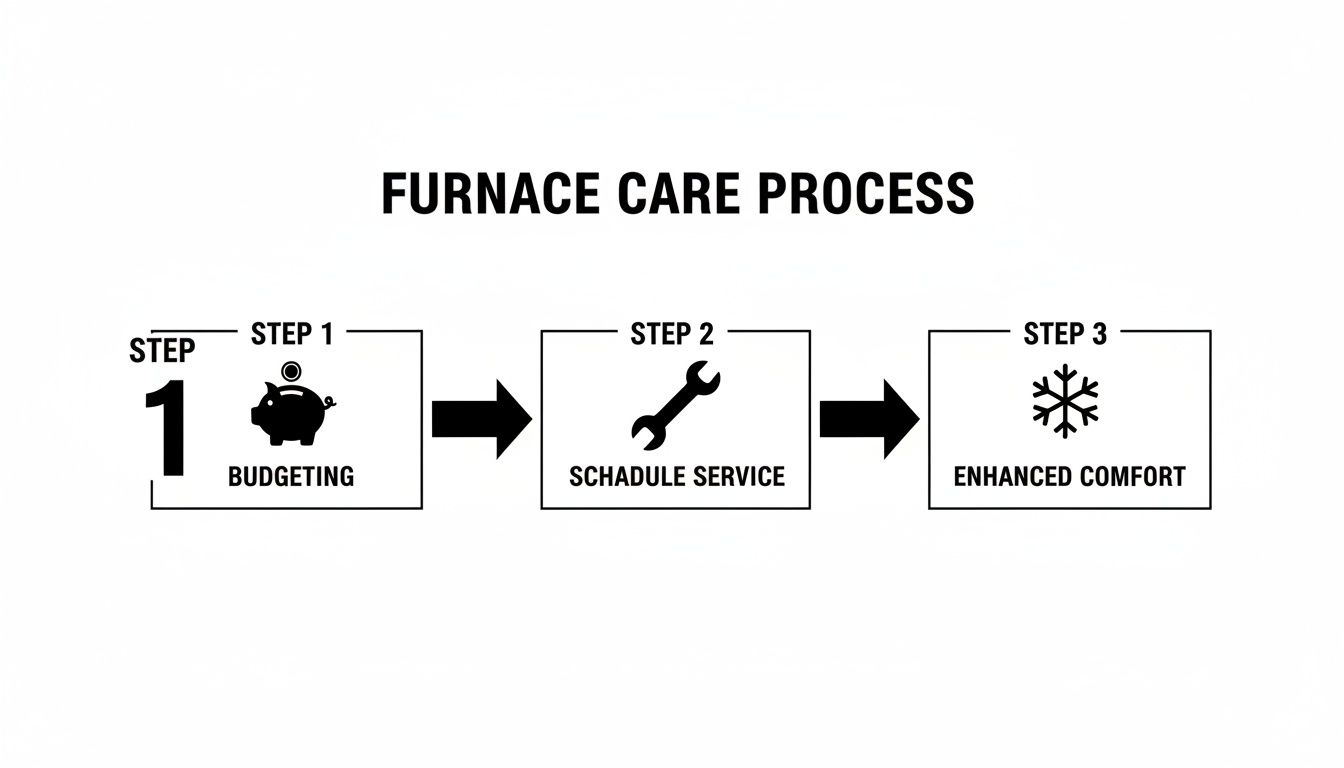
The path to a warm, worry-free winter is straightforward: you plan for the cost, book the service, and then enjoy reliable comfort when you need it most. It shows that maintenance isn't just an expense; it's a direct investment in your home's performance and your family's comfort.
The Inspection and Cleaning Process
A huge part of any service call is the meticulous cleaning and inspection. After a full season of running, dust, pet dander, and other debris build up on crucial parts, forcing your furnace to work harder and gobble up more energy.
A technician will get in there and clean the key components to bring performance back up to spec.
- Blower Motor and Components: They'll clean the blower wheel and its housing to ensure you're getting maximum airflow. This is a game-changer for both efficiency and how comfortable your home feels.
- Burners and Flame Sensor: Soot building up on the burners can mess with combustion, and a dirty flame sensor can cause your furnace to shut off randomly. Both get a thorough cleaning and testing.
- Heat Exchanger Inspection: This is, without a doubt, the most important safety check. The technician carefully inspects the heat exchanger for any cracks or corrosion that could leak deadly carbon monoxide gas into your home.
Safety Checks and System Calibration
Beyond a good cleaning, the technician's top priority is to make sure your furnace is operating safely. This involves testing all the safety controls and calibrating the entire system for peak performance, ensuring every part is working in perfect harmony.
A professional tune-up is all about catching those small, hidden issues before they snowball into catastrophic failures. It’s the difference between a simple tweak in October and a total system breakdown on the coldest night in January.
These safety and performance tests are absolutely non-negotiable.
- Testing Safety Controls: They'll test the high-limit switch and other safety circuits to confirm they’ll shut the furnace down correctly if an unsafe condition ever develops.
- Checking Gas Pressure and Combustion: The tech will measure the gas pressure and analyze the combustion output to make sure fuel is burning cleanly and efficiently—no wasted energy here.
- Lubricating Moving Parts: All moving parts, like the inducer fan motor and blower motor, get lubricated. This cuts down on friction, prevents premature wear, and helps quiet down any annoying operational noises.
If you want to dive even deeper, this ultimate HVAC preventative maintenance checklist gives a great overview of the full scope of professional care. Seeing all the steps involved really helps you appreciate the value behind your furnace maintenance costs. For our specific approach, you can always review our complete furnace maintenance checklist.
Key Factors That Influence Your Service Quote
When an HVAC technician gives you a quote for furnace maintenance, that number isn't pulled out of thin air. Just like a mechanic's estimate depends on your car's make and model, several key things determine the final cost of a furnace tune-up.
Knowing what goes into the price helps you understand exactly what you're paying for. A pro has to weigh a few variables to give you an accurate quote that covers the work needed to get your system running safely and efficiently.
Furnace Type and Age
One of the biggest price drivers is the kind of furnace you own. A modern, high-efficiency condensing furnace is more complex than its older cousins. It has extra parts like a secondary heat exchanger and sophisticated venting that need specialized checks.
Age matters, too. An older unit that's been around the block might need a little more TLC. Parts can be tougher to find, and years of service often mean a technician has to do more intensive cleaning and calibration to ensure it’s still running safely. The complexity and age directly shape how much time and effort the job will take.
System Condition and Service History
The current state of your furnace plays a huge role in the final furnace maintenance costs. If you’ve been on top of annual service, the tune-up will likely be quick and straightforward.
But a neglected system? That's a whole different ball game.
A furnace that has skipped a few years of maintenance often needs a lot more work. Technicians might find heavy soot buildup, clogged burners, or controls that are completely out of whack. Tackling these issues adds time and labour to the bill.
If it's been a while, your first service back might cost a bit more. Think of it less as preventative maintenance and more as a restorative service to get things back on track. If you're weighing maintenance against a full upgrade, our guide on the cost to replace both a furnace and air conditioner can offer some perspective.
Accessibility and Filter Condition
Believe it or not, where your furnace is located can bump up the price. A unit crammed into a tight crawlspace or a hard-to-reach attic is a lot tougher to work on than one sitting in an open, accessible basement.
The filter’s condition is another factor that often gets missed. For homeowners in the GTA, letting a filter get filthy can drive up maintenance costs by 25-30% each year. In dustier areas from Scarborough to Ajax, we see clogged filters cause expensive inducer motor failures all the time. As you can see from these key HVAC statistics, small oversights can lead to big repair bills.
The Real Cost of Skipping a Furnace Tune-Up
It’s tempting to put off your annual furnace tune-up, thinking you're saving a bit of cash. But let’s be honest, that's a risky bet to take against a Canadian winter. The small fee for some professional TLC is nothing compared to the massive headache and cost of neglect.
Picture this: it's the middle of a frigid January, and your furnace gives up. That’s not just an inconvenience—it’s an emergency. The real story behind furnace maintenance costs isn't about the price of a tune-up; it's about the brutal cost of skipping one. Let's dig into the numbers and see how a little investment now can save you from a budget-breaking disaster later.
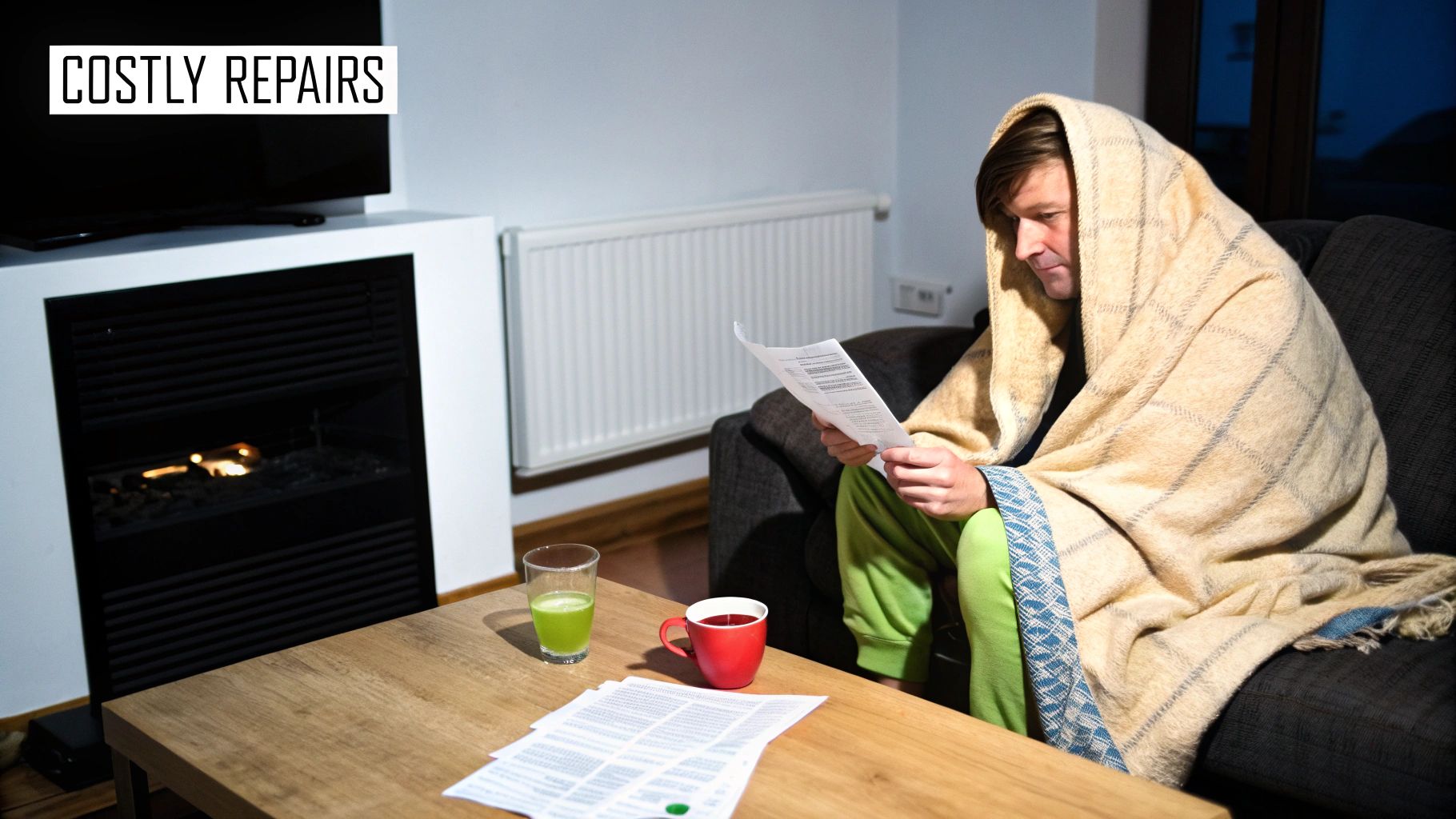
The Staggering Price of Emergency Repairs
When a furnace dies unexpectedly, the repair bills can be eye-watering. A minor issue that could have been spotted and fixed during a routine check-up can easily snowball into a catastrophic failure when the system is working overtime.
Here in the Greater Toronto Area, where dependable heat is a must, skipping your annual service is asking for trouble. A standard tune-up typically runs between $150 and $250. But if you roll the dice and lose, you could be looking at common emergency repairs like a blower motor replacement for $500 to $1,200, or a critical heat exchanger replacement clocking in at $2,000 to $4,000. These aren't just hypotheticals; local service logs show a staggering 40% jump in emergency calls when the temperature plummets in January. You can get more details on these regional heating cost breakdowns.
Let’s look at a quick comparison:
- Preventative Fix: During a tune-up, a technician notices the blower motor is labouring. A quick cleaning and lubrication—covered by the tune-up fee—gets it running smoothly again.
- Emergency Repair: That same motor, left untouched, burns out completely. Now you’re on the hook for a replacement bill that can easily soar past $1,000.
When you look at it that way, the choice is pretty clear. You can pay a small, predictable fee for maintenance in the fall, or you can risk a huge, unexpected repair bill in the dead of winter. Annual service isn't just an expense—it's your insurance against a financial nightmare.
The Most Critical Failure: A Cracked Heat Exchanger
Of all the things that can go wrong, the most dangerous and expensive is a cracked heat exchanger. This vital component is the only thing separating the air you breathe from toxic combustion gases like carbon monoxide. An unmaintained furnace can overheat, causing stress fractures in the metal over time.
A good technician meticulously inspects the heat exchanger during a routine visit, looking for any signs of wear and tear. Catching a problem early is everything. If it cracks, the furnace is immediately red-tagged and shut down for safety. At that point, you're left with two very expensive choices:
- Replace the Heat Exchanger: This is a complex, labour-intensive job that can easily cost $2,000 or more.
- Replace the Entire Furnace: If your furnace is getting on in years, it often makes more sense to replace the whole unit—a multi-thousand-dollar investment.
This one scenario alone shows you the true value of preventative care. An annual tune-up doesn't just protect your wallet; it protects your family's safety.
DIY Maintenance vs. Calling a Professional
It’s tempting to roll up your sleeves and tackle furnace upkeep yourself, especially if it means saving a few bucks. But while a bit of DIY spirit is great, it’s vital to know where to draw the line. Some jobs are perfect for a homeowner, while others absolutely require a pro.
Getting your hands a little dirty with basic maintenance is a fantastic way to keep your furnace humming along between professional check-ups. These simple steps can make a real difference in performance and help manage your overall furnace maintenance costs.
Simple and Safe DIY Furnace Tasks
You don’t need a TSSA licence to handle a few key tasks that keep your system happy. These are low-risk, high-reward jobs that every homeowner can—and should—do.
- Change the Furnace Filter Regularly: This is, without a doubt, the most important thing you can do for your furnace. A dirty, clogged filter chokes the airflow, making your system work way harder than it needs to and spiking your energy bills. Getting familiar with how often you should replace your furnace filter is a brilliant first step.
- Keep Vents and Registers Clear: Take a quick walk around your home. Is a couch, a rug, or a stack of magazines parked on top of a vent? Blocking supply or return vents disrupts airflow, preventing your system from heating your home efficiently.
- Clean Around the Furnace Unit: A little housekeeping goes a long way. Keep the area right around your furnace clear of dust, clutter, and especially anything flammable. This improves safety and stops extra dust from getting sucked into the works.
When to Absolutely Call a Professional
While those DIY tasks are helpful, some jobs are strictly for the pros. They involve serious risks and require specialized tools and training. Trying to service complex parts yourself can void your warranty, lead to costly damage, or create a dangerous situation for your family.
A professional tune-up isn't just a fancy cleaning. It's a precision safety inspection. Technicians are trained to handle high-voltage electrical systems, natural gas lines, and combustion components—areas where one tiny mistake can have disastrous consequences.
It's time to pick up the phone and call an expert for anything involving:
- Gas and Electrical Components: Never, ever try to adjust gas pressure, mess with electrical wiring, or service the burner assembly. This work requires a certified gas technician to prevent dangerous gas leaks or fire hazards.
- Internal Motor and Fan Maintenance: The blower motor and other moving parts inside your furnace need careful cleaning and lubrication. A pro ensures everything is put back together correctly so it operates safely and efficiently.
- Heat Exchanger Inspection: This is the most critical safety check of them all. Only a trained technician can spot the hairline cracks in a heat exchanger that could leak deadly carbon monoxide into your home. This is not a risk worth taking.
How Annual Maintenance Delivers Long-Term Savings
Think of regular furnace maintenance as an investment, not just an expense. It completely flips the script from dealing with expensive, reactive repairs to enjoying proactive savings. A well-maintained furnace doesn't just run—it runs efficiently, which makes a real difference on your monthly heating bills, especially during our long Canadian winters.
A clean, properly tuned system simply uses less energy to keep you warm. But the savings don’t stop at your utility bill. By keeping your furnace in great shape, you’re also reducing the total cost of ownership over the entire life of your heating system.
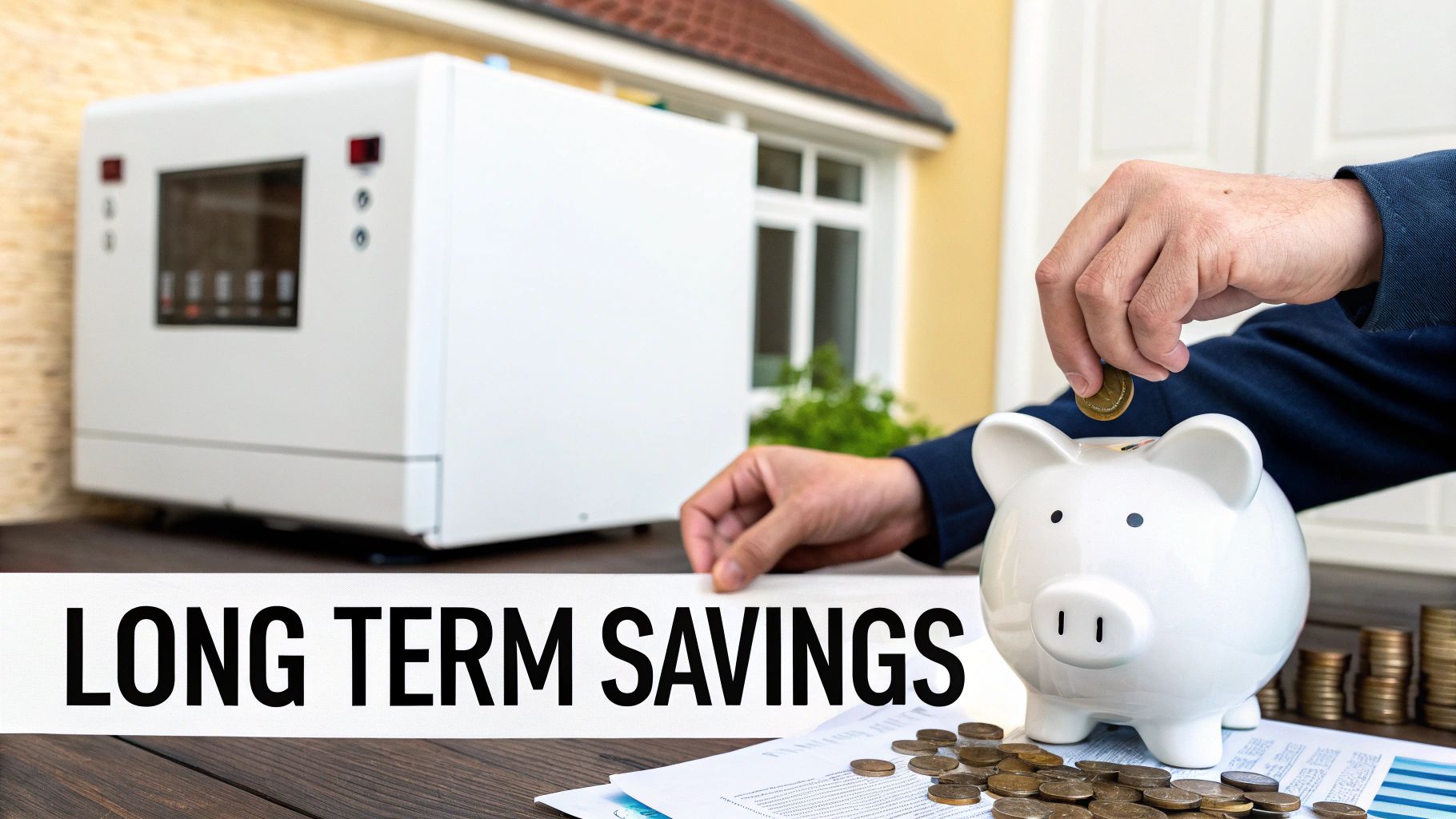
Extending Your Furnace's Lifespan
Maybe the biggest win from annual maintenance is squeezing more years out of your furnace. Those regular tune-ups dramatically cut down on the daily wear and tear that hammers critical parts like the blower motor and heat exchanger. It’s this consistent care that can add years to your furnace’s working life.
Putting off a full system replacement is a massive financial victory. When you consider that a brand new furnace is a major purchase, delaying that cost by even a few years keeps thousands of dollars right where they belong—in your pocket. You can see what's involved by checking out our guide on a full furnace replacement with installation.
The Numbers Behind the Savings
The math really makes a compelling case. Over a 15-year period, a GTA homeowner who stays on top of maintenance might spend between $3,000 and $4,500 in total for those annual visits. In return, they can save over $10,000 by dodging emergency repair bills and cutting down on wasted energy.
When you factor in that a new high-efficiency furnace installation in the GTA can run anywhere from $7,000 to $12,000, preventing even one premature replacement makes the cost of maintenance a no-brainer.
This long-term perspective changes furnace maintenance costs from a simple annual bill into a smart financial strategy. It's one of the best things a homeowner can do to protect their investment and keep their budget predictable. That small, yearly fee buys you peace of mind and some very real savings down the road.
Your Top Furnace Maintenance Questions Answered
When it comes to taking care of your furnace, it's natural to have a few questions. We get calls from homeowners across the Greater Toronto Area all the time, so we've put together some straightforward answers to the most common things people ask about furnace maintenance.
How Often Should I Service My Furnace in Canada?
With our chilly Canadian winters, annual furnace maintenance is non-negotiable. The sweet spot for scheduling a tune-up is in the early autumn, right before the cold really sets in.
Getting it done then means your system is clean, safe, and ready for whatever winter throws at it. Plus, you’ll avoid the mad rush for service when the first snowfall hits and everyone suddenly remembers their furnace.
Does a Furnace Tune-Up Include Duct Cleaning?
That’s a great question, and the short answer is no—not usually. Furnace maintenance and duct cleaning are two separate jobs that require different equipment and specialized skills. Think of it like getting an oil change for your car versus getting the interior detailed; both are important for the car's overall health, but they are distinct services.
Many companies, including us, offer packages that bundle furnace maintenance with duct cleaning. It's a powerful combination. A clean, efficient furnace pushing warm air through freshly cleaned ducts gives you the best possible performance and healthiest indoor air.
Can Regular Maintenance Actually Lower My Energy Bills?
You bet it can. A professional tune-up isn't just a quick look-over; it's a deep clean and calibration designed to get your furnace running as efficiently as the day it was installed. When a technician cleans the burners, lubricates all the moving parts, and checks the airflow, your furnace doesn't have to work as hard to heat your home. Less work means less energy consumed.
In fact, homeowners in Ontario can see their heating costs drop by as much as 15% annually after a proper service. Those savings add up quickly, often covering the cost of the maintenance itself over a single heating season. It’s one of the smartest investments you can make in your home.
Ready to make sure your furnace is safe, efficient, and prepared for winter? The expert team at Can Do Duct Cleaning provides top-tier maintenance services across the GTA. Schedule your tune-up today

