
When your air conditioner gives up during a sweltering Canadian summer, only one question really matters: "How much is this going to set me back?" Let's get straight to it.
For most homeowners in Canada, the average air conditioner replacement cost lands somewhere between $4,000 and $8,000. This range usually covers a standard central AC unit and the professional installation that goes with it. Of course, the final bill depends on your home’s unique layout, the system's efficiency, and its cooling power.
Your Quick Guide To AC Replacement Costs In Canada
Getting a handle on the potential investment is the first, most important step. While several things can nudge the price up or down, we can give you a solid starting point for your budget.
Think of it like buying an engine for a car. You wouldn't put a tiny hatchback motor in a huge transport truck, and you wouldn't waste a massive truck engine on a small car. It’s the same with air conditioners. Your home's size dictates the cooling power—measured in "tons"—that you'll need.
Why Home Size Matters
A bigger house needs a more powerful (and yes, more expensive) unit to cool every room properly. If you cheap out on an undersized unit, it will run nonstop trying to keep up, sending your hydro bills through the roof and burning itself out years too early.
On the flip side, getting a unit that's too big is just as bad. It will blast cold air so quickly that it shuts off before it can properly dehumidify your home, leaving you with that cold, clammy feeling. A pro will make sure you get the size just right for your space, ensuring you’re both comfortable and efficient.
The right-sized AC is just as important as the price tag. Getting it right means you aren't wasting money on an oversized beast or suffering with an underpowered unit that can't handle a real Canadian heatwave.
To give you a clearer picture, here’s a quick breakdown of what you can expect to pay based on typical home sizes across the country.
Estimated AC Replacement Costs In Canada By System Size
This table gives you a ballpark estimate for a complete central air conditioner replacement with a standard efficiency model, including installation.
| Home Size (sq. ft.) | AC Unit Size (Tons) | Estimated Cost Range (CAD) |
|---|---|---|
| 1,000 – 1,500 | 1.5 – 2.0 | $4,000 – $5,500 |
| 1,500 – 2,000 | 2.5 – 3.0 | $5,000 – $7,000 |
| 2,000 – 2,500 | 3.5 – 4.0 | $6,000 – $8,000+ |
These numbers are a great starting point for a standard job. But remember, a lot of homeowners decide to replace their furnace at the same time, which can actually be more cost-effective. If you're curious about that, check out our guide on the cost of replacing a furnace and air conditioner together.
Next up, we'll break down exactly what goes into these costs and what factors can make your final quote change.
What Are You Actually Paying For In An AC Replacement
When you get a quote for an air conditioner replacement cost, it’s easy to get sticker shock and just focus on the final number. But that total price is made up of several key parts, and each one is crucial for the long-term safety, efficiency, and comfort of your home. Understanding where your money goes helps you see the real value in a professional installation.
Think of it like getting a custom suit made. You're not just paying for the fabric; you're paying for the tailor's expertise, the precise measurements, the high-quality thread and buttons, and the final fitting. An AC replacement is no different—it involves way more than just the box sitting outside your house.
The Core Equipment
The most obvious line item on your bill is the hardware itself. This isn't just one unit but a matched set of components engineered to work together flawlessly.
- The Outdoor Condenser Unit: This is the big metal box with a fan that sits beside your home. It’s the workhorse of the system, responsible for pumping heat out of your house and releasing it into the summer air.
- The Indoor Evaporator Coil: Tucked away inside, usually right on top of your furnace, is what we call the "A" coil. As warm, humid air from your home blows across this coil, it absorbs the heat and moisture, sending cool, dry air back through your ducts.
It is absolutely critical that these two components are a factory-matched pair. Sticking a new, high-efficiency outdoor unit onto an old indoor coil is a recipe for disaster. It’ll kill your performance, spike your hydro bills, and likely lead to an early system failure.
Skilled Labour and Installation
This is often the biggest chunk of the cost after the equipment, and for good reason. You’re not just paying for a couple of hours of work; you're paying for the years of training and certification that HVAC technicians bring to the job.
Their work involves a whole lot more than just plugging things in:
- Carefully and safely removing the old, heavy equipment from your property.
- Precisely positioning and securing the new outdoor condenser and indoor coil.
- Connecting the system to your home’s existing electrical circuits and ductwork.
- Charging the system with the exact amount of refrigerant—a delicate task that requires specialized tools and a provincial or territorial licence.
- Running a full battery of tests to make sure everything is running at peak efficiency and delivering the cool air you paid for.
This process is complex and demands a high level of skill. A botched installation can cause refrigerant leaks, create electrical hazards, and wreck your system's performance, costing you far more down the road than you saved upfront.
This chart breaks down what you can expect to pay for an air conditioner replacement based on your home's size.
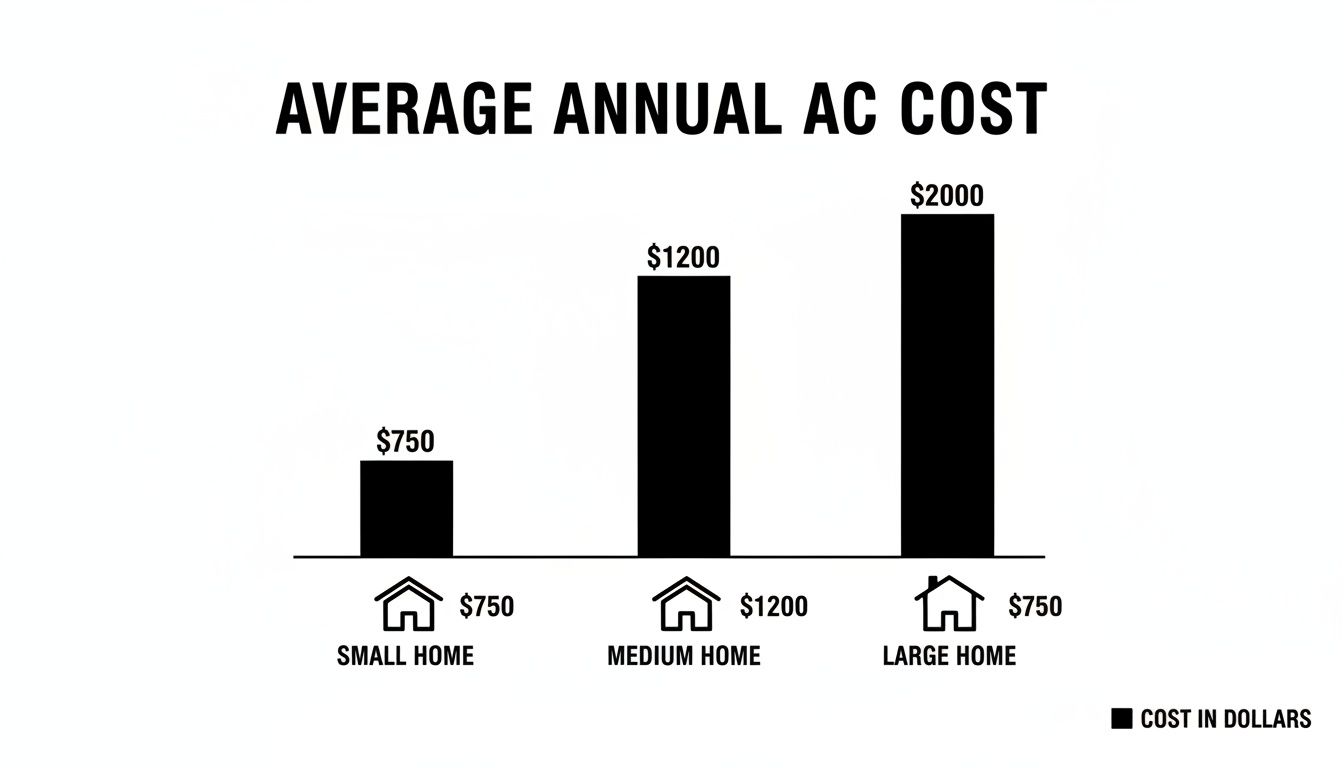
As you can see, the investment grows with the size of the home. This reflects the need for more powerful equipment and, sometimes, a more involved installation process.
Essential Materials and Compliance
Beyond the big metal boxes, a professional quote covers all the small but vital materials and administrative steps needed for a complete, code-compliant job.
This includes new refrigerant lines (the copper tubing connecting the indoor and outdoor units), a new concrete pad to ensure the condenser sits level, and fresh electrical wiring. You can learn more about why the air conditioning pipe is so important for system performance.
A professional quote is an all-inclusive price. It covers the equipment, the certified labour, all necessary materials, permits, and the responsible disposal of your old unit, ensuring there are no surprise charges.
Finally, any reputable quote will always include the cost of municipal permits and the safe disposal of your old unit. Permits aren't just red tape; they ensure the installation meets local safety codes, protecting your family and your property. Proper disposal is also non-negotiable, as old ACs contain refrigerant that can seriously harm the environment if not handled by a certified professional. These items might add to the cost, but they are essential for a safe, legal, and responsible installation.
Key Factors That Drive Your Final Replacement Cost
Ever wondered why your neighbour’s quote for a new air conditioner was thousands different from yours, even though your houses look similar? The final price isn't just pulled out of a hat. It's a careful calculation based on several key variables that can swing the total cost significantly.
Getting a handle on these factors is the best way to understand your quote and make a smart choice that balances your upfront budget with long-term savings. No two homes are exactly alike, and neither are their cooling needs.
System Efficiency: The SEER2 Rating
One of the biggest levers on price is the unit's SEER2 (Seasonal Energy Efficiency Ratio 2) rating. Think of it like the L/100km fuel rating for a car—a higher SEER2 number means the AC unit sips electricity instead of chugging it.
A basic, builder-grade unit might have a SEER2 rating of 13 or 14, which just meets the minimum standard. On the flip side, a high-efficiency model can boast a rating of 18, 20, or even higher.
- Lower SEER2 (e.g., 13-15): These units have a friendlier price tag, making them easier on the wallet initially. The catch? They work harder and use more electricity, which means higher hydro bills down the road.
- Higher SEER2 (e.g., 16+): These systems cost more upfront because they're packed with advanced tech like variable-speed compressors. The payoff comes every month in the form of lower energy bills, better dehumidification, and often, a quieter, more comfortable home.
For most Canadian homeowners, the sweet spot is a mid-range unit with a SEER2 of 15-17. This usually offers a great balance between a reasonable initial investment and real, noticeable savings on your hydro bill.
Unit Size and Your Home's Needs
As we mentioned earlier, the cooling capacity of an AC—measured in tons—has to match your home's square footage. A bigger house simply needs a more powerful (and more expensive) unit to keep things cool.
But it's not just about size. A proper "load calculation" done by a professional considers a lot more:
- How many windows you have and what kind they are
- The quality of insulation in your walls and attic
- The height of your ceilings
- Which way your home faces the sun
An experienced technician will measure all these things to recommend the perfect size. This prevents you from overpaying for a unit that's too powerful or, even worse, getting a system that can't keep up on those sweltering July afternoons.
Brand and Equipment Tiers
Just like with cars or kitchen appliances, AC brands come in different flavours and price points. Some are the "luxury models" known for premium features and bulletproof reliability, while others are the dependable workhorses that get the job done at a more accessible cost.
Most major manufacturers offer different tiers, from their basic, entry-level models to their top-of-the-line systems. The brand and tier you choose will directly influence the equipment portion of your air conditioner replacement cost.
Choosing a system is a long-term decision. While a premium brand might cost more upfront, its proven reliability and efficiency could save you money on repairs and hydro bills for the next 15 years.
Installation Complexity
Finally, the unique quirks of your home can add to the labour cost. A simple "swap-out," where the new unit fits perfectly where the old one was, is the most straightforward and affordable scenario.
However, some situations just take more time, skill, and materials, which nudges the price up.
- Accessibility: Is the indoor unit tucked away in a cramped attic or a tiny, hard-to-reach closet? If it's a pain to get to, it's going to take more labour hours.
- Electrical Upgrades: An older home’s electrical panel might not be up to the task of powering a modern, high-efficiency air conditioner. This could mean a necessary and important safety upgrade.
- Ductwork Modifications: Sometimes, the new system won't connect perfectly to your existing ducts. If your ductwork is old or in rough shape, you might need more extensive work. You can learn more about what's involved in the installation of ductwork in our detailed guide.
A good contractor will spot these potential challenges during their initial inspection and build them into your quote from the start. That way, there are no nasty surprises on installation day.
The Hidden Costs Lurking In Your Ductwork
Installing a brand-new, high-efficiency air conditioner but connecting it to old, leaky ductwork is like putting a brand-new engine in a car with four flat tires. You simply won't get the performance you paid for. The final air conditioner replacement cost is never just about the unit itself; it's about the entire system working together seamlessly.
Your ducts are the circulatory system for your home's cool air. If they're in bad shape, they’ll hamstring your new AC right out of the gate.
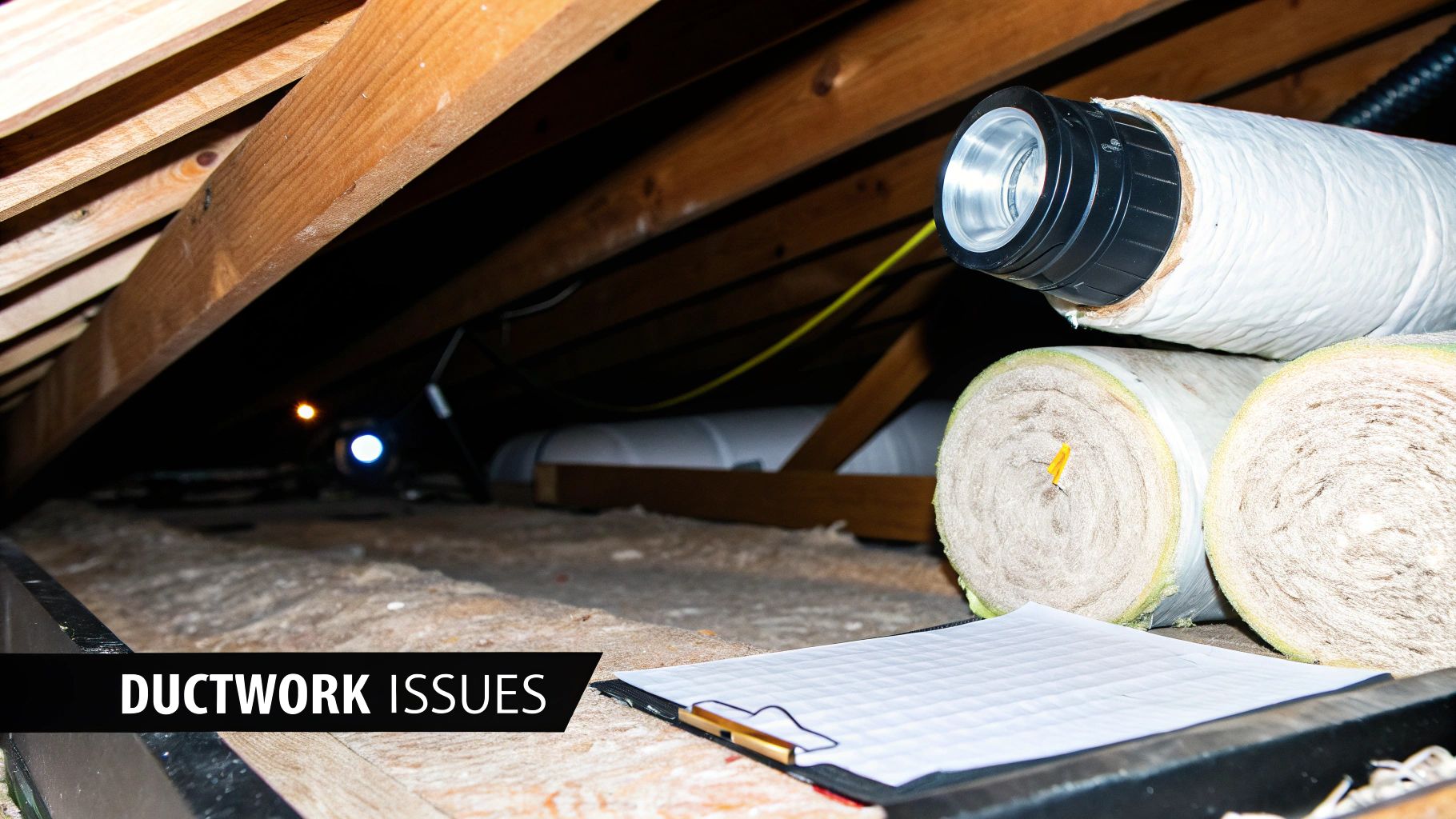
Old, leaky, or undersized ducts force your shiny new system to work way harder than it should. This just leads to higher hydro bills, frustrating hot and cold spots throughout the house, and extra strain that can shorten your AC's lifespan. It's like trying to drink a thick milkshake through a straw riddled with holes—you’re doing all the work for very little reward.
Signs Your Ductwork Needs Attention
So, how do you know if your ducts are the weak link in the chain? Many of the clues are subtle, but they point to big problems that can quietly inflate your bills for years.
It’s time to have a professional inspect your ductwork if you notice any of these signs:
- So. Much. Dust. If you feel like you’re constantly dusting, even right after cleaning, your ducts might be sucking in debris from your attic or behind walls and blowing it into your living space.
- Uneven Temperatures. Is one bedroom an icebox while the living room is always stuffy? That’s a classic symptom of blockages, leaks, or a poorly designed duct layout.
- Crazy High Hydro Bills. If your energy bills are eye-watering despite having an efficient AC, you’re probably paying to cool your attic or basement as air escapes through leaks.
- Visible Damage. Go take a look. Kinks, crushed sections, or joints that have pulled apart are obvious red flags that demand immediate attention.
The only way to know for sure is with a thorough inspection. A pro can use specialized tools to hunt down leaks and give you the real story on your system's condition.
Factoring Duct Repairs into Your Budget
If that inspection uncovers problems, the cost to fix them can vary quite a bit, depending on how bad the damage is and how hard it is to access the ducts. Think of these repairs as a separate but critical part of the whole replacement project.
Here’s a rough idea of what you might be looking at:
- Duct Inspection: A full professional assessment usually runs a few hundred dollars but gives you a detailed report card on your system's health.
- Sealing Leaks: For minor to moderate gaps, sealing up joints and connections with mastic sealant can cost anywhere from $500 to over $2,000.
- Partial or Full Replacement: If sections are completely crushed, rusted out, or just the wrong size for your new system, they’ll need to be replaced. This is a bigger job, with costs often ranging from $2,000 to $5,000 or more, based on the project's complexity.
While those numbers might make you wince, this is a truly worthwhile investment. Well-sealed and properly sized ducts ensure your new AC can actually hit its peak SEER2 rating, saving you money every month and delivering the even, cool comfort you were hoping for.
Your ductwork is the foundation of your home's comfort system. Investing in its health ensures your new air conditioner can perform efficiently, preventing you from throwing money away on wasted energy every single month.
When budgeting for a project this size, it helps to understand all the connected parts of your system. Knowing about smaller components, like the condensate pipe and its freezing risks, can help you anticipate the total AC replacement cost and avoid headaches down the road.
How To Save Money On Your New Air Conditioner
Let’s be honest—the air conditioner replacement cost can feel a bit steep. But while it's a major home investment, there are some clever ways for Canadian homeowners to soften the blow to their wallets.
It’s all about looking beyond the sticker price and thinking about the total cost of ownership. With the right strategy, combining government incentives with long-term energy savings, a new AC unit can become a lot more affordable than you might think.
Tapping Into Government and Utility Rebates
Thankfully, you don't have to bear the full cost alone. Both the federal and provincial governments want you to upgrade to a more energy-efficient system, and they’re willing to put money on the table to make it happen. These programs help you lower your carbon footprint and get some cash back in the process.
The big one to know about is the Canada Greener Homes Grant. Although the program has changed over time, it still offers significant rebates for homeowners who install high-efficiency equipment, especially heat pumps which handle both your heating and cooling needs.
- Federal Programs: Keep an eye out for grants and even interest-free loans designed for energy-efficient home upgrades. These can shave a nice chunk off your total installation cost.
- Provincial and Utility Rebates: Across Canada, it's also worth checking with local utility providers like BC Hydro, Enbridge, or Hydro-Québec. They often have their own special rebates for homeowners installing new ENERGY STAR® certified air conditioners.
These programs can change from year to year, so it's always smart to check what's currently available before you sign a contract. A good HVAC contractor stays on top of these deadlines and requirements and can help you navigate the paperwork to make sure you get every dollar you're entitled to.
Below is a quick look at some of the national and major provincial programs that could apply to your AC or heat pump upgrade.
Potential Savings On A New AC System In Canada
A summary of available rebates and credits for homeowners installing energy-efficient air conditioners or heat pumps. Programs and amounts are subject to change and may vary by province.
| Rebate/Credit Program | Governing Body | Potential Savings (CAD) | Notes |
|---|---|---|---|
| Canada Greener Homes Grant | Federal Government | Up to $5,600 | Focuses on heat pumps and major retrofits. Requires a pre- and post-retrofit EnerGuide evaluation. |
| Home Efficiency Rebate Plus (ON) | Enbridge Gas & NRCan | Up to $10,000 | Joint program. Often the main channel for Ontario homeowners to access federal and utility rebates for heat pumps, insulation, etc. |
| CleanBC Rebates (BC) | BC Hydro/FortisBC | Varies | Offers rebates for switching to high-efficiency heat pumps. |
| Rénoclimat (QC) | Govt. of Québec | Varies | Financial assistance for energy-efficient renovations, including HVAC systems. |
| Local Utility Promotions | Various (e.g., SaskPower) | Varies | Check with your local hydro provider for any seasonal or limited-time offers on ENERGY STAR® equipment. |
Remember to always confirm your eligibility and the current status of these programs with your HVAC provider or the governing body directly before making a purchase.
The Long-Term Payoff of High Efficiency
Rebates give you an immediate win, but the smartest way to save money is by investing in a high-efficiency unit. It might feel strange to spend more upfront to save money later, but the numbers don't lie.
Think of it like buying a car. You could get a cheap gas-guzzler or spend a bit more on a hybrid that sips fuel. Over a few years, the hybrid’s fuel savings make it the more economical choice. A high-SEER2 air conditioner is your hybrid—it uses way less electricity to deliver the same (or better) cooling power.
A high-efficiency air conditioner isn't just an expense; it's an investment that pays you back every month. The reduction in your hydro bills can be so significant that the system effectively helps pay for itself over its 15-year lifespan.
For example, swapping out an ancient 10 SEER unit for a modern 16 SEER2 model can slash your cooling costs by over 30% every year. In a typical Canadian home, that can easily add up to hundreds of dollars saved each summer. Over the life of the unit, you're looking at thousands back in your pocket.
Of course, a new AC is only one piece of the puzzle. To really squeeze every bit of efficiency out of your system, it’s worth looking into other essential home energy efficiency tips. Making sure your attic is well-insulated and your ducts are properly sealed can make a massive difference. In fact, learning about the benefits of using mastic sealant for ductwork is a great place to start.
Planning Your AC Replacement Project
Alright, you've got a handle on the costs and you know what a SEER2 rating means. Now it's time to stop researching and start doing. Planning your AC replacement turns all that information into a straightforward, step-by-step process. The goal here is simple: move ahead with confidence and make a smart investment for your home.

Here's a pro tip: the most critical first step isn't choosing a brand or a specific efficiency rating. It's scheduling a professional to come and assess your entire system. This isn't just about measuring the space for the new outdoor unit. A real expert will look at your home’s unique layout and—most importantly—inspect the state of your existing ductwork.
Think of this initial evaluation as the foundation for your entire project. It's what will uncover any hidden problems, like leaky ducts or an improperly sized system from the last install, that could cripple the performance of your brand-new AC. It's like a doctor running diagnostics before writing a prescription—it makes sure the solution actually fits the problem.
Gathering and Comparing Quotes
With a professional assessment in hand, your next move is to collect quotes from a few reputable, licensed HVAC contractors in your area. You should aim for at least three different estimates. Remember, this isn't just a race to the bottom to find the lowest air conditioner replacement cost. It's about comparing the value and seeing who proposes the most thorough job.
When you get those quotes, look past the final number. A good quote is detailed and transparent, breaking down what you're paying for: the equipment, the labour, all the little materials, and any necessary permits.
A cheap quote that cuts corners is the most expensive mistake a homeowner can make. Prioritize licensed contractors who provide detailed, written estimates and stand behind their work with a solid warranty.
Here’s what you need to put side-by-side when you compare:
- Equipment Details: Does the quote list the exact make, model, and SEER2 rating of the air conditioner they plan to install?
- Scope of Work: Is everything spelled out? This should include removing and disposing of the old unit, any ductwork modifications, and all electrical work.
- Warranty Information: What kind of warranty are they offering on parts and on their labour? A contractor who trusts their own work will offer a strong guarantee.
- Contractor Credentials: Check them out. Make sure the company is fully licensed and insured, and see what other local homeowners are saying in reviews.
Taking these steps gives you the power to make a decision you can feel good about. You’re no longer just buying an appliance; you're managing a major home upgrade that will pay you back with cool, comfortable summers for years to come.
Common Questions About AC Replacement Costs
Thinking about a new AC brings up a lot of questions. It's a big investment, and you want to get it right. Let's tackle some of the most common things we hear from homeowners across Canada.
When Is The Best Time Of Year To Replace My AC?
The best time to think about your air conditioner replacement cost is during the "shoulder seasons"—that's spring and autumn. In these milder months, HVAC contractors aren't scrambling to handle emergency calls from people whose systems gave out in the middle of a heatwave.
Booking your replacement in the off-season usually means you'll have an easier time scheduling the job. More importantly, it guarantees you won't be stuck sweating it out on the first truly scorching day of summer.
Should I Replace My Furnace And AC At The Same Time?
This is probably the most important question homeowners ask, and for good reason. In almost every situation, the answer is a definite yes. Your furnace and air conditioner are two halves of the same whole, sharing the indoor blower motor and all the ductwork that delivers comfortable air to your rooms.
Think of your AC and furnace as a team. If you pair a brand-new, high-efficiency player with an old, worn-out one, the whole team suffers. Replacing them together ensures they're perfectly matched to work in sync, giving you the best possible performance and efficiency.
Doing both jobs at once is also much easier on your wallet. You save a bundle on labour because the technicians are already there with the system opened up. It's one big job now instead of two separate, more expensive ones later.
How Long Should My New Air Conditioner Last?
For a professionally installed and well-cared-for central air conditioner here in Canada, you can realistically expect it to last between 15 and 20 years. How long it actually lasts comes down to a few critical things.
- The Quality of the Installation: This is the big one. A proper installation that follows the manufacturer's exact guidelines is the single most important factor in a long, healthy lifespan for your AC.
- Regular Maintenance: Annual tune-ups are non-negotiable. It's just like getting an oil change for your car—this simple service catches small problems before they turn into major, costly breakdowns.
- How Hard It Works: The intensity of our Canadian summers naturally plays a role. A unit that’s constantly running will wear down faster than one that isn't.
What Kind Of Warranty Should I Look For?
A good warranty is your peace of mind. It’s a clear signal that both the manufacturer and your installer are confident in the quality of their product and their work. A solid warranty package always includes two key parts.
First, you have the manufacturer's parts warranty. For any reputable brand, this will cover major components, like the all-important compressor, for 10 years. Just be sure to register your new unit within the required window (usually 60-90 days) to lock in that full coverage.
Second is the contractor's labour warranty. This part covers the technician's time if something needs fixing. A trustworthy installer will typically offer a one-year labour warranty at a minimum, though some offer longer terms for premium systems. Always, always get these details in writing.
Ready to get clear, honest answers for your home's specific needs? The team at Can Do Duct Cleaning has over 30 years of experience helping Canadian homeowners find the perfect cooling solutions. https://www.candoductcleaning.com