
Cleaning your ducts and vents isn't just another chore to tick off the list—it's a critical piece of home maintenance that directly affects your family’s health and how much you pay for hydro each month. When you ignore it, you’re essentially letting a mix of dust, allergens, and other gunk circulate through your living spaces.
This buildup can make allergy season feel like a year-round event and forces your HVAC system to work overtime. A professional cleaning clears all that out, giving you cleaner air and a more efficient home.
What's Really Circulating in Your Home's Air
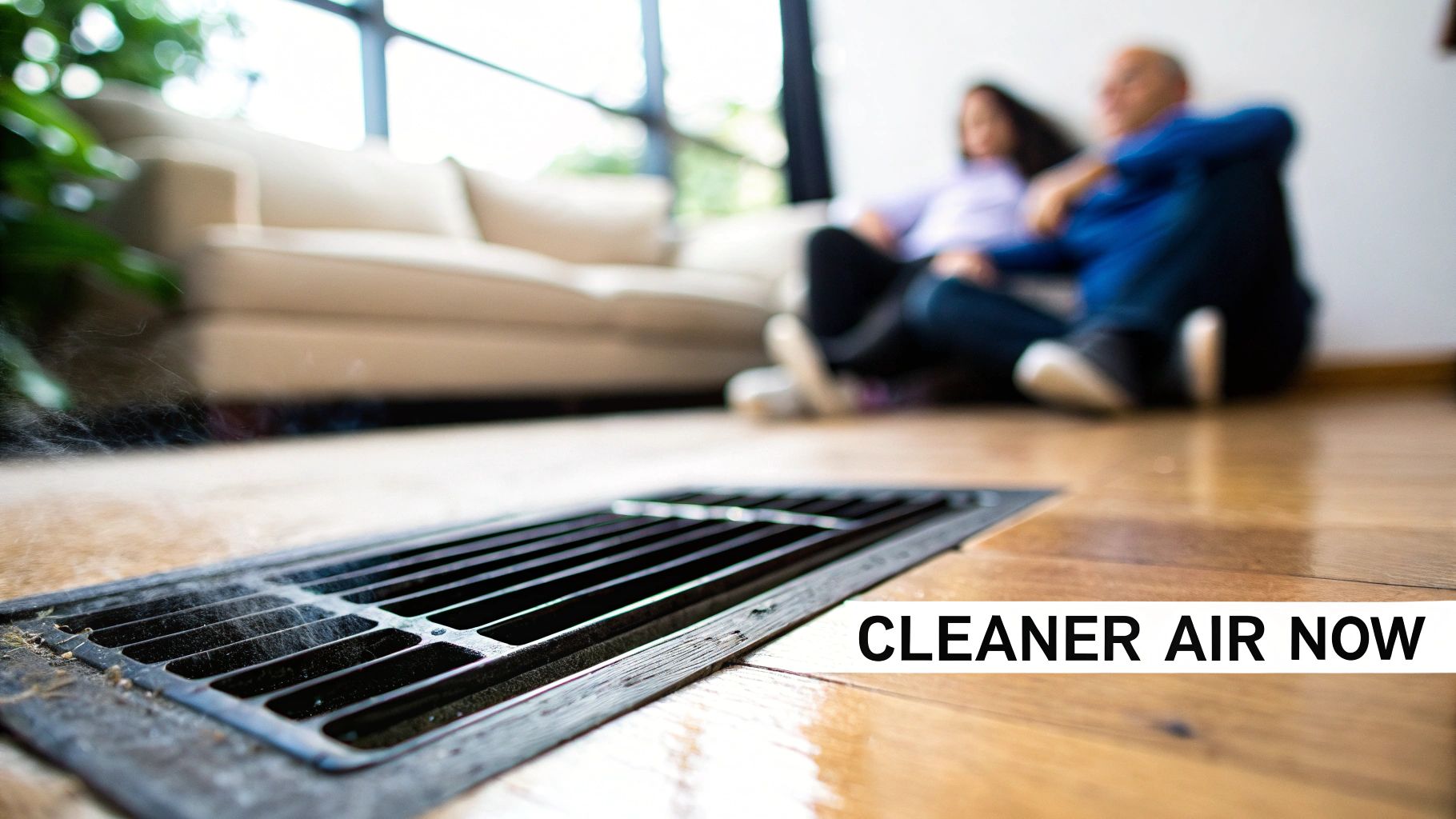
Most of us Canadians assume our furnace filter is doing all the heavy lifting to keep our air clean. And while filters are essential, they don't catch everything. Over the years, your ductwork slowly turns into a hidden collection bin for all sorts of contaminants that get blasted into your rooms every single time the furnace or AC kicks on.
Think of your ductwork as your home’s respiratory system. If it's clogged and dirty, the entire system struggles to breathe, and so do you.
Common Contaminants Found in Canadian Ductwork
That network of metal passages running through your walls and ceilings is carrying more than just warm or cool air. It's often a cocktail of particles that can impact your health and comfort.
Here’s a look at what we typically find lurking inside:
- Dust and Dust Mites: These are by far the most common culprits. They create a constant supply of indoor allergens that can trigger sneezing, coughing, and those frustratingly itchy eyes.
- Pet Dander and Hair: If you have furry family members, their dander is a major contributor to duct buildup. For anyone with pet allergies, this is a real problem.
- Mould and Mildew Spores: Canada's humid summers can create the perfect breeding ground for mould inside dark, damp ductwork, which then releases spores directly into your air.
- Pollen and Outdoor Allergens: Seasonal allergens don't just stay outside. They drift in through open windows and doors, get sucked into your system, and get stuck in the vents, making allergy symptoms linger.
- Construction Debris: Just moved into a new build or finished a renovation? It's almost guaranteed that sawdust, drywall dust, and other construction materials are hiding in your duct system.
This mess doesn't just sit there quietly. It gets churned up and pushed into your living areas every day, leading to a noticeable drop in air quality, persistent musty odours, and an environment where allergy and asthma sufferers just can't find relief.
The amount of debris we pull out is always an eye-opener for homeowners. In Canada, a professional air duct cleaning typically removes between 2 to 3 kilograms of dust and debris from the average home's system. It’s pretty shocking to see it all piled up.
The Hidden Costs of Dirty Ducts
Beyond the air you breathe, neglecting to clean your ducts and vents hits you directly in the wallet. When your ductwork is clogged, it chokes off airflow, forcing your furnace and air conditioner to work much harder to keep you comfortable.
That extra strain means your HVAC system is guzzling more energy, which translates to higher monthly utility bills. During a freezing Canadian winter or a sweltering summer, that inefficiency adds up fast. A clean system, on the other hand, runs at its best, ensuring you aren't paying more than you should be for heating and cooling. For a deeper dive, you can learn more about the benefits of air duct cleaning in our dedicated guide.
Your Pre-Cleaning Duct Inspection Checklist
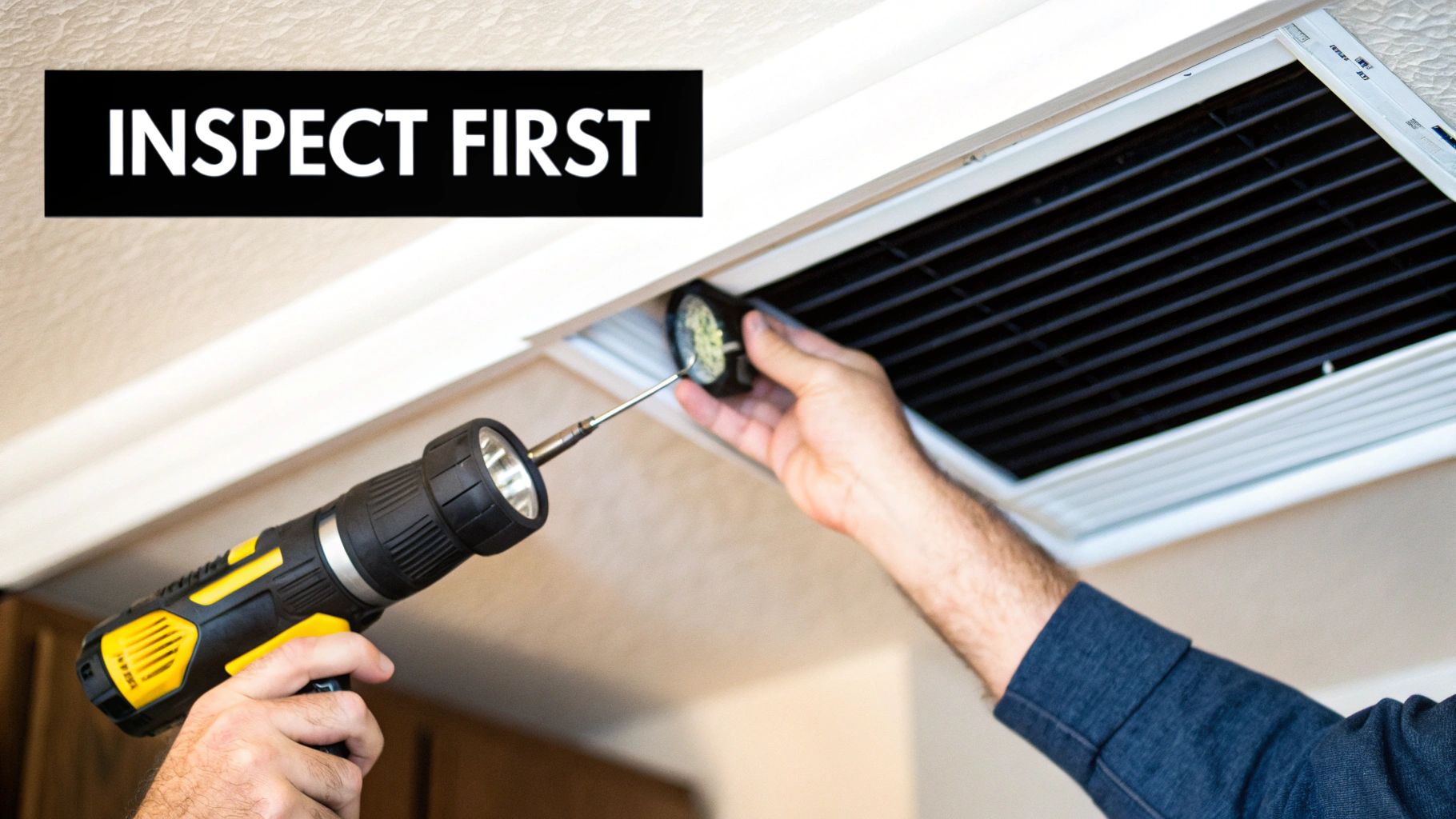
Before you jump into cleaning your ducts and vents, the smartest first move is to take a few minutes for a quick inspection. A good look can tell you everything you need to know about what you’re up against. Is it a simple surface clean, or is it time to call in the pros? For us here in Canada, this quick check is the best way to gauge the true state of your home’s airways.
The good news? You don't need any high-tech gear for this initial look. You probably have everything you need lying around the house.
To get started, just grab these few things:
- A powerful flashlight: Your phone's light might work in a pinch, but a proper flashlight with a focused beam is way better for peering deep into dark vents.
- A screwdriver: You’ll need this to pop off the vent covers (also called registers) from your walls, floors, or ceilings.
- Your smartphone: Go ahead and snap a few pictures of what you see inside. It’s great to have a visual record of what you’ve found.
With your tools ready, it’s time to play detective and find out what’s really hiding in your ductwork.
What to Look For During Your Inspection
First things first, head to your thermostat and turn the HVAC system completely off. You don't want air blowing dust in your face while you're trying to get a look.
Once the system is off, start removing a few vent covers in different rooms. This gives you a good sample of the whole system's condition.
Now, shine your light into the duct opening and keep an eye out for these red flags:
- Thick, visible dust and debris: A light dusting is normal. But if you see thick, fuzzy blankets of dust, clumps of pet fur, or other junk caked on the inside, you’ve definitely got significant buildup.
- Visible mould or mildew: Be on the lookout for speckled patterns of black, green, or white on the metal surfaces. A persistent musty smell coming from the vents is another huge warning sign that you might be dealing with mould.
- Pest activity: Any evidence of rodents or insects—like droppings, nesting materials, or dead bugs—means your ductwork has been compromised and needs professional attention right away.
Here's a real moment of truth: turn your system back on for a second. If you see a little puff of dust blow out when the fan kicks in, that’s your confirmation. It means the buildup is loose enough to get kicked up and circulated right back into the air you breathe.
Inspecting Different Vent Locations
It's worth remembering that not all vents are the same. Their location can make a big difference in what you find. For example, floor vents in busy areas are notorious for collecting dirt, crumbs, and whatever else gets dropped on the floor.
Ceiling and wall vents usually don't have that problem, but they can be magnets for dust, especially right on the grilles.
Make sure to pay extra attention to the return air grilles. These are the big vents that pull air back into your HVAC system. Since there's no filter right at the opening, they often have the most obvious and heavy buildup of dust and pet hair. Learning about all the signs that you need to get your air ducts cleaned will give you an even clearer picture of what to look for.
Doing this quick inspection yourself puts you in control. It gives you real evidence so you can understand exactly what’s going on and make a smart decision on how to tackle cleaning your ducts and vents.
Effective DIY Vent and Register Cleaning Methods
If you're a homeowner in Canada, giving your vents a quick clean is a fantastic maintenance job you can do between professional deep cleans. Let’s be clear: this isn’t about reaching deep into your ductwork—that’s a job for the pros with their specialized gear. This is about tackling the visible dust and grime that builds up right where the air enters your rooms. A good surface clean keeps things looking sharp and helps your system breathe a little easier.
First things first, let's get your tools together. You won't need anything fancy, just a few things you probably already have lying around.
- A good vacuum cleaner with a long hose and a brush attachment is your best friend here.
- A basic screwdriver (a Robertson or Phillips head will usually do the trick) for popping off the vent covers.
- A bucket of warm, soapy water for giving those grilles a good scrub.
- An old toothbrush or a soft-bristled brush to get into all the nooks and crannies.
- A couple of microfiber cloths for a lint-free finish.
That’s it. With this simple kit, you're all set to get started.
Preparing Your Space and System
Before you even think about unscrewing a vent cover, walk over to your thermostat and shut the entire HVAC system off. Make sure both the heating and cooling are switched off. This is a non-negotiable step; otherwise, you’ll have dust blowing right back in your face or getting pushed deeper into the vents.
Here’s another little trick: grab some old towels or a few pieces of cardboard and cover up the other vents in the room you’re working in. Blocking them off will concentrate the suction power of your vacuum on the single duct you're cleaning, pulling out way more gunk.
Cleaning the Vent Covers and Registers
With the system powered down, use your screwdriver to gently remove the vent covers from the walls, floor, or ceiling. Prepare to be a little grossed out—it's amazing how much dust and hair can get stuck to the underside of those grilles.
Take the covers over to a sink or bathtub and let them soak in warm, soapy water. Use your soft brush to scrub away all the built-up grime, then give them a good rinse. Lay them out on a towel and let them dry completely. It's a bit like other home projects where prep work is everything; for example, knowing how to properly clean walls before painting makes all the difference in the final result.
Vacuuming the Accessible Ductwork
Now it's time for your vacuum to shine. Pop on the hose and brush attachment and reach as far down into the duct opening as you can. Move it around methodically to suck up all the loose dust bunnies, pet hair, and cobwebs you can find.
The key is to be thorough but gentle. You want to remove the debris, not just shove it further down the line. If you're looking for more in-depth techniques, we've put together a full guide on air vents cleaning that you might find helpful.
A common rookie mistake is to use a weak vacuum or just clean the first few inches you can see. Make sure you run the hose along the top, bottom, and sides of the duct opening to do a proper surface-level job.
After you've vacuumed everything you can reach, grab a damp microfiber cloth. Give the inside of the vent opening a quick wipe, along with the wall or floor area around it. This final pass will catch any fine dust that the vacuum missed.
Know the Limits of DIY Cleaning
It’s really important to keep your expectations in check. A DIY clean is a great way to manage surface dust and keep things tidy, but it's no substitute for a professional cleaning. Your vacuum hose simply can't reach the metres of ductwork snaking through your home, which is where the real build-up of allergens and contaminants happens.
Think of it this way: what you’re doing is like sweeping your front porch. A professional service is like pressure washing the entire house. Both jobs are important, but they accomplish very different things. Your efforts will definitely make a noticeable difference, but only the pros can tackle the system as a whole.
When to Hire a Professional Duct Cleaning Service
While tackling the dust you can see is a great weekend project, it's crucial to know when a job is too big for your shop vac. Some situations just call for the heavy-duty equipment and expertise of a professional. Knowing the difference ensures the air in your home is actually clean, not just surface-level tidy.
Sometimes, the need for a pro is obvious. Just finished a big renovation? That fine drywall dust and sawdust has settled deep inside your ductwork, and your vacuum just can't get it all. It'll keep circulating for months, triggering allergies and making you feel like your brand-new space is never truly clean.
This quick decision tree can help you figure out if a DIY touch-up is enough or if it's time to call in the experts.
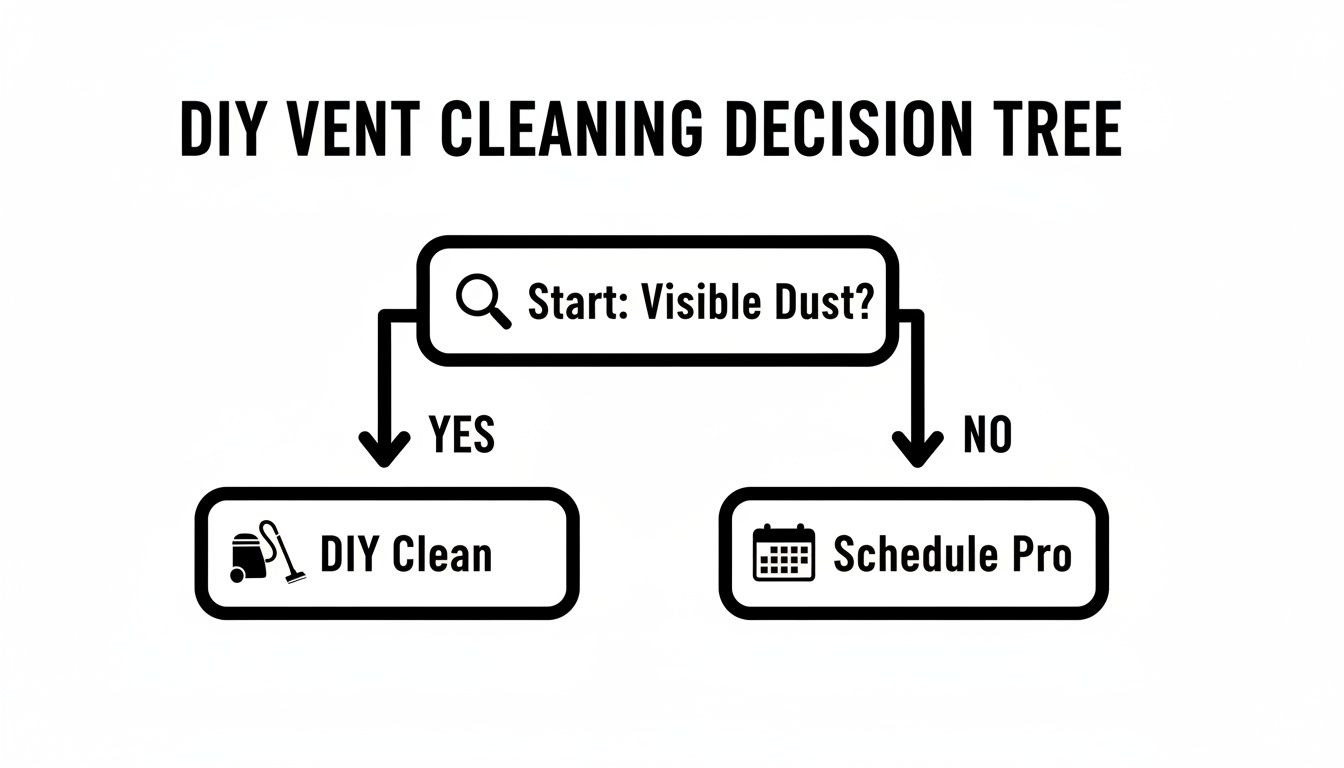
As you can see, even if you don't spot visible dust, it doesn't mean your deeper ducts are clear. That's where a professional assessment comes in.
Red Flags That Demand a Professional
Some issues are more than just dust bunnies. These are clear signs that your HVAC system needs a deep clean that’s way beyond a homeowner's reach.
Keep an eye (and nose) out for these warning signs:
- Suspected Mould Growth: If you notice a musty smell coming from your vents, especially after a humid Canadian summer, that’s a major red flag. Professionals have the tools to safely identify and remove mould without spreading dangerous spores through your home.
- Persistent Pest Issues: Found droppings or evidence of rodents and insects in your ducts? You need a pro to clear out nests and properly sanitize the system to get rid of serious health hazards.
- Severe Allergies or Asthma: For households with sensitive respiratory systems, professional cleaning is a must. It’s the only way to remove deep-seated triggers like pet dander, pollen, and dust mites that DIY methods leave behind.
- Excessive Dust and Debris: Does it feel like you finish dusting and a new layer appears almost immediately? That’s a classic sign your HVAC system is just blowing the same contaminants around in a never-ending cycle.
The Professional Advantage: Advanced Equipment
The real game-changer is the equipment. A reputable company brings in powerful, specialized tools you simply can’t rent at a hardware store. We're talking about massive, truck-mounted vacuums that create powerful negative pressure through your entire duct system.
This intense suction pulls all the dislodged dirt and debris directly out of your house and into a containment unit—nothing gets blown back into your living space. To break up the stubborn gunk, they use tools like high-powered air whips and rotating brushes that scrub the inside of your ductwork clean.
If you're already bringing in pros, you might want to have them tackle other hard-to-reach areas. Some homeowners choose to explore comprehensive deep cleaning services for a total home reset.
Choosing a Reputable Canadian Provider
The air duct cleaning industry has grown significantly in Canada. Unfortunately, this boom has also attracted some scams. A legitimate company will typically charge between $400-$600 for a medium-sized home (up to 185 square metres).
Be extremely wary of those "too good to be true" deals. Canadian authorities have warned that prices under $300 are a red flag for 99% of jobs.
To protect yourself, always look for a provider that is NADCA (National Air Duct Cleaners Association) certified. This certification is your guarantee that the company follows strict industry standards and won't cut corners.
A trustworthy air duct cleaning company will always give you a clear, detailed quote, walk you through their process, and even offer proof of their work. That's how you know your investment is truly improving your home's air quality and efficiency.
Maintaining Better Air Quality Year-Round
Alright, you've had your ducts and vents professionally cleaned. Your home feels fresher, and you're breathing easier. So, how do you keep it that way?
A professional cleaning hits the reset button on your system, but a few simple habits are what really protect that investment long-term. This isn't about adding complicated chores to your list; it's about smart, consistent upkeep tailored for Canadian homeowners. We deal with unique challenges here, from heavy spring pollen to the bone-dry, dusty air of a long winter, and a proactive plan makes a world of difference.
Your Furnace Filter: The Unsung Hero of Clean Air
Let’s be direct: your furnace filter is the single most important piece of the puzzle. It’s your system’s first line of defence, trapping dust, dander, and other gunk before it ever gets a chance to settle in your ductwork. Neglecting it is like asking for trouble.
Changing your filter on a regular schedule is non-negotiable. For the common one-inch filters, that means swapping it out every 1 to 3 months. If you have pets, smokers in the house, or family members with allergies, stick to the one-month mark. Seriously.
When a filter gets clogged, it doesn't just stop cleaning the air—it chokes your entire HVAC system. This forces it to work harder, which means higher energy bills and a shorter lifespan for your equipment. It's a simple task that prevents expensive problems.
Choosing the Right Filter for Our Canadian Seasons
Walk into any hardware store, and you'll see a wall of filters with a MERV (Minimum Efficiency Reporting Value) rating. This number simply tells you how well the filter traps particles of different sizes.
Here’s a quick breakdown:
- MERV 6-8: This is your solid, everyday choice. It does a great job catching the big stuff like dust, lint, and pollen without restricting airflow, which is perfect for most homes, especially those with older furnaces.
- MERV 9-12: Got pets or allergies? This is your sweet spot. These filters grab finer particles like pet dander and even some mould spores, offering a noticeable upgrade in air quality.
- MERV 13+: These are the high-efficiency powerhouses, ideal for households with severe allergies or respiratory issues. But be careful—they can be too dense for some HVAC systems to handle. Always check your furnace manual to make sure it can handle the restricted airflow before you buy one.
A great strategy for Canadian homes is to use a MERV 11 or 12 filter during the high-pollen spring and fall seasons. Then, you can switch back to a MERV 8 in the winter when the air is drier and dust is the main enemy.
Little Habits That Make a Big Difference
Beyond the filter, a few other routines will keep your ducts cleaner for longer. It sounds obvious, but a cleaner house means cleaner air. Vacuuming regularly (especially with a HEPA-filter vacuum), dusting with microfiber cloths, and managing pet hair all cut down on the amount of debris your HVAC system has to deal with. You can actually learn how to improve air quality at home with just a few small changes.
Controlling indoor humidity is another big one, particularly during our humid summers. High humidity can lead to condensation inside your cool metal ductwork, creating the perfect breeding ground for mould and mildew. Running a dehumidifier in the basement can stop this problem before it starts.
Even with the best maintenance, some buildup is just inevitable. That’s why here in Canada, we recommend a professional air duct cleaning every 2 to 3 years. This schedule is specifically designed to combat our local challenges, like construction dust and heavy seasonal allergens that clog up systems faster than in other regions. This keeps your home’s air healthy and your HVAC system running efficiently.
Common Questions About Duct and Vent Cleaning
Even when you've decided to get your ducts cleaned, a few questions always seem to pop up. Homeowners across Canada often wonder about the specifics—how it works, what it’s worth, and what to expect on the day of service.
Let's clear the air on some of the most common questions we hear, from how long it takes to how it's different from dryer vent cleaning. Getting straight answers will help you see the real value a professional cleaning brings to your home.
How Long Does Professional Duct Cleaning Usually Take?
This is usually the first thing people ask. For a typical home in Canada—let’s say around 185 square metres—a thorough, professional duct cleaning job should take between 2 to 4 hours. If a company promises a "whole house" cleaning in an hour, that's a major red flag. This isn't a quick job if it's done right.
The exact timing really depends on a few things:
- Home Size: A larger home simply has more ductwork to clean, which naturally takes more time.
- Ductwork Layout: Some systems are straightforward, while others are complex and harder to access, requiring a bit more maneuvering.
- Dirt and Debris Level: If it’s been years since your last cleaning, or you've just finished a messy renovation, there’s a lot more buildup for the technicians to dislodge and remove.
It's a methodical process. A pro team will inspect everything, hook up a powerful vacuum to create negative pressure, and then use specialized brushes and whips to scrub every inch of the ductwork clean before sealing it all back up.
Is Duct Cleaning a Scam or a Necessary Service?
It’s a fair question. The industry has definitely seen some shady operators, which makes homeowners rightfully skeptical. But here’s the bottom line: legitimate, professional duct cleaning is an incredibly valuable service, especially for your home's indoor air quality. The key is knowing how to spot a real pro.
The biggest warning sign of a scam is almost always the price. Be very wary of those "whole-house special" ads for $99. They're classic bait-and-switch tactics. A crew shows up and immediately starts using high-pressure sales tactics to upsell you on essential services that should have been included, ballooning the final bill into the hundreds or even thousands.
A reputable Canadian company will always give you a clear, detailed quote upfront. They'll show up with proper, high-powered equipment (like a truck-mounted vacuum) and should be happy to show you before-and-after photos to prove the work was done right.
For any home with pets, family members with allergies, or after a renovation, the benefits of a proper cleaning are impossible to ignore. It’s a necessary service when done by certified professionals.
Can Cleaning My Ducts Lower My Energy Bills?
Yes, it absolutely can. Your home's ductwork is like the circulatory system for your heating and cooling. When it gets clogged with layers of dust, pet hair, and other gunk, airflow gets restricted.
This blockage forces your furnace and air conditioner to work much harder to push air through the system and maintain the temperature you've set. That extra effort means it's burning more energy, leading directly to higher hydro bills.
When you have that buildup professionally removed, you restore clear, unobstructed airflow. Your HVAC system can finally run at peak efficiency again, heating and cooling your home without struggling. Many Canadian homeowners tell us they see a real drop in their energy costs after a thorough cleaning, especially in older homes where dust has had decades to accumulate. It's a smart investment that can pay for itself over time.
What Is the Difference Between Air Duct and Dryer Vent Cleaning?
It's easy to get these two mixed up since the terms sound so similar, but they are completely separate services targeting very different parts of your home. Confusing them means you might overlook a serious safety hazard.
Let's break it down.
| Service Feature | Air Duct Cleaning | Dryer Vent Cleaning |
|---|---|---|
| Primary Goal | Improve indoor air quality and HVAC efficiency. | Prevent house fires and improve dryer performance. |
| System Targeted | The entire network of ducts that circulates heated and cooled air throughout your home. | The single exhaust vent that runs from your clothes dryer to the outside. |
| Contaminants Removed | Dust, allergens, pet dander, mould spores, and construction debris. | Highly flammable lint—a major fire hazard. |
| Primary Benefit | Healthier air for your family to breathe and lower energy bills. | Critical fire safety and prevention for your home. |
While HVAC duct and vent cleaning is all about health and efficiency, cleaning your dryer vent is a non-negotiable safety task. Lint buildup is one of the top causes of house fires in Canada, making regular dryer vent cleaning an essential piece of home maintenance.
Ready to improve your home's air quality and efficiency? The experienced team at Can Do Duct Cleaning is here to help. With over 30 years of trusted service in the GTA, we provide thorough, professional cleaning that makes a real difference. Visit us at https://www.candoductcleaning.com to get a free quote and breathe easier in your home.


