
Window air conditioners and ductless mini-splits deliver the best blend of performance, cost and installation ease in most apartments. Portable models, meanwhile, slip into narrow spots—perfect when you need a temporary cool-down.
Choosing The Right Apartment Cooling Option
Picking the perfect AC for your apartment really comes down to matching the unit to your layout and lifestyle.
Key considerations include:
- Space constraints in studios, one-bed or multi-bed layouts
- Noise thresholds set by building policies or neighbours
- Energy consumption and ongoing running costs
Orientation, insulation quality and window size all shape your cooling load. Permanent installs often require permits, while portables simply need a nearby power outlet. Always double-check the decibel rating before you buy.
“Picking an AC is like finding the right shoe: it needs to fit your space, your style and your budget,” says a Toronto HVAC specialist.
Here’s a quick snapshot:
Apartment AC Options at a Glance
| AC Type | Space Suitability | Installation Ease | Estimated Cost |
|---|---|---|---|
| Window Unit | Small–medium | Moderate | $200–$600 |
| Portable AC | Very small | Easy | $250–$500 |
| Ductless Mini-Split | Medium–large | Professional install | $1,200–$3,500 |
| Through-Wall Unit | Small–medium | Moderate (permit) | $700–$1,200 |
Remember, that table’s just a starting point. Your floor plan or strata rules might push you toward a quieter mini-split or a simpler window unit.
Factors To Weigh
No two apartments are identical. A 6,000 BTU window unit handles a 300 sq ft studio with ease, but won’t cut it in a 900 sq ft two-bed.
Mini-splits shine on noise and zoned cooling, yet they involve drilling holes and professional wiring. Balance the upfront cost against long-term comfort and efficiency.
How This Guide Works
We’ll walk you through:
- Side-by-side comparisons of apartment AC types
- Room-by-room BTU calculations anyone can do
- Tips for maximising energy efficiency and quiet operation
- Navigating permits and condo approval processes
- Cost estimates and indoor air quality considerations
Before purchasing, always verify landlord or strata regulations. Sometimes the quietly humming mini-split or through-wall model is the only way to keep neighbours happy.
In Canada, home-cooling adoption varies widely by climate zone. According to Natural Resources Canada, around 40% of Canadian households had some form of air conditioning in 2020, with higher penetration in Ontario (over 60%) and lower rates (under 25%) in Atlantic provinces. In the U.S. San Francisco Bay Area, it climbed from 36% in 2015 to 50% in 2023. For more on Bay Area AC adoption trends, check out the ABC7 News report.
Comparing Apartment Air Conditioner Types
Choosing the right cooling system for your apartment often comes down to a few key questions: how big is the space, what’s your noise tolerance, and what fits your budget?
Before diving into individual models, keep these factors top of mind:
- Room Size And Layout
- Noise Levels And Neighbour Considerations
- Installation Requirements And Lease Rules
- Upfront Cost Versus Long-Term Efficiency
Below is a clear breakdown to help you weigh each option at a glance.
Comparison of Apartment Air Conditioner Types
| Type | Pros | Cons | Typical Cost |
|---|---|---|---|
| Window Unit | Easy to install, $200–$600 | Blocks view, noisy | $200–$600 |
| Portable AC | No permanent holes, quick setup | Less efficient, louder | $250–$500 |
| Ductless Mini-Split | Up to 30% more efficient, ultra-quiet | Professional install, permit needed | $1,200–$3,500 |
| Through-the-Wall Unit | Sleek built-in look, more secure | Requires wall cut, condo approvals | $700–$1,200 |
| Packaged Central | Whole-apartment cooling, hidden ducts | Complex ductwork, zoning restrictions | $3,000–$8,000 |
“In many condo suites, a ductless mini-split can halve the noise compared to a standard window unit—a real game-changer for evening TV time.”
Real Apartment Scenarios
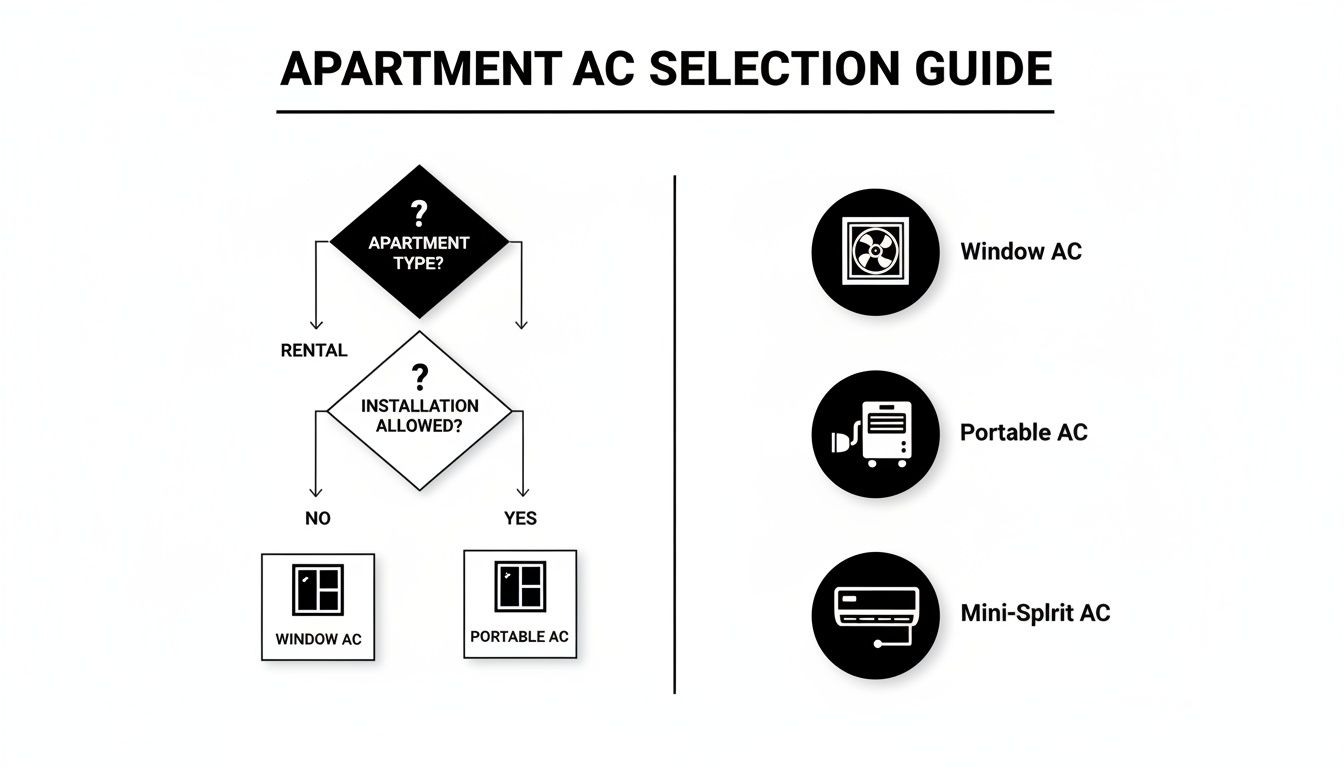
In a studio under 300 sq ft, a standard window AC usually does the trick and avoids any permit hurdles.
By the time you hit a 700 sq ft two-bedroom, you’ll notice the whisper-quiet comfort and separate-zone control of a mini-split.
Renters who can’t drill into walls often default to a portable unit—no landlord sign-off required, and you can stash it away for winter.
For apartments needing tailored pipe routing and refrigerant lines, check out our guide on air-conditioning pipe installation for clear instructions and code tips.
Budget And Noise Comparison
Sound output in apartment ACs can swing from 45 dB in mini-splits up to 65 dB in some portable models. Upfront price often drives the decision:
- Mini-Split: 45 dB, top-tier efficiency, starts at $1,200
- Window Unit: 55 dB, budget-friendly, $200–$600
- Portable AC: 60 dB, mobile placement, $250–$500
Don’t forget to weigh installation complexity and any permit fees. Spending a bit more now can mean big savings on your energy bills—and more peaceful summer nights.
Calculating BTU Needs For Your Apartment
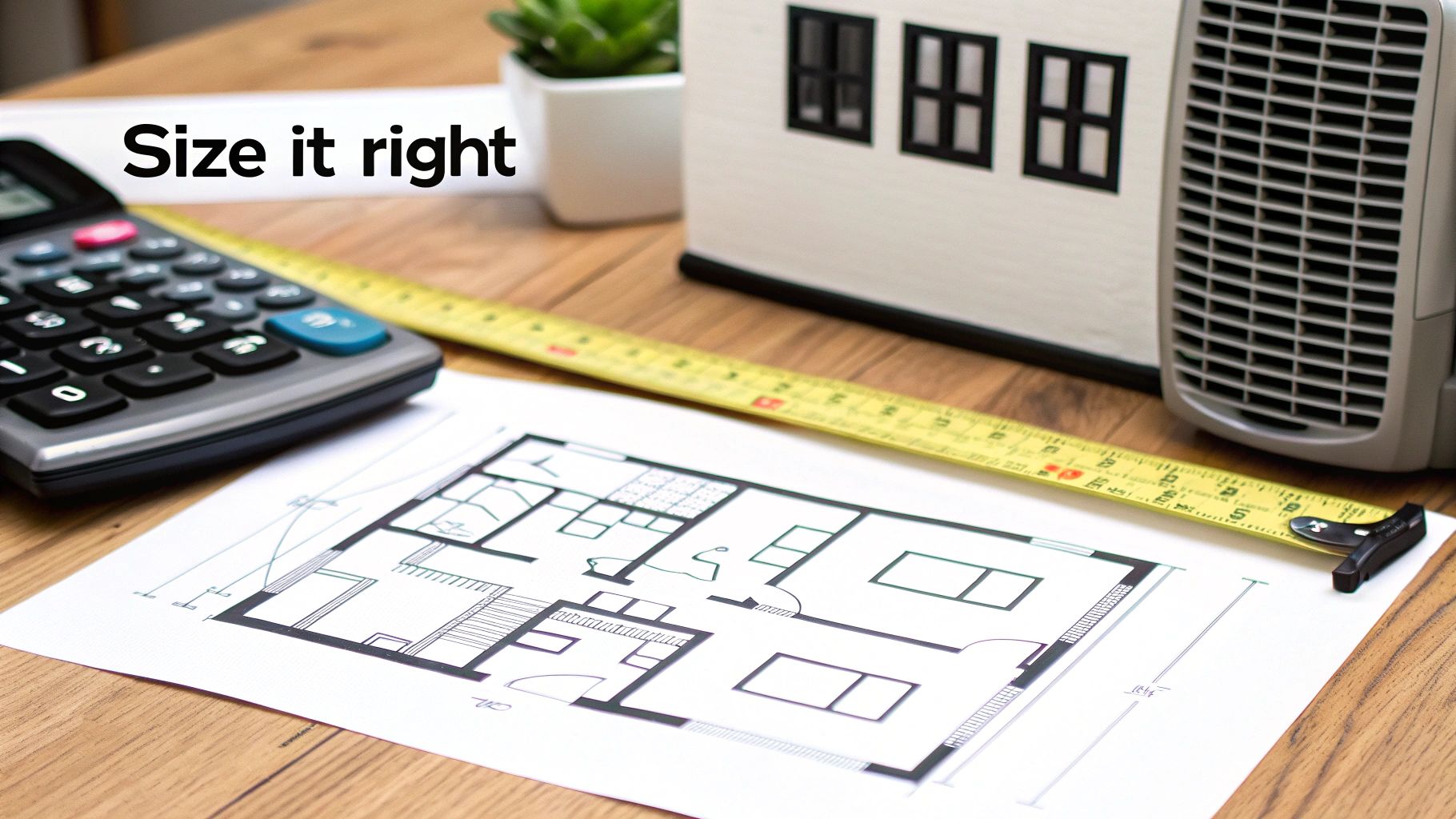
Getting the right BTU capacity stops your air conditioner from short cycling and keeps your space comfortable. Think of undersizing like asking a small engine to tow a trailer uphill—it simply can’t keep up.
To begin, measure the room’s square footage. Then multiply by 25 BTU per square foot—a solid starting point for rooms with standard 8 ft ceilings.
After that, factor in real-world quirks:
- Ceilings over 8 ft? Add 10% for every extra foot.
- Older windows or minimal insulation? Boost by 10–20%.
- South- or west-facing walls? Tackle sun gains with another 5–10%.
Adjustments are like fine-tuning a bicycle’s gears before a hill climb—get them right, and you’ll cruise.
Examples Of BTU Calculations
A 300 sq ft studio
- Base load: 300 × 25 = 7,500 BTU
- Well-insulated, north-facing: no extra needed
A 900 sq ft two-bedroom
- Base load: 900 × 25 = 22,500 BTU
- Ceiling 2 ft above standard: +20% → 27,000 BTU
BTU Requirements by Apartment Size
Here’s a quick reference to match your apartment’s square footage with an ideal BTU range.
| Apartment Size (sq ft) | Recommended BTU |
|---|---|
| 200 – 300 | 5,000 – 7,500 |
| 301 – 500 | 8,000 – 12,500 |
| 501 – 800 | 13,000 – 20,000 |
| 801 – 1,200 | 21,000 – 30,000 |
This breakdown covers most standard layouts, helping you narrow down options quickly.
Fine Tuning For Comfort
Beyond square footage and sun exposure, remember:
- Humidity levels make a difference—damp air feels warmer.
- Appliance heat and occupancy add to the load.
- More people in the room? Allocate a bit more capacity.
If you’re ever uncertain, err on the side of the next 1,000 BTU increment. That little buffer prevents overworking and keeps the unit cycling efficiently.
For precise measurements, permitting advice and expert installation, reach out to Can Do Duct Cleaning. Their team handles everything from AC installation services to duct cleaning, ensuring your system runs at peak performance.
Maximizing Energy Efficiency and Quiet Operation
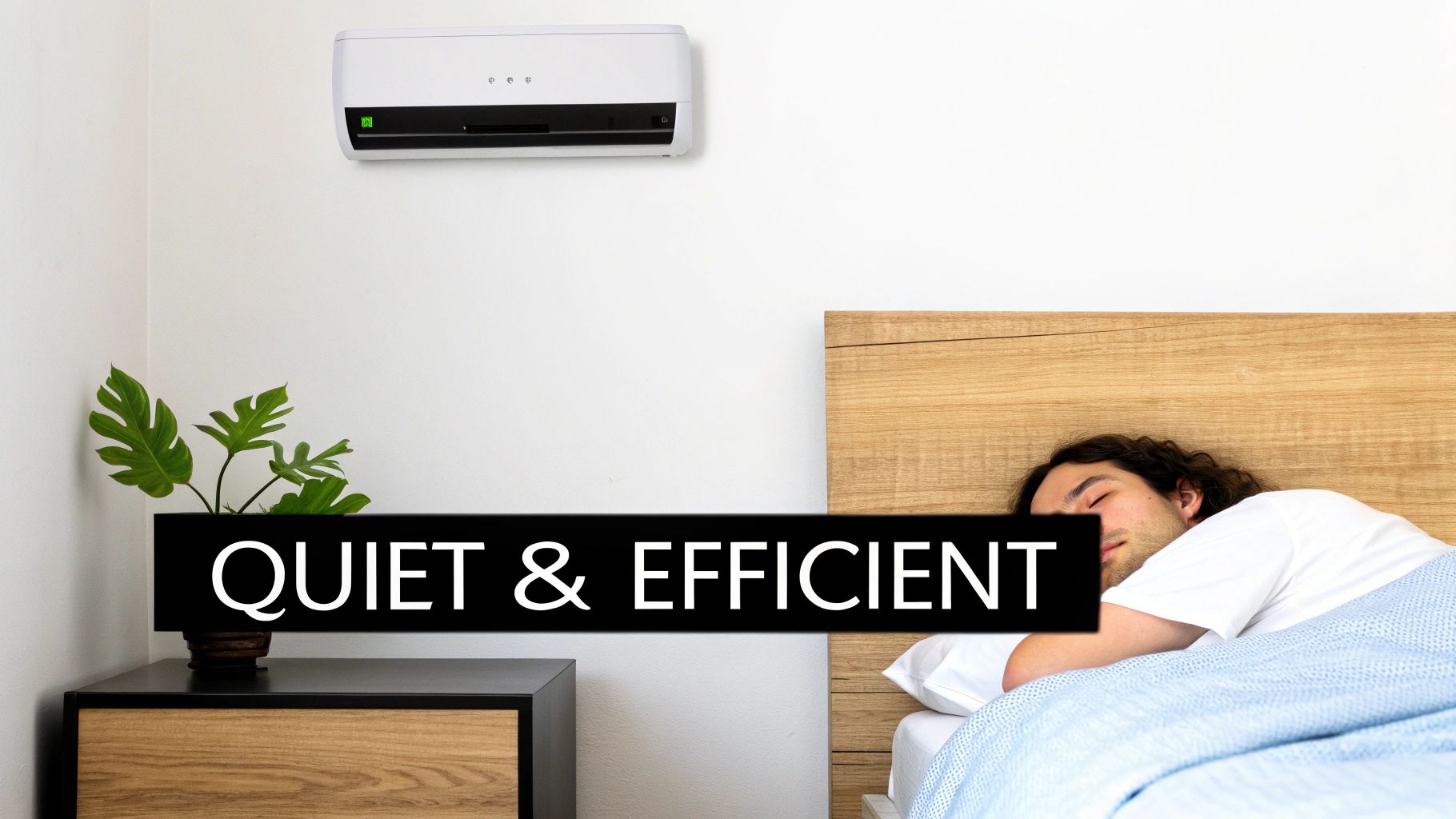
Living in an apartment means finding an air-con that sips power and hums quietly. Your ideal unit balances low operating costs with a background noise level you barely notice.
Think of SEER (Seasonal Energy Efficiency Ratio) and EER (Energy Efficiency Ratio) like a car’s miles-per-gallon. Higher ratings translate directly into smaller electricity bills.
If you upgrade from SEER 15 to SEER 16, you’ll typically use around 6% less juice—about $20 back in your pocket each month for a 600 sq ft space.
- A SEER 14 unit typically draws 2.5 kWh per hour, while a SEER 18 model drops to 1.9 kWh.
- Window ACs often sit near EER 10, whereas ductless mini-splits hit EER 12, affecting both summer and winter costs.
- Every SEER point above 14 can slash 2–3% off your annual energy bills, and those savings add up over time.
Interpreting Efficiency Ratings
Putting efficiency figures into real-world dollars makes comparison painless. Many high-SEER models also qualify for rebate programs, trimming up to $300 off that upfront investment.
- Running 1,000 hours at 2.5 kWh totals 2,500 kWh.
- At $0.13 per kWh, you’re looking at roughly $325 per cooling season.
- A simple 2-point SEER upgrade can shave about $50 off that bill each year.
Comparing Noise Levels
Sound matters when walls are thin and neighbours are close. Ductless mini-splits can whisper around 45 dB, but portable models may roar up to 60 dB—about the volume of a normal conversation.
- Mini-Splits: 45–50 dB, ideal for bedrooms and living areas.
- Window Units: 55–58 dB, noticeable but usually tolerable.
- Portable ACs: 60–65 dB, loud enough to cut into TV or phone calls.
“Quiet operation is as important as energy savings when living in close quarters,” notes a Vancouver HVAC expert.
Embracing Room Heat Pumps
Room heat pumps (RHPs) blend cooling and heating while shrinking your carbon footprint. Canada’s rebate programs and net-zero goals have pushed RHPs—and their SEER 20+ performance—into the spotlight.
The link between electrification and climate targets accelerates the shift away from older refrigerants toward more efficient systems. For insights into multifamily RHP adoption scenarios in California, see the assessment models here.
Check out our guide on energy recovery ventilators in apartments for even better indoor-air performance.
Best Practices For Quiet Efficient Cooling
- Choose inverter-driven mini-splits to hold constant RPM, cutting both surge-power and sound peaks.
- Inspect or replace filters every 3 months to prevent airflow blockages that drive up energy use.
- Position portable units away from corners—this opens airflow and reduces echoing noise.
- Pair your AC with an energy recovery ventilator for fresh-air intake and heat exchange efficiency.
Adopting these strategies means your apartment air-con will run smoother and quieter—while you enjoy lower bills and more peace of mind next summer.
Securing Permits And Meeting Condo Rules
Getting the green light for an apartment air conditioner often feels like piecing together a jigsaw puzzle. Strata bylaws, landlord approvals and municipal codes all intersect, so knowing each step ahead of time makes life easier.
To get started, you’ll need to:
- Confirm whether your condo board allows exterior units—especially if you’ll be drilling through walls or fitting a window bracket.
- Collect municipal application forms and tally up the mechanical cooling permit fees.
- Submit any required technical drawings or manufacturer specs to your local building department.
- Plan for a 2–6 week approval window, although timelines can stretch longer in busier municipalities.
Keep in mind condo associations often prohibit wall penetrations to protect the building’s exterior and structural soundness.
Navigating Condominium Bylaws
Before you pick up a drill, ask for a strata council review or written sign-off. A simple strategy is to show visual mockups—photos of identical installs in neighbouring suites work wonders.
This upfront transparency builds trust and defuses objections before they escalate.
“Clear communication is the foundation of any permit success,” notes a GTA property manager.
In Canada, cooling access varies widely across provinces and building vintages. In the U.S., research shows more than 92% of units built after 2012 come with mechanical cooling; older low-income buildings face far greater heat risks, as highlighted in this Energy Institute study.
Streamlining Professional Services
When it’s time to hire help, look for an HVAC pro who can juggle permit paperwork and installation. Can Do Duct Cleaning technicians will:
- Conduct an on-site assessment and draft code-compliant plans.
- Verify they hold the right municipal licences and liability insurance.
- Provide a detailed scope of work and timeline you can include in your permit application.
For a deeper dive into permit tips and best practices, check out our guide on air duct installation. Smooth approvals mean fewer delays and hidden fees—and a stress-free install.
Real Renter Experiences
Lisa in Mississauga hit a snag when her strata board initially refused a through-wall unit. She gathered photos of neighbouring suites, prepared a condo engineer’s report and put together a clear proposal. Two weeks later, she had her permit.
Key takeaways from her success:
- Include labelled photos of drill points and vent locations.
- Offer to restore wall finishes and paint once the job is done.
Show how a neat, professional install adds value and comfort—most councils will respond positively to that.
Avoiding Common Pitfalls
Skipping permit research? That can lead to fines or forced removal. Ignoring strata rules? You might face indefinite hold-ups.
- Don’t assume your landlord or board will waive approvals—you need documented permission.
- Double-check voltage and wiring requirements before you submit any forms.
Ready to streamline your apartment cooling project? Contact Can Do Duct Cleaning today.
Estimating Costs And Improving Indoor Air Quality
Budgeting for an apartment AC feels a bit like planning a road trip—you want to know your fuel stops and tolls before you hit the highway. In this case, your “fuel stops” break down into equipment, labour and permits. Mapping out each expense up front keeps those monthly bills from sneaking up on you.
Keep in mind that rented suites and condos often require permit applications and strata approvals. Depending on your municipality, those add $100–$500 to the tab. Once you’ve got the green light, labour in the Greater Toronto Area usually runs $80–$120 per hour.
Upfront And Installation Expenses
Equipment costs can swing wildly based on the system you choose:
- 6,000 BTU window unit: $200–$600
- Ductless mini-split: $1,200–$3,500
On top of that, factor in:
- Permit application fees: $50–$150
- Condo or landlord approval administration
- Wall sleeve kits (through-the-wall models): $100–$250
"A clear permit strategy can shave days off approval timelines," notes a Toronto HVAC contractor.
Labour itself depends on the install type. A two-person crew needs about 4–8 hours for mini-splits and 3–5 hours for through-the-wall units. Always ask for a detailed quote that itemises labour, materials and permit handling.
Maintenance Tasks And DIY Tips
A little upkeep goes a long way toward lowering costs and keeping air quality high:
- Swap filters every 1–3 months
- Clean coils twice a year
- Schedule a pro tune-up before the hottest months
For deeper insights on boosting your home’s air quality, check out our article on How To Improve Air Quality At Home
Extra upgrades can really move the needle:
- Install HEPA filters
- Add a UV air purifier to capture up to 99.97% of particles as small as 0.3 microns
When To Call Professionals
DIY covers filters and basic cleaning, but complex issues call for expert hands. Reach out to Can Do Duct Cleaning for:
- Comprehensive duct cleaning to remove dust and mould
- Professional coil and blower servicing
- Full seasonal AC system tune-ups
Striking the right balance between your own efforts and professional care will keep your air conditioners for apartments humming smoothly and avoid emergency repairs down the road.
Summing Up Costs And Benefits
Laying out both one-time and ongoing expenses helps renters and owners plan with confidence:
- Equipment: $200–$3,500 depending on system type
- Labour & permits: 4–8 hours at $80–$120/h, plus $50–$150 in fees
- Maintenance: roughly $20–$50 per year for filters and supplies
By pairing smart up-front choices with regular maintenance, you’ll lock in savings—plus breathe easier all summer long. And if any major hiccups arise, professional help ensures safe, efficient outcomes for your air conditioners for apartments.
Frequently Asked Questions
Many apartment dwellers wrestle with the same cooling and heating issues as seasons shift. Here’s a quick rundown of the top queries and expert tips to keep your space comfortable year-round.
How Do I Store A Window AC Over Winter?
Pull the unit out before the first frost, let the coils dry completely, then seal the vents with a breathable cover. Stash it indoors on a raised shelf or platform—keeping it off cold concrete prevents moisture damage.
What Permits Are Required For A Mini-Split Install?
In most Canadian cities you’ll need a mechanical cooling permit and condo-board approval. Your HVAC technician will handle the heavy lifting—submitting equipment specs, wiring diagrams and drawings on your behalf.
Common AC Permit Requirements
- Mechanical Cooling Permit applications and fees
- Manufacturer Specifications and detailed wiring diagrams
- Written Strata Or Landlord Sign-Off
- Inspection Scheduling and compliance checks
Read also: learn how to keep your vents spotless in our guide on cleaning air conditioner vents
How Can I Persuade My Condo Board To Approve Cooling In An Older Building?
Focus on energy savings and increased property value. Showcase a ductless mini-split’s whisper-quiet operation and slim profile—it won’t disturb historic brickwork or window lines.
What Makes A Portable AC Efficient?
Seek out dual-hose models with high EER ratings. Check the noise level—aim for under 60 dB—and favour units with programmable thermostats for precise control.
Portable AC Efficiency Considerations
- Typical EER Range: 8 to 12
- Noise Ratings: Often exceed 60 dB in older designs
- Hose Layout: Proper positioning reduces heat recirculation and peak power draw
“Choosing the right portable AC is like picking the right pair of shoes—fit and comfort make all the difference,” says a GTA HVAC specialist.
When Should I Schedule Routine Maintenance?
Every three months, swap out filters and give coils a gentle clean yourself. Before the summer rush, book a professional tune-up for coil cleanings, electrical checks and performance testing.
Ready to enjoy crisp, refreshing air in your apartment? Trust the pros for seamless installation and thorough cleaning.
For professional air conditioner installation and maintenance, contact Can Do Duct Cleaning today.


