
Ever thought about the network of hidden pathways snaking through your home's walls and ceilings? That's your ductwork & ducting, and it's basically your home's respiratory system. It's the unsung hero that delivers warm and cool air right where you need it, making sure you stay comfortable all year round.
A well-designed and properly maintained system doesn't just keep you comfortable; it helps your furnace and A/C run efficiently, which translates to real savings on your energy bills and cleaner air for your family.
Why Your Ductwork Deserves Your Attention
It’s easy to forget about something you can’t see, but your ductwork is one of the most critical parts of your entire HVAC system. Think of it as the highway for conditioned air. Without it, even the most expensive, high-efficiency furnace or air conditioner is just a noisy box.
This network of channels is what dictates your home’s comfort, energy efficiency, and even its overall health. It’s a huge industry for a reason—the U.S. air duct market was valued at an estimated USD 1.1 billion in 2024 and is expected to climb to USD 1.28 billion by 2032. You can read the full research on these market trends to see just how big a role it plays.
The Core Functions of Ducting
Good ductwork does more than just move air around; it's a carefully balanced system with a few critical jobs.
Here’s what it’s responsible for:
- Delivering Conditioned Air: Its main purpose is to push heated or cooled air from your furnace or AC into every room, creating a consistent and comfortable temperature.
- Returning Air to the HVAC Unit: Just as important are the return ducts, which pull stale air back to the HVAC unit to be filtered and re-conditioned, keeping the air circulating properly.
- Maintaining Air Quality: A tightly sealed duct system is your first line of defence against poor indoor air. It prevents dust, allergens, and other gunk from attics and crawlspaces from getting sucked in and blown all over your house.
A leaky or poorly designed duct system can be a massive energy vampire. In fact, it can be responsible for up to 30% of a home's heating and cooling costs. Suddenly, paying attention to your ducts seems like a pretty smart financial move, doesn't it?
Getting these basics right is the first step in understanding why this is an air duct system you shouldn't ignore. When you neglect it, you’re practically asking for higher utility bills, frustrating hot and cold spots, and lower indoor air quality. By recognizing just how important it is, you can take the right steps to keep your home's respiratory system in top shape.
Decoding the Different Types of Ductwork
Think of your home’s ductwork like its circulatory system. Just as your arteries and veins deliver blood everywhere it needs to go, your ducts deliver heated or cooled air from your HVAC unit to every room in the house. But not all ducts are created equal. The materials and design choices matter—a lot.
What’s running behind your walls is chosen based on your home's layout, your budget, and the kind of efficiency you’re aiming for. Getting to know the main types of ductwork & ducting is the first step to understanding what keeps your home comfortable.
This diagram gives you a great visual of how your ductwork connects everything together.
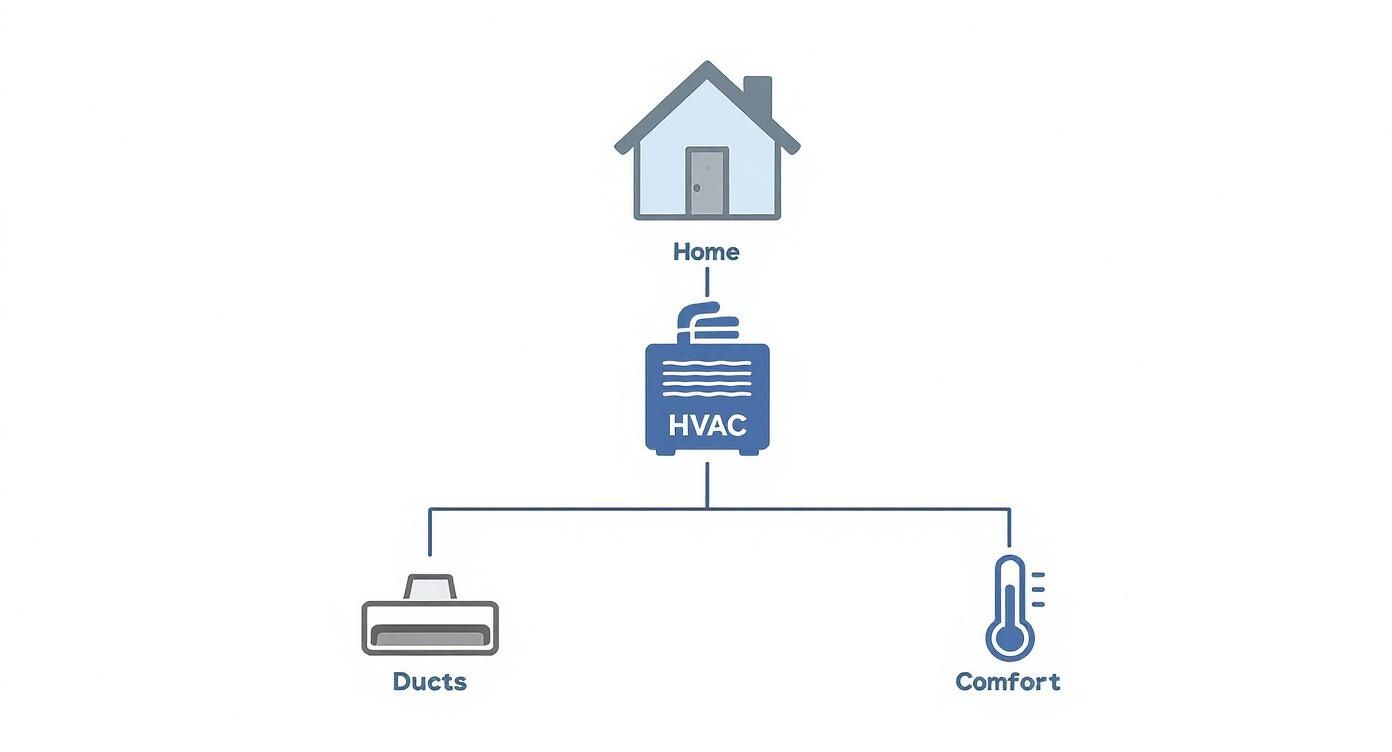
It really drives home the point: without a solid ducting network, even the most powerful furnace or AC is just a very expensive box. The ducts are the delivery drivers, and if they’re not up to the job, the comfort never arrives.
Flexible Ductwork
You'll often hear pros call this "flex duct," and the name says it all. It’s a bendable tube, usually made with a spring-coil wire skeleton, wrapped in flexible plastic and a layer of insulation. Its superpower is its versatility.
Flex ducts are the problem-solvers for tight or awkward spots. They’re perfect for weaving around ceiling joists in an attic or connecting a rigid trunk line to a ceiling vent. But there's a trade-off. Their ribbed interior can create more friction for airflow, which can dip your HVAC’s efficiency if they’re not stretched tight and installed just right.
Rigid Ductwork
If flex ducts are the local side streets, rigid ducts are the main highways of your home's airflow system. They are incredibly durable and have smooth interiors, letting air glide through with minimal resistance. This makes them the backbone of any high-performing HVAC system.
There are three common varieties you’ll find in homes across the GTA:
- Sheet Metal Ducts: Made from galvanized steel or aluminum, this is the classic choice. They’re tough as nails, naturally resistant to mould growth, and can be custom-fabricated for any situation.
- Fibreglass Lined Ducts: Take a standard sheet metal duct and add an internal fibreglass lining. What do you get? A duct that’s not only insulated but also dampens the sound of air rushing through, leading to a much quieter system.
- Fiberboard Ducts: These are made from compressed fibreglass fibres bonded with resin, making them rigid and pre-insulated. They are fantastic at preventing heat loss but aren’t as durable as sheet metal and can be vulnerable to moisture if a seal fails.
To make it easier to see the differences at a glance, here’s a quick comparison of the most common materials used in rigid duct systems.
Comparing Common Ductwork Materials
| Material Type | Primary Use Case | Pros | Cons |
|---|---|---|---|
| Sheet Metal (Steel/Aluminum) | Main trunk lines and branch runs | Extremely durable, non-porous, mould-resistant | Requires separate insulation, higher initial cost |
| Fibreglass Lined Metal | Systems where noise reduction is a priority | Excellent sound dampening, pre-insulated | Can collect dust/debris, harder to clean thoroughly |
| Fiberboard | Low-pressure systems; cost-effective new builds | Good insulation properties, lightweight, lower cost | Less durable than metal, susceptible to moisture/mould |
Ultimately, each material comes with its own set of pros and cons. Sheet metal is the long-lasting champion but needs to be properly insulated to avoid wasting energy. Fiberboard, on the other hand, comes with built-in insulation but has to be handled carefully to avoid damage.
Finding that perfect balance between durability, cost, and efficiency is what a professional installation of ductwork is all about. A pro will know which material is right for which part of your home, ensuring your system runs smoothly and efficiently for years.
Diagnosing Common Ductwork Problems
Ever wonder why one room in your house feels like a sauna while another is an icebox? Or maybe you've noticed your energy bills creeping up month after month for no good reason. These are classic tell-tale signs that your home’s hidden highway for air—the ductwork & ducting—might have a problem.
Learning to play detective with your ducts can help you spot issues that make your furnace and air conditioner work way harder than they should.

Most ductwork problems start small, but they can have a huge impact on your home's comfort and your bank account. If you learn to spot the early warning signs, you can fix minor issues before they spiral into major headaches and costly repairs.
Uncovering Hidden Air Leaks
The number one culprit behind a struggling HVAC system is leaky ductwork. Tiny gaps, cracks, and poor connections at the seams—often hidden away in attics, crawl spaces, or basements—let all that precious heated or cooled air escape before it ever reaches your rooms.
Think of it like trying to water your garden with a hose riddled with holes. A good chunk of the water just spills out onto the ground, never reaching the plants.
You can do a quick check yourself. Turn on your HVAC system, then head to any accessible ductwork and carefully run your hand along the joints and connections. Feel a draft? You've just found a leak. It might not seem like much, but those little gaps can add up, wasting 20% to 30% of the air moving through your system.
When you're troubleshooting, it's important to look at the whole picture. For example, water damage affecting your home's systems is a serious concern, as the excess moisture can lead to mould growth and even rot out the structures supporting your ductwork.
Identifying Blockages and Poor Layouts
Another common issue is anything that restricts airflow. This can be caused by a few different things, like a flexible duct getting crushed in a tight space or years of dust and debris building up inside the system. Sometimes, the problem is the design itself—a layout with too many sharp turns and long, winding runs can choke the airflow, forcing your equipment to strain.
Here are a few signs you might be dealing with a blockage or a bad design:
- Weak Airflow: The air coming out of the vents in certain rooms feels weak or barely there.
- Noisy Operation: You hear strange whistling or roaring sounds from the vents as air struggles to get through a narrow opening.
- Excessive Dust: If you're constantly dusting, it could be because your ducts are dirty and just blowing it all back into your home.
If you think you have a blockage, a visual inspection is a great place to start. Take a look at any visible flexible ducts to make sure they aren’t kinked, squashed, or torn. Getting a look deep inside the system, however, usually requires a pro. You can learn more about this in our guide on https://candoductcleaning.com/how-to-know-if-you-have-blocked-air-ducts/.
Catching these problems early doesn't just make your home more comfortable; it also helps your expensive HVAC equipment last a whole lot longer.
Why Duct Maintenance and Cleaning Matter
Taking care of your ductwork & ducting is one of the smartest investments you can make in your home's health and your wallet. Think of it as preventative medicine for your house. When you ignore this hidden network, you're setting yourself up for poor indoor air quality, surprisingly high energy bills, and a shorter lifespan for your expensive furnace and A/C.
It's about more than just a little dust. Over time, your ducts become a collection point for pet dander, pollen, construction debris, and who knows what else. This gunk doesn't just sit there—it gets blown back into the air you breathe every time the system kicks on. On top of that, all that buildup can choke off airflow, forcing your HVAC equipment to work way harder than it should just to keep you comfortable.

Key Benefits of Regular Duct Maintenance
Keeping your ducts in top shape pays you back in very real ways. Sure, you get cleaner air, but you'll also notice better system performance and lower bills. Getting professional furnace and duct cleaning services isn't just a chore; it's essential for stopping dust and allergens from building up and making sure your whole system runs smoothly.
Here’s what you stand to gain:
- Improved Indoor Air Quality: When you get all that accumulated dust, allergens, and potential mould spores out of the ducts, they stop circulating through your home. Simple as that.
- Enhanced HVAC Efficiency: Clean ducts are open pathways. Air flows freely, which means your HVAC system doesn’t have to struggle to do its job. That translates directly to less energy use and lower utility bills.
- Longer Equipment Lifespan: An overworked furnace or A/C is an unhappy one. By clearing the ducts, you reduce the strain on critical parts like the blower motor, helping the whole system last longer.
This isn't a small-time industry. To give you some perspective, California alone had around 69,400 HVAC jobs in 2023, showing just how massive the demand is for installation and maintenance. That's part of a U.S. market that was worth over $30 billion in 2023. It’s clear this is a crucial part of homeownership.
When to Schedule Professional Cleaning
A good rule of thumb is to have your ducts professionally cleaned every three to five years. But sometimes, your house gives you clear signs that you need to act sooner.
It's time to call in the pros if you notice a persistent musty odour coming from your vents, see visible mould growth around registers, or experience a sudden spike in allergy or asthma symptoms among family members.
You should also seriously consider a deep clean in these situations:
- Right after a major home renovation that kicked up a ton of dust.
- If you have pets that shed a lot (we're looking at you, Golden Retrievers).
- When you move into a new-to-you home and have no idea about its maintenance history.
Between professional visits, you can help by changing your furnace filter regularly and making sure furniture or rugs aren't blocking any supply or return vents. These little things make a big difference in maintaining healthy airflow and getting the most out of the benefits of professional air duct cleaning.
How to Hire a Ductwork Pro in the GTA
Trying to find a trustworthy pro to work on your home’s ductwork & ducting in the Greater Toronto Area can feel like a shot in the dark. A great technician will get your HVAC system humming efficiently, but a bad one can leave you with a mess of expensive repairs and headaches that just won’t quit.
So, how do you make the right call? It all starts with knowing what to look for.
First things first, check their credentials. Here in Ontario, any technician who touches fuel-fired appliances connected to your ductwork—like your furnace—is legally required to be certified by the Technical Standards and Safety Authority (TSSA). This isn't just a nice-to-have; it's the law, ensuring they’re properly trained to do the job safely.
Next up, a solid, reputable company will always have full liability insurance and WSIB coverage. This is your safety net, protecting you from any liability if an accident happens on your property. Don't be shy about asking to see proof of these documents before they start any work.
Key Qualifications to Look For
Once you start looking up companies, a bit of homework can save you a world of trouble. There are a few key signs that separate the real pros from the rest.
Keep an eye out for these must-haves:
- A Strong Local Reputation: Jump on sites like Google and HomeStars to see what your neighbours are saying. A track record of happy customers across the GTA is one of the best signs you’ve found a winner.
- Transparent Pricing: A pro will give you a clear, detailed quote before they start. If you get a vague estimate or feel pressured to sign on the spot, that’s a major red flag.
- Experience with Your System: Make sure they know their way around your specific type of ductwork, whether you have an older sheet metal system or modern flexible ducts.
Here’s a little perspective: the North American market for residential ductwork design software is expected to hit USD 326.87 million by 2025. That tells you that top-tier companies are investing heavily in technology to diagnose and design systems perfectly. You can dive deeper into this market growth on Mordor Intelligence.
What to Expect During a Service Call
Okay, so you’ve picked a company. Knowing what a professional service call looks like will help you feel confident in your choice. Whether it's for installation, cleaning, or a repair, the process should be structured and professional from start to finish.
Here’s what a typical appointment should involve:
- A Thorough Inspection: Before they do anything else, the technician should do a full inspection of your duct system to spot any leaks, blockages, or insulation issues.
- Clear Communication: They should walk you through what they found, explain their recommended fixes in plain English, and be ready to answer all your questions.
- Respect for Your Home: True professionals treat your home like their own. Expect them to use drop cloths to protect your floors and furniture, and to leave the work area spotless when they're done.
Ultimately, choosing the right air duct cleaning company isn't just about finding the cheapest quote. It’s about finding a reliable partner who will improve your home's comfort, air quality, and safety for years to come.
Your Top Ductwork Questions, Answered
Even after getting the basics down, it's totally normal to have questions about your home's ductwork & ducting. Homeowners are always asking us about the right timelines, potential costs, and what they can tackle themselves.
We get it. That's why we’ve put together this quick Q&A, pulling from the most common questions we hear from folks right here in the Greater Toronto Area. Think of it as your cheat sheet for making smart decisions about your HVAC system.
How Often Should I Get My Ducts Cleaned?
For most homes around here, a professional duct cleaning every 3 to 5 years is a solid rule of thumb. That’s usually the sweet spot to prevent the gunk from building up to a point where it hurts your air quality or makes your furnace work overtime.
But that’s just a baseline. You’ll want to think about getting them done more often if you’ve got a few things going on:
- Pets in the House: All that fur and dander has to go somewhere, and your ducts are a prime destination.
- Allergies or Asthma: If someone in your family struggles with breathing, clean ducts can be a game-changer for their comfort.
- Just Finished a Renovation: That reno dust is no joke. It's incredibly fine and settles deep inside your ductwork.
- You See or Smell Something Off: Noticing little puffs of dust shooting out of your vents? Or a funky, musty smell that won't go away? Those are your ducts calling for help.
At the end of the day, your home will give you clues. Pay attention to them, and you’ll know when it’s time.
Can I Clean My Own Ductwork?
We love a good DIY project, but this is one where you really should call in the pros. As a homeowner, your job is to handle the simple stuff: vacuuming out your vent covers and, most importantly, changing your furnace filter on schedule. That's your first line of defence.
A full, deep cleaning of the entire system, though? That’s a whole different ball game.
Professionals roll up with serious gear, like truck-mounted vacuums that have incredible suction power and long, spinning brushes that can scrub the inside of your main duct lines. Your household vacuum just can't compete. Trying to rig something up might just push dust and debris deeper into the system, which only makes the problem worse.
What Are the Signs of Leaky Ductwork?
Leaky ducts are like little energy vampires hidden in your walls and ceilings, quietly sucking money out of your bank account. The signs can be sneaky at first, but they add up.
Look out for stubbornly high energy bills, certain rooms that never seem to get warm or cool enough, and a general "stuffy" feeling in the air. If you feel like you're dusting way more than you should be, that's another big clue—leaks can pull dirty air in from your attic, crawlspace, or behind walls.
If you suspect a leak, you might be able to find obvious tears or disconnected joints just by looking. But for the real story, a professional can run a pressure test to find out exactly how much air you’re losing.
Is Replacing Ductwork Expensive?
Replacing your ductwork is definitely a major project, and the cost can swing quite a bit. What you'll end up paying depends on the size of your house, how tricky it is to get to the ducts, the materials you choose, and the going labour rates in your area. A small repair job might just set you back a few hundred dollars.
For a full replacement on a typical home in the GTA, you could be looking at anywhere from $3,000 to over $10,000. It's a big investment, no doubt. But you have to weigh that against the long-term payoff: new, perfectly sealed and insulated ducts will slash your energy bills, make your home way more comfortable, and help your HVAC system run like a dream for years to come.
For a professional assessment of your home's ductwork system, trust the experts at Can Do Duct Cleaning. Our team has the experience and equipment to handle everything from routine cleaning to complex installations. Get in touch with us today for a free estimate!

