
If you want to get a real handle on the dust in your home, you need to stop thinking about it as just "dirt." It’s much more than that. The key is shifting from just wiping it away to actually preventing it from building up in the first place. That starts with knowing exactly where it's coming from.
What Is Household Dust and Where Does It Come From
So, what is that grey fluff collecting on your shelves and hiding in the corners? It’s a complex mix of tiny particles from both inside and outside your home. Every time a door opens or a window is cracked, you’re letting in pollen, soil, and pollutants. They sneak in on your shoes, your clothes, and even on a gentle breeze.
But that's only half the story. The stuff generated inside your house is just as big a problem.
The Indoor and Outdoor Dust Divide
It might surprise you, but a huge chunk of the dust in your home isn't from your home at all. It's an unwanted guest from the great outdoors.
Research on indoor air quality shows that about 60% of household dust actually comes from outside. It gets tracked in on boots, blown in through leaky window seals, or just floats in when you're bringing in the groceries. The other 40% is created right there inside your walls, which leads us to the culprits living under your own roof.
Uncovering the Sources Inside Your Home
The dust that originates indoors is a unique cocktail of everything that makes up your daily life. Think of it as a constant, microscopic blizzard of fibres and biological bits and pieces.
Here are the main contributors:
- Human Skin Cells: It's a bit grim, but we're always shedding dead skin. These tiny flakes are a huge part of dust and a favourite snack for dust mites.
- Pet Dander: Our furry family members add their own dander (tiny flecks of skin) and fur to the mix, not to mention whatever they track in from the yard. If this is a big issue for you, we have a whole guide on how to get rid of pesky pet dander.
- Fabric Fibres: Your cozy carpets, comfy sofa, curtains, and even your clothes are constantly shedding tiny fibres that become airborne.
- Cooking Residue: Ever notice that slightly sticky film on top of your kitchen cabinets? Microscopic particles from cooking, especially frying, float through the air and eventually settle as part of the dust layer.
To really get a grip on the dust situation, let's break down where it all comes from.
Primary Sources of Household Dust
This table gives you a clear picture of the common culprits contributing to the dust you see (and don't see) around your house.
| Source Type | Specific Examples | Contribution Level |
|---|---|---|
| Outdoor | Pollen, soil, pollutants from traffic, industrial emissions | High (~60%) |
| Human | Dead skin cells, hair | High |
| Pets | Dander, fur, tracked-in dirt | High (if present) |
| Fabrics | Carpet fibres, upholstery, bedding, clothing, curtains | Medium |
| Household | Food debris, cooking particles, decomposing insects | Medium |
| Building | Drywall dust, paint flakes, insulation fibres | Low (unless renovating) |
Understanding these sources is the first real step toward a less dusty home.
By keeping that 60/40 split in mind, you can create a smarter cleaning strategy. Your goal should be twofold: block outdoor dust from getting in and manage the dust-producing culprits already inside. It’s a much more effective approach than just chasing dust bunnies around with a cloth.
Ultimately, every home’s dust makeup is a little different. It all depends on where you live, whether you have pets, and even the type of furniture you own. Pinpointing your specific sources is the foundation for creating a cleaner, healthier space for you and your family.
Build a Smarter Dust-Busting Cleaning Routine
It's a frustrating feeling, isn't it? You clean the whole house, and before you know it, a fresh layer of dust has already settled. It can feel like a never-ending battle. The secret isn't necessarily to clean more, but to clean smarter. A systematic routine is what turns the tide, shifting your efforts from constantly reacting to dust to proactively keeping it from building up in the first place.
This isn't about spending hours scrubbing every single day. A good schedule breaks down the big job into small, manageable daily, weekly, and monthly tasks. This way, you stay ahead of the dust instead of just chasing it around.
The Foundation: Your Daily and Weekly Habits
Consistency is everything when it comes to reducing dust. Small, regular actions are what prevent that heavy buildup that demands a massive deep clean down the road.
Your weekly routine is where you really make a dent. The key is to remove dust before it gets ground into carpets or kicked back into the air. Technique matters here. Always, always clean from the top down. Start with ceiling fans, the tops of bookshelves, and light fixtures. Let gravity do some of the work, so any dislodged particles fall onto surfaces you're about to clean anyway, with the floor being your final stop.
This top-down method helps you visualize how dust, from both inside and outside, moves and settles.

You can see why managing what gets tracked in is just as important as cleaning what’s already there.
Choosing the Right Tools for the Job
The tools you use are just as important as how you use them. That old feather duster? It might look like it's working, but it’s mostly just flinging dust into the air, only for it to land right back where it started a few minutes later.
Here are the non-negotiables for your cleaning kit:
- Damp Microfibre Cloths: These are your absolute best friend in the fight against dust. The damp fibres actually trap and hold onto dust particles. Use them on every hard surface you can, from your end tables to the baseboards.
- A Vacuum with a HEPA Filter: A HEPA (High-Efficiency Particulate Air) filter is a game-changer, designed to capture 99.97% of tiny particles. A standard vacuum can act like a dust-blower, spitting the finest particles right back out. Be sure to use the attachments for upholstery, drapes, and those dusty corners.
- Electrostatic Dusters: For things you can't wipe with a damp cloth, like electronics or delicate decor, an electrostatic duster is perfect. It uses a static charge to attract and grab dust.
The goal is to capture and remove dust, not just relocate it. Investing in a quality vacuum with a sealed HEPA system and a good set of microfibre cloths is one of the most significant upgrades you can make to your cleaning arsenal.
Don't forget those tricky spots that act like dust magnets. For a deep dive on tackling often-overlooked items like blinds, check out a complete guide on how to clean Venetian blinds.
A Practical Cleaning Schedule That Works
The best routine is one you can actually stick to. Don't overwhelm yourself with a giant to-do list—that's a sure way to burn out. Instead, break it down logically.
Daily (5-10 Minutes)
- Wipe down high-use surfaces like kitchen counters and the coffee table.
- Give your doormats a good shake outside to stop dirt in its tracks.
Weekly (1-2 Hours)
- Dust every surface, top to bottom, with a damp microfibre cloth.
- Vacuum all floors and rugs using your HEPA-filter vacuum. Get into the nooks and crannies with the attachments.
- Wash all your bedding in hot water. This gets rid of dust mites and the dead skin cells they love to eat.
- Wipe down mirrors and glass.
Monthly (1-2 Hours)
- Vacuum your curtains, lampshades, and any upholstered furniture.
- Wipe down baseboards, door frames, and window sills.
- Clean your light fixtures and ceiling fan blades.
- Check your HVAC filter and replace it if it's dirty.
This structured plan tackles dust at every level. While a great portable vacuum is essential, a central vacuum system can offer even more power for a truly deep clean. Having the right tools makes all the difference; you can even find specialized central vacuum accessories designed for everything from stubborn pet hair to reaching high corners. When you combine the right tools with a consistent routine, you'll spend less time cleaning and get much better results.
Turn Your HVAC System Into a Dust-Fighting Ally
Think of your home's heating, ventilation, and air conditioning (HVAC) system as its lungs and arteries. It constantly pulls air in, heats or cools it, and pushes it back out to every single room. This makes it either your biggest ally in the fight against dust or the main reason it spreads everywhere.
With a few smart moves, you can turn your HVAC from a dust-pusher into a powerful, whole-home air purifier.
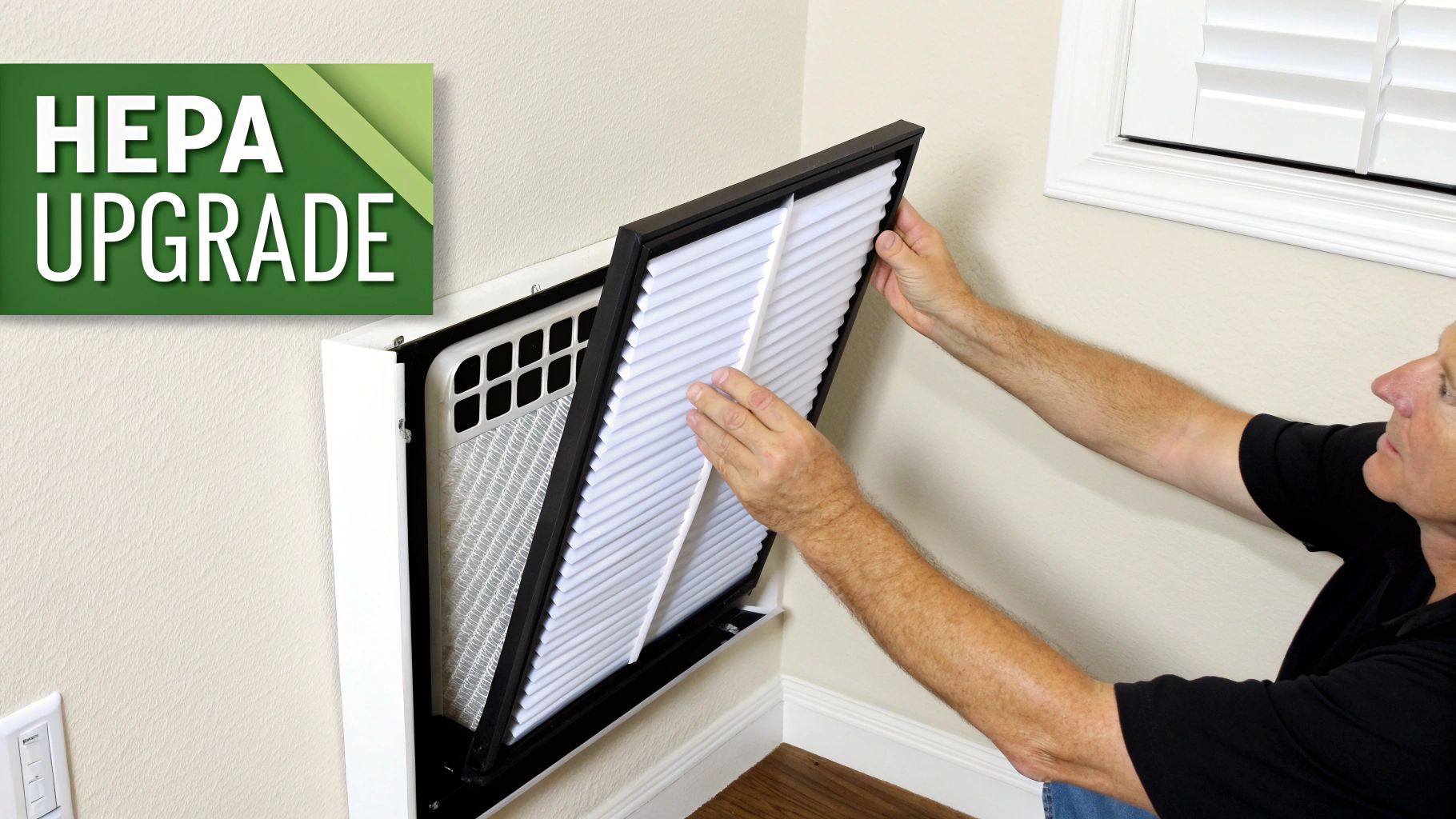
It all starts with your furnace filter—the system's first line of defence. A cheap, flimsy fibreglass filter is really only there to stop large debris from damaging your furnace. It does next to nothing for your air quality, letting microscopic dust, dander, and pollen sail right through and back into your living space.
Upgrade Your Furnace Filter for Superior Dust Capture
To actually trap the tiny particles that make up most household dust, you need a better filter. This is where the MERV (Minimum Efficiency Reporting Value) rating becomes so important. A higher MERV rating means the filter is designed to capture much smaller particles.
- MERV 1-4: These are your basic, see-through filters that catch less than 20% of large particles. They won't help with dust.
- MERV 6-8: This is a decent starting point for most homes. These pleated filters can trap common irritants like dust mites and mould spores.
- MERV 11-13: Now we're talking. This is the sweet spot for seriously cutting down on dust and allergens, capturing pet dander, fine dust, and even some bacteria.
Switching to a filter with a MERV rating of 11-13 can make a huge difference in how fast dust builds up. Just remember, a harder-working filter gets clogged faster. Knowing how often you should replace your furnace filter is crucial for keeping your system efficient, especially in the GTA where the seasons throw a lot at our homes.
When to Consider Professional Air Duct Cleaning
Over the years, your air ducts collect an unbelievable amount of dust, pet hair, construction debris, and other gunk. While a great filter stops new particles from getting in, it can't do a thing about the buildup that’s already lining your ductwork.
Every time your system kicks on, it can dislodge some of that old dust and blow it right back into your rooms.
Think of your air ducts as the hidden highways of your home. If those highways are caked with years of grime, the air travelling through them will never be truly clean, no matter how good your filter is.
Professional duct cleaning isn't an annual chore for most people, but certain situations absolutely call for it. It gives you a clean slate and can dramatically improve your indoor air quality.
You should seriously consider calling a pro if you spot any of these signs:
- Visible Dust from Vents: If you see little puffs of dust shooting out of your vents when the furnace or AC turns on, that’s a dead giveaway your ducts are full.
- Recent Renovations: Drywall dust is the worst. If you’ve just finished a reno, a huge amount of that fine powder has likely settled in your ductwork.
- Unexplained Allergy Flare-Ups: Are family members suddenly sneezing and sniffling at home for no obvious reason? Contaminated ducts could be spewing irritants into the air.
- Signs of Pests or Mould: If you find evidence of rodents or see mould growing near your vents, it's time for a professional cleaning and sanitization, no question about it.
By using a better HVAC filter and making sure your ductwork is clean, you put a system that's already running to work for you. It becomes an active air purifier, trapping dust before it even has a chance to settle.
Design Your Home to Naturally Repel Dust
Your cleaning schedule is important, but it's really only half the battle. The choices you make when decorating your home—from the flooring you walk on to the curtains you hang—can either make your space a dust magnet or help it stay cleaner for longer. If you get strategic with your materials and furniture, you can actually design a home that fights dust for you.
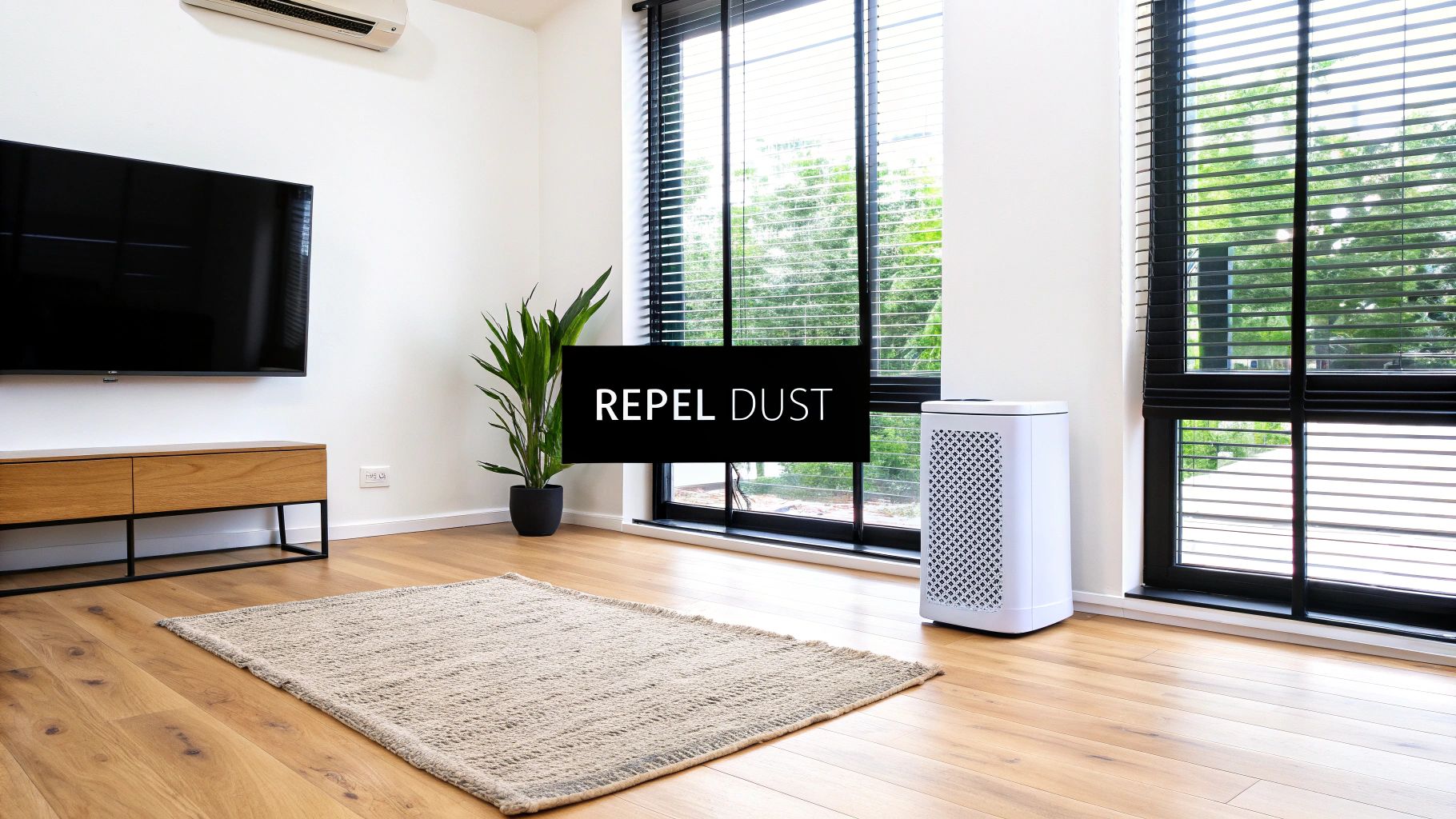
It’s all about prevention. The goal is to minimize the surfaces where dust can settle and make it much easier to clear away the dust that does show up.
Choose Your Surfaces Wisely
Let’s be honest, some materials are just terrible for trapping dust, pet dander, and other allergens. Thick, high-pile carpets are probably the worst offenders. Every single fibre acts like a tiny net, grabbing onto dust particles and refusing to let go, even when you go over it with a high-powered vacuum.
Hard surfaces are your secret weapon here. Think about making a few of these simple but powerful swaps:
- Flooring: Ditch the wall-to-wall carpet and opt for hardwood, laminate, vinyl, or tile floors instead. Dust has nowhere to hide, and a quick sweep or mop gets rid of it completely. If you can't live without the softness of a rug, go for a low-pile or washable version you can clean properly.
- Window Coverings: Those heavy, dry-clean-only drapes? They're basically giant dust cloths hanging on your walls. A much better choice is sleek blinds (wood or vinyl) or roller shades you can wipe down in seconds. If curtains are a must, pick fabrics that are machine-washable and toss them in the laundry every season.
- Furniture: Plush, upholstered furniture can hold a shocking amount of dust. On the other hand, materials like leather, wood, and plastic are a breeze to keep clean with a quick wipe.
Making these changes can dramatically cut down on the amount of dust that builds up in your home.
Choosing the right furnishings from the start makes a world of difference in your long-term cleaning efforts. Here’s a quick-glance table to help you spot the dust magnets and their smarter, low-dust alternatives when you're shopping or redecorating.
Dust-Friendly vs. Dust-Resistant Home Furnishings
| Item | High-Dust Material (Attracts Dust) | Low-Dust Alternative (Resists Dust) |
|---|---|---|
| Flooring | Wall-to-wall high-pile carpet | Hardwood, laminate, tile, low-pile area rugs |
| Window Treatments | Heavy, dry-clean-only drapes | Blinds (wood, vinyl), roller shades, washable curtains |
| Sofas & Chairs | Plush fabric, velvet, chenille | Leather, faux leather, wood, plastic |
| Bedding | Wool or down comforters | Synthetic, washable materials, allergen-proof covers |
| Decorative Items | Ornate trinkets, open bookshelves | Minimalist decor, items in closed glass cabinets |
| Throw Pillows/Blankets | Faux fur, chunky knits | Cotton, linen, or tightly woven synthetic fabrics |
By consciously selecting items from the "Low-Dust" column, you're not just decorating—you're actively creating a healthier, cleaner environment that requires less intensive cleaning.
The Power of an Air Purifier
Even with all the right surfaces, tiny particles will still hang around in the air. This is where a good air purifier really shines. It's not a replacement for cleaning, but it's a fantastic tool for catching dust before it has a chance to settle on your freshly wiped furniture.
For an air purifier to do any good against dust, it needs a true HEPA (High-Efficiency Particulate Air) filter. These filters are the real deal, engineered to capture 99.97% of airborne particles as small as 0.3 microns. That includes not just dust but also pet dander, pollen, and mould spores.
Pro Tip: Where you put the purifier matters. Place it in the room where you spend the most time, like your bedroom or the living room. Make sure it has some open space around it for good air circulation and just let it run. It's designed to work 24/7.
Think of it as a silent dust-trapper, working around the clock to lighten your cleaning load and improve the very air you breathe.
Declutter for a Less Dusty Home
Take a look around. Every single item sitting out in your home—from the books on a shelf to the little knick-knacks on the mantelpiece—is a landing pad for dust. The more stuff you have, the more surfaces there are to clean. Clutter doesn’t just look messy; it creates an obstacle course for your duster and lets grime build up in all those nooks and crannies.
Adopting a more minimalist mindset is one of the easiest and most effective ways to reduce dust.
- Store It Away: Get friendly with closed storage like cabinets, drawers, and decorative boxes. They keep your things protected and leave you with far fewer surfaces to wipe down.
- Decorate with Intention: Instead of a dozen small trinkets, choose a few larger statement pieces that are simple to clean.
- Tackle Paper Clutter: Piles of mail, magazines, and flyers are huge dust traps. Have a system for sorting and filing paper as soon as it enters your house.
When you simplify your space, you not only make your home feel more open and relaxing, but you also drastically reduce the time and energy you spend dusting. A clutter-free home is simply an easier home to keep clean.
Targeted Dust Solutions for Allergy Sufferers and Pet Owners
For most people, a bit of dust is just a minor annoyance—something to wipe up and forget. But if you're living with allergies, asthma, or share your home with furry friends, that grey fluff is a whole different beast. It’s packed with potent triggers like dust mites and pet dander that can turn your home from a sanctuary into a source of constant sniffles and sneezes.
This isn't about just tidying up. To create a space where you can breathe easy, you need to get strategic and tackle these microscopic irritants right where they start. For anyone with allergies or pets, figuring out how to reduce dust is a game-changer for your health.
Winning the War Against Dust Mites
Dust mites are tiny critters you can't see, and they absolutely love warm, humid places where they can feast on the skin cells we naturally shed. Think of your bed as their personal all-you-can-eat buffet. As a primary cause of indoor allergies, the bedroom is ground zero in the fight against dust.
The key is to make your home an inhospitable place for them.
- Encase Your Bedding: The single best thing you can do is zip up your mattress, box spring, and pillows in allergen-proof covers. These create a physical barrier, sealing the mites and their waste products away from you.
- Wash Bedding in Hot Water: Get into the habit of washing all your sheets, pillowcases, and blankets every single week in water that’s at least 54°C (130°F). That hot water is what it takes to actually kill them off.
- Control Humidity: Mites need moisture to survive. Use a dehumidifier or your air conditioner to keep your home’s humidity below 50%, and you'll make it much tougher for them to multiply.
Your bedroom should be a sanctuary for rest, not a breeding ground for allergens. By focusing on encasing your bedding and maintaining a hot-water washing schedule, you directly disrupt the dust mite life cycle and significantly reduce your exposure while you sleep.
This aggressive approach is vital because airborne particulate matter has a measurable impact on health. For instance, a recent study highlighted that exposure to high levels of dust was associated with reduced lung function in children. You can explore the full findings on dust and respiratory health here.
Managing Pet Dander and Fur
We adore our pets, but let's be honest—they're walking, breathing dust-and-dander machines. Pet dander, those microscopic flecks of skin they shed, is a very powerful allergen that can float around in the air for hours.
To get a handle on it, you need to tackle the problem from two angles: grooming your pet and managing your home. Brushing your pet a few times a week (doing it outside is even better) gets rid of loose fur and dander before it ever makes its way onto your floors and furniture. It’s also helpful to understand how outside elements can affect your pet; for example, research on the impact of fine desert dust on pet skin shows how outdoor irritants can lead to more shedding indoors.
Creating "pet-free zones" gives your lungs a much-needed break. Declaring the bedroom off-limits to pets ensures you get at least eight hours a day in a space with far fewer allergens. It might feel tough at first, but this boundary can make a world of difference.
Finally, don't forget about how your HVAC system circulates all that dander. If you're serious about capturing these fine particles, you might be wondering if professional air duct cleaning is necessary. It can be a critical step to clear out years of built-up dander from the very system that delivers air to every room in your house.
Common Questions About Dust Reduction
Even with a great cleaning routine, some dust problems just don't seem to go away. It’s frustrating when you put in the effort but don't see the results. We get it. Let’s break down some of the most common questions and sticking points we hear from homeowners trying to win the war on dust.
Getting to the bottom of these issues can turn an endless chore into a victory. Here are the answers you've been looking for.
How Often Should I Really Change My Furnace Filter?
This is a huge one, and the right answer depends entirely on your home and the type of filter you use. It's definitely not a one-size-fits-all situation.
For those basic, 1-inch fibreglass filters, you should be swapping them out monthly. No exceptions, especially during the heavy heating and cooling seasons here in the GTA. They just get clogged too fast.
If you’ve invested in a better-quality pleated filter—something with a MERV 8 rating or higher—you can often stretch that to every 60-90 days. But here's the catch: if you have pets, family members with allergies, or anyone smokes indoors, you’re back to checking it monthly. A dirty filter can’t do its job, forcing your HVAC system to work overtime and just blow dusty air around your home.
Do Air Purifiers Actually Make a Difference for Dust?
They absolutely can, but you have to get the right one. For an air purifier to have any real impact on dust, it needs a true HEPA (High-Efficiency Particulate Air) filter. That part is non-negotiable. HEPA filters are specifically designed to capture 99.97% of tiny particles, including dust, pollen, and pet dander.
Where you put it also matters. Place the unit in the room where you spend the most time—often the bedroom—so you're breathing cleaner air while you sleep. For the best results, just let it run. An air purifier won't mean you can stop dusting forever, but it dramatically cuts down on the amount of airborne dust that settles on surfaces in the first place.
Think of an air purifier as a silent partner in your fight against dust. It's constantly working in the background, pulling particles out of the air before they even get a chance to land. It’s a proactive measure that makes your regular cleaning routine much more effective.
This continuous filtering creates a baseline of cleaner air, lightening your overall cleaning load.
Why Does My House Get So Dusty, So Fast, Even After I’ve Cleaned?
This is easily the most common frustration we hear. If you feel like dust reappears the second you put your cleaning supplies away, it’s time to do some detective work. It usually comes down to one of these culprits:
- Your HVAC System is the Source: More often than not, a clogged furnace filter is to blame. It can’t trap dust, so your system just circulates it endlessly. The problem might run deeper, though. Your air ducts could be filled with years of accumulated grime. To learn more, check out our guide on how often ducts should be cleaned, because a professional cleaning can make a world of difference.
- You're Using the Wrong Tools: Still using a dry cloth or a classic feather duster? You might as well be rearranging the dust instead of removing it. Those tools just flick particles into the air. The simple fix is to switch to a damp microfibre cloth, which actually traps and holds onto dust.
- There Are Sneaky Entry Points: Small gaps around windows and doors are like an open invitation for outdoor dust and pollen. Feel for drafts and consider adding or replacing weatherstripping to create a better seal.
- You Have Too Many "Dust Magnets": Heavy drapes, plush carpets, and piles of throw pillows are all notorious dust traps. They hold onto particles and shed their own fibres, constantly contributing to the problem.
Tackling these root causes is the key to finally breaking the cycle of constant cleaning.
At Can Do Duct Cleaning, we know that a truly healthy home goes beyond what you can see. If you think your HVAC system is working against you in the fight against dust, our team is here to help. We can provide a thorough inspection and professional duct cleaning to clear out years of built-up dust and allergens. Get your free quote today!