
If you've ever found yourself in a condo, apartment, or basement laundry nook staring at a solid wall where a dryer vent should be, you know the frustration. How do you get rid of all that hot, moist air? This is a common headache in many Canadian homes where running ductwork outside just isn't an option.
That's where an indoor clothes dryer vent comes in. It's a special kit that filters your dryer's exhaust and releases the warm air back into the room instead of pumping it outdoors.
Understanding Indoor Dryer Vents
So, what exactly is this thing? It's best to think of an indoor vent not as a true "vent," but more like a filtration system. A traditional dryer vent has one simple job: get all the hot, damp, lint-filled air completely out of your house. Easy enough.
An indoor kit, on the other hand, has to work a lot harder. It reroutes that same exhaust air through a purpose-built filter box designed to trap the unwanted stuff before recycling the air back into your living space.
How It Works: A Simple Analogy
Picture this: your dryer is like a kettle boiling water on the stove. The steam it creates is the hot, moist air, and any little mineral bits in the water are the lint.
Venting outside is like opening a window—all that steam and gunk just goes straight out. An indoor vent is more like putting a special filter and a water trap right on the kettle's spout. It catches the gunk and condenses the steam into water, letting only warm air pass through.
The process breaks down into a few key steps:
- Capturing Lint: The air first passes through a filter, often a multi-stage one, that grabs all those tiny, flammable lint fibres.
- Managing Moisture: Next, the system uses a small water reservoir to cool the air, causing the water vapour to condense back into liquid water, which it collects.
- Recirculating Air: Finally, the filtered, drier, warm air is released back into the room.
An indoor clothes dryer vent is a solution born of necessity—it should only be used when venting to the exterior is truly impossible. It's a trade-off. You gain the convenience of a dryer in a tricky spot, but you also take on new responsibilities for regular maintenance and keeping a close eye on your home's humidity and air quality, which we'll dive into next.
Exterior Vents vs. Indoor Kits: A Head-to-Head Comparison
Figuring out how to vent your dryer isn't just a technical detail—it's a major decision for your home's health and safety. The traditional method, venting straight to the outdoors, is considered the gold standard for good reason. It gets the job done by completely removing lint, moisture, and exhaust from your living space.
But for many of us in apartments, condos, or basement laundry rooms, running a duct outside just isn't in the cards.
That’s where an indoor clothes dryer vent comes into the picture. It’s not a first choice, but it’s an alternative when you have no other option. To make the right call, you need to understand the trade-offs you're making with safety, efficiency, and ongoing maintenance.
How They Actually Work
Think of an exterior vent as a dedicated exhaust pipe for your dryer. Its only job is to provide a one-way ticket out for hot, damp air and all those tiny, highly flammable lint particles. It's a simple, effective system that, aside from a yearly cleaning, you don't really have to think about.
An indoor vent kit, on the other hand, is more like a filtration system. It has to trap the lint and condense the water vapour before it can release the air back into the room. This process needs your constant attention. If the filter gets clogged or the water trap overflows, the system fails, and you’re left with all those hazards right inside your home.
This decision tree cuts right to the chase, helping you visualize the first question you should always ask.
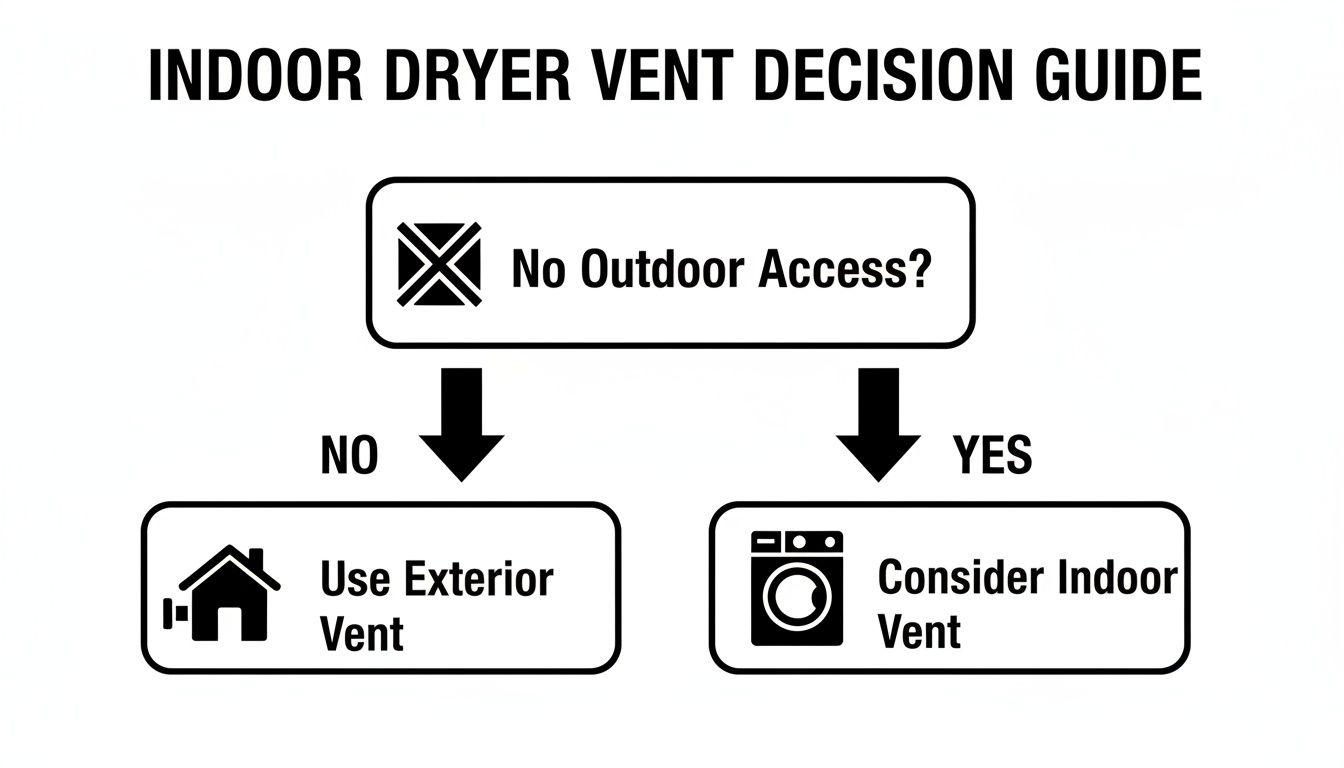
The takeaway is clear: an indoor vent is a workaround, designed specifically for situations where you can't get to the outside.
Comparing Dryer Venting Methods for Canadian Homes
To help you weigh your options, we've put together a quick comparison table. It breaks down the key differences between the gold-standard exterior vent and the indoor alternative.
| Feature | Exterior Venting (Gold Standard) | Indoor Vent Kit (Alternative) |
|---|---|---|
| Safety (Fire Risk) | Very High. Flammable lint is removed from the building. | Low. Flammable lint is collected inside the home, requiring constant monitoring. |
| Moisture Control | Excellent. All moisture is expelled outside. | Poor. Moisture is released into the room, risking mould and mildew. |
| Indoor Air Quality | Excellent. Exhaust fumes and fine particles are removed. | Poor. Fine lint, VOCs, and humidity are recirculated into your living space. |
| Maintenance | Low. Requires professional cleaning once a year. | High. Requires cleaning filters and emptying water after every use. |
| Installation | Complex. Usually requires professional installation and cutting through an exterior wall. | Simple. Can often be installed as a DIY project with no structural changes. |
| Best For | Nearly all homes. The safest and most effective solution. | Apartments, condos, or basements where exterior access is impossible. |
The choice really boils down to your home’s layout. If an exterior vent is possible, it's always the better, safer path.
The Big Picture: Safety, Moisture, and Maintenance
When you dig into the details, a few core factors really stand out. Safety is number one. Exterior vents physically get flammable lint out of your house, which is critical when you learn that lint buildup is a leading cause of the estimated 34% of residential dryer fires. Indoor kits have filters, but they keep that same dangerous material inside your home, putting the pressure on you to stay on top of it.
While an indoor vent kit might seem like an easy fix, it essentially transfers all the responsibility for managing fire risk, moisture levels, and air quality directly onto you.
Let's break it down a bit more:
- Controlling Moisture: An exterior vent is a champ here, pushing all the damp air from wet laundry straight outside. An indoor vent does the opposite—it pumps that humidity right back into the room, creating a perfect environment for mould, especially in a chilly Canadian basement.
- Air You Breathe: A proper vent ensures exhaust fumes and tiny lint particles are gone for good. An indoor kit, however, can release those fine particles and even chemicals from your detergent (VOCs) back into the air you breathe.
- Energy Use: This is the one area where an indoor vent might seem to have an advantage. In the dead of a Canadian winter, that warm, moist air can help humidify and heat your home, which could trim your energy bill. But that small benefit comes with the major risks of poor air quality and moisture damage.
- The Upkeep: An exterior vent needs a professional cleaning about once a year. An indoor kit needs your attention after every single load. You have to empty the water, check the filters, and make sure the whole unit is clean and working.
In the end, it all comes down to the limitations of your space. If you’re trying to figure out what's possible in your home, our guide on professional dryer vent installation can help you explore your options.
The Hidden Dangers of Venting Your Dryer Indoors
An indoor clothes dryer vent might feel like a clever fix for a laundry room without outside access, but that convenience comes with some serious strings attached. It solves one problem but quietly introduces a few new hazards that every Canadian homeowner needs to get ahead of.
Without the right care, this simple setup can start to compromise your home's safety and air quality before you even realize it.
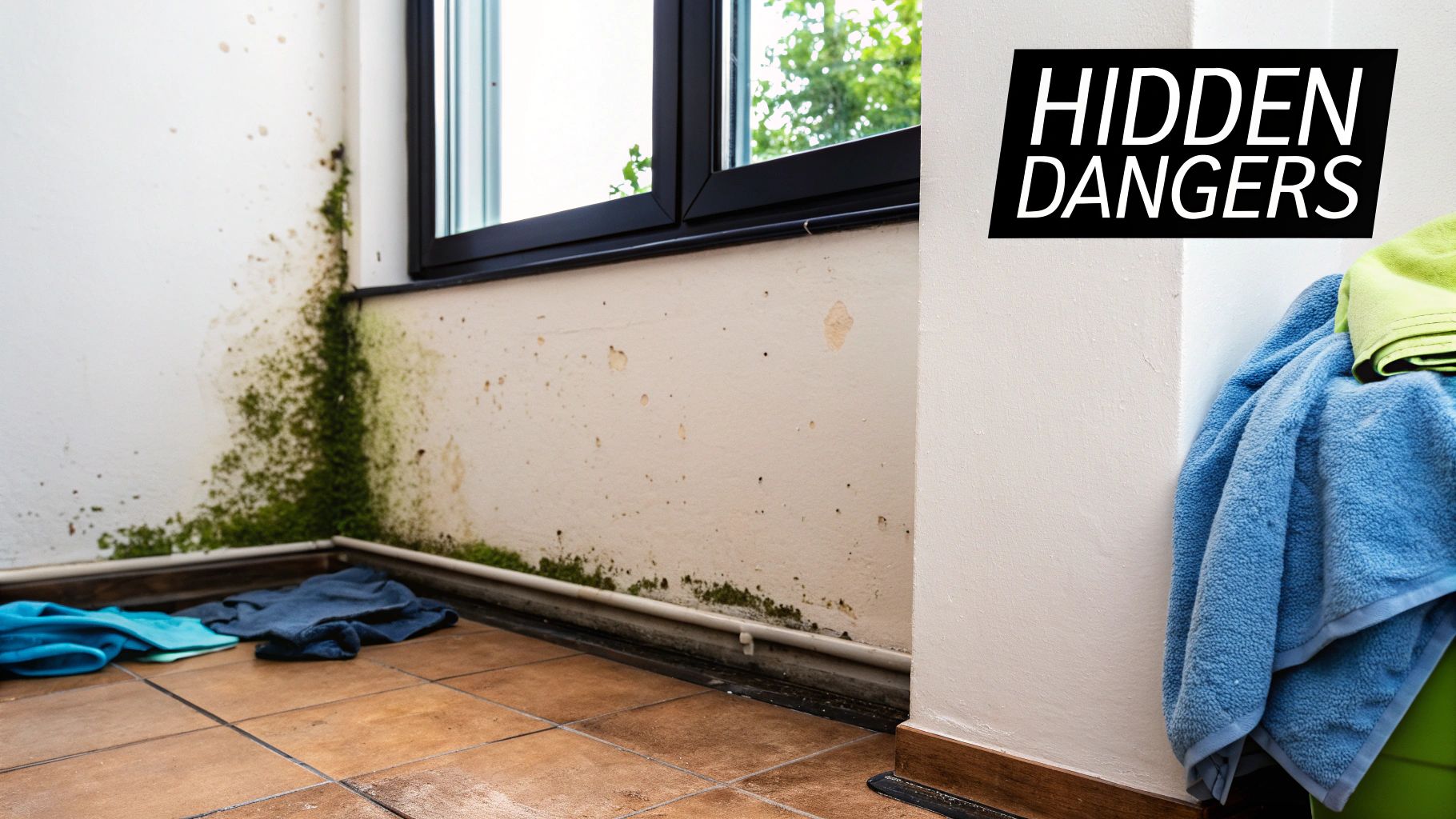
The Threat of Moisture Overload and Mould
Think about it: every load of wet clothes holds a surprising amount of water—often several litres. A standard dryer pushes all that steamy air safely outside. An indoor kit, on the other hand, dumps it right back into your living space.
This is a big deal, especially with our Canadian weather. During a humid Toronto summer or a long winter when the windows are sealed tight, that extra moisture has nowhere to escape. You’ll start to see condensation on your windows and walls, creating the perfect damp environment for mould and mildew to take hold.
You’re basically running a powerful, unfiltered humidifier every time you do laundry. This won't just leave a musty smell—over time, it can cause paint to peel, wood to warp, and lead to some pretty expensive structural repairs.
The Ever-Present Fire Hazard
The most immediate danger is the lint that escapes from your dryer. This stuff is highly flammable. While an indoor dryer vent is meant to catch it, no filter is foolproof.
Tiny lint particles will inevitably bypass the trap and settle on nearby surfaces, creating a hidden fire risk all over the room. We know from industry research that failing to clean dryer vents is a leading cause of house fires, and when you bring all that lint inside your home, the risk only gets higher.
- Lint Accumulation: Those fine fibres can build up behind your washer and dryer, on curtains, and even in carpets.
- Overheating Risk: If the vent's filter gets clogged with lint, airflow is choked off. This forces the dryer to work harder and get hotter, which can easily ignite the trapped lint.
Poor Indoor Air Quality
Beyond moisture and lint, venting indoors directly affects the air you and your family breathe. Your dryer exhaust isn’t just water and fuzz; it’s also full of other particulates you don’t want circulating through your house.
This includes:
- Fine Particulate Matter: Microscopic lint fibres that are small enough to be inhaled deep into your lungs.
- Volatile Organic Compounds (VOCs): These are chemicals released from the fragrances in your detergents and fabric softeners.
- Carbon Monoxide (A Critical Warning): This is the biggest red flag of all. You should never, under any circumstances, use an indoor clothes dryer vent with a gas dryer. Gas-powered dryers produce carbon monoxide—a deadly, odourless gas that must be vented directly outside. Using an indoor kit with a gas dryer is a life-threatening mistake.
If you’re venting indoors, you’re slowly degrading your home’s air quality. For homeowners who want to understand all the potential airborne threats, it might be worth looking into expert air quality tests for a safer home.
These factors combined can turn your home’s air into a real problem. If you’re worried about your current setup, our guide on how to improve indoor air quality offers some practical steps you can take right now. The bottom line is that an indoor vent requires constant, careful attention to keep these health and safety risks in check.
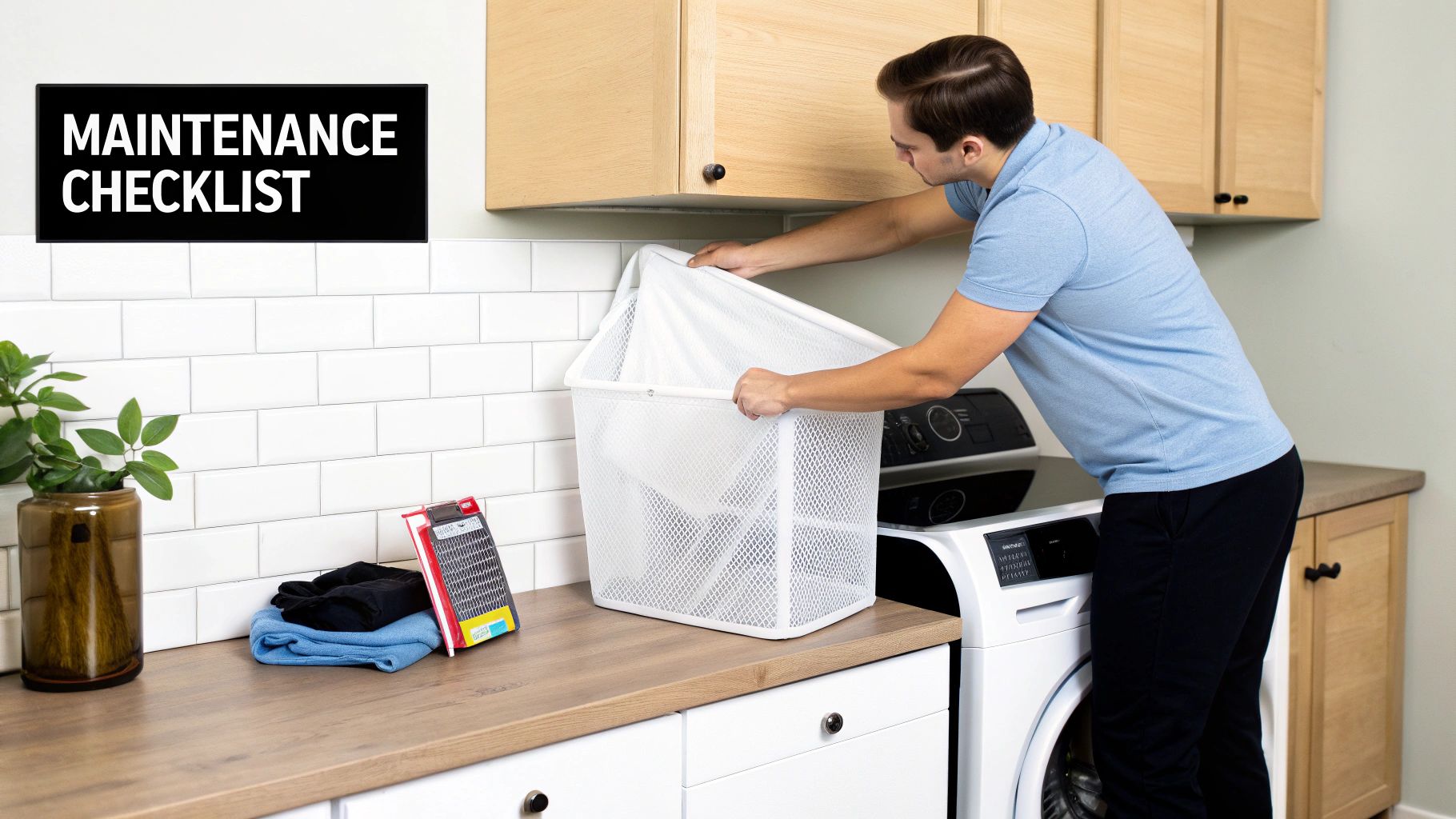
Your Essential Indoor Vent Maintenance Checklist
If you're using an indoor clothes dryer vent, staying on top of maintenance isn't just a good idea—it's your first line of defence against fire, mould, and poor indoor air quality. Think about it: an exterior vent pushes all that moisture and lint outside. Your indoor kit keeps it all inside your home, which means a simple, consistent cleaning routine is non-negotiable.
This checklist will walk you through the key tasks to keep your system running safely. Following these steps helps you manage the risks and catch potential problems before they turn into major headaches.
After Every Single Load
This isn't a weekly or monthly job—you need to do this every single time a drying cycle finishes.
Empty the Water Reservoir: Your vent kit condenses moisture from the dryer into a collection tray or bucket. If that water just sits there, it quickly becomes a breeding ground for mould and mildew. That gunk can then get circulated right back into the air you breathe. Always empty it immediately.
Quickly Check the Main Lint Screen: Just like your dryer’s built-in trap, the indoor vent has its own filter. Give it a quick look for any heavy buildup and pull off any big clumps of lint that gathered during the cycle.
Every Week
Set a reminder on your phone or calendar for a more thorough weekly check. This regular attention is what stops dangerous lint from building up.
Letting your indoor vent go for even a few weeks can seriously increase your fire risk. Lint is incredibly flammable, and a clogged filter can make your dryer overheat—a dangerous combination.
- Deep Clean the Primary Lint Screen: Take the main screen out and give it a proper clean. You might just need to wipe it with a soft cloth, or you may need to rinse it under the tap (just make sure it’s 100% dry before you put it back).
- Wipe Down the Unit: Use a damp cloth to wipe down the inside and outside of the vent kit. This nabs any of the fine lint particles that might have snuck past the filter.
Every Month
A monthly deep-dive makes sure every part of the system is clear and working as it should.
Inspect the Internal Filter: Many kits have a second, finer filter inside, often made of polyester or foam. Take it out and check for any discolouration or fine dust. Clean it or replace it based on what the manufacturer recommends.
Clear the Flexible Hose: Unhook the hose running from your dryer to the indoor vent kit. Look straight through it to check for blockages or a thick layer of lint. A long, flexible brush is great for clearing out any debris. For more pointers on this, check out our guide on how to clean your dryer's lint trap and the ducting connected to it.
Clean the Surrounding Area: Pull your dryer away from the wall and give the floor and wall behind it a good vacuum. Lint loves to collect in these hidden spots, creating a sneaky fire hazard.
Warning Signs Your Dryer Vent Needs Immediate Attention
A struggling dryer vent—whether it's an indoor kit or a traditional exterior duct—rarely fails without giving you a few hints first. These signals are your home's early warning system, letting you know that a simple clog could be escalating into a serious hazard. Learning to spot these signs is key to knowing when to act.
The most obvious red flag is when your clothes are still damp after a full drying cycle. If you find yourself running the dryer for a second time just to get things dry, that’s a classic symptom of poor airflow. The moist air has nowhere to go, so it just stays trapped in the drum with your laundry.
Performance and Sensory Clues
Another clear indicator is the dryer itself. If the top or sides of the machine feel unusually hot to the touch, it means the appliance is overheating. This happens when a blockage forces the dryer to work much harder than it should, trapping heat that can damage internal components and significantly increase the risk of fire.
You should also trust your nose. A persistent musty smell in your laundry area often points to a moisture problem. It could mean the water reservoir in your indoor vent isn't being emptied, or that damp, lint-filled air is escaping and promoting mould growth behind the unit.
A blocked vent doesn't just make your dryer less efficient; it creates a dangerous environment where intense heat and flammable lint can combine. Recognizing these symptoms early allows you to address the problem before it becomes a critical safety issue.
Visible and Environmental Signals
Sometimes, the evidence is right there in front of you. Look for an unusual amount of dust or lint accumulating on surfaces around your laundry room. This shows that the filter in your indoor clothes dryer vent is failing to capture all the particles, spewing them back into your living space instead.
One of the most common and serious warning signs is when you have a dryer not heating up properly, often pointing to a restricted vent. This is a critical issue that requires immediate attention. You can read more about these issues in our guide covering the 5 warning signs of clogged vents.
The growing focus on safety and efficiency is clear when you look at the dryer vent market in North America, where Canada holds a 10.39% share. This trend is driven by a better understanding of the risks associated with poor maintenance. To see a full breakdown of the market, you can learn more about these global dryer vent market findings.
Know When to Call a Professional for Your Dryer Vent
While it’s great to be hands-on with home maintenance, some jobs are best left to the pros. Knowing your limits is key to keeping your home safe and your dryer running smoothly, and sometimes, making that call is the smartest move you can make.
Let's be clear about one thing: never use an indoor vent with a gas dryer. This isn't a suggestion—it's a hard rule. A setup like this will pump lethal carbon monoxide directly into your living space, creating a serious hazard. If you have a gas dryer without outdoor venting, a professional can walk you through your options, which will almost certainly involve switching to an electric or ventless model.
The Value of a Professional Inspection
Trying to figure out local building codes in the Greater Toronto Area can feel like a maze. A certified technician lives and breathes these regulations. They know exactly what's required to make your setup compliant, saving you from headaches down the road. Their trained eye can also spot subtle signs of trouble that most homeowners would easily miss.
A professional inspection gives you peace of mind by:
- Finding Hidden Dangers: Technicians have the tools to find lint packed deep inside your dryer or hose, far beyond what a typical DIY cleaning can reach.
- Ensuring Code Compliance: They’ll confirm your entire venting system is up to snuff with local Canadian safety standards.
- Boosting Performance: An expert can measure airflow and recommend tweaks to make your dryer more efficient, which translates to real savings on your energy bills.
If you're ever in doubt about your dryer vent's safety, efficiency, or compliance, it's time to bring in an expert. Your family’s safety is the top priority, and a professional provides the confidence that your system is set up correctly and running safely.
In the end, it’s all about making sure your venting system is safe and doing its job properly. For a comprehensive inspection and cleaning that protects your home, check out our expert dryer vent cleaning services.
Frequently Asked Questions About Indoor Dryer Vents
When it comes to indoor clothes dryer vents, it’s natural to have a few questions. For homeowners across Canada, getting the right answers is key to making a safe and smart choice for your laundry setup. Let's tackle some of the most common ones.
Can I Use an Indoor Clothes Dryer Vent with a Gas Dryer in Canada?
Let me be perfectly clear: never use an indoor vent with a gas dryer. It's incredibly dangerous and a serious violation of building and safety codes right across Canada.
Gas dryers produce carbon monoxide—a deadly, odourless gas that has to be vented directly outside, no exceptions. This is one rule in home maintenance you can never bend.
How Often Must I Clean My Indoor Dryer Vent Kit?
If you have an indoor kit, staying on top of cleaning isn’t just a good idea, it's essential for safety. The water reservoir must be emptied after every single load to stop mould from taking hold.
Check the main lint filter after every one or two cycles and give it a more thorough cleaning at least once a week. You should also give the entire kit, including the hose, a full inspection every month to make sure everything is clear and connected properly.
Think of it this way: skipping regular cleaning turns a convenient laundry solution into a major fire and health risk. Diligent maintenance isn't optional—it's the only way to use these systems safely.
Are Indoor Dryer Vents a Good Idea for Cold Canadian Winters?
The idea of pumping some extra heat and humidity into a dry house during a long, cold winter sounds tempting, but it’s a gamble. All that moist air from the dryer has to go somewhere, and it usually ends up as condensation on your cold windows and exterior walls.
This trapped moisture is a perfect recipe for mould, mildew, and can even cause structural rot over time. If you absolutely have to use an indoor vent in the winter, you’ll need to run a dehumidifier and keep the room well-ventilated to have any hope of managing the moisture.
If you're ever unsure about your dryer vent setup or want to guarantee your system is safe and running at peak efficiency, give the experts at Can Do Duct Cleaning a call. Our professional technicians offer detailed inspections and cleaning services for your total peace of mind. Find out more at https://www.candoductcleaning.com.

