
When your furnace gives out in the middle of a bitter Ontario winter, the first question that pops into your head is usually, “How much is this going to cost me?” It’s a valid concern. The average price for a new furnace installation in Ontario ranges from $3,500 to $7,500, making it a significant household investment.
This price tag covers everything from the unit itself to the labour required to get it up and running. We’ll break down all the factors that go into that final number throughout this guide.
Your Guide to Furnace Costs in Ontario
In a place like the Greater Toronto Area (GTA), where a reliable heating system is non-negotiable, your furnace is the heart of your home. Getting a handle on the potential cost is the first step toward making a smart, confident decision that keeps your family warm and safe.
Think of it like any other major home renovation. You wouldn’t put a new roof on your house without understanding the difference between shingle types and labour costs, right? The same logic applies here. The final price on your invoice is a blend of several key variables that will determine where your specific project lands within that typical range.
Key Factors Influencing Your Final Bill
So, what exactly are you paying for? A few key things drive the total cost of a furnace replacement in Ontario. Knowing what they are will help you make sense of quotes and budget accordingly.
Here are the big three:
- Furnace Efficiency: This is all about the AFUE (Annual Fuel Utilization Efficiency) rating. A higher-efficiency unit will cost more upfront, but it’s designed to save you money on your hydro and gas bills month after month.
- Unit Size and Type: The furnace’s heating capacity, measured in BTUs, has to be the right size for your home. On top of that, the fuel type—whether it’s natural gas, propane, or electric—plays a huge role in the price.
- Installation Complexity: A simple swap-out of an old furnace for a new one will always be cheaper than a more involved job. If you need new ductwork, different venting, or electrical upgrades, the cost and time involved will go up.
Here’s a quick overview of what you can expect to pay for a new furnace installation in Ontario, depending on the type and efficiency.
Estimated Furnace Installation Costs in Ontario
| Furnace Type | Average Installed Cost Range | Best For |
|---|---|---|
| Mid-Efficiency Gas Furnace | $3,500 – $5,000 | Budget-conscious homeowners in older homes with existing standard venting. |
| High-Efficiency Gas Furnace | $4,000 – $6,500 | Most Ontario homes; offers the best balance of upfront cost and long-term energy savings. |
| Electric Furnace | $3,000 – $5,500 | Homes without access to natural gas, or as a backup heating source. |
| Propane Furnace | $4,500 – $7,500 | Rural properties or homes not connected to the natural gas grid. |
These numbers give you a solid starting point, but remember they can shift based on the factors we just discussed.
A new furnace is a significant but necessary investment for Ontario homeowners. In the GTA, a new furnace installation typically falls between $3,500 and $7,500, with high-efficiency gas models—the most popular choice—ranging from $4,000 to $6,500 installed.
This wide range exists because every home is different. A cozy bungalow in Scarborough has very different heating needs than a sprawling two-storey house in Ajax. While we’re focusing on Ontario, the general principles of furnace costs and types are helpful no matter where you live. For more general insights, you can also check out an HVAC company's blog.
As you continue through this guide, you’ll also learn more about the combined cost of replacing a furnace and air conditioner together, which can often save you money in the long run.
How Furnace Type and Efficiency Drive Your Final Price
When it comes to the total cost of a new furnace in Ontario, the biggest piece of the puzzle is the unit itself. Think of it like buying a car: you can go for a basic model with a lower sticker price or invest in a high-efficiency hybrid that saves you money on fuel down the road. This decision sets the stage for both your upfront investment and your monthly heating bills for years.
In Ontario, you're looking at three main fuel types: natural gas, propane, and electric. For most of us in cities and suburbs like the GTA, natural gas is the go-to. It's affordable and already piped to our homes. But if you're in a more rural area, propane or electric furnaces become the practical choice.
This chart gives you a bird's-eye view of what you can expect to pay for a new furnace installation across the province.
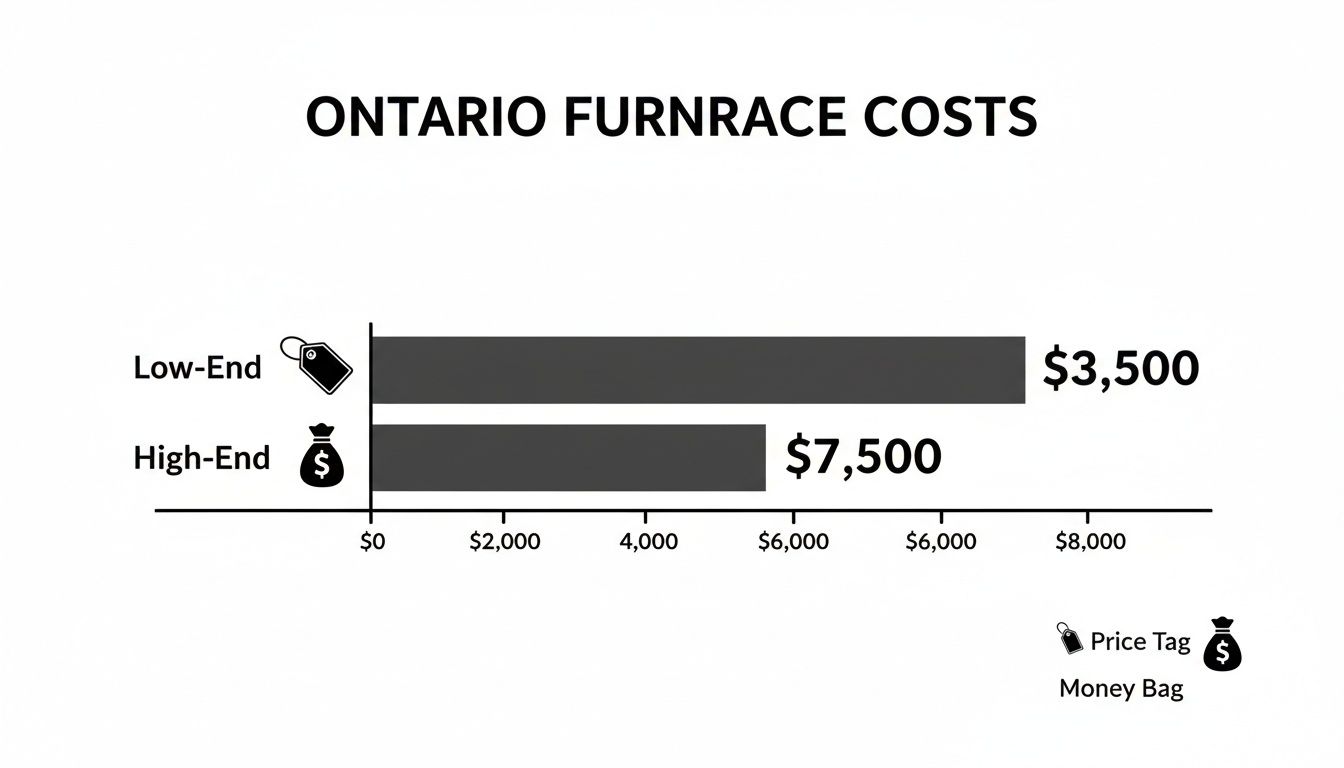
As you can see, a new furnace is a major home investment. That’s exactly why getting a handle on your options is so important before you make a decision.
Decoding Furnace Efficiency Ratings
Beyond fuel type, the most important number you’ll see is the AFUE (Annual Fuel Utilization Efficiency) rating. It’s a simple percentage that tells you how much of the fuel your furnace burns actually becomes heat for your home. The rest just goes up the chimney as exhaust.
Here's an easy way to think about it: an 80% AFUE furnace turns 80 cents of every dollar you spend on fuel into heat. The other 20 cents is wasted. In contrast, a high-efficiency furnace with a 96% AFUE rating only wastes 4 cents of that same dollar. You can imagine how much that adds up over a long, cold Ontario winter.
A higher AFUE rating means a more expensive furnace upfront, but it pays you back with lower energy bills every month. The trick is finding the right balance between the initial cost and long-term savings.
Comparing Furnace Types and Their Costs
Each furnace type has its own price tag and benefits, depending on where you live in Ontario. For most homeowners, the choice is pretty clear, but it helps to know the "why" behind it.
- Natural Gas Furnaces: This is the most popular and affordable option in places like Toronto. They deliver powerful heat and run on cheaper fuel, making them the standard choice for a reason.
- Propane Furnaces: These work just like natural gas models but are for homes without access to a gas line. The furnace itself costs about the same, but you’ll pay more for propane fuel.
- Electric Furnaces: These have the lowest upfront purchase price, which can be tempting. But with Ontario's hydro rates, they cost a lot more to run, making them a better fit for smaller homes or as a backup heat source.
Right now, a new natural gas furnace in Ontario typically costs between $4,000 and $6,500, including installation. While you might find some standard-efficiency models (80-89% AFUE) on the lower end, high-efficiency units (90-98% AFUE) are now the norm. In fact, due to federal regulations, it’s tough to even find new furnaces below 95% AFUE. An electric furnace might only set you back $1,500-$3,500 initially, but its high operating costs make it a tough sell for an average-sized home.
Ultimately, choosing a high-efficiency furnace isn't just about saving a few bucks—it's about future-proofing your home. As energy costs climb, a furnace with a 95% AFUE rating or higher acts as a buffer against rising bills, giving you reliable comfort and peace of mind. To get a better feel for the top performers, check out our guide on the best furnace brands available in Canada.
Uncovering the Hidden Costs of Furnace Installation
The price you see on the furnace itself is just the starting line, not the finish. Many Ontario homeowners are caught off guard when the final invoice arrives with extra charges they never saw coming. Getting a handle on these "hidden" costs is the key to creating a realistic budget and avoiding any nasty surprises on installation day.
These extras aren't about contractors padding the bill. They represent the essential work, materials, and safety measures needed to get your new furnace installed legally, safely, and effectively for the long haul.
Labour and Disposal Fees
The biggest chunk of the additional costs almost always comes from labour, which can run anywhere from $800 to $1,500 or even more. This isn't just for lifting the unit into place; it covers the hours of skilled work by a certified technician who will disconnect your old unit, connect gas and electrical lines, and run diagnostics to make sure everything is working perfectly.
Then there’s the old furnace to deal with. You can't just drag it out to the curb. Most HVAC companies will include a disposal fee, typically between $100 and $250, to safely remove and recycle the old beast.
Permits and Inspections Across the GTA
Swapping out a furnace in Ontario isn't a simple DIY-style job. It requires a permit to guarantee the work meets strict safety codes, which is all about protecting your home and family. The cost of these permits changes depending on where you live in the Greater Toronto Area.
A licensed HVAC contractor must pull a permit for any new furnace installation. This isn't just red tape; it's a crucial safety measure that ensures the work is inspected and meets the strict standards set by the Technical Standards and Safety Authority (TSSA).
For instance, the permit fee in Toronto might be different from what you'd pay in Ajax or Scarborough. It's smart to budget between $150 and $400 for the permit and the follow-up inspection. It’s a small price for the peace of mind you get from a professionally verified, safe installation.
The Critical Role of Your Ductwork
Now, let's talk about the unsung hero—and potential budget-breaker—of your heating system: your ductwork. Think of your shiny new high-efficiency furnace as a high-performance engine. Your ductwork is the highway system that delivers all that warm air.
If that highway is old, full of potholes (leaks), and clogged with traffic (debris), you've just hooked up a Ferrari engine to a gravel road. Your furnace has to work way harder, leading to higher energy bills, hot and cold spots throughout your house, and a much shorter lifespan for your new investment. This is why sorting out your ducts before a new furnace goes in isn't an upsell; it's protecting your purchase.
In many older GTA homes, ductwork modifications aren't just a good idea—they're a necessity. In fact, ductwork mods are vital for 60% of installations in pre-1980 homes, potentially adding $2,000 to $4,000 to the total cost. Ignoring leaky or undersized ducts can increase the strain on your new furnace by 25%, which can slash its lifespan from 15-20 years to under 10.
On the flip side, pairing a new furnace with a professional duct cleaning can boost its efficiency by up to 30%. You can learn more about what's involved in our guide on the installation of ductwork.
Common Additional Installation Costs for Ontario Homeowners
To give you a clearer picture, here’s a quick rundown of potential extra costs that can pop up. Not every installation will require all of these, but it’s wise to be aware of them when you're planning your budget.
| Service or Item | Typical Cost Range | Why It Might Be Needed |
|---|---|---|
| Old Furnace Disposal | $100 – $250 | Your old unit must be removed and recycled according to environmental regulations. |
| Municipal Permits & Inspection | $150 – $400 | Required by law in most GTA municipalities to ensure the installation is safe and up to code. |
| Ductwork Modifications | $2,000 – $4,000+ | Common in older homes where ducts are leaky, undersized, or poorly configured for a new furnace. |
| Chimney Liner | $500 – $1,200 | Required for mid-efficiency furnaces that vent through a masonry chimney to prevent corrosion. |
| Thermostat Upgrade | $150 – $500+ | A smart thermostat is often needed to get the most efficiency out of a new furnace. |
| Electrical Upgrades | $300 – $800+ | Necessary if your home's current wiring or electrical panel can't support the new furnace. |
Remember, these figures are estimates. The only way to know for sure is to get a detailed, on-site quote from a qualified HVAC professional who can assess your home's specific needs.
Lowering Your Bill with Ontario Furnace Rebates
That initial quote for a new high-efficiency furnace can feel like a big number, but it's rarely the final price you'll pay. Think of government and utility rebates as a kind of financial partnership. They have a vested interest in encouraging energy efficiency to ease the load on the power grid, and you want to shrink your heating bills. It’s a win-win that lets savvy Ontario homeowners knock a significant chunk off their total furnace cost in Ontario.
These programs are set up to give you a financial high-five for making a greener choice. When you install a qualifying high-efficiency unit, you’re not just setting yourself up for lower monthly energy bills—you’re also getting cash back on your investment. It’s a smart way to make those top-tier, energy-sipping models much more affordable.
Navigating Federal and Provincial Programs
Ottawa often takes the lead with nationwide programs designed to help Canadians improve their home's energy efficiency. While the names and details of these programs can change, the goal is always the same: incentivize upgrades that seriously cut down a home's carbon footprint. High-efficiency furnaces are almost always on that list.
For years, a major federal program was the Canada Greener Homes Grant, which helped homeowners pay for eligible retrofits. It's absolutely critical to check the official Natural Resources Canada (NRCan) website for the latest on what's available, as these programs are constantly evolving. Many federal grants require a pre- and post-retrofit EnerGuide evaluation to qualify, so you'll want to plan for that from the start.
Rebate programs aren't just about a quick discount. They're a strategic way to make a better long-term investment. By using these offers, you can often afford a more efficient furnace than you originally budgeted for, leading to even greater savings down the road.
On top of federal money, it's worth looking for provincial initiatives. Ontario's specific programs come and go, but they all share that core mission of promoting energy conservation. A quick search before you sign any contracts is always a good idea.
Local Utility Rebates Enbridge Gas and Others
Beyond the government level, some of the easiest and most substantial savings come directly from your local utility provider. For most homeowners across the GTA and wider Ontario, that means seeing what Enbridge Gas is offering. Their Home Efficiency Rebate Plus program, often run in partnership with federal initiatives, is a huge one.
These utility programs often give you cash back for a whole slate of home improvements, including:
- High-Efficiency Furnaces: You can get a hefty rebate for installing a furnace that meets a certain ENERGY STAR® certification or AFUE rating.
- Smart Thermostats: Adding a smart thermostat to your new furnace setup often unlocks another rebate, since it helps you manage your energy use even better.
- Boilers and Water Heaters: Sometimes, you can bundle a furnace replacement with other upgrades and increase the total rebate you get back.
The process usually involves bringing in a registered contractor who knows the ropes and can help you with the paperwork. The best part is that these programs are designed specifically for us here in Ontario. They get our cold winters and understand why efficient heating isn't a luxury—it's a necessity.
You can learn more about how the whole project unfolds, from choosing a unit to the final installation, in our guide to furnace installation costs and process. By stacking federal, provincial, and utility offers, you can turn a major expense into a smart, manageable investment in your home’s comfort and future.
Deciding Between Furnace Repair and Replacement
It's a classic Canadian dilemma. Your furnace starts acting up on the coldest night of the year, and you’re stuck wondering: do I pay for another repair, or is it finally time to replace the whole thing?
Making the wrong call can feel like throwing money into a black hole. But the right one can set you up for years of worry-free warmth. The decision isn't just a gamble; it's about looking at the facts—age, repair history, and performance—to make a smart investment in your home's comfort.
Applying the 5,000 Rule
HVAC pros often use a quick back-of-the-napkin calculation called the "5,000 Rule." It's not a strict law, but it’s a handy way to put things into perspective. Just multiply the age of your furnace by the estimated repair cost.
(Age of Furnace) x (Repair Cost) = Decision Factor
If that number comes out over 5,000, it’s a strong sign that replacement is the smarter financial move.
Let’s say your furnace is 12 years old and needs a repair quoted at $450. The math is simple: 12 x 450 = 5,400. Since that’s over the 5,000 mark, sinking that $450 into an aging unit probably isn't the best use of your money. You'd be better off putting that cash toward a new, reliable system.
Telltale Signs Your Furnace Is Nearing the End
Beyond the numbers, your furnace will usually give you some pretty clear hints that it's on its way out. Spotting these early can save you from a complete breakdown when you need heat the most.
If you notice any of these signs, it’s time to start thinking about a replacement.
- Rising Energy Bills: Are your hydro or gas bills creeping up every winter, even though you haven't changed your habits? That’s a classic sign of a furnace losing its efficiency. It’s working harder—and burning more fuel—just to keep up.
- Frequent or Costly Repairs: If you're on a first-name basis with your HVAC technician, that’s not a good thing. A furnace that constantly needs new parts or attention is a money pit, plain and simple.
- Strange Noises: Your furnace should be relatively quiet. Any loud banging, rattling, or groaning sounds are signs of mechanical stress or failing parts.
- Inconsistent Heating: Do you have to wear a sweater in the living room but feel like you're in a sauna upstairs? Uneven heating means your furnace can no longer push warm air effectively through your home.
- Visible Rust or Cracks: Any physical signs of wear and tear, like rust or cracks on the unit itself, are serious red flags. A cracked heat exchanger, in particular, can leak deadly carbon monoxide into your home.
A single repair might look cheaper on paper, but the costs of patching up an old, inefficient furnace add up fast. Investing in a replacement means more than just a new piece of equipment; it means reliability, lower energy costs, and peace of mind for you and your family.
Choosing the Right Contractor and Getting an Accurate Quote
You can pick the best, most efficient furnace on the market, but it won't mean a thing if it's installed poorly. That's why the final step—choosing the right professional—is arguably the most important one of all. This decision will directly affect how well your new furnace performs, how safe it is, and how long it lasts.
Think of it like this: a world-class chef can't make a gourmet meal in a badly built oven. In the same way, your furnace is completely at the mercy of the installation quality. A certified, experienced technician makes sure every connection is solid, every setting is dialled in, and your system runs at peak performance right from the start.

This is precisely why grabbing the first or cheapest quote you find can end up costing you big time down the road. Taking a little extra time to properly vet your options is an investment in your home’s future comfort and safety.
What to Look For in a Trustworthy HVAC Contractor
Finding a great HVAC contractor in Ontario isn’t about luck—it’s about knowing what to look for. The right company provides more than just a furnace installation; they give you peace of mind.
Here’s a checklist of the absolute must-haves:
- TSSA Certification: In Ontario, any technician who works on fuel-burning equipment must be certified by the Technical Standards and Safety Authority (TSSA). This is your guarantee that they’re properly trained and follow strict safety codes.
- Proof of Insurance and WSIB: A reputable company will always carry liability insurance and have Workplace Safety and Insurance Board (WSIB) coverage. This protects you, the homeowner, from any liability if an accident happens on your property.
- A Strong Local Reputation: Check out reviews on sites like Google or HomeStars. A long track record of happy customers in your area is one of the best signs of quality work and dependable service.
- Detailed, Written Quotes: A true professional will never give you a final price over the phone. They’ll visit your home and provide a detailed, itemized quote in writing that breaks down every cost—from the furnace itself to labour, permits, and any ductwork modifications.
The single most important part of getting a quote is the on-site visit. A contractor who tries to give you a firm furnace cost for your Ontario home without ever seeing it is a huge red flag.
An in-person inspection allows a technician to properly size the furnace for your home, check the condition of your existing ductwork, and spot any potential challenges before the work begins. It’s the only way to get a genuinely accurate price and avoid nasty surprises on installation day.
Spotting Red Flags and High-Pressure Tactics
Knowing what to look for is half the battle; knowing what to avoid is the other half. Some companies rely on aggressive sales pitches instead of quality service to close a deal. You need to be able to spot these warning signs a mile away.
Be cautious of any contractor who:
- Offers Quotes Over the Phone: As we mentioned, a quote without an in-home assessment is nothing more than a ballpark guess. It’s a common tactic that often leads to surprise charges later.
- Uses High-Pressure Sales Tactics: If a salesperson tells you that you have to "sign today" to lock in a special price, it's time to show them the door. A good contractor will give you space to review your options.
- Is Vague About Brands or Warranties: They should be able to clearly explain why they recommend certain models and give you full details on both the manufacturer’s parts warranty and their own labour warranty.
- Can’t Provide References: Any established contractor with a solid reputation will be happy to provide references from past customers in your neighbourhood.
Your best strategy is to get at least three detailed, written quotes from different certified contractors. This allows you to compare apples to apples and ensures you're getting a fair price for high-quality work. By doing your homework, you can confidently choose a team that will make sure your new furnace runs safely and efficiently for many winters to come. For more details on what a quality installation involves, you can learn more about our complete furnace and installation services.
Frequently Asked Questions About Ontario Furnace Costs
Getting a new furnace is a big decision, and it’s natural to have a few questions. To help clear things up, here are some quick answers to the things we hear most often from homeowners across Ontario.
How Long Does a Typical Furnace Installation Take in the GTA?
For a straightforward swap—taking out the old unit and putting in a new one—most furnace installations in a typical GTA home take between 4 to 8 hours. That gives the technicians enough time to remove your old furnace, connect the new one, and run all the tests to make sure it's working perfectly.
Of course, if the job is more complex, it can take longer. Things like rerouting ducts, drilling new vents, or making electrical updates can easily turn it into a full-day job. Your contractor will give you a firm timeline once they’ve seen your setup.
What Kind of Warranty Should I Expect with a New Furnace?
You're in good hands here. Most new furnaces sold in Canada come with a solid manufacturer's warranty. You can typically expect a 10-year warranty on parts and often a limited lifetime warranty on the heat exchanger, which is the heart of the furnace.
Here’s a pro tip: Make sure you register your new furnace with the manufacturer right after it's installed. If you forget, the warranty can sometimes default to a much shorter basic coverage, like only five years.
On top of that, your HVAC installer should provide their own labour warranty. This usually covers the first 1 to 2 years and protects you against any issues related to the installation itself. It’s your peace of mind that the job was done right.
Is It Cheaper to Install a Furnace in the Summer?
Yes, it often is! HVAC companies are slammed in the fall and winter when everyone suddenly realizes their heat isn't working. It’s all hands on deck.
If you can plan your replacement for the off-season, like late spring or summer, you’ll likely have more scheduling flexibility and might even catch a promotional deal. It's a smart way to save some money if you know a replacement is on the horizon.
How Often Should My New Furnace and Ducts Be Serviced?
Think of it like an oil change for your car. To keep your furnace running efficiently, safely, and to keep that warranty valid, you should have it professionally serviced once a year. The best time is in the early fall, right before you really need it.
As for your ductwork, getting it professionally cleaned every 3 to 5 years is a good rule of thumb. This keeps your indoor air fresh and ensures your new furnace can breathe easily, letting it run efficiently without any extra strain.
At Can Do Duct Cleaning, we believe a safe and efficient installation is the key to long-term home comfort. If you're ready for an accurate, no-pressure quote from a trusted local expert, visit us at https://www.candoductcleaning.com.

