
Let's be blunt: when your air conditioner dies in the middle of a summer heatwave, the last thing you want is a surprise bill. So, what's a realistic budget for a new central AC unit? Across Canada, you can generally expect the air conditioning replacement cost to land somewhere between $8,000 and $12,000 CAD.
That price gives you a solid starting point, but it's just that—a start. The final number on your quote will depend on a few key things specific to your home and the system you choose.
A Realistic Look at AC Replacement Costs in Canada
We get it. Facing a failing AC during a heatwave is stressful enough without the anxiety of a massive, unknown expense. That's why we believe in being upfront and clear about what goes into the final price.
Think of it like buying a car. A basic sedan will get you from A to B, but if you want more horsepower, a premium sound system, or advanced safety features, the price tag adjusts. It's the same with your AC. A new system for a small bungalow in a smaller city will have a very different cost profile than one for a sprawling two-storey home in a major urban centre.
Why Prices Vary Across Canada
There’s no "one-size-fits-all" price for a new air conditioner, especially in a competitive market. Here at Can Do Duct Cleaning, with over 30 years of experience serving Canadian homeowners, we see that the average cost for a standard-efficiency unit in a typical 1,500 to 2,500 sq. ft. home falls in that $8,000 to $12,000 range.
Your home’s size is the single biggest factor that shapes your initial AC replacement cost. A larger space simply requires a more powerful—and therefore more expensive—unit to cool it effectively without wasting energy.
Knowing this helps you set a realistic budget before you even start calling for quotes. And remember, if you’re looking at more than just the AC, the numbers will shift. If you're considering a full system overhaul, check out our guide on the cost to replace a furnace and air conditioner together.
Quick-Glance Canadian Cost Estimates
To give you a clearer picture, here’s a quick overview of typical all-in costs for central air conditioning replacement based on common home sizes across Canada. These prices include the new unit and a standard, professional installation.
Estimated Canadian AC Replacement Costs by Home Size
A quick overview of typical all-in costs for central air conditioning replacement based on common home sizes in Canada. Prices include standard installation.
| Home Size (Square Feet) | Average AC Unit Size (Tons) | Estimated Cost Range (CAD) |
|---|---|---|
| Up to 1,500 sq. ft. | 1.5 – 2.0 Tons | $7,500 – $9,500 |
| 1,500 – 2,500 sq. ft. | 2.5 – 3.0 Tons | $8,000 – $12,000 |
| 2,500 – 3,500 sq. ft. | 3.5 – 4.0 Tons | $11,000 – $15,000+ |
Keep in mind, these are ballpark figures. Factors like the efficiency rating (SEER2), brand, and any necessary ductwork modifications can move the final price up or down.
Decoding Your Air Conditioner Replacement Quote
Getting a quote for a new air conditioner can feel like trying to read a foreign language. You’re faced with a page full of technical terms and numbers that don’t mean much at first glance. It helps to think of it like a detailed receipt for any other major purchase—every line item tells part of the story, and understanding them is crucial to making a smart investment in your home.
Let's translate that confusing jargon into plain English. We’ll break down the three main components you'll find on any professional quote, so you can see exactly where your money is going and compare different offers with confidence.
The Big Three Cost Components
Every legitimate air conditioner replacement quote boils down to three core categories. Some companies might bundle them together, but these three elements will always be there. Knowing what they are helps you figure out if you're getting a fair, complete price.
These components are:
- The Equipment: The physical air conditioning unit itself.
- The Labour: The skilled technicians doing the installation.
- The Materials: All the other parts needed to connect the system.
This diagram gives you a quick visual of how costs scale up depending on your home’s size, which is one of the biggest factors in choosing the right equipment.
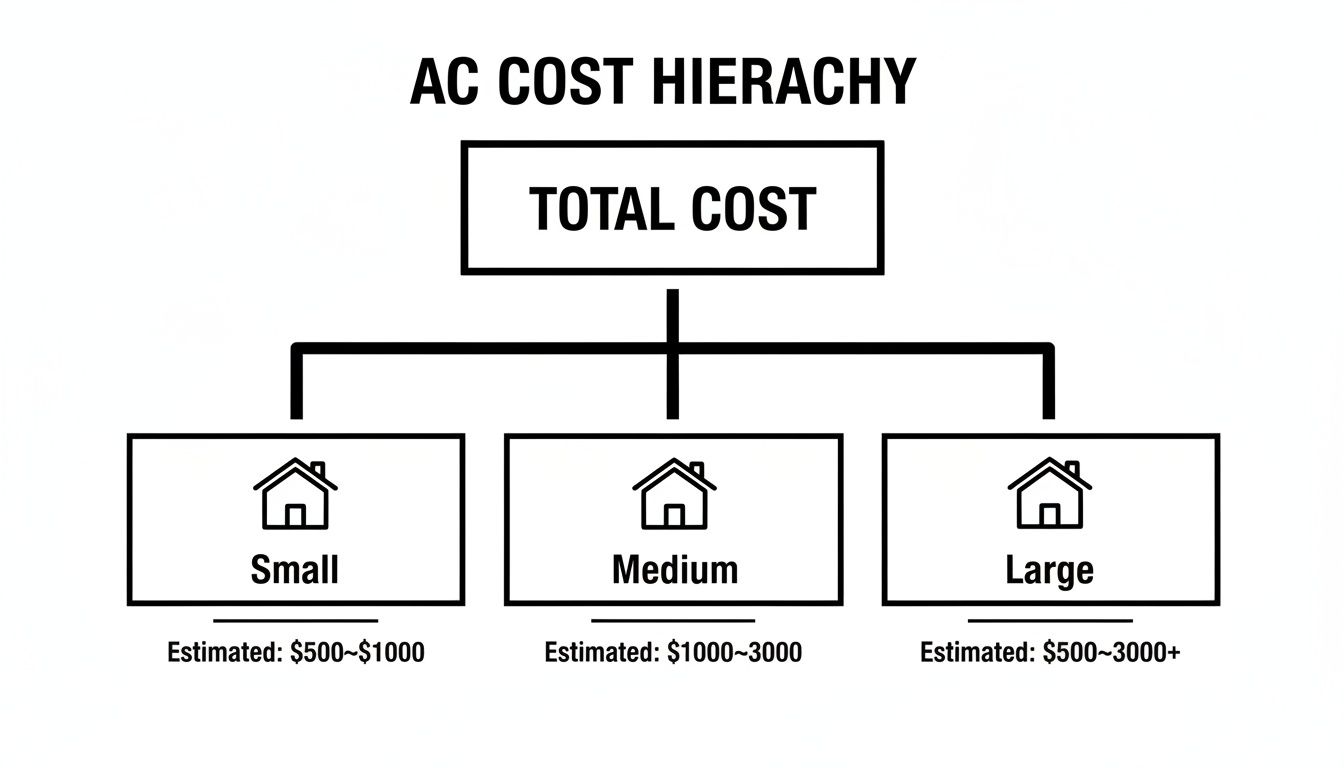
As you can see, the total cost is directly tied to the system size needed for a small, medium, or large home. A bigger home doesn't just mean a bigger AC unit; it also means more labour and materials to get the job done right.
Line Item 1: Equipment Cost
This is almost always the biggest number on your quote. The equipment cost is simply the price of the new indoor and outdoor air conditioning units—the actual hardware you’re buying.
This cost can swing wildly based on the brand, size (measured in tonnage), and energy efficiency (SEER2 rating) you go with. A unit with a higher SEER2 rating will cost more upfront, but it uses less electricity to cool your home, which means lower hydro bills for years to come. Brand reputation for reliability and the included warranty also play a big part in the final price tag.
Line Item 2: Labour Cost
Next up is labour. This covers the time, skill, and expertise of the certified HVAC technicians who will safely pull out your old system and install the new one. This isn’t just heavy lifting; it's a precise, technical job.
Professional labour isn't just one task. It includes several critical steps:
- Safe Removal and Disposal: Properly decommissioning your old unit, which includes handling environmentally sensitive materials like old refrigerant.
- Electrical and Refrigerant Line Work: Making sure all electrical connections are safe and up to code, and that the refrigerant lines are flawlessly installed and charged.
- System Calibration and Testing: Firing up the new system and running a full set of diagnostics to ensure it’s operating at peak performance and efficiency right from day one.
A cheap installation can quickly turn a high-quality AC unit into an inefficient energy hog. Investing in skilled labour is an investment in your system's long-term health and your home's comfort.
Line Item 3: Materials and Supplies
Finally, your quote will have a line for materials and supplies. These are all the smaller but essential components needed to connect everything and make sure your new system is secure. They might seem minor, but they’re vital for a proper, long-lasting installation.
We’re talking about things like copper refrigerant lines, electrical wiring, the mounting pad for the outdoor unit, and drainage tubes. If you want to dive deeper, you can learn more about the critical role of the air conditioning pipe in our detailed guide. These costs ensure the entire system works together as one efficient, cohesive unit.
By understanding these three pillars of your quote, you can better analyze the air conditioning replacement cost and make a confident decision for your home.
The Key Factors That Shape Your Final AC Cost
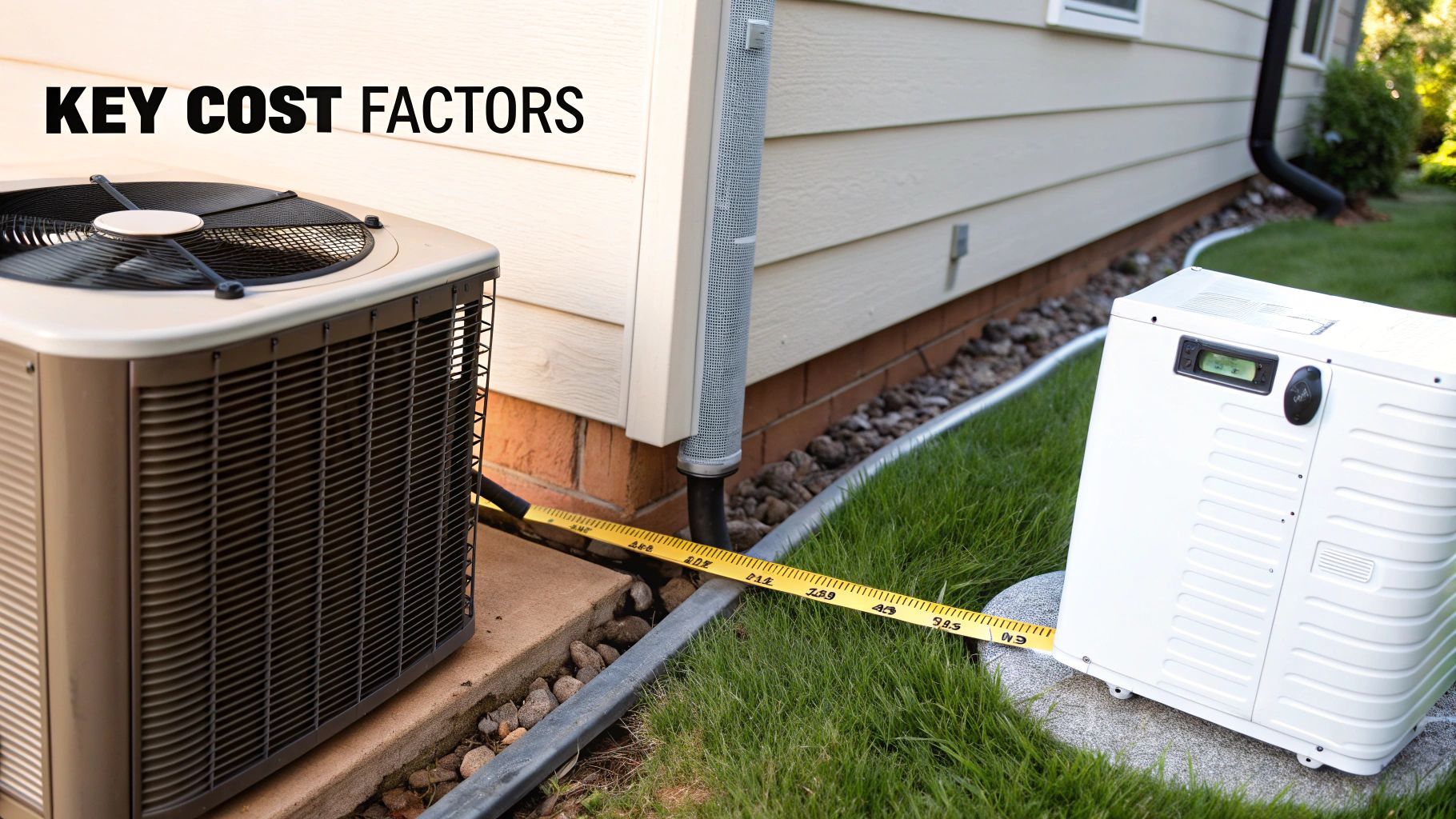
Ever wonder why your neighbour’s air conditioning replacement cost was thousands less—or maybe more—than the quote you just got? The truth is, there’s no one-size-fits-all price. Several key variables act like dials, turning the final cost up or down based on your home, your choices, and the complexity of the job.
Think of it like getting a new kitchen. The price isn't just about the fridge; it’s about the cabinet materials, countertop choices, and how much plumbing work is needed. Your AC replacement is the same. It’s more than just the outdoor unit. Let’s break down the major factors that will shape your quote.
System Type: Central vs. Ductless
The first big choice is the type of system you need. For most Canadian homes that already have a furnace and ductwork, a central air conditioner is the go-to option. It cleverly uses your furnace’s fan and the existing ducts to push cool air throughout the entire house.
But what if you don't have ducts? Or maybe you've built an addition or just want to cool a specific area like a master bedroom? That's where a ductless mini-split system comes in. These systems have an outdoor unit connected to one or more indoor heads, giving you fantastic zoned cooling. Just be aware that while a single-zone ductless unit can be cheaper than a full central AC, outfitting a whole house with a multi-zone ductless system often ends up costing more.
AC Unit Size and Tonnage
Here's a common mistake we see all the time: thinking that a bigger AC is always better. It’s not. An oversized unit is just as bad as one that’s too small. If the unit is too powerful, it will blast your home with cold air and shut off quickly. This short-cycling means it never runs long enough to properly pull humidity out of the air, leaving you feeling cool but clammy. It also puts a ton of extra wear and tear on the system.
AC size is measured in tonnage, which is about cooling capacity, not weight. A pro will do a proper load calculation (often called a "Manual J") to figure out the exact size you need based on:
- Your home’s square footage
- Ceiling heights
- How many windows you have and which way they face
- Insulation levels in your walls and attic
- Your local Canadian climate
Getting the size right is absolutely crucial for comfort and efficiency.
Energy Efficiency: The SEER2 Rating
How do you measure an AC's efficiency? You look at its SEER2 (Seasonal Energy Efficiency Ratio 2) rating. In simple terms, this number tells you how much cooling you get for every bit of electricity you use. The higher the SEER2 rating, the less it costs to run.
Here in Canada, the federal government requires a minimum rating of 14.3 SEER2 for any new central air conditioner. You can choose to install a higher-efficiency unit, like a 16 or 18 SEER2 model. It will cost more upfront, but it will pay you back with lower hydro bills month after month.
This is a classic "pay now or pay later" situation. That initial investment in a high-efficiency model can easily save you hundreds of dollars in energy costs every year, making it a smart long-term move for many homeowners.
Brand Reputation and Warranty
Just like with cars or kitchen appliances, AC units come from a wide range of brands. You’ve got the premium, feature-packed names and the more budget-friendly options. Established, well-known brands often carry a higher price tag, but that price usually reflects better build quality, proven reliability, and a much stronger warranty.
A great warranty can be a real lifesaver, covering parts and sometimes even labour for up to 10 years. A value brand might save you some cash today, but a premium brand could save you from a massive repair bill down the road. It’s all about balancing that initial cost with long-term peace of mind.
The Hidden Cost Driver: Your Ductwork
This is the one factor most people forget about, but it can have a huge impact on both performance and your final air conditioning replacement cost. Your ductwork is the highway system for your home’s air. If those highways are leaky, undersized, or poorly designed, even the world's best AC unit won't work properly.
Connecting a brand-new system to bad ducts is like putting a race car engine in a vehicle with four flat tires—you’re simply not going to get the performance you paid for. Leaky ducts can lose up to 30% of your precious cool air into your attic or walls before it even gets to your rooms.
That's why a thorough ductwork inspection is one of the most important first steps. Sometimes, all you need is some sealing or a few minor repairs. In other cases, you might need to replace sections of the ductwork to handle the airflow of the new system. To see what's involved, check out our guide on the importance of ducts for your air conditioner.
While it can add to the initial bill, making sure your ducts are in top shape is the only way to guarantee you get every bit of efficiency and comfort out of your new AC.
The choices you make across these categories directly influence where your final price lands. To make it clearer, here’s a breakdown of how different decisions can swing your total investment.
How Different Factors Impact Your Total AC Cost
| Cost Factor | Lower Cost Option (Example) | Higher Cost Option (Example) | Estimated Price Impact (CAD) |
|---|---|---|---|
| Energy Efficiency | Minimum 14.3 SEER2 Unit | High-Efficiency 18+ SEER2 Unit | $1,500 – $4,000+ |
| Brand Reputation | Standard/Value Brand | Premium, Feature-Rich Brand | $1,000 – $3,000+ |
| Ductwork Condition | No repairs needed | Significant repairs or partial replacement | $500 – $5,000+ |
As you can see, opting for higher efficiency, a premium brand, or requiring ductwork modifications can add thousands to the project. However, these are often investments that pay for themselves through lower energy bills, better reliability, and superior home comfort.
Real-World Cost Scenarios in Canadian Homes
Numbers on a page are one thing, but seeing how they play out in the real world makes the air conditioner replacement cost much easier to grasp. Let's walk through three different scenarios from across Canada.
Each of these homeowners had a unique set of needs, a different type of house, and a budget to match. By seeing how their projects unfolded, you’ll get a much clearer picture of how things like home size, efficiency goals, and installation complexity can dramatically change the final price tag. You might even see a bit of your own situation in their stories.
Scenario 1: The Budget-Conscious Suburban Bungalow
First up, we have a classic 1,400 sq. ft. brick bungalow in a mid-sized city. The owners’ 20-year-old air conditioner finally called it quits, and their top priority was simple: get a reliable replacement without a massive bill. High-tech features and top-tier efficiency weren't on their radar; they just needed cool air.
Luckily, their existing ductwork was in pretty good shape, just needing some minor sealing. This made for a straightforward, textbook swap-out.
- Home: 1,400 sq. ft. bungalow
- Need: A dependable and cost-effective replacement.
- Solution: A standard-efficiency 2-ton central AC unit (14.3 SEER2) from a reputable, value-focused brand.
- Complexity: Low. A simple replacement with minimal ductwork adjustments.
Final Cost Breakdown:
- Equipment Cost: $4,500
- Labour & Materials: $3,500
- Total Project Cost: $8,000 + HST/GST
This is the kind of baseline replacement we see all the time. The job was simple, and the focus was on affordability, which kept the final cost at the lower end of the spectrum.
Scenario 2: The Growing Family Two-Storey
Next, let's look at a 2,600 sq. ft. two-storey home in a major suburb, where a growing family with young kids and work-from-home parents needed an upgrade. For them, long-term energy savings and consistent, even cooling were the main goals. They were ready to invest more upfront for a high-efficiency system that would slash their summer hydro bills.
Their bigger home needed a more powerful unit, and they chose a premium brand known for its quiet performance and excellent warranty. This is a very common project in Canadian suburbs. In fact, what we see in regional cost trends across North America holds true here: a 3-ton AC replacement for an average home often falls between $10,000 and $15,000, representing a major piece of any HVAC overhaul.
- Home: 2,600 sq. ft. two-storey
- Need: High efficiency to cut energy costs and maximize comfort.
- Solution: A high-efficiency 3-ton central AC unit (18 SEER2) from a premium brand with a 10-year parts and labour warranty.
- Complexity: Medium. The new, more powerful unit required some minor electrical work to be brought up to code.
Final Cost Breakdown:
- Equipment Cost: $7,500
- Labour & Materials: $4,500
- Total Project Cost: $12,000 + HST/GST
Scenario 3: The Complex Downtown Townhouse
Finally, let’s look at a modern 1,800 sq. ft. townhouse in a dense urban centre. This couple faced a challenge we see more and more: very little outdoor space. Their old condenser was perched on a tiny, hard-to-reach rooftop patio, which immediately complicated the job.
They also wanted a unit that looked good and didn't take up the whole patio, which pointed them toward a sleek, compact model from a high-end brand—at a premium price.
- Home: 1,800 sq. ft. townhouse with tricky access.
- Need: A compact, powerful unit for a difficult installation spot.
- Solution: A premium, small-footprint 2.5-ton central AC unit.
- Complexity: High. Getting the old unit out and the new one in required a crane rental, which added significant cost and time to the project.
Final Cost Breakdown:
- Equipment Cost: $8,000
- Labour, Materials & Crane Rental: $7,000
- Total Project Cost: $15,000 + HST/GST
Smart Strategies for Saving on Your New AC
A new air conditioner is a big-ticket item, there’s no getting around it. But a high upfront air conditioning replacement cost doesn’t have to completely drain your savings. With a bit of smart planning, homeowners across Canada can find plenty of ways to bring that final price down and make the whole thing more affordable. It really just comes down to timing, good research, and knowing where to find the deals.
The trick is to look beyond just the sticker price on the quote. Getting and comparing quotes from reputable and experienced HVAC companies is your starting point—that’s non-negotiable for finding good value. From there, you can start stacking on other money-saving tactics to make the investment work for your budget.
Time Your Purchase Wisely
One of the simplest ways to get a better deal is to buy when nobody else is. HVAC contractors are slammed during the first real heatwave of summer and the first big freeze of winter. If you have the flexibility, aim to get your replacement done during the "shoulder seasons"—that's spring and autumn.
During these slower months, you’ll likely find that companies have more open schedules and might even offer off-season promotions to keep their crews working. This one simple move can easily save you hundreds of dollars without you having to do anything extra.
Leverage Rebates and Promotions
Don't sleep on rebates. Seriously. Both the federal government and various provincial/utility programs often dangle some pretty significant incentives to get homeowners to switch to more energy-efficient models.
Across Canada, programs like the Canada Greener Homes Grant have offered significant rebates for qualifying high-efficiency home upgrades, including a new AC. Provincial bodies and local utility companies also have their own programs. These initiatives change, so it’s always a good idea to check for the latest offers from Natural Resources Canada and your provincial energy provider before you buy.
On top of that, keep an eye out for manufacturer promotions, which usually pop up in the spring and fall. These could be straight-up cash rebates or package deals that give you more bang for your buck.
Think Long-Term with High Efficiency
This might sound a little backward, but sometimes spending more now saves you a lot more later. A high-efficiency unit with a great SEER2 rating will cost more upfront, but you'll feel the difference on your monthly hydro bills almost immediately.
Think about the long-term wins here:
- Lower Energy Bills: A new high-efficiency model can use 30-50% less energy than a unit that's 10-15 years old. That's a direct, month-after-month saving.
- Increased Home Value: An energy-efficient home is a huge plus for potential buyers if you ever decide to sell.
- Environmental Impact: Using less power is just plain better for the environment and shrinks your home's carbon footprint.
Bundle Services for Bigger Savings
If your furnace is also getting up there in age, replacing both your AC and furnace at the same time can be a fantastic financial move. HVAC companies almost always offer a discount for bundling these two major jobs into one project.
You're saving them a trip and saving yourself money on labour costs since the crew is already there. It also means your entire HVAC system is perfectly matched, which is key for peak performance and efficiency. Just remember that a new system works best with clean ducts; you can learn more about the benefits of air duct cleaning to get the most out of your investment. To help with the cost of these larger projects, many installers offer financing with flexible payment plans.
What to Expect During Your AC Replacement
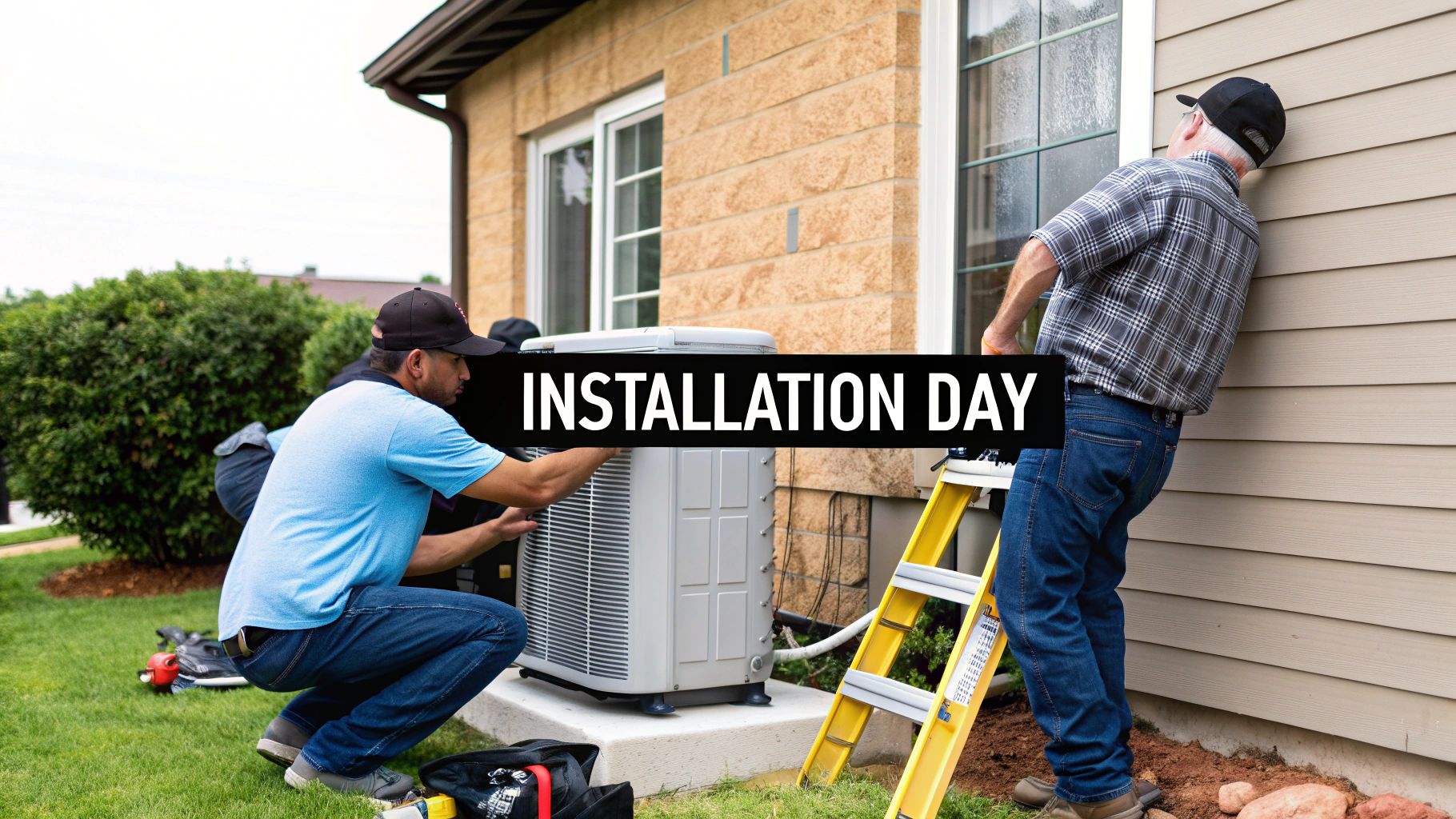
It’s natural to feel a bit apprehensive about a big project like an AC replacement. But knowing what happens step-by-step can take a lot of the stress out of the equation.
A professional installation is a surprisingly smooth operation. It's a well-practised routine that our teams have down to a science, designed to transform your home’s comfort with as little disruption to your day as possible.
Preparing Your Home for Installation Day
A little prep work on your end can make a huge difference in how smoothly and quickly the installation goes. Before our technicians arrive, there are a few simple things you can do to help us get right to work.
Here’s a quick checklist that helps our team tremendously:
- Clear the Area: We’ll need a clear, safe path from our truck to both your indoor furnace area and the spot where the outdoor unit will sit.
- Secure Pets: For everyone's safety—yours, ours, and your furry family members'—it's best to keep pets in a separate, secure room for the day.
- Plan for Noise: We do our best to be considerate, but there will be some drilling and noise. You might want to schedule any important calls or plan a quiet activity elsewhere for a few hours.
The Installation Process Unfolded
For most homes, a standard central air conditioner replacement is completed in one full day. The whole process is methodical, making sure every single component is installed perfectly for peak performance and safety.
The day starts with our crew laying down drop cloths and protective coverings to keep your home pristine. First things first, we’ll safely disconnect and remove your old indoor and outdoor units. Then, the new equipment is carefully moved into position. This means setting the new condenser on a perfectly level pad outside and connecting the new evaporator coil to your furnace inside.
If your project also includes new ductwork, that process is a bit more involved. You can get the full scoop on our guide to the installation of ductwork.
The real skilled work comes in when we connect the refrigerant lines and electrical wiring. This is the heart of the installation—getting it right is absolutely critical for the system's efficiency and long-term reliability. It's where a certified technician's expertise truly shines.
Once the new system is fully connected, we load up all the old equipment and materials. We handle the responsible disposal and recycling, so you’re never left with a mess or an old AC unit on your curb.
The Final Walkthrough and System Test
We’re not done until we know it's working flawlessly. Once the installation is complete, we don’t just pack up and leave. The final, crucial step is a full system test and calibration.
We’ll fire up your new air conditioner and run it through a complete cooling cycle. We check everything—airflow, temperature drops across the coil, and refrigerant pressures—to make sure it’s operating exactly to the manufacturer’s specifications. During this final walkthrough, we’ll also show you how to use your new thermostat and answer any questions you have.
Our goal is for you to feel completely comfortable and confident with your new system from the moment we leave.
Common Questions About AC Replacement Costs
Figuring out the true air conditioning replacement cost can feel like peeling an onion—there are a lot of layers. Even after you’ve got a handle on the basics, a few specific questions always seem to pop up for homeowners. We’ve pulled together the ones we hear most often to give you straight-up answers and help you move forward with confidence.
Should I Repair or Replace My Air Conditioner
This is the big one, and it often comes down to a tough financial call. A handy rule of thumb we use is the "5,000 rule." Just multiply your air conditioner's age by the quoted repair cost. If the total is more than $5,000, replacement is almost always the smarter long-term financial decision.
Beyond the math, there are some pretty clear signs it's time to say goodbye to your old unit:
- Your AC is over 15 years old.
- You're on a first-name basis with your repair technician because the calls are getting more frequent and expensive.
- The system still uses R-22 refrigerant, which is now phased out and incredibly costly to source.
- Your home is never quite cool enough, and your hydro bills are creeping up month after month.
Of course, nothing beats a professional inspection to get a definitive recommendation based on your system’s actual health.
Can I Use My Old Ductwork with a New AC
More often than not, the answer is yes—but only after a thorough professional check-up. Your ductwork is like the highway system for your home’s conditioned air. If those highways are full of leaks, blockages, or are simply too small for a modern, high-efficiency AC, your new unit will never deliver the performance you paid for.
Connecting a powerful new air conditioner to old, inefficient ductwork is like putting a high-performance engine in a car with leaky tires. You simply won't get the efficiency or comfort you paid for, and you'll waste energy and money every month.
That’s exactly why a full ductwork assessment is a non-negotiable first step. We can figure out if your ducts just need a solid cleaning or if some sealing and repairs are required to truly maximize your investment.
How Long Does an AC Replacement Take
For a standard central air conditioner swap in a typical home, the installation itself usually takes one full day. That timeline gives the crew enough time to remove the old equipment, properly set the new units, connect all the lines, and run tests to make sure everything is working perfectly.
Now, if the project involves significant ductwork changes or repairs, it could stretch into a second day. Beyond just the cost and timeline, getting insights into air conditioning services and their customer feedback can be a huge help in choosing a company you trust. Any reputable contractor will give you a clear, honest timeline before any work begins, so you know exactly what to expect.
Your home's comfort and air quality are too important to leave to chance. At Can Do Duct Cleaning, our certified experts provide transparent quotes and flawless installations tailored to your home's specific needs. Schedule your on-site inspection today and take the first step toward reliable, efficient cooling.

