
At its core, A/C duct cleaning is a professional service that clears out all the built-up dust, debris, and other gunk from the ductwork connected to your forced-air system. Think of it as a deep clean for your home's respiratory system—a way to improve your indoor air and help your HVAC system run more efficiently.
What Exactly Is A/C Duct Cleaning?
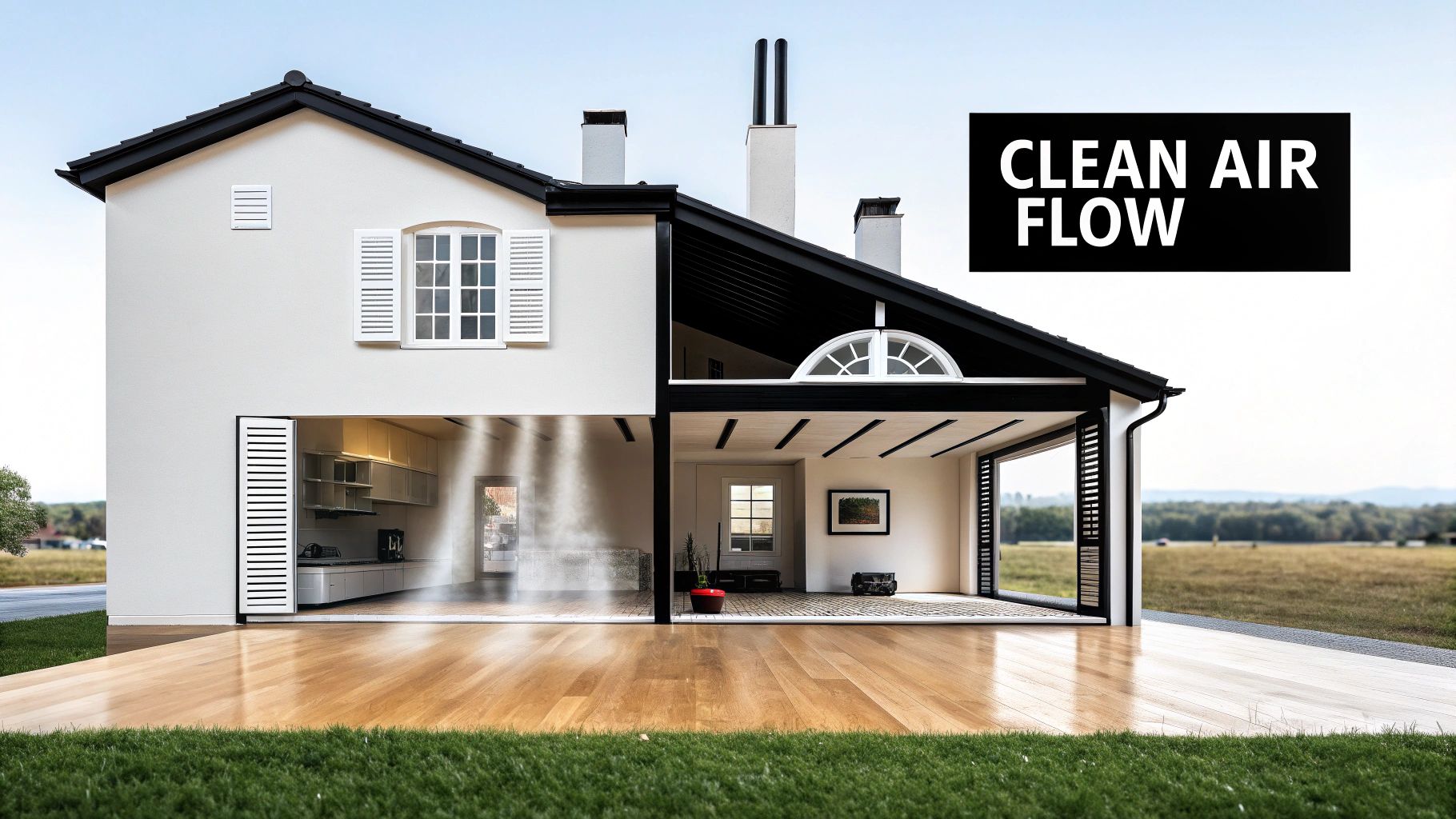
It helps to picture your home’s ductwork as its lungs, constantly circulating the air your family breathes. This hidden network of channels pulls air from your rooms, runs it through your furnace and air conditioner for heating or cooling, and then pushes it right back out. It's a non-stop cycle that keeps your home comfortable all year round.
But over time, those same ducts can become collection points for all sorts of things you'd rather not have floating around. Dust, pollen, pet dander, and other common allergens get sucked into the system and can start to cake the inside of your ductwork. If moisture gets in, you might even end up with mould or mildew growth, which is often the source of those stubborn musty smells.
The Core Purpose of Cleaning Your Ducts
Professional A/C duct cleaning isn't just about wiping down the vent covers you can see. It's a comprehensive maintenance service that uses powerful, high-velocity vacuums and specialized tools to agitate and remove contaminants from the entire system.
This includes cleaning out the:
- Supply and Return Air Ducts: The main highways that carry air to and from your HVAC unit.
- Registers and Grilles: The vent covers on your floors, walls, and ceilings.
- Diffusers: The components that help spread the airflow out evenly.
- Key HVAC Components: Parts like the heat exchanger, cooling coils, and blower motor housing.
The main goal is to get your ventilation system back to a clean, hygienic state. By clearing out that reservoir of particles, you can significantly improve the quality of the air that circulates through your home. You can learn more about what air duct cleaning is and why it's important in our detailed guide.
Understanding the Debate on Health Benefits
Now, while a clean system just feels better, the direct health benefits of routine duct cleaning are a hot topic among experts. Research confirms that ducts can definitely trap dust and other particles, but studies haven't consistently shown that cleaning them on a regular schedule leads to measurable improvements in air quality or health.
This is why many experts, including the U.S. Environmental Protection Agency (EPA), lean towards a more targeted approach. Instead of treating A/C duct cleaning as a routine task like changing your oil, they suggest doing it when there’s a clear problem. This could be visible mould growth, signs of a pest infestation, or a serious amount of dust and debris clogging up the works.
Key Signs Your Air Ducts Need Cleaning
So, how can you tell if your air ducts are overdue for a good cleaning? Since most of your ductwork is tucked away behind walls and ceilings, it’s not exactly easy to take a peek. But your home has its own way of sending you signals that it’s time to call in the pros.
It’s not always as obvious as seeing a puff of dust shoot out of your vents. Let’s look at some of the more subtle clues that your A/C ducts are begging for a clean. Learning to spot these signs helps you make a call based on real evidence, not just a guess about your home’s air quality.
Unexplained Allergy Symptoms and Respiratory Issues
Have you noticed your family sneezing and coughing more often indoors? Are watery eyes and sniffles a constant problem at home, but seem to vanish the moment you step outside? If so, your ductwork could be the hidden culprit.
Air ducts can turn into a five-star resort for allergens like dust mites, pollen, pet dander, and even mould spores. Every time your A/C or furnace turns on, it blasts these irritants into every room, making life miserable for anyone with allergies or asthma.
If your indoor allergies suddenly get worse for no clear reason, it's a huge red flag. This is especially true if you haven't brought a new pet home or opened the windows during peak pollen season. Your ducts are likely circulating something that shouldn't be there.
Persistent Musty Odours
Ever walk into a room and get hit with a funky, musty smell you just can't pinpoint? You've cleaned everything from top to bottom, but that stale odour just won't go away. Chances are, it’s wafting out from deep inside your ventilation system.
That signature musty smell is often the telltale sign of mould or mildew. All it takes is a little moisture getting into your dark, undisturbed ducts to create the perfect breeding ground. An a/c duct cleaning is designed to get right to the source and eliminate whatever is causing those unpleasant smells.
We dive even deeper into this in our guide covering all the key signs your air ducts need to be cleaned.
Visible Signs of Mould or Debris
Sometimes, the evidence is right in front of you. The clearest sign of a problem is seeing actual mould growing around your vent covers or, if you peek inside with a flashlight, on the duct walls themselves. If you can see it on the grilles, you can bet there’s more lurking where you can’t see.
Another quick check is your air filter. If it’s getting completely choked with dust just a few weeks after you change it, that means your entire system is overloaded and struggling to keep up.
Keep an eye out for these visual cues:
- Dark Discolouration: Any black, green, or fuzzy spots around your air vents are a serious warning sign.
- Excessive Dust: Are your vent grilles caked in a thick layer of dust? Or do you see dust bunnies being blown into the room?
- Pest Droppings: Finding evidence of rodents or insects in your ductwork is a major health hazard that needs immediate professional attention.
If you’re still on the fence after a visual check, you might want to consider expert air quality tests for a safer home. A professional test can give you concrete answers about what exactly is floating around in your air.
The Professional Duct Cleaning Process Explained
Ever wonder what actually happens during a professional A/C duct cleaning? Since most of the work is hidden behind walls and in ceilings, it can seem a bit like a mystery. Let's pull back the curtain and walk through exactly what a certified technician does, step-by-step.
This is far more than a simple vacuum job. It’s a systematic process designed to safely capture and remove years of built-up gunk without letting any of it escape back into your home. Knowing what to expect will help you feel confident when cleaning day arrives. It all kicks off with a good, hard look at your home’s specific HVAC system.
Step 1: Initial System Inspection
Before a single tool comes out, the crew will do a thorough visual inspection of your ductwork. They’re looking for things like loose connections, signs of mould, or any obvious blockages. They'll also keep an eye out for asbestos-containing materials, which need very specific handling.
This first walkthrough is crucial. It allows the technicians to map out your system, pinpoint any problem areas, and plan the most effective cleaning strategy for your home. They’ll share what they find and answer any questions you have before they get started.
Step 2: Creating Negative Pressure
This is the most important step of the whole process, and it’s what separates the pros from the amateurs. The technicians hook up a massive, high-powered vacuum collection unit to your main duct line near the furnace. This machine, often mounted on their truck, creates powerful negative pressure throughout your entire duct system.
Think of it like putting a tight lid on a container and sucking all the air out. This intense suction ensures that every speck of dust, dander, and debris they dislodge gets pulled straight into the containment unit instead of being blown out of your vents. It’s the secret to a clean, mess-free job.
Without creating negative pressure first, any attempt to clean the ducts would just stir up all the dust and push it into your rooms. You could actually end up with worse air quality than when you started.
Step 3: Agitating the Duct Walls
With the powerful vacuum running, the real cleaning can begin. The team starts at the vent furthest from the furnace and works their way back, sealing off all other registers to focus the suction on one duct at a time.
To break loose all the stubborn grime caked on the inside of the ducts, they use a few specialized tools:
- High-Powered Brushes: Long, rotating brushes are fed into the ducts to scrub the interior walls, dislodging packed-down dust.
- Air Whips: These flexible tools blast compressed air in all directions, whipping away debris from every nook and cranny.
- Compressed Air Nozzles: For tough spots and tight corners, these nozzles deliver a concentrated jet of air to blast contaminants free.
This is the part of the process that directly tackles the sources of common household issues like lingering odours, allergy flare-ups, and even mould.
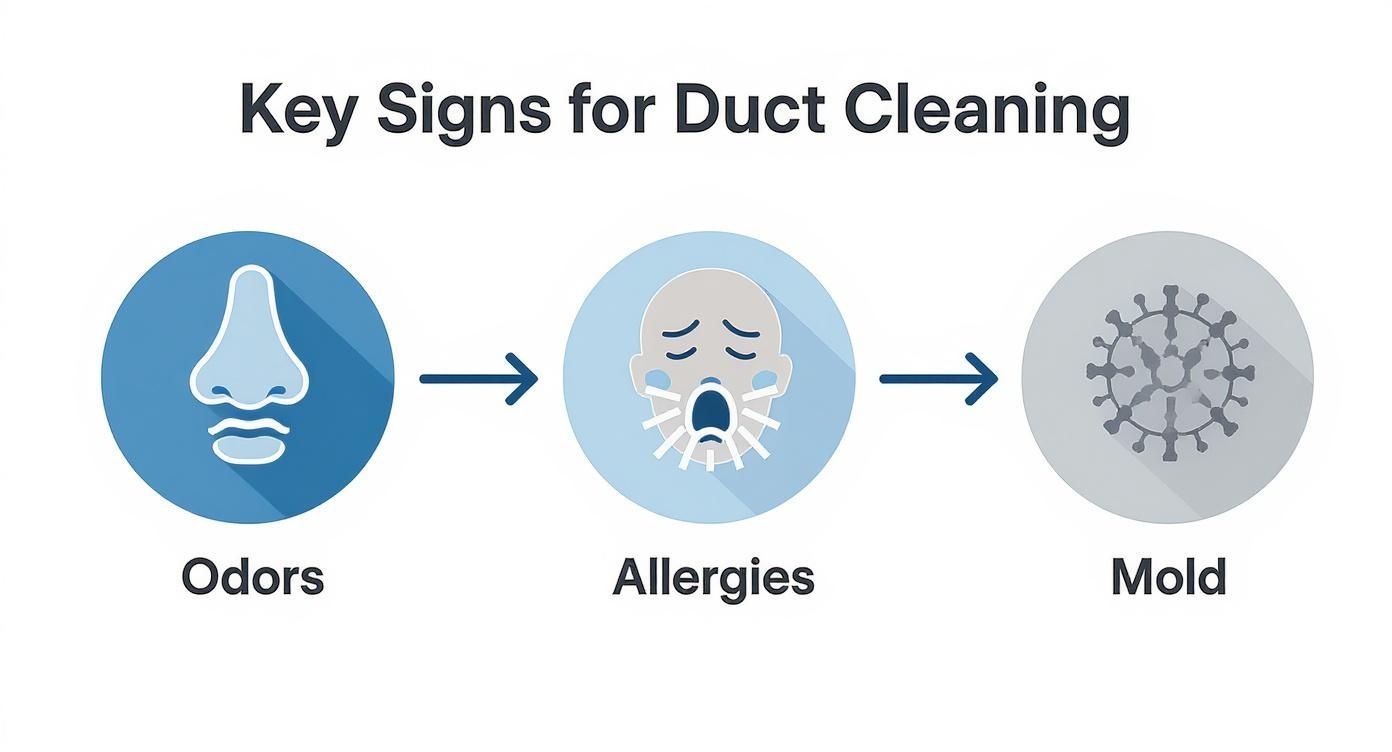
As you can see, what starts as a simple musty smell can point to bigger problems. A thorough agitation and cleaning process is designed to remove the root cause before it escalates.
Step 4: Cleaning HVAC Components
A quality A/C duct cleaning doesn't just stop at the ducts. For the job to be truly effective, the technicians also need to clean the key components of your HVAC system that the air passes through.
A comprehensive service includes cleaning:
- The furnace fan (blower motor) and its housing
- The evaporator coil (the A/C coil)
- The heat exchanger
- The condensate drain pan
Skipping these parts means your freshly cleaned air immediately picks up dirt from grimy components, undoing much of the hard work. To see a full breakdown of what’s involved, check out our complete guide to the air duct cleaning process.
Step 5: Final System Check and Cleanup
Once every duct and component is clean, the job isn’t quite done. The technicians will perform a final inspection, securely sealing any access panels they created. They’ll then turn your HVAC system on to make sure everything is running smoothly.
A professional crew will always leave your home as clean as they found it—except, of course, for the air, which will be much, much cleaner.
DIY Vs. Professional Duct Cleaning
The urge to roll up your sleeves and tackle a home project yourself is strong, especially when it promises to save a few dollars. When it comes to A/C duct cleaning, it might seem tempting to just grab your shop vac and a brush. But is that really a good idea, or could you end up making things worse?
Let’s get real about the difference between a weekend DIY attempt and calling in the pros. Understanding what each approach can—and can't—accomplish is crucial for your home's air quality and the long-term health of your HVAC system.
The Limits of a DIY Approach
You've probably seen the DIY kits online: a long, flimsy brush you attach to a drill, paired with instructions to use your own vacuum. While the idea sounds simple enough, the reality is that this method barely scratches the surface.
The biggest problem is a lack of power and reach. Your household vacuum just isn't built for the job. It doesn't have nearly enough suction to pull gunk out from the twists and turns deep inside your ductwork. More often than not, all you're doing is knocking dust loose, pushing it further into the system, or worse, sending a cloud of it straight into your living room. You might get the first few inches of the vent looking clean, but the other 99% of the problem is left untouched. We've put together a detailed guide to show you what's really involved in how to clean air ducts properly.
Why Professional Equipment Makes All the Difference
This is where a professional service changes the game entirely. Certified technicians show up with specialized, high-powered equipment that you simply can't rent at a hardware store. It’s a completely different league.
The heart of a professional cleaning is a massive, truck-mounted vacuum that creates intense negative pressure throughout your entire duct system. As we touched on earlier, this powerful suction means that every bit of dislodged dust, pet dander, and debris gets pulled directly out of your home and into a sealed containment unit on the truck. No mess, no fuss.
Pros also come armed with an arsenal of agitation tools to break stubborn buildup free, including:
- Rotating Brushes: These are heavy-duty brushes designed to scrub the inside walls of your ducts, removing years of caked-on grime.
- Air Whips and Skippers: These tools shoot compressed air in all directions, blasting contaminants out of every nook, cranny, and corner of the system.
It's this one-two punch of aggressive agitation and powerful suction that guarantees a thorough clean from your registers all the way back to the HVAC unit itself. It’s no wonder that duct cleaning often appears on lists of DIY jobs homeowners shouldn't attempt; the risks and lack of results just aren't worth it.
A Head-to-Head Comparison
| Feature | DIY Duct Cleaning | Professional Service |
|---|---|---|
| Effectiveness | Only cleans what you can see. Risks pushing debris deeper into your system. | Cleans the entire ductwork system and key HVAC components for a total reset. |
| Equipment | A shop vac and basic brushes. Lacks the power to create negative pressure or contain dust. | Truck-mounted vacuums and specialized tools like air whips and rotating brushes. |
| Contaminant Removal | Minimal. Can actually make air quality worse by kicking up settled dust and allergens. | Comprehensive removal of dust, allergens, mould spores, and debris into a sealed unit. |
| Risk Factor | High. You could easily damage fragile or flexible ductwork, creating bigger problems. | Low. Trained technicians know how to handle all types of ductwork safely without causing damage. |
| Cost | Seems cheap upfront for tools. | A higher initial investment, but one that delivers real, long-lasting results. |
According to the National Air Duct Cleaners Association (NADCA), a proper professional service typically costs between $450 to $1,000. They recommend cleaning every three to five years, unless you're dealing with specific problems like mould or pests. That price reflects the value of a job done right—a far better investment than a superficial DIY attempt that might do more harm than good.
How To Choose The Right Duct Cleaning Service In The GTA

Trying to find a solid, trustworthy duct cleaning company in the Greater Toronto Area can sometimes feel overwhelming. A quick search brings up dozens of providers, all making big promises. So, how do you sort through the noise and find a team that won’t cut corners? It all comes down to knowing what to look for and the right questions to ask.
A truly professional company does more than just show up with a vacuum. They protect your home, value your time, and are upfront about their process from the very beginning. Let’s walk through a clear checklist to help you vet local companies and hire someone you can trust.
Verify NADCA Certification
Your first—and most important—checkpoint is certification from the National Air Duct Cleaners Association (NADCA). This isn't just a sticker for the side of a van; it’s a guarantee that the company meets the highest industry standards for a/c duct cleaning.
To earn a NADCA certification, a business has to prove it's serious. This means:
- Keeping at least one certified Air Systems Cleaning Specialist (ASCS) on staff who has passed a tough exam.
- Carrying proper liability insurance to cover you and your home.
- Pledging to follow a strict code of ethics and cleaning protocols.
Don’t just take their word for it. Ask for their NADCA certification number and pop it into the NADCA website to verify. This one simple step weeds out a huge number of unqualified operators and is the best way to make sure you're hiring a legitimate air duct cleaning company.
Insist On Detailed and Transparent Quotes
A rock-bottom price is one of the biggest red flags in this business. Unscrupulous companies often hook you with a cheap offer, only to hit you with a bunch of surprise fees for things that should have been included in the first place. A professional quote should always be detailed, in writing, and based on the specifics of your home’s HVAC system.
Before you agree to anything, make sure the quote clearly spells out the entire scope of work. It needs to list every component they’ll be cleaning, the type of equipment they'll use, and the final price—no hidden extras.
An honest provider will never rush you into a decision. They’ll take the time to explain each item on the quote, so you know exactly what you’re paying for before they even start.
Watch Out For Common Red Flags
Beyond checking for certifications and clear pricing, a few other warning signs can help you dodge a bad experience and a shoddy job.
Keep your guard up if a company:
- Uses scare tactics or makes wild health claims about the dangers lurking in your ducts.
- Can't show you proof of their business liability insurance.
- Is reluctant to provide you with references from recent local customers.
- Quotes you a flat "per-vent" price without asking about the size or layout of your system.
While prices vary across the GTA, having a general idea of costs helps you spot an offer that's too good to be true. For some perspective, homeowners in other big cities like San Francisco typically pay between $195 and $405 for a 1,500-square-foot home, with technician rates around $80 to $115 per hour. You can learn more about how duct cleaning costs are calculated on Angi.com. If a quote in the GTA is dramatically lower than the norm, it's a major red flag.
Common Questions About A/C Duct Cleaning
Even with a good grasp of the process, you probably still have a few questions. It’s only natural. We hear the same handful of queries from homeowners across the GTA, so let's clear them up right now so you know exactly what to expect.
How Long Does Professional Duct Cleaning Take?
For most single-family homes in the Toronto area, a proper, thorough A/C duct cleaning will take somewhere between two and four hours. It’s not a quick in-and-out job if it's done right.
The exact timing really depends on a few things:
- Your Home's Size: Bigger homes with more ductwork simply take longer to clean properly.
- System Complexity: A simple bungalow layout is faster than a multi-storey home with two furnaces.
- How Dirty the Ducts Are: If it’s been a decade since the last cleaning, technicians will need to spend more time dislodging caked-on dust and debris.
Any company promising to be done in an hour is cutting corners. A true professional takes the time needed to methodically clean every vent, trunk line, and component right back to the furnace.
Will Cleaning My Ducts Eliminate All Dust?
This is a big one. While a professional cleaning will pull a shocking amount of dust out of your HVAC system, it's not a magic wand that eliminates dust from your home forever. It will, however, dramatically reduce the amount of dust being blown around your living space.
Think of your ductwork as a hidden reservoir for dust. A cleaning empties that reservoir. But dust still comes from other places—skin cells, pet dander, clothing fibres, and whatever gets tracked in from outside. You'll still need to do your regular dusting, but you’ll likely notice you can do it a lot less often.
Are the Cleaning Agents Used Safe for My Family and Pets?
Absolutely. This is a non-negotiable for any reputable company. The truth is, the heavy lifting of duct cleaning is done with physical tools—powerful vacuums, spinning brushes, and high-pressure air whips. This mechanical scrubbing removes the vast majority of debris without any chemicals at all.
In the rare case a sanitizer or deodorizer is recommended—say, for a musty smell or suspected mould growth—professionals use products specifically formulated for HVAC systems. These are typically plant-based, eco-friendly solutions that are completely safe for people and pets once applied correctly. If you have any concerns, just ask your technician what they use. They should be happy to show you.
Ready to breathe cleaner air and improve your home’s efficiency? The expert team at Can Do Duct Cleaning has over 30 years of experience providing top-tier, eco-friendly A/C duct cleaning services across the GTA. Get your free and transparent quote today!

