Breathing easier at home starts with three key things: cutting down on pollutants at their source, getting fresh air circulating, and making sure your air filtration is up to snuff. It’s all about finding what’s dirtying your air, letting the good air in, and trapping the bad stuff before it gets to you.
Why Your Home's Air Quality Matters More Than You Think
We spend a massive amount of time indoors, especially when those long, cold Canadian winters hit. It’s natural to think of our homes as a safe bubble, away from all the pollution outside. The surprising truth? The air inside your Greater Toronto Area home can actually be way more polluted than the air outdoors.
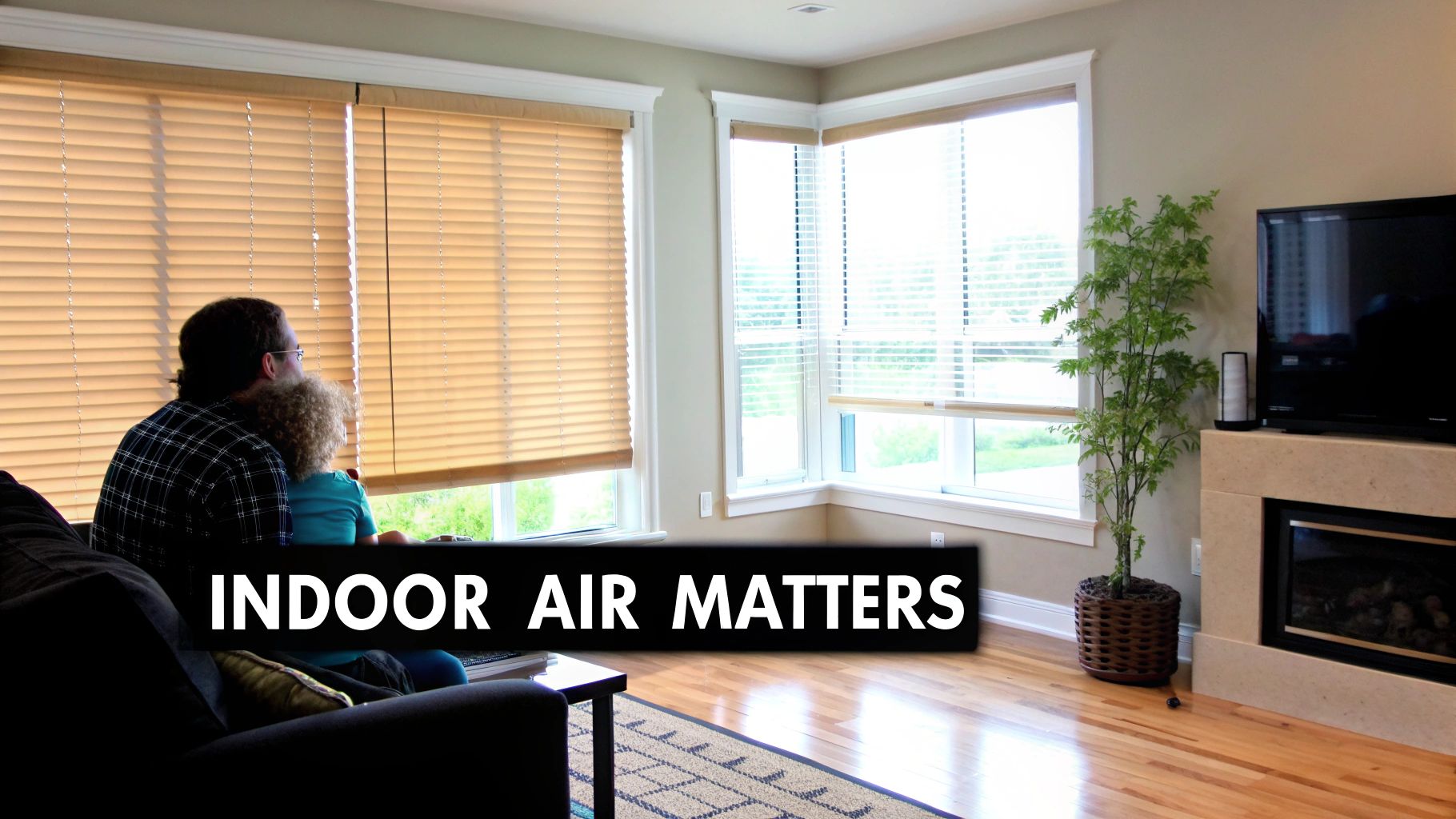
Here’s why: modern Canadian homes are built to be incredibly energy-efficient, meaning they're sealed up tight. That’s fantastic for your heating bills, but it’s not so great for air circulation. All those airborne irritants have nowhere to escape, so they just get trapped, build up, and keep cycling through your living space day after day.
The Hidden Pollutants in Your GTA Home
So, what exactly is getting trapped? A lot of it comes from everyday items and activities that you probably don't even think about. These pollutants fly under the radar but can have a serious impact on your family’s health.
Think about some of the usual suspects we find in Canadian homes:
- Dust and Dust Mites: These little critters love our cozy carpets, furniture, and bedding. Their waste products are a huge trigger for allergies and asthma.
- Pet Dander: We love our pets, but those tiny flecks of skin they shed can fill the air and really bother anyone with sensitivities.
- Volatile Organic Compounds (VOCs): This is a fancy term for the gases let off by all sorts of common household stuff—paint, cleaning sprays, air fresheners, that new sofa, and even brand-new carpeting.
- Seasonal Allergens: Pollen is a master at sneaking indoors. Once inside, it gets trapped, making allergy season feel like it lasts forever for those who suffer.
When you add it all up, the air you're breathing every day can be a real cocktail of irritants. Tackling this isn't just about surface cleaning; it’s about fundamentally creating a healthier environment for your family.
From Nagging Coughs to Serious Health Concerns
The effects of poor indoor air quality can creep up on you. It might start with something that seems minor, like a cough that won't quit, headaches that come out of nowhere, or allergy symptoms that flare up even when you're inside.
But over time, that constant exposure can make existing conditions like asthma much worse and even contribute to more significant respiratory issues. It’s a problem that experts are seeing everywhere, not just in the GTA. Research from other regions has shown how things like building materials, furniture, and cleaning products are major sources of indoor pollution—the same stuff we have in our homes.
Taking control of your home’s air is one of the most proactive things you can do for your family’s well-being. For a deeper dive into the science, you can start by understanding indoor air quality. In this guide, we'll walk you through the harmful effects of dirty air ducts and give you practical steps to start clearing the air in your home.
Simple DIY Fixes for Better Air Quality Today
Improving the air in your home doesn't have to mean a massive renovation or a hit to your wallet. In fact, some of the most powerful strategies are simple, low-cost habits you can start today. Think of these as the foundational building blocks for a healthier home.
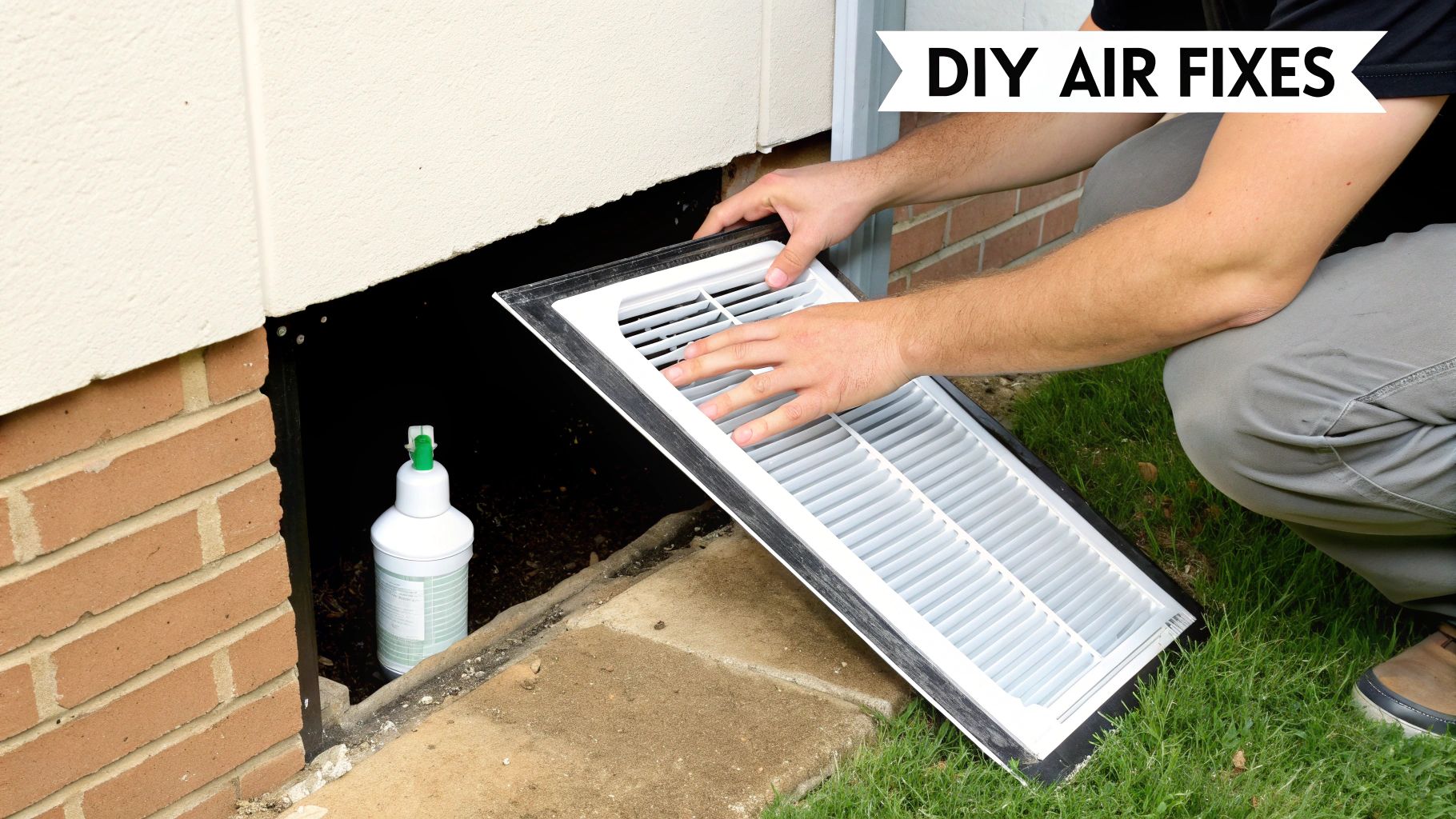
You can make a huge difference just by being more mindful of what you bring into your house and how you manage its core systems. These fixes are all about stopping pollutants at the source and making sure your home’s built-in filtration is actually doing its job.
Master Your HVAC Filter
Your furnace or HVAC filter is your home's first line of defence against all sorts of airborne gunk. But for it to work, you need the right kind of filter, and you have to change it regularly. Neglecting it is like trying to stop pucks with a fishing net—it’s just not going to catch much.
This is where understanding MERV (Minimum Efficiency Reporting Value) ratings comes in. It’s a simple scale from 1 to 20 that tells you how well a filter traps particles of different sizes.
- MERV 1-4: These are your most basic filters. They’ll catch large stuff like carpet fibres and insects, but that’s about it.
- MERV 8-10: This is a solid middle ground for most homes, effectively trapping dust, pollen, and mould spores.
- MERV 11-13: This is the sweet spot, especially for homes with pets or anyone dealing with allergies or asthma. These filters are fine enough to capture pet dander, smoke, and even some bacteria.
We always tell homeowners that choosing a filter with a MERV 13 rating is one of the single best upgrades you can make. It's a small investment that pays off big time by grabbing the tiny particles that can really trigger respiratory issues.
Get in the habit of checking your filter every month. A good rule of thumb is to replace it every 60-90 days. If you have pets or live near a busy road, you’ll probably need to swap it out closer to every 45 days. A clogged filter doesn’t just stop cleaning the air; it chokes your HVAC system, forcing it to work harder and driving up your hydro bills.
DIY Indoor Air Quality Checklist
To make things easier, here’s a quick-reference table for the essential DIY tasks you can tackle around the house. Following this schedule will keep you ahead of the most common indoor pollutants without feeling overwhelmed.
| DIY Task | Recommended Frequency | Pollutants Targeted | Estimated Cost |
|---|---|---|---|
| Replace HVAC Filter | Every 60-90 Days | Dust, Pollen, Dander, Fibres | $15 – $50 |
| Use Exhaust Fans | During Cooking/Showering | VOCs, Moisture, Odours | $0 (Energy Use) |
| Check Humidity Levels | Weekly | Mould, Mildew, Dust Mites | $10 – $30 (Hygrometer) |
| Clean Window Screens | Seasonally | Pollen, Dust, Outdoor Debris | $0 – $10 (Cleaning Supplies) |
| Wipe Down Vents | Monthly | Dust Buildup | $0 (Cleaning Supplies) |
| Run Dehumidifier | As Needed (Humid Months) | Excess Moisture, Mould Spores | $0 (Energy Use) |
This simple routine forms the backbone of good indoor air quality maintenance, tackling the biggest issues before they become major problems.
Control Pollutants at the Source
The easiest way to deal with indoor pollution? Stop it from getting inside in the first place. This strategy is all about making smarter, more conscious choices in your daily life. It's a proactive approach that reduces the overall load on your home's filtration systems.
For example, anytime you're cooking—especially on a gas stove—flick on that kitchen exhaust fan. It's a simple action that vents combustion gases and cooking fumes straight outside before they have a chance to circulate. The same goes for the bathroom fan; run it during and after a shower to pull all that moisture out of the air.
Here are a few other practical swaps that make a real difference:
- Choose Low-VOC Products: Planning a paint job? Look for cans labelled "Low-VOC" or "Zero-VOC." They release far fewer harmful gases. The same logic applies to new furniture, flooring, and even caulk.
- Rethink Your Cleaning Cabinet: Many popular cleaners and air fresheners are loaded with harsh chemicals. You can get the same results with simple alternatives like vinegar and water or by choosing unscented, plant-based cleaning products.
- Keep Windows and Screens Maintained: Your window screens are a physical barrier against pollen, dust, and insects. If yours are torn or damaged, a DIY sliding window screen replacement is a weekend project that can immediately improve your home's defence against outdoor irritants.
Manage Home Humidity Levels
Anyone who's lived through a Southern Ontario summer knows how humid it can get. That moisture doesn't just stay outside; it seeps into our homes, especially basements. Mould and mildew absolutely thrive in these damp conditions, releasing spores that are notorious for triggering allergies and respiratory problems.
The sweet spot for indoor humidity is between 30% and 50%. You can easily keep an eye on this with an inexpensive little device called a hygrometer.
If you have one of those classic damp basements in an older Toronto home, a dehumidifier will be your best friend. Run it consistently during the muggy months to keep the air dry and stop mould from getting a foothold. Of course, moisture control is just one part of the puzzle. If you want to dive deeper, you can learn more about how to remove dust from air in our other guide.
Upgrading Your Home's Air Filtration and Ventilation
While the DIY fixes we've covered make a real difference, the next leap in air quality comes from tackling the mechanical systems doing the heavy lifting in your home. These aren't just add-ons; for modern, airtight Canadian houses, they're essential for actively managing your air—pulling in the good and kicking out the bad.
Many newer homes, particularly across the GTA, are built to be incredibly energy-efficient. That tight seal is fantastic for your heating and cooling bills, but it can also trap stale air, letting pollutants build up inside. You need a way to let your house breathe without sending your energy savings out the window.
Let Your Home Breathe with an HRV
This is exactly what a Heat Recovery Ventilator (HRV) was built for. It’s a smart ventilation system that continuously swaps stale indoor air for fresh outdoor air. The genius is in the "heat recovery." As it exhausts the warm, stale air from inside, it uses that heat to warm up the fresh, cold air it's pulling in.
It’s like opening a window in the dead of a January winter, but without the icy draft or the shocking gas bill that follows. For well-insulated Canadian homes, it’s a non-negotiable piece of equipment for maintaining a healthy indoor environment.
For Canadian homeowners, an HRV is one of the single most effective ways to fight the buildup of indoor pollutants like VOCs and damp, musty air. It’s a systematic approach to guaranteeing a constant supply of fresh air—the very foundation of great indoor air quality.
If you’re wondering how this all works, our detailed guide explains what a Heat Recovery Ventilator is and how it works. It’s a genuine game-changer for any home that feels stuffy or struggles with condensation on the windows.
Supercharge Your Furnace with Advanced Filtration
Beyond just swapping out that basic filter every few months, you can integrate some serious air purification technology right into your HVAC system. These are whole-home solutions that work quietly behind the scenes, cleaning every cubic foot of air that passes through your furnace or AC.
Two of the most effective options we see homeowners install are:
- Whole-Home Air Purifiers: These units are installed directly inside your ductwork. They use technologies like UV light or electrostatic charges to zap or grab microscopic particles that regular filters just can't catch—think viruses, bacteria, and mould spores.
- Integrated HEPA Filters: A whole-home HEPA (High-Efficiency Particulate Air) system is the gold standard for a reason. These systems can trap an incredible 99.97% of airborne particles as small as 0.3 microns. That means allergens, smoke particles, and other tiny irritants get stopped in their tracks.
Why the Best Filter in the World Needs Clean Ducts
Now, here’s the critical piece of the puzzle that so many people miss. You could go out and buy the most expensive, advanced HEPA filter on the market, but if your ductwork is caked with years of dust, pet dander, and grime, your air quality will never be what it could be. Your brand-new system will be fighting an impossible, uphill battle.
Think about it. The filter cleans the air perfectly, but that pristine air then has to travel through a dirty delivery system to reach you. It’s like washing your hands and then drying them on a muddy towel. The ducts themselves become a source of contamination, constantly reintroducing pollutants into your home.
This isn’t just our opinion; it's a fundamental principle of modern home construction. The National Building Code of Canada has specific requirements for home ventilation because it recognizes that a whole-system approach is crucial for health and safety. The goal is to ensure every part of the system works together.
At the end of the day, a high-performance filter only works at its best when it's paired with clean ductwork. That synergy is what truly delivers the fresh, healthy air your family deserves.
Knowing When to Call in the Professionals
While tackling some home maintenance yourself is a great way to start, there are times when improving your indoor air quality calls for a specialist. Some jobs are just too big, complex, or require equipment you won't find at Canadian Tire. That’s when bringing in an expert is the smartest move for your home and your health.
Knowing when you've hit the limit of your DIY efforts is key. If you’ve got filter changes down to a science and you’re managing humidity like a champ, but the air still feels off, it’s probably time to look deeper into the systems running behind your walls.
Telltale Signs Your Ducts Need Attention
Think of your home's ductwork as its respiratory system. Over time, it gets congested with all sorts of gunk, and eventually, it starts sending out distress signals.
Keep an eye out for these classic indicators:
- Puffs of Dust: If you see little clouds of dust shooting out of your vents when the furnace or AC kicks on, it's a dead giveaway the ducts are overloaded.
- Persistent Musty Smells: A damp, musty odour that only seems to pop up when the system is running often points to mould or mildew growth hidden deep inside the ductwork.
- Post-Reno Fallout: Big renovations create a shocking amount of fine dust and debris. All that drywall and sawdust get sucked into your return vents and settle throughout the system, creating a non-stop source of airborne particles.
- Mystery Allergy Flare-Ups: Is your family sniffling and sneezing more at home, even after a good clean? Your air ducts could be circulating a heavy concentration of allergens like pet dander, pollen, and dust mite droppings.
If any of this sounds a little too familiar, you've likely reached the point where DIY solutions just won't cut it. To get to the bottom of it, it's worth considering professional indoor air quality testing in Toronto to get a clear picture of what you're dealing with.
For those of us in the GTA, the age and build of our homes often dictate the best path forward. This decision tree is a handy visual for choosing between an HRV and an air purifier.
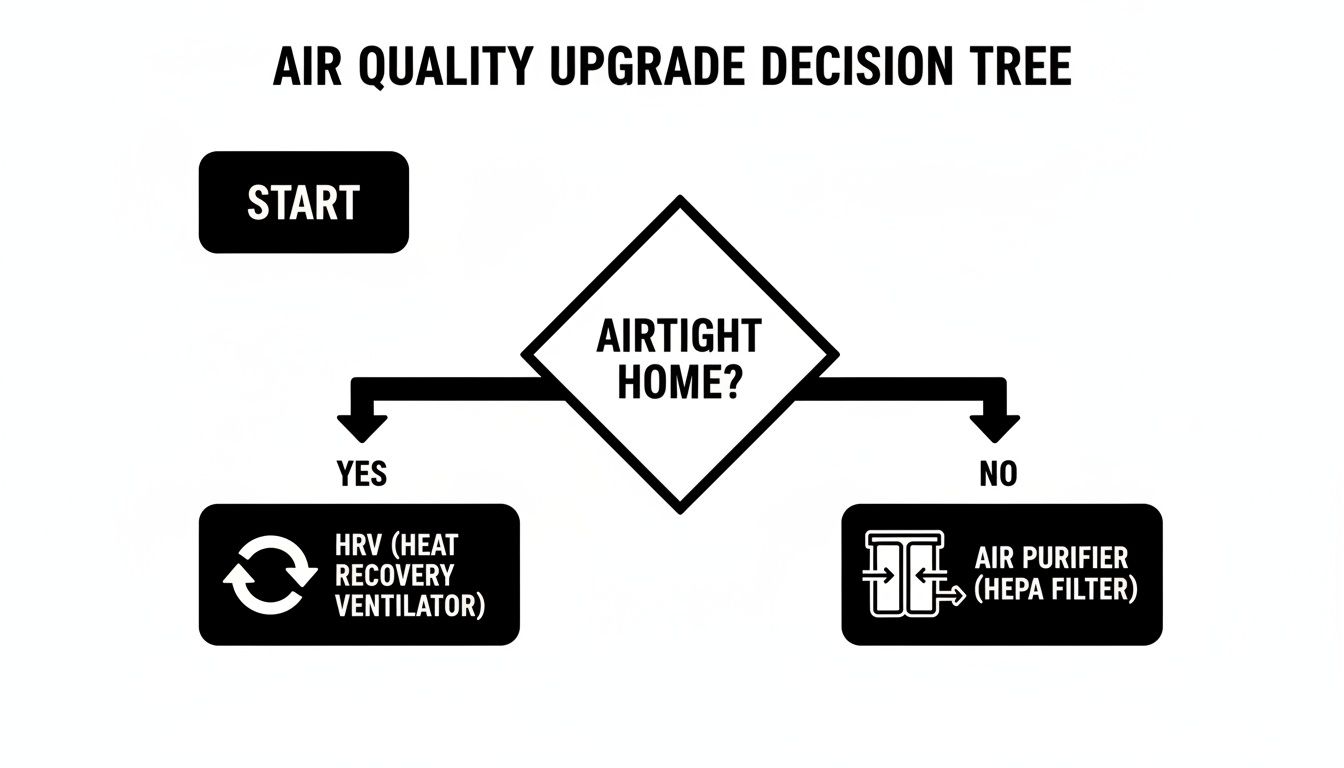
The main idea here is that newer, airtight homes get a huge benefit from ventilation systems like HRVs, whereas older, draftier houses might find a top-notch air purifier does the trick.
The Overlooked Fire Hazard: Dryer Vent Cleaning
Your HVAC system isn't the only network of ducts that needs attention. Your dryer vent is a critical component that impacts both air quality and, more importantly, home safety. It's an easy one to forget about, but you really shouldn't.
Over time, that long tube running from your dryer to the outside fills with highly flammable lint. This buildup chokes off airflow, making your dryer work harder and less efficiently, but it also creates a serious fire risk. In fact, safety experts point to clogged dryer vents as a leading cause of house fires in Canada every year.
A professional cleaning is more than just maintenance—it's a critical fire prevention step. For a small annual cost, you get peace of mind that protects your home and your family.
From an air quality angle, a blockage can cause issues too. A clogged vent on a gas dryer can cause carbon monoxide to seep back into your home. It can also trap moisture in your laundry area, creating the perfect conditions for mould to take hold.
Deciding what you can handle and what's best left to a pro can be tricky. This table breaks down common air quality issues to help you make the right call.
Professional Service Guide: DIY vs Pro Cleaning
| Air Quality Issue | DIY Solution | When to Call a Professional | Associated Can Do Service |
|---|---|---|---|
| Dusty Surfaces | Regular dusting, changing HVAC filters. | When dust reappears immediately after cleaning or puffs from vents. | Duct Cleaning |
| Musty Odours | Using dehumidifiers, checking for leaks. | When the smell is persistent and tied to HVAC system operation. | Duct Cleaning, IAQ Testing |
| Allergy Symptoms | Regular cleaning, HEPA vacuuming. | When symptoms are severe or don't improve with regular cleaning. | Duct Cleaning, IAQ Testing |
| Slow-Drying Clothes | Cleaning the lint trap after every load. | When drying cycles are long despite a clean trap, or the dryer feels hot. | Dryer Vent Cleaning |
Ultimately, a professional service brings specialized tools and expertise to tackle problems at their source, ensuring the job is done safely and effectively.
What to Expect from a Professional Service
When you hire a company like Can Do Duct Cleaning, you're getting a lot more than a quick vacuum. It's a comprehensive process using powerful, specialized gear.
Here’s what a typical pro cleaning looks like:
- System Inspection: First, the technicians will do a walkthrough to inspect your system and pinpoint any specific problem spots.
- Powerful Vacuum Connection: A massive, high-powered vacuum is hooked up to your main duct lines, creating intense negative pressure throughout the system.
- Agitation and Scrubbing: Specialized tools, like rotating brushes and high-pressure air whips, are sent down each individual vent to break loose all the caked-on dust and grime.
- Containment and Removal: Thanks to the negative pressure, all that dislodged debris is sucked directly out of your home and into the collection unit on the truck. Nothing gets blown back into your living space.
Budgeting for Professional Services in the GTA
Knowing the typical cost for these services helps you spot a fair quote and budget for the work. Here in the Greater Toronto Area, professional air duct cleaning for a standard single-family home usually falls in the $350 to $600 range. The final price can shift based on your home's size, the number of vents, and the layout of your ductwork.
For a professional dryer vent cleaning, you can expect to pay somewhere between $125 and $200. It's a really affordable service, especially when you consider the massive safety benefit it provides. Always be a bit skeptical of prices that seem too good to be true—they often mean corners are being cut.
Creating a Long-Term Clean Air Maintenance Plan
Improving your home's air quality isn't a one-and-done job; it's an ongoing process. To keep breathing easy all year round, you need a simple, sustainable maintenance plan. Think of it as a roadmap to keeping your air fresh and your HVAC system humming along happily.
Being proactive does more than just clear dust and allergens from the air. It actually boosts your HVAC system's energy efficiency, helps you avoid the headache of expensive emergency repairs, and can extend the life of your equipment. For those of us in the GTA, a simple annual schedule makes a world of difference.
Your Annual Clean Air Calendar
Breaking tasks down by season stops maintenance from feeling like a chore. This schedule is built around the unique demands our Canadian climate puts on our homes, so you're always one step ahead.
Spring (March-May): Prep for Cooling Season
- HVAC Tune-Up: Get a professional to inspect your air conditioner before that first surprise heatwave. This makes sure it’s clean, efficient, and ready for summer.
- Clean and Inspect: After a long winter, give all your vent covers a good wipe-down and check your window screens for any rips or damage.
Summer (June-August): Maintain and Monitor
- Check Humidity: Southern Ontario summers can get incredibly sticky. Use a hygrometer to keep your indoor humidity between a comfortable 30-50%. You might need to run a dehumidifier to keep mould at bay.
- Filter Check: With the AC blasting, your HVAC filter is working overtime. Give it a look every month and swap it out if it’s looking clogged.
Autumn (September-November): Prep for Heating Season
- Furnace Tune-Up: Just like your AC, your furnace needs a professional check-up before you start relying on it. You can see what's involved by checking out a complete furnace maintenance checklist.
- Dryer Vent Cleaning: Autumn is the perfect time to book your annual professional dryer vent cleaning. Clearing out that lint buildup is a critical fire safety step before the heavy laundry days of winter kick in.
Winter (December-February): Indoor Focus
- Consistent Filter Changes: Your furnace is running constantly, so be strict about replacing that filter every 60-90 days.
- Monitor Ventilation: If your home has an HRV, make sure it’s running properly to circulate fresh air, especially when everything is sealed up tight against the cold.
Planning for Professional Services
While these seasonal DIY tasks form the backbone of your plan, some jobs need professional equipment and expertise. Knowing how often to book these major system cleanings is key.
The goal here is to switch from reactive repairs to proactive maintenance. Instead of waiting for something to break, a schedule keeps your home’s systems in peak condition, ensuring you get consistent air quality and reliability.
For most homes in the Greater Toronto Area, we recommend a professional air duct cleaning every 3 to 5 years. Of course, that can change depending on your home. If you have pets that shed a lot, family members with bad allergies, or you’ve just finished a big renovation project, you might want to get them cleaned every 2 to 3 years.
Dryer vent cleaning, however, is a non-negotiable annual task. The fire risk from a clogged lint trap is just too serious to put off, making it an essential part of your home safety plan.
The Real Impact of a Maintenance Plan
Sticking to a maintenance schedule for your home’s ventilation and filtration systems makes a real, measurable difference. For example, research on modern homes shows just how important mechanical ventilation is for getting rid of harmful indoor pollutants. A study of homes built between 2011 and 2017 revealed that proper ventilation compliance resulted in a 44% drop in indoor formaldehyde levels compared to older homes.
But here’s the kicker: the study also found that ventilation fans were only running in 26% of homes when researchers first visited. This shows a massive gap between having the right gear and actually using it. You can read the full research about these ventilation findings for more details. It really drives home why a proactive plan—one that includes simply checking that your systems are on and working—is so vital for better indoor air quality.
Common Questions About Indoor Air Quality in the GTA
As homeowners across the Greater Toronto Area start paying more attention to the air inside their homes, we tend to get asked the same questions over and over. That's a good thing! It means people are taking their health seriously. We’ve heard it all, so let's clear the air and give you some straightforward answers.
How Often Should I Really Get My Air Ducts Cleaned in a Toronto Home?
This is easily the most common question we get. For the average home in the GTA, a professional duct cleaning every 3 to 5 years is a solid rule of thumb. It’s the sweet spot for preventing a serious buildup of dust, allergens, and other gunk in your system.
But that’s just a baseline. Life happens, and some situations call for more frequent cleaning. You’ll want to bump that up to every 2 to 3 years if you’ve got:
- Pets that shed. We love our furry friends, but their dander gets everywhere, especially inside your ductwork.
- Family members with asthma or allergies. Cleaning the ducts removes irritants at the source, which can make a world of difference for their daily comfort.
- A recent home renovation. Drywall dust, sawdust, you name it—it all gets sucked into your HVAC system. A post-reno duct cleaning is the final cleanup step you shouldn’t skip.
Are Air Duct Cleaning Scams Common and How Can I Avoid Them?
Unfortunately, yes. The industry has its share of bad actors. You have to be really careful with those too-good-to-be-true offers, like a "$99 whole-home cleaning." In our experience, these are almost always a setup for a "blow-and-go" scam.
What happens is a company with a flashy ad shows up with subpar equipment, does a quick, useless pass-through, and then hits you with aggressive upselling tactics for services you suddenly "need." It's a classic bait-and-switch that leaves you with ducts that are still dirty and a bill that's way higher than promised.
Our advice? Stick with a reputable company with a real, verifiable track record in the GTA. Look for clear, upfront pricing, lots of positive reviews from local homeowners, and professionals who use commercial-grade equipment. A trustworthy company will gladly walk you through their process and will never pressure you into a sale.
Can Professional Duct Cleaning Actually Help with My Family's Allergies?
Absolutely. Think of your ductwork as the lungs of your home—if they’re filled with irritants, everyone breathes them in. Over the years, dust, pollen that’s snuck in from outside, pet dander, and even mould spores settle and collect in those channels.
Then, your furnace or AC kicks on. It churns up all those settled particles and blasts them into every room of your house. Your HVAC system, meant to provide comfort, becomes a delivery service for the very things making your family sneeze and sniffle.
A thorough, professional cleaning gets rid of all that built-up gunk right at the source. It’s no surprise that so many of our clients tell us they notice a real drop in allergy symptoms—and a lot less dust on their furniture—right after a cleaning.
Is Dryer Vent Cleaning More About Fire Safety or Air Quality?
It’s crucial for both, but the number one reason is, without a doubt, fire prevention. That soft lint that collects in your dryer's trap also builds up deep inside the vent line. It’s highly flammable, and a clogged vent is one of the leading causes of house fires in Canada. It's a serious risk.
But the danger doesn't stop there. A blocked vent also tanks your indoor air quality. If the air can't get out, harmful gases like carbon monoxide (if you have a natural gas dryer) can seep back into your home.
On top of that, all the moisture from your wet clothes gets trapped, creating a damp, humid environment in your walls and around the laundry room. That’s a perfect recipe for mould and mildew, which then release spores into the air you breathe. An annual cleaning is a small price to pay for your family's safety and health.
Ready to take the next step toward a healthier home? The team at Can Do Duct Cleaning has over 30 years of experience helping homeowners across the GTA breathe easier. Get your free, no-obligation quote today!