
First things first, you need to figure out what kind of filter you’re working with. Is it reusable or disposable? If it's a reusable filter, you're in for a cleaning. If it's disposable, don't even think about washing it—it needs to be replaced entirely.
To clean a reusable filter, you’ll want to shut down the furnace completely, slide the old filter out, and give it a good vacuum to get rid of the loose gunk. After that, a gentle wash with mild soap and water does the trick. Just make sure it's bone-dry before you put it back in.
Why Cleaning Your Furnace Filter Is a Non-Negotiable Task
For homeowners here in the Greater Toronto Area, furnace maintenance isn't just another item on the to-do list. It’s absolutely essential for your wallet and your family’s well-being, especially with our tough Canadian climate. A clean furnace filter is the unsung hero of your HVAC system, quietly protecting your equipment and your indoor air.
When you let this simple task slide, dust, pet dander, and all sorts of airborne gunk build up, creating a thick barrier that basically chokes your furnace. The system has to work way harder to pull air through, which leads straight to higher energy bills and can cause serious wear and tear on critical parts.
The Impact on Your Wallet and Your Health
The financial hit is real. In our 30+ years of serving homeowners across the GTA, we’ve seen dirty filters cause energy bills to spike by as much as 15% during a harsh winter. For a typical home in Ajax or Scarborough, a clogged filter can force the furnace to pull an extra 500-1,000 kWh from the grid every year. That adds up fast.
Beyond the hit to your hydro bill, a dirty filter directly impacts your family’s health. It stops trapping pollutants, which means they get circulated all through your home. This can make allergies and respiratory issues a lot worse—a big problem when we’re all cooped up inside for months on end. Understanding the harmful risks brought by dirty ducts gives you a better picture of what’s floating around in your air.
A clogged filter doesn’t just run up your bill; it can lead to serious system failures. When airflow is severely restricted, your furnace can overheat, potentially damaging the heat exchanger or shutting down completely when you need it most.
It's not uncommon to find a dirty furnace filter causing no heat at all, leaving you in the cold on a frigid January night. So, learning how to clean or change your furnace filter isn't just about basic maintenance. It’s one of the most important things you can do to keep your home safe, comfortable, and cost-effective.
Finding and Identifying Your Furnace Filter
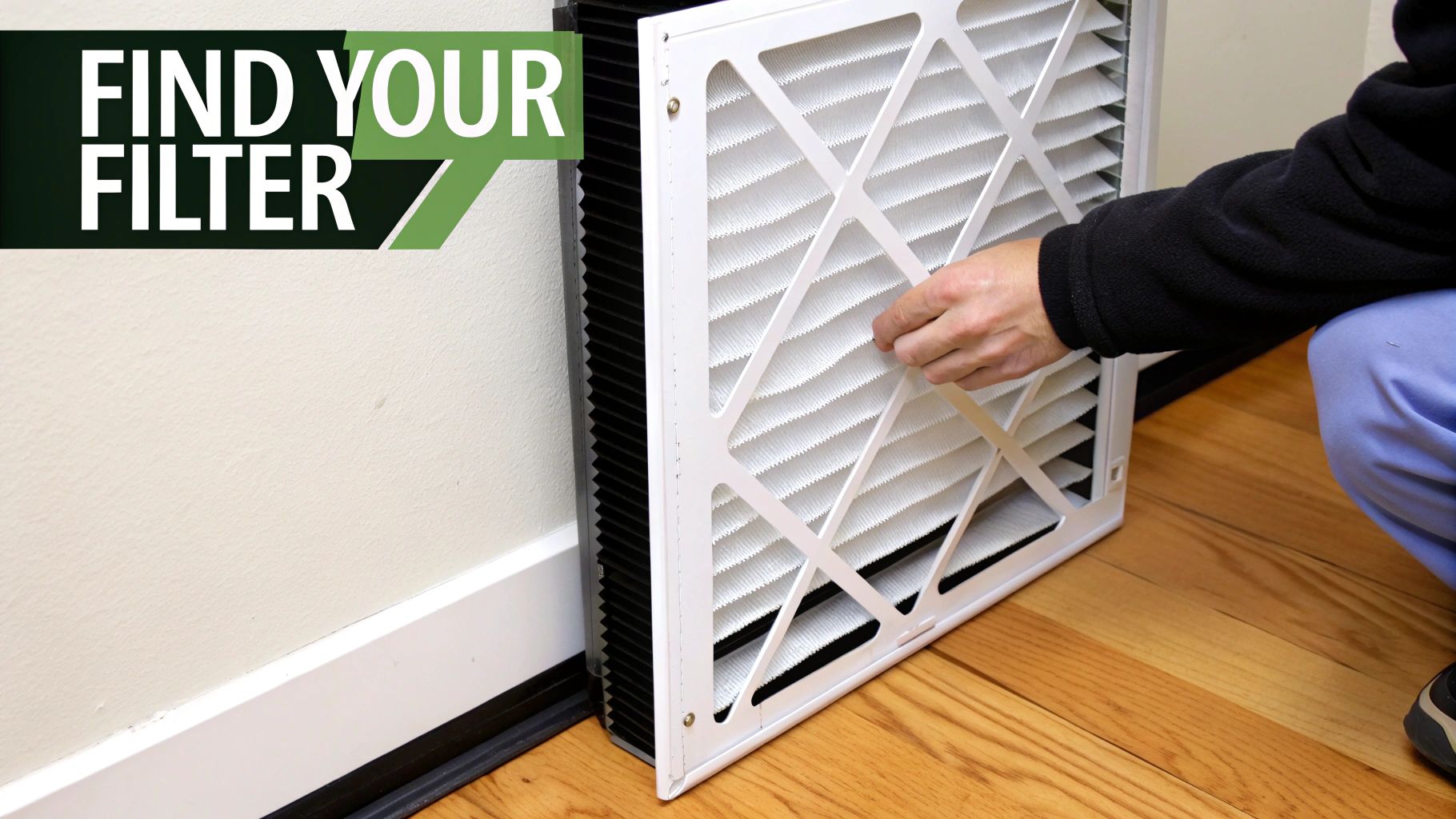
Alright, before you can clean anything, you need to know where to look. Furnaces are designed to keep things tidy, so the filter is usually tucked away in one of three common spots.
Your first bet is to check for a filter slot right on the furnace cabinet itself. This is often located near the bottom of the unit, right where the big return air duct connects. If it’s not there, follow that duct a little further away from the furnace. You might find a dedicated filter housing built into the ductwork, covered by a small metal or plastic door that pops or slides off.
Is Your Filter Washable or Disposable?
Once you’ve got the filter in hand, the next step is crucial: figuring out what kind you have. This will tell you whether you’re about to clean it or just replace it.
Take a good look at the frame.
- Disposable filters are the most common. They have a cardboard frame and a fairly thin, paper-like mesh. These are strictly one-and-done; once they’re dirty, you toss them.
- Reusable filters feel much more solid. They’ll have a sturdy plastic or metal frame and a more robust mesh. The frame will almost always be labelled as "washable" or "reusable."
A common mistake I see homeowners make is trying to wash a disposable filter. Don't do it! You'll just damage the delicate filter media, making it useless and potentially sending gunk straight into your HVAC system. Disposable means disposable.
You’ll also notice a set of numbers printed on the frame. These are important. They give you the filter’s dimensions (something like 16x25x1) and its MERV rating, which is a score for its filtration power. Getting familiar with what makes a good furnace air filter helps you pick the right one for your home's needs. Jotting these details down is key for buying the right replacement or simply understanding what you're working with.
The Right Way to Clean a Reusable Furnace Filter
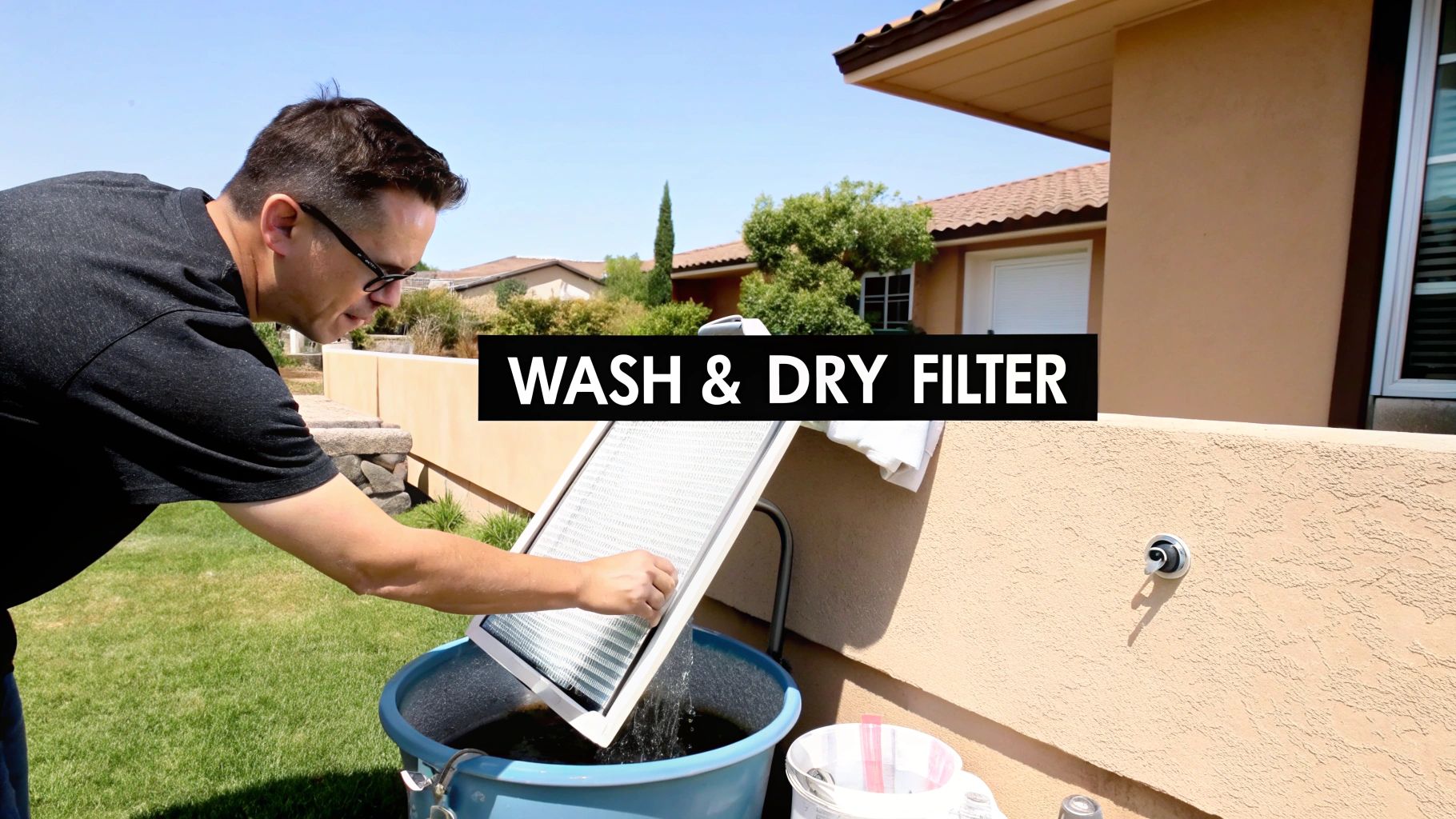
So, you’ve discovered you have a reusable filter. That’s great! A little bit of upkeep goes a long way in keeping these things working efficiently.
Before you even think about touching the filter, though, your first move is always safety. Head to your home's breaker panel and look for the switch labelled "Furnace" or "HVAC." Flip it to the OFF position. This is a non-negotiable step—it cuts the power to the unit, protecting you and your equipment from any nasty surprises.
Getting Rid of the Surface Grime
With the power safely off, you can now slide the filter out of its slot. The first thing you'll want to do is get rid of all that loose dust and debris. Trust me, you want to do this outside to avoid kicking up a dust storm inside your house.
Take the filter and give it a few firm but gentle taps against a solid surface, like your deck railing or an exterior wall. You’ll probably be amazed at how much gunk falls out. Once you’ve done that, grab a vacuum with a soft brush attachment and carefully go over both sides to suck up any lingering dust. Be gentle here—the filter mesh is durable, but you don't want to accidentally tear it.
The Deep Clean: Washing and Drying
Now for the main event. You don’t need any fancy or harsh chemicals for this part. A simple garden hose with a low-pressure nozzle or even a handheld shower sprayer will do the trick.
- Mind the Airflow: This is key. Your filter has an arrow on the frame indicating the direction of airflow. You want to spray the water from the opposite side. This pushes all the trapped dirt out the way it came in, rather than driving it deeper into the filter media.
- Tackle the Grease: If your filter feels greasy or is particularly grimy, a bit of mild detergent mixed with warm water will work wonders. Use a soft brush to gently scrub away the buildup, then rinse it thoroughly until every last bit of soap is gone.
The most critical part of this whole process? Making sure the filter is 100% dry before you put it back. Reinstalling a damp filter is a huge mistake. It creates the perfect environment for mould and mildew to grow, which your furnace will then happily circulate throughout your home.
Let the filter air dry completely after washing. Depending on the weather here in the GTA, this could take a few hours, so plan your day around it. Once it's bone-dry to the touch, you can slide it back into the furnace—just make sure the airflow arrow is pointing the right way.
Finally, head back to the breaker and flip the power back on. You’re all set! This simple routine will keep your system running smoothly and your home’s air quality in check.
Thinking about whether a reusable filter is the right long-term choice for your home? You can explore the pros and cons by learning more about washable furnace filters to see if they fit your needs.
What Toronto's Unique Air Quality Means for Your Furnace Filter
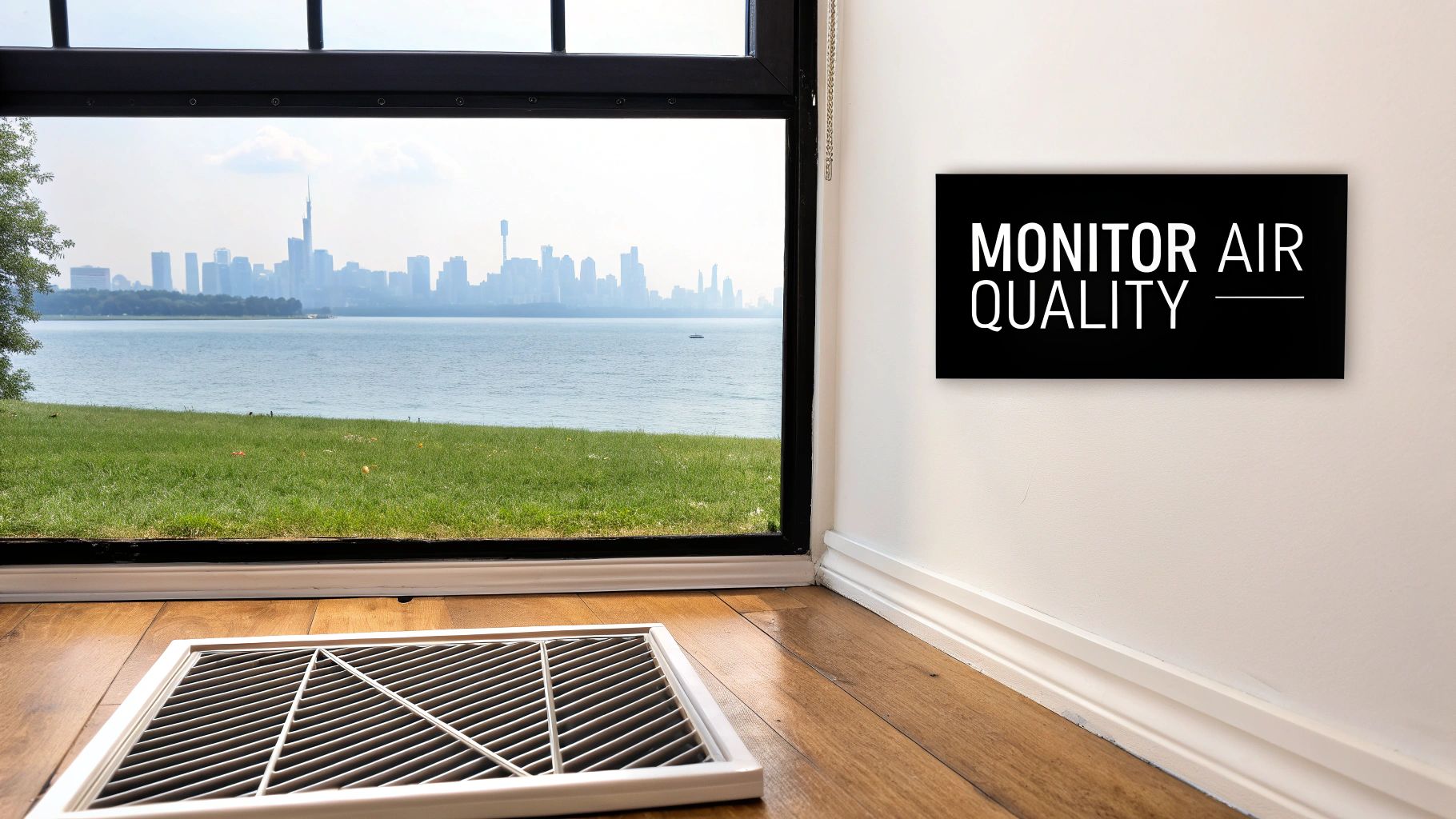
Living anywhere in the GTA throws a few curveballs at your furnace filter that you just don't see elsewhere. Being so close to Lake Ontario means we get a ton of humidity, especially in the summer. All that moisture in the air can turn a simple dusty filter into a damp, sticky mess—the perfect breeding ground for mould and mildew that gets blown right back into your home.
Then there are the seasonal headaches. Spring and summer bring brutal pollen counts, and if you have pets, you’ve got a year-round supply of dander getting sucked into your HVAC system. These local factors alone mean that the old "check it every 90 days" rule often doesn't cut it here if you want clean air and an efficient furnace.
How to Handle Local Air Quality Events
It's not just the usual allergens we're dealing with anymore. Southern Ontario is getting hit more and more by air quality events from outside our region. That wildfire smoke drifting across the border has become a real problem for homeowners.
We saw this firsthand during recent events, telling clients in Scarborough and Ajax to check their filters every two to four weeks when the smoke was bad. On some of those days, Toronto’s Air Quality Health Index (AQHI) shot past 10+. That kind of cross-border haze can slam your filter with harmful particles at rates 200% higher than normal. For a deeper dive, you can learn more about how wildfires impact your HVAC filter on calenergyexteriors.com.
When the air outside is hazy and poor, your furnace filter is the last line of defence for your family. Checking it more often isn't just about maintenance—it's a critical health measure to keep fine particulate matter out of your home.
Staying on top of this is key to protecting your family's health. If you're worried about what all these environmental factors are doing inside your home, a professional assessment can give you a clearer picture. We often recommend looking into indoor air quality testing in Toronto to get a real baseline.
By adjusting your filter checks based on Toronto's specific environmental cues, you'll stop your HVAC system from overworking and keep your home the healthy sanctuary it should be.
Knowing When to Call in a Professional
Changing your furnace filter is a fantastic DIY skill, but it’s not a silver bullet for every HVAC problem. Sometimes, you do everything right—you clean or replace the filter on schedule—and things still feel off. That’s usually your system’s way of telling you there's a bigger issue at play.
If you’ve put in a fresh filter and you’re still dealing with musty smells, something is wrong. That smell could be a sign of mould lurking deep inside your ductwork where you can't see it. The same goes for stubbornly high energy bills or a surprising amount of dust floating around right after a filter change. These are all red flags.
When Your Ducts Are the Culprit
Think of it this way: your filter is the gatekeeper, but what if the roads leading to and from the gate are clogged? That's what happens when your ducts are packed with years of accumulated dust, pet dander, and other debris. A clean filter can only do so much if the air travelling through the system is already picking up gunk along the way.
Don’t ignore persistent symptoms after a filter change. They’re your home’s way of telling you that the root of the problem lies deeper in the HVAC system, often within the ductwork where debris accumulates over time.
Living in the GTA, we deal with unique challenges. The humidity rolling in off Lake Ontario can make furnace filters clog up to 30% faster in the summer. And our own data shows that homes with pets should be changing filters monthly to keep up with the 50% extra dander.
When you’re facing issues that a simple filter swap can’t fix, it’s time to look at professional duct cleaning. It’s about restoring the health of your entire system, not just one part of it. You can learn more about how location affects duct cleaning needs on acunaspolaraire.com.
Your Top Furnace Filter Questions Answered
Even after you've got the basic steps down, it's natural to have a few lingering questions. When it comes to something as important as your furnace and air quality, getting the details right really matters. Let’s tackle some of the most common questions we hear from homeowners across the GTA.
"How often should I really change my filter?" This is, without a doubt, the number one question. There's no single answer that fits every home in Toronto, but a great rule of thumb is to check it every 60 to 90 days.
That said, if you have furry friends shedding dander or family members with allergies, you’ll want to bump that up to a monthly check. You can find a deeper dive in our guide on furnace filter replacement frequency.
Making Sense of MERV Ratings and Airflow
Another point that often trips people up is the MERV rating. It’s just a number, usually between 1 and 20, that tells you how well the filter catches tiny particles. For most homes in Ajax, Scarborough, and the surrounding areas, a filter with a MERV rating between 8 and 13 is the sweet spot. It does a fantastic job of grabbing dust and pollen without choking your furnace.
A common mistake is assuming that a higher MERV number is always better. Slapping in a filter with too high a rating can actually strain your furnace's motor, leading to higher energy bills and potential damage. Before you upgrade, always double-check your furnace manual to see what it can handle.
Finally, let's talk about that little arrow. Every disposable filter has one printed on the side. This arrow must always point toward the furnace's blower motor—in other words, away from the big return duct where the air is coming from. Get it backwards, and the filter just won't do its job properly.
And if you've ever wondered why your furnace filter gets dirty so fast, it might be a sign of something more than just a filter doing its job. It can point to bigger issues with your home's air quality or how your HVAC system is running.
If you think dirty ducts are the real culprit behind your air quality problems, the team at Can Do Duct Cleaning has the tools and experience to help. Get a free quote today!


